
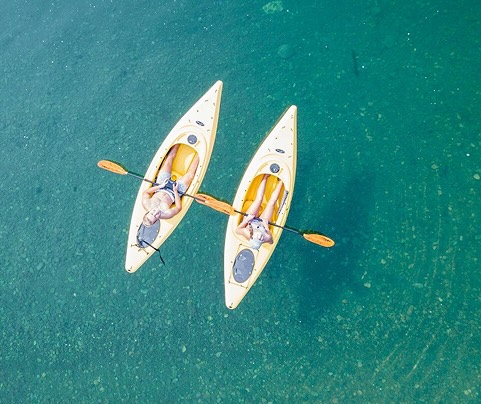
Sit-on-top kayak
A kayak where the rider sits on top of the hull. Self-draining through scuppers, stable, easy to exit. Most common rental type.
For rental shops: The default rental kayak for most coastal and lake operations.
Glossary
68 terms every kayak, SUP, surf and multi-sport water rental shop should know.
A kayak where the rider sits on top of the hull. Self-draining through scuppers, stable, easy to exit. Most common rental type.
For rental shops: The default rental kayak for most coastal and lake operations.
A kayak where the rider sits inside a cockpit enclosed by the hull. Better in cold water, requires paddling skill to re-enter if capsized.
Entry-level, wide and stable, short. For calm water and beginners. Most rental kayaks fit this category.
Longer, narrower, designed for distance paddling. Usually has sealed bulkheads and hatches.
Removable plugs in sit-on-top kayaks that block drain holes. Keep plugs in for flat water; remove in rough conditions.
Steering mechanism on the stern, controlled by foot pedals. Common on touring kayaks and some rec models.
Fixed or retractable fin that aids tracking. Simpler than a rudder.
The seating area in a sit-inside kayak. Enclosed by the deck.
Neoprene or nylon skirt that seals around the cockpit and paddler. Keeps water out in rough conditions.
Waterproof wall inside a kayak creating sealed compartments. Provides flotation and dry storage.
Access point to sealed compartments. Must seal completely when closed.
For rental shops: Missing gaskets are the #1 hatch issue in rental fleets.
Rigid SUP made of foam core with fiberglass or epoxy shell. Better glide and performance than inflatables.
Air-filled SUP that inflates to 15–18 psi. Easier to store and transport; slightly softer feel than hardboard.
Wide, stable, beginner-friendly. The default rental board.
Longer, narrower, designed for distance. Better for intermediate+ paddlers.
Shorter, narrower, designed for wave riding. Not typical rental inventory.
The grip surface on top of the SUP. Made of textured EVA foam.
The slot on the bottom rear that accepts the center fin.
The most common fin box standard on SUPs. Takes a center fin of various sizes.
Cord attaching paddler ankle to the board. Prevents separation in a fall.
For rental shops: Leash failure in open water is dangerous, inspect on every rental.
Hand or electric pump for inflating iSUPs. Must have accurate gauge.
Performance surfboard, under 7 feet, for advanced riders. Uncommon rental.
Long (9+ ft), stable, easy to paddle. Classic surf and beginner-friendly. Common rental.
Between shortboard and longboard (7–8 ft). Good rental for progressing intermediates.
Foam-surfaced surfboard. Very forgiving, easy to paddle, common beginner rental.
Board buoyancy. Beginner volume = rider weight × 1.3–1.5. Match at booking for good fit.
Curvature of the board from nose to tail. More rocker = turns easier, less speed.
Removable fins on the bottom. Two main box systems: FCS (most common) and Futures.
Damage to the board, dent, crack, or hole. Small dings are repairable; large ones may retire the board.
Separation of fiberglass from foam core. Usually retirement signal.
Beeswax grip applied to the deck for traction. Needs regular refresh in rental use.
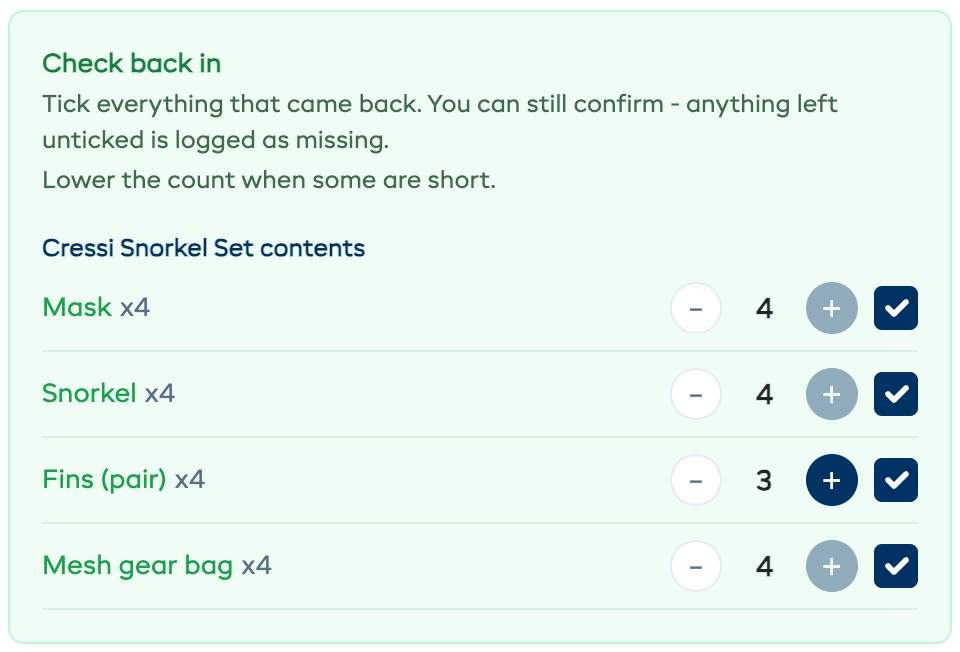
Tick everything that came back. Anything left unticked is logged as missing.
No credit card required. 21-day free trial.
Neoprene thickness, typically 2mm–5mm. Thicker = warmer but less flexible.
Wetsuit covering full body. Typical for cold water.
Short-armed, short-legged wetsuit. For warm water.
Long-armed, short-legged. For transitional temperatures.
When cold water enters the wetsuit through gaps. Bad fit = cold paddler.
Flatlock (entry), glued-and-stitched (mid), taped (premium). Better seams reduce flush.
Life jacket. Legally required for most water rentals.
For rental shops: Never rent without, liability is severe.
Standard recreational PFD. Keeps head above water in conscious user. USCG-approved.
Special-use inflatable or hybrid PFDs. Less common in rental use.
Required safety item on many watercraft. Signals distress. Simple, cheap, mandatory.
Pre-booking check of equipment condition, accessories, and customer match. 6–10 min per item.
Condition review at return with customer present. Foundation of any damage charge.
Matching equipment to customer (board size, wetsuit size, PFD size).
Customer safety briefing before they head out. Route, hazards, emergency contacts.
Where customers enter the water from your operation.
Where customers come back to after their session.
Written plan for retrieving customers in trouble. Essential for any water sports op.
Rise and fall of water due to moon. Affects launch/return timing in many operations.
Ocean wave energy. Measured in feet or meters and period (seconds).
Short, choppy surface waves driven by wind. Uncomfortable for SUPs and kayaks.
Weather warning for conditions dangerous to small boats. Typical trigger to cancel rentals.
Wind blowing from land toward water. Pushes paddlers away from shore, dangerous.
Wind blowing from water toward land. Pushes paddlers toward safety.
Strong current flowing away from beach. Dangerous for swimmers and some paddlers.
Wind speed scale 0–12. Rentals typically operate up to Beaufort 4 (moderate breeze).
Involuntary gasp reflex when entering cold water. Major drowning risk. PFDs prevent.
Dangerous drop in body temperature. Risk in cold water. Wetsuits and rescue protocols matter.
Rental by the hour. Common for SUPs, short surf sessions.
3–4 hour rental window. Common for kayaks and touring SUPs.
8+ hour rental. Common for kayak day-trippers.
24+ hour rental. For touring kayakers, camping trips.
Rental that includes a guide. Safer for beginners, premium pricing.
Rental without a guide. Lower cost, requires customer competence.
Rental starting one location, ending another. Requires gear shuttle.
A single rental block. Can be an hour, a half-day, or a full trip.
Customer doesn't arrive and doesn't cancel. 3–8% typical water sports rate.
Signed legal release acknowledging activity risk. Required for most water sports rentals.
No terms match that search.