Follow one Saturday at a beach hut on EquipDash, from the first online booking to the numbers at close.


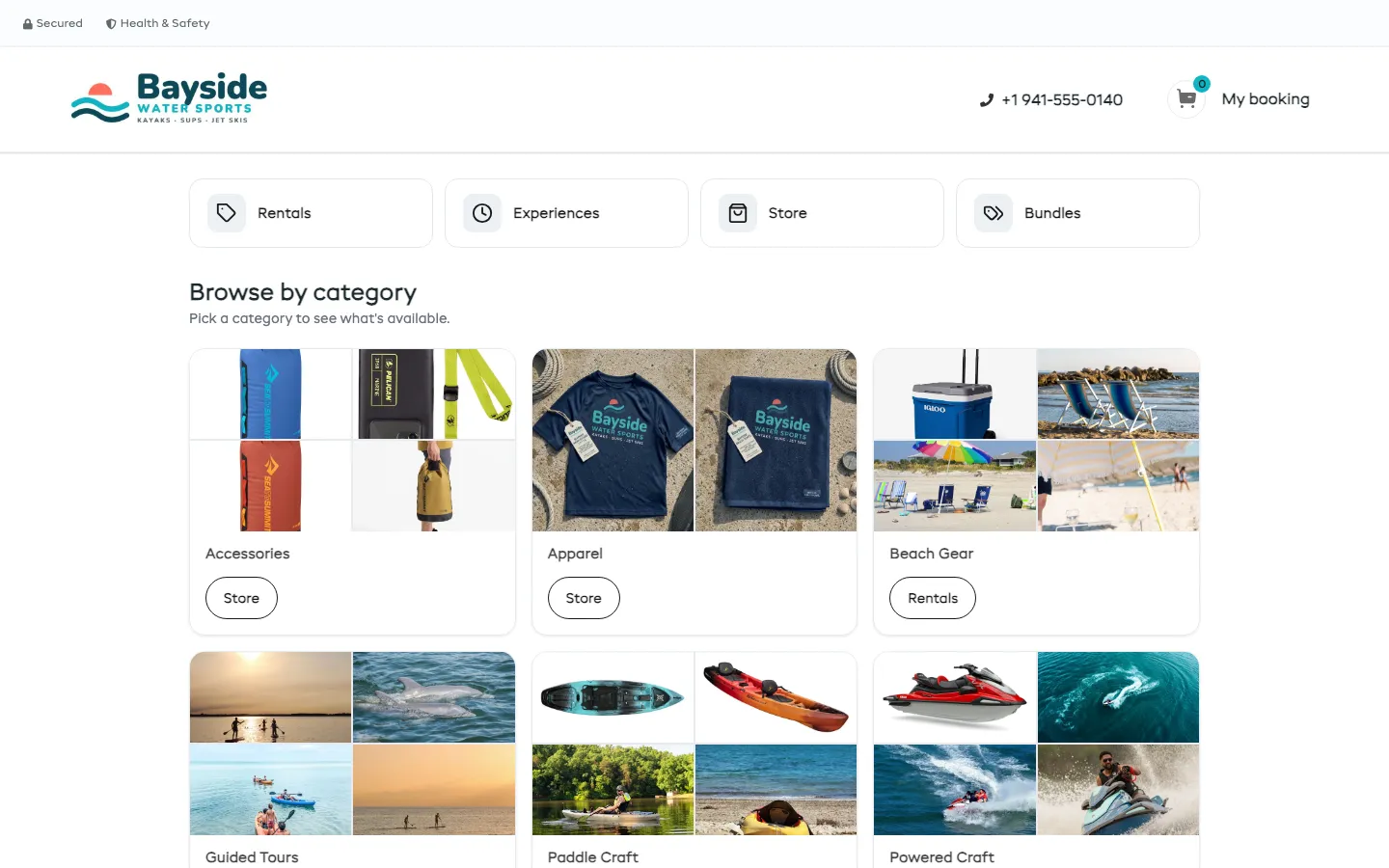
They book on your own booking page, branded as your shop, sitting on your website.
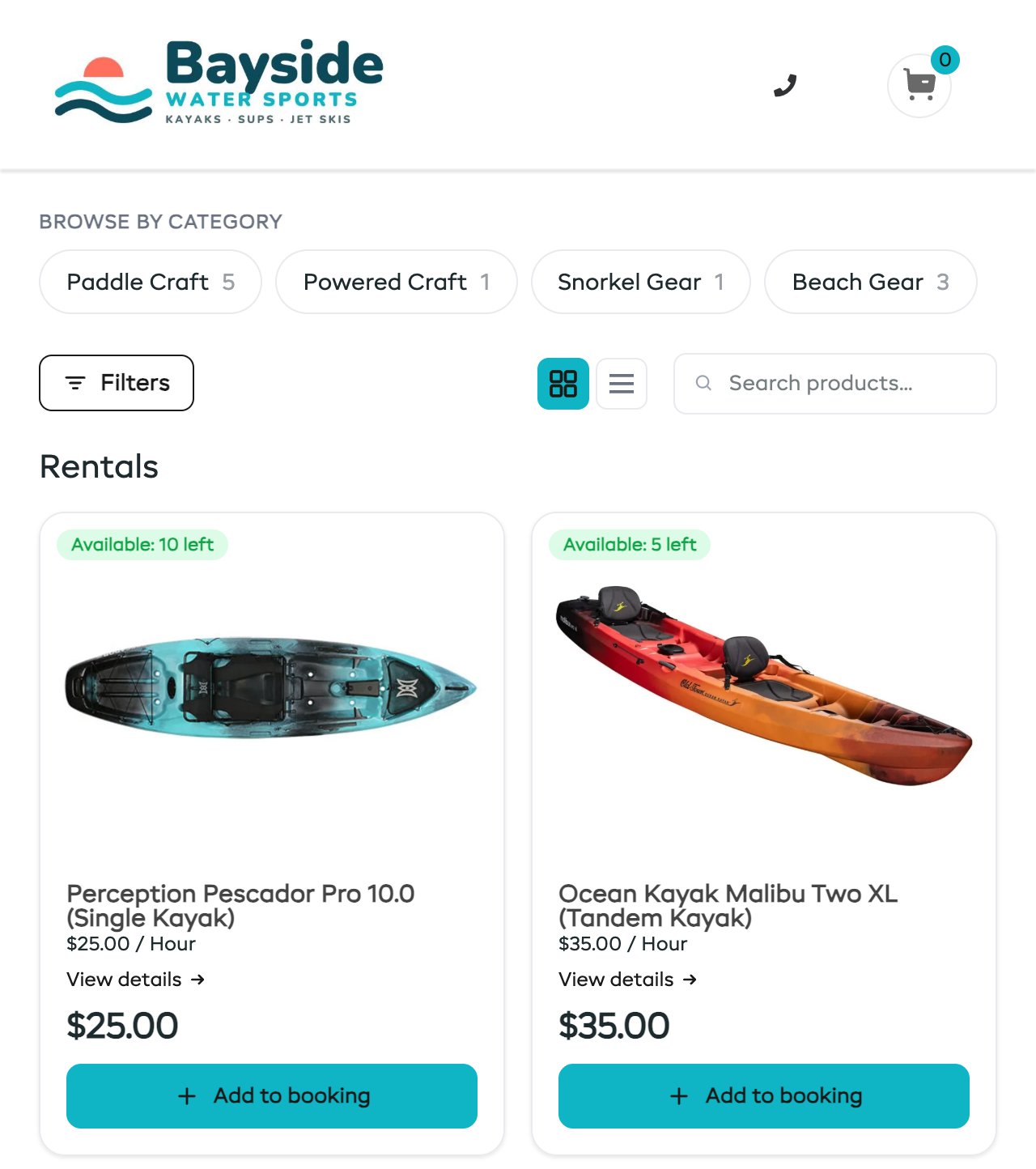
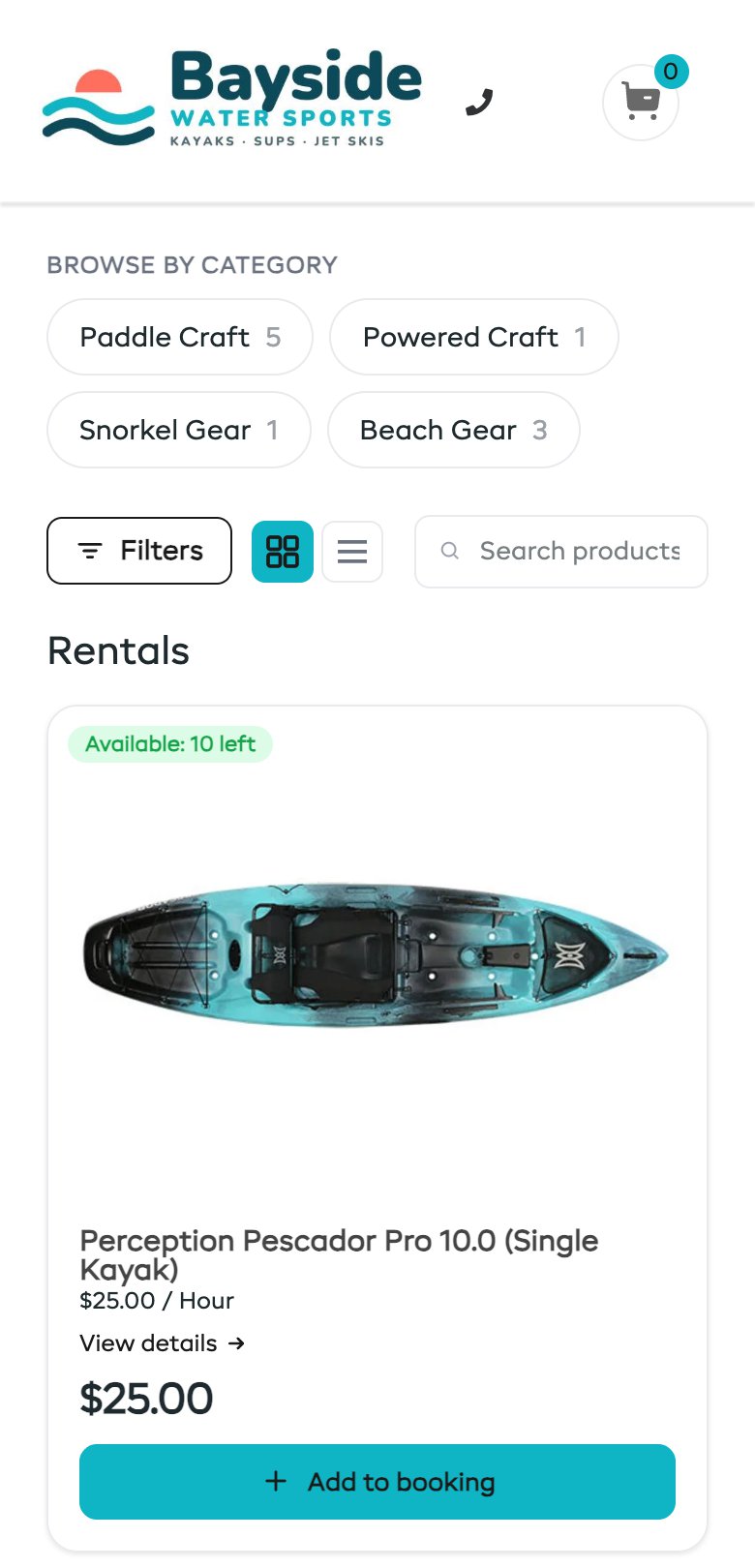
Dash answers on your booking page and on the phone, from your own gear, prices and what's free, and books the customer in.
Dash has read the whole day: pickups, returns, the busy hours and the forecast. Under it sits only what needs you.
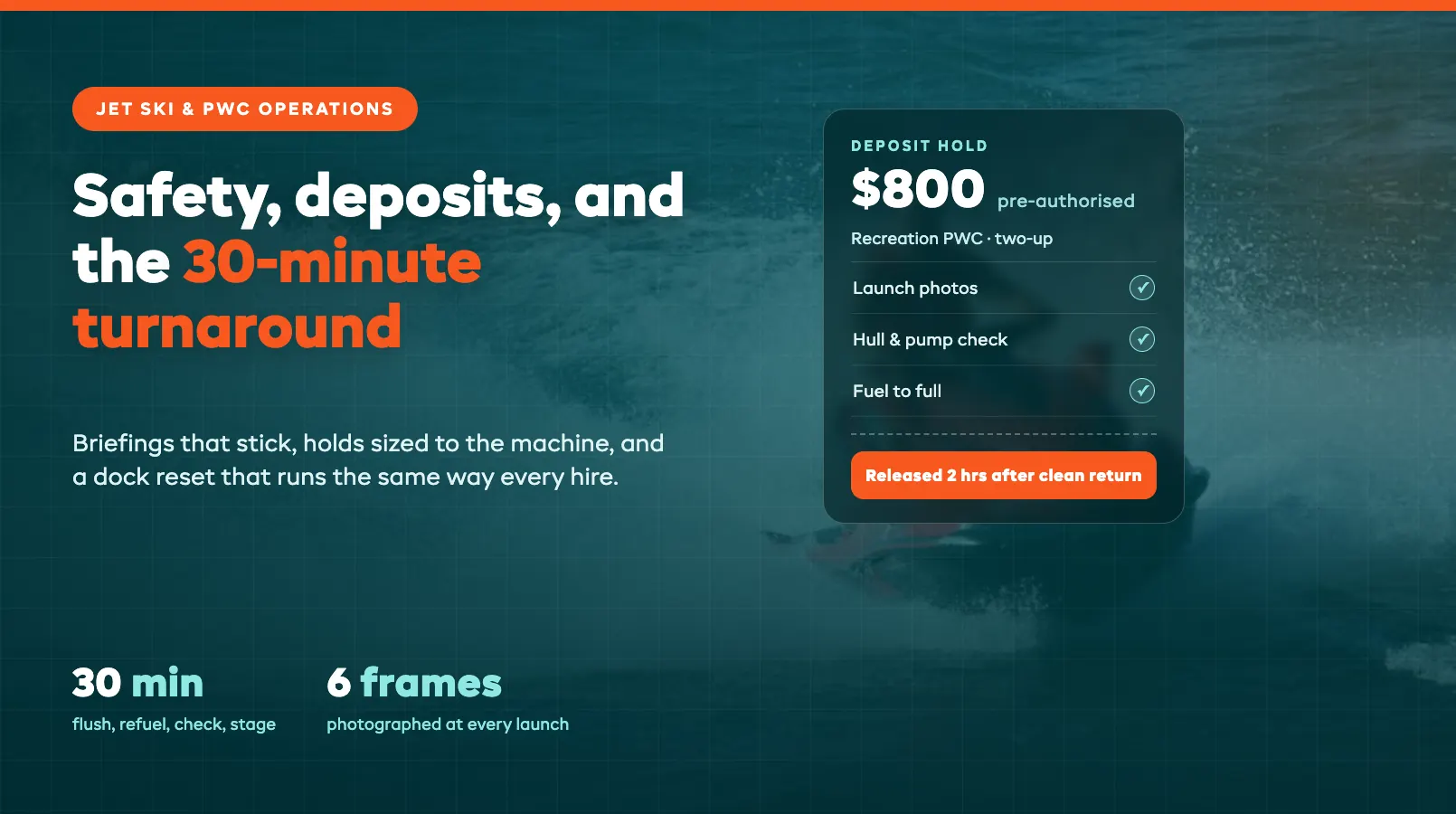
Scan the sticker so the booking knows exactly which jet ski went out, then tick your own handover checks.
Tell the till what they want in one sentence. Dash fills the sale, and everyone signs on their own phone.

You set your own wind limits. When the forecast crosses one, Dash lists every booking it hits and where each can move.

Each one pulls the paddler's phone number and booking from the record, so nobody copies and pastes at 11pm.
Dash adds up what the late gear is costing you. One tap texts every late paddler, and an extension link lets them add time and pay from their phone.

Tick off what came back and lower the count for anything short. The missing pair is logged on the booking, ready to take from the deposit.

Open the reports, or ask Dash what no report covers, like which hour on a Saturday has the most boards out.
Describe a job in a sentence, like reminding tomorrow's jet ski renters to bring their boating card, and a bot does it every day.
Free resources
Kayak, SUP, surf and snorkel rental shops in our directory, by town.
Free checklists for water sports shops. Use them as they are, or import them into EquipDash.
Ready-made bots for water sports shops. Turn one on in Dash in a few seconds.
Water sports rental terms, explained.
Water sports rental software is a platform that manages every part of a kayak, SUP, surf or snorkel rental operation — online bookings, gear inventory, PFD sizing, paddle waivers, payments, repair tickets and customer comms — in one place. Modern systems like EquipDash replace the spreadsheet-and-clipboard setup most beach shops grew up on and add AI bots that handle the repetitive admin (weather reschedules, overdue chasers, review requests, peak-day staffing) automatically.
A paddler visits your website, picks a date and slot from an embedded booking widget, picks a craft (single kayak, tandem kayak, 11ft SUP, 9'6" longboard), signs a paddle waiver on their phone, and pays a deposit or the full rental via Stripe. The booking lands in your dashboard in real time, your inventory drops by one unit for that slot, and an SMS pickup reminder fires automatically the day before. They walk into the shop already paid and signed — counter time drops from 20 minutes to 5 for a family.
A rental hands a paddler a kayak, SUP or surfboard for self-guided use — they book a slot, sign a waiver, take the gear and bring it back. A tour is a scheduled guided experience (a 3-hour sunset paddle, a half-day snorkel trip, a kayak-and-camp overnight) with a guide leading the group. Most water sports shops run both: rentals fill the calendar between scheduled tours. EquipDash handles both on one dashboard — rentals get a slot booking, tours get a manifest + guide assignment + route notes, and the same waiver flow covers both.
A damage report is the record of wear or damage flagged at return on a specific board, kayak or PFD. It captures the gear asset ID, the damage type (hull scrape, fin crack, leash tear, PFD foam compromised, ding on rail), the photo evidence taken at return, the paddler booking that flagged it, the assigned tech, the parts cost, and the deadline before the gear is back in rotation. In EquipDash, repair tickets auto-create when staff flag damage at the return scan — the gear drops out of bookable inventory until a tech signs it off.
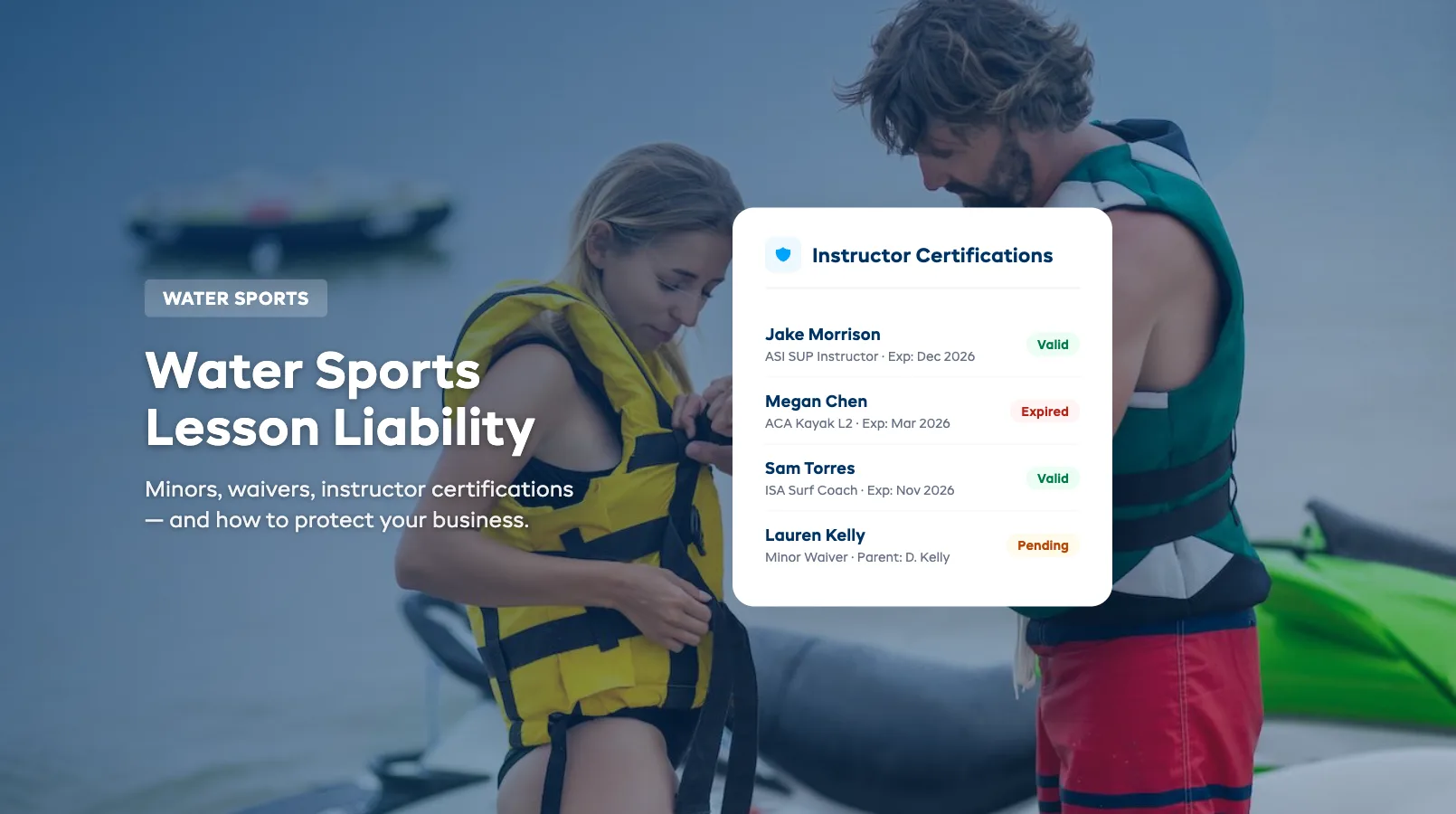
Most U.S. and Canadian water sports rental shops require a signed liability waiver before handing over gear — partly for insurance, partly to clarify policies (PFD use, deep-water competence, after-hours return, damage liability). Digital waivers replace the paper clipboard at the counter: paddlers sign on their phone before they walk in, the signed PDF attaches to their booking record automatically, and you can pull a clean export for an insurer in seconds. Guardian sign-off is built in for any paddler under 18 in a family booking.
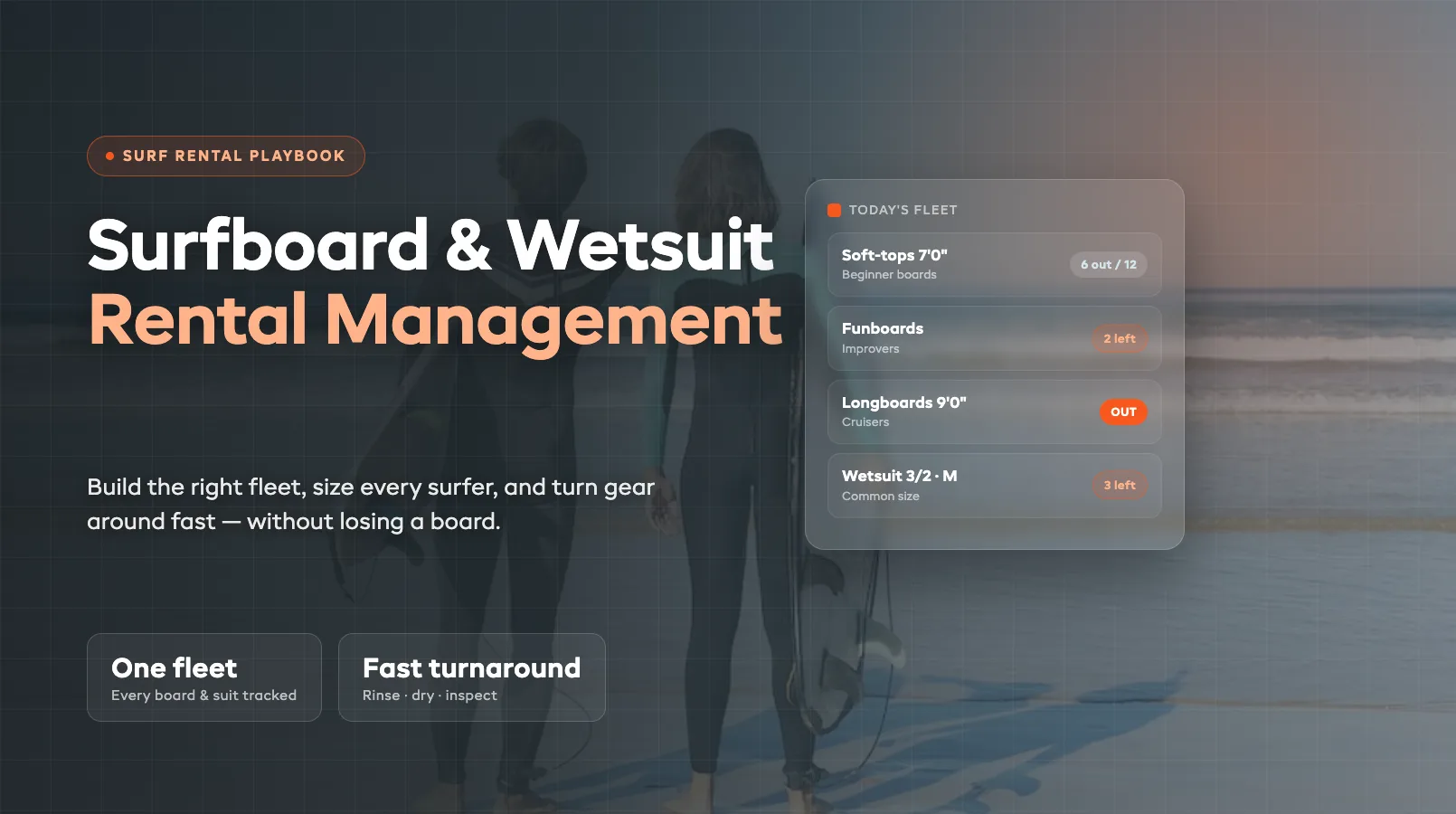
PFD (personal flotation device, aka life jacket) sizing is the practice of matching the vest to the paddler's chest size and weight so it actually keeps them buoyant in the water. Adult sizes typically run XS–XXL by chest; kids run by weight band (infant, child 30–50lbs, youth 50–90lbs). A wrong-size vest rides up or doesn\'t close and is effectively unsafe. A good rental shop confirms PFD size 12 hours before pickup (EquipDash does this with the PFD Sizing Confirm bot) so the right vest is on the rack when the paddler arrives — no scrambling, no swapping.
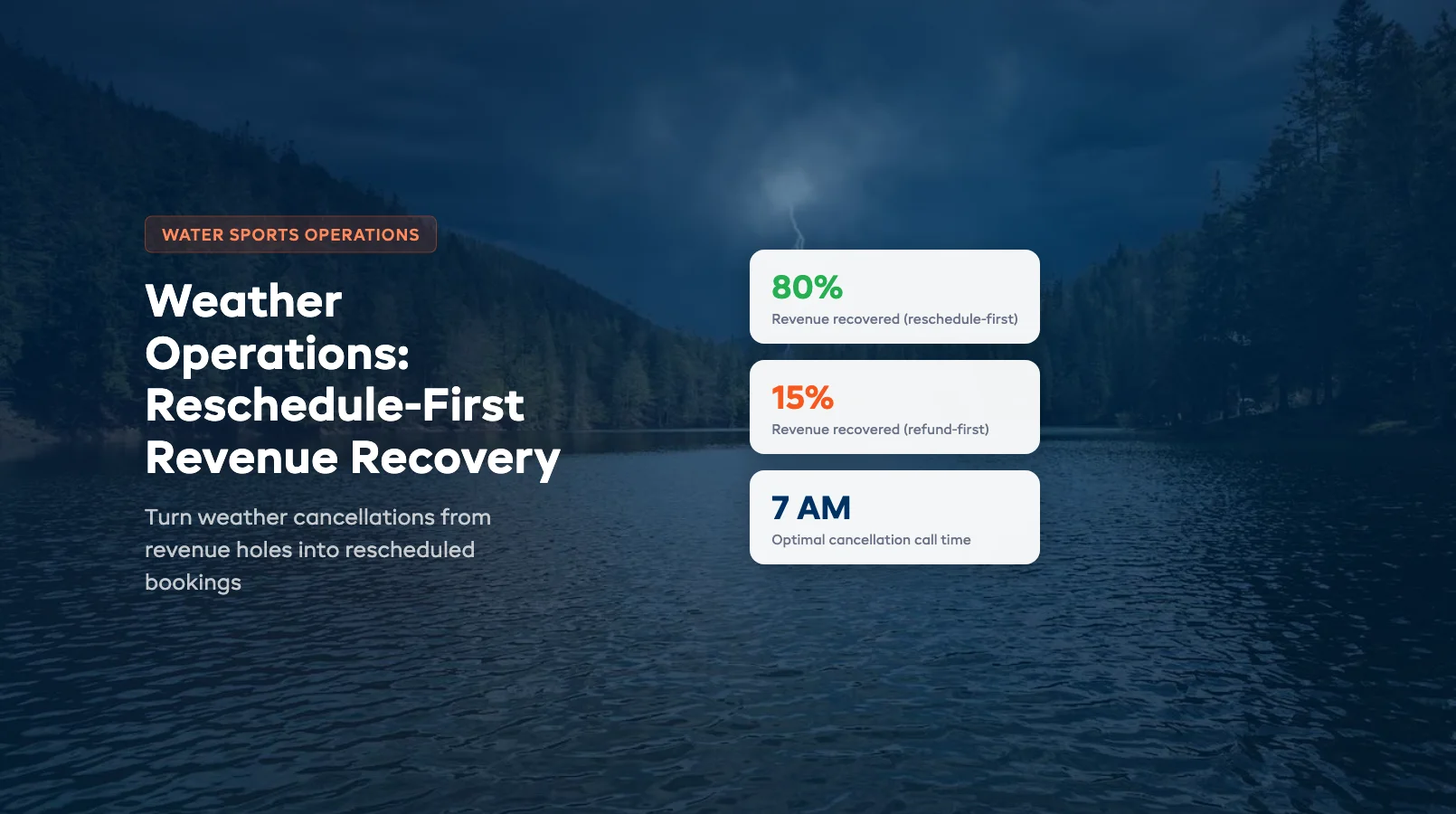
Best practice is to set explicit thresholds (e.g. wind >25km/h for SUP/kayak, lightning risk, small-craft advisory), watch the marine forecast the evening before each session, and proactively text every booked paddler the night before — not the morning of — with a one-tap reschedule offer or a self-serve refund inside your policy. EquipDash automates this with the Weather Reschedule bot: the forecast hits your threshold, every booked paddler gets a personalized text, and the dashboard tracks how many rescheduled vs refunded so you protect both revenue and your review score.
A single-site rental works from one beach, dock or shop — one inventory, one staff schedule, one set of pickup slots. A multi-launch operation runs gear out of multiple physical sites (a main shop plus a beachfront kiosk, a lake dock plus a river put-in) with separate inventories, capacity and staff at each site. Multi-launch shops need software that tracks gear and bookings per launch — closing one site for weather shouldn\'t black out the others. EquipDash handles both single and multi-launch with no extra add-on.
Damage charge defense is the operational habit of capturing enough evidence at return that any disputed charge — a Stripe chargeback for a $40 fin repair, an insurer query on a $300 hull patch — is winnable. The four-step record: photo at return, written condition note, paddler acknowledgement (or refusal), and a Stripe payment link sent for the charge. EquipDash automates this — staff flag the damage at the return scan, a repair ticket auto-creates with the photo, and the paddler gets a polite text explaining the charge with a one-tap link to pay. That clean record is what wins a chargeback dispute.
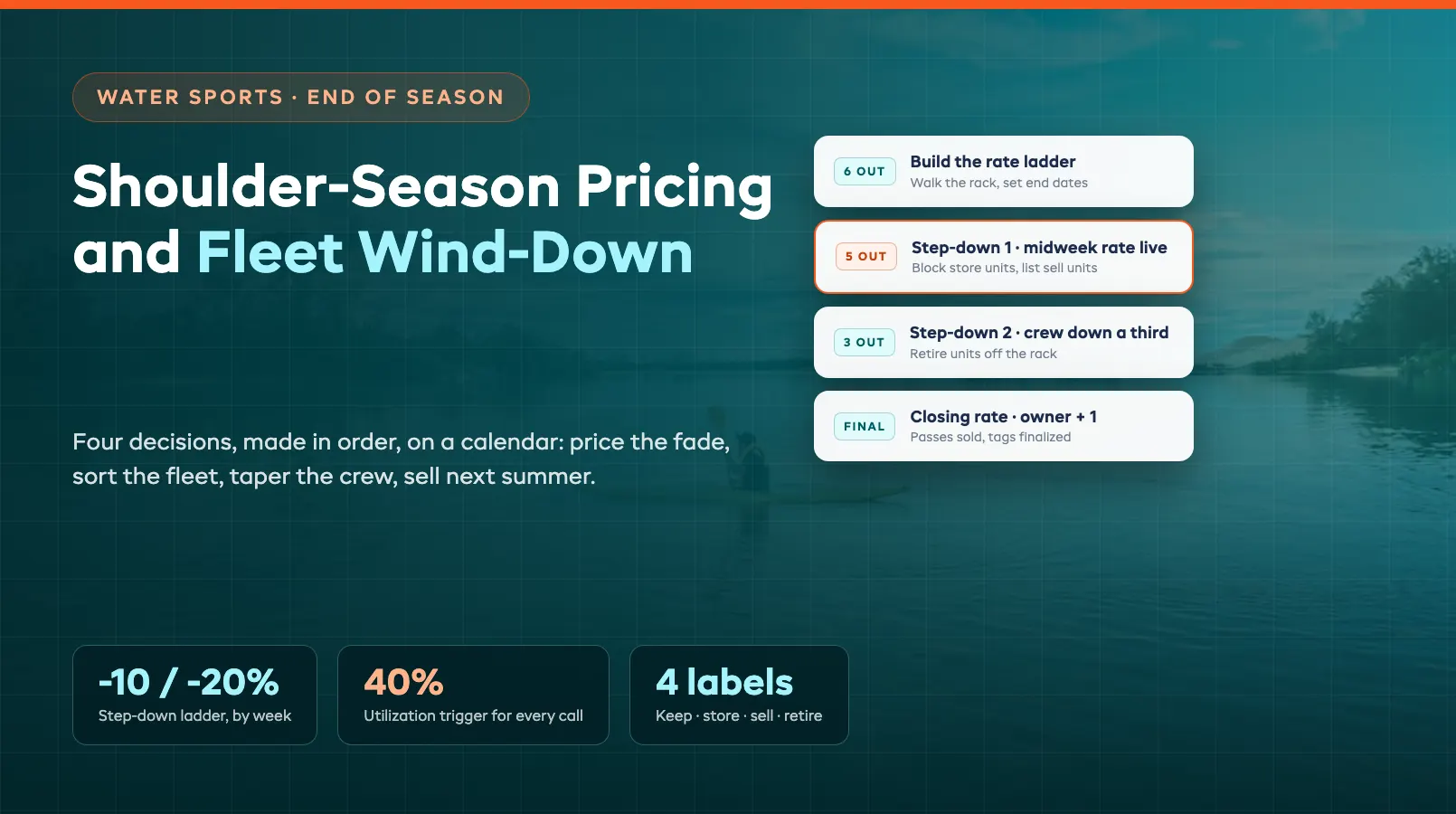
Fleet utilization is the percentage of your gear-hours that are actually booked over a period. A 30-craft shop open 8 hours a day for 30 days has 7,200 gear-hours of supply; if you booked 3,200 of those, your utilization is 44%. Good water sports shops in peak season run 50–70%. EquipDash reports utilization per craft type (SUP, kayak, surfboard, snorkel set) and per location so you know which gear to add to the fleet and which to retire at end of season.
Most water sports shops send four touchpoints by SMS: pickup reminder with slot time and launch site (the night before), waiver chase (12 hours before, if unsigned), overdue follow-up (1 hour past slot end, with extension offer), and review request (1 hour after return). Each one is a small touch but stacked together they cut no-shows by 40–60%, recover late-return revenue, and lift your Google rating. EquipDash ships these as pre-built Dash Bots — no scripts to write, no SMS provider to wire up.
Yes. Electric craft (e-foil, e-SUP, electric surfboard) are treated as their own product type in EquipDash — separate hourly rate, separate deposit, separate damage and competence requirements. The waiver flow can include extra clauses for electric craft. Pricing, deposits, and waiver wording can differ from non-powered gear; the booking flow is otherwise identical. Note: EquipDash does not currently track battery state of charge on rented craft — that's tracked manually at hand-off and return.
BLOG
 Comparisons
 Guides
 Guides
 Guides
 Guides
 Guides
Other industries





FREQUENTLY ASKED QUESTIONS
Real questions from kayak, SUP, surf and snorkel rental shop owners evaluating EquipDash. If yours isn't here, get in touch.
Contact UsPlans start at $29/month. 21-day free trial, no card. There is a 1–2% platform fee you can pass to the paddler at checkout — so unlike FareHarbor or Peek Pro pulling 1–6% off your top line, your margin stays yours.
Start your free 21-day trial and explore every feature, including Dash AI and Dash Bots. No credit card, no commitment.