
EquipDash hands the busywork — bookings, kit checks, sanitization logs, late-return chasers — to Dash AI. So you can focus on getting campers on the trail instead of behind a screen.





 Dashboard

 POS
POS
 Calendar
 Scan a barcode
 Bookings
 Rentals
 Experiences
 Customers
 Staff
Staff
 Waivers & Forms
| # | Customer | Items | Status | Pickup | Price |
|---|---|---|---|---|---|
| BK-2389 | Sarah M. | 2-Person Backpacking Kit + extras | Confirmed | 12 Sept 8:00am | $180.00 |
| BK-2388 | Jake R. | 4-Person Family Camp Kit · 3 days | Active | 11 Sept 8:30am | $245.00 |
| BK-2387 | Patel family | 4-Person Tent + 4× Sleeping Bag (0°F) | Confirmed | 13 Sept 9:00am | $312.00 |
| BK-2386 | Marco L. | Solo Backpacking Kit · 4 days | Returned | 06 Sept 8:00am | $132.00 |
Dashboard
POS
Calendar
Scan a barcode
Bookings
Rentals
Experiences
Customers
Staff
Waivers & Forms
| Item | SKU | Qty | Status | |
|---|---|---|---|---|
⛺ |
2-Person Backpacking Kit | KIT-BP2-04 | ×1 | Confirmed |
🥾 |
Bear canister + Water filter | ADD-BWF-02 | ×1 | Confirmed |
Dashboard
POS
Calendar
Scan a barcode
Bookings
Rentals
Experiences
Customers
Staff
Waivers & Forms
| Item | SKU | Qty | Status | |
|---|---|---|---|---|
⛺ |
2-Person Tent — Half Dome
Rainfly tear · ~3cm vestibule seam
|
TNT-HD2-09 | ×1 | Repair bench |
🛏️ |
Sleeping Bag (20°F) ×2 | BAG-20F-04 | ×2 | Sanitize |
More trips booked direct. Every kit tracked piece-by-piece. Every camper contacted automatically. The stuff your last system promised and never quite delivered.
Most campers book direct on your website — if the widget feels like your shop. Embed a branded widget that looks like your shop, not generic tourism software. Real-time availability, multi-day pricing tiers, deposits, trip-date booking. Mobile-ready and fast, even on a Friday-night pre-Labor-Day rush.
Out on a trip. Back on the shelf. On the sanitization rack. Overdue. Scan to check out, scan to return — from any device. Auto-text the campers running late so you stop chasing them.
A signed waiver attached to every booking before pickup. Customers sign on their phone — including guardian sign-off for minors in family groups. Damage photos save automatically. Exports are insurance-ready, not a PDF mess.
Pre-trip confirmations. Pickup-day reminders. Overdue chasers. Waiver follow-ups. Post-trip review requests. All sent automatically — no scripts, no 11pm copy-paste from a spreadsheet. Pulls camper phone right from the booking.
Ask Dash anything in plain English — get the answer in seconds. Or deploy pre-built bots that run in the background while you're packing kits on the shop floor.
Three workflows other rental software doesn't have. Plus all the standard tools you'd expect — done well.
Bundle a tent, sleeping bag, pad, stove and lantern into a 2-Person Backpacking Kit — and have the system check every single part at pickup and return. So no camper drives 2 hours to a trailhead missing a tent pole.
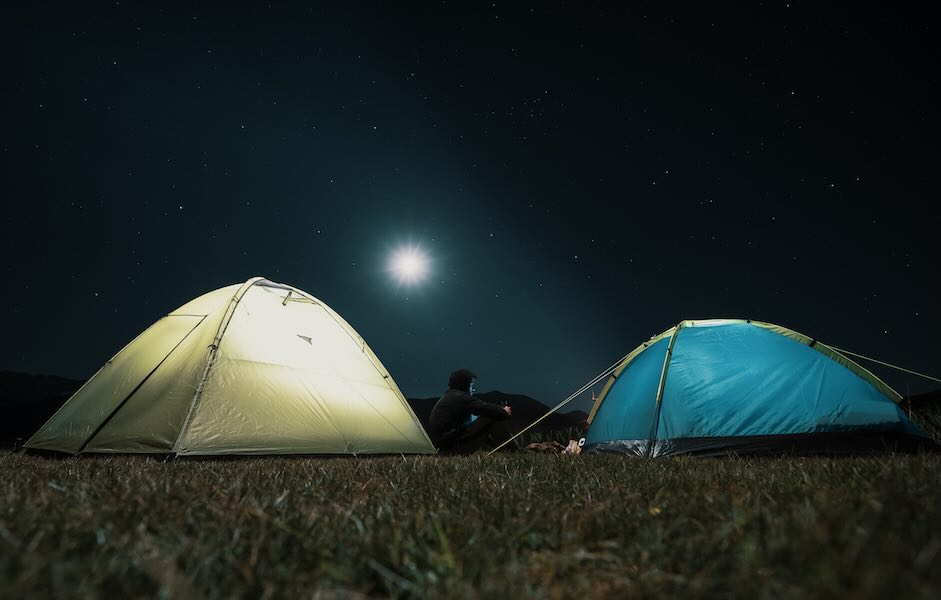
Sleeping bags, cookware, water filters — everything that touches a camper's mouth or skin gets a sanitization log between rentals. Item drops out of bookable inventory until cleaned and signed off. So your next camper unzips a bag that smells like detergent, not the last person.
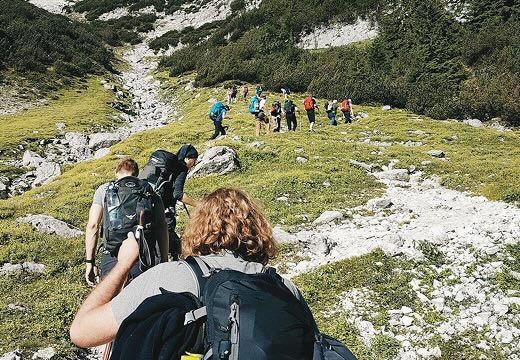
Campers book trip dates, not 'X days starting today'. Price drops for week-long rentals, climbs for high-demand fall weekends, and any 24-hour overdue gets a one-tap extension offer auto-texted before a late fee even applies.

The 3 features above are unique to camping gear rental. Everything below is table stakes — and we don't charge extra for any of it.
Track every tent, sleeping bag, stove, backpack, water filter and bear canister by size and serial. Live updates as kits go out and return — no more “sorry, we’re fully booked on 4-person tents” mid-Saturday.
Every kit gets a full repair history across seasons. Import free camping gear service checklists. Searchable by asset, camper or date.
Build rosters for the pre-holiday Fridays that matter. Pair with the peak-day alert bot to forecast 16 hours ahead.
Campers book, pay a deposit, and sign the waiver before they arrive. Counter time cut in half. Pre-booked campers check in 3x faster than walk-ins.
Handle a family of six, a Scout troop of twenty, or a guided overnight with kit attached — all in one flow. One waiver per camper (guardian-signed for minors), one invoice for the group, kit completeness check applied per booking.
Ring up walk-ins in seconds. Tap-to-pay on iPad or phone, customer lookup for repeats, deposits and refunds in the same flow.
Signed on phone before they arrive. Guardian-signed for minors. Every waiver archived and searchable, insurance-ready exports.
Each shop or trailhead outpost has its own inventory, staff and reporting. Owner-level dashboard rolls them up. Staff can be assigned to multiple sites. Popular pattern: a main shop plus a trailhead outpost for park-adjacent pickups.
DESTINATIONS
Browse our directory of camping and hiking gear rental shops across 7+ outdoor destinations. Find shops near your trip or use the directory as a benchmark for your own operation.
FREE CHECKLISTS
8 free deep-dive checklists built for camping and hiking gear rental operations. Pre-season audit, post-rental return check, climbing-gear retirement review, stove and fuel inspection — and more. Use them as-is or import into EquipDash in seconds.
A 15-minute tent pre-rental inspection covering poles, fabric, zippers, seams, stakes, and rain fly. Catches issues before custome...
ChecklistA structured sleeping bag cleaning protocol for rental operations. Removes odor, preserves insulation, extends bag life.
ChecklistA 10-minute backpack inspection covering straps, buckles, frame, zippers, padding. Catches issues before customers wear them 15 mi...
ChecklistA 15-minute camp stove inspection covering burner, fuel line, valves, pressure regulator, safety. Prevents the #1 cause of camping...
ChecklistA structured climbing gear retirement inspection. Harnesses, ropes, cams, nuts, hardware. Age + use + visual criteria. The inspect...
ChecklistA 4-hour pre-season camping fleet audit before opening. Tents, bags, packs, stoves, climbing gear, accessories.
ChecklistA 15-minute post-rental return inspection for camping gear. Condition, cleanliness, completeness. Documentation for damage charges...
ChecklistA structured retirement review for camping gear at end of season. Continue / sell / retire per asset. Based on wear and maintenanc...
AI FRONT DESK
Trip planning is full of questions about tents, sleeping bags and what to pack. AI Front Desk answers them on the phone and in the chat, builds the right kit list from your catalog, and takes the booking, so first-timers rent with confidence instead of clicking away.
AI assistant — may make mistakes. Confirm details with Trailhead Outfitters.
AI AGENT TEMPLATES
Pre-built AI agent templates for camping and hiking gear rental shops. Overdue chasers, pre-trip pack-list drafting, weather alerts, no-show follow-up, damage report drafting, dormant camper reactivation, kit completeness checks, sanitization queueing, fully-booked alerts, gear inspection cycles, post-trip reviews and deposit release. Build any of them in Dash Bots in seconds with a plain-English prompt.
BLOG
 Guides
 Guides
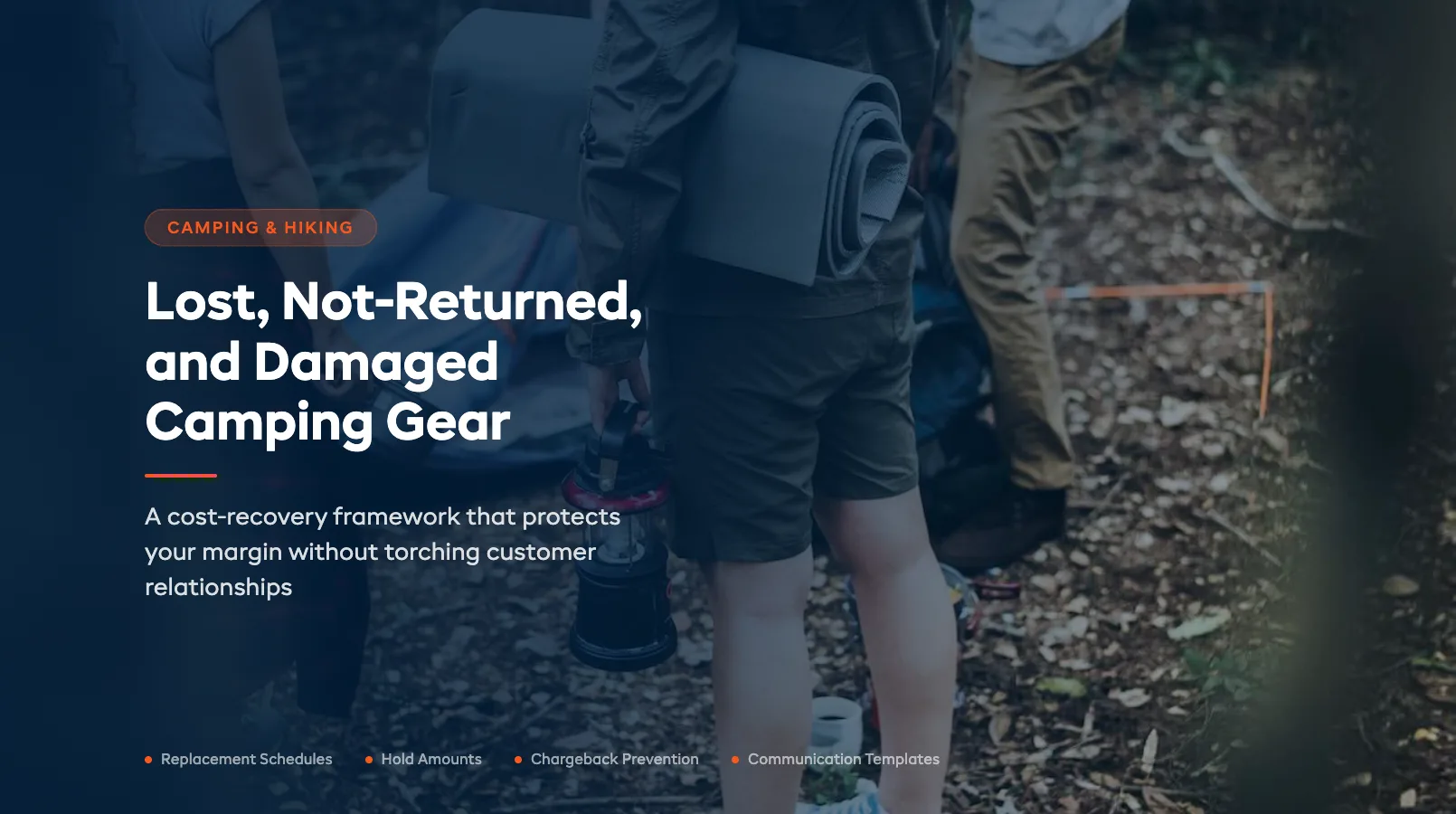 Guides
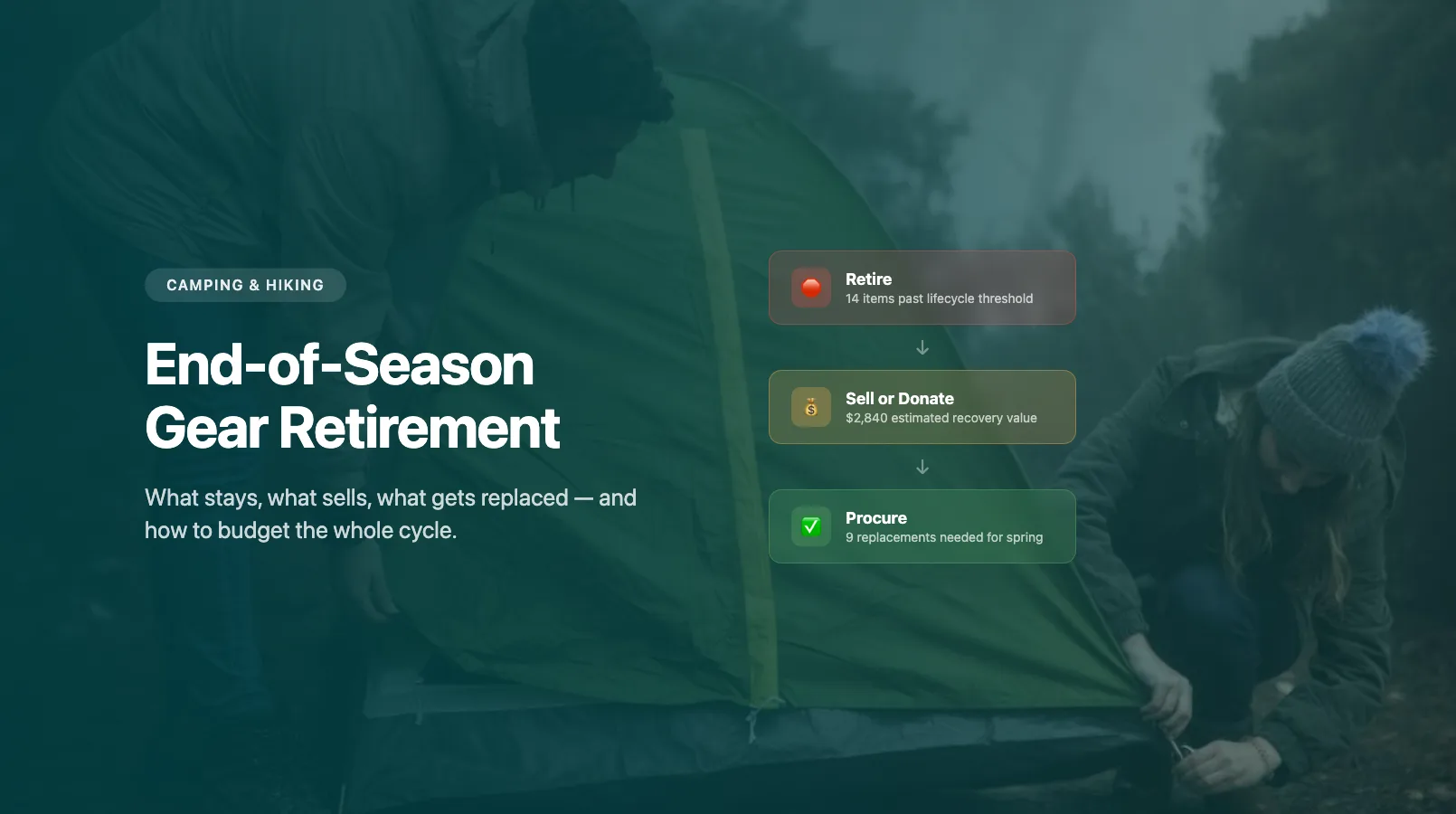 Guides
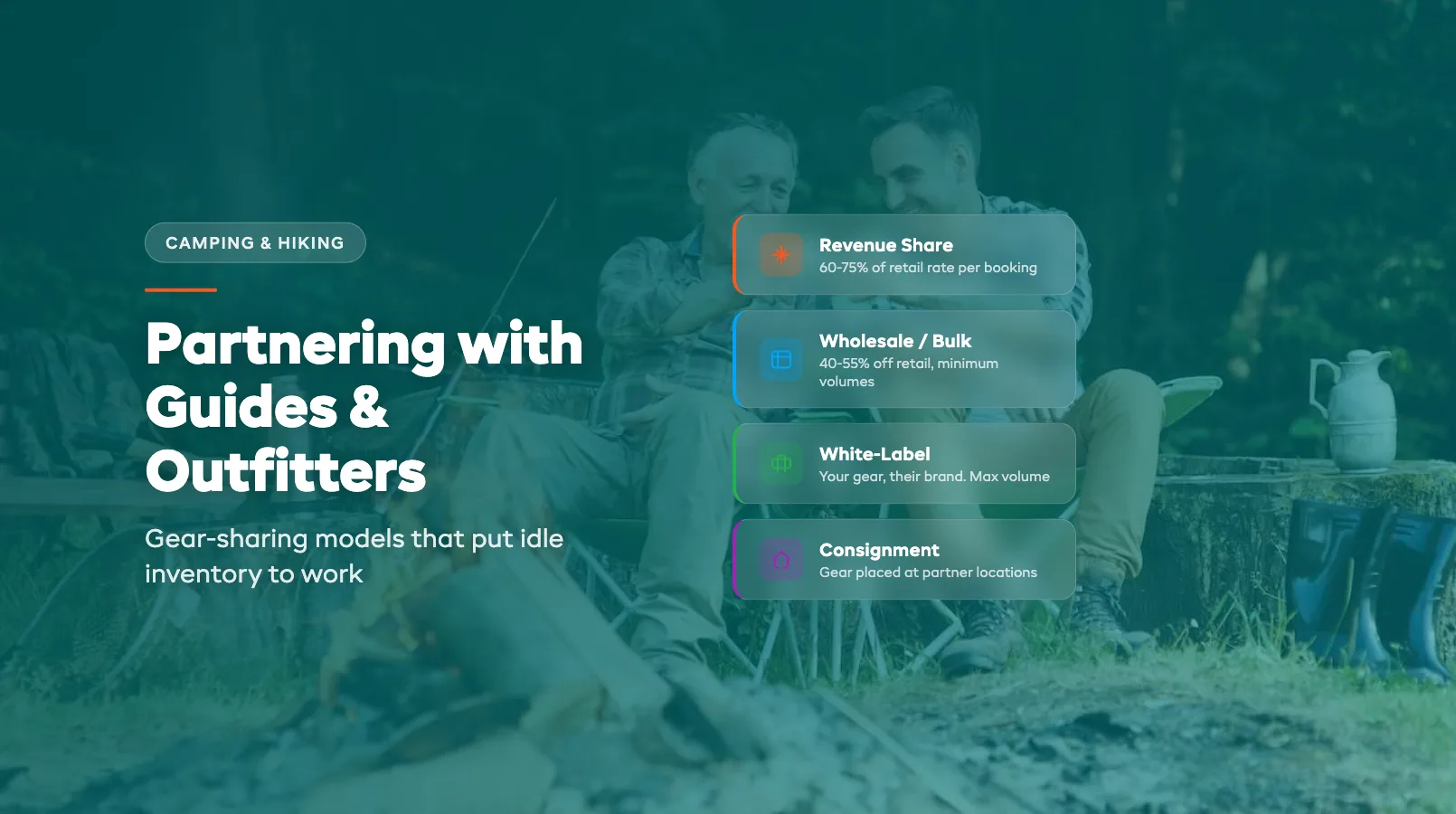 Guides
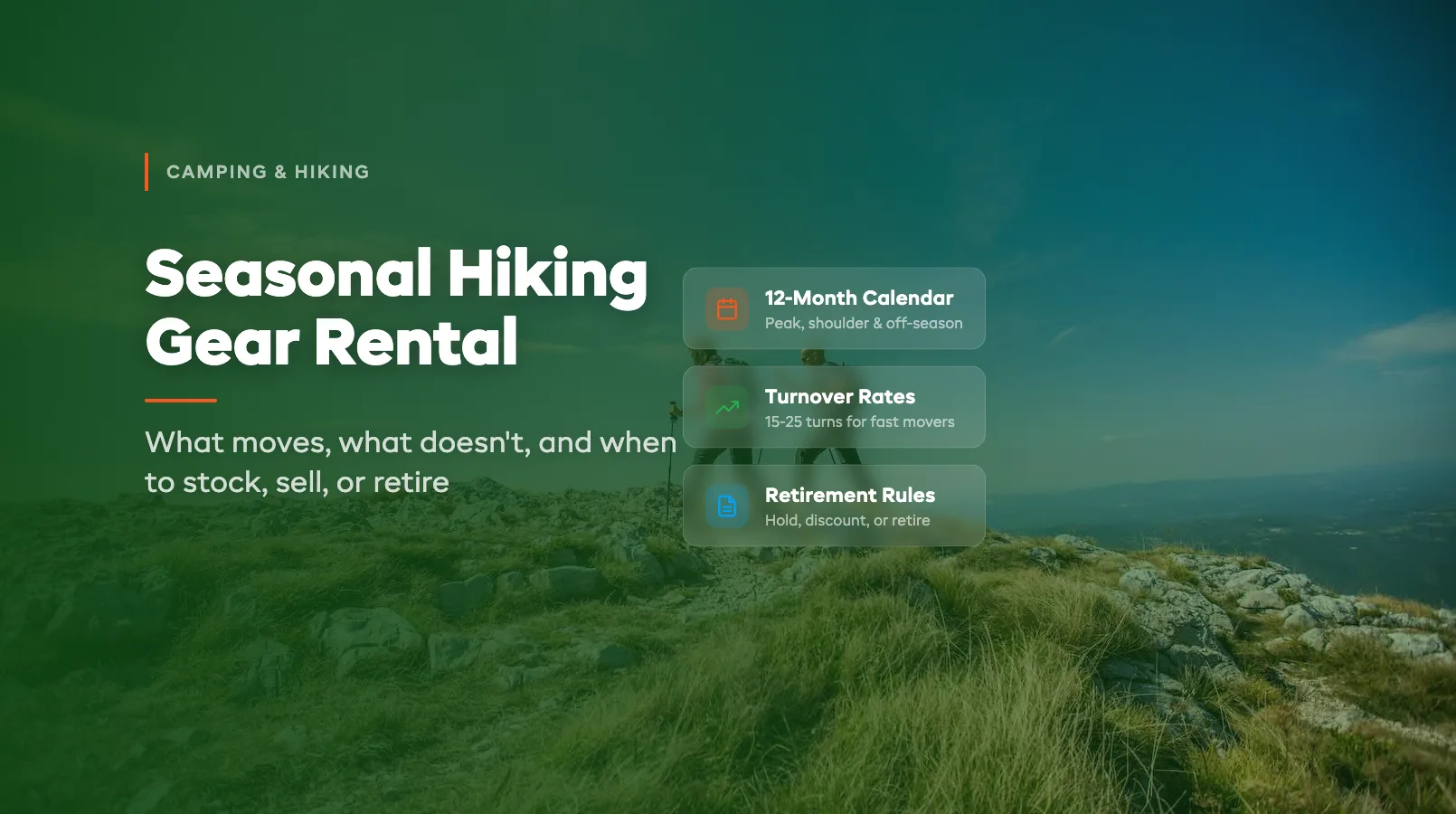 Guides
CAMPING GEAR RENTAL GLOSSARY
Quick reference answers to the terms that come up when researching camping gear rental software, kit-based operations, sanitization tracking and multi-day pricing. Want the full lexicon? Open the camping gear rental glossary below.
Camping gear rental software is a platform that manages every part of an outdoor gear rental operation — online trip-date bookings, kit inventory, completeness checks, sanitization logs, waivers, payments, repair tickets and customer comms — in one place. Modern systems like EquipDash replace the spreadsheet-and-clipboard setup most outfitters grew up on and add AI bots that handle the repetitive admin (pre-trip reminders, overdue chasers, review requests, sanitization queues) automatically.
Instead of renting items one-by-one (tent, then sleeping bag, then pad, then stove), shops bundle related gear into named kits — "2-Person Backpacking Kit", "Family Car Camping Kit", "Solo Winter Kit". The camper books the kit by trip dates; staff pack it as one unit using a completeness checklist that verifies every part (tent body, poles, stakes, footprint, rainfly, sleeping bag, pad, stove, fuel) is in the bag before the camper drives off. Kit-based rental cuts checkout time, raises average booking value, and prevents the trip-killer of arriving at a trailhead missing one critical part.
A multi-day pricing tier is a flat rate for a defined rental length (3-day, 5-day, 7-day) that's cheaper than simple per-day math. Campers see "$148 for 5 days" instead of "$30/day × 5 days = $150" — and the shop encourages longer rentals (better fleet utilization, less staff handling per booking). EquipDash lets you define unlimited tiers per kit plus a base per-day rate for anything outside the tiers, with peak-season multipliers for fall foliage weekends and holiday demand.
Sanitization is a manual operator workflow — staff clean items between rentals using cleaning templates (down-safe wash cycle for sleeping bags, backflush for water filters, high-heat sanitize for cookware) and log each step with their initials and a timestamp. EquipDash routes items needing cleaning to a sanitization rack on return, holds them out of bookable inventory until the cleaning checklist is signed off, then auto-returns them to the bookable pool. The audit trail shows "last sanitized" date and staff per item — useful if a camper ever raises a hygiene concern.
Trip-date booking means the camper picks the actual dates of their trip — "Sept 12 → Sept 16 Yosemite trip" — rather than "rent for 4 days starting today". This matches how campers plan (they've already booked their campsite or trail permit) and lets the shop pre-stage kits the night before, pre-text pickup reminders with the right pack list, and apply multi-day pricing tiers cleanly. EquipDash widgets default to trip-date booking with a date-range picker.
A kit completeness check is a tablet-based checklist that staff run at pickup and return to verify every component of a multi-part kit is present. A "2-Person Backpacking Kit" might have 18 listed parts — tent body, 2 poles, 8 stakes, footprint, rainfly, 2 sleeping bags, 2 pads, stove, fuel canister, lantern, 2 headlamps. Staff tick each off; missing parts are flagged before the camper leaves (at pickup) or before the next camper books the kit (at return). This is the single biggest operational difference between camping gear rental and most other rental verticals — it's the difference between a trip-killer and a clean rotation.
Best practice is to capture enough evidence at return that any disputed charge — a Stripe chargeback for a $40 stake-set replacement, an insurer query on a $300 tent-fly patch — is winnable. The four-step record: photo at return, written condition note, camper acknowledgement (or refusal), and a Stripe payment link sent for the charge. EquipDash automates this — staff flag the damage at the return scan, a repair ticket auto-creates with the photo, and the camper gets a polite text explaining the charge with a one-tap link to pay. That clean record is what wins a chargeback dispute.
Fleet utilization is the percentage of your gear-days that are actually booked over a period. A 30-kit shop renting an average of 5 days per booking has 900 kit-days of supply per month; if you booked 540 of those, your utilization is 60%. Multi-day camping rentals make this calculation different from same-day verticals (bike, kayak) — a single 7-day booking ties up the kit for a week. EquipDash reports utilization per kit type (Solo Backpacking, 2-Person Backpacking, Family Car Camping) so you know which kits to add to the fleet, which to retire at end of season, and which to rotate into a multi-purpose role.
A sanitization audit trail is the per-item record of every cleaning cycle the gear has been through — sleeping bag #BAG-042 was returned 14 Sept, wash cycle started 14 Sept 6:12pm by staff TM, tumble-dry completed 15 Sept 8:04am by staff JR, re-bagged and back on shelf 15 Sept 9:11am. Useful both internally (catches missed cleaning before a complaint) and externally (an honest answer to "when was this sleeping bag last cleaned?" beats a guess). EquipDash builds the trail automatically as staff complete cleaning templates; no separate spreadsheet to maintain.
Most outfitters send four touchpoints by SMS: pre-trip pack-list + pickup reminder (the night before pickup), waiver chase (12 hours before pickup, if unsigned), overdue follow-up (24 hours past return, with extension offer), and review request (24 hours after return). Each one is a small touch but stacked together they cut no-shows by 40–60%, recover late-return revenue, and lift your Google rating. EquipDash ships these as pre-built Dash Bots — no scripts to write, no SMS provider to wire up.
Yes. Climbing gear (harnesses, ropes, cams, slings, helmets) has strict retirement criteria from UIAA and individual manufacturers (typically 5–10 years from manufacture, sooner if flagged for impact or UV exposure). EquipDash tracks per-asset age, use cycles and fall logs, and surfaces items approaching their retirement window so the shop can replace ahead of expiry. Note: EquipDash does not currently scan tags or RFID for impact events — that data is logged manually when an item is returned with a noted fall.
GLOSSARY
60+ camping, hiking and climbing gear rental terms every outfitter, counter staffer and trailhead outpost lead should know — from kit completeness and sanitization audit trails to multi-day pricing tiers, trip-date booking and the rental-ops terminology that makes pre-Labor-Day Saturdays predictable.
FREQUENTLY ASKED QUESTIONS
Real questions from outfitters and outdoor gear rental shops evaluating EquipDash. If yours isn't here, get in touch.
Contact UsPlans start at $29/month, or $23/month billed annually. 21-day free trial, no card. There is a 1–2% platform fee you can pass to the camper at checkout — so unlike FareHarbor or Peek Pro pulling 1–6% off your top line, your margin stays yours.
Start your free 21-day trial and explore every feature, including Dash AI and Dash Bots. No credit card, no commitment.
