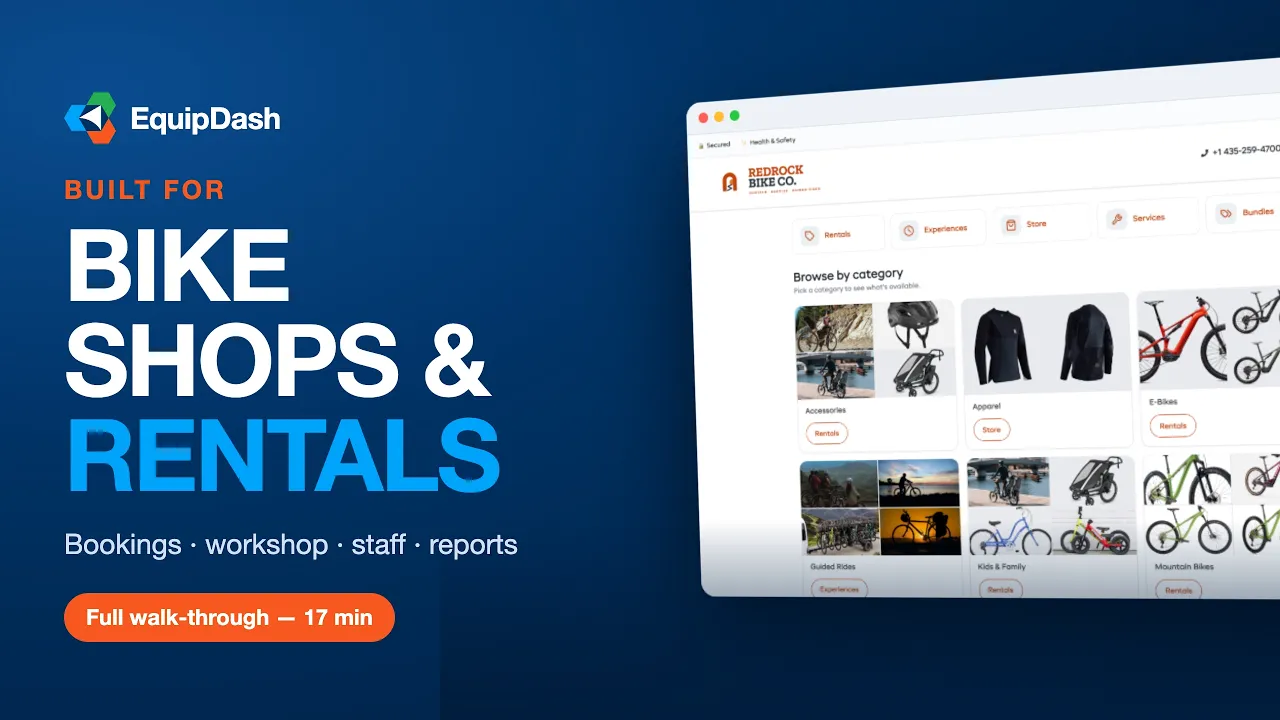
EquipDash runs bike rentals and tours in one system, with fleet tracking, waivers, walk-ins and repair jobs.


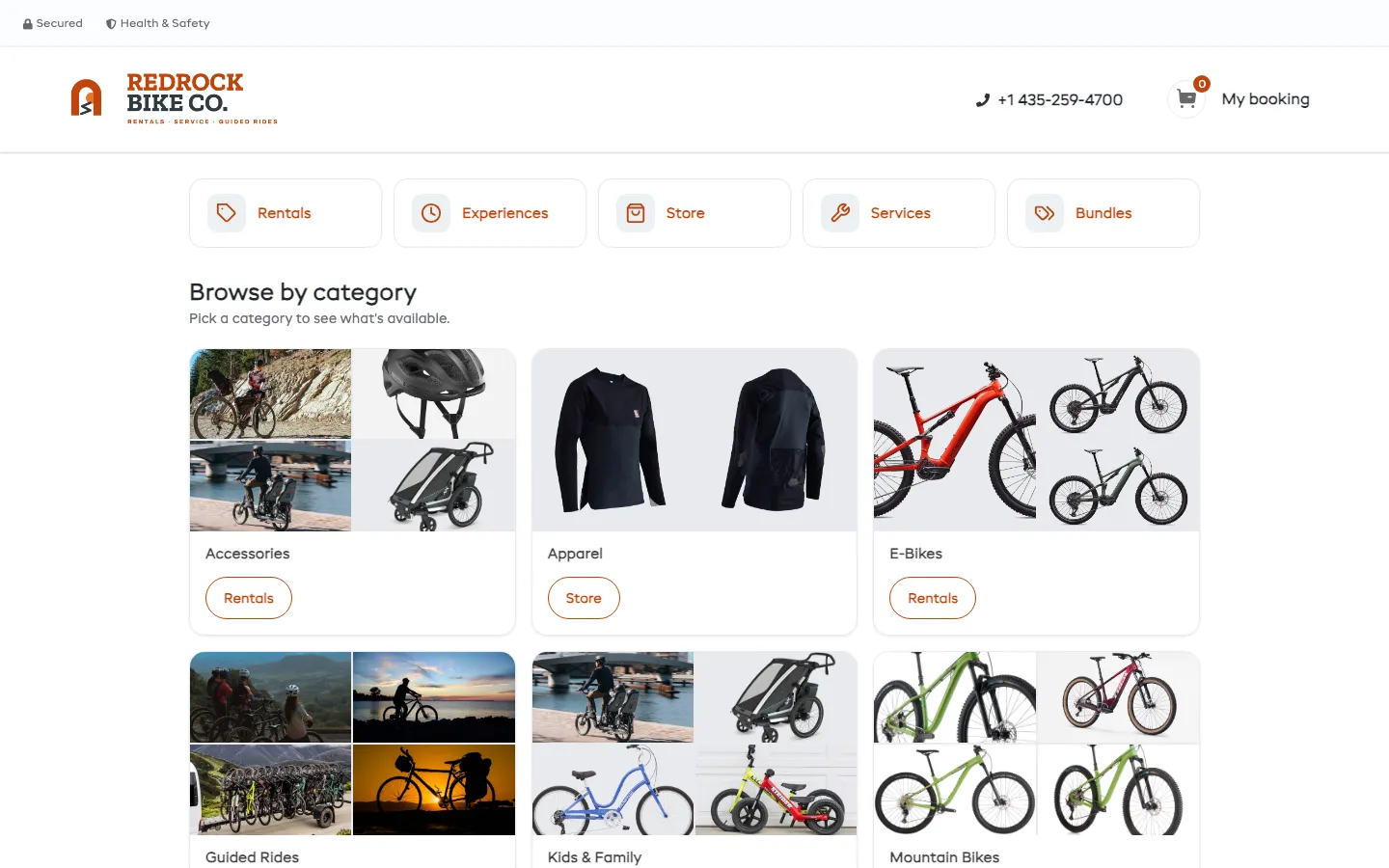
They pick it on your own booking page, branded as your shop, sitting on your website and quick on a phone.

Dash answers on your booking page and on the phone, from your own catalog and prices, and puts the right bike in the cart.
Pickups, returns and bikes still out on the trail, on your computer or your phone, with Dash one question away.

Every waiver is signed before they walk in, and every bike is scanned on its way out.
Bikes, helmets, locks, waivers and payment go on one counter screen, with no second till to reconcile.

Each one pulls the rider's details from the booking, so nobody copies and pastes at 11pm.
Your second location runs on a phone. Check the bike back in out there and the shop in town sees it right away.
Dash shows what the late bikes are worth. Riders get a text with a link to extend and pay, so nobody chases them.
Damage flagged at return becomes a workshop ticket with the photo, the rider and a deadline attached.
Rentals, guided rides and the store each have their own numbers, or ask Dash and read the answer in plain words.
Describe a job in a sentence and a bot does it every day, asking you first when it should.
Free resources
Bike rental shops in our directory, by town.
Free checklists for bike shops. Use them as they are, or import them into EquipDash.
Ready-made bots for bike shops. Turn one on in Dash in a few seconds.
Bike rental terms, explained.
Bike rental software is a platform that manages every part of a bike rental operation — online bookings, fleet inventory, waivers, payments, workshop tickets, and customer comms — in one place. Modern systems like EquipDash replace the spreadsheet-and-paper-diary setup most shops grew up on and add AI bots that handle the repetitive admin (overdue chasers, review requests, peak-day staffing alerts) automatically.
A rider visits your website, picks a date and bike type from an embedded booking widget, signs a digital waiver on their phone, and pays a deposit or the full rental via Stripe. The booking lands in your dashboard in real time, your inventory drops by one unit for those dates, and an SMS pickup reminder fires automatically the day before. They walk into the shop already paid and signed — counter time drops from 12 minutes to 4.
Bike rental is a transactional model — a rider books a specific bike from your fleet for a defined period (an hour, a day, a week) and returns it to your shop. Bike sharing is membership-based and station-based: riders pay a subscription and grab any bike from any docking station, returning it to any other station. EquipDash is built for rental — for shops that own their fleet and need fit, waiver, and pickup workflows. Bike sharing platforms are a different category entirely (Lyft Bikes, BCycle).
A workshop ticket is the record of a repair, service, or condition issue for a specific bike in your fleet. It captures the bike asset ID, the issue (brake pads worn, gear cable stretched, flat tire), the photo evidence taken at return, the rider booking that flagged it, the assigned technician, the parts cost, and the deadline before the bike is back in rotation. In EquipDash, workshop tickets auto-create when staff flag damage at return — the bike drops out of bookable inventory until a tech signs it off.
Most U.S. and Canadian bike rental shops require a signed liability waiver before handing over a bike — partly for insurance, partly to clarify policies (helmet use, damage liability, after-hours returns). Digital waivers replace the paper clipboard at the counter: riders sign on their phone before they walk in, the signed PDF attaches to their booking record automatically, and you can pull a clean export for an insurer in seconds. Guardian signatures handle minors.
Best practice is a four-step record: photo at return, written condition note, rider acknowledgement (or refusal), and a Stripe payment link sent for the charge. EquipDash automates this — staff flag the damage at the return scan, a workshop ticket auto-creates with the photo, and the rider gets a polite text explaining the charge with a one-tap link to pay. That clean record is what wins a Stripe dispute if the rider chargebacks the card.
ABC is Air, Brakes, Chain — the three-point safety check every rental bike should pass before it leaves the shop. Air: tire pressure correct for the rider's weight. Brakes: pads have material, lever has bite, no rub on the rotor. Chain: lubricated, no stiff links, derailleur shifts cleanly. EquipDash ships a free ABC checklist template — staff tick it off in 60 seconds at hand-off, and the timestamp is stored against the bike's service history.
A bike rental shop hands a bike to a rider for self-guided use; a bike tour operator runs a scheduled experience (a 3-hour guided coastal ride, a multi-day mountain trip) with a guide leading the group. Most operators run both — rentals fill the calendar between scheduled tours. EquipDash handles both on one dashboard: rentals get a fleet booking, tours get a manifest + guide assignment + route notes, and the same waiver flow covers both.
Fleet utilization is the percentage of your bike-hours that are actually booked over a period. A 50-bike shop open 12 hours a day for 30 days has 18,000 bike-hours of supply; if you booked 6,000 of those, your utilization is 33%. Good shops in peak season run 60–80%. EquipDash reports utilization per bike type and per location so you know which frame sizes to add to the fleet and which to thin out at end-of-season.
Not if your rental software has a built-in POS. Older operations run two separate systems — a booking platform for online + a Square/Clover till at the counter — which means end-of-day reconciliation between the two and double-entry for walk-in rentals. EquipDash includes a tap-to-pay POS so a walk-in family of four is rung up on the same screen as the online bookings, one Stripe deposit, one set of reports.
Most rental shops send four touchpoints by SMS: pickup reminder (24 hours before), waiver chase (12 hours before, if unsigned), overdue follow-up (2 hours past return time, with extension offer), and review request (1 hour after return). Each one is a small touch but stacked together they cut no-shows by 40–60%, recover late-return revenue, and lift your Google rating. EquipDash ships these as pre-built Dash Bots — no scripts to write, no SMS provider to wire up.
Yes. E-bikes can be set up with their own pricing, deposit, and damage policy, plus battery-range and charging custom fields captured at booking. Workshop tickets, service logs, and per-asset maintenance schedules apply the same way they do to standard bikes — so techs catch a worn brake pad or a degraded battery before a rider runs out of charge mid-ride. The booking flow is otherwise identical to a standard rental.
BLOG
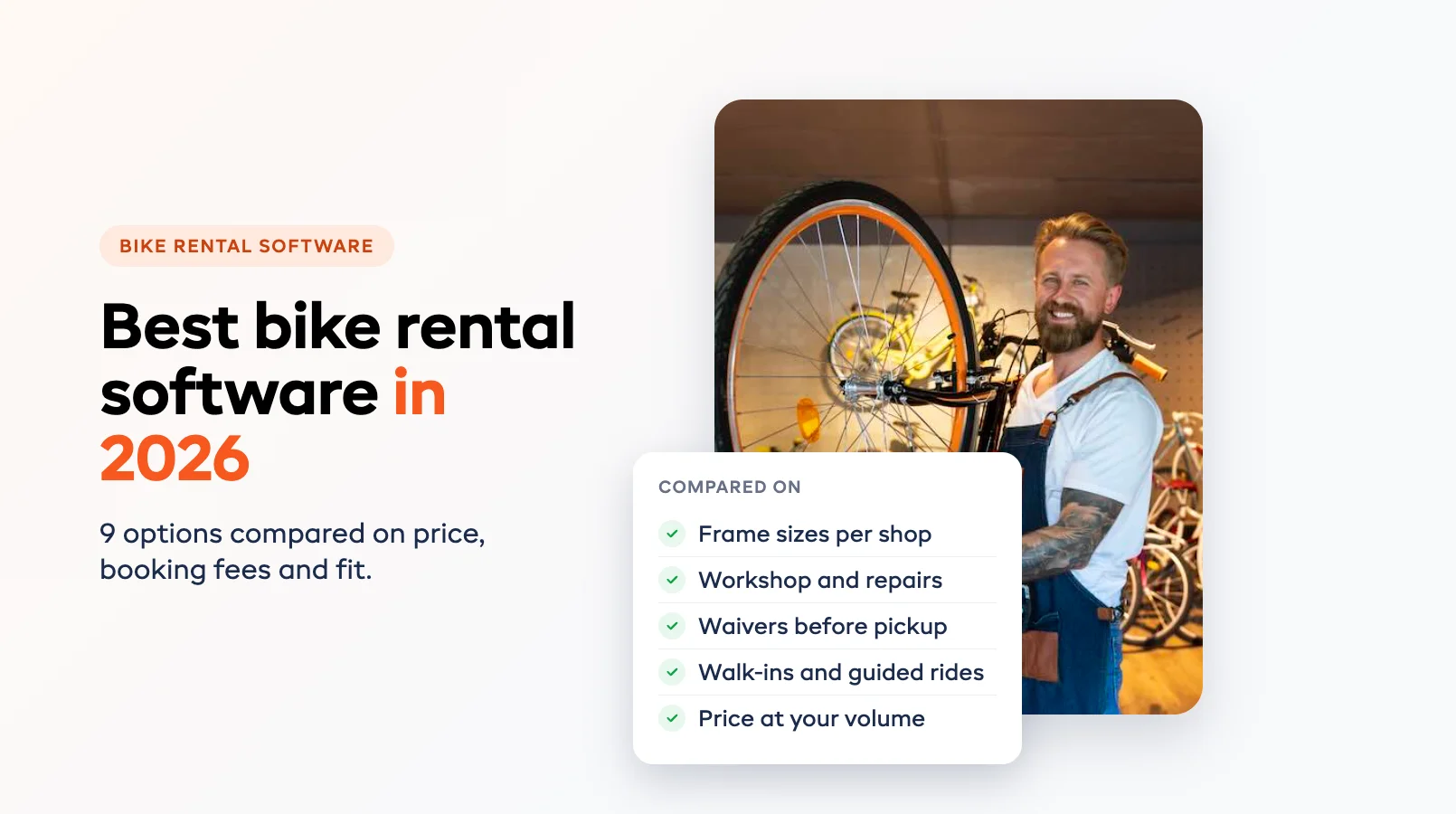 Comparisons
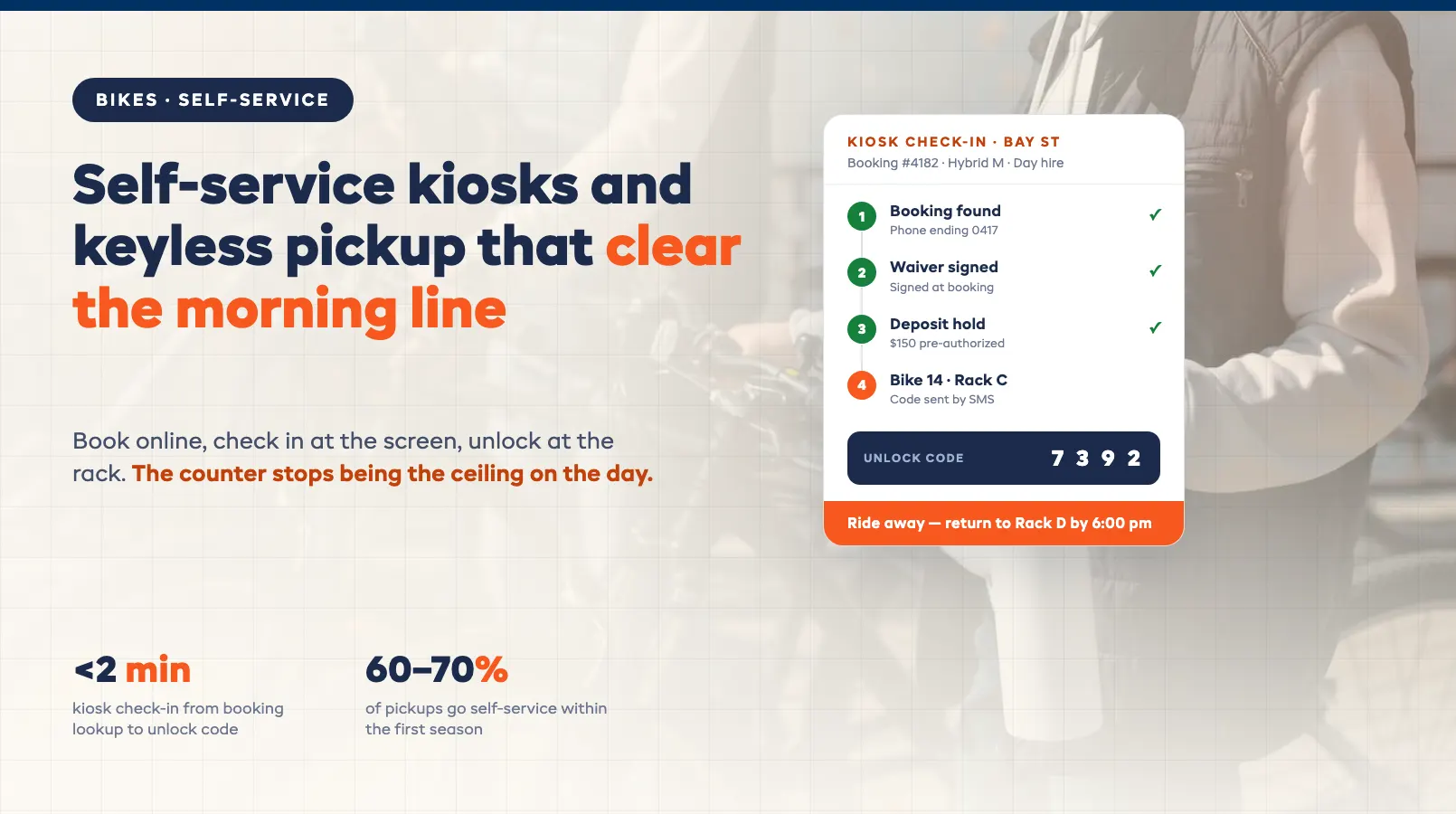 Guides
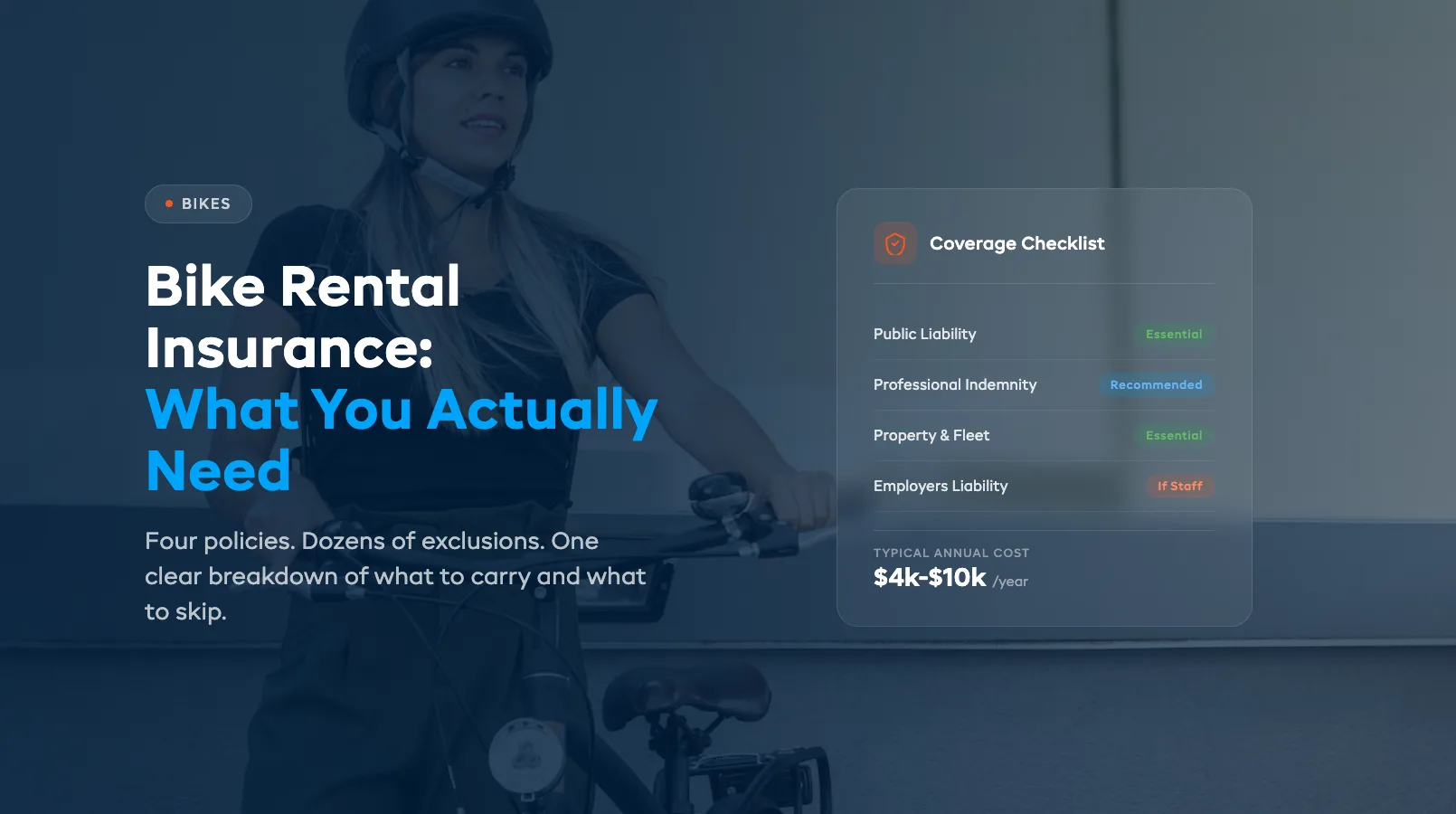 Guides
 Guides
 Guides
 Guides
Other industries






FREQUENTLY ASKED QUESTIONS
Real questions from bike rental shop owners and bike tour operators evaluating EquipDash. If yours isn't here, get in touch.
Contact UsPlans start at $29/month. 21-day free trial, no card. There is a 1–2% platform fee you can pass to the rider at checkout — so unlike FareHarbor or Peek Pro pulling 1–6% off your top line, your margin stays yours.
Start your free 21-day trial and explore every feature, including Dash AI and Dash Bots. No credit card, no commitment.