SUP & Kayak Rental Pricing: Hourly, Half-Day, Full-Day, Multi-Day
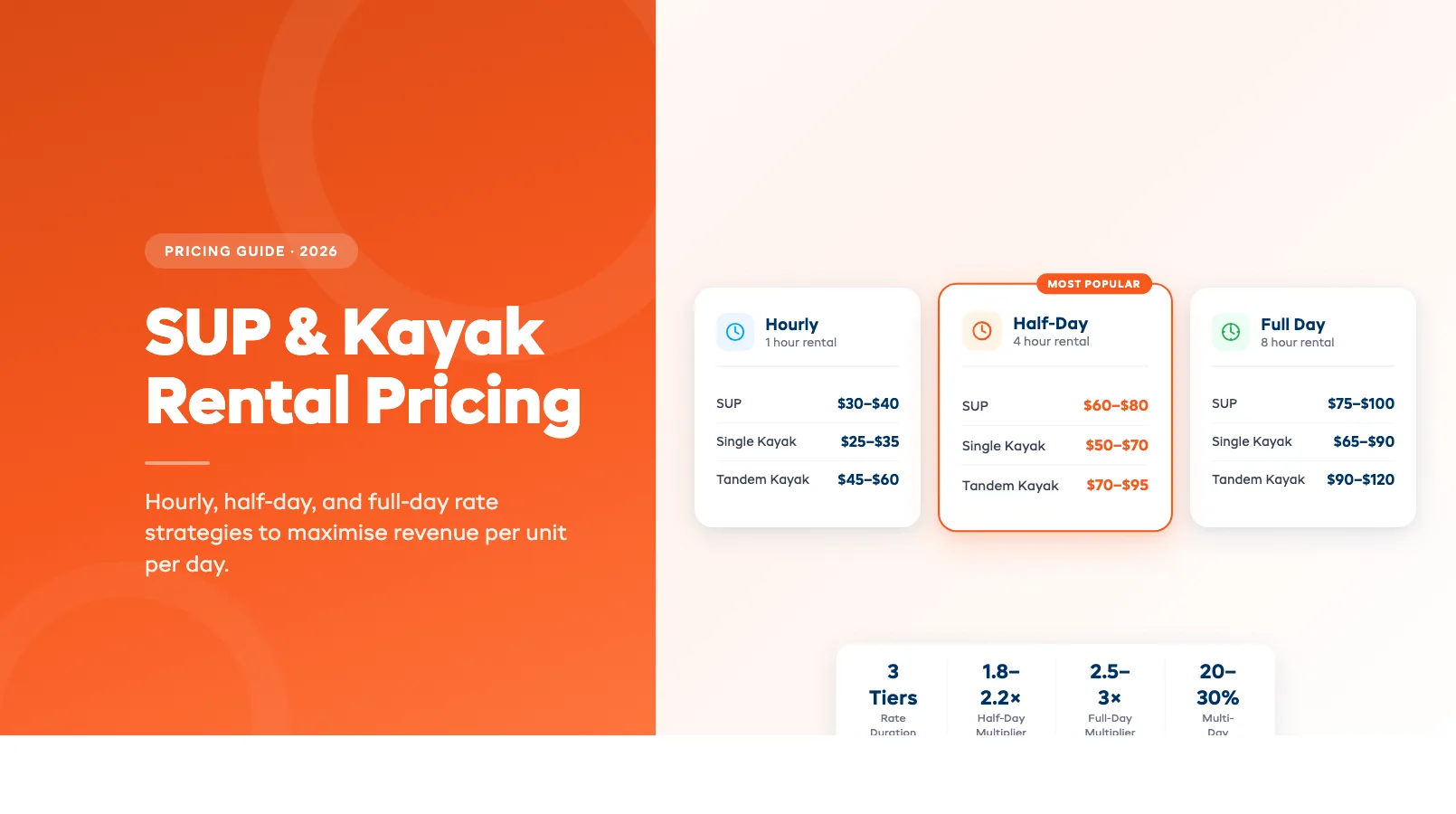
You set your kayak rental pricing once, taped a laminated sheet to the counter, and haven't looked at it since. Meanwhile, the shop two docks over is running half-day packages, early-bird specials, and group rates that pull families straight past your sign. Pricing isn't a set-and-forget decision — it's the single biggest lever you have for revenue per unit per day.
This guide breaks down real 2026 market rates for SUP and kayak rentals, shows you where the break-even points land for hourly vs half-day vs full-day, and gives you a framework for packages, group discounts, peak surcharges, and upsells that actually move the needle. For the full operational picture — fleet, staffing, safety, tech — see our complete water sports rental business guide.
Current Market Rates by Geography
Kayak rental pricing and SUP rental pricing vary more by location than by equipment type. A single kayak hour in rural Wisconsin looks nothing like a single kayak hour in Maui. Here are 2026 benchmarks across three location tiers:
| Duration | Budget Market (rural lakes, rivers) | Mid-Range (coastal towns, popular lakes) | Premium Market (resort areas, islands) |
|---|---|---|---|
| SUP — 1 hour | $20–$25 | $30–$40 | $45–$60 |
| SUP — half-day (4h) | $40–$55 | $60–$80 | $85–$120 |
| SUP — full day | $55–$70 | $75–$100 | $110–$150 |
| Single kayak — 1 hour | $18–$25 | $25–$35 | $40–$55 |
| Single kayak — half-day | $35–$50 | $50–$70 | $75–$100 |
| Single kayak — full day | $50–$65 | $65–$90 | $95–$130 |
| Tandem kayak — 1 hour | $30–$40 | $45–$60 | $60–$80 |
| Tandem kayak — half-day | $55–$70 | $70–$95 | $95–$130 |
| Tandem kayak — full day | $70–$90 | $90–$120 | $130–$170 |
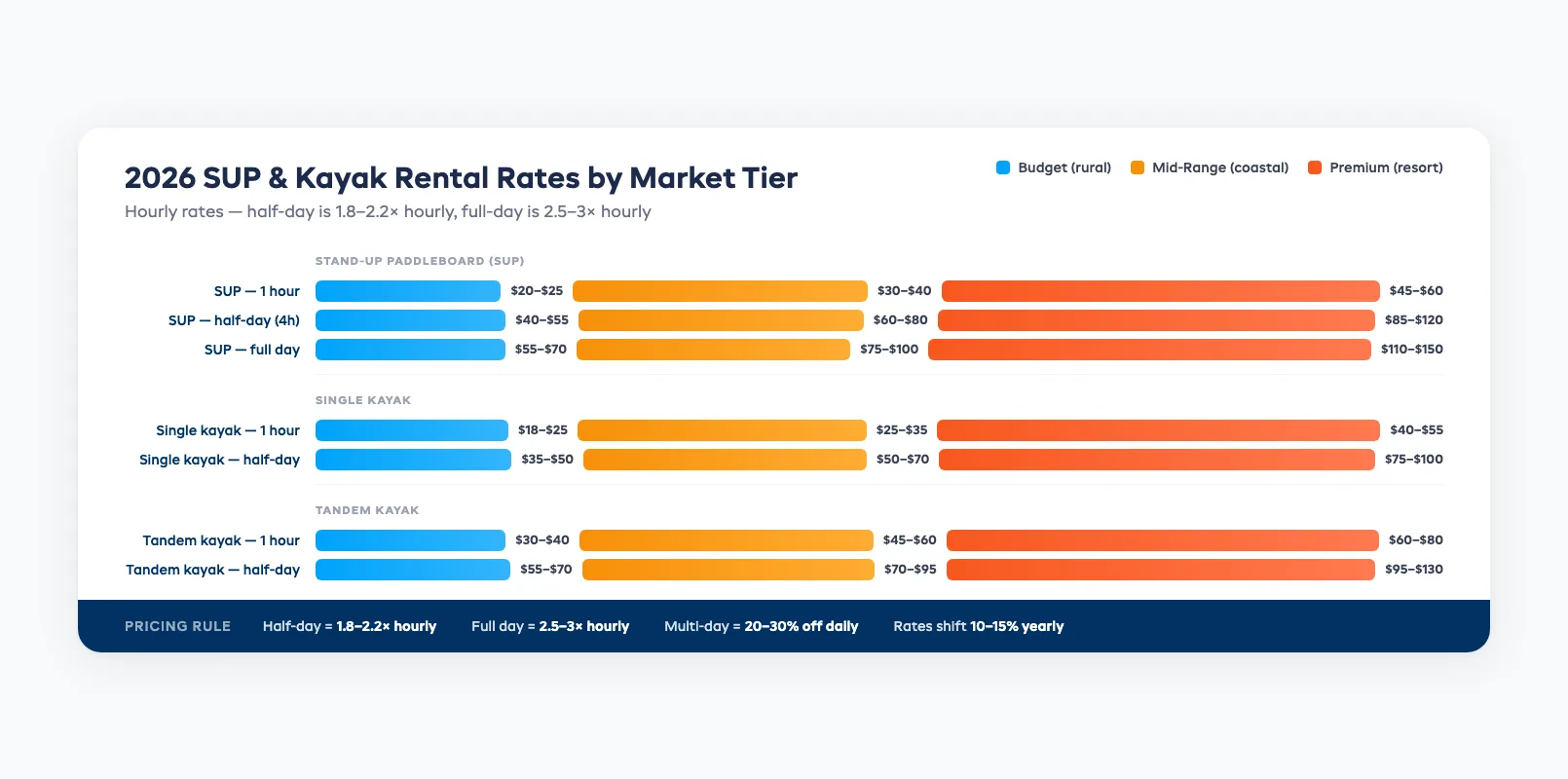
Where do you fit? If your shop is within walking distance of hotels or vacation rentals, you're in the premium tier regardless of your town's size. If customers drive 20+ minutes to reach you, you're competing on value and need budget or mid-range pricing to fill units.
These numbers shift 10–15% year to year. Track competitors quarterly — not just their posted rates, but their package structures and what shows up on Google when someone searches "kayak rental near me" in your area.
For the broader pricing context across all water sports activities, the water sports hub covers how rates fit into the full vertical.
Hourly vs Half-Day: Where the Break-Even Lands
The hourly rate is your highest per-minute revenue. But it's also your highest turnover cost — every hour rental means another check-in, safety briefing, gear handoff, and return inspection. The real question: when does a half-day rental make you more money than two hourly rentals in the same window?
The math:
Say your 1-hour SUP rate is $35 and your half-day (4-hour) rate is $70.
- Two hourly rentals in 4 hours: $35 × 2 = $70, minus 20 minutes of turnaround between rentals (briefing, inspection, cleaning). You also need a third customer to fill the remaining ~2.5 hours — if they don't show, that unit sits idle.
- One half-day rental: $70, zero turnaround, unit occupied for the full window. Your dock staff handles one check-in instead of two or three.
The break-even is simple: if your dock can consistently fill 3+ hourly slots per half-day window, hourly wins on revenue. If occupancy is inconsistent (weekdays, shoulder season, bad weather days), half-day pricing wins because it locks in revenue for the full block.
The pricing sweet spot:
Set your half-day at 1.8×–2.2× your hourly rate. At 2× ($35/hr → $70 half-day), the customer feels like they're getting a deal while you guarantee 4 hours of utilization. Above 2.5×, the half-day feels expensive and customers default to hourly.
For full-day rates, price at 2.5×–3× hourly. A $35/hr SUP at $95/day gives the customer a clear incentive to commit for the day — and you a unit that's booked, not waiting for walk-ups.
Multi-day discounts make sense for vacation destinations. Offer 20–30% off the daily rate for 3+ days. A family renting four SUPs for three days at 25% off is $855 in revenue you'd never capture at hourly rates — those boards would sit idle Monday through Thursday otherwise.
Use a pre-rental inspection checklist at every handoff regardless of rental duration. The time cost is 2–3 minutes; the liability protection is worth every second.
Package Pricing That Increases Average Transaction Value
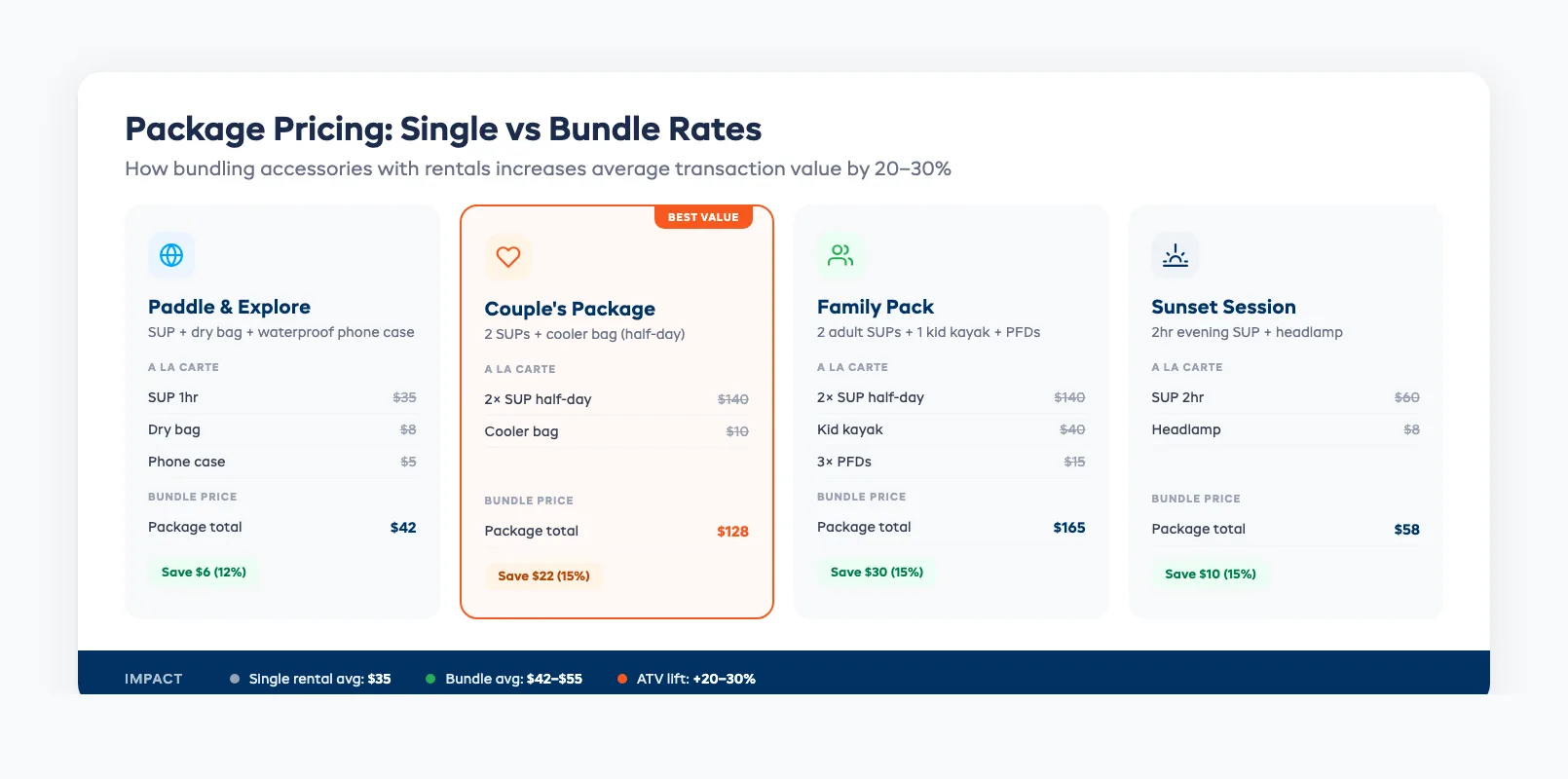
Single-item rentals are your baseline. Packages are where margin grows. The goal: bundle items customers already want together, price the bundle 10–15% below à la carte, and watch average transaction value climb 30–50%.
Packages that work for SUP and kayak shops:
- "Paddle & Explore" — SUP or kayak + dry bag + waterproof phone case: Price at $5–$8 above the standalone rental. The add-ons cost you $0.50–$1.00 per use in depreciation. A $35/hr SUP becomes $42 with the package.
- "Couple's Package" — 2 SUPs or 1 tandem kayak + cooler bag: Couples are your most predictable segment. Offer 10% off two singles or 5% off a tandem-plus-cooler. The cooler bag costs you $2/use and creates a longer rental (they pack lunch, stay longer, feel good about the value).
- "Family Pack" — 2 adult SUPs + 1 kid kayak + PFDs included: Families hate surprises at the counter. An all-in price that includes PFDs and a kid-sized unit removes friction. Price at 15% below the sum of parts.
- "Sunset Session" — 2-hour evening rental + headlamp: Exclusive to the last 2-hour window before dark. Creates urgency ("only 8 spots tonight"), fills a time slot that often goes empty, and the headlamp adds a wow factor at zero marginal cost after the initial investment.
Bundle pricing rules:
- The bundle must save the customer real money vs buying each item separately. A fake bundle (same total price) destroys trust.
- Keep packages to 3 items max. More than that confuses the counter conversation.
- Display the package next to the à la carte prices so the savings are obvious.
Track which packages sell and which don't. If a package isn't moving after 3 weeks, kill it and try something else.
Group and Corporate Rates
Groups are volume plays. A birthday party of 12 or a corporate team-building outing of 20 fills your dock in one booking. The discount is worth it because:
- One booking, one waiver batch, one safety briefing
- Guaranteed utilization for 2–4 hours (no idle units)
- High referral potential — every person in that group is a future individual customer
Recommended group discount tiers:
| Group Size | Discount | Example (single kayak, 2hr @ $50) |
|---|---|---|
| 4–7 people | 10% off | $45/person |
| 8–14 people | 15% off | $42.50/person |
| 15–24 people | 20% off | $40/person |
| 25+ people | Custom quote | Negotiated |
Corporate outings command slightly different pricing. Companies expect an invoice, advance confirmation, and a dedicated host or guide. Charge a flat "event coordination fee" of $100–$200 on top of discounted per-person rates. This covers your extra admin and makes the booking feel premium.
Schools and youth groups get the deepest discounts (25–30%) but bring the highest volume and repeat year after year. A summer camp that books 30 kayaks every Wednesday for 8 weeks is 240 rental-days — worth more than any single premium customer.
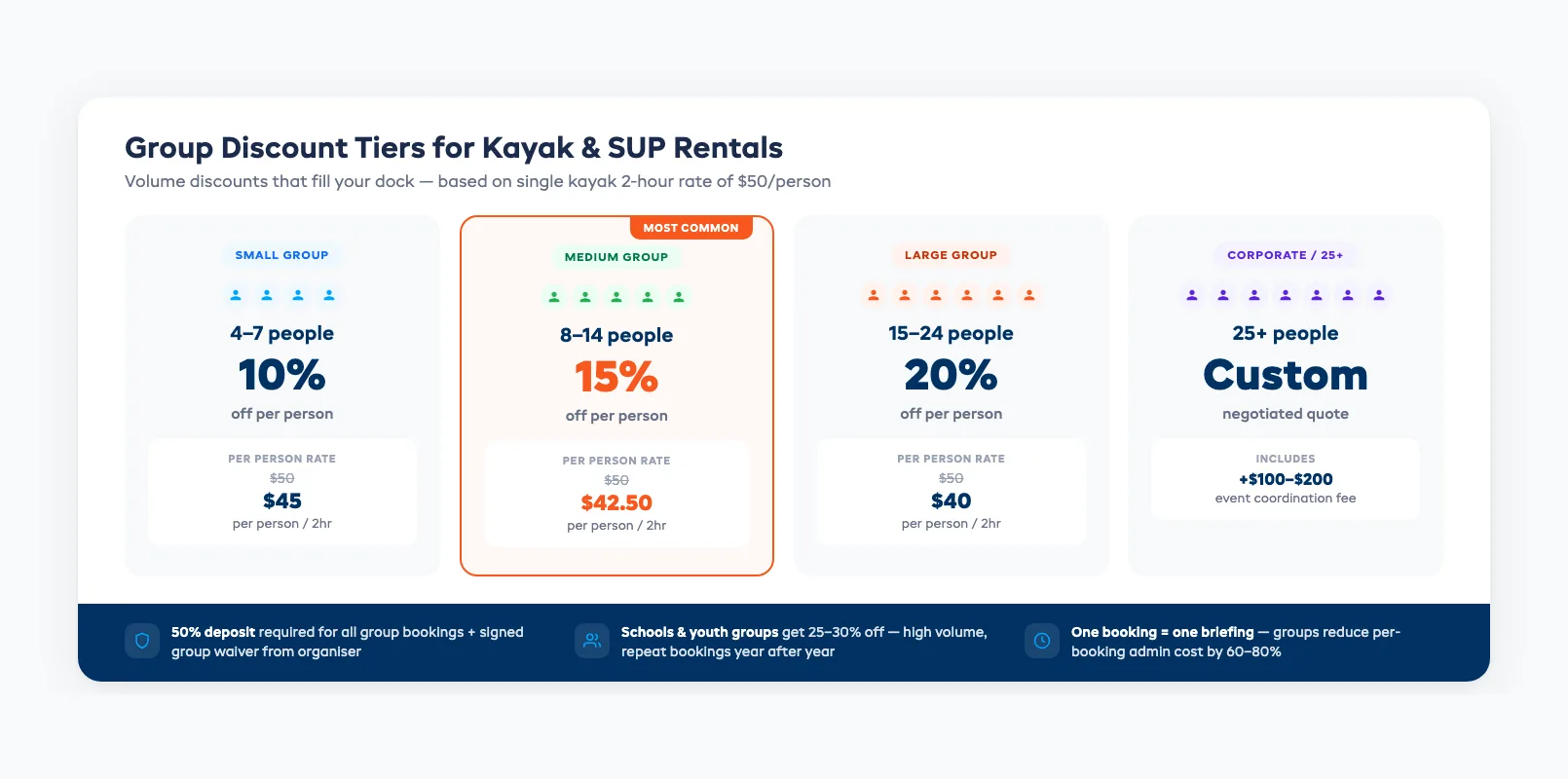
Require a 50% deposit for all group bookings and a signed group waiver from the organizer. Your waiver chaser agent can automate the follow-up so you're not manually emailing 20 people for signatures.
Peak and Off-Peak Pricing
If you charge the same rate on a rainy Tuesday in October as you do on Fourth of July weekend, you're leaving money on the table in July and scaring away customers in October.
Peak pricing (15–25% surcharge):
- Weekends (Sat–Sun) during summer season
- Public holidays (Memorial Day, Fourth of July, Labor Day, local festivals)
- School break weeks (spring break, summer holiday starts)
- Special events (regattas, triathlons, waterfront festivals)
Post peak pricing clearly on your website, booking page, and at the counter. Customers accept surcharges when they see them upfront. They leave angry reviews when they find out at checkout.
Off-peak incentives (15–25% discount):
- Weekday mornings (typically your slowest window)
- Shoulder season (the 3–4 weeks before and after peak)
- Early bird bookings (reserved 7+ days in advance)
- Rainy-day vouchers (book today, come back when the sun returns)
The goal isn't to fill every slot at a discount — it's to shift marginal customers from peak to off-peak. If Tuesday mornings run at 20% utilization and Saturday afternoons are at 95%, a weekday deal moves some demand without cannibalising your best hours.
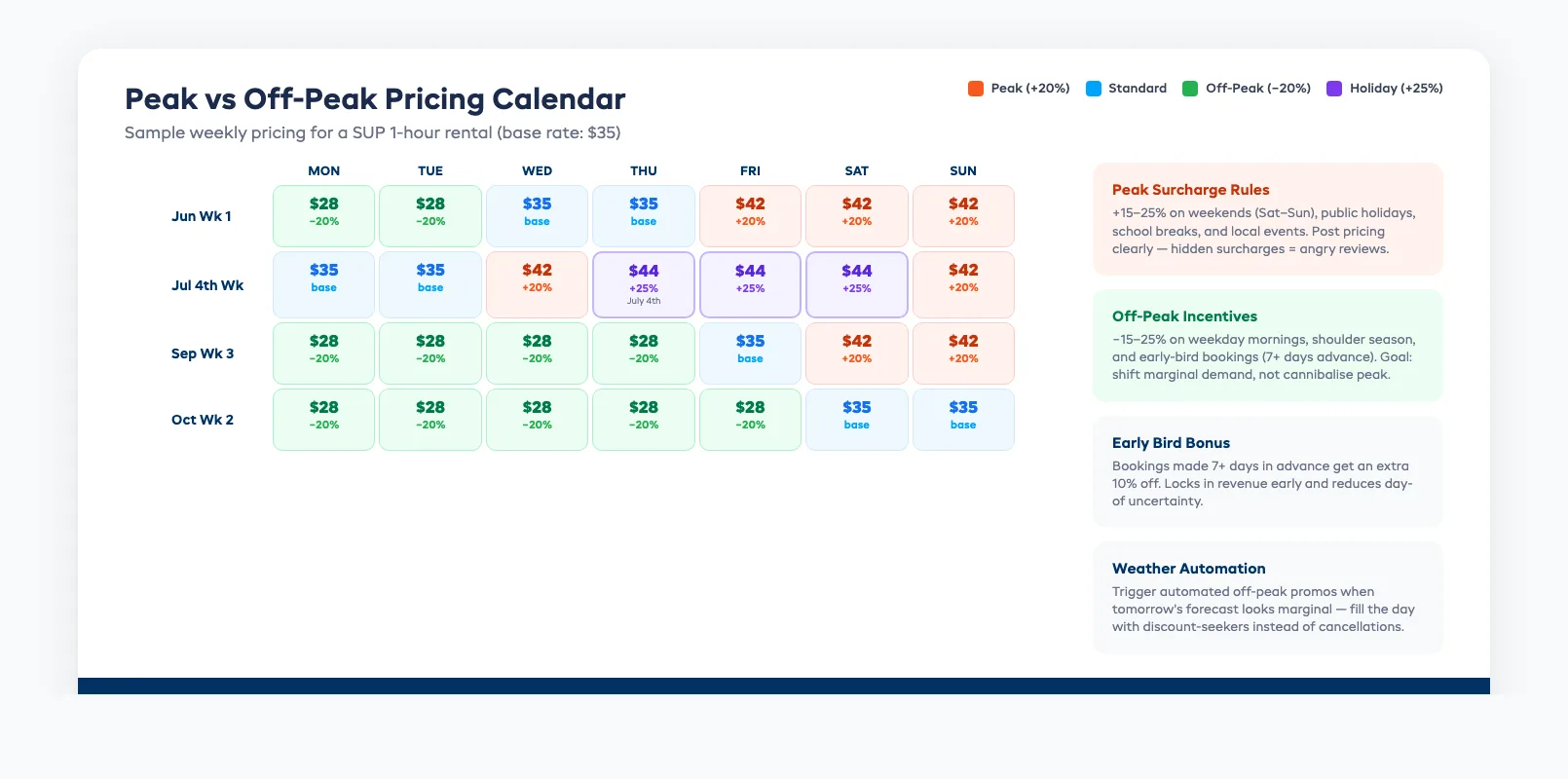
A weather alert agent that monitors conditions can trigger automated off-peak promotions to your email list when tomorrow's forecast looks marginal. Instead of losing the day to cancellations, you fill it with discount-seekers who don't mind clouds. For the complete reschedule-first playbook that turns weather days into retained revenue, see our weather operations guide.
Upsell Anchors: Turning a $30 Rental Into $55
Upsells work when they solve a problem the customer didn't know they had until they're standing at your counter. The best upsells for SUP and kayak rentals:
At booking (online or phone):
- Guided tour add-on ($20–$40): Works for first-timers. A 30-minute guided paddle before their solo rental removes anxiety and increases the chance they'll come back. If you're offering lessons, factor in the additional insurance overhead — see our lesson liability guide for coverage requirements.
- Photo package ($15–$25): A waterproof camera rental or a staff photographer for groups. Low cost, high perceived value.
- Delivery to hotel/campsite ($25–$50): For vacation markets. Saves the customer a drive and opens up waterfront locations you don't have a physical presence on.
At the counter (walk-ups):
- Wetsuit or rash guard ($10–$15): Essential upsell for morning rentals, shoulder season, and cooler-water locations.
- Dry bag ($5–$8): The customer always has a phone, wallet, and car keys. A dry bag solves an immediate problem.
- Upgraded equipment ($10–$15): Offer a premium board or a touring kayak for a small upcharge. "For $10 more, you get our carbon-fibre paddle — lighter, easier on your shoulders for a 2-hour paddle."
After the rental:
- Return discount ("Come back this week for 20% off"): Captures the post-experience high. Print it on the receipt.
- Season pass: If they're local, offer 10 rentals for the price of 7. Locks in repeat revenue and turns a tourist into a regular.
The key: train your dock staff to offer upsells naturally, not as a sales pitch. "Heading out for 2 hours? Grab a dry bag — keeps your phone safe if you take a swim" works. "Would you like to add our premium package for just $15 more?" doesn't.
For operators managing high volumes of add-ons across multiple rental types, standardize terminology with your team so every dock staffer quotes the same prices and describes packages the same way. Consistency at the counter builds trust. If you're expanding to a second location, keeping pricing identical across sites is critical — see our multi-location scaling guide.
FAQ
What's the average hourly rate for SUP rentals in 2026?
SUP rental pricing ranges from $20–$25/hour in budget markets (rural lakes) to $45–$60/hour in premium resort areas. The national mid-range average is $30–$40/hour. Your rate should reflect your location, demand, and equipment quality — not just what the shop next door charges.
Should I offer multi-day kayak rental discounts?
Yes, especially in vacation destinations. A 20–30% discount on 3+ day rentals captures revenue that would otherwise go to zero — those units typically sit idle midweek. A family renting for 3 days at 25% off is still more profitable than 3 separate 1-hour rentals with turnaround costs.
How much should I discount for groups?
Start at 10% off for groups of 4–7, scaling to 20% for 15–24. The discount is justified because groups reduce your per-booking admin cost, guarantee utilization for the rental window, and generate referrals. Always require a deposit and use a digital waiver system for efficiency.
When should I raise prices for peak season?
Apply a 15–25% surcharge on weekends, public holidays, school breaks, and local event days. Post the surcharge on your website and booking page before the customer arrives. Hidden surcharges generate negative reviews. Clear surcharges set expectations.
How do I price SUP and kayak packages?
Bundle 2–3 items (rental + accessory + add-on) and price the package 10–15% below the à la carte total. A SUP rental + dry bag + waterproof phone case for $42 instead of $48 feels like a deal and increases your average transaction value by 20–30%.
What upsells generate the most revenue per rental?
Guided tour add-ons ($20–$40) and wetsuit/rash guard rentals ($10–$15) deliver the highest return. Guided tours are high-margin if your staff is already on the dock. Wetsuits cost $1–$2 per use in depreciation and solve a real comfort problem for the customer. For the full breakdown on wetsuit care and cost-per-rental math, see our soft gear guide.
Should I match competitor pricing?
Not automatically. Competing on price alone is a race to the bottom. Instead, compare your package structure, equipment quality, and customer experience. If the shop next door charges $5 less per hour but doesn't offer packages, online booking, or clean gear, your higher rate is justified — just make sure customers understand the difference.
Pricing is the lever. Pull it intentionally — based on your numbers, your location, and your customer mix — and every unit on the water earns more per hour. Start with the rate table above, adjust for your market tier, and build packages that make the customer feel smart for spending more.
For the full operator playbook covering fleet, staffing, safety, and tech alongside pricing, read our complete guide to running a water sports rental business.
in one place