How to Run a Bike Rental or Tour Business: The Complete Operator's Guide (2026)
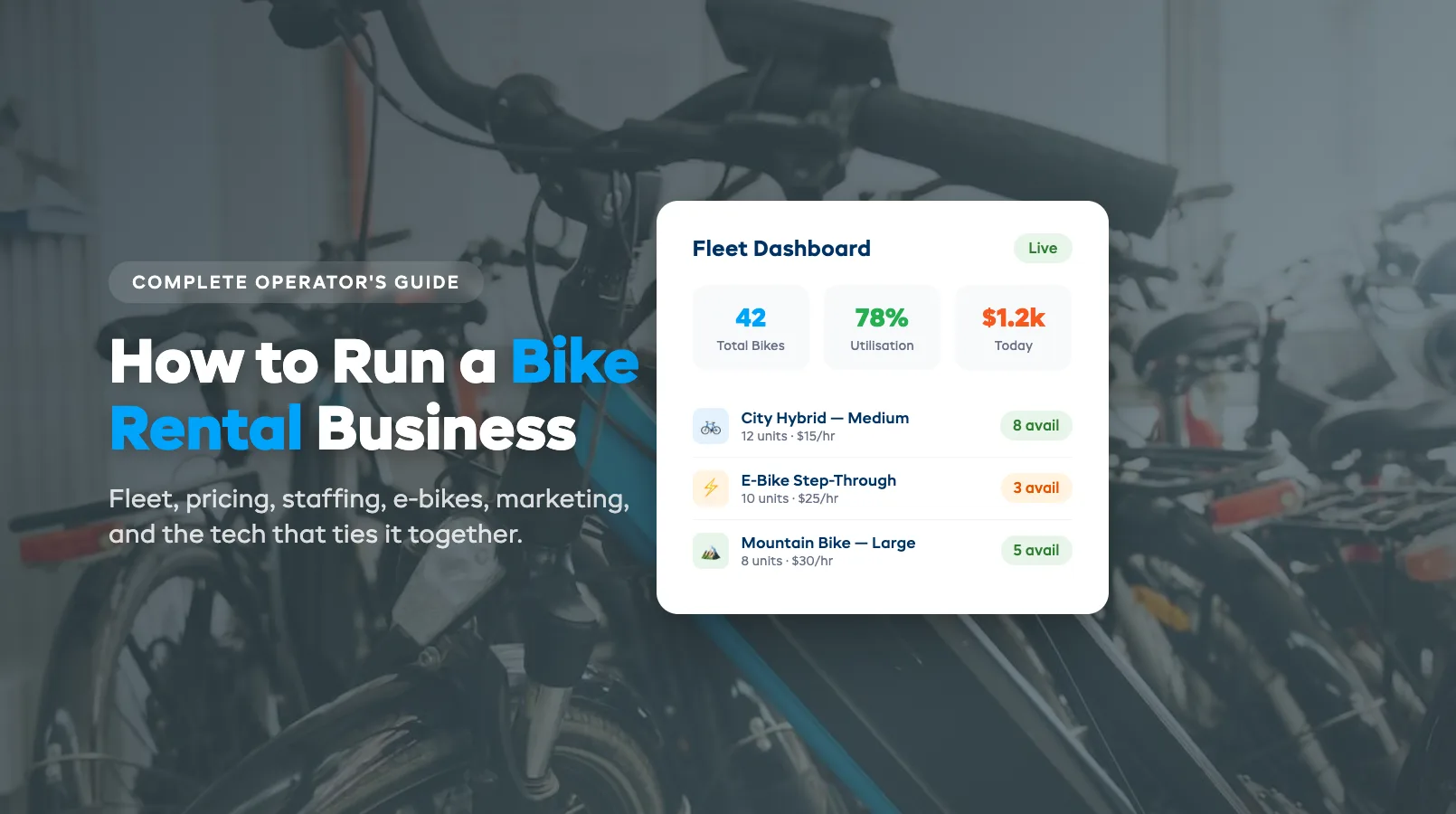
Running a bike rental business looks simple on paper. Buy bikes, find a spot near tourists, rent them out. Then your first busy Saturday arrives — three flat tires, a bent derailleur, an e-bike battery at 12%, a customer who swears the saddle height was fine when they left, and a hotel concierge calling about a group of eight arriving in 20 minutes. The gap between "I like bikes" and "I run a profitable bike rental operation" is measured in broken spokes and missed reservations.
This guide is the operator playbook for 2026. It covers every major decision — from business model selection and fleet composition to e-bike economics, pricing, staffing, marketing, and the tech that holds it all together. Whether you're launching an urban bike rental in a downtown corridor, running guided bike tours along a coastal path, or supplying a resort with a fleet of cruisers, the fundamentals are here.
Three Business Models: Urban Rental vs Bike Tours vs Hotel Partnerships
Not every bike rental business looks the same. Before you buy a single bike, you need to know which model fits your market.
Urban bike rental — city-center operations renting to commuters, day-trippers, and tourists. High volume, short rentals (1-4 hours), price-sensitive customers. Your competition includes bike-share programs (Lime, Citi Bike) and other rental shops. You win on quality, convenience, and customer service — not price. Average transaction: $15-$40. Key metric: turns per bike per day (target 2-3 on weekdays, 4-5 on weekends). For a deep dive on how these two markets differ, see our urban vs tourist bike rental comparison.
Guided bike tours — you provide the bikes, the route, and the guide. Higher ticket price ($50-$120 per person), but you need guides, route planning, liability coverage, and a reliable schedule regardless of group size. Tour businesses are labor-intensive and weather-dependent, but they build brand loyalty and generate reviews that drive organic bookings. The revenue ceiling per bike is higher because you're selling an experience, not just a vehicle. Our bike tour revenue playbook covers pricing, upsells, and off-season strategy in detail.
Hotel and resort partnerships — you place bikes at hotels and earn through revenue share, commission per rental, or a flat monthly fee. Lower operational overhead (the hotel handles customer interactions), but you lose control over the customer relationship and pricing. Typical revenue split: 70/30 or 60/40 in the operator's favor. The upside is guaranteed placement and access to a captive audience. The downside is your margins depend on the hotel's sales effort. We break down all three partnership structures in our hotel bike rental partnerships guide.
Which one should you choose? Many operators run a hybrid. A shop in a tourist area might do 60% walk-in rentals, 25% guided tours, and 15% hotel fleet. The key is knowing which revenue stream is primary and building your fleet and staffing around it.
For a deeper look at how rental technology maps to the bike vertical, see our bikes hub.
Fleet Composition: What to Stock and How Many
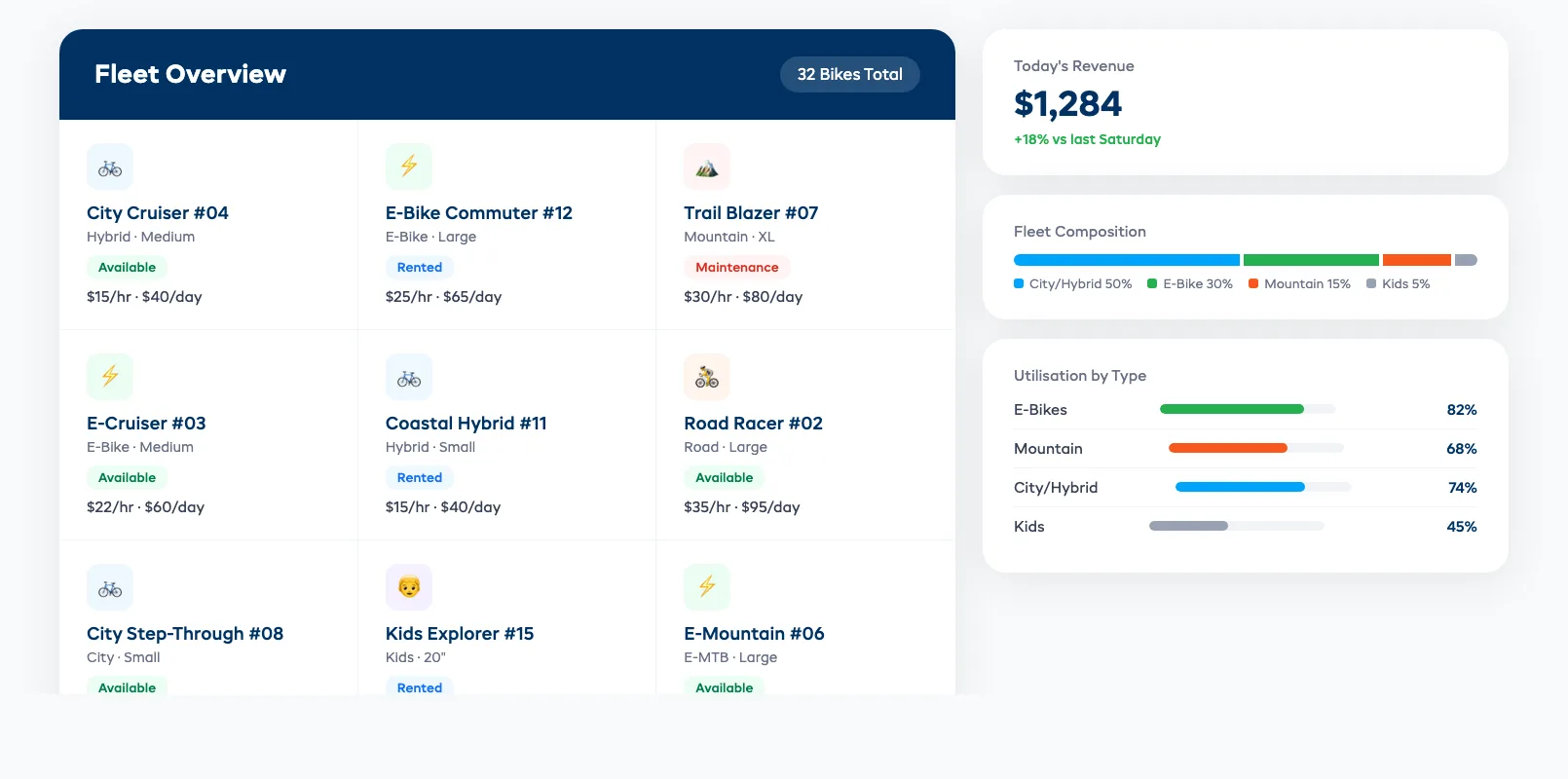
Your fleet mix determines your capital outlay, maintenance burden, and target customer. Here's a framework by business type:
For urban rental / tourist areas:
- 50% city or hybrid bikes ($300-$600 each) — comfortable geometry, step-through frames for easy mounting, puncture-resistant tires
- 30% e-bikes ($1,500-$4,000 each) — the fastest-growing segment, commands premium pricing
- 20% specialty (mountain bikes, road bikes, cargo bikes, kids' bikes) — caters to specific requests
For bike tour operations:
- 70% hybrid or touring bikes — reliable, comfortable for 2-4 hour rides, easy to maintain
- 20% e-bikes — essential for tours with hills or older demographics
- 10% kids' bikes and trail-a-bikes — family tours are high-margin
For hotel/resort fleets:
- 80% cruiser or city bikes — simple, low-maintenance, fits all skill levels
- 15% e-bikes — premium upsell for the hotel
- 5% kids' bikes and accessories (helmets, locks, baskets)
How many bikes do you need? Take your expected peak-day customers and multiply by 1.2 to account for turnaround time and bikes in the maintenance rotation. Starting with 20-30 bikes is standard for a single-location operation. Under-stocking on opening weekend teaches you more than over-stocking — you'll see real demand before committing more capital.
Size range matters. Stock frame sizes from small (5'0"-5'4") through XL (6'0"+). A customer who doesn't fit your bikes is a customer who walks away. Most operators carry 30% small/medium, 40% medium/large, and 30% large/XL.
Track utilization by bike type and size weekly. If mountain bikes sit below 30% utilization during peak season, convert that capital to more e-bikes or hybrids. Use a pre-rental bike ABC check before every handoff — Air, Brakes, Chain. It takes 90 seconds and catches 80% of ride-day failures.
E-Bike Considerations: Revenue vs Complexity
E-bikes are the biggest shift in the bike rental industry since disc brakes. They're also the biggest source of new operational headaches. Here's what you need to know.
The revenue case is clear. E-bikes rent for 40-60% more per hour than pedal bikes. A standard city bike renting at $15/hour becomes $22-$25/hour as an e-bike. On a busy day with 4 turns, that's an extra $28-$40 per bike per day. Across a 20-bike e-fleet over a 180-day season, that's $100,000-$144,000 in additional gross revenue.
The cost case is more complicated. E-bikes cost 3-5x more per unit. Battery replacement runs $400-$800 every 2-3 years (or 500-800 charge cycles). Charging infrastructure — outlets, charging stations, battery management — adds $2,000-$5,000 upfront. Motor and controller repairs require specialist knowledge or expensive service contracts.
Battery logistics are your new bottleneck. A fleet of 20 e-bikes needs a charging rotation. Most rental e-bikes have 40-60 mile range, which covers a full day of city riding. But you need every bike at 80%+ charge by morning. That means overnight charging with enough outlets (each bike draws 2-4 amps) and a system to track which bikes need priority charging. An e-bike battery health check protocol catches degrading cells before they strand a customer mid-ride.
Regulations vary by jurisdiction. Class 1 (pedal-assist up to 20 mph) is legal nearly everywhere. Class 2 (throttle-assist to 20 mph) is restricted in some bike paths and parks. Class 3 (pedal-assist to 28 mph) is prohibited on many trails and may require different insurance. Know your local rules before buying. Most rental operators stick to Class 1 — fewest restrictions, lowest liability.
Insurance implications. E-bikes may require additional product liability coverage beyond standard bike rental insurance. Speeds are higher, batteries introduce fire risk (rare but real), and injury severity increases with motorised assistance. Budget an extra $500-$1,500 per year for e-bike-specific coverage.
The bottom line: e-bikes are worth adding to your fleet, but start with 20-30% of your total bikes. Learn the operational overhead before going all-in. For a deeper dive into battery charging logistics, safety protocols, speed-class regulations, and e-bike-specific insurance, see our e-bike rental operations guide.
Pricing Models That Actually Work
Bike rental pricing follows a tiered duration model. Here are 2026 market benchmarks:
| Bike Type | 1 Hour | 2 Hours | Half-Day (4h) | Full Day | Weekly |
|---|---|---|---|---|---|
| City/hybrid | $12-$18 | $20-$30 | $30-$45 | $40-$60 | $150-$250 |
| E-bike | $20-$30 | $32-$48 | $48-$70 | $65-$95 | $250-$400 |
| Mountain bike | $25-$40 | $40-$60 | $55-$80 | $70-$110 | $280-$450 |
| Road bike | $30-$50 | $48-$75 | $65-$100 | $85-$140 | $350-$550 |
| Kids' bike | $8-$12 | $14-$20 | $20-$30 | $25-$40 | $100-$160 |
Pricing rules that work:
- Half-day anchor. Set your half-day rate at 2x hourly. Customers see "1 hour: $15, half-day: $30" and think the half-day is a deal — even if they'll only ride for 2.5 hours. This is your highest-margin rental period.
- Full-day ceiling. Full-day at 2.5-3x hourly. Never exceed 3x — it starts to feel expensive and pushes customers toward shorter rentals.
- Weekly rates for tourist areas. Set weekly at 4x daily. Vacation renters on week-long stays are your lowest-effort, highest-value customers. The bike goes out Monday and comes back Saturday.
- Peak surcharges of 10-20%. Weekends, holidays, festival days. Post the surcharge on your website — surprise pricing generates bad reviews.
- Group discounts. 10% off for 4+ bikes, 15% for 8+. Family bookings and corporate team outings drive volume on slow weekdays.
- Guided tour pricing. Separate from rental pricing. Charge $50-$120 per person depending on tour length, includes the bike. Don't let customers see the rental rate inside the tour price — it devalues the guide's expertise.
Deposits and damage fees. Hold $50-$200 on a credit card (amount varies by bike value). Pre-authorize, don't charge. Release after return inspection. Use a bike rental damage assessment checklist to document condition at check-out and check-in — photos from both ends prevent disputes.
Staffing and Mechanics
Staffing a bike rental shop is about matching skills to roles. You need three types of people:
Counter and dock staff — handle check-in, bike fitting, safety briefing, and check-out. 1 staff member per 8-10 active rentals during peak hours. These are your front-line customer experience people. They need to be friendly, fast, and able to adjust a saddle height without fumbling. Pay: $14-$18/hour.
Mechanics — keep bikes rideable. Under 30 bikes, most operators handle basic maintenance (flat fixes, brake adjustments, chain lubing) themselves and contract a local bike shop for bigger jobs (wheel truing, bottom bracket service, e-bike motor diagnostics). Above 30 bikes, a part-time mechanic (15-25 hours per week at $20-$30/hour) pays for itself. A full-time mechanic makes sense above 60 bikes.
Tour guides (if running tours) — need local knowledge, group management skills, first aid certification, and the ability to fix a flat on the road. Good guides are your highest-value employees and hardest to replace. Pay: $18-$28/hour plus tips. Certifications to look for: first aid/CPR, cycling guide (nationally accredited programs vary by country).
The staffing math for a 40-bike urban rental shop:
- Peak weekend shift: 2 counter staff + 1 mechanic (on-call or scheduled) + you = 4 people
- Weekday: 1 counter staff + you = 2 people
- Weekly labor cost: roughly $2,000-$3,500 during peak season
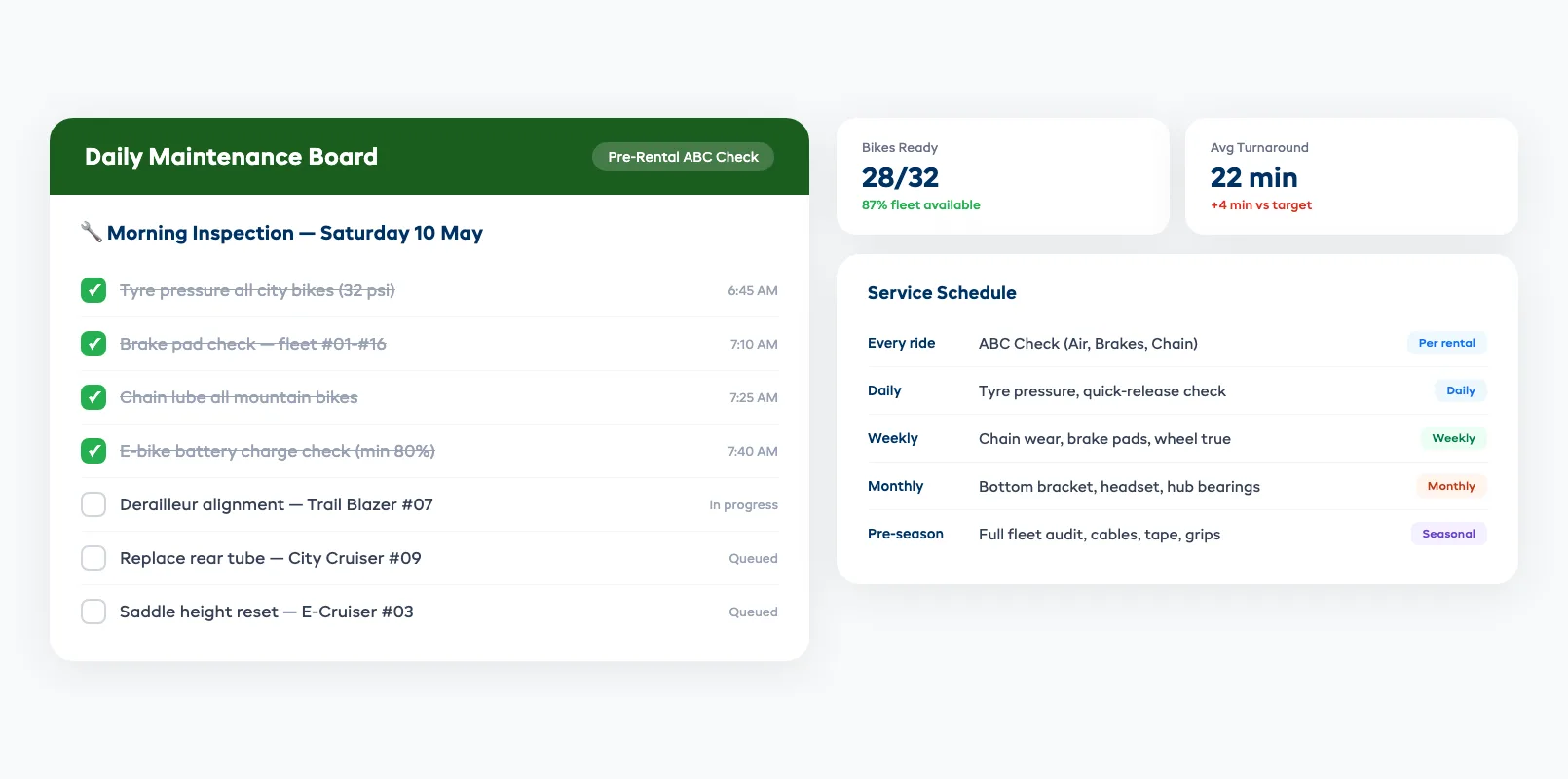
Mechanic workflow matters. Establish a daily routine: morning ABC check on all bikes going out, midday quick-service on returns, end-of-day full inspection. Use a bike chain and drivetrain service schedule — chains stretch, cassettes wear, derailleurs drift. Rental bikes take 3-5x the abuse of owner-ridden bikes. A component that lasts a recreational rider 2 years lasts a rental bike 6-8 months. For a full breakdown of service intervals by component, see our bike fleet maintenance schedule guide.
Run a pre-season bike fleet audit before your season opens. It catches the bikes that wintered poorly and shouldn't go back into the rental rotation without work.
Marketing Channels for Bike Rental Businesses
Bike rental is a local and hyper-seasonal business. Your marketing should match.
Google Business Profile — your #1 channel. When a tourist types "bike rental near me," your GBP listing is what appears. Optimize it: correct hours, high-quality photos (bikes, shop, routes), respond to every review, post weekly updates during season. This single channel drives 30-50% of bookings for most urban rental shops.
Hotel and accommodation partnerships. Place flyers, QR codes, or booking links at hotel front desks, Airbnb welcome books, and campground offices. Offer the property a 10-15% referral commission. This is low-cost, high-conversion marketing — guests are already looking for things to do.
TripAdvisor and Viator. List your guided tours and rentals. These platforms charge 15-25% commission, but they put you in front of travelers planning their itinerary before they arrive. Strong reviews compound — a 4.5+ star listing generates bookings for years.
Social media. Instagram and TikTok showcase your routes, bikes, and happy customers. Post 3-4 times per week during season. Social rarely drives direct bookings, but it builds brand recognition and feeds your Google ranking signals.
Local SEO and your website. Target location-specific keywords: "bike rental [city name]," "e-bike rental [neighborhood]," "bike tours [landmark]." These are high-intent, low-competition keywords. A well-optimized page with genuine photos and clear pricing outranks national directories.
Partnerships with other operators. Cross-refer with kayak shops, food tour operators, and hotels. You send them customers, they send you customers. No cost, high trust.
Email and SMS for repeat customers. Collect contact info at check-in. Send a pre-season "we're open" email and a mid-season "bring a friend" offer. Repeat customers cost nothing to acquire and book at higher ticket prices.
Tech Stack: The Systems That Run Your Operation
A bike rental business runs on four systems. Get them right and you scale. Get them wrong and you cap out at one location and a clipboard.
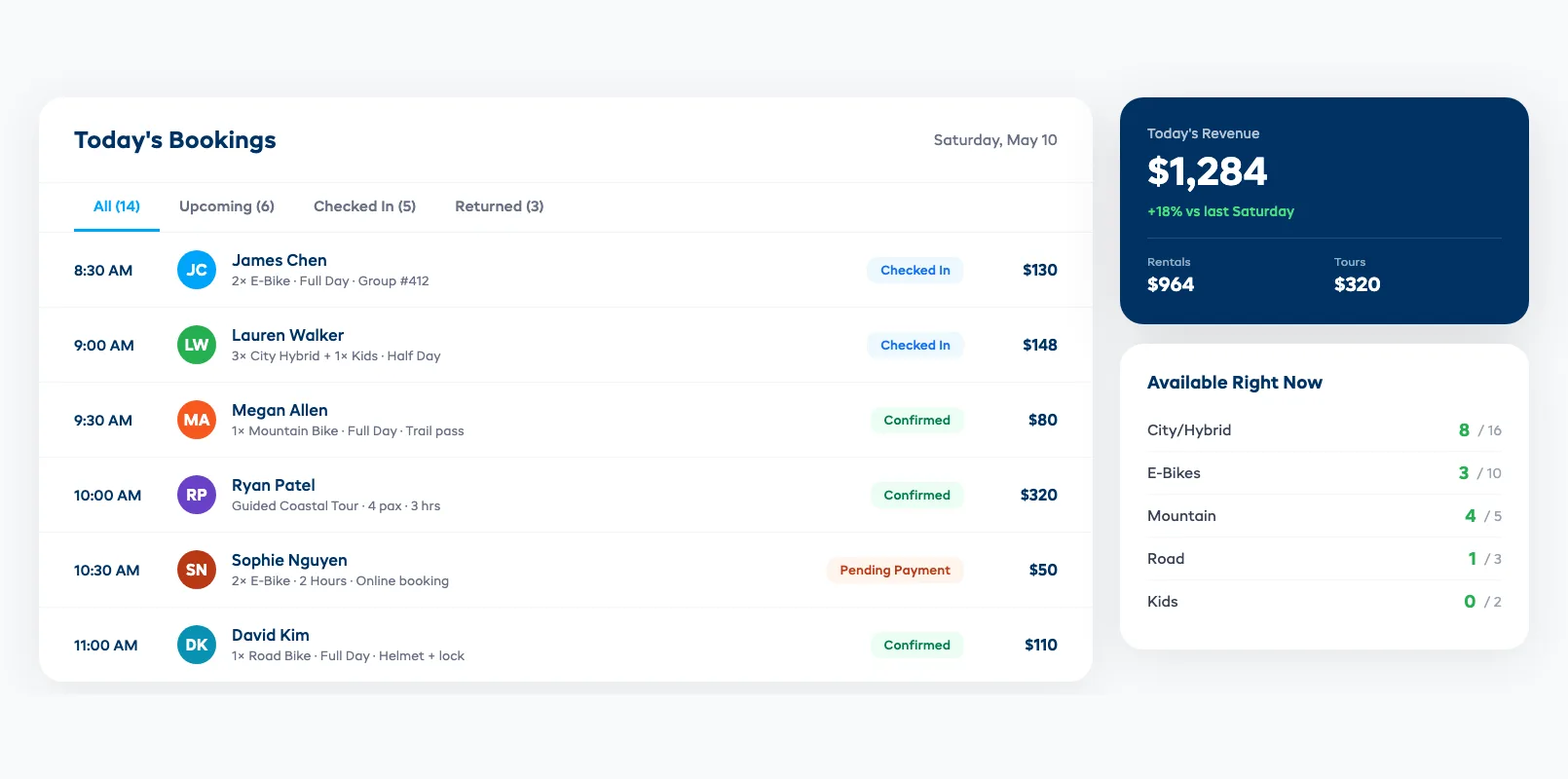
1. Online booking and availability. Customers expect to book online — especially tourists planning before they arrive. You need real-time availability that updates as bookings are made, not a contact form that you respond to in 3 hours. 24/7 online booking captures after-hours revenue that phone-only shops miss entirely. A good booking system also handles group bookings, deposits, and automated confirmations.
2. Fleet and inventory management. Every bike needs a status: available, rented, in maintenance, retired. When you have 40+ bikes across multiple types and sizes, a spreadsheet breaks down. You need a system that shows what's available right now, what's coming back this afternoon, and what's been in the shop for three days. Pair it with your bike shop opening-day checklist to make sure every morning starts clean.
3. Digital waivers and insurance. Paper waivers are a storage nightmare and a legal weak point. Digital waivers can be signed before arrival (cutting 3-5 minutes off check-in), are timestamped and stored automatically, and are searchable when you need one for an incident report. Include: assumption of risk, equipment responsibility, medical fitness, and photo release. Your waiver language should align with your insurance policy — see our bike rental insurance guide for coverage types and how waivers complement them. You also need a clear damage policy that customers understand before they ride.
4. Payment processing and reporting. Accept card payments at the counter and online. Track revenue by bike type, rental duration, and time period. The data tells you which bikes earn their keep and which are dead weight. Monthly reporting should answer three questions: What's my revenue per bike? What's my cost per rental (maintenance + depreciation + labor)? What's my utilization rate by category?
Dash AI can handle the booking confirmations, follow-up messages, and waiver reminders that eat your morning. That's hours back every week — time you spend on the dock or the shop floor instead of behind a screen.
For a complete look at how rental technology fits the bike vertical — from fleet tracking to tour scheduling — visit the bikes hub page.
FAQ
How much does it cost to start a bike rental business?
A basic pedal-bike operation with 20-30 bikes runs $15,000-$40,000 including bikes, storage, insurance, and permits. Add e-bikes and the number climbs to $40,000-$80,000 depending on battery capacity and fleet size. Your biggest line items: bikes (50-60% of startup cost), first/last on your lease (15-20%), and insurance (10-15%).
Are e-bike rentals more profitable than regular bike rentals?
E-bikes command 40-60% higher hourly rates than pedal bikes. But higher unit cost ($1,500-$4,000 vs $300-$800), battery replacement ($400-$800 every 2-3 years), and charging infrastructure eat into the margin. Net profit per ride is roughly 15-25% higher for e-bikes when utilization is above 50%. Below 50% utilization, the higher capital cost makes e-bikes less profitable per unit than a busy pedal bike.
What insurance do I need for a bike rental business?
At minimum: commercial general liability ($1M-$2M), property insurance covering your fleet, and workers' compensation if you have employees. E-bike operations may need additional product liability coverage due to battery and motor risks. Budget $2,000-$6,000 per year depending on fleet size, location, and whether you run guided tours (which adds professional liability).
How many bikes do I need to start?
Most operators start with 15-25 bikes. Take your expected peak-day customers and multiply by 1.2 to account for turnaround and maintenance rotation. Under-stocking on opening weekend teaches you more than over-stocking — you'll learn real demand patterns before committing more capital.
What's the best pricing model for bike rentals?
Tiered duration pricing: hourly, half-day (4 hours), and full-day. Set the half-day at 2x hourly — it's the anchor that pushes customers toward longer, higher-value rentals. Add weekly rates at 4x daily for tourist-heavy areas. Peak-season surcharges of 10-20% on weekends and holidays are standard and expected.
Do I need a mechanic on staff?
Under 30 bikes, handle basic maintenance yourself (flats, brake adjustments, chain lube) and contract a local shop for bigger jobs. Above 30 bikes, a part-time mechanic (15-25 hours/week at $20-$30/hour) pays for itself in faster turnaround. Above 60 bikes, full-time mechanic is standard.
How do I market a bike rental business?
Top three channels by ROI: Google Business Profile (captures "bike rental near me" searches), hotel/accommodation partnerships (concierge referrals with 10-15% commission), and TripAdvisor/Viator listings (reaches tourists before they arrive). Social media builds awareness but rarely drives direct bookings. Invest in local SEO for "[city] bike rental" keywords first.
Running a bike rental or tour business is hands-on work. The operators who succeed aren't the ones with the most bikes — they're the ones with the best systems. If you're ready to move past the clipboard and spreadsheet stage, see how EquipDash handles bike rental operations or start a free trial and see for yourself.
in one place