
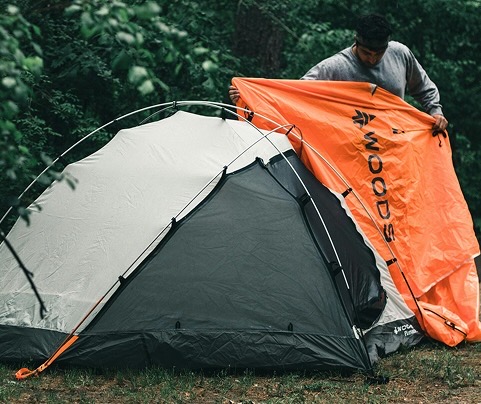
Backpacking tent
Lightweight tent designed to be carried. Typical weight under 4 lbs. Most common rental category.
Glossary
74 terms every camping, hiking and climbing gear rental operation should know.
Lightweight tent designed to be carried. Typical weight under 4 lbs. Most common rental category.
Larger, heavier tent designed for vehicle transport. 6-12 person common.
Designed for spring-summer-fall use. Not rated for heavy snow or high wind.
Designed for winter use with snow and wind loads. Heavier and more expensive.
Separate inner tent and rain fly. Better ventilation, lighter weight per material.
One waterproof shell. Simpler setup, often heavier.
Waterproof outer layer over the tent body. Determines weather protection.
Ground cloth matched to tent shape. Protects floor from abrasion.
Covered area outside the tent body, under the rain fly. Gear storage.
Aluminum or carbon fiber rods that support the tent. Shock-corded for easy setup.
External rope stabilising the tent in wind.
Waterproof tape along seams. Critical for weather protection.
Insulated bag for overnight warmth.
Rated temperature for the bag (e.g. 20°F, 30°F). Rental customers should understand this relates to survival, not comfort.
Bird-feather insulation. Lightest warmth-to-weight, loses insulation when wet.
Polyester insulation. Insulates when wet, heavier and bulkier than down.
Bag insulation thickness when fluffed. Low loft equals loss of insulation.
Insulated ground pad. Essential for warmth and comfort.
Thermal resistance rating for sleeping pads. Higher equals warmer.
Air mattress with insulation. Light, compact, warm but puncture-prone.
Dense foam pad. Indestructible but bulky.
Inflatable or stuffable pillow. Usually included in premium kits.
Internal-frame pack for multi-day trips. 50-80L common rental size.
Small pack (20-35L) for day hikes.
Internal or external support structure.
Main weight-bearing strap on backpacks. Transfers weight from shoulders to hips.
Padded straps over shoulders. Weight distribution.
Small straps bringing pack closer to body.
Key fitting measurement (C7 to iliac crest) determining pack size.
Internal pocket for water bladder.
Removable top compartment on larger packs.
Compression bag for compressible gear (bags, clothes).
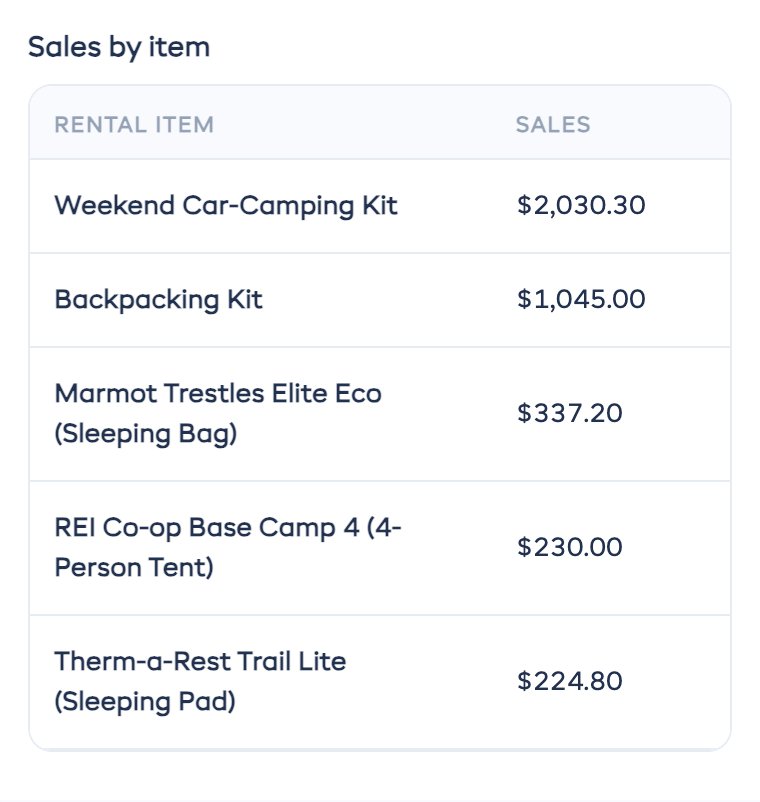
Sales by item shows which kits and single pieces of gear bring in the most money.
No credit card required. 21-day free trial.
Stove running on sealed isobutane canister. Most common rental type.
Stove running on white gas or other liquid. Better cold-weather performance.
Stove and pot designed together (e.g. Jetboil). Efficient but specialty.
Fuel mixture in most canister stoves. Standard rental fuel.
Refined petroleum for liquid fuel stoves.
Shield around stove improving fuel efficiency in wind.
Built-in igniter. Backup matches always carried.
Cooking pots and pans. Typically nested for pack efficiency.
Plates, bowls, utensils for eating.
Removes bacteria and protozoa from water. Pump, gravity, or chemical.
More aggressive than filter, removes viruses too.
Body-worn gear for roped climbing. Retirement is strict by manufacturer spec.
Load-bearing loop on harness where belay device attaches. Structural component.
Metal gate clip for connecting ropes and gear. Categorized by purpose (lightweight, locking).
Carabiner with gate-locking mechanism. Used in critical applications.
Friction device for belaying a climbing partner.
Climbing-specific helmet. Certified to UIAA or CE. Retirement at impact or age.
Climbing rope. Static or dynamic. Age, fall count, and visible wear determine retirement.
Two carabiners connected by sling. Used on sport routes.
Passive or active protection in trad climbing.
Sewn webbing loop for anchors and extensions.
Standards body for climbing gear. Products must certify for commercial use.
Manufacturer-specified maximum use period. Typically 5-10 years from first use.
Ethical framework for outdoor use. Seven principles.
Bear-resistant food storage container. Required in many protected areas.
Pepper spray for bear defense. Regional requirement.
Pocket tool for camp tasks.
Head-mounted LED light. Essential gear.
Collapsible walking poles. Reduces joint stress on long hikes.
Navigation GPS. Optional premium rental item.
Personal locator beacon for emergencies. Often rental option for wilderness trips.
Lightweight folding chair. Comfort item, common rental upsell.
Pre-assembled gear package for specific trip type (weekend solo, family, expedition).
Per-item condition check before handoff.
Condition and completeness check at return.
Verifying kit bundle has all expected components.
Surcharge for excessively dirty returns.
Per-day charge for overdue returns.
Hold on customer payment covering potential damage.
Optional customer purchase limiting liability.
Formal removal of gear from rental rotation.
Per-asset record of rental count and repairs.
No terms match that search.