Peak Season Preparation for Rental Shops
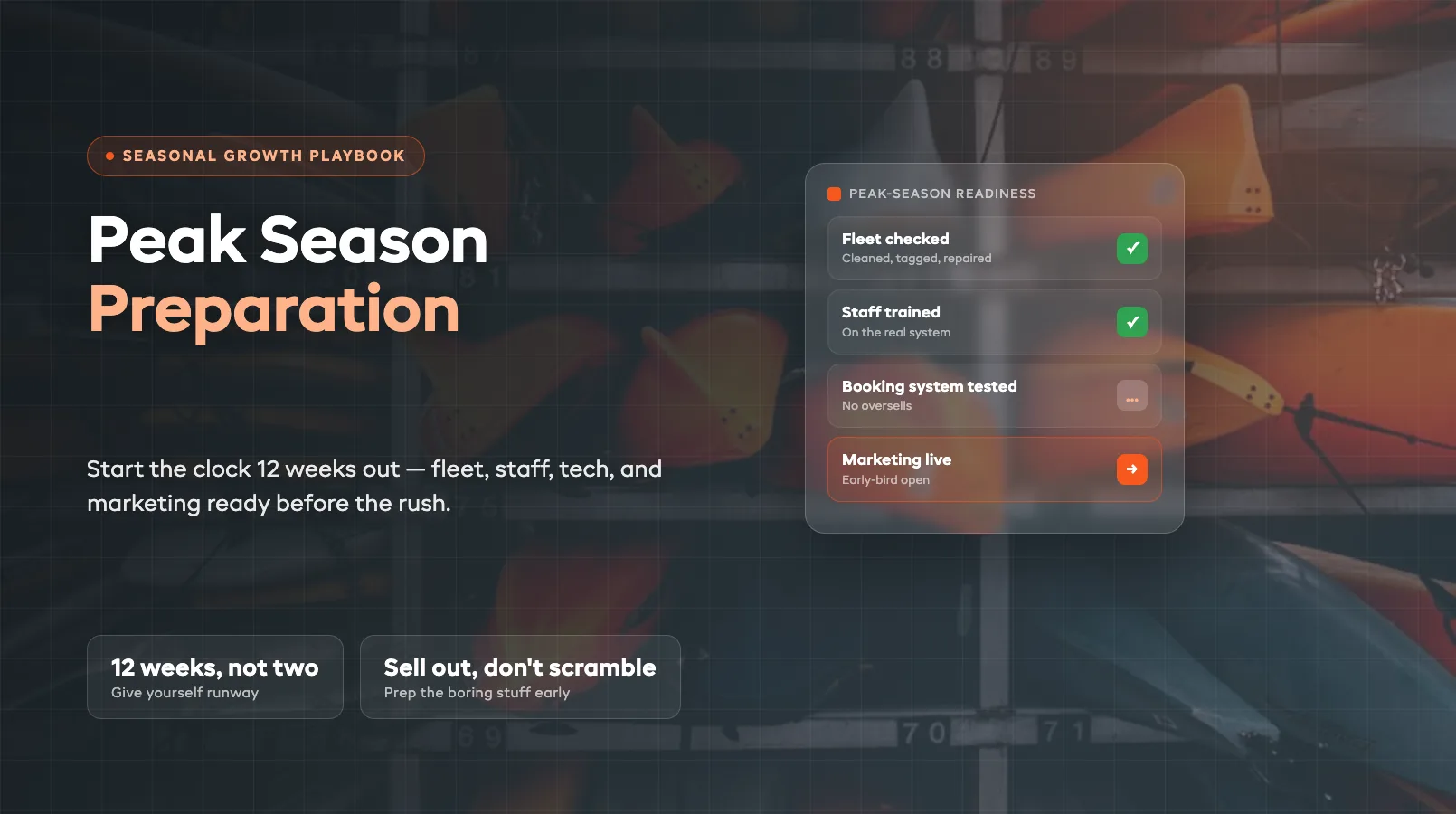
Peak season pays the bills. For most rental shops, eight to twelve weeks carry the whole year. Get those weeks right and you coast through the off-season. Get them wrong and you spend the busy months apologizing for broken gear, short-staffed counters, and bookings you had to turn away.
The difference between a smooth peak and a chaotic one is almost never luck. It is preparation that started months earlier. This is a plain checklist for getting your shop, your fleet, and your team ready before the rush hits — so you sell out your best gear instead of scrambling to fix it.
The Preparation Timeline (12 Weeks Out)
Start earlier than feels necessary. The shops that struggle are the ones that started prepping two weeks before the first big weekend. By then, repair parts are back-ordered, the good hires are taken, and there is no time left to test anything.
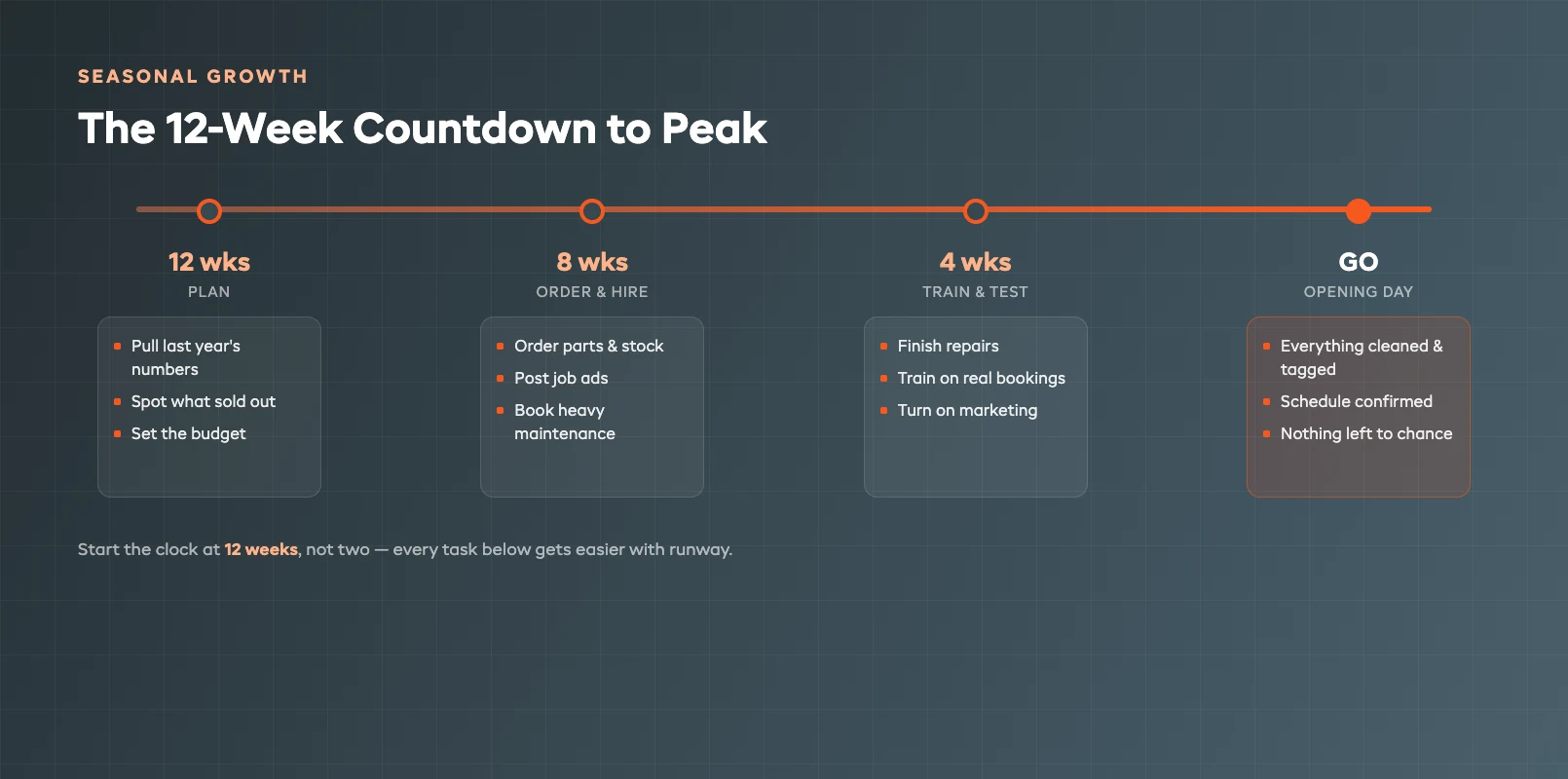
Here is a timeline that works for most operators:
- 12 weeks out: Pull last year's numbers. Which weeks were busiest? What sold out? What sat on the rack? This tells you where to spend money and attention.
- 8 weeks out: Order parts, new stock, and consumables now. Start posting job ads. Book any major maintenance while the shop is still quiet.
- 4 weeks out: Finish repairs. Train new staff on real bookings. Turn on your marketing. Test your booking system end to end.
- 1 week out: Final walk-through. Every item cleaned, tagged, and ready. Staff schedule confirmed. Nothing left to chance.
If you only do one thing differently this year, start the clock at 12 weeks instead of two. Everything else gets easier when you have runway.
Inventory Audit and Maintenance Blitz
Walk your entire fleet before the season, not during it. Every unit gets checked, cleaned, and either cleared for rental or flagged for repair. Nothing goes on the rack until it passes.
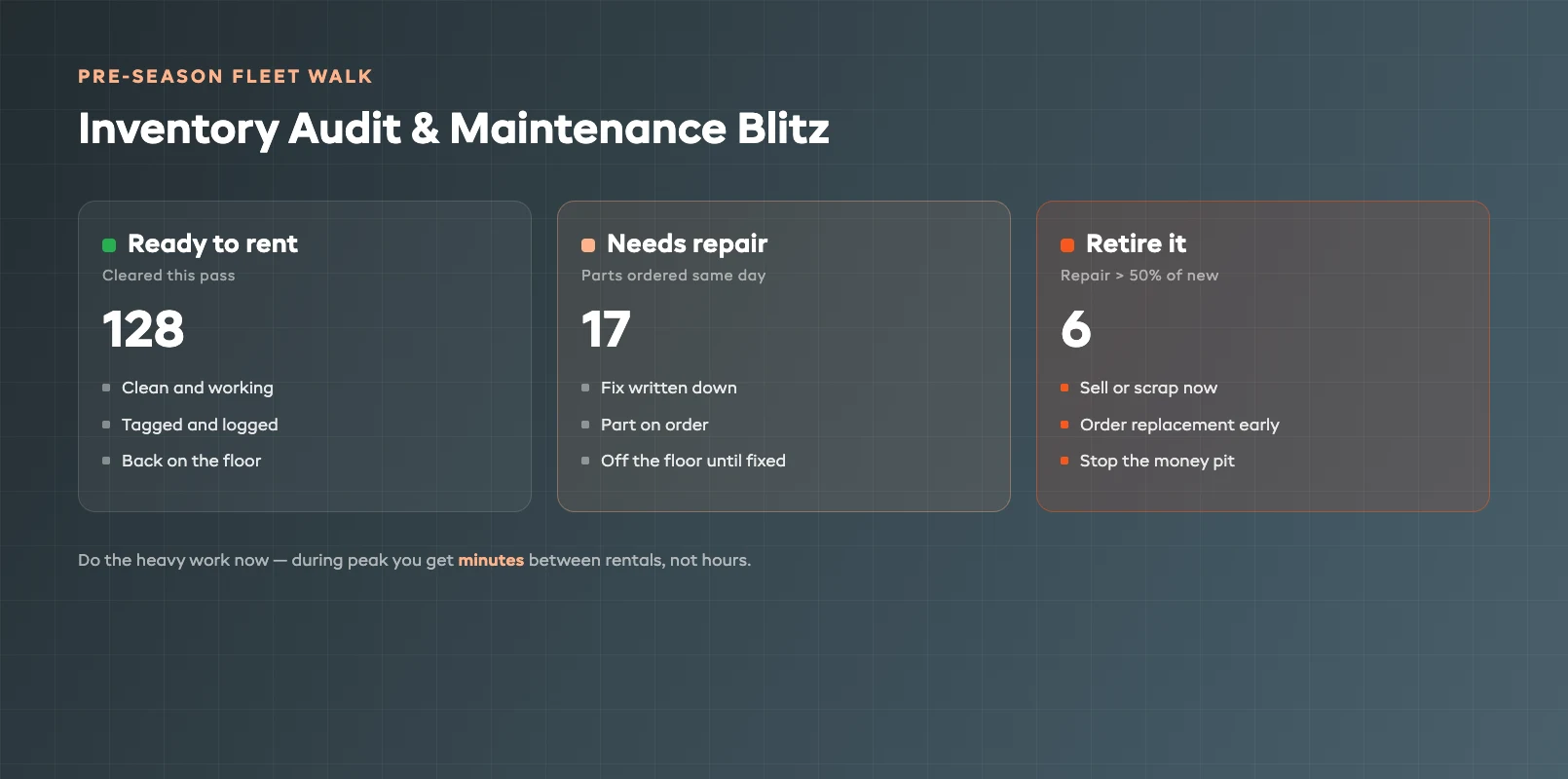
Sort each item into three buckets:
- Ready to rent — clean, working, tagged, back on the floor.
- Needs repair — pulled aside with the fix and the part written down. Order parts the same day.
- Retire it — when repairs cost more than half of replacement, stop pouring money in. Sell it or scrap it and buy the replacement now, not in July.
Do the heavy maintenance now, while you have time. Once peak hits, you only have minutes for a quick check between rentals, not hours for a rebuild. A maintenance schedule you actually track keeps gear earning instead of sitting in a repair pile during the weeks it should be out the door.
Count your consumables too — helmets, straps, wax, batteries, cleaning supplies. Running out of a $4 part on a Saturday can idle a $2,000 item.
Staffing Up
Your busiest weekend is the worst possible time to be short a person. Hire and train before you need the help, not after the queue is out the door.
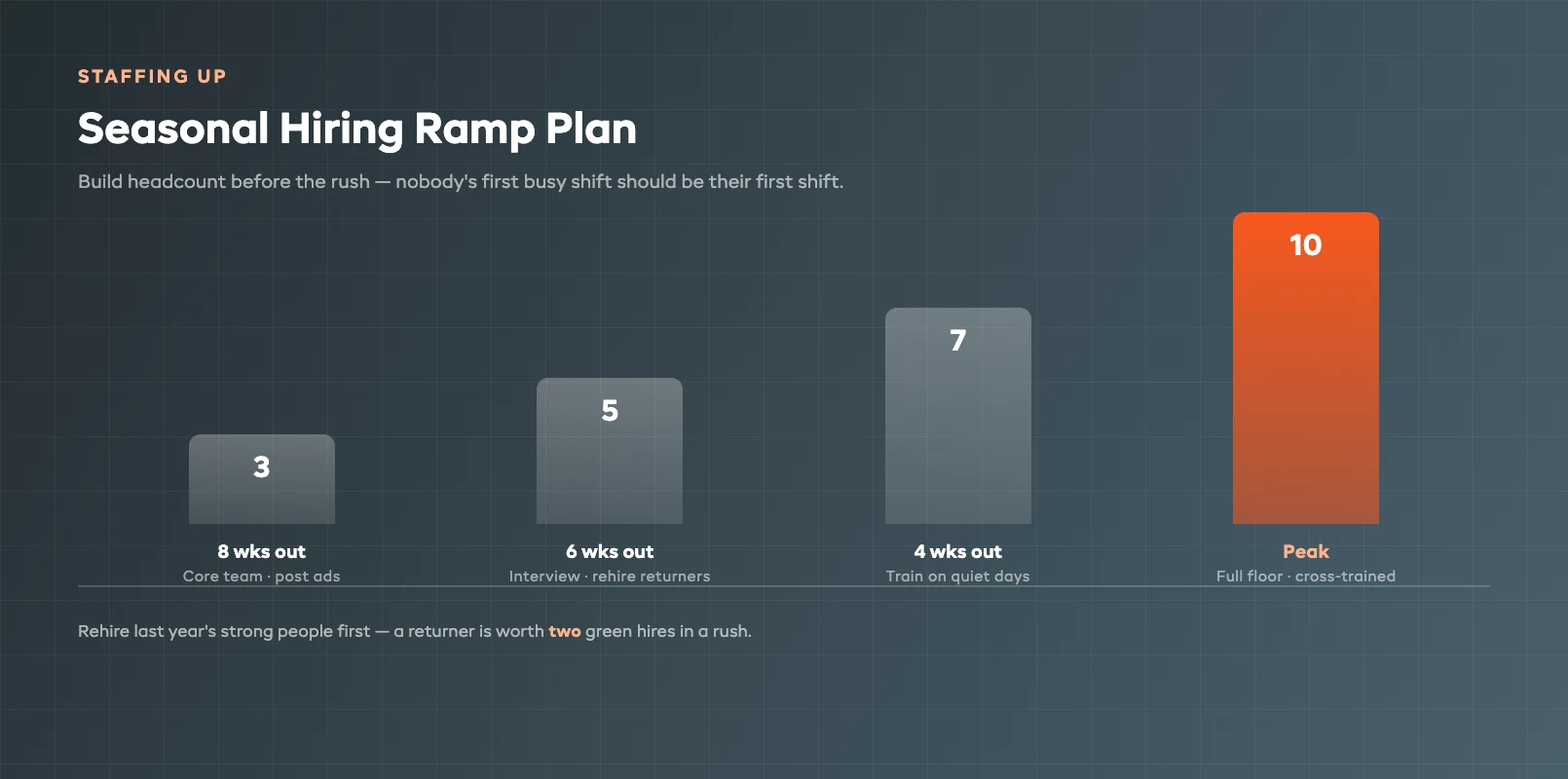
Work backward from your peak weeks. If you need eight people on the floor in July, you cannot start hiring in July. Post ads eight weeks out, interview six weeks out, and have new staff trained on quiet days four weeks out. That way their first busy shift is not their first shift ever.
A few things that pay off:
- Rehire last year's good people first. They already know the gear and the system. A returning staffer is worth two green ones during a rush.
- Train on the real system, not a talk-through. Let new hires run actual check-outs and check-ins on slow days so the software is muscle memory by peak.
- Cross-train the counter. When everyone can size a helmet, take a payment, and process a return, no single line grinds to a halt.
The same discipline applies to guides and instructors if you run tours alongside rentals — the hiring and onboarding basics carry straight over.
Technology Check
Peak season is when your booking system earns its keep or falls over. Test it before the traffic arrives, not when 40 people are trying to book at once.
Run a real booking from a customer's phone. Does availability show correctly? Does a deposit take? Does the confirmation land in the inbox? Try to double-book a single item and confirm the system blocks it — an oversell on your busiest day means a refund and a bad review.
Check that your rack of gear matches what the system thinks you have. If ten kayaks are on the floor but the system lists twelve, you will sell two rentals you cannot fulfill. A pre-season sync between your physical count and your software count prevents the most common peak-season disaster.
Turn on the automations that save you time when you have none. Reminder messages, prep lists, and waitlist alerts run themselves so your staff stay on the floor helping customers instead of chasing paperwork.
Marketing Push
Do not wait for peak to start marketing. The bookings you want in July are made in May. Get in front of customers while they are still planning, and you fill your calendar before your competitors even open the conversation.
Focus on the channels that actually move rentals:
- Email your past customers first. They already trust you. A simple "book your dates before we sell out" note to last year's list is the cheapest booking you will ever get.
- Update your listings and photos. Fresh photos, current prices, and correct hours on your website and Google profile catch the searchers who are ready to book now.
- Open early-bird booking. Let people lock in dates weeks ahead with a deposit. It smooths your calendar and tells you where demand is heaviest.
If you are still building the fundamentals, the rental business starter guide covers the pricing, listings, and booking basics that marketing sits on top of.
Overflow Planning
The best problem to have is more demand than gear. The worst response is turning people away with nothing. Plan for the overflow before it shows up.
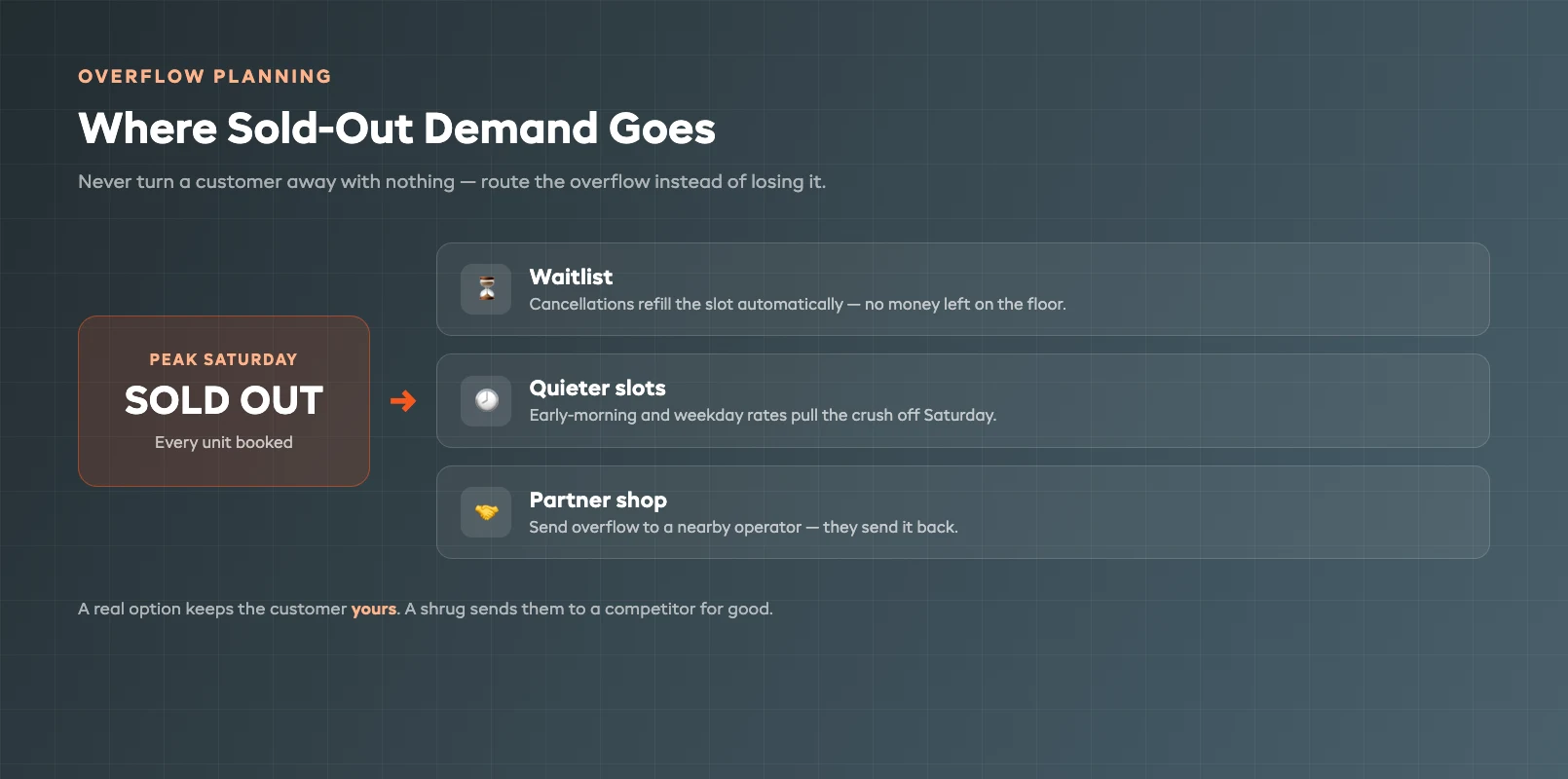
Have a plan for the day you sell out:
- Run a waitlist. When someone cancels — and they will — the system fills the slot from the waitlist automatically instead of leaving money on the floor.
- Push demand to quieter slots. Offer an early-morning or weekday rate to move some of the Saturday crush to Tuesday. Every unit rented twice in a week beats one rented once.
- Line up a partner shop. A quiet handshake deal with a nearby operator lets you send overflow their way, and them send it back. Both of you rent gear that would otherwise sit idle.
Turning a customer away with a real option keeps them yours for next time. Turning them away with a shrug sends them to your competitor for good.
Putting It Together
Peak season rewards the shop that did the boring work early. Twelve weeks of steady prep — fleet checked, staff trained, system tested, marketing live, overflow planned — turns the busiest weeks of the year from a scramble into a payday. Pick your peak date, count back twelve weeks, and start today. The version of you working the counter in July will be glad you did.
FAQ
When should I start preparing for peak season?
Start twelve weeks out. That gives you time to order parts before they back-order, hire and train staff before the rush, and test your booking system before real traffic hits. Shops that start two weeks before the first big weekend spend peak season fixing problems they could have prevented.
What is the number one mistake going into peak season?
Starting too late. Almost every peak-season disaster — broken gear on the rack, untrained staff, an oversold calendar — traces back to prep that began weeks too late. The parts, the good hires, and the testing time all run out if you wait. Give yourself runway.
How do I handle overflow demand when I sell out?
Never turn a customer away with nothing. Run a waitlist so cancellations refill automatically, push some demand to quieter weekday or early-morning slots with a lower rate, and set up a partner deal with a nearby shop to send overflow back and forth. A customer given a real option stays yours.
How much of my maintenance should I do before the season?
Nearly all of the heavy work. During peak you only have minutes between rentals for a quick check, not hours for a rebuild. Do every major repair, part replacement, and deep clean in the eight weeks before the season so the busy weeks only need light, fast inspections.
When should I start hiring seasonal staff?
Post ads about eight weeks before your peak weeks, interview around six weeks out, and train new hires on quiet days four weeks out. Rehire last year's strong performers first — they already know your gear and system. The goal is that nobody's first busy shift is also their first shift ever.
Do I really need to test my booking system if it worked last year?
Yes. Prices, stock, and staff change over a year, and a small mismatch that is harmless in the quiet months causes oversells and refunds under peak load. Run a real booking from a phone, try to double-book one item to confirm it blocks, and sync your physical count against the system before the traffic arrives.
in one place