Bike Tour Operator Revenue: Pricing, Upsells, Off-Season Strategy
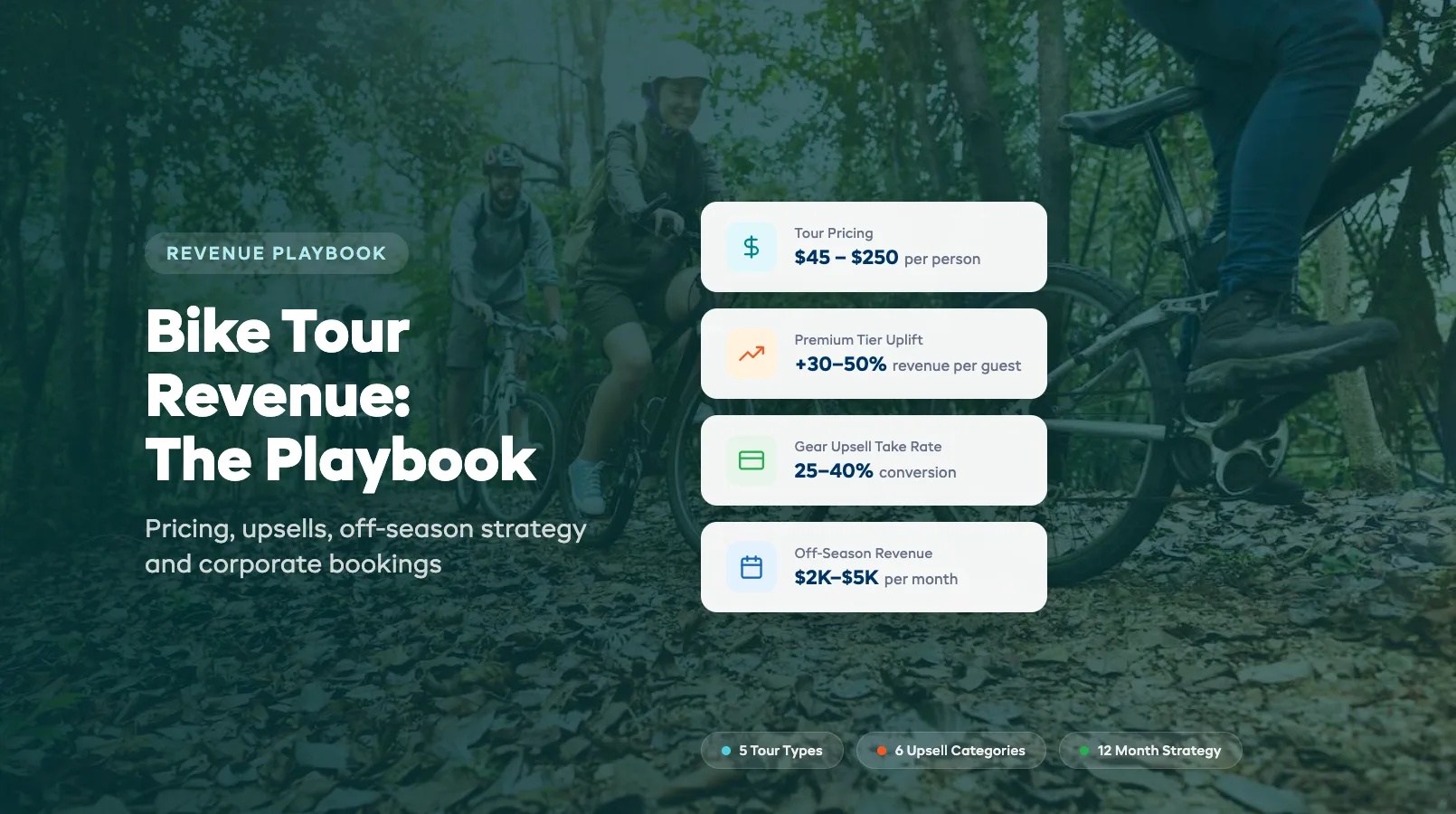
You sell guided bike tours. Guests pay, ride, leave. Revenue equals ticket price times headcount. Simple math — and the reason most tour operators plateau at the same number year after year.
The operators who grow past that ceiling aren't running more tours. They're extracting more revenue per guest and filling dead months with programming that would otherwise earn zero. This guide breaks down the specific levers: base pricing by tour type, premium tiers, gear upsells, photo packages, off-season strategy, and corporate groups. It's the revenue companion to our complete bike rental and tour business guide.
Base Pricing by Tour Type
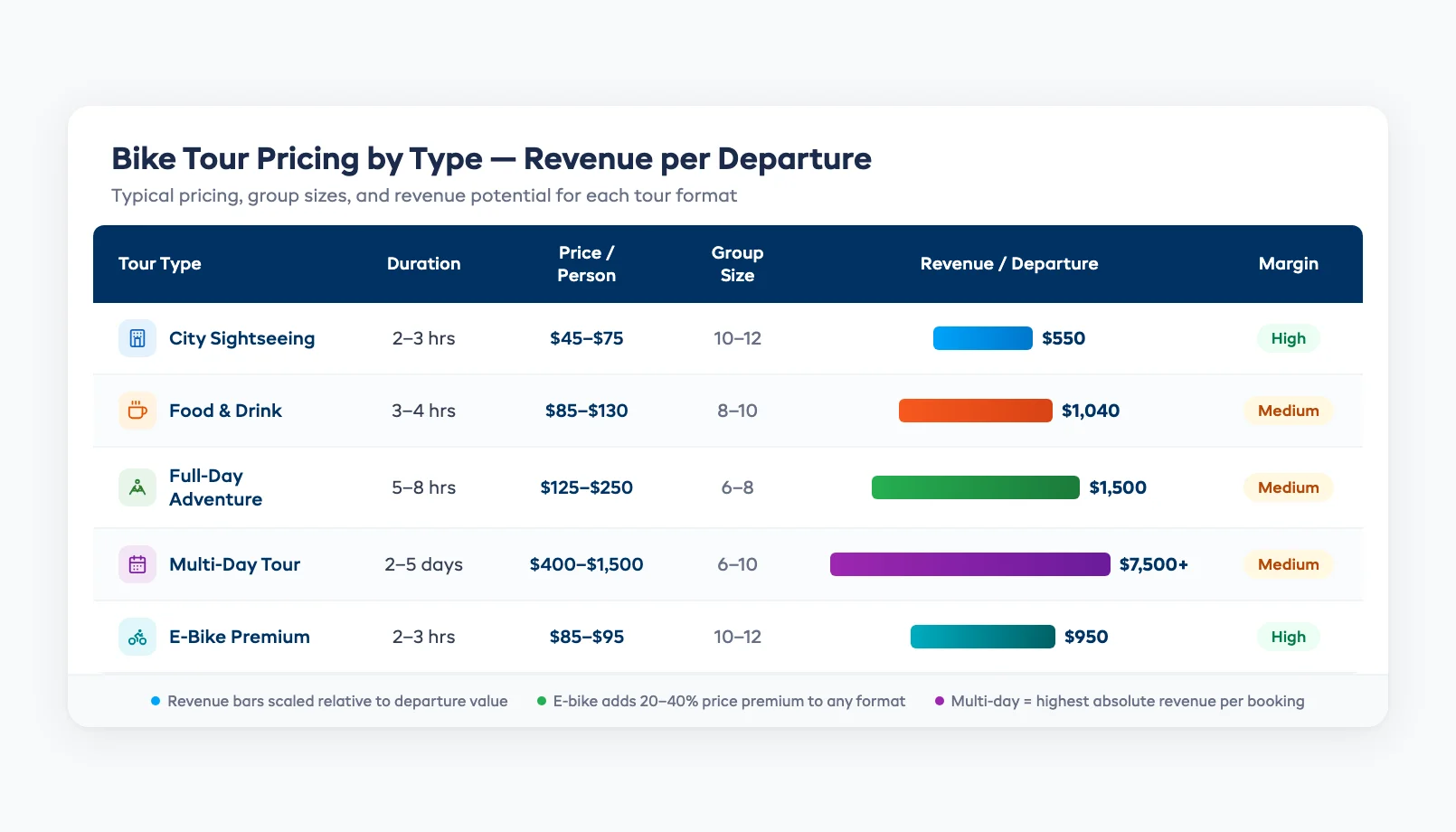
Tour pricing starts with understanding what you're actually selling. A 2-hour city highlights tour and a full-day wine country ride are different products with different cost structures. Price them accordingly.
City and sightseeing tours (2-3 hours). These are your volume product. Low guide-to-guest ratios (1:12 is common), minimal route logistics, and high turnover. Typical pricing: $45-$75 per person. You can run 2-3 departures per day per guide. The economics work on volume — 10 guests at $55 is $550 per departure, and your guide cost is $80-$120.
Food and drink tours (3-4 hours). Higher ticket price because you're bundling tastings. $85-$130 per person is standard. Your margin depends on what you negotiate with partner venues. Some operators pay $15-$25 per person for tastings; others get comped stops in exchange for foot traffic. Negotiate hard — those $20 per-person tasting fees eat 15-20% of your ticket price.
Full-day adventure tours (5-8 hours). Premium pricing: $125-$250 per person. Smaller groups (6-8 guests), higher guide skill requirements, vehicle support for sag wagon or shuttle. These tours have higher revenue per departure but lower frequency — typically one per day. They also carry more weather-cancellation risk.
Multi-day tours (2-5 days). The highest absolute revenue per booking: $400-$1,500+ per person. But they require route planning, accommodation partnerships, luggage transfer logistics, and backup guides. Operationally complex. Most operators start with day tours and add multi-day after building route expertise.
E-bike tours. Any tour format above gets a 20-40% price premium when you swap in e-bikes. A $65 city tour becomes $85-$95 on e-bikes. Guests pay willingly — they associate e-bikes with a better experience. Your added cost is battery management and higher per-unit depreciation, but the margin expansion is real.
Premium Tier Economics
The fastest way to increase per-guest revenue without increasing headcount is to offer a premium tier alongside your standard tour.
What "premium" means in practice. It's the same route, same departure time, same guide — with 3-4 additions that cost you little but feel significant. Common premium inclusions: upgraded bike (carbon road bike or premium e-bike), a small gift (branded water bottle, route map poster), priority booking for popular departure times, and a post-tour drink at a partner venue.
Pricing the premium tier. Charge 30-50% above your standard price. A $65 standard tour becomes $90-$95 premium. Your incremental cost per premium guest is typically $8-$15 (the drink, the gift, and faster depreciation on the nicer bike). That's $20-$25 incremental margin per upgrade.
Uptake rates. Expect 15-25% of guests to choose premium when you present both options during booking. That climbs to 30-35% when premium is the default selection in your booking widget and standard requires opt-down. Small UX choice, big revenue impact. You can configure this in your booking system so the higher tier shows first.
VIP and private options. Beyond premium, offer a private tour tier. Same route, exclusive group, flexible start time. Price at 2-3x the per-person rate with a minimum headcount guarantee (typically 2-4 people). Private tours attract couples and small families willing to pay for exclusivity. They also fill off-peak departure slots that would otherwise run empty or get canceled.
Gear Upsells That Actually Convert
Gear upsells work because guests are already committed to the experience. They've booked, they've shown up, and they're in "yes" mode. The trick is offering items that genuinely improve the ride — not pushing junk.
High-conversion upsells (25-40% take rate):
- Helmet upgrades (road-style vs basic): $5-$10 per rental. Costs you $0.50-$1.00 in depreciation per use.
- Phone mounts: $5 per rental. Buy them for $8-$12 each, they last 100+ rentals.
- Hydration packs or water bottles: $3-$5 per rental or $12-$15 to buy outright. Branded bottles double as marketing.
Medium-conversion upsells (10-20% take rate):
- Padded cycling shorts: $8-$12 per rental. Important for tours over 2 hours. Guests who've done longer rides before know they need these.
- Rain jackets or ponchos: $5-$8 per rental. Weather-dependent — conversion spikes on overcast days.
- Child seats or trailers: $15-$25 per rental. Essential for family tours.
The checkout moment matters. Train your guides to mention upsells during the bike fitting, not at the counter. "This helmet is included, but we also have these road-style ones — much more comfortable for the 3-hour ride. It's $8." That framing ("included" vs "upgrade") converts better than a wall of price tags.
Bundling beats line items. Package 2-3 upsells into a "Comfort Kit" at a slight discount. Helmet upgrade + phone mount + water bottle for $15 instead of $18-$23 à la carte. Bundles simplify the decision and increase average upsell value by 30-40%.
Photo Packages and Digital Add-Ons
Photo packages are the highest-margin upsell in the bike tour business. Your cost is a guide with a smartphone and 5 minutes of editing. The guest's willingness to pay is high because they want shareable content from the experience.
How to offer it. Guide takes 15-20 photos per tour at scenic stops and candid moments. Photos are edited (basic color correction, crop) and delivered via a shared album link within 24 hours. Charge $15-$25 per person or $35-$50 per group.
Cost structure. Your actual cost is near zero if the guide is already taking photos as part of the tour experience. If you hire a dedicated photographer for premium tours, that's $100-$150 per tour — spread across 8-12 guests, it's $10-$15 per person against a $25 charge. Still strong margin.
Digital add-ons beyond photos:
- GPS route file (GPX download): $0 cost, offer free as a post-tour email touchpoint. It brings guests back to your brand.
- Branded digital certificate of completion (for challenge rides): $5-$10. Guests share these on social media — free marketing.
- Video highlight reel (GoPro clips from guide's bike, edited to 60 seconds): $20-$30 per person. Higher production effort but premium feel.
Post-tour email sequence. Send the photo album link within 24 hours. Include a review request and a referral discount code. This single email drives more repeat and referral bookings than any ad campaign. Most tour booking platforms let you automate the send.
Off-Season Programming
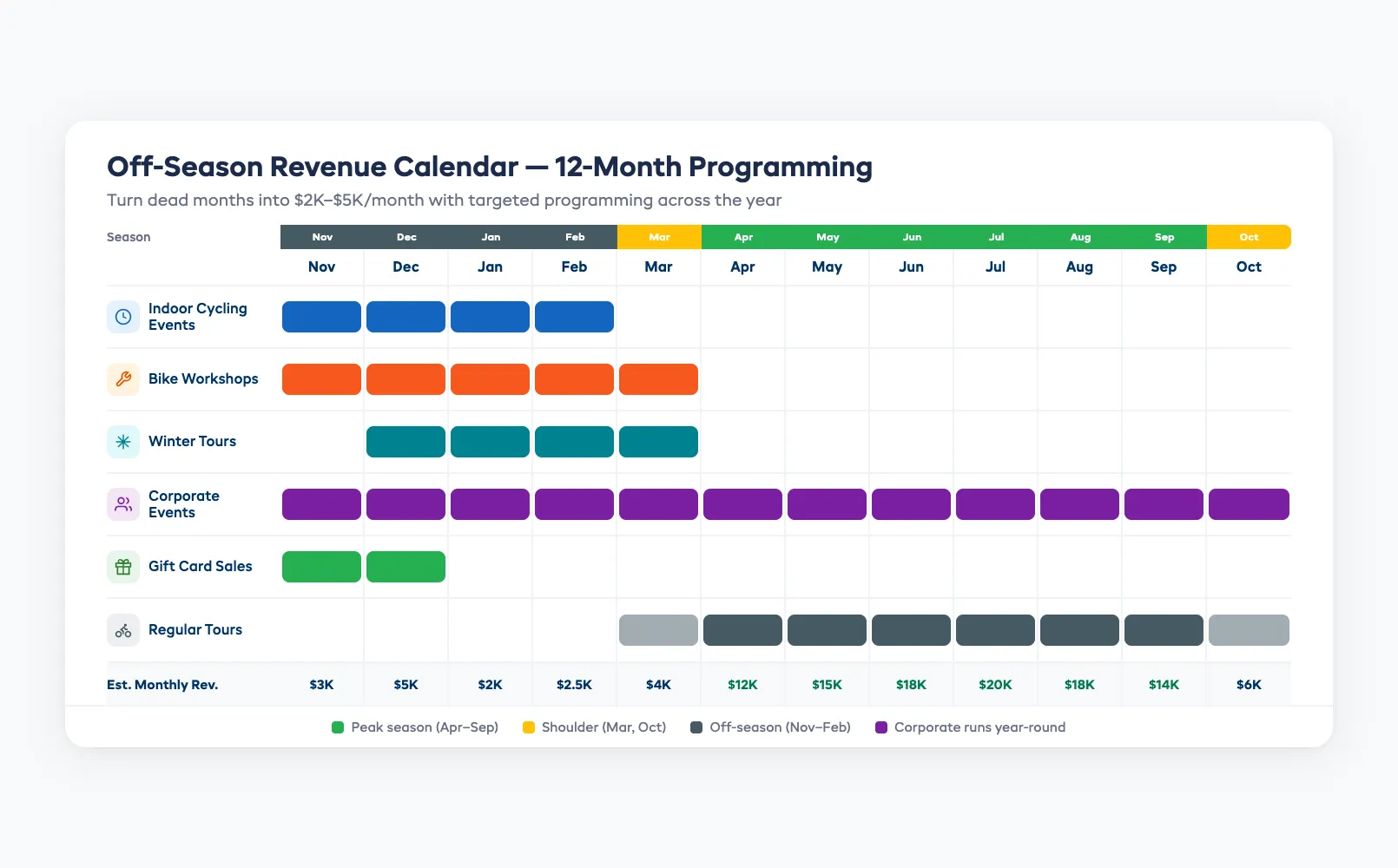
If your tours run April through October, you're earning zero revenue for 5 months. Off-season programming won't match peak-season numbers, but turning dead months into $2,000-$5,000 per month changes your annual picture.
Indoor cycling events. Partner with a local brewery, winery, or event space. Run themed rides on stationary trainers — "Tour de France watch parties" or "New Year's resolution rides." Charge $25-$40 per person, include a drink. These events keep your brand visible and your email list warm.
Maintenance workshops. Teach basic bike maintenance classes. Flat tire changes, chain care, brake adjustment. Charge $30-$50 per person, run groups of 6-10. Low overhead — you're using your existing shop space and tools. Attracts cyclists who become tour customers in season.
Winter and cold-weather tours. If your climate allows it (above freezing, dry roads), run reduced-schedule tours on weekends. Fat bike tours on snow are a growing niche in mountain towns. Price at a 20-30% premium over summer tours — the novelty factor justifies it.
Corporate team-building (off-season version). Companies book team events year-round. In winter, pitch indoor events: navigation challenges using maps of your tour routes, bike-building competitions with donated bikes for charity, or team trivia with cycling themes. $50-$80 per person, 15-person minimum.
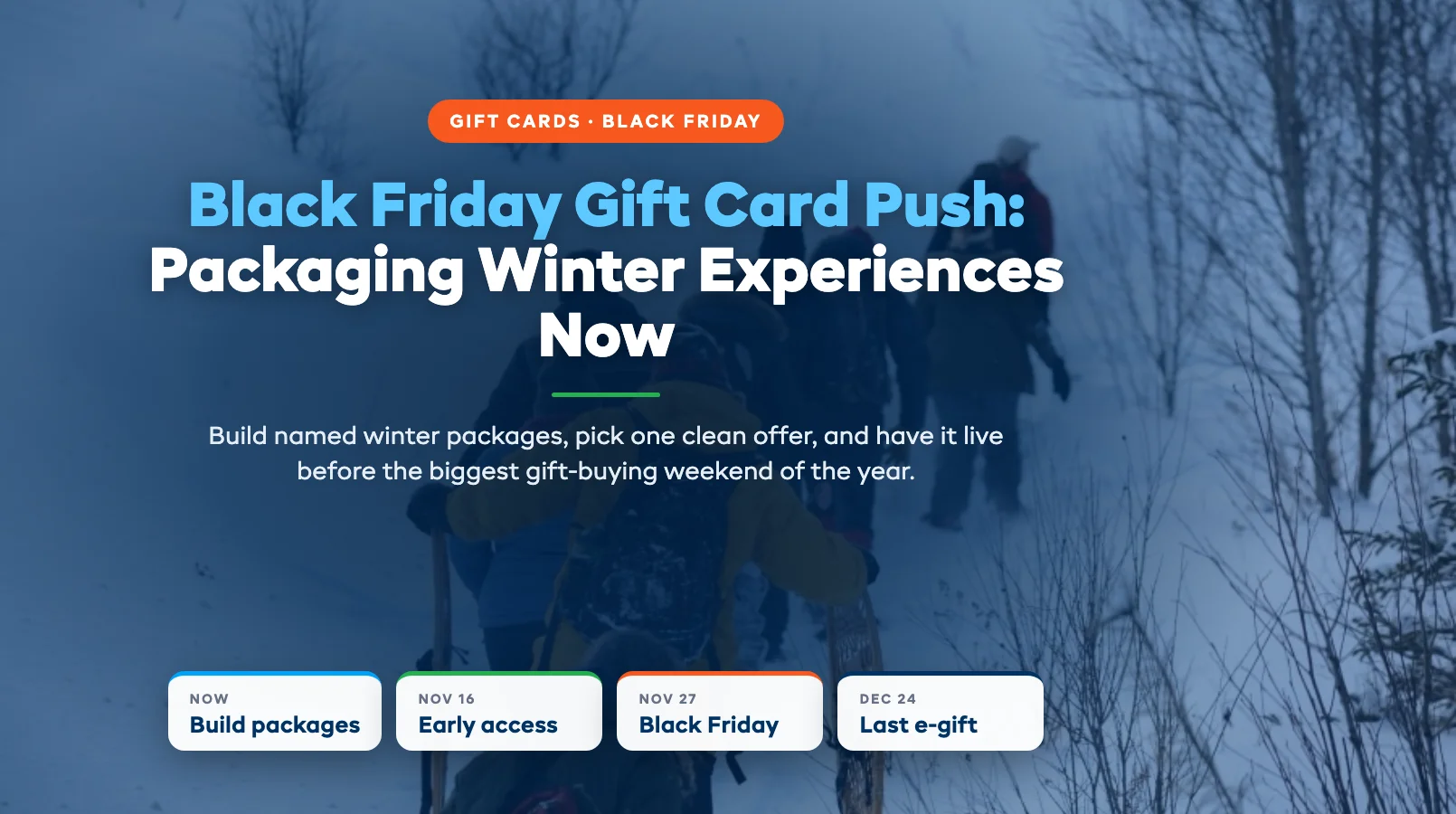
Gift cards and vouchers. Push gift card sales hard in November and December. Offer a bonus — "Buy $100, get $120 in tour credit." Redeemable in season. This generates immediate cash flow and guarantees future bookings. Track redemption rates in your booking system to forecast spring demand.
Corporate Groups and Private Bookings
Corporate bookings are the single highest-value revenue channel for bike tour operators. A corporate group of 20 at $85 per person is $1,700 in one departure — more than most operators earn in a full day of public tours.
What companies want. Team-building, client entertainment, offsite activities. They care less about price and more about logistics: "Can you handle 30 people?" "Do you have a meeting space after?" "Can we add drinks?" Say yes to everything and figure out the logistics second.
Pricing corporate. Charge 15-25% above your public per-person rate. Add a private-tour surcharge ($100-$200 flat fee) for exclusive departure. Build packages that include post-ride food and drinks — partner with a local restaurant and mark up their per-head cost by 30-40%.
Minimum headcount guarantees. Set a minimum of 10-15 people or charge a flat minimum fee equivalent (e.g., "Private tours start at $850, which includes up to 10 guests. Additional guests at $85 each"). This protects you from a "corporate booking" that turns out to be 4 people.
The sales process. Corporate bookings don't come through your public booking page. Build a simple "Groups & Events" landing page with a contact form. Respond to enquiries within 2 hours — corporate event planners are comparing 3-4 vendors simultaneously, and the first reply often wins.
Repeat business. Once you deliver a good corporate event, you're on their list. Send a follow-up 10 months later: "Your team's tour last September was great — want to book again this year?" Corporate accounts generate 2-3 bookings per year with minimal acquisition cost.
Tracking group bookings, revenue per channel, and repeat rates is where your booking and operations platform earns its keep. When you can pull a report showing "corporate bookings generated 28% of revenue last year," that number drives your sales strategy.
Ready to track your tour revenue, upsell conversions, and corporate bookings in one place? Dash gives bike tour operators real-time visibility into per-guest revenue, channel performance, and seasonal trends — so you know exactly which levers are driving growth.
FAQ
What's a realistic per-guest revenue target for bike tour operators?
Strong operators target $70-$100 per guest all-in (ticket + upsells + photos). If your current average is $50-$60, adding a premium tier and photo package gets you there without changing your base price.Should I raise base prices or focus on upsells?
Both, but upsells first. Raising base prices risks reducing bookings. Upsells increase revenue from guests who've already committed. Once you've maximized per-guest revenue through upsells, then test a 5-10% base price increase.How do I price e-bike tours versus standard bike tours?
Charge a 20-40% premium. A $65 standard tour becomes $85-$95 on e-bikes. Guests pay willingly because e-bikes feel like a better experience. Your added cost is battery management and higher depreciation, but the margin expansion more than covers it.What photo package pricing works best?
$15-$25 per person or $35-$50 per group. Per-person pricing earns more on larger tours. Group pricing converts better on small tours (couples, families). Some operators offer both and let the guest choose.How do I get corporate bookings?
Build a "Groups & Events" page on your website with a contact form. List on corporate event directories. Partner with local hotels that host conferences. The biggest lever is responding fast — reply to enquiries within 2 hours. Event planners go with whoever responds first.Is off-season programming worth the effort?
If it generates $2,000-$5,000 per month in otherwise dead months, that's $10,000-$25,000 in annual revenue you wouldn't have. It also keeps your brand active, your email list engaged, and your staff employed. The ROI isn't just the direct revenue — it's the retention and visibility.What upsell has the highest margin?
Photo packages. Your cost is near zero (the guide takes photos anyway), and you charge $15-$25 per person. Phone mounts are second — $8 purchase price, 100+ rentals per unit, at $5 per rental.in one place