
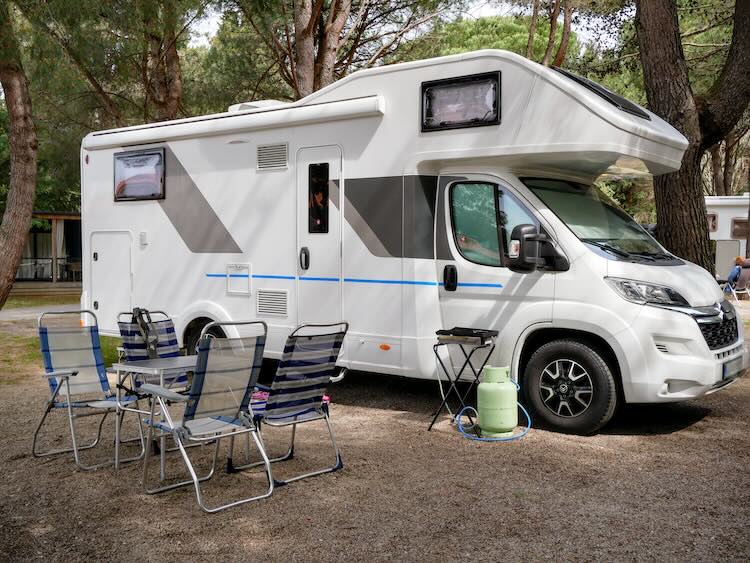
Motorhome
Any self-propelled RV you drive rather than tow. Covers Class A, B and C. The core of most drive-away rental fleets.
Glossary
71 terms every RV and campervan rental operator should know.
Any self-propelled RV you drive rather than tow. Covers Class A, B and C. The core of most drive-away rental fleets.
Large bus-style motorhome built on a heavy chassis. The biggest, most feature-rich rig, highest nightly rate and deposit.
A camper built inside a standard van body. Compact, easy to drive, popular with couples. The lightest, most fuel-efficient motorhome.
Mid-size motorhome with the signature cab-over bunk, built on a cutaway van chassis. A common family rental.
General term for a van converted for sleeping and cooking. Overlaps with Class B; often used for smaller conversions.
A towable RV that hitches to a ball on the tow vehicle. Renters need a capable vehicle or rent one alongside.
A large towable that connects to a hitch mounted in a pickup truck bed. Roomy, but needs a heavy-duty truck.
A lightweight folding trailer that expands into a tent-topped camper. Cheap to tow, quick to set up.
A small, aerodynamic towable with a sleeping cabin and a rear galley. Popular minimalist rental.
An RV with a rear garage and drop-down ramp for hauling ATVs, bikes or gear. Rented for adventure trips.
A camper unit that loads into the bed of a pickup truck. Compact and off-road capable.
The vehicle frame, engine and running gear an RV is built on. Determines size class, weight rating and service intervals.
Onboard tank holding potable water for the sinks, shower and toilet. Filled at pickup and topped at turnaround.
Waste water from sinks and the shower. Held in the gray tank until dumped at a dump station.
Toilet waste. Held in the black tank and dumped separately from gray. Emptying it is a core turnaround step.
General term for the fresh, gray and black tanks that store water and waste on board.
Liquefied petroleum gas that powers the stove, furnace, water heater and fridge. Refilled between rentals.
Mains electricity supplied by plugging the RV into a campsite pedestal, so appliances run without the battery or generator.
The two common shore-power service ratings. Bigger rigs with more appliances need 50-amp; smaller ones run on 30-amp.
Onboard engine that produces electricity when off shore power. Runs on the RV fuel supply and tracks its own hours.
Device that converts battery DC power into household AC power for outlets, so appliances work without hookups.
Device that turns shore or generator AC power into DC to run 12-volt systems and charge the house battery.
Battery bank that powers lights, pumps and 12-volt systems when the engine is off. Separate from the starting battery.
A facility with a sewer connection for emptying the gray and black tanks. Where turnaround dumping happens.
A hookup that feeds mains water pressure directly into the RV plumbing, bypassing the fresh tank and pump.
Appliance heating water for the shower and sinks, running on propane, electric, or both.
Draining the water system and adding RV antifreeze so pipes don’t freeze in storage. A seasonal fleet task.
A section of the RV that extends outward when parked to enlarge the living space. Retracted for driving.
A retractable fabric cover that extends from the side to shade the outdoor area. A common damage item on returns.
Jacks that level the RV on uneven ground so doors, fridge and slide-outs work correctly. Manual or automatic.
Jacks or braces that steady a parked RV to reduce rocking. Different from leveling jacks, which bear weight.
Camping with no hookups, relying on the fresh tank, house battery and generator. Popular but harder on the systems.
A campsite with water, electric and sewer connections all available. The opposite of boondocking.
The RV kitchen area, stove, sink, fridge and counter. Often stocked with a rentable kitchen kit.
The built-in table-and-bench seating area, which usually converts into an extra bed.
A compact bathroom where the shower shares the space with the toilet and sink. Common in camper vans.
A toilet with a small removable waste tank emptied by hand, common in vans without a full black tank.
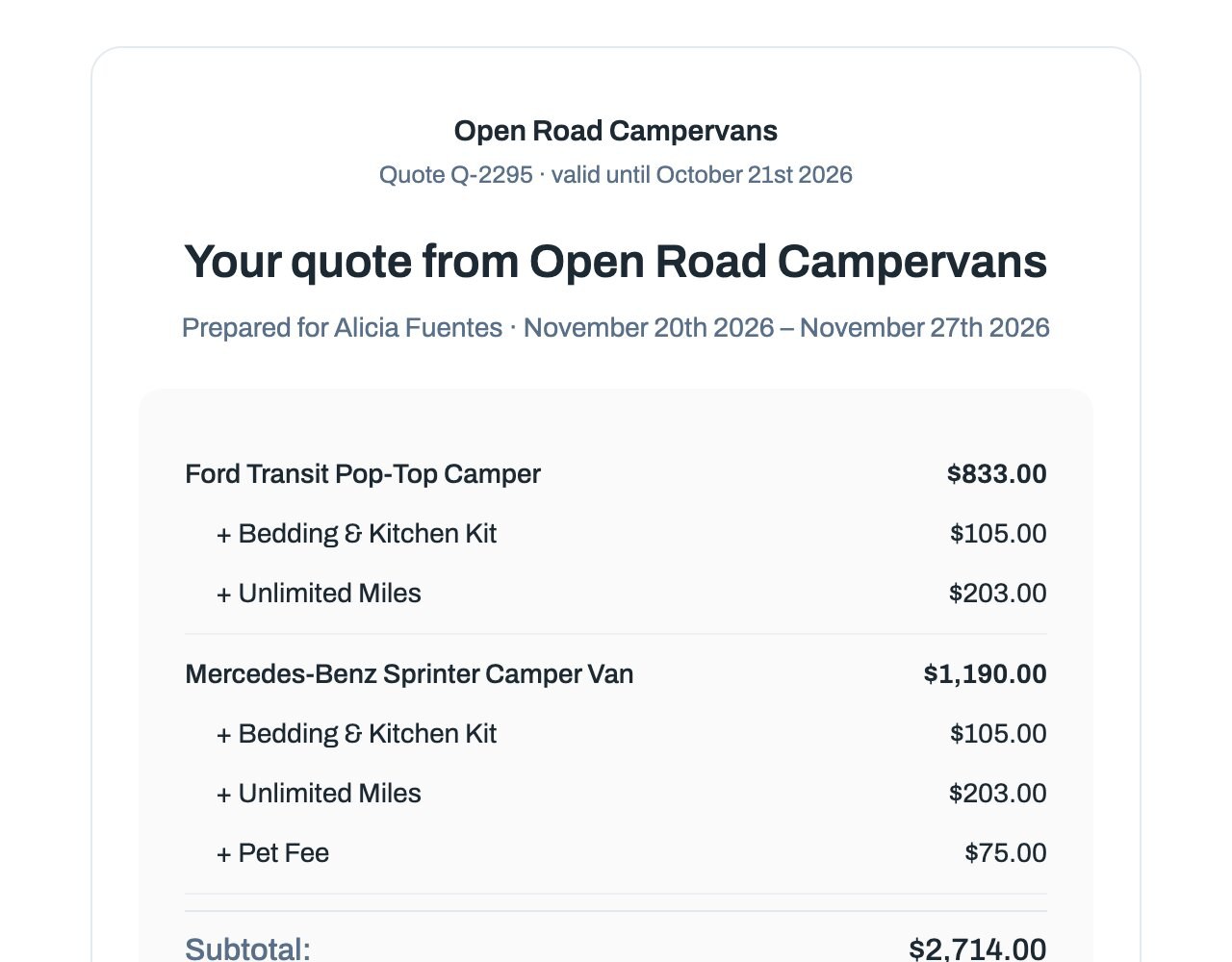
Build a quote with the vans, add-ons and tax, and send it to the customer in one go.
No credit card required. 21-day free trial.
Gross Vehicle Weight Rating, the maximum safe loaded weight of the RV, including passengers, water and gear.
Gross Combined Weight Rating, the maximum weight of the RV plus anything it tows. Matters for towable and toy-hauler setups.
Payload is how much weight you can add on top of the empty RV before hitting the GVWR. Renters often overload it.
Connecting a trailer or a towed car to the RV. The hitch is the coupling hardware rated to a specific weight.
A hitch setup that spreads trailer tongue weight across the axles for stable towing. Reduces sag and sway.
Side-to-side movement of a towed trailer, dangerous at speed. Managed with weight distribution and sway-control bars.
The miles included per night in the rate. Beyond the cap, a per-mile charge applies. Read at pickup and return.
Tail swing is how the rear of a long RV swings wide in turns. A common first-timer scrape hazard on handover briefings.
A Class A motorhome with a rear-mounted diesel engine. Powerful and quiet, at the premium end of a fleet.
The rule for returning fuel, usually return-full or pay-at-return. Applies to both the drive tank and generator fuel.
The structured handover staff run with the renter at pickup, covering how every system works before the keys change hands.
The hands-on part of the walkthrough, showing the renter the water tanks, propane, generator, awning and slide-outs.
The signed contract setting the terms: mileage cap, generator allowance, deposit, insurance and return condition.
Recording the renter’s (and any additional driver’s) license before pickup, kept on file with the booking.
A pre-authorization hold on the renter’s card covering damage and overage. Released on a clean, in-allowance return.
The turnaround routine of emptying the black and gray tanks and refilling fresh water and propane for the next rental.
The whole changeover between rentals, dump, refill, clean, restock and inspect, before a rig can go out again.
The work of readying a rig for the next renter, sometimes billed as a fixed cleaning-and-restock prep fee.
The generator’s run-time reading, logged at pickup and return. Drives both overage charges and service scheduling.
The check at drop-off recording final mileage and generator hours, tank status, and any damage against a rate card.
A pre-set price list for common damage (torn awning, scratched panel, chipped counter) applied against the deposit.
The photo-and-notes record of a rig’s state at pickup and return, the evidence that wins a disputed damage charge.
The base price per night of the rental, before mileage, add-ons, deposits and fees.
Pricing for a whole trip of several nights, often with a weekly discount. The standard structure in RV rental.
The shortest stay a rig can be booked for, often raised in peak season and around holidays.
The nightly included-mileage allowance built into the rate. Overage bills per mile at return.
A per-hour fee for generator use beyond the included allowance, calculated from the hour-meter readings.
Picking up at one depot and dropping at another. Carries a one-way fee to cover repositioning the rig.
The high-demand stretch, summer and holidays for most fleets, when rates, minimum nights and deposits rise.
A fixed cleaning-and-restock charge added to the booking to cover turnaround, in place of or alongside a deposit deduction.
An optional paid item, kitchen kit, bedding, camp chairs, mileage pack, sold at booking or the counter.
An optional purchase that caps the renter’s liability for damage, sold as a daily add-on instead of a larger deposit.
A charge for bringing a rig back past the return time, usually per hour or per day, applied against the deposit.
The share of your available rig-nights that are actually booked. The core health metric for an RV rental business.
No terms match that search.