
EquipDash hands the busywork — bookings, rental agreements, deposit holds, turnarounds — to Dash AI. So you can focus on getting rigs off the lot instead of behind a screen.





 Dashboard

 POS
POS
 Calendar
 Scan a barcode
 Bookings
 Rentals
 Experiences
 Customers
 Staff
Staff
 Waivers & Forms
| # | Renter | Rig | Status | Pickup | Price |
|---|---|---|---|---|---|
| BK-2389 | Sarah M. | Class B Camper Van + mileage | Confirmed | 12 Jul 10:00am | $1,720.00 |
| BK-2388 | Jake R. | Class C · 25ft + generator | On trip | 10 Jul 9:30am | $2,180.00 |
| BK-2387 | Patel family | Class A · 32ft · one-way | Confirmed | 14 Jul 10:00am | $3,420.00 |
| BK-2386 | Marco L. | Travel Trailer · 22ft | Returned | 3 Jul 9:00am | $980.00 |
Dashboard
POS
Calendar
Scan a barcode
Bookings
Rentals
Experiences
Customers
Staff
Waivers & Forms
| Rig / Add-on | Unit # | Qty | Status | |
|---|---|---|---|---|
🚐 |
Class B Camper Van — Solis | OR-VAN-04 | ×1 | Confirmed |
🍳 |
Mileage pack + kitchen kit | ADD-MILE-K | ×1 | Confirmed |
Dashboard
POS
Calendar
Scan a barcode
Bookings
Rentals
Experiences
Customers
Staff
Waivers & Forms
| Item | Unit # | Qty | Status | |
|---|---|---|---|---|
🚐 |
Class B Camper Van — Solis
Awning scuff · driver-side edge · ~6 in
|
OR-VAN-04 | ×1 | Inspection |
🍳 |
Mileage pack + kitchen kit | ADD-MILE-K | ×1 | Returned · OK |
More bookings online. Every rig tracked. Every renter contacted automatically. The stuff your last system promised and never quite delivered.
Most renters book direct on your website — if the widget feels like your business. Embed a branded widget that looks like your operation, not generic tourism software. Real-time availability, nightly + multi-day pricing, mileage packs, deposit holds. Mobile-ready and fast, even at the height of road-trip season.
On the road. Back on the lot. On turnaround. Overdue. Mark pickup, mark return — from any device. Auto-text the renters running late so you stop chasing them.
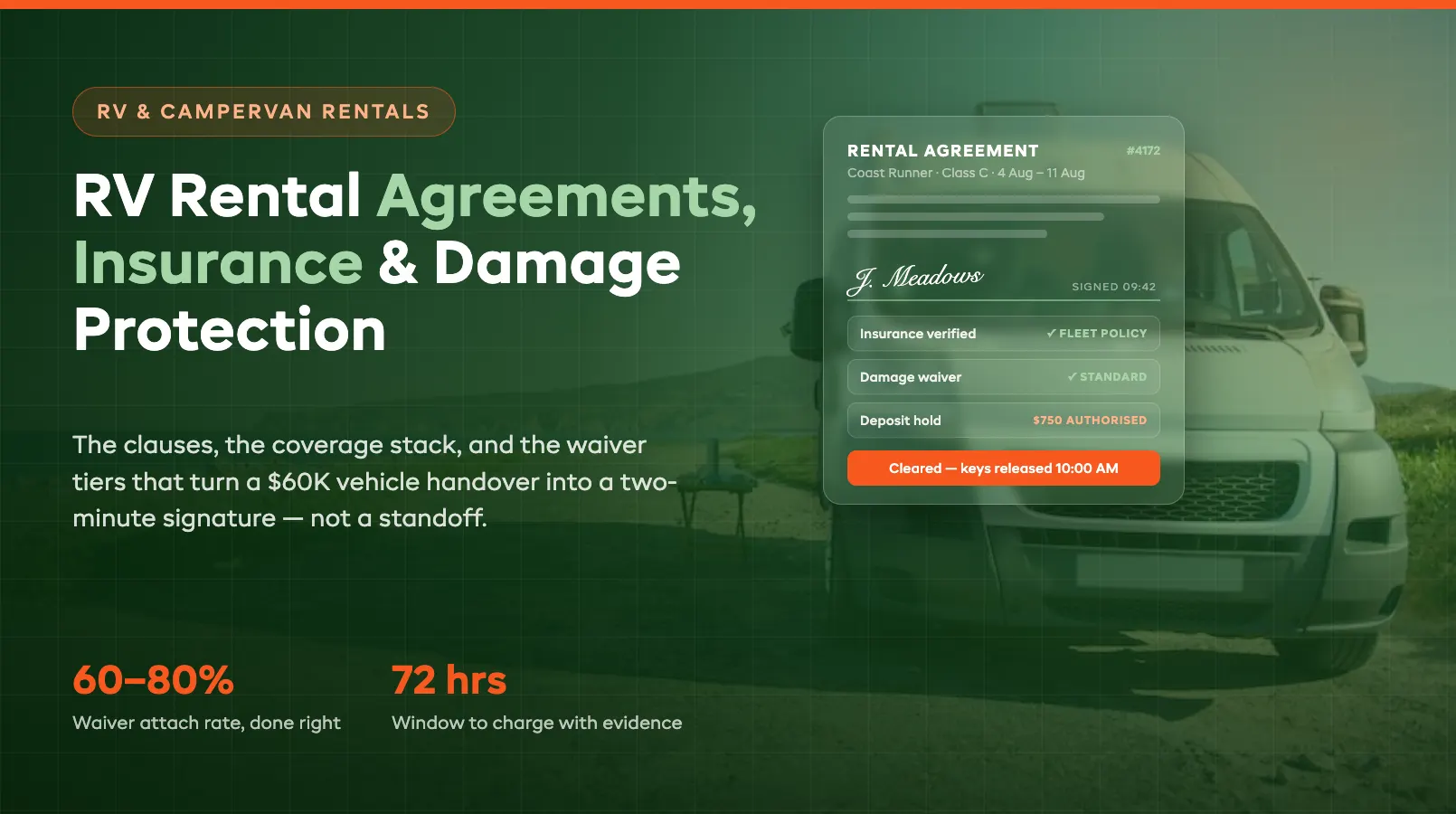
A signed rental agreement and a driver license captured on every booking before pickup. Renters sign on their phone. Walkthrough photos save automatically. Exports are insurance-ready, not a PDF mess.
Confirmations. Pre-trip prep reminders. Overdue chasers. Agreement follow-ups. Service-due alerts. Post-trip review requests. All sent automatically — no scripts, no 11pm copy-paste from a spreadsheet. Pulls renter phone right from the booking.
Ask Dash anything in plain English — get the answer in seconds. Or deploy pre-built agents that run in the background while you're on the lot or in the office.
Three workflows other rental software doesn't have. Plus all the standard tools you'd expect — done well.
A first-time renter needs the whole systems demo — fresh, gray and black water, propane, generator, awning, slide-out. EquipDash runs it as a tablet checklist you tick together, captures photos and the signed rental agreement, and only releases the rig once every item is done. Nothing forgotten, nothing to argue about later.
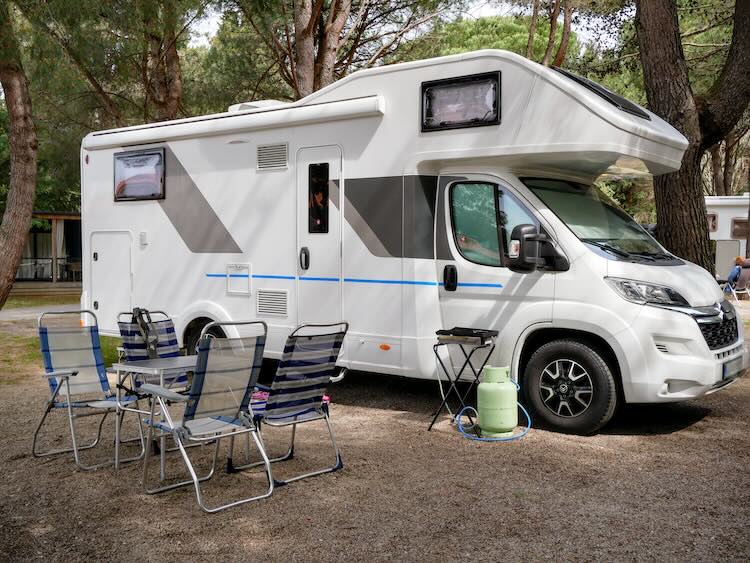
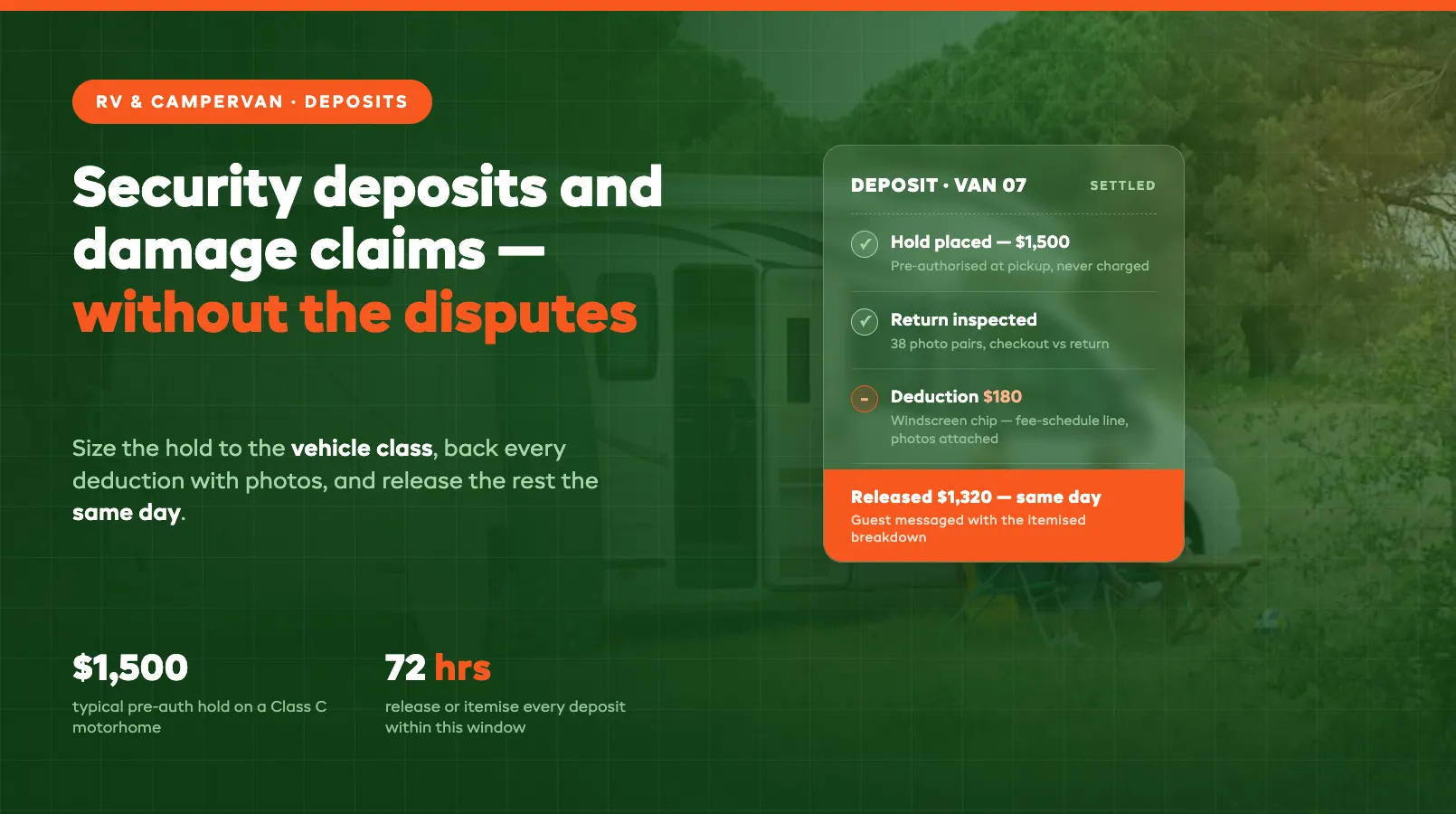
Motorhomes are six-figure assets and wear is part of the job. EquipDash pre-authorizes a security hold on the renter's card when they book through Stripe, captures mileage and generator hours at return, releases the hold automatically if the inspection is clean, or applies it to documented damage and overage if not. No card-on-file billing, no manual chase.
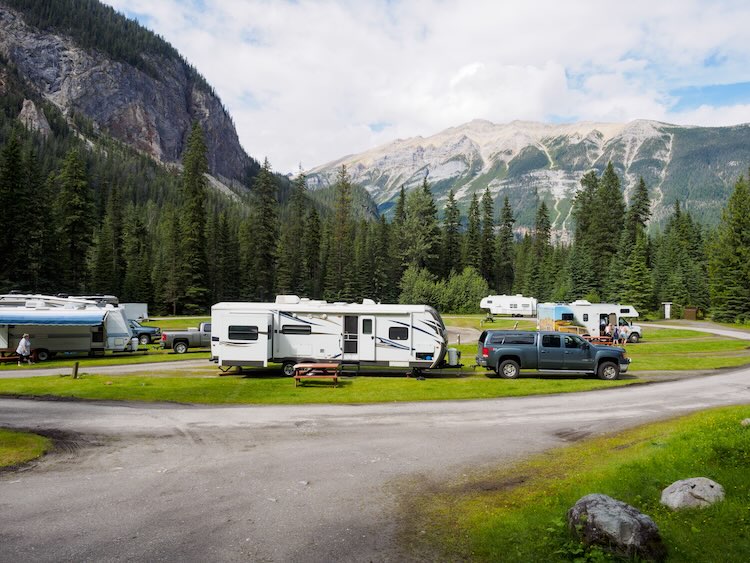
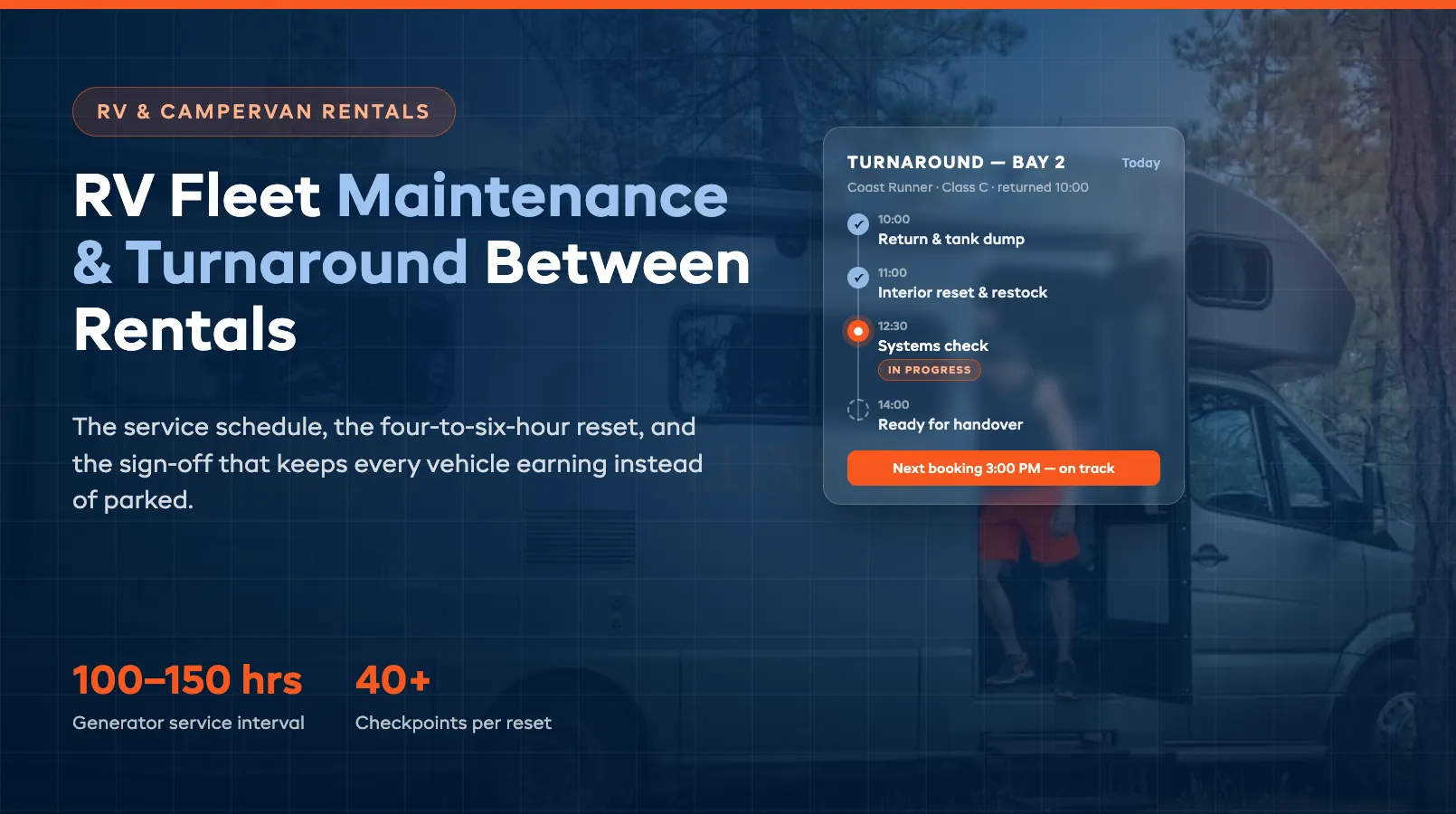
A 7-night rental returns at 11am. The next renter is booked for 2pm. Between them sits a full turnaround — dump the tanks, refill fresh water and propane, clean the interior, restock the kitchen. EquipDash auto-blocks the buffer, spins up a cleaning ticket the moment the rig returns, and won't let the widget sell a rig before it's prepped.
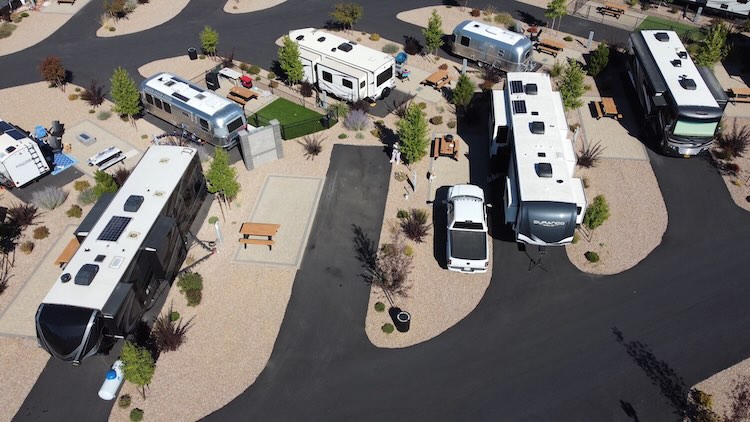
The 3 features above are unique to RV and campervan rental ops. Everything below is table stakes — and we don't charge extra for any of it.
Every Class A, Class B camper van, Class C, travel trailer and toy hauler tracked by unit number and bay. Live updates as rigs depart and return — no more “sorry, the camper van is double-booked” mid-Saturday.
Every rig gets a full service history across seasons. Mileage and generator hours per unit, oil changes, tire swaps, last inspection. Free RV-rental service checklists. Searchable by unit, renter or date.
Build rosters for the changeover days that matter. Pair with the peak-day alert agent to forecast the weekend’s pickups and returns ahead.
Renters book, pay a deposit, sign the rental agreement and upload their driver license before they arrive. Handover time cut in half. Pre-booked renters check in far faster than walk-ups.
Handle a family of four in one camper van, a friends’ trip across two motorhomes, or a multi-rig group heading to the same rally — all in one flow. One rental agreement per booker (extra named drivers added, guardian-signed for minors), one invoice, one consolidated deposit hold.
Ring up walk-up renters and add-ons in seconds. Tap-to-pay on iPad or phone, customer lookup for repeats, camp kits and extras in the same flow — no separate till to reconcile.
Signed on phone before they arrive. Driver license uploaded at booking. Extra named drivers and guardian sign-off for minors built in. Every agreement archived and searchable, insurance-ready exports.
Each depot or lot has its own fleet, staff and reporting. Owner-level dashboard rolls them up. Staff can be assigned to multiple sites, and rigs transfer between them for one-way rentals. Popular pattern: a main lot plus a seasonal depot in the next state.
DESTINATIONS
Browse our directory of RV and campervan rental businesses across 12+ road-trip destinations. Find rentals near your trip or use the directory as a benchmark for your own operation.
AI BOOKINGS
Renting an RV is a big decision full of questions — which model, how many it sleeps, what's included, how pickup works. AI Bookings puts Dash on your booking page to answer from your own details, match each traveler to the right rig, and take the booking, so more of your fleet stays on the road.
AI assistant — may make mistakes. Confirm details with Open Road RV Co.
AI AGENT TEMPLATES
Pre-built AI agent templates for motorhome and campervan rental businesses. Rental-agreement and license chasing, deposit releases, pre-trip provisioning reminders, late-return charging, mileage and generator-hour service alerts, and review requests. Build any of them in Dash Agents in seconds with a plain-English prompt.
BLOG
 Guides
 Guides
 Guides
 Guides
 Guides
 Guides
RV RENTAL GLOSSARY
Quick reference answers to the terms that come up when researching RV rental software, fleet management, deposits, mileage and generator-hour tracking, and turnaround logistics. Want the full lexicon? Open the RV rental glossary below.
RV rental software is a platform that manages every part of a motorhome and campervan rental operation — online multi-day bookings, fleet inventory, deposit holds, driver license and rental-agreement capture, pickup walkthroughs, mileage and generator-hour tracking, payments, damage reports and turnaround — in one place. Modern systems like EquipDash replace the spreadsheet-and-clipboard setup most rental lots grew up on and add AI agents that handle the repetitive admin (agreement chasing, deposit releases, service alerts, review requests) automatically.
Class A is a large bus-style motorhome built on a heavy chassis — the biggest, most feature-rich rigs. Class B is a camper van built inside a standard van body — compact, easy to drive, popular for couples. Class C is the mid-size motorhome with the signature cab-over bunk, built on a cutaway van chassis. Rental businesses usually price and deposit each class differently because size, complexity and repair cost vary widely.
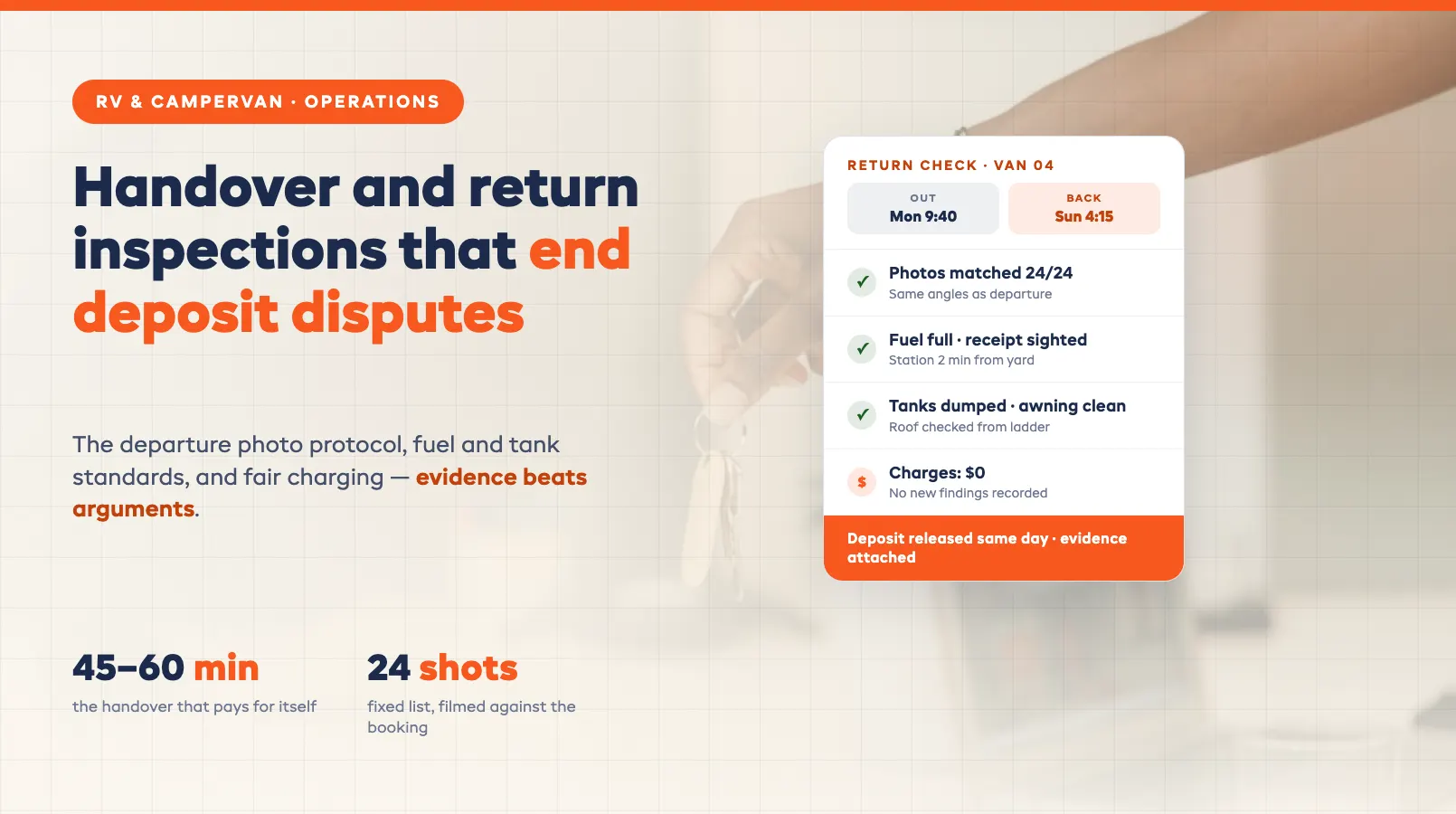
A pickup walkthrough is the structured handover staff run with the renter before the keys change hands. The systems demo covers the fresh, gray and black water tanks, propane/LP, the generator, shore-power hookup, the awning, slide-outs and leveling jacks — plus how to dump and refill. In EquipDash this lives as a per-rig checklist on a tablet; the booking cannot move to “out” status until every item is ticked, photos are taken and the rental agreement is signed. The completed handover attaches to the booking for insurance and audit.
A security deposit is a pre-authorization hold placed on the renter’s card at booking — typically $1,000 for a camper van up to $2,500 for a Class A motorhome. The hold sits on the card without being charged; if the return inspection is clean and mileage and generator hours are inside allowance, it’s released automatically (Stripe voids the auth and the hold drops off the renter’s statement in a few days). If damage is documented or overage applies, a rate-card charge is applied against the hold and the balance is released. This is the standard approach across RV rental lots — far cleaner than billing a “card on file” after the fact.
A mileage cap is the number of miles included per night in the rental rate — a common structure is 100–150 included miles per night, with a per-mile charge beyond that. The odometer is read at pickup and again at return; the difference against the included allowance is the overage. In EquipDash both readings are captured at the walkthrough, the overage calculates automatically, and the charge posts against the deposit hold or as a return charge — no manual arithmetic at the counter.
Most motorhomes carry an onboard generator with its own hour meter. Running it draws fuel and wears the unit, so rental businesses typically include a small number of generator hours per night and charge per hour beyond that. EquipDash captures the generator-hour reading at pickup and return alongside the odometer, so any overage charges automatically. It also feeds the service-due alert — generators run on their own maintenance interval, separate from engine mileage.
Turnaround is everything that happens between one rental returning and the next one leaving: dumping the black and gray tanks, refilling fresh water and propane, cleaning the interior, restocking the kitchen, and running the post-return inspection. It is the real capacity constraint in RV rental — not weather. EquipDash auto-blocks a turnaround buffer after every return so the widget can’t sell a rig before it’s prepped, and spins up a cleaning ticket the moment the rig comes back, so no renter ever picks up a dirty tank.
A one-way rental is when the renter picks the rig up at one depot and drops it at another — popular for point-to-point road trips (pick up in Denver, drop in Las Vegas). Because the rig now sits at the wrong location, operators charge a one-way fee to cover repositioning. EquipDash handles one-way rentals across depots: the drop-off location, the fee and the fleet reassignment all flow through the booking automatically so the returned rig shows up in the right lot’s inventory.
A return inspection is the structured check staff complete when a rig comes back. It records the final odometer and generator-hour readings, confirms the tanks are dumped and fresh water is topped, and logs any damage with multi-angle photos against a rate card. In EquipDash the inspection drives the money: mileage and generator overage post automatically, documented damage applies to the deposit, the clean balance releases to the renter, and a turnaround cleaning ticket is created — all from one screen.
Damage charge defense is the operational habit of capturing enough evidence at pickup and return that any disputed charge — a chargeback for a scratched panel, a query on a torn awning — is winnable. The record: pickup photos with odometer and generator readings, the signed rental agreement and driver license on file, return photos with the damage flagged, the rate-card line item applied to the deposit hold, and the renter notified by text with the photo and rate-card reference. EquipDash automates this — the damage report drafts from the return inspection, so you just review and send.
Fleet utilization is the percentage of your rig-nights that are actually booked over a period. A 10-rig lot has 300 rig-nights of supply in a 30-day month; if you booked 180 of those, utilization is 60%. Healthy RV rental lots in peak season run 65–85% on their fleet. EquipDash reports utilization per rig class (Class A, Class B camper van, Class C, travel trailer) and per depot so you know which rigs to add, which to retire at end of season, and where turnaround delays are quietly eating available nights.
Most RV rental lots send four touchpoints by SMS: a pre-trip prep and provisioning reminder with the pickup time and what to bring (a few days out), a rental-agreement and license chase (if unsigned before pickup), an overdue follow-up (past the return time, with an extension offer), and a review request (after the rig is back and inspected). Each is a small touch but stacked together they cut no-shows, recover late-return revenue, and lift your rating. EquipDash ships these as pre-built Dash Agents — no scripts to write, no SMS provider to wire up.
GLOSSARY
60+ RV and campervan rental terms every owner, lot staffer and shop lead should know — from pickup walkthroughs and Stripe deposit holds to mileage caps, generator hours, dump-and-fill turnarounds and the rental-ops terminology that makes busy changeover days predictable.
FREQUENTLY ASKED QUESTIONS
Real questions from RV and campervan rental operators evaluating EquipDash. If yours isn't here, get in touch.
Contact UsPlans start at $29/month. 21-day free trial, no card. There is a 1–2% platform fee you can pass to the renter at checkout — so unlike FareHarbor or Peek Pro pulling 1–6% off your top line, your margin stays yours.
Start your free 21-day trial and explore every feature, including Dash AI and Dash Agents. No credit card, no commitment.
