Running Boat Rentals at a Marina: Slip Logistics and Handoffs
It's 9:15 on a Saturday morning. Three families are waiting on the dock. Two boats are coming in late from yesterday's sunset cruise. Your dock hand is fueling one pontoon while a customer demands their 9 AM departure. Nobody knows which slip is free.
This is what marina boat rental operations look like without a system. Every handoff is a scramble. Every peak hour is a coin flip between smooth departures and angry customers blocking the fairway.
Marina-based rentals add a layer of complexity that trailer operations don't have. You're coordinating fixed slip space, shared dock access, fuel schedules, and customer flow — all in a footprint you can't expand. The operators who run smooth marina operations don't have more dock space. They have better assignment logic, tighter handoff protocols, and check-in flows that separate arriving customers from departing boats.
For the full boat rental operator playbook — licensing, insurance, fleet sizing, and software — see our complete boat rental business guide. For maintenance scheduling by engine hours, see our boat maintenance logs guide.
Slip Assignment Algorithm
Random slip assignments create bottlenecks. A 26-foot center console squeezed between two pontoons blocks the pontoon renters from boarding. A deep-draft sailboat assigned to a shallow finger dock means your dock hand spends 15 minutes re-docking.
Assign slips based on three factors:
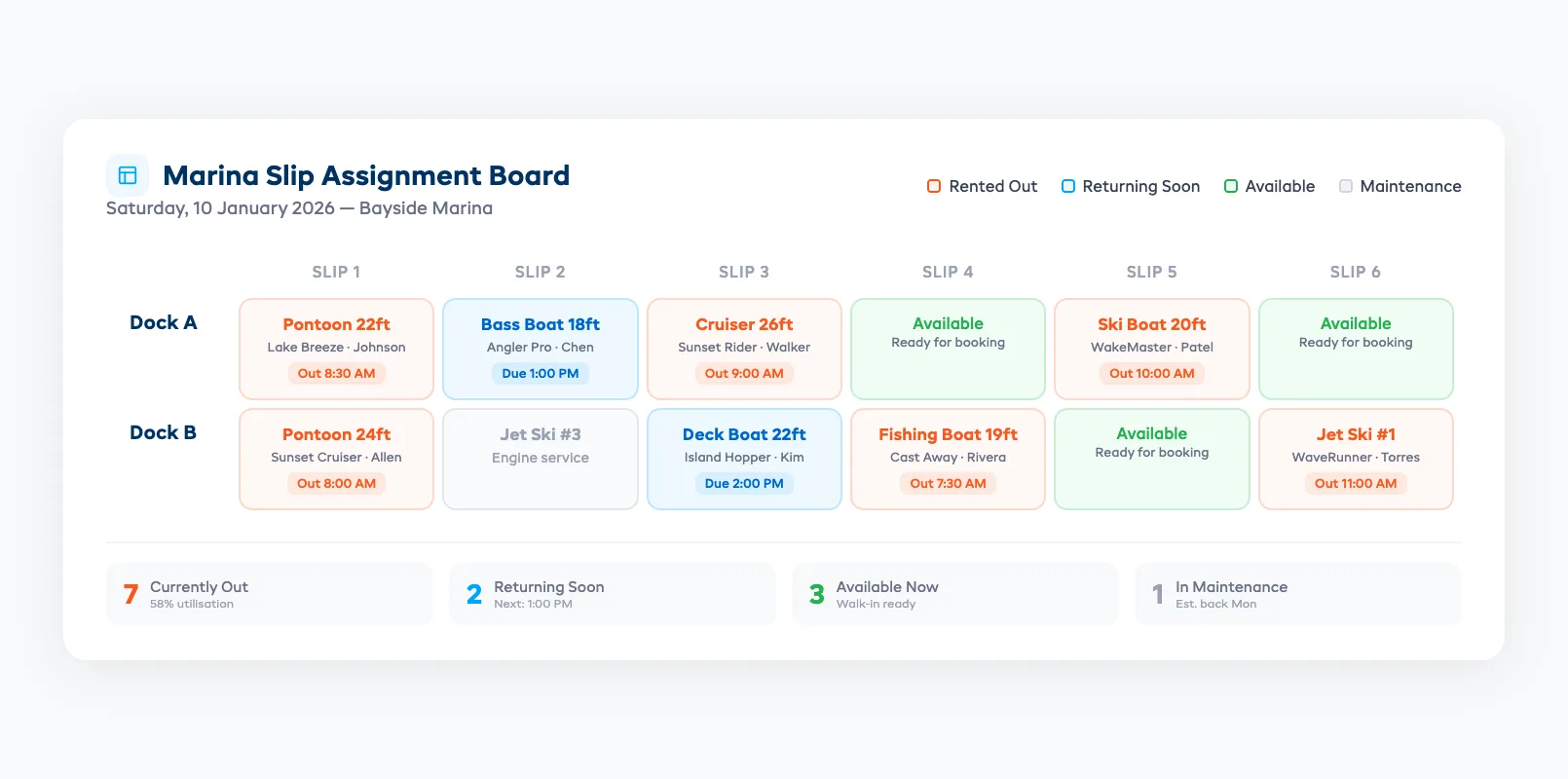
Boat class and beam width. Group similar-sized vessels together. Pontoons in one section, runabouts in another. This keeps dock lines consistent and prevents oversized boats from blocking narrow fairways. If you run 12 slips, dedicate 4 to pontoons (your highest-volume class), 4 to runabouts and bowriders, and 4 flex slips for center consoles, fishing boats, or overflow.
Departure time. Boats departing first go on the outside slips — closest to the fairway. Late departures go inside. This eliminates the "excuse me, I need to get past your boat" problem that turns a 5-minute departure into 20 minutes of shuffling.
Turnaround window. If a boat returns at 12:00 and the next rental departs at 12:30, that vessel needs a slip near the fuel dock and cleaning station. Don't assign it to the far end of the marina where your dock team loses 10 minutes walking back and forth.
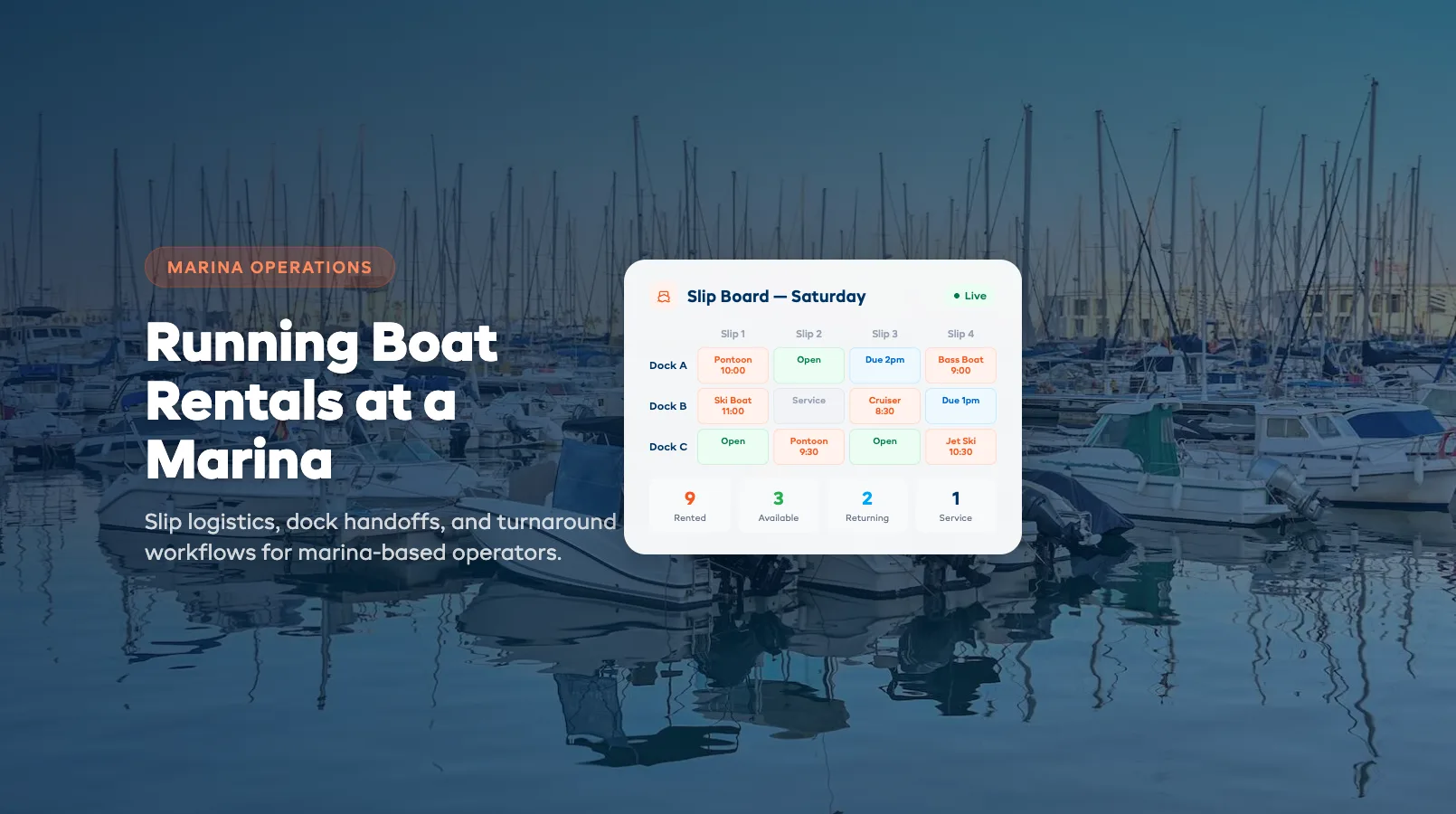
Map your slips on a whiteboard or digital board that updates in real time. Every dock hand should see at a glance: which slips are occupied, which boats are departing next, and which slips are staging for turnaround.
Use our boat dock handling and check-in protocol checklist to standardize how your dock team assigns and stages slips each morning.
Peak-Hour Dock Traffic
Most marina rentals have two traffic spikes: the morning departure wave (8:30–10:00 AM) and the afternoon return wave (3:30–5:00 PM). During these windows, you might have 6–10 boats moving simultaneously in a space designed for 2–3 at a time.
Stagger departure times by 15 minutes. Don't book five 9 AM departures. Book 8:45, 9:00, 9:15, 9:30, and 9:45. This gives your dock team time to complete each handoff — safety briefing, photo documentation, engine start — before the next customer arrives.
Designate a one-way fairway during peak hours. Outbound traffic takes priority from 8:30 to 10:00. Returning boats hold at the channel marker until the dock hand signals them in. Reverse the priority from 3:30 to 5:00. Post the rule on your dock and in your pre-rental briefing.
Use a staging dock. If your marina layout allows it, designate one or two slips as staging-only. Returning boats pull into staging first. Dock team inspects, refuels, and cleans. Then moves the boat to its assigned slip. This keeps the main dock clear for departures.
Count bodies on the dock. During peak hours, limit dock access to the party that's departing next. Everyone else waits at the check-in area. Crowded docks cause slips, falls, and — worst case — someone in the water.
Staff Handoff Protocol
A marina boat rental needs at least three roles during peak hours: dock hand, check-in agent, and a floater who covers fuel, cleaning, or customer questions. The handoff between roles is where things break.
Pre-shift briefing (5 minutes, non-negotiable). Every morning, review the day's board: how many departures, how many returns, which boats need maintenance, which customers are repeat renters vs first-timers. First-timers need longer briefings — factor that into the schedule.
Handoff trigger: boat tied up. The moment a returning boat is secured at the dock, the dock hand radios the check-in agent. The check-in agent starts the return condition report while the dock hand moves to the next arriving vessel. No standing around. No waiting for the customer to walk up to the counter.
End-of-shift log. Before a dock hand clocks out, they log: boats still out, expected return times, any maintenance flags, fuel levels on staged boats, and anything the next shift needs to know. A shared logbook or a quick note in your booking system prevents the "nobody told me" problem.
Our boat shop opening-day operations checklist covers the full pre-shift sequence from dock inspection to radio checks.
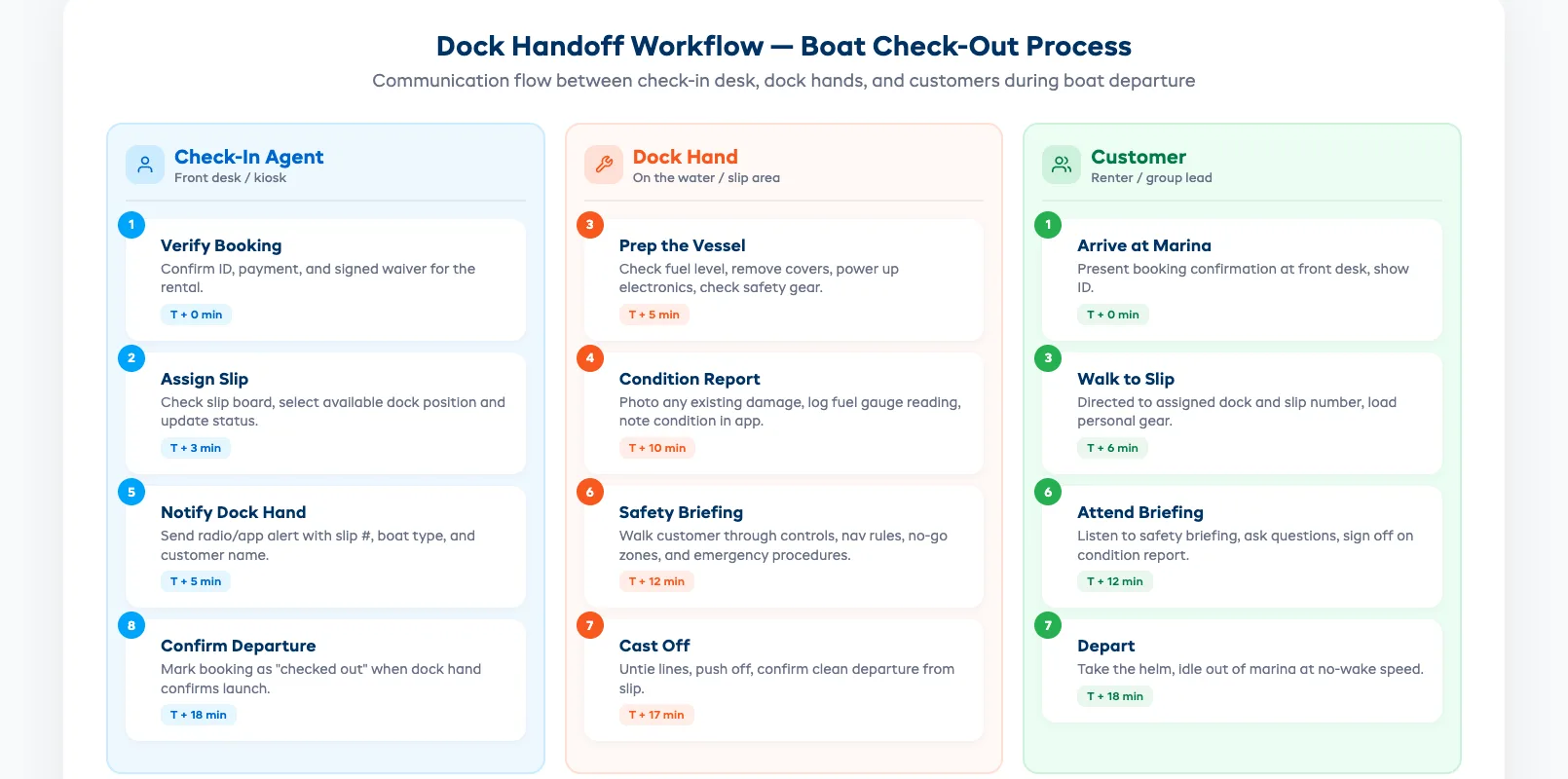
Customer Check-In Flow
The customer check-in should happen away from the dock. Putting customers on the dock before their boat is ready creates congestion, confusion, and liability.
Step 1 — Arrive at the check-in counter (not the dock). Verify the booking, collect ID, process the security deposit hold, and complete the waiver. This takes 5–8 minutes.
Step 2 — Safety briefing at the briefing station. A dedicated area with a map of the waterway, no-wake zones marked, and a 3-minute verbal briefing covering: throttle operation, VHF radio channel, emergency procedures, fuel gauge location, and return protocol. First-time renters get a 5-minute version. Experienced boaters get the abbreviated version.
Step 3 — Dock escort. A dock hand walks the customer to their assigned slip only when the boat is staged and ready. The hand does a walk-around with the customer — pointing out existing condition, showing them the dispatch photos, and confirming they understand the controls.
Step 4 — Departure. Dock hand casts off lines. Customer idles out at no-wake speed. Dock hand radios "Slip 7, departed 9:02" to the check-in agent, who updates the board.
This four-step flow keeps the dock clear, the customers informed, and the liability documented. EquipDash operators use the daily boat pre-departure checklist to run through every safety item before handing over the keys.
Weather Redirection
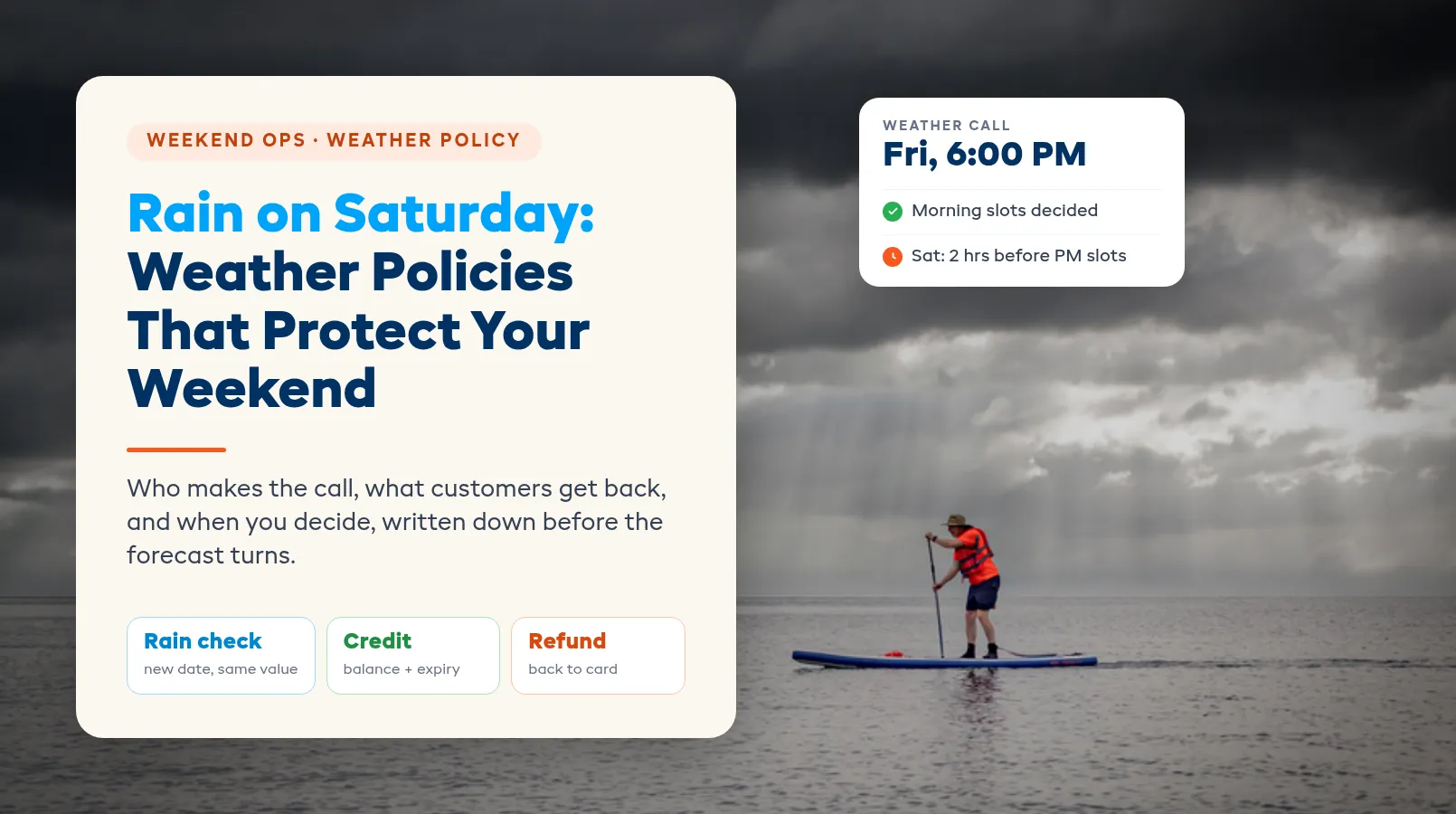
Marina rentals are more exposed to weather disruption than inland operations. A squall line moving in at 2 PM means every boat on the water needs to return — and your dock needs to absorb them all at once.
Monitor marine forecasts hourly during operating hours. NOAA marine weather, Windy, or your local harbor authority channel. If wind speeds are forecast above 15 knots or lightning is within 20 miles, start the callback sequence.
Callback protocol:
- Text or call all active rentals with a return-by time. "Wind advisory issued. Please return to marina by 2:30 PM."
- Stage extra dock hands for the incoming rush. Pull staff from check-in if needed.
- Suspend departures until the weather window clears.
- Offer affected customers a credit, reschedule, or partial refund — decide your policy before the season starts and put it in the rental agreement.
Don't cancel too early, don't cancel too late. Canceling a full morning of rentals because of an afternoon forecast costs you $2,000–$5,000 in revenue. Letting boats go out into deteriorating conditions costs you a hull, a lawsuit, or worse. Check the forecast at 6 AM, 9 AM, and noon. Make the call at the latest safe point.
For structured weather cancellation workflows, the boat weather cancellation agent automates customer notifications and rebooking when conditions change.
Fuel and Pumpout Coordination
Fuel and pumpout are the invisible bottleneck. A boat that returns at 12:00 PM can't depart again at 12:30 PM if the fuel dock is occupied and the holding tank needs pumping.
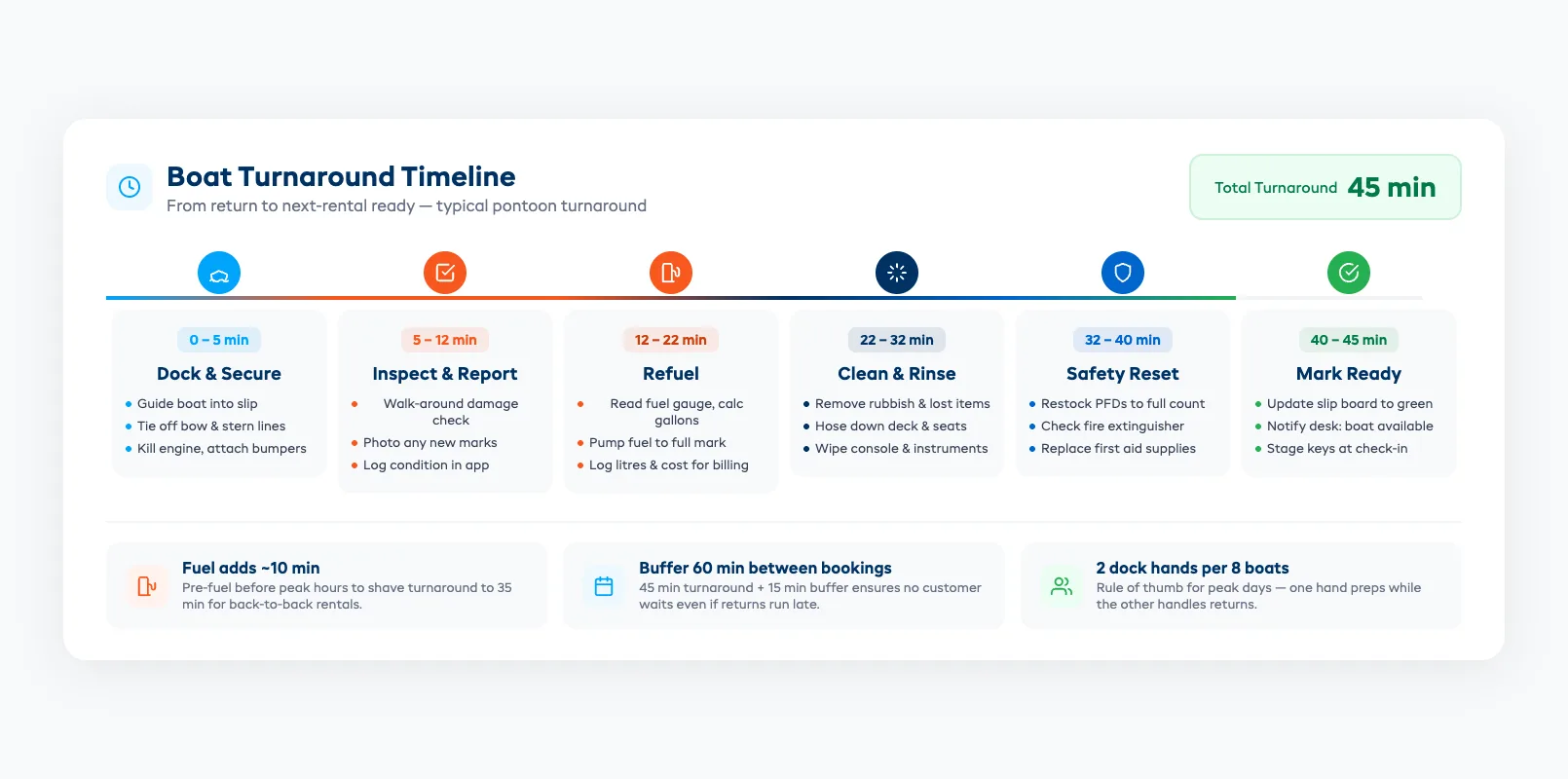
Fuel on return, not on departure. When a boat comes back, the dock hand tops off the tank immediately — before cleaning, before the return inspection. This way, the next renter gets a full tank without a fuel dock queue delaying their departure. Charge the returning customer for fuel used (gallons consumed x your posted rate).
Schedule pumpouts during off-peak windows. If your marina has a pumpout station, schedule holding tank service between 10:00 AM and 3:00 PM — after the morning departure wave and before the afternoon returns. Never pumpout during peak dock traffic. Pumpout lines crossing the dock are a trip hazard and slow everything down.
Track fuel by vessel. Log gallons pumped per boat per rental. Over a season, this data shows you which boats are fuel hogs (possible engine issues) and which customers are running hard enough to warrant extra maintenance checks. Your boat engine service log should include fuel consumption alongside engine hours.
Keep a fuel reserve. If your marina fuel supply runs low on a holiday weekend, you're grounding boats. Track tank levels daily and reorder at 30% capacity — not 10%.
FAQ
How many slips do I need per rental boat? Plan for 1.2 slips per boat in your active fleet. The extra capacity covers turnaround staging and unexpected late returns. If you run 10 boats, secure 12 slips.
What's the minimum turnaround time between rentals at a marina? 30 minutes is the floor for a full turnaround — fuel, inspection, cleaning, and re-staging. 45 minutes is safer during peak season when your dock team is handling multiple returns simultaneously.
Should I charge customers for fuel or include it in the rental price? Charge for fuel used. Including it in the rental price incentivises customers to burn fuel carelessly and makes your pricing less competitive against operators who price fuel separately. Post your per-gallon rate clearly.
How do I handle late returns that block the next rental? Build a 15-minute buffer into every booking. If a boat is due at 12:00, the next rental starts at 12:45 — not 12:30. Charge a late return fee ($25–$50 per 30 minutes) and disclose it in the rental agreement. Late fees reduce repeat offenders by 40–60%.
Do I need separate dock staff for fuel and check-in? At 6+ boats in active rotation, yes. Below that, one dock hand can handle fuel and staging while a check-in agent runs the counter. During peak hours, even a 4-boat operation benefits from a dedicated fueling role.
What radio channel should dock staff use? Use a dedicated marina operations channel (VHF channel 71 or 72 are common for harbor operations). Keep customer-facing communications on channel 16 (emergency) and your posted hail channel. Never mix internal dock chatter with customer radio traffic.
How do I coordinate with the marina owner if I don't own the slips? Get slip assignments in your lease agreement. Shared marinas mean shared dock traffic — negotiate priority dock access during your peak departure and return windows. Pay for dedicated slips if possible. Shared slips that move your boats around daily will add 30+ minutes of shuffling per shift.
Marina boat rental operations come down to dock logistics. Assign slips by boat class and departure time. Stagger your bookings. Keep customers off the dock until their boat is ready. Fuel on return, not departure. The operators who make marina rentals look effortless aren't lucky — they've built systems that handle the chaos before it starts.
For the full boats vertical — fleet management, licensing, captained vs bareboat economics, and more — visit our boats resource hub. When your marina operations grow past 10 vessels, staffing and maintenance breakpoints change — see our scaling guide for pontoon rental fleets.
More in the boats series: Captained vs bareboat economics · Damage deposits & customer policy · Fuel policies, provisioning & fine print · Pre-season recommissioning checklist
in one place