Seasonal Hiking Gear Rental: What Moves, What Doesn't, When
Every camping gear rental operator knows the feeling: a warehouse full of trekking poles in January and zero stock of daypacks in July. Seasonality isn't a surprise. It's the rhythm of the business. But most operators manage it by gut feel, ordering too late, discounting too early, and retiring gear that had another season left.
The operators who grow year over year treat seasonality like a system. They know which gear peaks in which months, how far ahead to order, and when to start shoulder-season promotions. This guide breaks down the patterns and walks through the stocking and retirement decisions that keep your warehouse lean and your margins healthy.
For the full business playbook (inventory setup, pricing tiers, partnerships, and more) start with our complete guide to running a camping gear rental business.
Demand by Month: The Hiking Rental Calendar
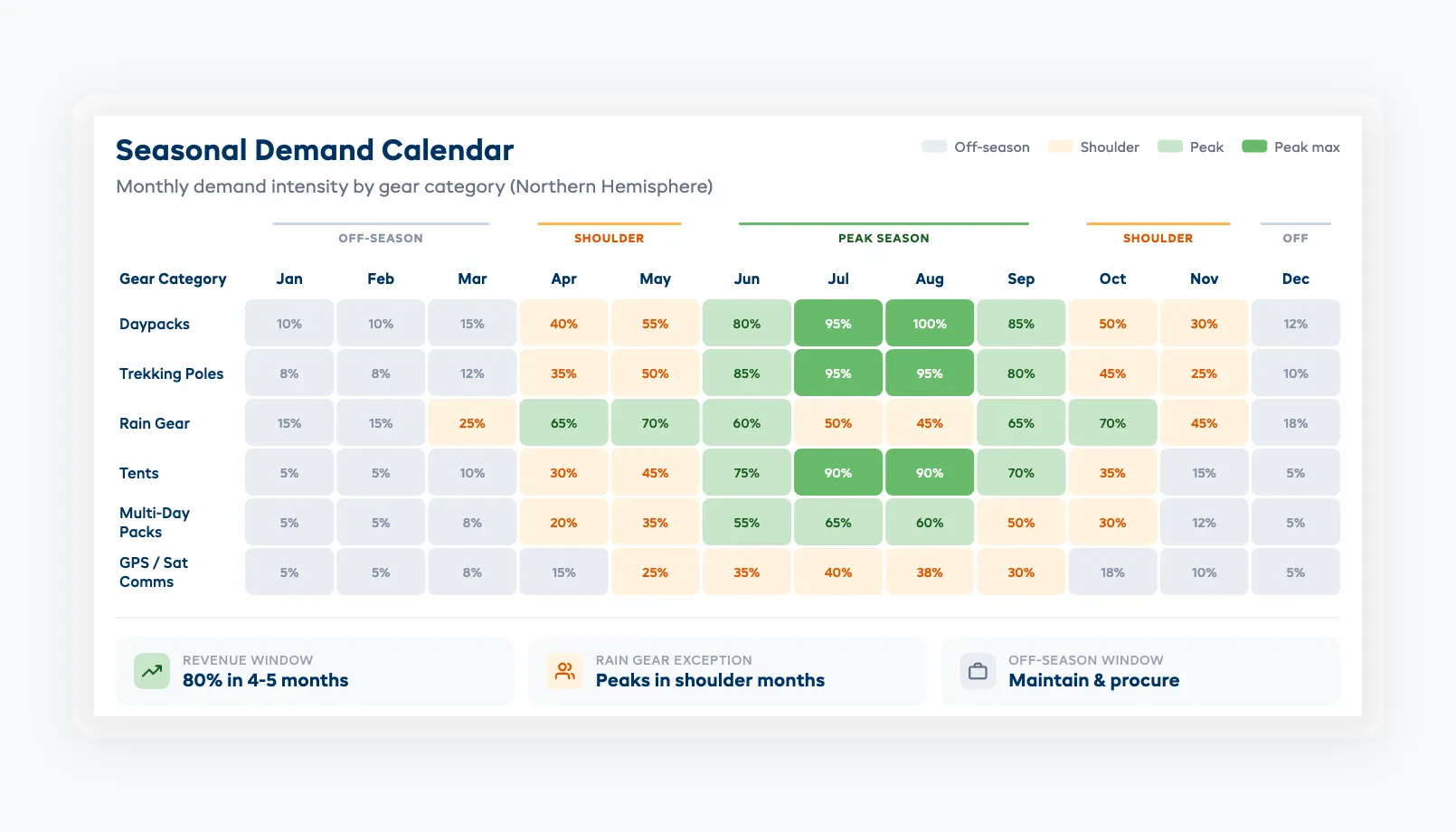
Hiking gear demand follows a predictable curve, though the shape varies by region. Here's the general pattern for temperate markets:
Peak season (June-September / Dec-Feb in Southern Hemisphere):
- Daypacks, trekking poles, and hydration systems hit 80-100% utilization.
- Tent rentals spike for long weekends and school holidays.
- Boot rentals peak 2-3 weeks before the biggest holiday weekends — customers book early for popular sizes.
Shoulder season (April-May, October-November / Oct-Nov, Mar-Apr):
- Demand drops 40-60% from peak. But it doesn't disappear.
- Layering gear (rain shells, fleece midlayers) actually peaks in shoulder months when weather is unpredictable.
- Backpacking stove and cookware rentals hold steady — serious hikers prefer cooler temps.
Off-season (December-March / Jun-Aug):
- Overall demand drops to 10-20% of peak.
- Snowshoe and microspike rentals can fill the gap if your region gets winter trail traffic.
- This is your maintenance, retirement, and procurement window.
The 80/20 rule applies. About 80% of your annual hiking rental revenue lands in a 4-5 month window. Plan your cash flow around that reality, not around a fantasy of even monthly income.
Gear Category Patterns: What Moves When
Not all hiking gear follows the same curve. Category-level patterns let you stock smarter and avoid tying up capital in items that sit idle for months.
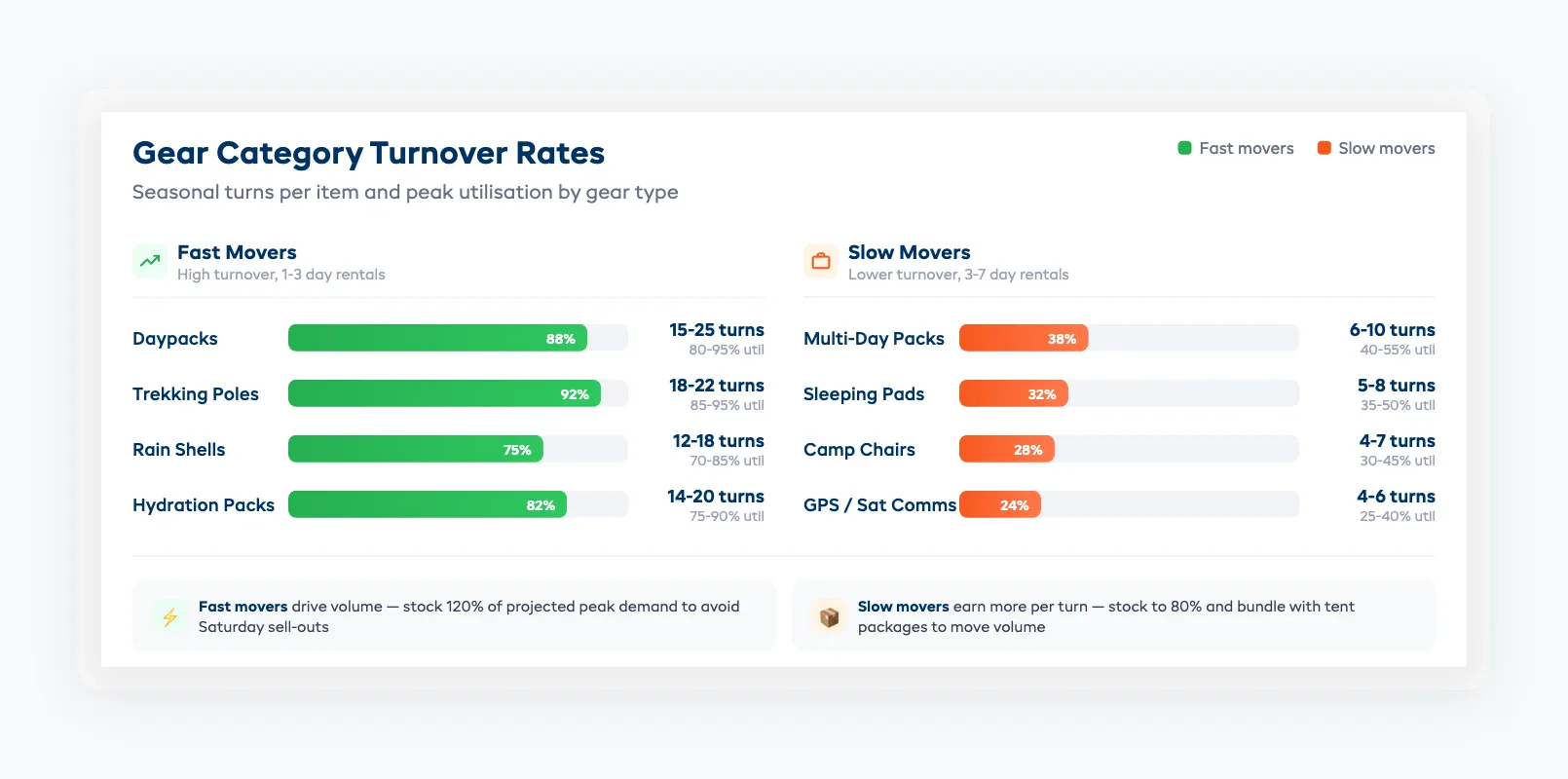
Fast movers (high turnover, short rental periods):
- Daypacks and hydration bladders — 1-3 day rentals, 15-25 turns per season for popular sizes.
- Trekking poles — weekend warriors rent these more than any other single item. Peak utilization: 85-95% on summer weekends.
- Rain gear — spikes with every weather forecast. Keep 20% more rain shells than you think you need in shoulder season.
Slow movers (lower turnover, longer rental periods):
- Multi-day backpacks (50-70L) — 3-7 day rentals, 6-10 turns per season. Higher revenue per turn but fewer cycles.
- Sleeping pads and camp chairs — nice-to-have add-ons. Utilization rarely exceeds 50% even in peak. Bundle them with tent packages to move volume. See our camping rental pricing guide for bundle strategies that work.
- GPS units and satellite communicators — niche demand, high per-rental revenue. 4-6 turns per season.
Seasonal crossovers:
- Headlamps spike in autumn as days shorten.
- Gaiters and microspikes bridge the gap between hiking and winter seasons.
- Water filters see consistent demand from April through October — serious hikers carry these regardless of weather.
Track utilization rates per category per month for at least two seasons before making big stocking decisions. One year of data isn't enough — a rainy summer can skew everything.
Stocking Rules: When to Buy, How Much to Hold
Getting your inventory levels right is the difference between maxing out revenue in July and sitting on $30,000 of idle gear.
The 120% rule for peak-season essentials. Stock 120% of your projected peak demand for daypacks, poles, and rain gear. The extra 20% covers damage replacements, demand surges, and gear in cleaning or repair. Running out of poles on a Saturday morning in August costs more than carrying 10 extra pairs.
Pre-season procurement timeline:
- 4-5 months before peak: Place orders for new inventory. Supplier lead times are 6-12 weeks for outdoor gear. Order late and you'll be scrambling.
- 2-3 months before peak: Receive, inspect, tag, and photograph new inventory. Every item needs a condition baseline photo before its first rental.
- 1 month before peak: Run a full fleet audit. Use a pre-season camping fleet audit checklist to verify every item is rental-ready: clean, functional, all components present.
Mid-season restocking triggers:
- Any category hitting 90%+ utilization for two consecutive weekends needs more stock.
- If you're declining bookings because a specific size or item is unavailable, that's a buying signal, not a "we'll get to it" signal.
- Keep a simple waitlist. When customers ask for an item you don't have, log it. Three requests for the same thing in a month justifies a purchase.
Don't overbuy slow movers. Multi-day packs and specialty items have low turns. Stock to 80% of projected demand. It's cheaper to occasionally turn someone away than to own 15 bear canisters that rent 4 times each all year.
End-of-Season Decisions: Retire, Discount, or Hold
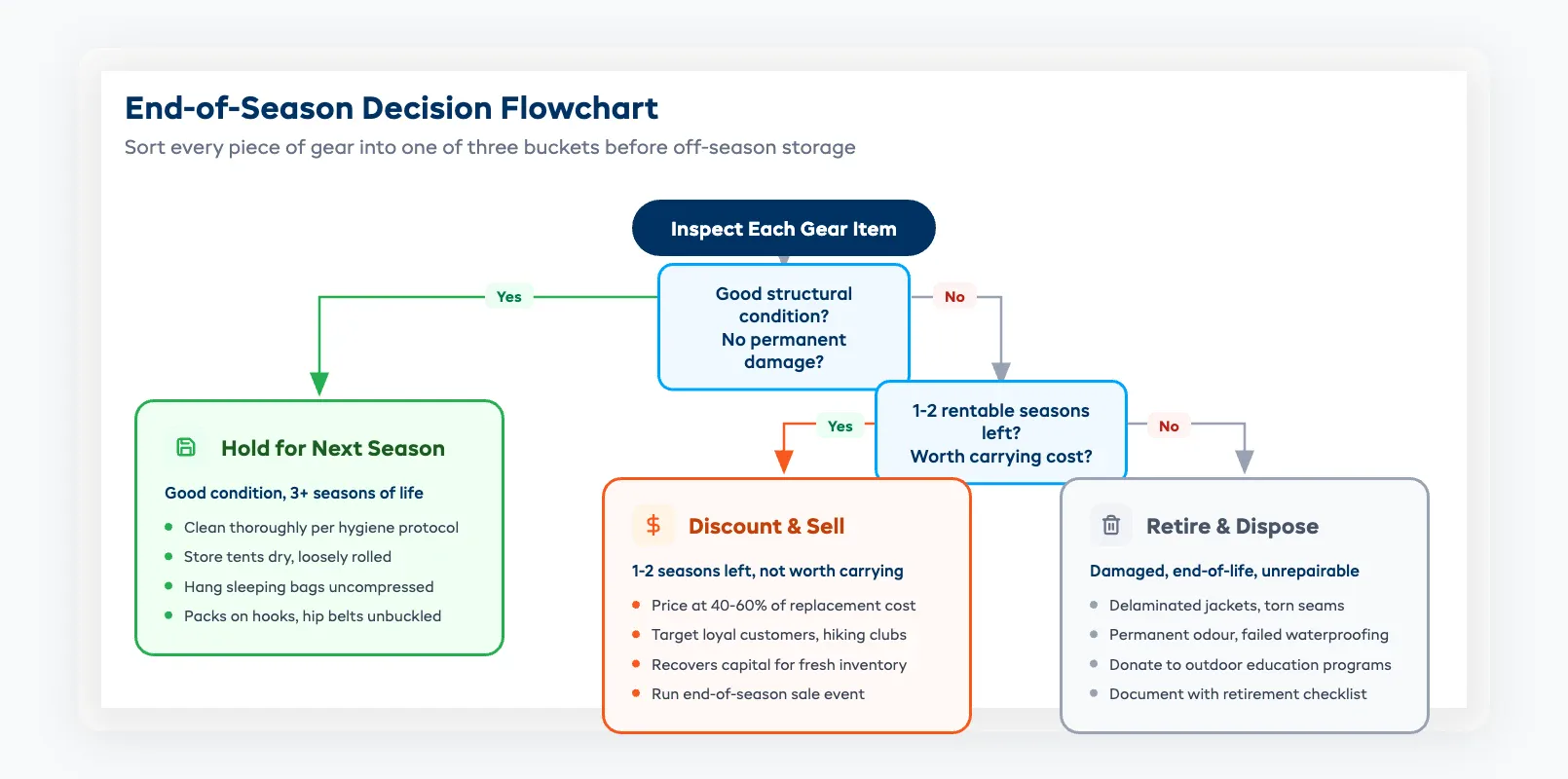
When season winds down and you're staring at a warehouse of used gear, every item falls into one of three buckets.
Bucket 1: Hold for next season. Gear in good condition with life left. Clean it thoroughly (follow your gear hygiene protocols) and store it properly. Tents fully dry and loosely rolled. Sleeping bags hanging, not compressed. Packs on hooks with hip belts unbuckled.
Bucket 2: Discount and sell. Gear with 1-2 rentable seasons left but not worth carrying through winter. Price at 40-60% of replacement cost. Loyal customers and hiking clubs buy used rental gear all day. This recovers capital for fresh inventory.
Bucket 3: Retire and dispose. Delaminated rain jackets, tents with permanent odour, sleeping bags that won't loft. Don't sell end-of-life gear to customers. It damages your reputation. Donate to outdoor education programs or recycle. Use your end-of-season retirement checklist to document each decision.
The 3-season rule. Most soft goods (sleeping bags, rain gear, packs) get 3 peak seasons of rental use before they need retirement or deep refurbishment. Hard goods (poles, stoves, cook kits) last 4-6 seasons. Track rental count per item, not calendar age, to make data-driven retirement decisions rather than arbitrary ones.
Shoulder-Season Strategy: Filling the Gaps
The weeks between peak and off-season are where smart operators find unexpected profit. Demand is lower but not zero, and you have full inventory with minimal competition.
Targeted promotions that work:
- Weekday specials. Offer 20-30% off Monday-Thursday rentals in shoulder months. Retirees, remote workers, and homeschool families hike on weekdays.
- Multi-day discounts. A 5-day rental at the price of 3 fills otherwise empty days and locks gear into longer bookings.
- "Bring a friend" bundles. Rent two packs and get the third at half price. Groups drive volume when individual demand is soft.
Partner with local guides and clubs. Hiking clubs run group outings year-round. Offer a standing 15% discount for club members booked through the club coordinator. Guided hiking companies need gear for clients who don't own their own — negotiate a seasonal rate for bulk bookings.
Content and email timing. Start shoulder-season marketing 3-4 weeks before you want bookings. Email last year's peak customers: "The trails are quieter, the colors are incredible, and gear is ready." Autumn hiking is an easy sell. You just have to remind people it exists.
Don't slash prices too early. Deep discounts in August tell your market September gear is worth less. Hold peak pricing through the last full month of high demand. Transition gradually — 10% off in the first shoulder month, 20% in the second.
Inventory Optimization: Data Over Gut Feel
Stop guessing. Track these numbers and the answers become obvious.
Key metrics to track monthly:
| Metric | What it tells you | Target |
|---|---|---|
| Utilization rate (per category) | Are you overstocked or understocked? | 70-85% in peak, 30-50% shoulder |
| Revenue per item per month | Which items earn their shelf space? | Varies, but rank them |
| Turns per season | How many times each item rents | 10-20 for fast movers, 5-10 for slow |
| Damage/retirement rate | How fast you're burning through inventory | Under 10% per season |
| Booking decline rate | How much demand you're missing | Under 5% |
Year-over-year comparison is gold. One season's data tells you what happened. Two seasons show you the trend. After three years, you can predict demand by month within 10-15% accuracy — enough to order with confidence.
Category mix review. Every off-season, check which categories earned their keep. If bear canisters rented 12 times total and you own 8, you need 4 next year. If daypacks sold out every weekend, add 15-20% more. Adjust the mix annually — your third year's buying plan will be a strategy, not a guess.
Dash can flag utilization trends and suggest reorder points based on your historical booking data — one less spreadsheet to maintain during your busiest months.
FAQ
When should I start ordering inventory for hiking season?
Place orders 4-5 months before peak season. Supplier lead times run 6-12 weeks, and you need time to receive, inspect, tag, and photograph every item before the first rental.
How do I know when to retire hiking rental gear?
Track rental counts per item, not calendar age. Most soft goods (sleeping bags, rain shells, packs) last 3 peak rental seasons. Hard goods (trekking poles, stoves, cook kits) last 4-6 seasons. Retire anything with structural damage, permanent odour, or failed waterproofing.
What's a good utilization rate for hiking rental gear?
Aim for 70-85% utilization on your core categories during peak season. Below 70% means you're overstocked. Above 85% means you're likely turning away bookings and should add inventory.
How do I fill the gap between hiking seasons?
Run shoulder-season promotions: weekday discounts, multi-day deals, group bundles. Partner with local hiking clubs and guided tour operators. Autumn hiking is undermarketed: send emails to last year's customers reminding them the trails are quieter and gear is available.
Should I sell used rental gear at the end of season?
Yes. For gear that has 1-2 seasons of life left but isn't worth holding through winter. Price at 40-60% of replacement cost. Loyal customers and hiking clubs buy used gear readily. Don't sell gear that's truly end-of-life; donate or recycle it instead.
How many trekking poles should I stock?
Stock 120% of your projected peak-weekend demand. Poles are the highest-turnover single item in most hiking rental operations, and running out on a Saturday morning costs more in lost revenue than the carrying cost of extra pairs.
What's the best way to store camping gear over winter?
Tents need to be fully dry and loosely rolled, never compressed. Sleeping bags should hang freely, not sit stuffed in compression sacks. Packs go on hooks with hip belts unbuckled. Store everything in a climate-controlled space away from direct sunlight. Run a condition check on every item before storage and again at the start of next season.
Seasonal hiking gear rental is a rhythm, not a gamble. Track the data, respect the patterns, and make your stocking decisions with numbers instead of hunches. The operators who do this consistently grow their fleet, and their margins, every year. Browse the camping rental glossary for key terms, or check our camping checklist templates to standardize your seasonal operations.
in one place