Ski Rental Pricing: Dynamic Rates, Package Deals, and Seasonal Revenue
Most ski rental shops set a daily rate once, print it on a card, and barely touch it for five seasons. That single number then has to do an impossible job: capture full value on a sold-out holiday weekend, stay competitive against the shop two doors down, and still feel fair to the local who rents from you every Saturday. It can't. The shops that quietly out-earn their neighbors don't have a magic rate — they have a pricing structure that flexes with the trip length, the calendar, and the demand on the mountain.
This guide walks through that structure piece by piece: daily versus multi-day, peak versus off-peak, the real economics of packages and family pricing, how resort and town shops should price differently, where dynamic pricing actually helps, and how to discount without training your customers to wait for a deal. None of it requires a pricing PhD. It requires a ladder you can defend and a system that holds the rules so you're not doing mental math at the counter on the busiest day of the year.
Daily vs multi-day rates
Your daily rate is the anchor everything else hangs off, so set it deliberately. Price it to your busiest realistic weekend — the day demand is highest and you could sell every board on the wall — not to the quiet Tuesday when you're tempted to undercut to fill space. A rate built for your peak gives you room to discount down; a rate built for your slow days leaves money on the counter every single weekend.
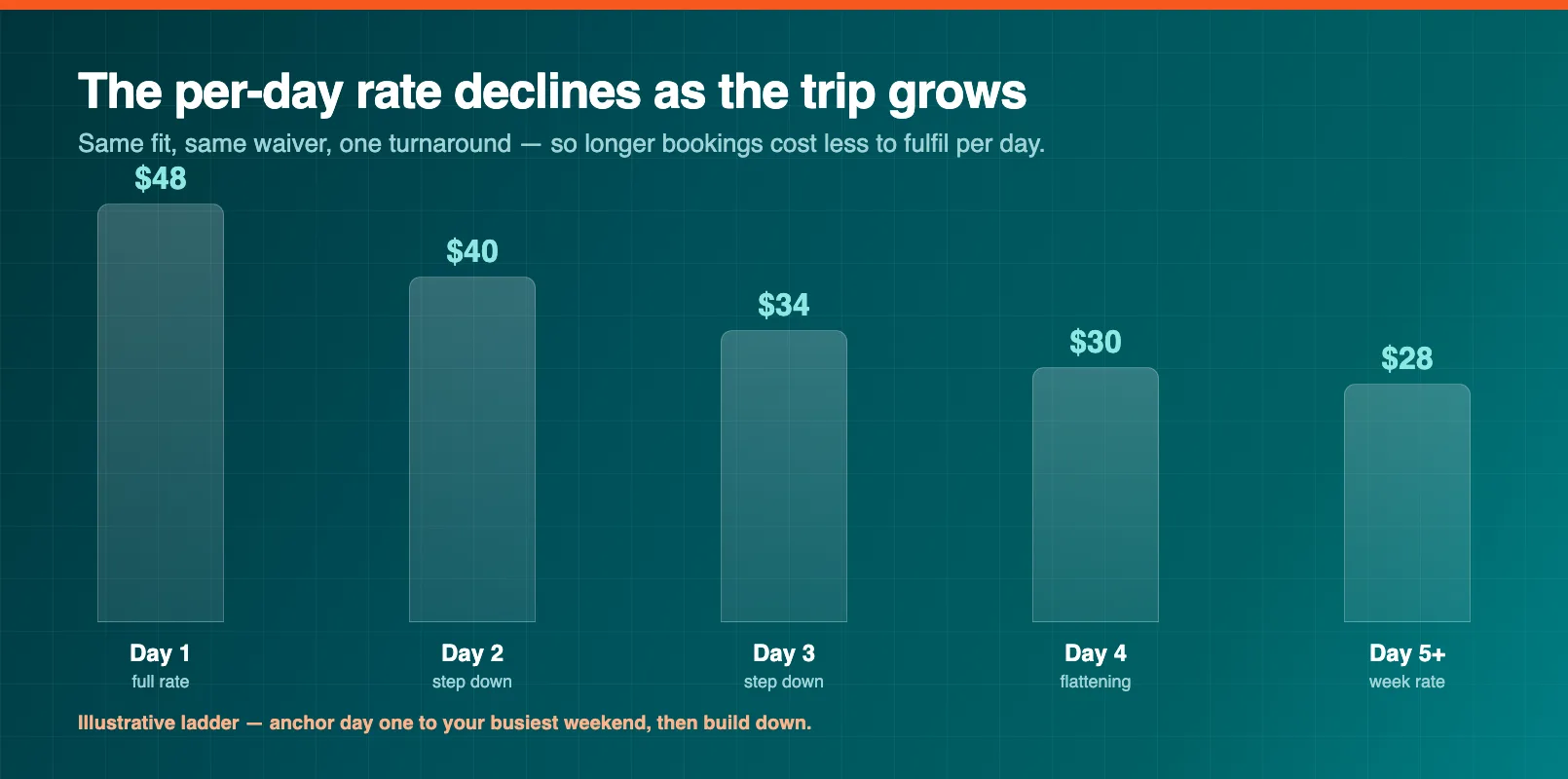
Multi-day rates should decline per day, and the reason is operational, not generous. A guest who books five days costs you almost the same to fulfill as a guest who books one: a single fit, a single waiver, one round of turnaround labor. Stretch that across five days and your cost per rental day drops sharply. Sharing part of that saving as a declining daily rate is what turns a one-day walk-in into a week-long booking.
A clean ladder might run full price for day one, then step the per-day rate down through day three, and flatten for longer trips so a week-long guest feels rewarded without giving the gear away.
The mistake here is making the multi-day discount so steep that it cannibalises your strongest customers. Destination guests on a week-long trip are already committed — they're not price-shopping the way a half-day walk-in is. Reward the longer booking, but don't hand back margin you never needed to.
Peak vs off-peak pricing
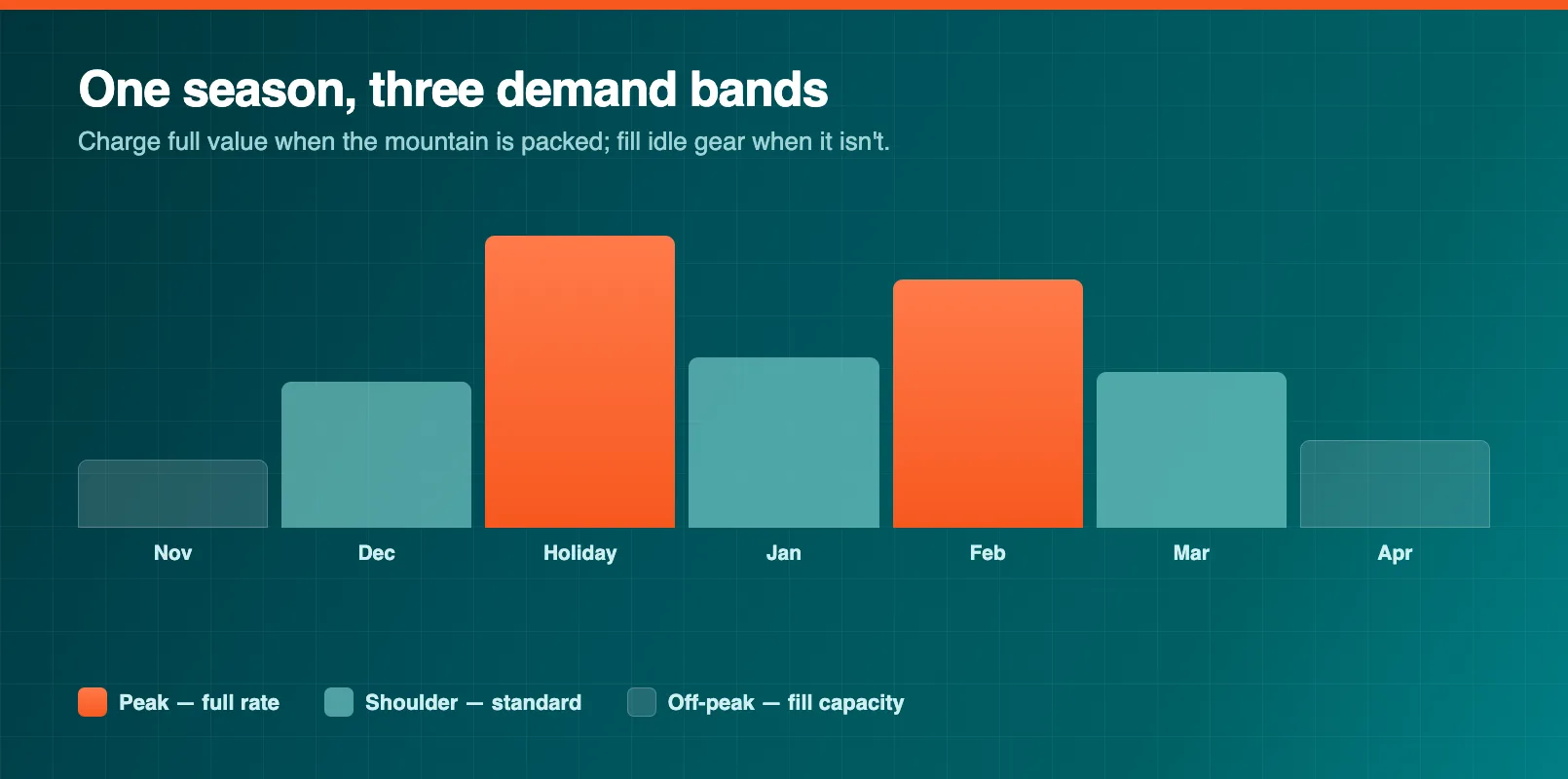
A holiday week and a flat midweek in early December should not cost the same, yet plenty of shops charge one rate from open to close. Splitting your season into bands — peak, shoulder, and off-peak — lets one set of gear earn its full value when demand is high and still move when it's slow.
Peak is the easy part: holiday weeks, long weekends, and powder-driven spikes when you'd sell out at almost any price. Shoulder covers the regular weekends that fill but don't sell out. Off-peak is the quiet midweek and the thin edges of the season, where the goal shifts from maximizing rate to simply not having gear sit idle on the rack.
The trap is treating off-peak as a fire sale. You're not desperate; you're filling capacity that would otherwise earn nothing. A modest midweek rate, a "stay three nights, ski free Monday" tie-in with a local lodge, or a locals' weekday rate all move idle gear without torching the price integrity your peak weekends depend on.
Package economics
A package isn't a discount with a bow on it — it's a way to raise the average booking value while making the customer feel they got a deal. Bundle skis, boots, and poles into one ski package and a board, boots, and bindings into one snowboard package, and the guest stops mentally itemising every piece. They see one number and one decision instead of three add-ons to flinch at.
The economics work because the marginal cost of adding poles or a helmet to a rental that's already going out the door is tiny, but each item carries real perceived value. A helmet that costs you a few dollars a day to own can anchor a "performance package" that justifies a meaningfully higher rate than bare skis alone.
Build a good-better-best ladder: an entry package for first-timers, a mid-tier for confident intermediates, and a performance or demo package for guests who want the good stuff. Most people pick the middle, which is exactly where you want your margin to live. The packages do the selling so your counter staff don't have to upsell line by line during a rush.
Family pricing
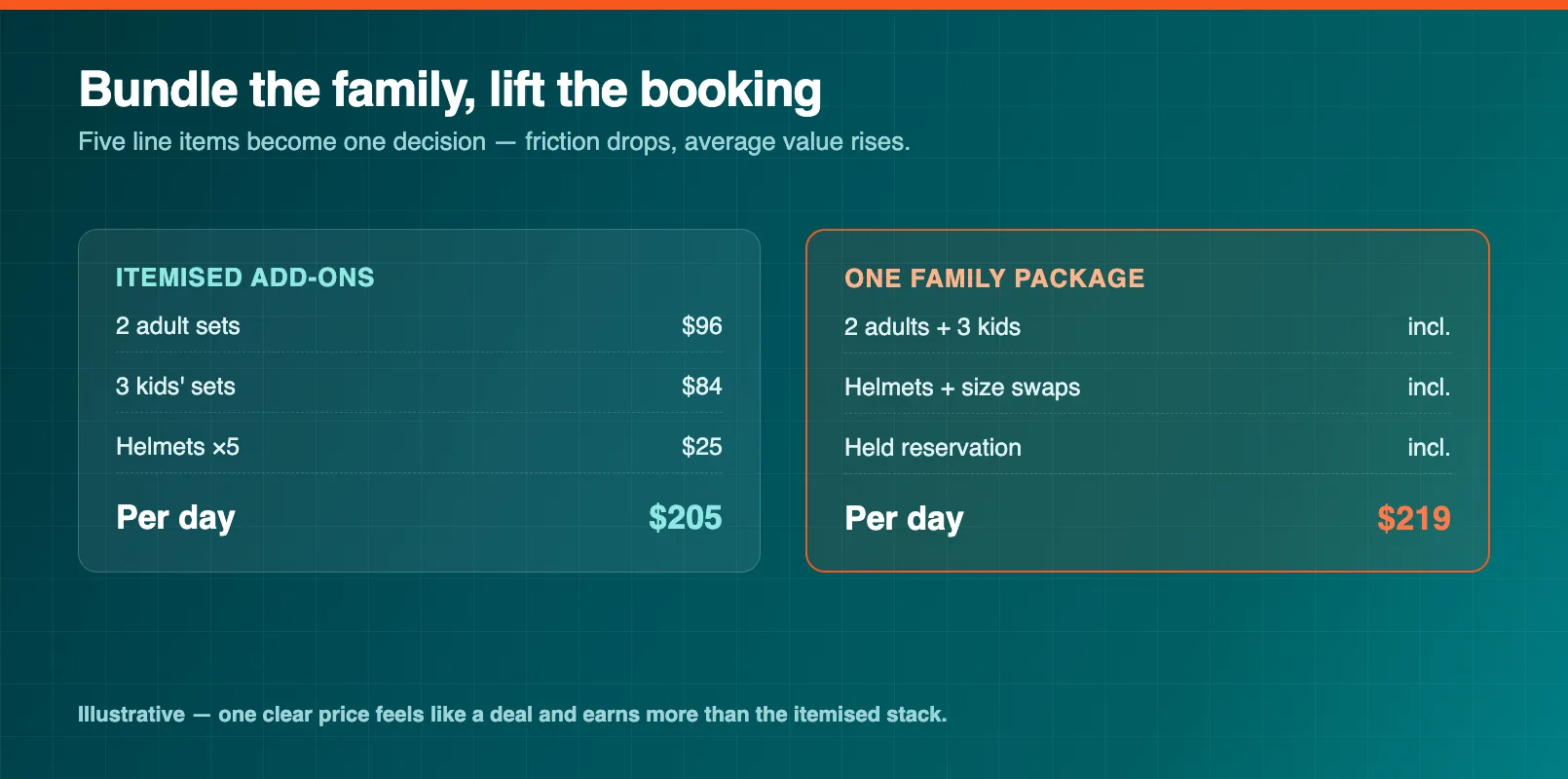
Families are some of your highest-value bookings and the easiest to lose at the counter. A parent renting for two adults and three kids is staring down five separate line items, and every one is a chance to balk. Price the family as a single unit and that friction disappears.
A flat family package — two adults, up to three kids, one clear price per trip — does two things at once. It lifts your average booking value above what those guests might assemble piece by piece, and it makes kids' gear feel like part of the deal rather than another charge stacked on a pricey ski week. Throw in the small stuff that costs you little and means a lot to a stressed parent: helmets included, a free size swap if a kid's boots don't fit, a held reservation so the family isn't queuing in ski boots with three children.
Family bookings also skew multi-day and they rebook. Get the price and the experience right once and that family becomes a predictable line on next winter's calendar — which is worth far more than the few dollars you'd claw back by itemising every helmet.
Resort vs town rates
Where your shop sits changes what you can charge. A base-area shop sells convenience: the guest clicks out of your gear and is on the lift in minutes, and they'll pay a premium for not hauling boots across a parking lot. A town shop a few miles down the road competes on value and on the repeat locals who'd never pay resort rates.
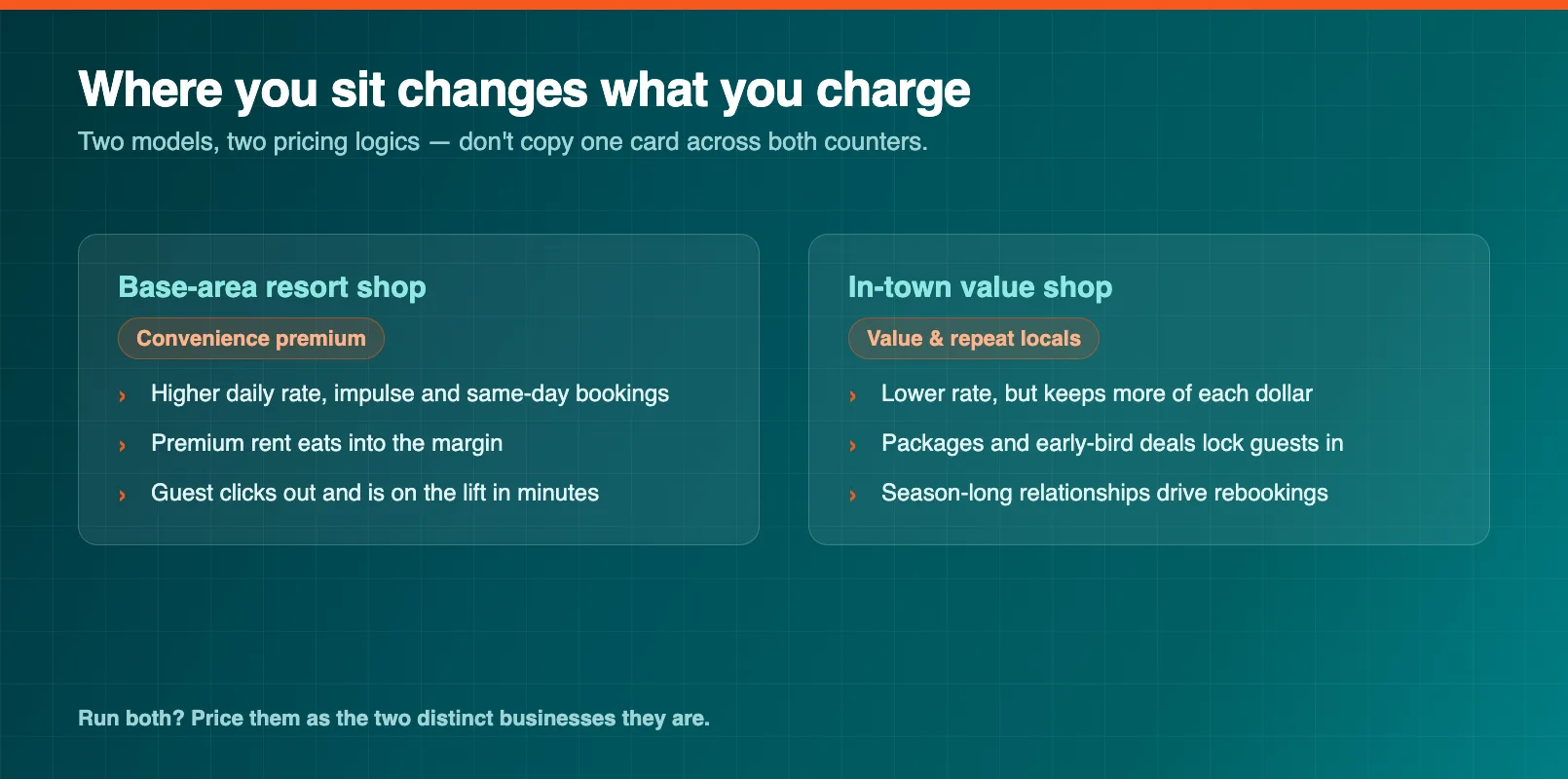
Neither model is automatically better — they're priced for different demand. The base-area shop runs a higher daily rate, leans on impulse and same-day bookings, and accepts that premium rent eats into the margin. The town shop runs lower rates but keeps more of each dollar, builds season-long relationships, and uses packages and early-bird deals to lock in bookings before the guest ever reaches the mountain. If you run both, price them as the distinct businesses they are rather than copying one card across both counters. The full economics of each model are covered in our guide to running a ski rental business, and the ski and snowboard operator hub maps how the pieces fit together.
Dynamic pricing
Dynamic pricing sounds intimidating, but for a rental shop it just means your rate responds to demand instead of sitting frozen all season. A sold-out powder Saturday and a dead midweek shouldn't earn the same number, and a rule-based system lets you capture that gap automatically.
The key word is rule-based. Random price swings erode trust fast, and your repeat locals will notice. Predictable, defensible triggers don't: rates nudge up as available gear gets scarce on a peak weekend, and ease down to fill capacity midweek. Set the floors and ceilings yourself so the system never prices you out of a market or gives the shop away.
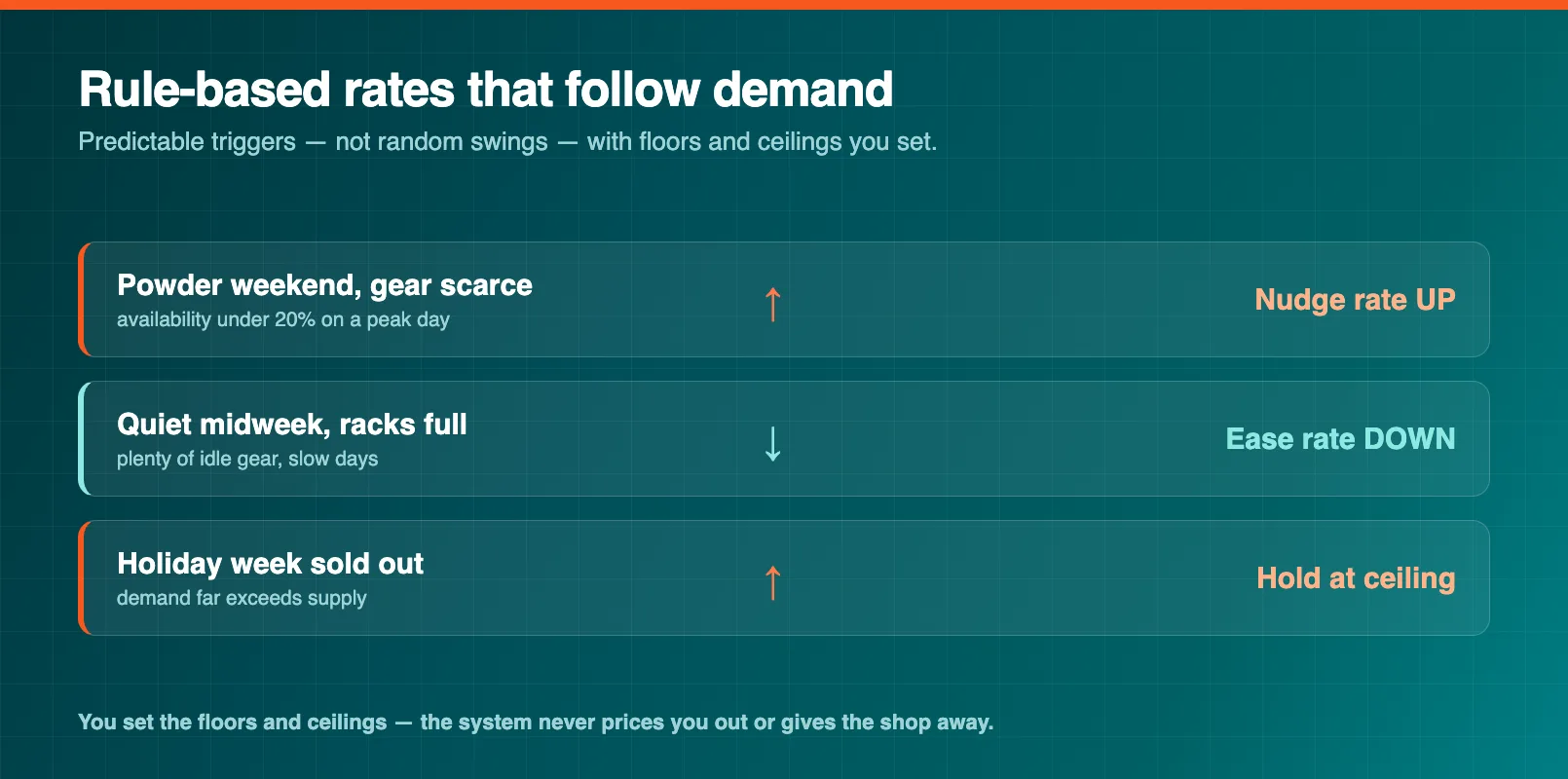
This is where the right platform earns its keep. EquipDash can watch availability and demand and suggest rate adjustments before a big weekend, so you're not guessing on Thursday night whether to bump the holiday rate — the powder day pricing suggestion agent turns a forecast spike into a concrete pricing nudge you can approve or ignore.
Discounting without the damage
Discounts are a tool, not a reflex. The danger isn't the dollars you give up on any single deal — it's teaching customers that your real price is a fiction and the smart move is to wait. Once guests learn the rate always drops, your full rate stops working.
Make discounts earn their place by tying them to behavior you actually want. Early-bird rates reward guests who book before the season and lock in cash flow. Multi-day and package rates reward bigger bookings. Locals' weekday rates fill your quietest hours. Each of these is a structured discount with a job to do, and every one is baked into your pricing ladder rather than handed out at the counter to whoever asks.
What to avoid is the blanket, open-ended sale that trains everyone to expect a deal. Keep your peak weekends at full rate, protect the price integrity your structure depends on, and let the targeted discounts do the work of filling the gaps. Before opening day, the ski shop opening day checklist is a good moment to confirm every rate, package, and discount rule is loaded and live.
Putting it together
Good ski rental pricing isn't one clever number — it's a structure: a daily anchor set to your peak, multi-day rates that reward longer trips, seasonal bands that flex with demand, packages and family deals that lift average value, location-aware rates, and disciplined, rule-based discounting. Build the ladder once, write down why each rung exists, and you'll defend it confidently all season instead of reinventing it at the counter.
The shops that win don't out-price their neighbors — they out-structure them. Let your system hold the rules so your team can hold the line, and your pricing will quietly do its job on the busiest day of the year and the quietest one alike.
FAQ
How much should I charge for a daily ski rental?
Most independent shops charge somewhere between a beginner package and a performance demo package per day, with the gap driven by ski quality, location, and how close you sit to the lift. Anchor your daily rate to your busiest weekend, then build multi-day and package rates down from there rather than starting from your slowest day.
Should ski rental prices change between peak and off-season?
Yes. A holiday week and a quiet midweek in early December should not cost the same. Splitting the calendar into peak, shoulder, and off-peak bands lets you capture full value when demand is high and fill idle gear when it's low, without running a season-long fire sale.
Why do multi-day ski rentals cost less per day?
A multi-day rental costs you almost the same to fulfill as a one-day rental but books the gear out for the whole trip, removing turnaround and re-fitting labor. Sharing that saving with the guest through a declining daily rate is usually more profitable than holding firm and losing the booking to the shop next door.
How should I price family ski rental packages?
Price the family as a single unit, not as separate line items. A bundled family package with one clear price per trip removes friction at checkout, makes kids' gear feel like a bonus rather than another charge, and lifts the average booking value while winning repeat bookings.
Should resort and town ski shops charge different rates?
They usually do. A base-area shop steps off the gear and onto the snow, so it commands a convenience premium and leans on impulse bookings. A town shop competes on value and repeat locals, so its rates run lower with more package and season-long options to lock guests in early.
Does dynamic pricing work for ski rentals?
It can, as long as it's rule-based and predictable rather than random. Nudging rates up on a sold-out powder weekend and down on a dead midweek captures revenue you'd otherwise leave on the table, provided you set sensible floors and ceilings and repeat locals still feel they're treated fairly.
in one place