How Online Booking Systems Increase Rental Revenue
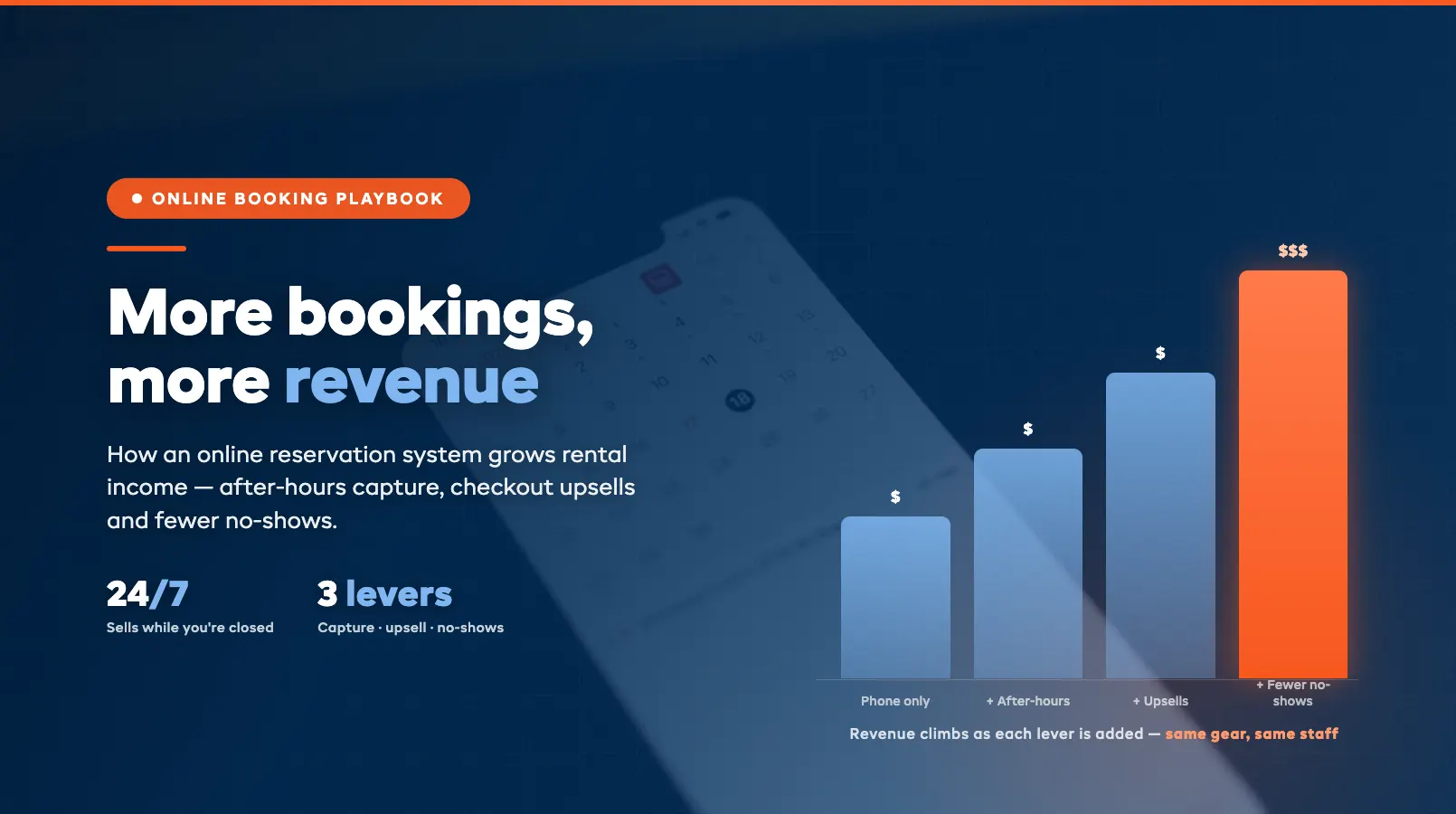
Most rental owners think of online booking as a convenience — a way to stop answering the phone during dinner. It is that. But the bigger story is on the revenue line. A reservation system that takes payment, sells add-ons, and chases no-shows on its own doesn't just save you time; it captures bookings you were quietly losing and squeezes more out of the ones you already had. This guide puts numbers to that, so you can decide whether the switch pays for itself.
If you're still weighing the basics, start with our complete guide to online booking systems for rentals. Here we focus on one question: where does the extra money actually come from?
The Revenue Impact of Online Booking (Real Numbers)
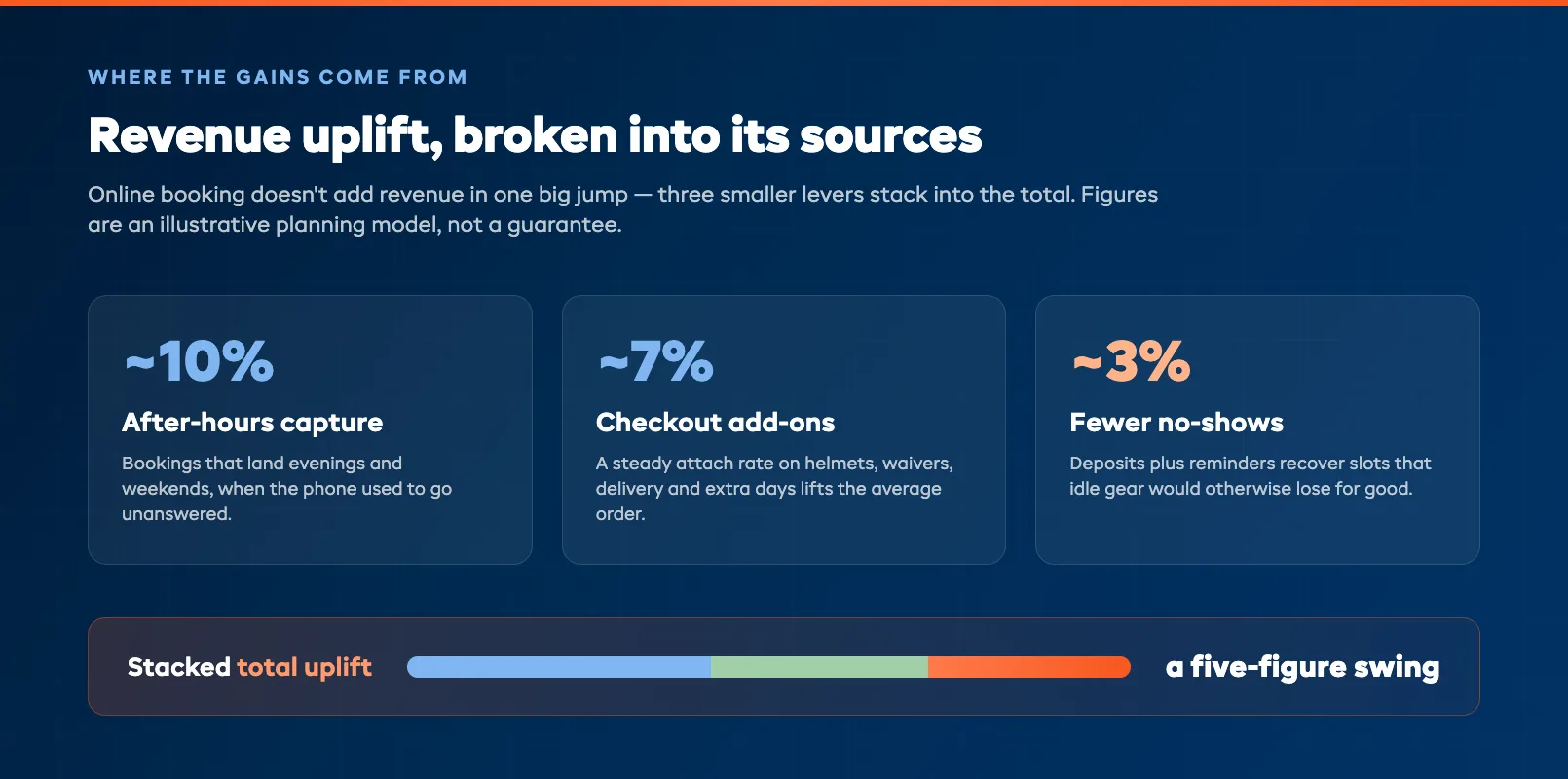
The revenue gain from online booking isn't one big lever. It's three smaller ones stacked together. Operators who move from phone-and-paper to a real reservation system typically see new revenue from three places: bookings captured outside business hours, add-ons sold at checkout, and deposits that turn no-shows into either paid arrivals or kept revenue. None of these is dramatic on its own. Together, they move the needle.
Treat the figures below as a planning model, not a promise — your mix depends on your gear, your season, and your prices. A shop doing $300,000 a year that captures even 10% more bookings after hours, lifts its average order with a 15% add-on attach rate, and halves a 5% no-show rate is looking at a five-figure swing. The point isn't the exact number. It's that the same three mechanisms apply to almost every rental business, and a booking system runs all three without extra staff.
Capturing After-Hours and Multi-Timezone Bookings
The single biggest leak in a phone-only operation is the booking that happens when you're closed. People plan rentals at night, on weekends, and from the sofa after the kids are down. A 2024 traveler will not call back in the morning. They'll book the competitor whose site let them pay at 11pm. Every hour your phone is unanswered is an hour your storefront could still be selling.
Multi-timezone demand makes this sharper. If you take tourists, plenty of your customers are booking from three or five hours away, sometimes from another country, often before they've even landed. An online reservation system sells to them on their schedule, in real time, against live availability, so two people in different cities never grab the same kayak. Our breakdown of online booking versus phone reservations goes deeper on exactly which bookings the phone loses.
This is the lever most owners underestimate, because the lost bookings are invisible. There's no missed-call log for the customer who never tried. A simple test settles it: look at when your existing online orders actually land. Most shops find a real share come in evenings and weekends, hours nobody was at the desk. Those aren't bookings the system created out of thin air; they're demand that was always there and used to walk straight to whoever answered first.
Upselling Add-Ons at Checkout
A staffed counter sells add-ons when someone remembers to ask. A checkout flow sells them every single time, to every customer, without pressure or awkwardness. That consistency is where the money is. Helmets with the bikes, wetsuits with the boards, damage waivers, delivery, a second day at a discount — each is a small yes, and a well-built checkout puts the right ones in front of the customer at the moment they're already paying.
The numbers reward it. If your average booking is $120 and a third of customers add a $25 item, you've lifted your average order by roughly 7% without winning a single new customer. Insurance and damage waivers are especially worth surfacing, because they protect your margin as well as growing it. The feature set that separates a basic widget from a real booking platform usually comes down to how well it handles add-ons, deposits, and rules at checkout.
Reducing No-Shows With Automated Reminders
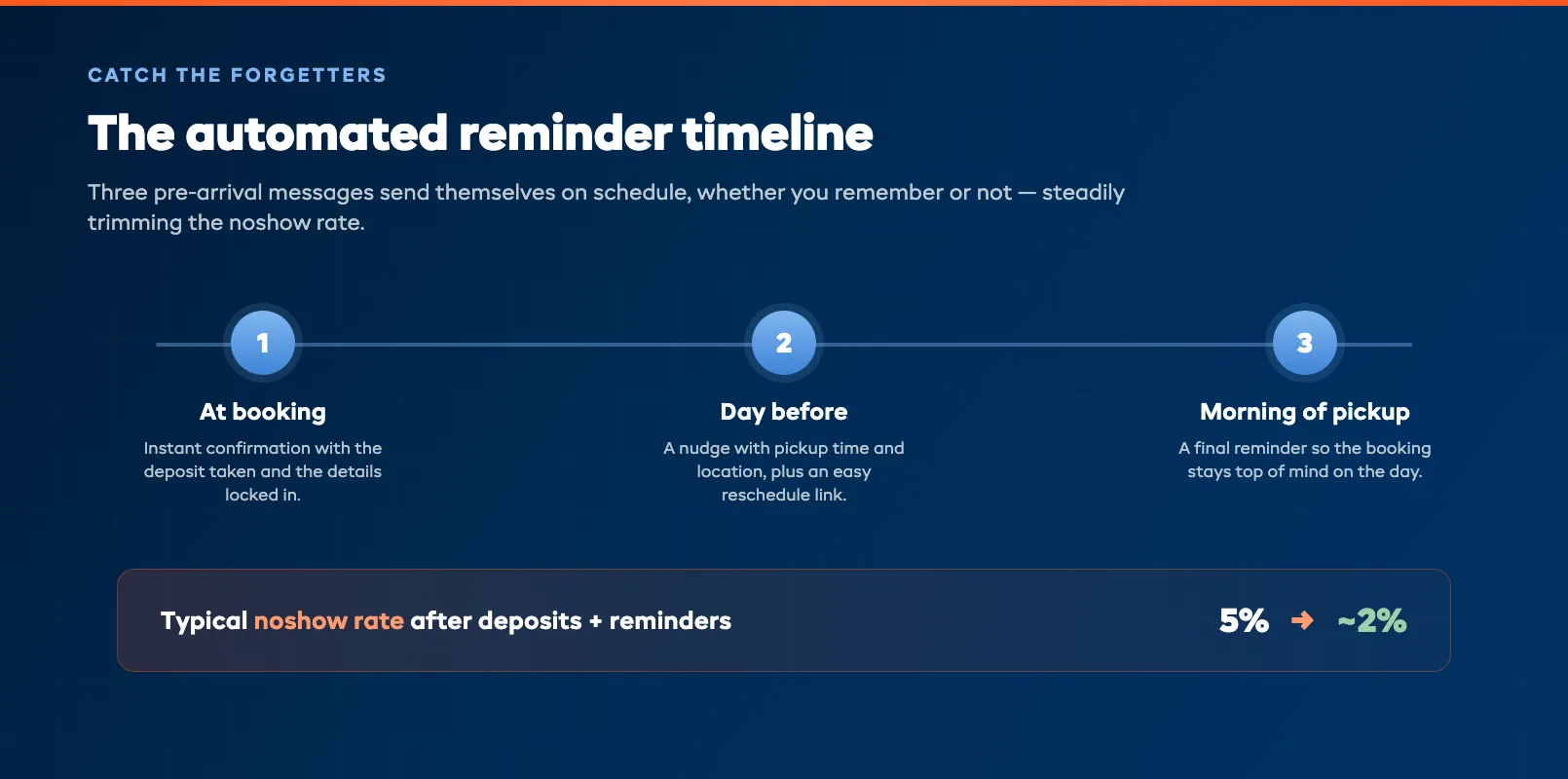
No-shows are pure lost revenue — gear sat idle that someone else would have paid for. The fix is two-part, and a booking system does both automatically. First, take a deposit or full payment up front; the moment a customer has money on the line, they show up or they cancel in time for you to rebook. Second, send automated reminders so the honest forgetters don't slip through.
A reminder at the time of booking, again the day before, and once on the morning of pickup is enough to move a typical 5% no-show rate down meaningfully. The system sends every message on time whether you remember or not, and a smart confirmation flow lets a customer who genuinely can't make it reschedule instead of vanishing, turning a dead slot into a future booking. That's revenue you'd otherwise write off entirely.
Building the Business Case for Your Team
Adding up the three levers makes the decision concrete. Put your own numbers into a simple sum: estimated after-hours bookings you currently miss, your average order times a realistic add-on attach rate, and the deposits or recovered slots from fewer no-shows. Set that gain against the monthly cost of the system plus any payment processing fees. For most shops the system pays for itself on the after-hours bookings alone. Everything else is upside.
When you pitch it internally, frame it as fewer phone hours and more revenue, not as new software to learn. Staff who spent every Saturday morning taking bookings get that time back for customers in front of them, and the owner gets a storefront that sells around the clock. If you want the wider view of how the pieces fit, the pillar guide on online booking systems for rentals lays out the full setup from availability rules to payment.
FAQ
How much more revenue can I realistically expect from online booking?
There's no single number, because it depends on your prices, season, and current no-show rate. A useful planning model is to add three estimates: bookings you currently miss after hours, the lift from a realistic add-on attach rate, and recovered revenue from fewer no-shows. For many shops the after-hours capture alone covers the cost of the system, with upsells and no-show reduction as upside.
Will an online booking system actually help me upsell add-ons?
Yes. And more reliably than a counter does. A checkout flow offers the same relevant add-ons (helmets, wetsuits, waivers, delivery, extra days) to every customer at the moment they're paying, instead of only when a staff member remembers to ask. Even a modest attach rate lifts your average order value without needing a single new customer.
Do automated reminders really reduce no-shows?
They help, especially paired with a deposit. Taking payment up front gives customers a reason to show or cancel in time, and reminders at booking, the day before, and on the morning of pickup catch the honest forgetters. A reschedule option also turns would-be no-shows into future bookings rather than dead slots.
What about customers who still want to call?
You keep the phone. Online booking adds a channel that sells while you're closed and to customers in other timezones; it doesn't remove the one you have. Most operators find the phone volume drops to the calls that genuinely need a human, freeing staff for customers in front of them.
How do I avoid double-bookings once I'm taking reservations online?
A real reservation system holds live availability, so a slot or item booked online is immediately unavailable everywhere else. That's the core difference from a paper diary or a basic form — inventory updates in real time, so two customers can never reserve the same gear for the same window.
Is online booking worth it for a small rental shop?
Often more so, because small shops can't staff a phone around the clock. The same three revenue levers (after-hours capture, checkout upsells, fewer no-shows) apply at any size, and the monthly cost is usually recovered by the bookings you'd otherwise miss while closed.
in one place