AI Personalization for Tours and Experiences: The Right Trip for Every Guest
Walk into a small hotel where the owner remembers your name, knows you like a corner table, and asks how the kids enjoyed the kayak trip last summer. That feeling, of being known, is the most expensive thing in hospitality. It usually takes a tight team and years of repeat visits to build.
Personalization is how you get that feeling at scale, without hiring a concierge for every guest. For most tour and experience operators it has felt out of reach: too much data, too little time, too few staff. That math has changed. The same customer records and booking history sitting in your system can now do the remembering for you, and quietly point each guest toward the trip they actually want.
This is a practical look at what that means for a real operation: what personalization actually does, where the value is, and how to do it without spooking the people you're trying to serve.
What AI Personalization Looks Like for Tours
Personalization is not a chatbot and it's not a discount code. It's the practice of showing each guest a version of your business shaped to them.
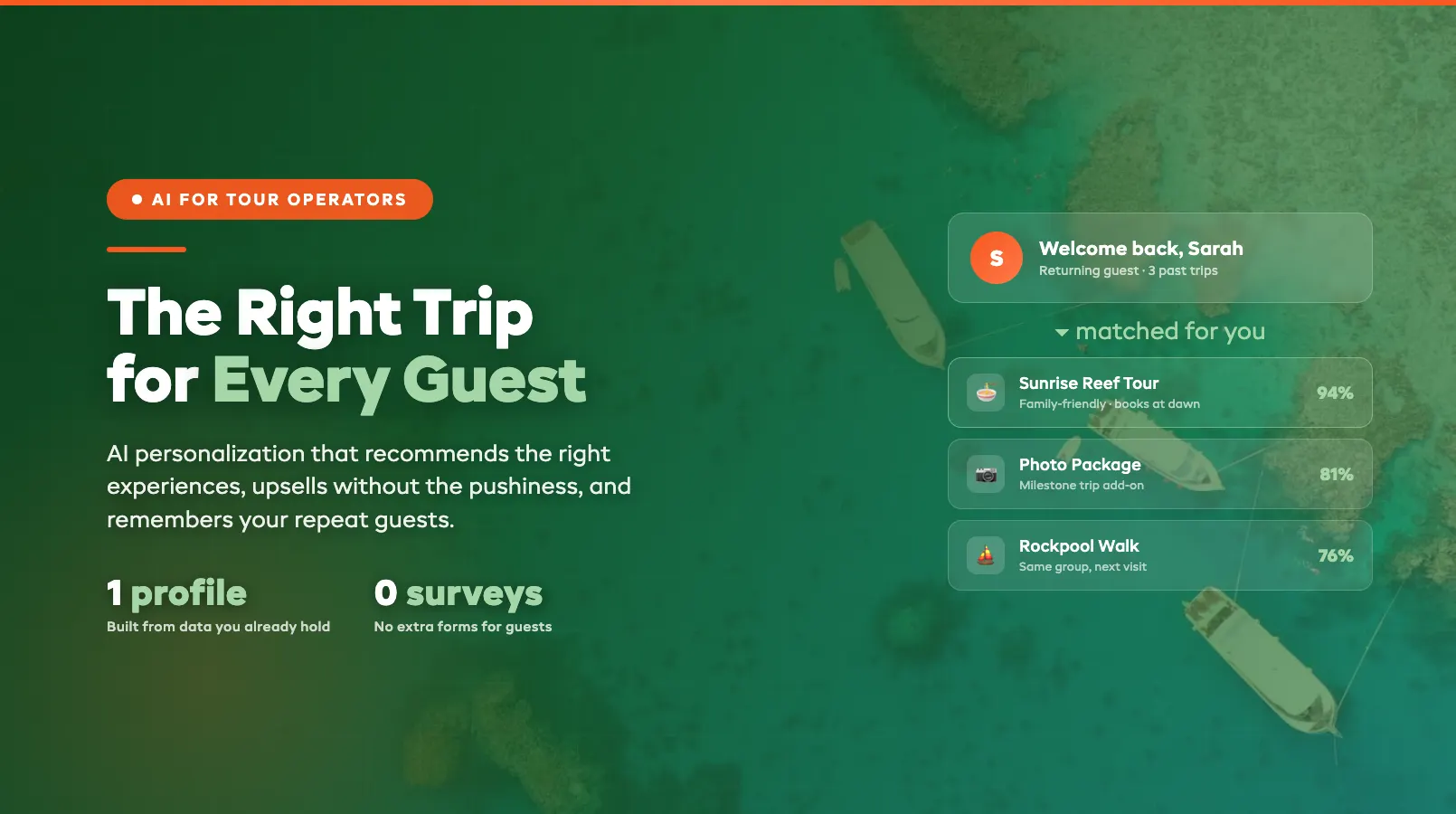
In a tour operation that looks like a handful of concrete things. The booking page leads with the half-day reef tour for the family of four, not the 14-day expedition. The confirmation email suggests a sunrise add-on because this guest booked at dawn last time. The returning customer sees "welcome back" and a one-click rebook of the trip they loved, instead of scrolling your whole catalog again.
None of that requires a guest to fill out a survey. The system reads signals you already capture (group size, season, past purchases, which trips someone clicked but didn't book) and uses them to reorder what each person sees. The result feels less like marketing and more like good service. Our pillar guide to AI for tour operators covers where this sits alongside the rest of the AI toolkit; personalization is the piece that makes every other interaction feel tailored.
Recommendation Engines for Experiences
A recommendation engine answers one question on every screen: of everything I offer, which two or three things should this guest see first?
For a tour operator the inputs are simpler than the e-commerce giants make them look. A guest who booked a family snorkel trip is a strong match for the kid-friendly rockpool walk, not the advanced night dive. Someone who books your premium tier twice is unlikely to want the budget option. A visitor browsing in December is a different buyer than one browsing in July. The engine weighs those signals and surfaces the best-fit experiences instead of dumping a 30-item menu on everyone.
Done well, this lifts conversion because guests stop hunting. They land, they see something that fits, they book. It also raises average order value, not by pushing harder, but by putting the right higher-value trip in front of the right person. This pairs naturally with AI booking optimization, which fills the seats once the guest has chosen.
Upsell Suggestions That Don't Feel Pushy
Every operator wants more revenue per booking. The trouble is that most upsells are blunt: the same add-on, the same price, shown to everyone, every time. Guests learn to ignore it the way they ignore a pop-up.
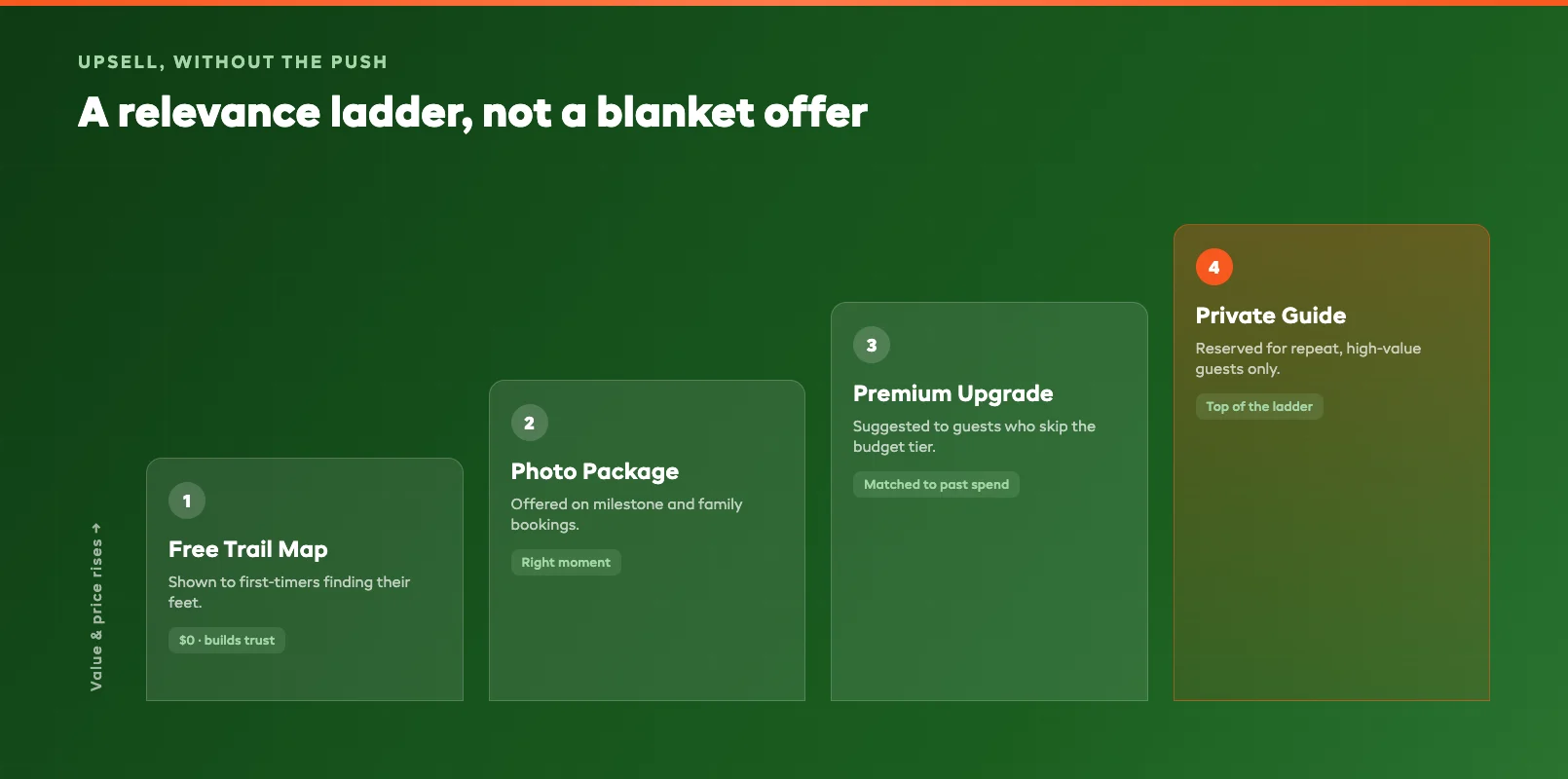
The fix is relevance, not volume. A milestone booking (an anniversary, a birthday party of eight) is the right moment to offer the photo package. A wet forecast is the right moment to offer the covered-boat upgrade. A guest who already bought the premium tier doesn't need to be sold the premium tier again. When the suggestion matches the situation, it reads as helpful. When it doesn't, it reads as noise.
The quiet part matters as much as the offer. A good system knows when not to suggest anything. When the guest is price-sensitive, when they've declined the same add-on twice, when the timing is wrong. Restraint is what keeps the helpful suggestions credible.
Repeat Guest Recognition
Most tour businesses treat every booking as a first booking. The returning customer re-enters their details, gets the same generic confirmation, and gets no credit for being loyal. That's a missed moment — repeat guests are cheaper to convert and spend more, and they notice when you forget them.
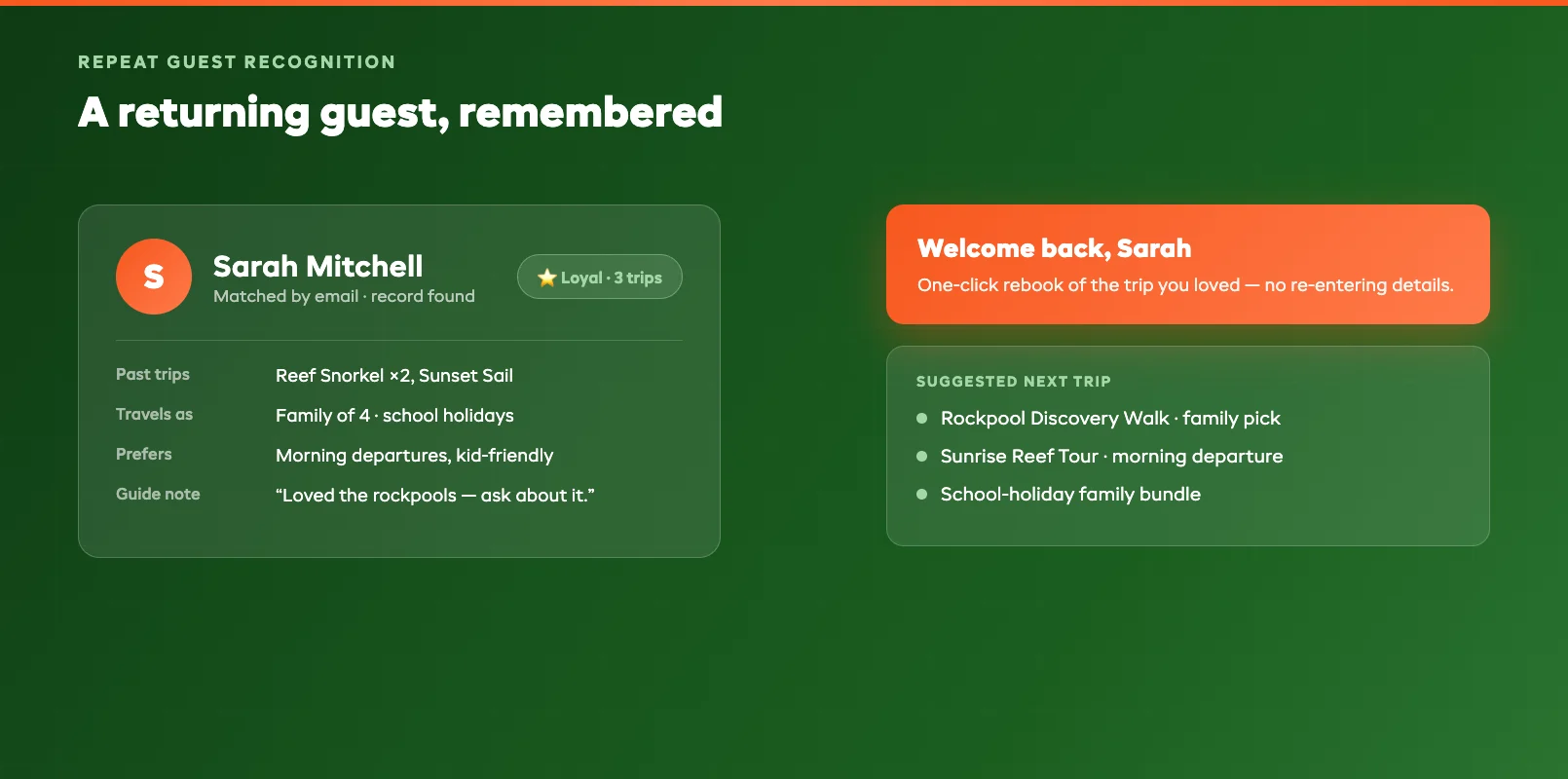
Recognition closes that gap. When a booking matches an existing record, the guest's history surfaces: the trips they've taken, the add-ons they like, the note your guide left last season. You can greet them by name, skip the questions you already know the answers to, and suggest the obvious next trip. Pair it with automated guest communication and the "welcome back" message goes out on its own, in your voice, without anyone remembering to send it.
This is also where loyalty stops being a punch card and starts being a relationship. The system remembers so your staff don't have to, which means even a guest your team has never personally met still feels like a regular.
Data You Already Have (and Aren't Using)
The biggest myth about personalization is that you need to go collect a pile of new data first. You almost never do. The fuel is already in your booking system.
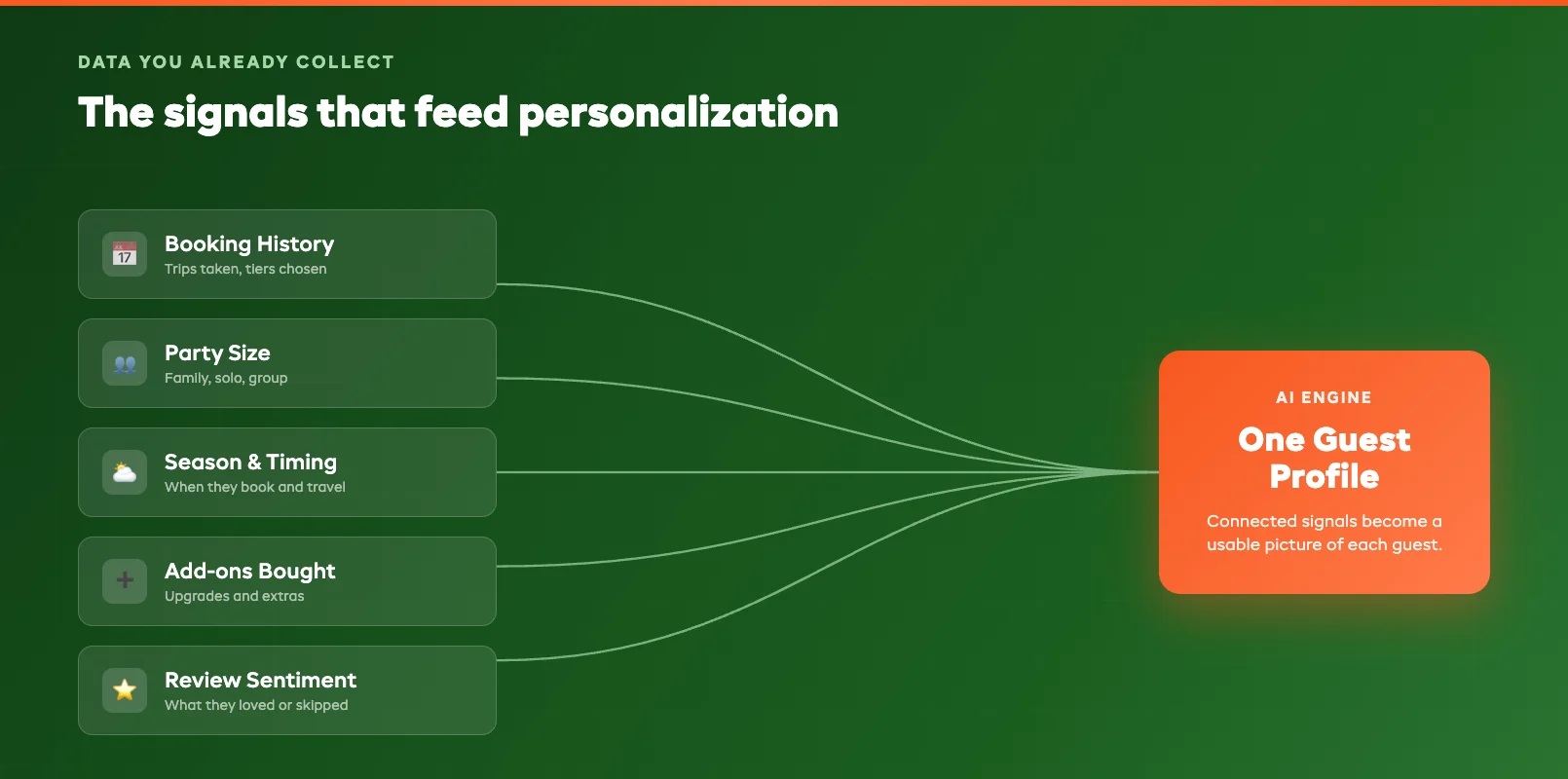
Think about what a single booking records: who the guest is, how big their party is, what they paid, what they added, when they came, and whether they came back. Stack a few of those together and you have a profile that tells you plenty: preferred season, price comfort, family versus solo, first-timer versus regular. Layer in review sentiment and the trips people clicked but skipped, and the picture sharpens further.
The work isn't gathering data; it's connecting it. When your bookings, payments, and customer records live in separate tools, the signals stay trapped in silos and nobody can act on them. When they live in one system, the patterns become usable. That's the same backbone behind demand forecasting and dynamic pricing — personalization just points the same data at the individual guest instead of the calendar.
Privacy and Guest Trust
Personalization runs on guest data, so trust is the whole game. Get it wrong and "we remember you" tips into "we're watching you", and that feeling is hard to win back.
The principles are not complicated. Use the data guests gave you for the purpose they'd expect (recommending relevant trips, remembering preferences) not for things they never agreed to. Make opting out of marketing genuinely easy. Don't sell or share a guest's information with anyone they didn't sign up for. And collect only what you actually use; a leaner profile is both safer and easier to defend.
Handled this way, personalization usually relies on less data than guests assume, and it earns goodwill rather than burning it. The operators who win here treat guest data the way they'd treat a guest's house keys: held carefully, used only as agreed, and never passed around. If a guest ever asks "why am I seeing this?", you want an answer you'd be comfortable giving to their face.
Putting It to Work
You don't need a data science team to start. Turn on repeat-guest recognition so returning customers get remembered. Let your booking flow lead with best-fit experiences instead of the full catalog. Add one or two relevant, situation-aware upsells and kill the blanket ones. Then watch what converts and refine.
The goal isn't to automate the human touch out of your business. It's to give a small team the memory of a big one. When the system handles the remembering, your guides and front desk get to spend their attention on the part only a person can do: making the trip itself unforgettable.
FAQ
What is AI personalization for tours and experiences?
It's using a guest's own booking history, party type, and stated interests to recommend the experiences they're most likely to want, and to skip the ones they're not. The matching runs automatically off data you already collect at checkout, so every guest sees relevant options instead of your full catalog.
Do I need a lot of data before personalization works?
No. Most operators already hold enough: past bookings, group size, season, add-ons purchased, and review sentiment. Even a single prior booking lets you greet a returning guest by name and suggest a logical next trip. You build richer profiles over time, but you can start with the data in your booking system today.
Will AI upsells annoy my guests?
They shouldn't, if the suggestion is relevant and optional. A pushy upsell shows the same expensive add-on to everyone. A good one suggests the photo package to families who booked a milestone trip and stays quiet for the solo traveler who didn't. Relevance is what separates a helpful nudge from a nag.
How does AI recognize repeat guests?
It matches the new booking to an existing customer record by email or phone, then surfaces that guest's history (past trips, preferences, and any notes) to you and to the booking flow. The guest gets a "welcome back" experience instead of starting from scratch every time.
Is guest data used for personalization a privacy risk?
Only if you handle it carelessly. Use the data guests gave you for the purpose they expect, let them opt out of marketing, and don't share it with anyone they didn't agree to. Done right, personalization uses less data than most guests assume and earns trust rather than spending it.
Can a small operator afford AI personalization?
Yes. The capability now ships inside booking and operations platforms rather than as a separate enterprise tool. If your system already stores customer records and booking history, turning on recommendations and repeat-guest recognition is a settings change, not a six-figure project.
in one place