AI Chatbot for Tour Operators: Answer Guest Questions Without the Inbox Overload
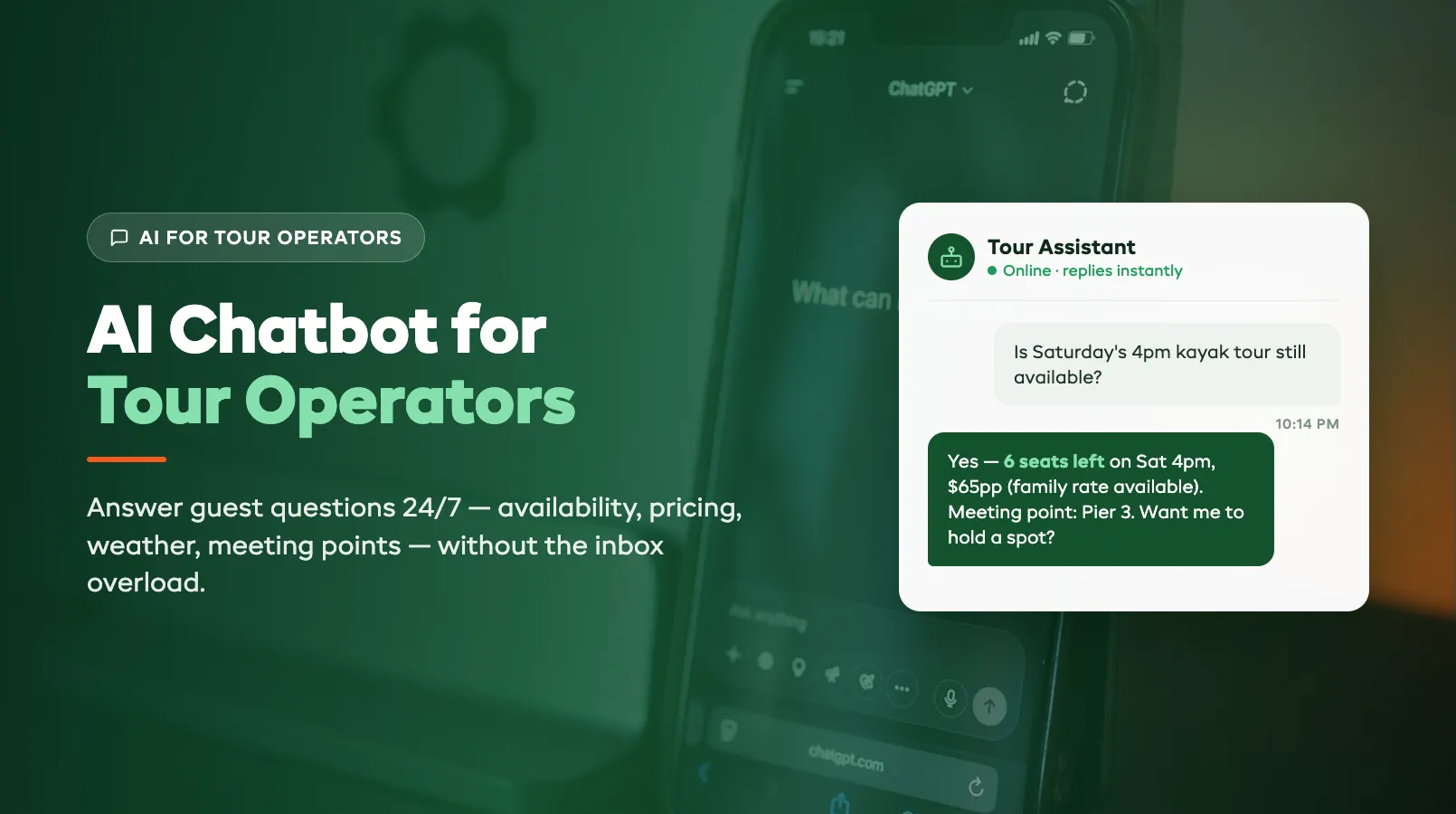
It's 10:14pm. A traveler halfway through planning tomorrow has one question before they book your sunset kayak tour: "Is the 4pm Saturday trip still available, and what's the meeting point?" You're not at your desk. You're asleep, or at dinner, or finally off the clock. By the time you reply at 8am, they've booked the operator who answered in thirty seconds. The tour was never the problem. The silence was.
Tour and activity operators live in their inbox. The same dozen questions arrive over and over (availability, price, what to bring, where to meet, what happens if it rains) and most of them land outside the hours you can answer. An AI chatbot doesn't replace the warmth of a real guide or your judgment on a tricky request. It answers the predictable questions instantly, around the clock, so you stop losing bookings to slow replies and stop spending your evenings typing the same answer for the hundredth time.
This guide covers exactly what a tour chatbot handles well, where the line sits, and what should always stay human. For the bigger picture of how AI is reshaping tour operations, start with our AI for tour operators guide.
What Guests Actually Ask (and When)
Forget the idea of a chatbot holding deep conversations. A tour chatbot in 2026 is answering the same eight to ten questions your guests ask before every booking. The skill isn't intelligence. It's having instant access to your real availability, pricing, and policies, and answering in plain language.
The recurring questions cluster into a handful of buckets: is there space on a specific date and time, how much it costs and whether there's a group rate, what the cancellation and refund policy is, what happens in bad weather, what to bring and wear, where and when to meet, and age or fitness requirements. None of these are hard. They're lookups dressed up as conversation.
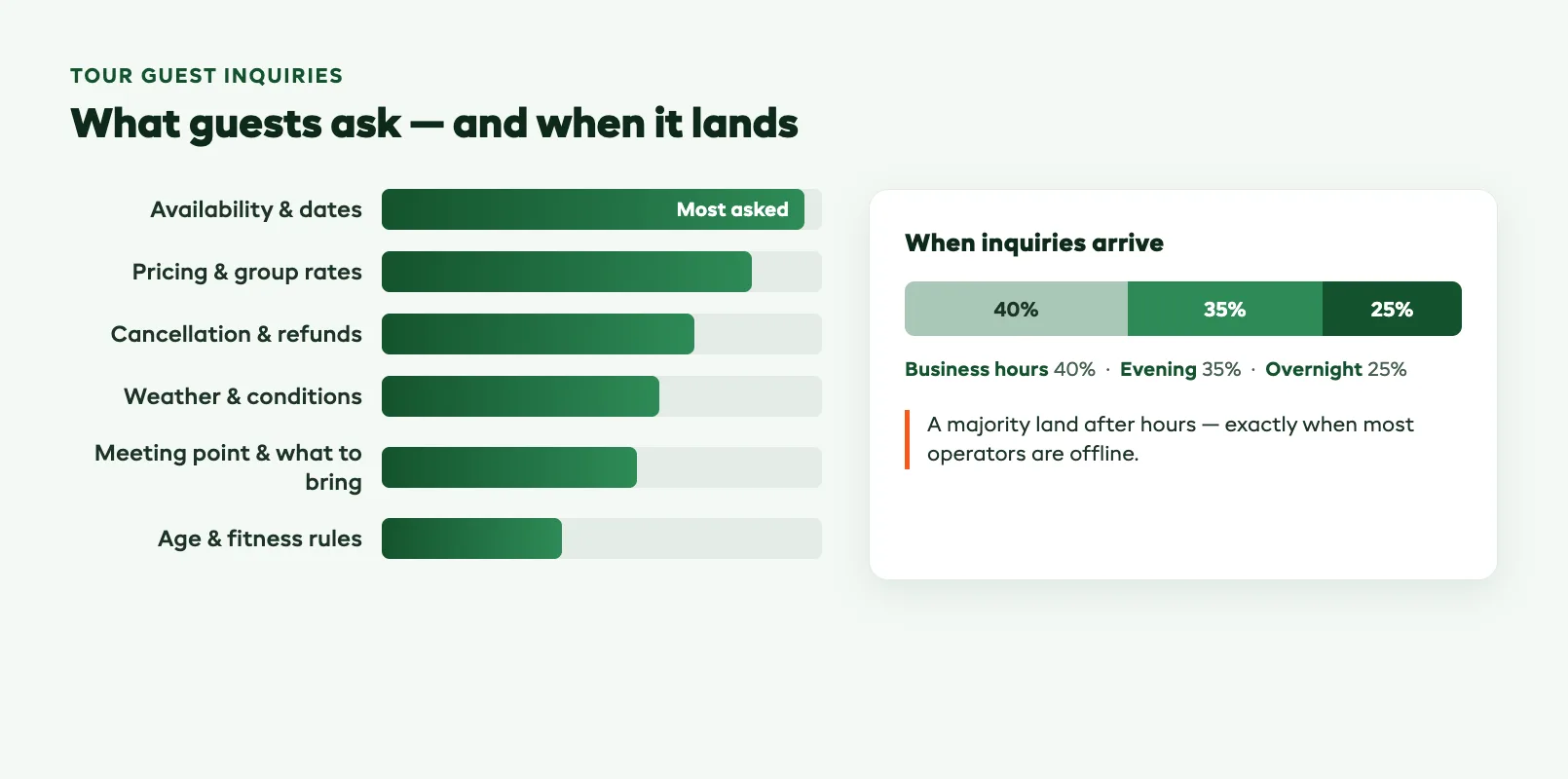
The timing is what makes them expensive to ignore. A large share of tour inquiries arrive in the evening and overnight, when travelers are planning the next day from a hotel room or a couch. That's precisely when your phone is off and your inbox is dark. A chatbot that answers at 10pm with a real availability check is the difference between a confirmed booking by morning and a guest who's moved on.
Availability and Pricing Queries
The single most valuable thing a tour chatbot does is answer "do you have space?" with a real answer instead of "please call us." A bot wired into your live booking calendar can confirm that Saturday's 4pm kayak tour has six seats left, quote the per-person price, mention the family rate, and hand the guest a booking link, all in one reply, at any hour.
That live connection is the whole game. A chatbot that says "contact us for availability" is worse than useless; it adds a step and still leaves the guest waiting. One that reads your actual calendar and pricing turns an idle question into a checkout. This is the same engine behind smart booking flows. If you want the deeper version, our guide to AI booking optimization for tours covers waitlists, group consolidation, and auto-fill.
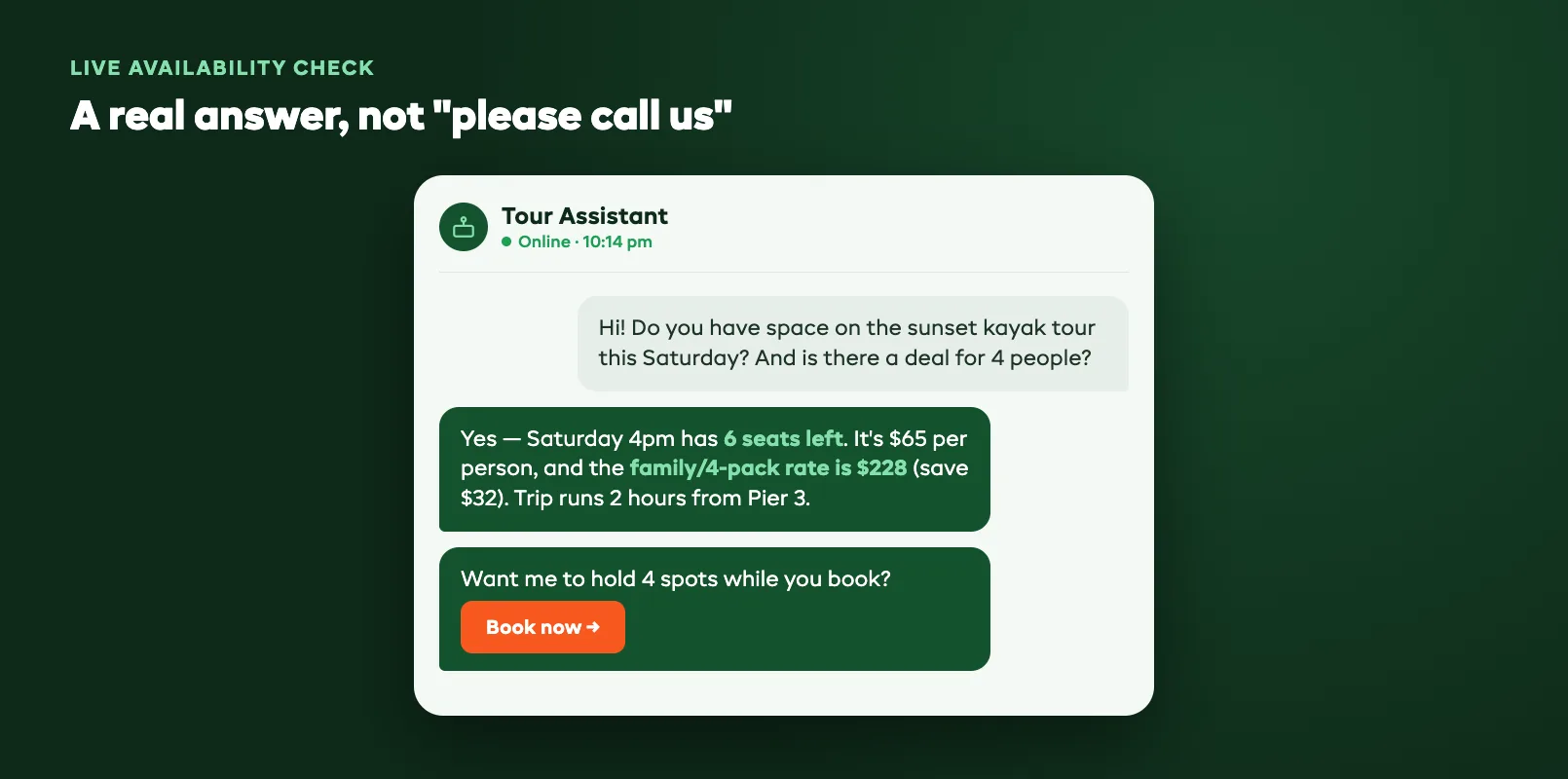
Pricing questions follow the same logic. Guests want a straight number, plus the answer to "is there a discount for four of us?" A chatbot pulling from your real rate table can quote the price, surface the relevant package or group rate, and explain what's included, so guests stop dropping off at the one question you weren't awake to answer. If that rate table itself is moving with demand, our guide to AI dynamic pricing for tours and activities covers how surge, early-bird, and group rules are set safely.
Cancellation, Refunds, and Weather
After availability and price, the questions that flood your inbox are about risk: "What if I need to cancel?" and "What happens if it rains?" These are policy lookups, and a chatbot answers them perfectly because the answer never changes. Feed it your cancellation window, your refund and reschedule rules, and your weather policy, and it delivers a consistent, accurate answer every time — no matter who's asking or when.
Weather is the question that defines outdoor tours, and it's where instant answers matter most. A guest watching a forecast the night before wants to know whether tomorrow's trip runs, what your call cut-off is, and whether they'll get a refund or a reschedule if you cancel. A chatbot can explain the policy clearly and set the expectation, then point them to where they'll get the final go/no-go call.
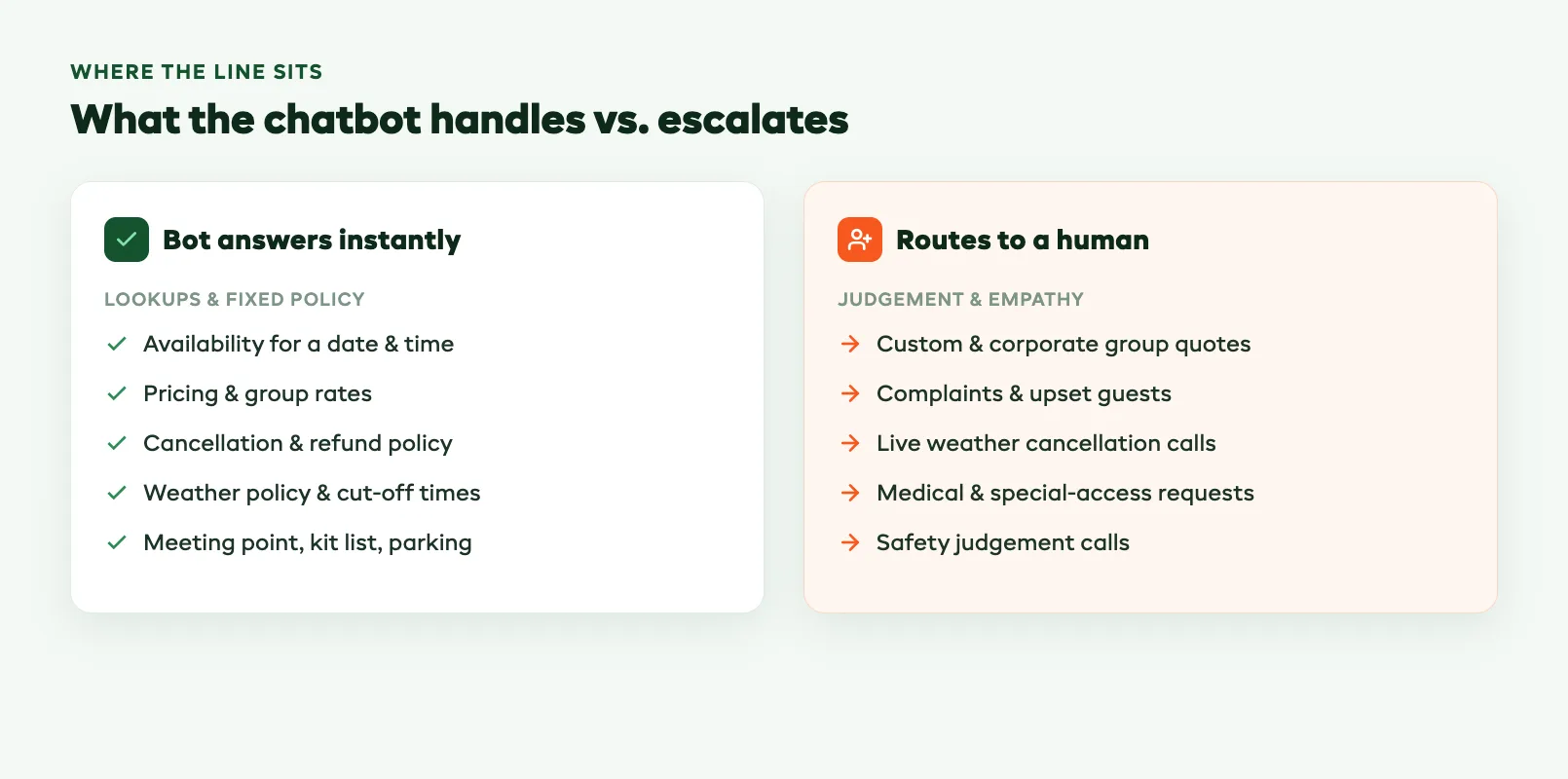
There's an important limit here. The chatbot states the policy. It shouldn't be the one making a live weather cancellation call or approving a goodwill refund outside policy. Those are judgment calls that belong to you. The bot's job is to handle the 90% of weather and cancellation questions that are pure policy, and cleanly hand off the rest.
Pre-Tour Information and Meeting Points
The last big cluster is logistics: where to meet, what time to arrive, what to bring, what to wear, where to park, and whether the activity suits a nervous first-timer or a six-year-old. These questions arrive in the anxious window between booking and showing up, and answering them well is what turns a booked guest into one who actually arrives on time, prepared, and relaxed.
A chatbot handles this beautifully because the details are fixed per tour. It can send the exact meeting-point address with a map link, the recommended arrival time, the kit list, and the dress code the moment a guest asks, and it does it the same way every time, so nobody shows up in flip-flops for a mountain hike. Keeping that information accurate and tied to each guest's booking is far easier when your customer records live in one place; a connected tour operator CRM means the bot is answering from the same source of truth your team uses.
Done well, this cuts the day-before scramble of "where do I go?" messages to near zero and reduces no-shows, because a guest who knows exactly where to be and what to bring is a guest who turns up.
What Stays Human (and Should)
A chatbot earns its place by handling volume, not by pretending to be a guide. The line is simple: anything that's a lookup or a fixed policy, the bot handles. Anything that needs judgment, empathy, or a real decision, a human handles.
That means custom group quotes for a corporate booking, a complaint from a guest who had a bad experience, a special-access or medical request, a live safety call, and the moment someone is upset and needs a person. These all route to you. A good chatbot recognizes when it's out of its depth and escalates cleanly, capturing the guest's question and contact details so nothing falls through the cracks.
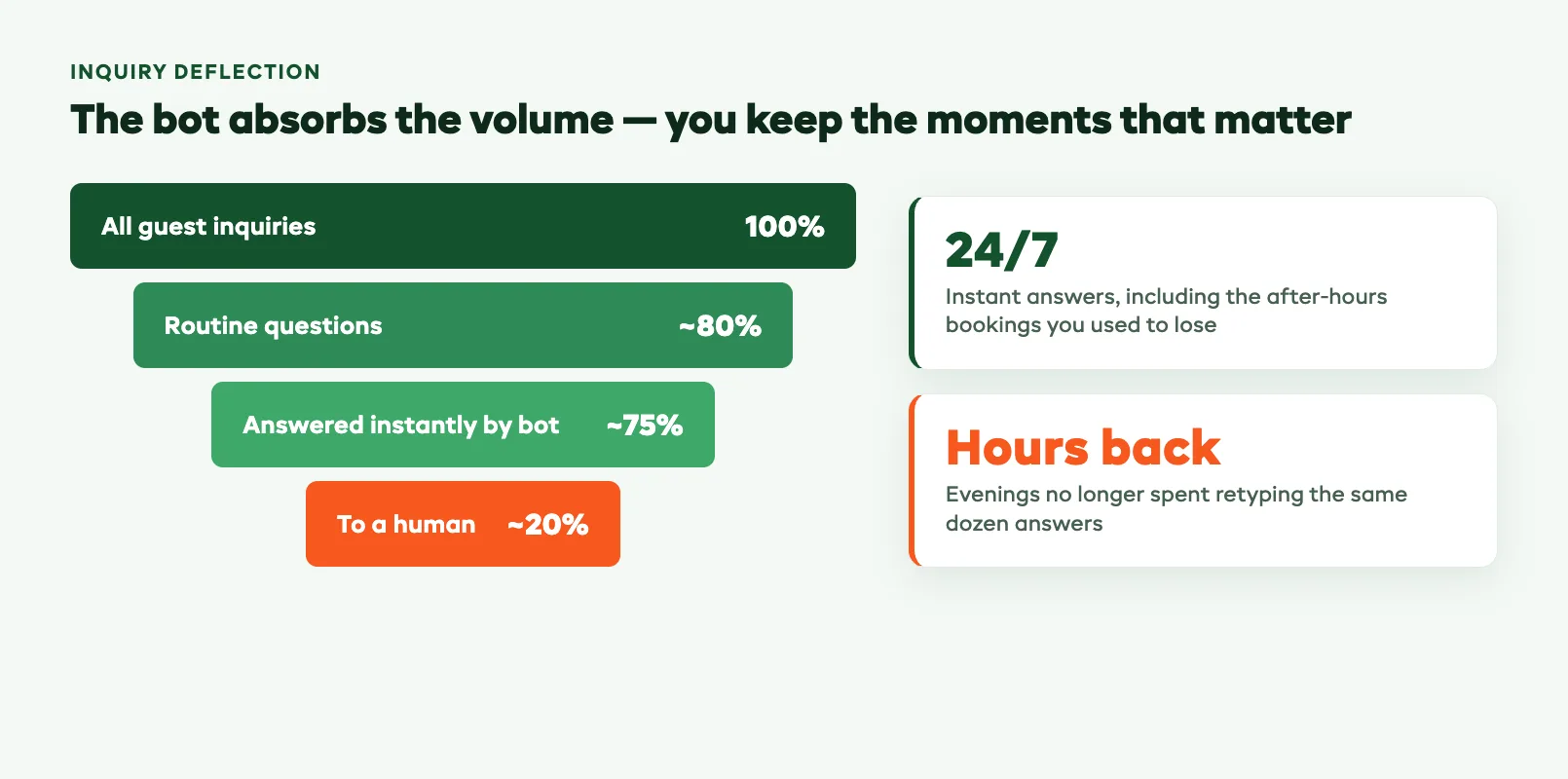
Set up this way, the chatbot doesn't make your business feel automated. It makes it feel responsive. Guests get instant answers to the easy questions and a real person for the ones that matter. The payoff is concrete: fewer lost after-hours bookings, an inbox that no longer eats your evenings, and more of your attention freed for the guests and trips in front of you. The operators who win in 2026 aren't the ones who answer fastest by hand. They're the ones who let software answer the predictable questions and save their own time for the conversations only a human can have. A chatbot covers the questions guests bring to you; the other half of the job is the messages you send them without being asked: confirmations, prep notes, weather alerts, and review requests. Our guide to automated guest communication for tour operators maps that full outbound chain. If you're ready to put booking, guest records, and automated answers on one system, that's exactly what tour operator software is built to do.
FAQ
What questions can an AI chatbot answer for a tour operator?
An AI chatbot handles the predictable, high-volume questions: availability for a specific date and time, pricing and group rates, cancellation and refund policy, weather and condition policies, what to bring and wear, meeting-point and arrival details, and age or fitness requirements. The key is connecting it to your live booking calendar, real pricing, and written policies so it gives accurate, specific answers ("Saturday's 4pm tour has six seats at $65 each") rather than telling guests to call you back.
Will an AI chatbot make my tour business feel impersonal?
Not if it's set up with clear limits. The chatbot handles routine lookups instantly so guests aren't left waiting, and it hands off anything needing judgment or empathy (complaints, custom group requests, safety questions, upset guests) to a real person. Done right, it makes your business feel more responsive, not less personal: guests get instant answers to easy questions and a human for the ones that actually matter.
Can a chatbot handle weather cancellations for tours?
A chatbot should explain your weather policy: your decision cut-off time, your refund or reschedule rules, and where guests will get the final go/no-go call. It should not be the one making the live cancellation decision or approving out-of-policy refunds; those are judgment calls that stay with you. So it answers the bulk of weather questions (the policy ones) automatically and escalates the actual decision to a human.
Why does answering after-hours questions matter for tour bookings?
A large share of tour inquiries arrive in the evening and overnight, when travelers plan the next day's activities. That's exactly when most operators are offline, so unanswered messages turn into bookings lost to whoever replied first. An AI chatbot that answers at 10pm with a real availability check and a booking link captures those guests instead of losing them to a faster competitor by morning.
How is a tour chatbot different from a generic website chatbot?
A generic chatbot reads your FAQ page and gives static answers. A tour chatbot is connected to your live operations. It checks real seat availability, quotes current pricing and group rates, reads your actual cancellation and weather policies, and sends booking-specific meeting-point details. That live connection is what turns it from a glorified search box into something that actually closes bookings and cuts your inbox volume.
in one place