Partnering with Guides, Outfitters, and Tour Operators (Gear-Sharing Models)
Your camping gear sits in the warehouse five days a week. Meanwhile, three hiking guides within 20 miles run trips every weekend using gear they bought themselves, or worse, gear they rented from your competitor. That's dead inventory on your side and unnecessary capital spend on theirs.
Gear-sharing partnerships fix this. You supply the tents, bags, and cookware. The guide or outfitter supplies the customers and the expertise. Both sides make more money with less overhead. But only if the deal is structured correctly. A handshake arrangement between friends falls apart the first time a $400 tent comes back shredded.
This guide covers six areas you need to nail before handing your gear to anyone: partnership structures, pricing, branding, training, liability, and SLAs. For the full camping rental operator playbook (inventory, pricing, hygiene, logistics) start with our complete guide to running a camping gear rental business.
Partnership Structures That Actually Work
Not every partnership looks the same. The right model depends on volume, trust, and how much control you want over the customer experience.
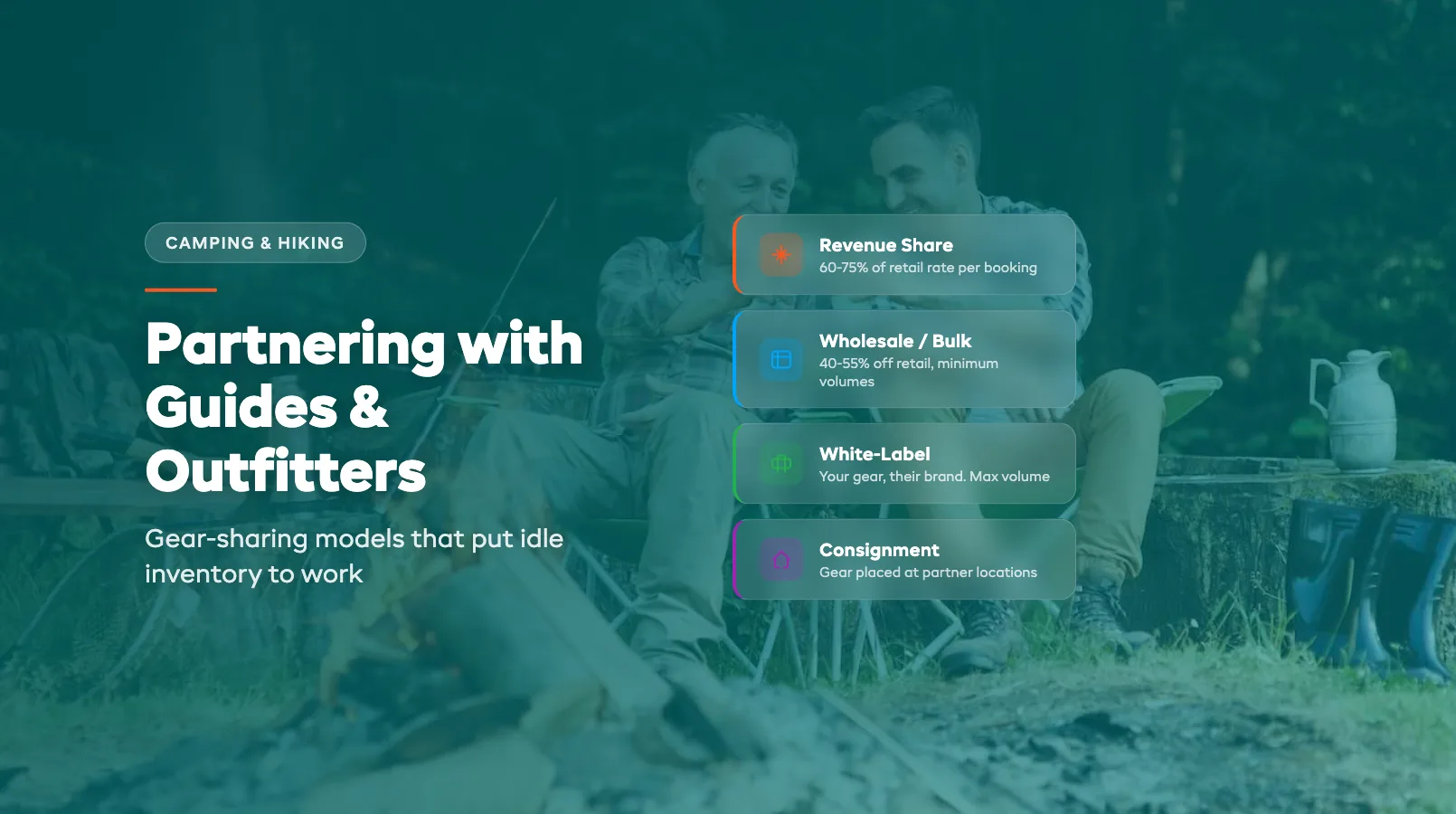
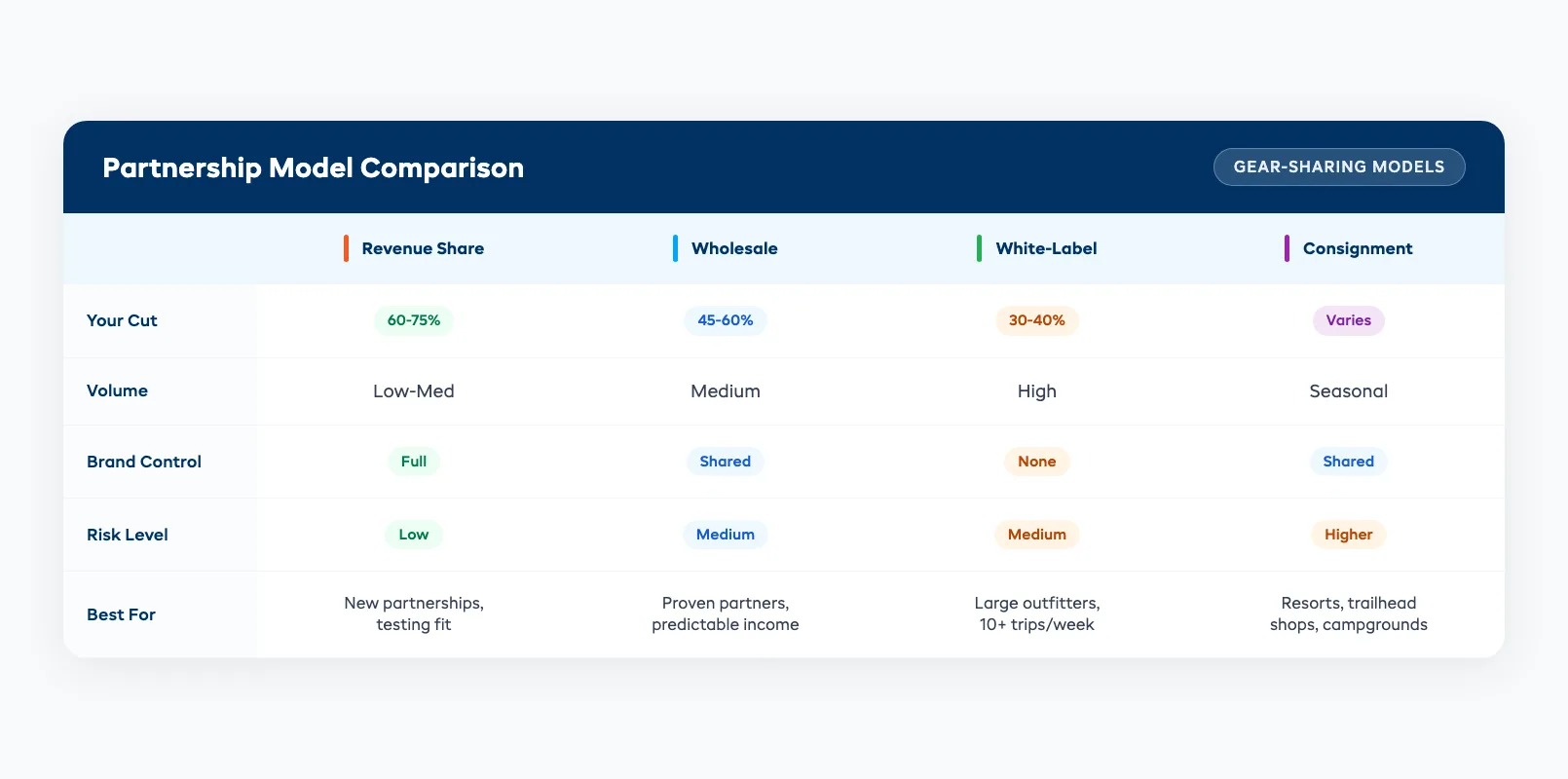
Revenue-share. The partner books your gear as part of their trip package. You get a percentage of each booking, typically 60-75% of the retail rental rate. The guide handles customer communication and logistics. You handle cleaning, maintenance, and restocking. This works best with established guides who run consistent volume. Low risk for both sides because nobody commits capital upfront.
Wholesale / bulk rate. The partner pays a flat discounted rate per item per day, usually 40-55% off retail. They mark it up however they want. You get guaranteed revenue regardless of whether they fill the trip. This works when partners want pricing control and you want predictable cash flow. The trade-off: lower margin per unit, but higher utilization across your fleet.
White-label. The partner's customers never know your gear exists. Your tents show up with the partner's branding (or no branding at all). You're essentially a wholesale supplier. This pays the least per unit but moves the most volume — ideal for large outfitters running 10+ trips per week.
Consignment / seasonal placement. You place gear at a partner's location for the season. They rent it directly to their customers and pay you a monthly fee or per-rental cut. This works well for resort partners, campground stores, or trailhead shops. The risk: you lose daily visibility on gear condition. Build in monthly inspection checkpoints to keep tabs on wear. Campgrounds and glamping sites are the fastest-growing placement partners here — our guide to campground and glamping gear rentals shows the deal from the property's perspective, including the 15-25% placement cut they'll expect.
Most operators start with revenue-share for the first season, then graduate to wholesale once they've proven volume. Don't jump straight to white-label unless you have 200+ items and can absorb the margin hit.
Pricing for Partners
Partner pricing needs to accomplish three things: incentivise the partner to sell your gear, protect your margin, and stay below the threshold where customers would just rent directly from you.
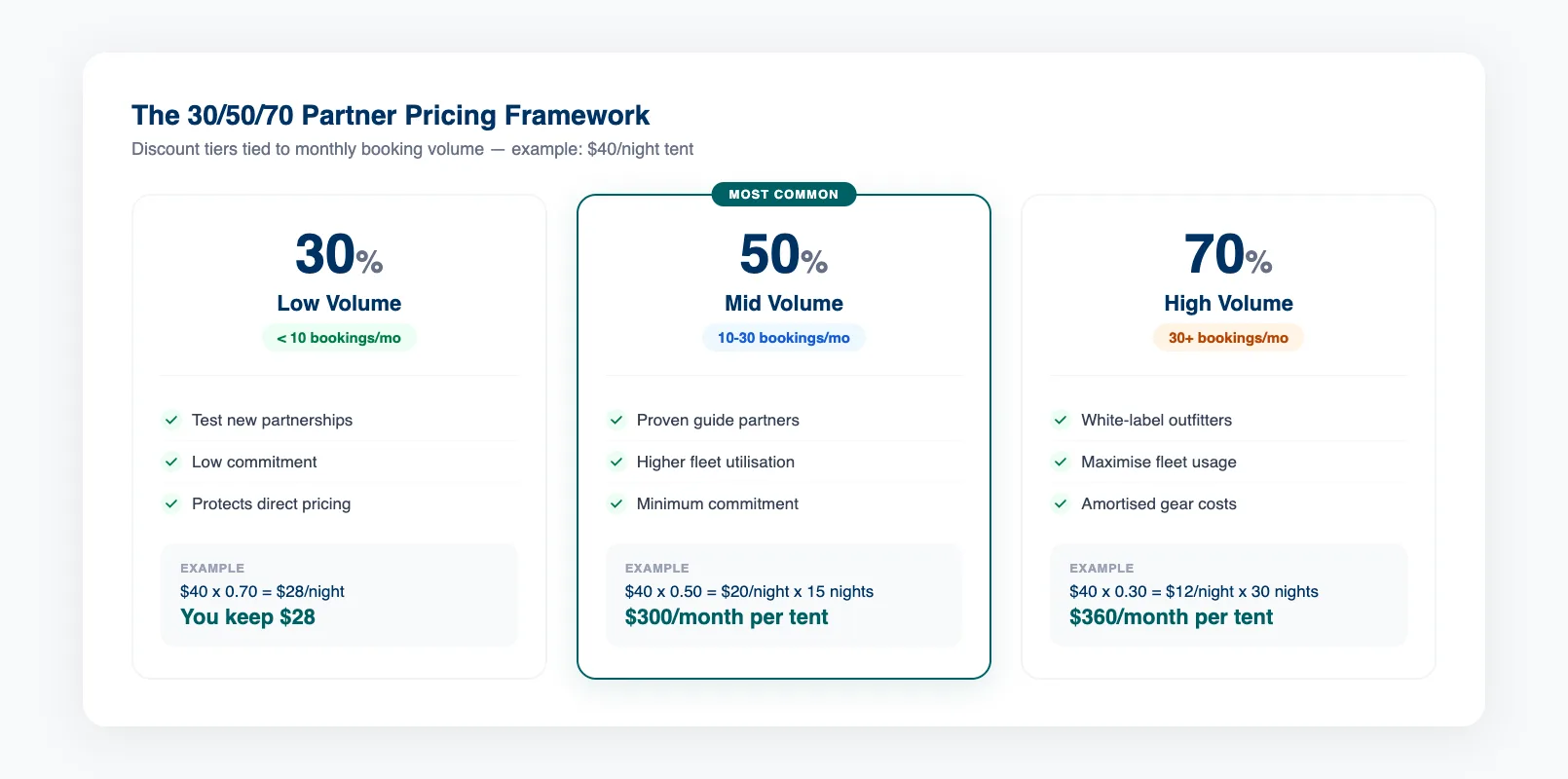
The 30/50/70 framework:
- 30% discount for low-volume partners (fewer than 10 bookings/month). Enough to make it worth their time, not enough to undercut your direct business.
- 50% discount for mid-volume partners (10-30 bookings/month). This is where most guide partnerships land. At 50% off a $40/night tent rate, you collect $20/night. If the tent rents 15 nights/month through the partner, that's $300 — compared to maybe 8 direct rentals at $40 for $320. Close enough that the extra utilization makes it worth it.
- 70% discount for high-volume or white-label partners (30+ bookings/month). Only viable if your gear costs are fully amortised and you're optimizing for fleet utilization over margin.
Minimum commitments matter. A partner who promises 20 bookings and delivers 3 is worse than no partner. You held inventory for them that could have rented directly. Tie discount tiers to minimum monthly volumes. Miss the minimum two months in a row, and the rate resets to the lower tier.
Seasonal adjustments. Peak season (June-September for most camping operators) should carry a smaller discount, your gear rents out anyway. Off-season partnerships can go deeper on discounts because any revenue beats zero. Structure your pricing packages so partner rates flex with demand.
Branded vs Unbranded Gear
This is a branding decision disguised as an operations question. When a guide takes your gear on a trip, whose name does the customer associate with the experience?
Keep your branding visible when:
- You want direct referrals. A tag on every tent that says "Gear provided by [Your Shop]" with your booking URL turns every trip into a marketing channel.
- The partner is small and doesn't have strong brand recognition. Your gear quality becomes part of their credibility.
- You're running revenue-share and want customers to know they can rent directly next time.
Remove or neutralise branding when:
- The partner specifically requests white-label. Respect it — it's part of the deal.
- You're supplying to a competitor's trips (yes, this happens). They won't promote your name.
- The partner has a premium brand and your branding would dilute their customer experience.
Practical approach: Use removable hang tags instead of permanent labels. A carabiner-clip tag on each item is easy to add or remove per partner agreement. It costs about $0.50 per tag and takes 10 seconds to attach.
Partner Training and Gear Handling
The fastest way to destroy a partnership, and your gear, is handing over equipment without training. Guides are great at guiding. They're not necessarily great at packing a tent correctly, drying a sleeping bag, or inspecting a stove for fuel leaks.
What every partner needs to know:
- Setup and takedown procedures for every item they'll use. Run a 2-hour hands-on session before the first trip. Focus on the mistakes that cause damage: forcing tent poles, stuffing wet bags, leaving cookware with food residue.
- Return condition expectations. Give them a printed checklist — the same post-rental return checklist your own staff uses. If they can't return gear to this standard, they pay for the extra cleaning.
- Damage reporting protocol. They need to flag damage immediately, not after three more trips. Provide a simple form (photo + description + trip date) that they submit within 24 hours of return.
- Weather and storage rules. Wet gear must be unpacked and dried within 4 hours. Period. One mouldy tent because a guide left it in their van overnight costs you $300-500 in replacement. Make this non-negotiable. See our camping gear hygiene guide for the full protocol.
Refresher schedule: Re-train at the start of every season and whenever you introduce new gear. A 30-minute refresher prevents 90% of handling damage.
Risk and Liability
Partnerships multiply your liability exposure. Your gear is now in someone else's hands, being used by customers you've never met, on trips you didn't plan.
Insurance requirements:
- Require every partner to carry their own commercial general liability insurance — $1M minimum. Get a certificate naming your business as additionally insured.
- Your own policy should cover gear in third-party possession. Talk to your broker; some policies exclude equipment loaned or rented to businesses (as opposed to individual consumers).
- For backcountry operations, verify the guide's wilderness liability coverage separately. Standard CGL policies often exclude backcountry incidents. Our backcountry rental operations guide covers the logistics side in detail.
Damage and loss allocation:
- Normal wear: Your cost. Factor it into the partner rate.
- Negligent damage: Partner pays replacement cost minus depreciation. Define "negligent" in writing, leaving wet gear packed, using gear beyond rated capacity, skipping pre-trip inspection.
- Customer-caused damage: Depends on your agreement. Most operators split this — the partner covers the first $100, you cover the rest if the partner followed all handling protocols.
- Loss or theft: Partner pays full replacement cost. No exceptions.
Waiver chain. The guide's customers should sign a waiver that covers both the guide's business AND your equipment. Work with a lawyer to draft language that protects both parties. Don't assume the guide's existing waiver covers your gear. It probably doesn't.
Service-Level Agreements
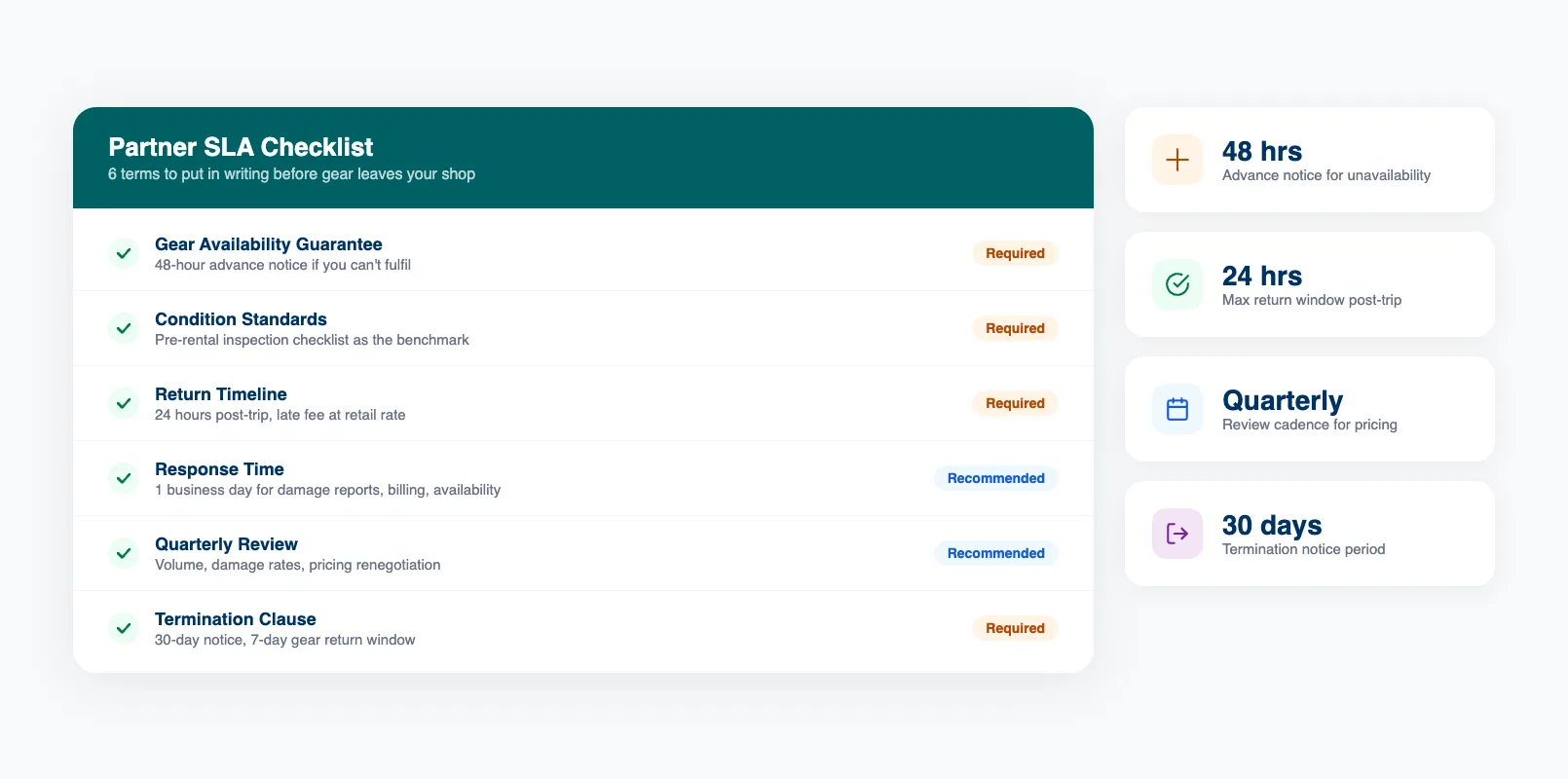
A good SLA prevents arguments. A missing SLA guarantees them. Put these terms in writing before the first piece of gear leaves your shop.
What your SLA should cover:
- Gear availability guarantee. You commit to having the agreed inventory ready by a specific time before each trip. If you can't fulfill, you notify the partner 48 hours in advance so they can source alternatives.
- Condition standards. Every item meets a defined condition threshold: no patches, no broken zippers, no cosmetic damage that a customer would notice. Reference your pre-rental inspection checklist as the standard.
- Return timelines. Gear comes back within 24 hours of trip end. Late returns incur a daily fee equal to the retail rate. This prevents partners from sitting on your inventory between trips.
- Communication response time. Both sides respond to damage reports, availability requests, and billing questions within one business day.
- Review cadence. Quarterly sit-down to review volume, damage rates, and pricing. This is where you renegotiate tiers, address problems, and plan for the next season.
- Termination clause. Either party can exit with 30 days' written notice. Outstanding gear returns due within 7 days of termination. Deposits held until all gear is inspected and cleared.
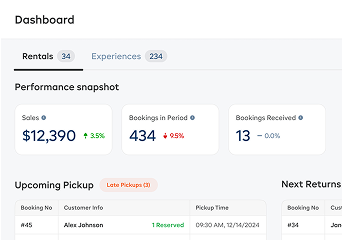
Track everything in your rental system. Assign each partner a customer profile in Dash so every booking, return, and damage report is logged in one place. When it's time for the quarterly review, pull the data. Don't rely on memory or spreadsheets.
For seasonal patterns that affect your partnership inventory planning, check our seasonal hiking gear rental guide to see which items move when.
Frequently Asked Questions
How much commission should I pay guides who book my gear? Most revenue-share partnerships land at 25-40% commission to the guide (meaning you keep 60-75% of the retail rate). Start at 25% for new partners and increase based on volume and reliability. A guide consistently booking 20+ rentals per month has earned a better split.
Should I brand gear that partners use with their customers? It depends on the partnership model. For revenue-share, yes. Use removable hang tags so customers know where to rent directly. For white-label, no. Respect the partner's brand. The small branding investment ($0.50/tag) pays for itself in direct referrals.
What happens when a partner damages my equipment? Define damage categories in your agreement upfront. Normal wear is your cost (built into the rate). Negligent damage, like packing wet tents or overloading packs, is the partner's cost at depreciated replacement value. Customer-caused damage is usually split based on whether the partner followed handling protocols.
Do I need a written SLA for guide partnerships? Yes. Always. Even with friends. The SLA covers availability guarantees, return timelines, condition standards, damage liability, and termination terms. A two-page document saves you from a $5,000 argument about who pays for a lost tent.
How do I train partners to handle my gear properly? Run a 2-hour hands-on session covering setup, takedown, cleaning, and damage reporting. Give them the same return checklists your staff uses. Re-train at the start of each season. The training investment is small compared to the repair costs from untrained handling.
What's the difference between revenue-share and wholesale pricing? Revenue-share ties your income to each booking. You earn a percentage of every rental the partner books. Wholesale means the partner pays a fixed discounted rate regardless of what they charge customers. Revenue-share is lower risk; wholesale provides more predictable income but requires minimum volume commitments.
in one place