Managing Dive Certifications and Prerequisites at Check-In
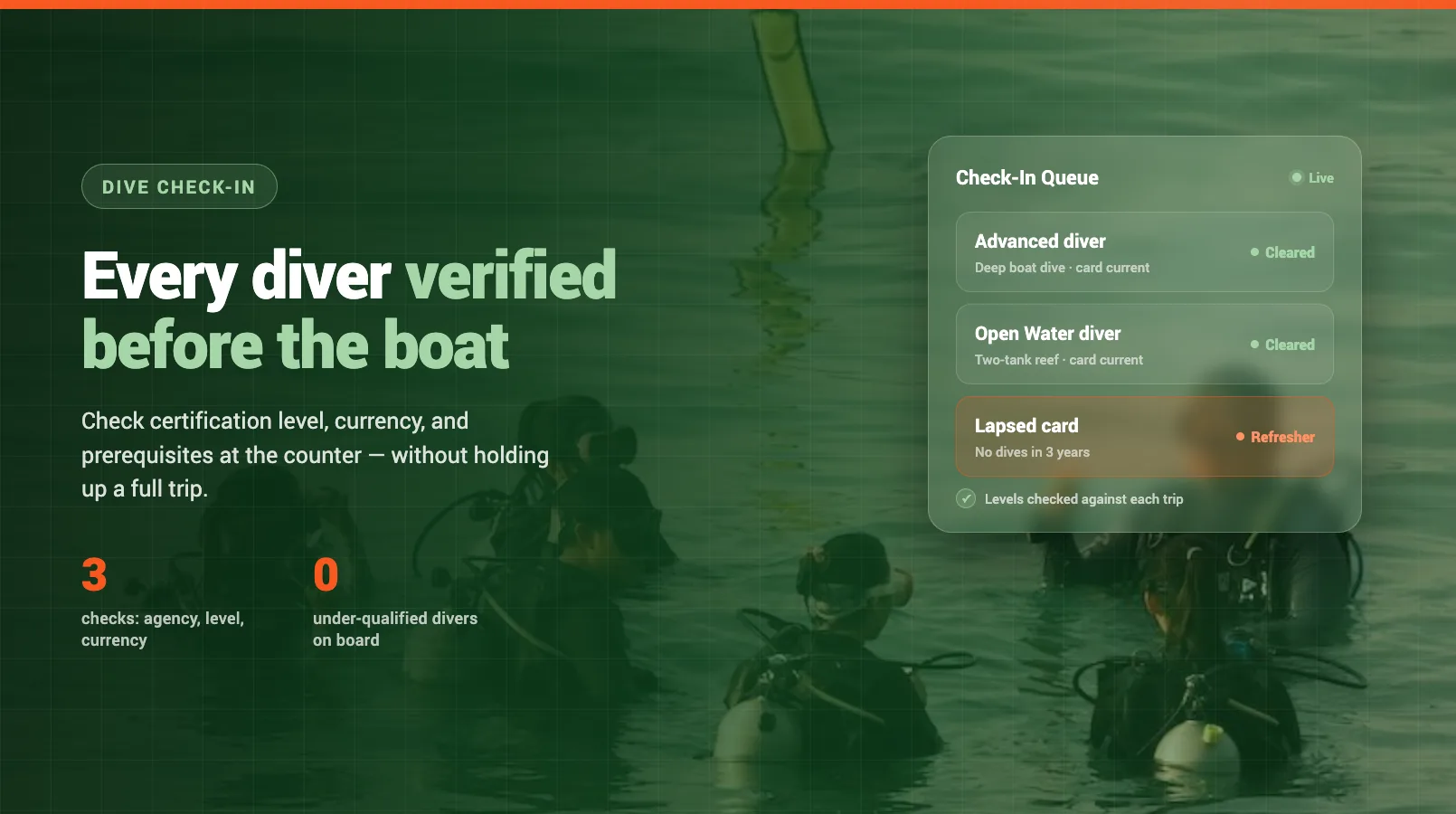
Every dive that leaves your dock starts with the same question at the counter: is this diver actually allowed on this trip? A certification card, a logbook, a booked dive, and a boat schedule all have to line up in the two minutes before a group heads to the boat. Get it right and check-in is a formality. Get it wrong and you either put an under-qualified diver in the water or hold up a full boat while you sort out paperwork that should have been settled days ago.
Certification checks are where safety, liability, and customer experience meet the front counter. This guide covers what to verify, how to match divers to the dives they booked, and how to catch the lapsed cards and missing logbooks before they become a problem at the dock. It sits alongside the complete guide to running a scuba diving business, which covers the wider operation around the check-in desk.
Why certification checks matter at the counter
A certification check is not bureaucracy — it is the line between a diver you can legally and safely take underwater and one you cannot. If a diver is hurt on a dive their certification did not cover, "they seemed confident" is not a defense. The card, the level, and the dive have to match, and you have to be able to show that you checked.
There is a customer side to this too. The counter is the first thing a diver experiences on the day, and a slow, disorganised check-in sets the tone for the whole trip. When every diver is processed from scratch on a busy Saturday morning — cards hunted for, levels debated, logbooks flipped through — the boat leaves late and the dive shortens. The goal is a check that is thorough enough to be safe and fast enough to stay invisible.
What to verify: agency, level, and currency
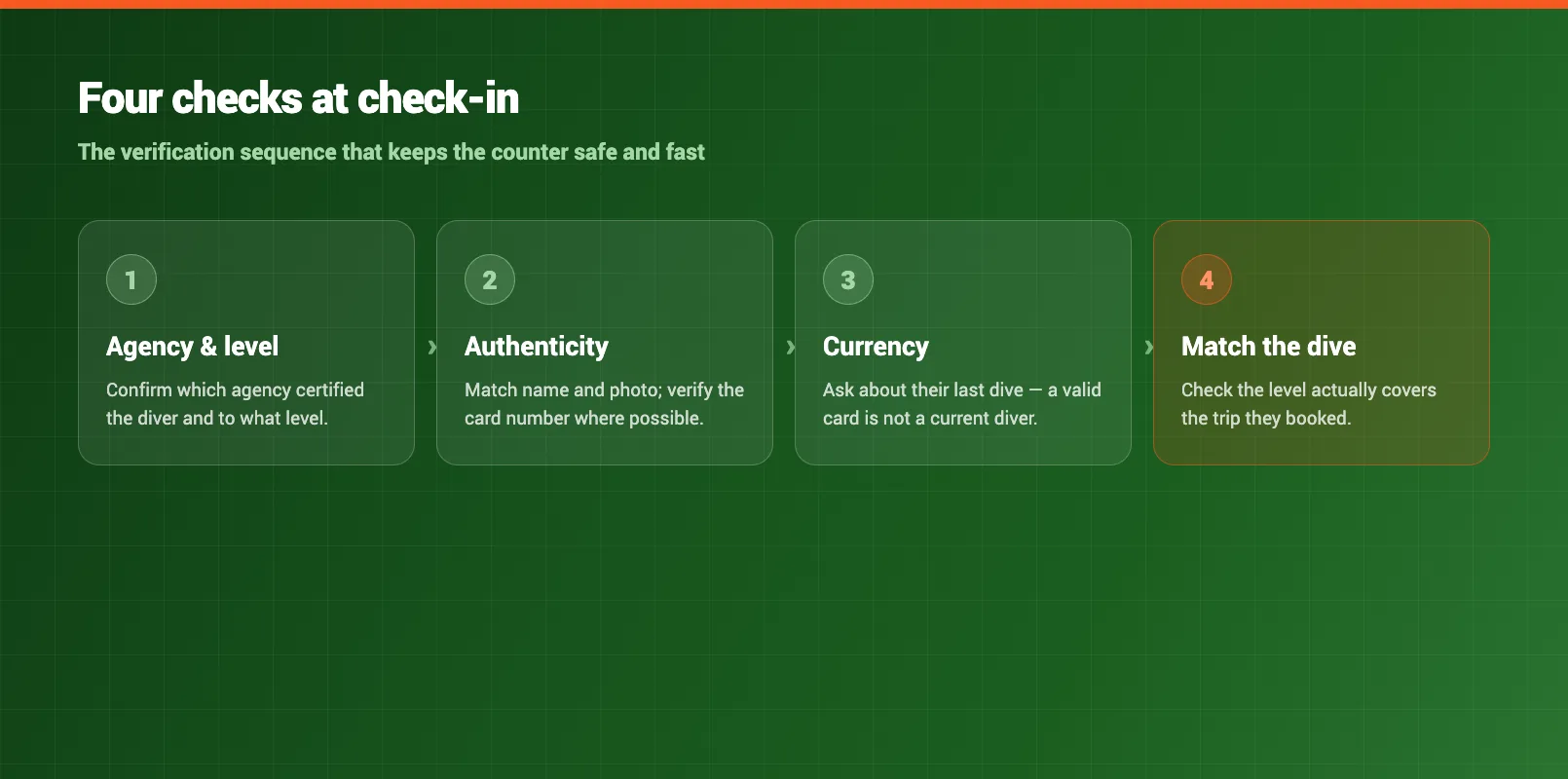
Three things make up a proper certification check, and each catches a different problem.
Agency and level. Confirm which agency certified the diver and to what level. The major agencies map to each other closely — an Open Water diver is an Open Water diver whether the card says PADI, SSI, or another agency — but the level tells you the depth and dive type the diver is trained for. This is the single most important field to get right.
Authenticity. Match the name and photo to the person in front of you. Digital cards in the agency apps are easy to check and hard to fake; a worn laminated card is worth a second look. Where the agency offers an online certification lookup, the number confirms the card is genuine.
Currency. A valid card does not mean a current diver. Entry-level certifications never expire, so a card from fifteen years ago is still valid even if the diver has not been wet since. A quick question about their last dive, or a glance at a logbook, tells you whether they need a refresher before a demanding trip.
Matching divers to the dives they booked
Verifying a card is only half the job. The other half is checking that the certification level actually covers the dive on the schedule. This is where most eligibility problems live.
An Open Water diver is limited to shallower recreational depths and should not be on a deep boat dive. An Advanced diver can go deeper. A specialty dive — wreck penetration, cave, deep, nitrox — needs the matching specialty training, not just a general certification. The mismatch to watch for is the confident diver who booked a trip above their level and assumes their enthusiasm covers the gap.
The cleanest way to handle this is to attach a required certification level to every trip you run, so the dive itself tells you who is eligible. A diver whose level does not reach the requirement gets flagged before they ever reach the counter.
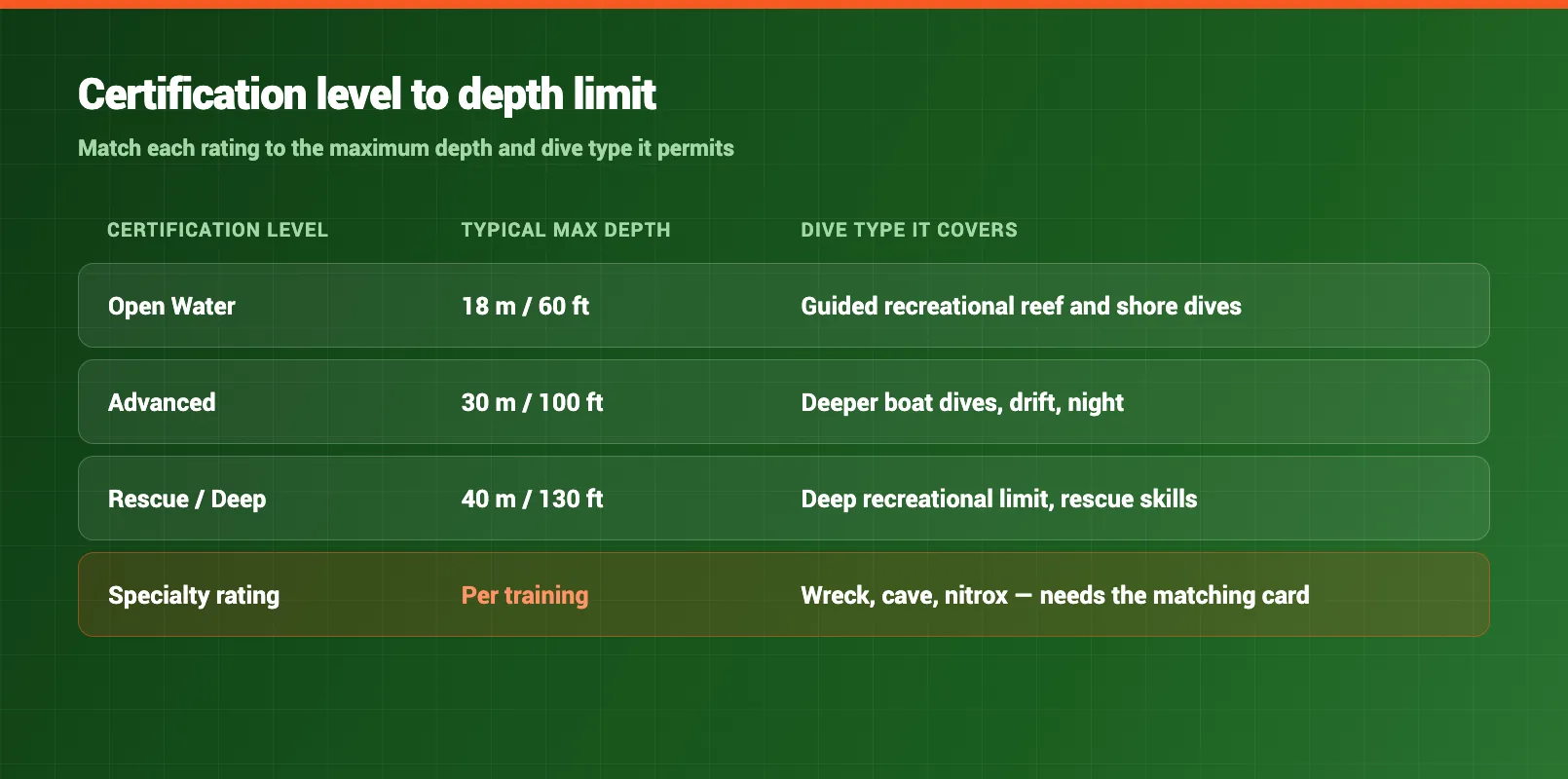
Handling prerequisites for courses and advanced dives
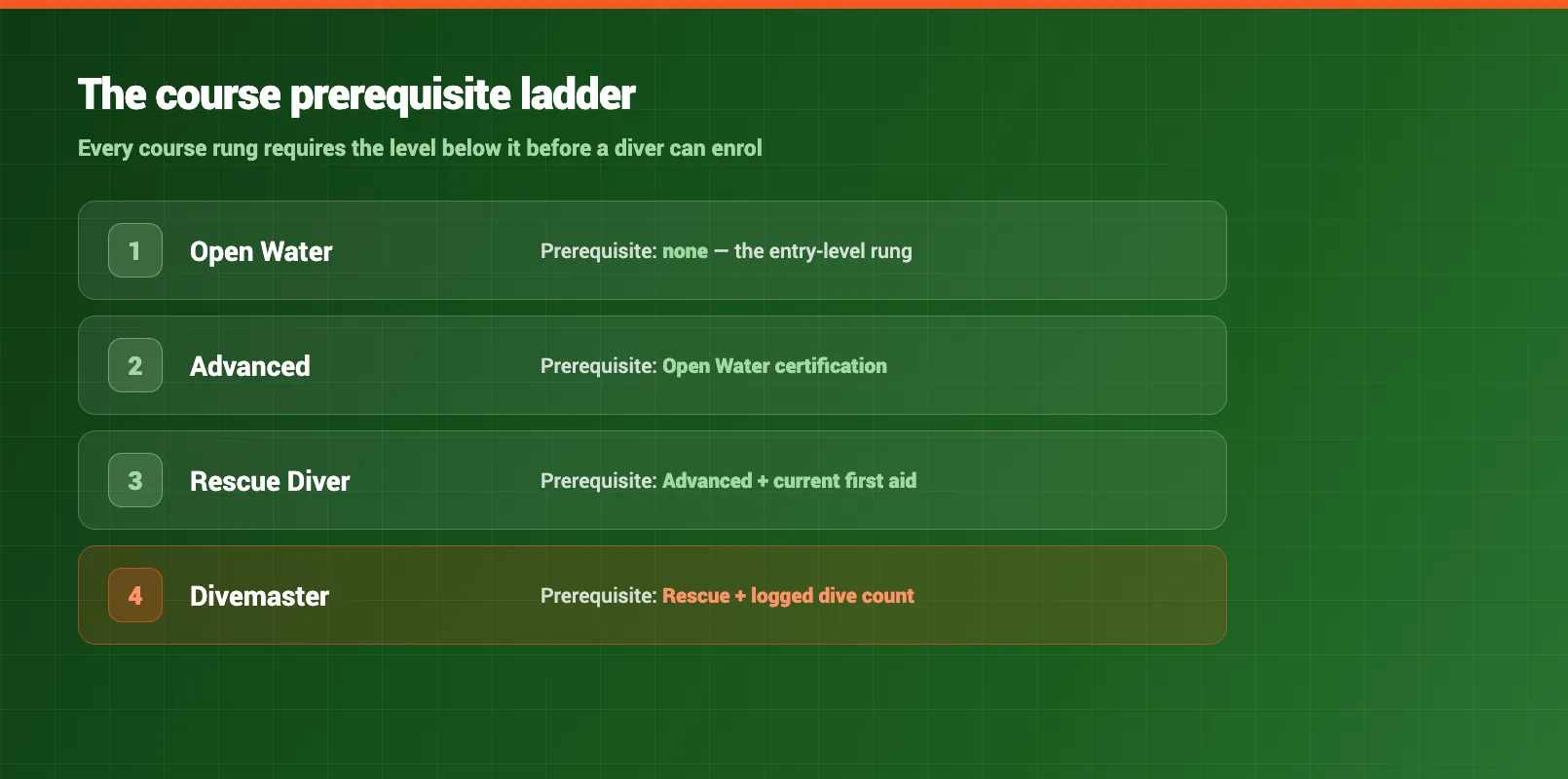
Courses stack on top of each other, and each rung has a prerequisite. You cannot put a diver into an Advanced course without an Open Water certification first, or into a Rescue course without the Advanced level and a current first-aid qualification. Sell a course to a diver who does not hold the prerequisite and you have a student who cannot legally complete it — a refund, a reshuffle, and a bad review waiting to happen.
Prerequisites are easiest to enforce at the point of sale. When a diver books an Advanced course, the system should ask what they already hold and stop the booking if the prerequisite is missing, rather than discovering the gap on day one of the course. The same logic applies to advanced fun dives: a trip that requires a deep or nitrox certification should refuse a booking from a diver who does not hold it.
Catching lapsed cards and missing logbooks
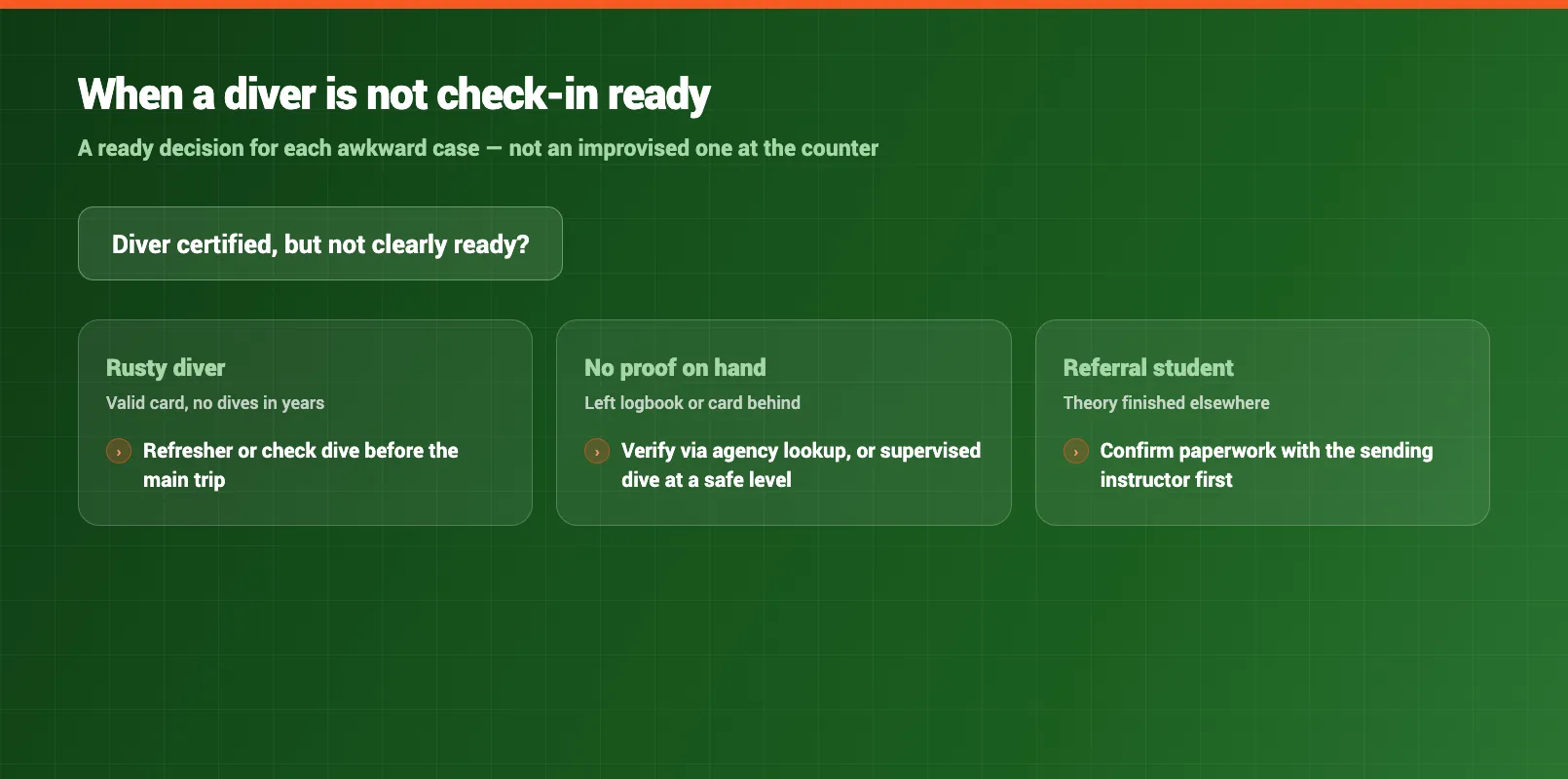
The awkward cases are not the divers with the wrong level — those are obvious. The awkward ones are the divers who are technically certified but not ready: the Open Water card from a decade ago, the diver who left their logbook at the hotel, the referral student who finished their theory elsewhere and needs their open-water dives verified.
None of these are automatic refusals. Each has a path forward. A rusty diver takes a refresher or a check dive before the main trip. A diver without proof gets verified through the agency lookup, or is offered a supervised dive at a level you can stand behind. A referral student's paperwork is confirmed with the sending instructor before they join the course. The point is to have a decision ready for each situation instead of improvising at a busy counter with a boat waiting.
Keeping check-in fast without cutting corners
The tension in all of this is speed versus thoroughness. A check that is too loose is a liability; a check that is too slow costs you dive time and goodwill. The answer is not to check less — it is to check earlier.
Collect certification level and number at the time of booking, not at the counter. That single change moves most of the verification off the busy morning and onto the quiet moment when the diver reserves. Store verified divers on their customer profile so a returning diver is already cleared and walks straight through. What is left at the counter is only the exceptions — new divers, mismatches, and lapsed cards — which is a handful of conversations instead of a queue. A booking system that holds certification, prerequisites, and customer history together is what makes that possible, and it is one of the reasons operators move off paper onto dive shop booking software.
Putting it together
Certification management is not one big task — it is a series of small checks that each catch a specific failure. Verify the agency and level, confirm the card is genuine and current, match the level to the booked dive, enforce prerequisites at the point of sale, and have a ready path for the rusty, unproven, and referral cases. Do the bulk of it at booking and store what you verify, and the counter stays fast even on your busiest days.
For the language your staff and customers will run into — agency levels, specialty ratings, and the terms on a certification card — the scuba diving glossary is a useful reference. And if you are building out the rest of the operation around check-in, the scuba diving operator hub pulls the pieces together.
FAQ
What certifications should a dive operator check at check-in?
Check the diver's certification agency and level, that the card is genuine and belongs to the diver in front of you, and that the level actually covers the dive they booked. For deeper or specialty dives, also confirm the specific prerequisite — a deep dive needs a deep certification, a wreck penetration needs wreck training, and so on. A quick logbook or recent-dive check tells you whether they are current in the water, not just on paper.
Do scuba certifications expire?
Entry-level certifications like Open Water do not expire — they are a lifetime qualification. What lapses is currency: a diver who has not been in the water for a year or more is rusty even with a valid card. Some professional ratings and specific memberships do renew annually, and many operators set their own recency policy, such as requiring a refresher for anyone who has not dived in the past six to twelve months.
How do I verify a certification card is real?
Match the name and photo on the card to the diver, check the issuing agency and level, and where the agency offers it, verify the certification number through their online lookup. Digital certification cards in the agency apps are harder to fake than a laminated card and can be checked on the spot. When a diver cannot produce any proof, treat them as unverified and offer a check dive or refresher rather than putting them on a trip above their evidence.
What if a diver's certification does not match the dive they booked?
Do not put them on a dive their certification does not cover — that is the exact situation that creates liability and safety risk. Offer an alternative that fits their level, or the training that would qualify them. Catching the mismatch at booking rather than at the counter is far better, which is why collecting certification level at reservation and flagging the gap early saves everyone the awkward dockside conversation.
Should I keep records of the certifications I check?
Yes. Log the certification agency, level, and number against each diver so you have a record of what you verified and when. If an incident is ever reviewed, that record shows you checked eligibility before the dive. Storing it against the customer profile also means a returning diver is already verified, so their next check-in is faster.
How do I check certifications without slowing down check-in?
Move the check upstream. Ask for certification level and number at the time of booking, so most of the verification is done before the diver arrives. Store verified divers on their customer profile so repeat visitors skip the step entirely. That leaves staff at the counter handling only the exceptions — new divers, mismatches, and lapsed cards — instead of processing every single person from scratch on a busy morning.
in one place