
EquipDash hands the busywork — bookings, waivers, cert checks, weather reschedules — to Dash AI. So you can focus on getting divers on the boat instead of behind a screen.





 Dashboard

 POS
POS
 Calendar
 Scan a barcode
 Bookings
 Rentals
 Experiences
 Customers
 Staff
Staff
 Waivers & Forms
| # | Diver | Trip | Status | Departs | Price |
|---|---|---|---|---|---|
| BK-2389 | Sarah M. | 2-Tank Boat Dive + gear | Confirmed | 24 May 8:00am | $245.00 |
| BK-2388 | Jake R. | Night Dive + torch hire | On boat | 24 May 6:30pm | $110.00 |
| BK-2387 | Patel family | Guided Snorkel Tour ×4 | Confirmed | 25 May 10:00am | $260.00 |
| BK-2386 | Marco L. | Discover Scuba Diving | Completed | 23 May 9:00am | $140.00 |
Dashboard
POS
Calendar
Scan a barcode
Bookings
Rentals
Experiences
Customers
Staff
Waivers & Forms
| Trip / Add-on | Ref | Qty | Status | |
|---|---|---|---|---|
🤿 |
2-Tank Boat Dive — Reef | BH-2TK-RF | ×1 | Confirmed |
🎒 |
Full gear rental + nitrox | ADD-GEAR-N | ×1 | Confirmed |
Dashboard
POS
Calendar
Scan a barcode
Bookings
Rentals
Experiences
Customers
Staff
Waivers & Forms
| Item | Ref | Qty | Status | |
|---|---|---|---|---|
🎒 |
Full gear set — BCD + regulator
Regulator free-flow · second stage · service due
|
RG-118 | ×1 | Service |
🤿 |
2-Tank Boat Dive — Reef | BH-2TK-RF | ×1 | Logged · OK |
More bookings online. Every diver cert-checked. Every trip contacted automatically. The stuff your last system promised and never quite delivered.
Most divers book direct on your website — if the widget feels like your dive center. Embed a branded widget that looks like your operation, not generic tourism software. Real-time availability, 2-tank + shore + snorkel pricing, cert capture, gear add-ons. Mobile-ready and fast, even on the busiest Saturday of the season.
On the boat. Back on the rack. In service. Overdue. Mark check-out, mark check-in — from any device. Auto-text the divers running late so you stop chasing them.
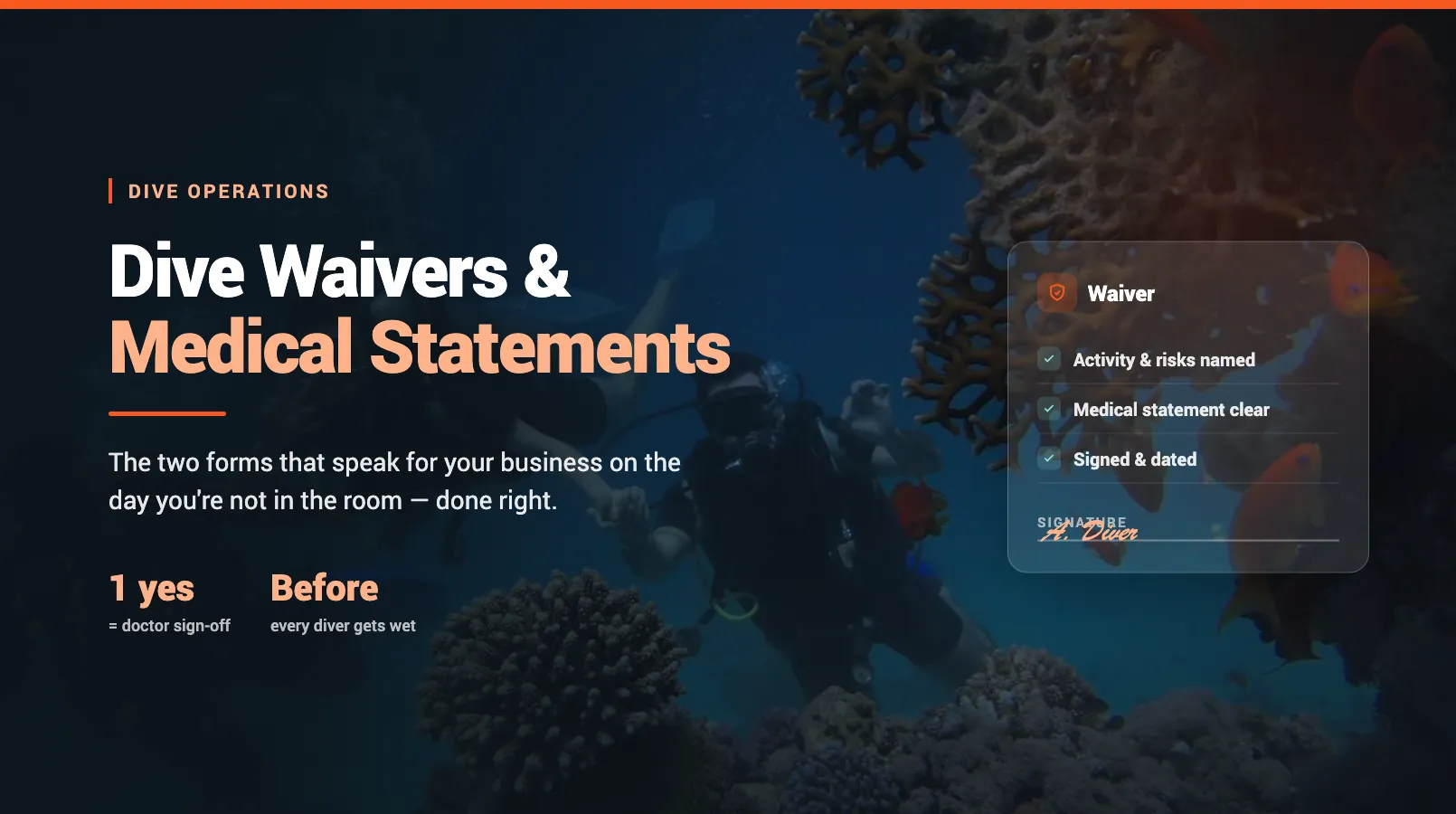
A signed waiver, a medical questionnaire and a cert level captured on every booking before check-in. Divers sign on their phone. Cert photos save automatically. Exports are insurance-ready, not a PDF mess.
Confirmations. Departure reminders. No-show chasers. Waiver follow-ups. Weather reschedule offers. Post-dive review requests. All sent automatically — no scripts, no 11pm copy-paste from a spreadsheet. Pulls diver phone right from the booking.
Ask Dash anything in plain English — get the answer in seconds. Or deploy pre-built bots that run in the background while you're on the dock or in the office.
Three workflows other rental software doesn't have. Plus all the standard tools you'd expect — done well.
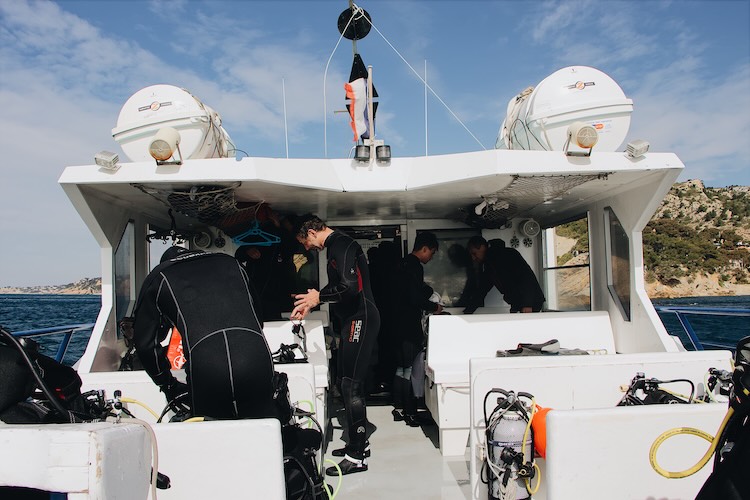
8am 2-tank trip. 12 divers, mixed certs, half of them renting gear. EquipDash builds the manifest from the bookings, pairs buddies, counts tanks, and lets your guide check each diver in on a tablet at the dock — cert verified, waiver signed, weight assigned — before the boat casts off.
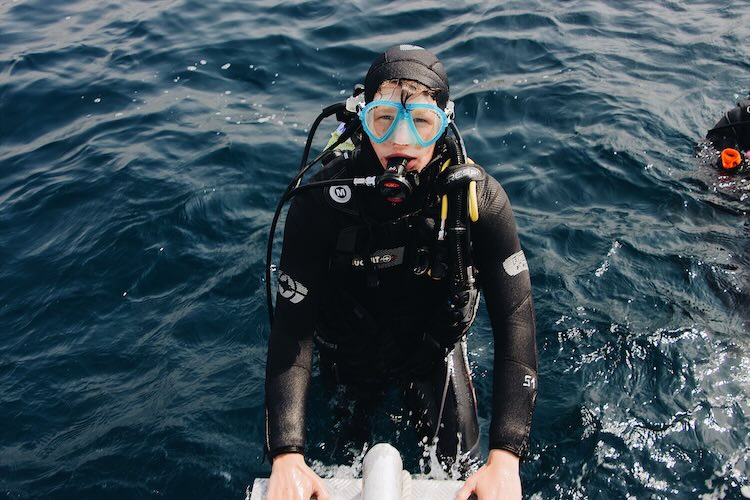
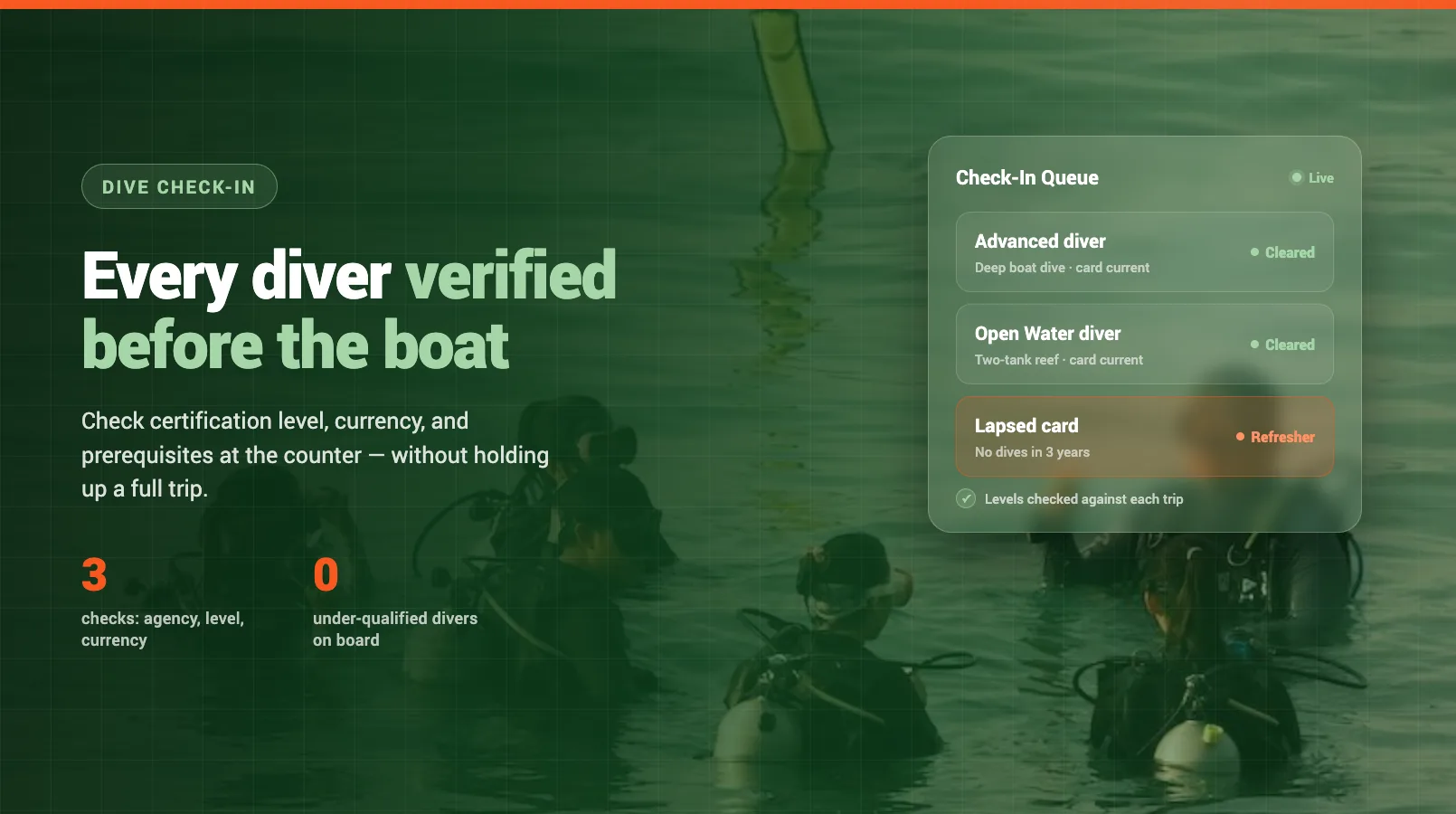
You can’t put an uncertified diver on a reef dive, and you can’t chase a medical form at the tank fill. EquipDash captures each diver’s agency, cert level, last-dive date and a signed medical questionnaire at booking — and flags anything expired or mismatched so a guide catches it early, not at the dock.
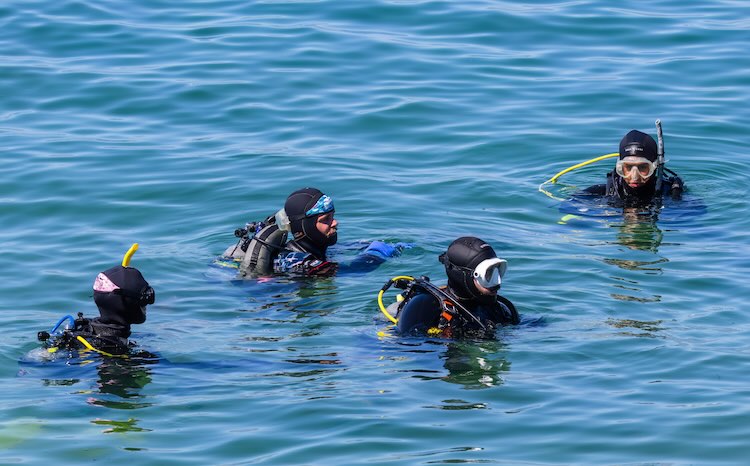
Thursday 4pm the marine forecast turns — wind up, swell building, viz dropping. Dash AI scans tomorrow's 16 divers, texts each the new forecast plus a one-tap “move to Sunday” link, and rebooks them automatically. You wake up to a clean Friday schedule, not 16 phone calls before dawn.
The 3 features above are unique to dive and snorkel ops. Everything below is table stakes — and we don't charge extra for any of it.
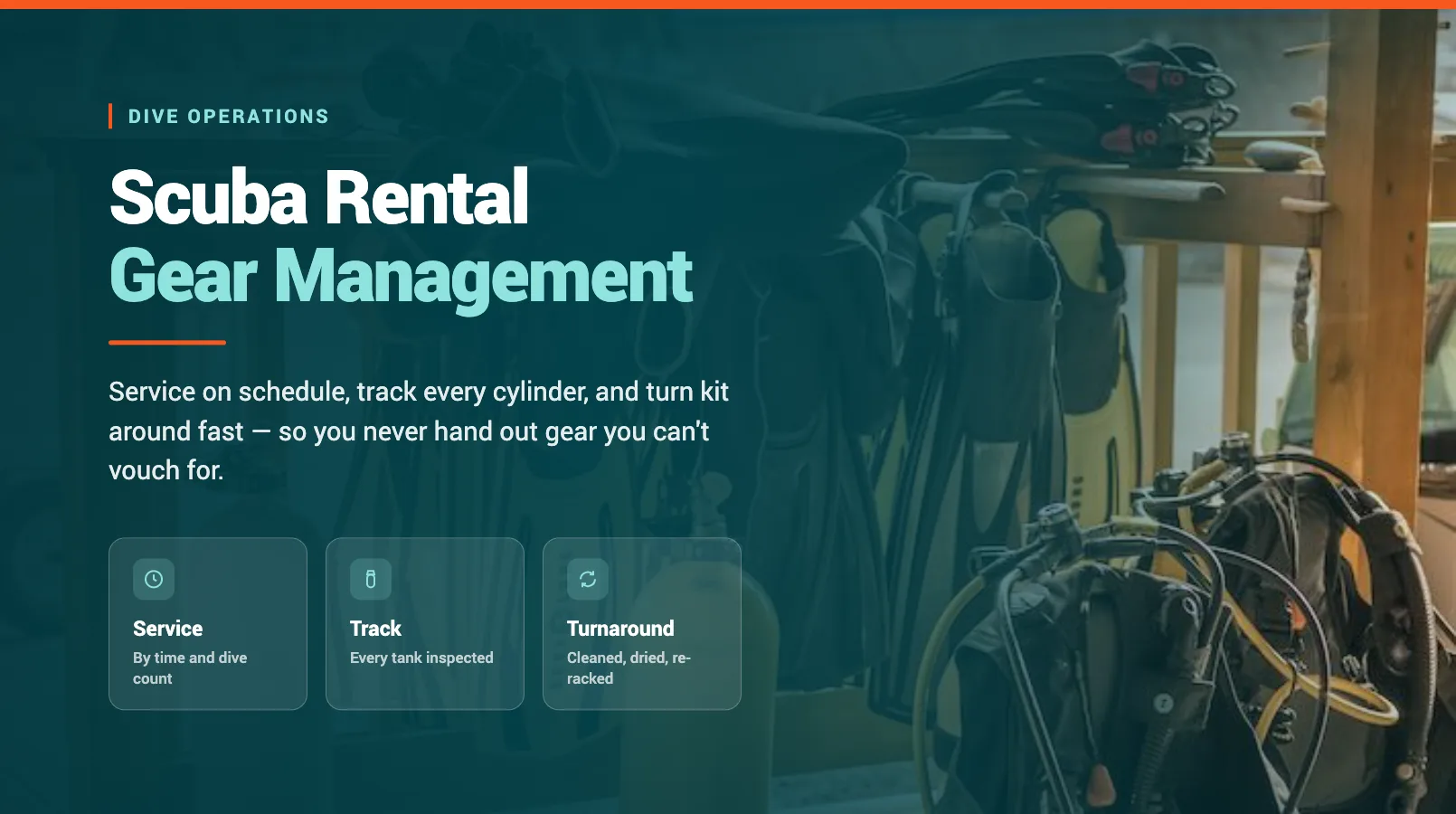
Every BCD, regulator, cylinder, wetsuit and torch tracked by asset number and rack. Live updates as gear leaves and returns — no more “sorry, that reg is already out” mid-Saturday.
Every reg and cylinder gets a full service history across seasons. Annual reg service, cylinder VIP and hydro dates, last inspection. Free dive-op service checklists. Searchable by asset, diver or date.
Build rosters for the Saturdays that matter. Pair with the peak-day alert bot to forecast 16 hours ahead.
Divers book, pay a deposit, sign the waiver and submit their cert level and medical before they arrive. Counter time cut in half. Pre-booked divers check in 3x faster than walk-ups.
Handle a snorkel family of four, a dive club of eight across two trips, or a corporate try-dive day — all in one flow. One waiver per booker (guardian-signed for minors), one invoice, one consolidated deposit hold. Certified divers and Discover Scuba guests share the schedule cleanly.
Ring up walk-up divers and snorkellers in seconds. Tap-to-pay on iPad or phone, customer lookup for repeats, gear and fills in the same flow — no separate till to reconcile.
Signed on phone before they arrive. Cert level and medical captured at booking. Guardian-signed for minors. Every waiver archived and searchable, insurance-ready exports.
Each dock, dive boat or shore-entry site has its own schedule, staff and reporting. Owner-level dashboard rolls them up. Guides can be assigned to multiple sites. Popular pattern: a harbor base plus a seasonal shore-dive site and a satellite dock.
DESTINATIONS
Browse our directory of dive centers and snorkel operators across 12+ dive destinations. Find operators near your trip or use the directory as a benchmark for your own operation.
AI FRONT DESK
Divers ask about certification, gear rental and meeting points before they book. AI Front Desk answers on the phone and on your dive center booking page, matches each guest to the right experience from your catalog, and takes the booking, so no inquiry goes cold overnight.
AI assistant — may make mistakes. Confirm details with Coral Coast Divers.
AI AGENT TEMPLATES
Pre-built AI agent templates for dive centers and snorkel operators. Cert-expiry reminders, weather cancellations, equipment service-due alerts, no-show recovery, dive-log and review requests, and off-season diver reactivation. Build any of them in Dash Bots in seconds with a plain-English prompt.
BLOG
 Guides
 Guides
 Guides
 Guides
 Guides
 Guides
SCUBA DIVING GLOSSARY
Quick reference answers to the terms that come up when researching dive booking software, gear management, weather operations, certification and manifest logistics. Want the full lexicon? Open the scuba diving glossary below.
Scuba diving booking software is a platform that manages every part of a dive or snorkel operation — online bookings, trip schedules, tank and gear inventory, certification and medical capture, waivers, dive manifests, payments, service tickets and diver comms — in one place. Modern systems like EquipDash replace the spreadsheet-and-clipboard setup most dive shops grew up on and add AI bots that handle the repetitive admin (weather reschedules, unsigned-waiver chasers, cert-expiry reminders, review requests) automatically.
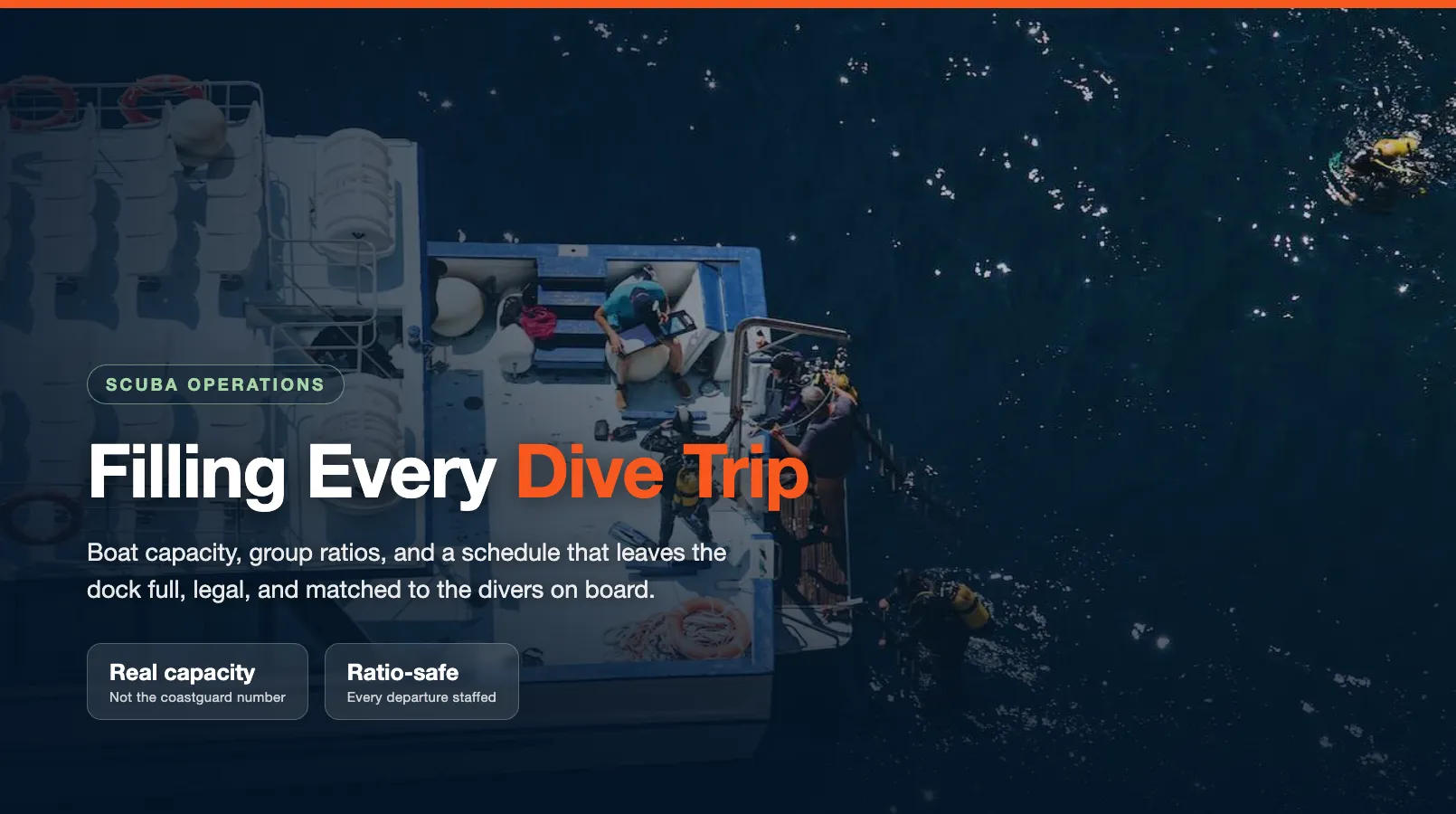
A 2-tank boat dive is the standard half-day dive trip: the boat departs the dock, divers do a first dive on a full cylinder, take a surface interval back on board, then drop for a second dive on a fresh tank. It’s the backbone of most dive-center schedules. In EquipDash a 2-tank trip is one bookable trip type with its own departure time, tank count on the manifest, guide assignment and per-diver rental-gear list.
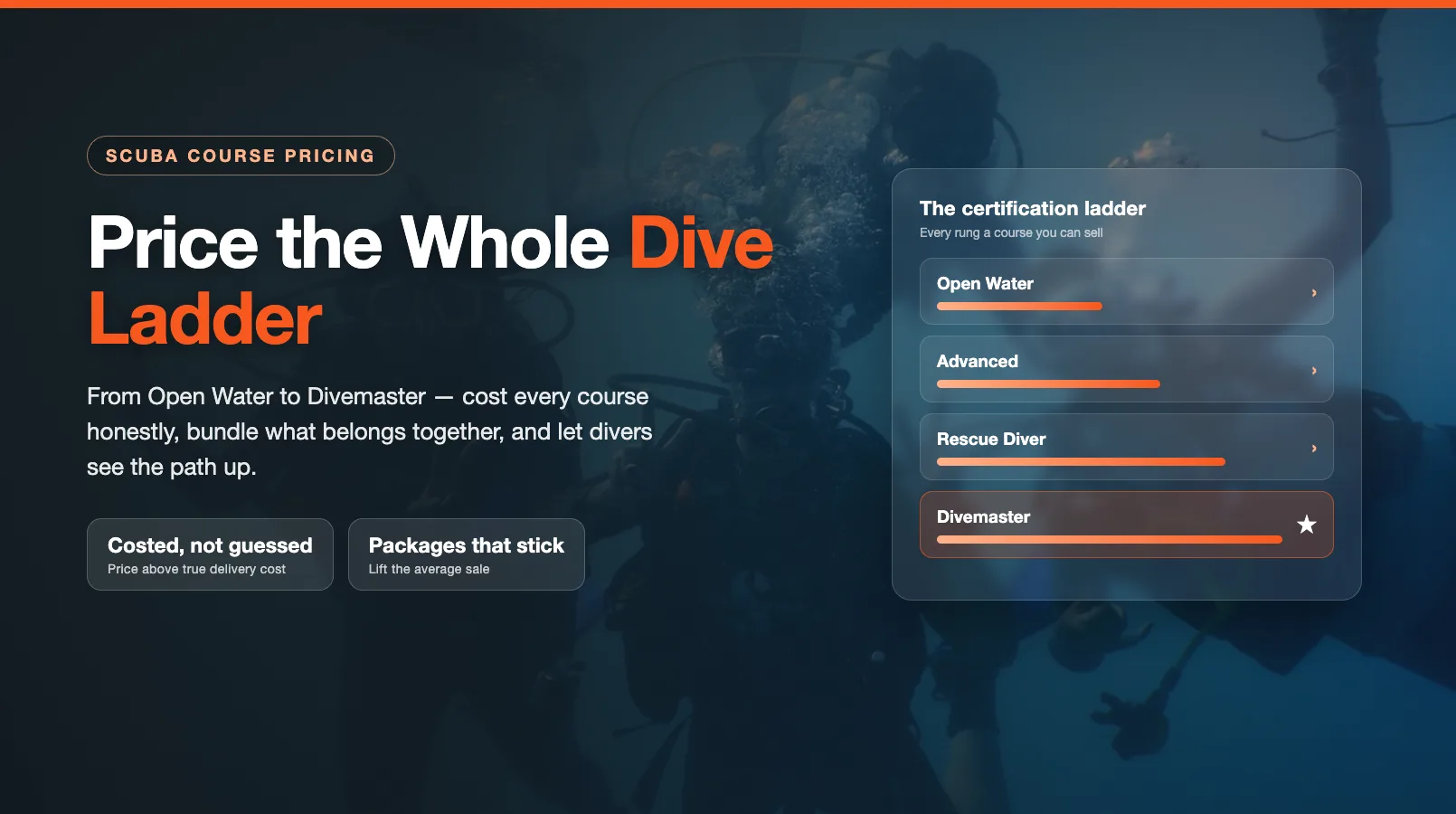
The common progression runs Open Water Diver (the entry certification, typically max 18m), Advanced Open Water (deeper dives and specialties), Rescue Diver, then Divemaster (the first professional rating). Agencies like PADI and SSI issue these; a card from one is generally recognized by the others. Dive operators capture the diver’s agency, level and cert number at booking so the trip roster matches each diver to dives within their qualification.
Discover Scuba Diving is an introductory experience for people with no certification — a short briefing, basic skills in confined or shallow water, then a guided dive under close instructor supervision. It’s the try-dive that turns snorkellers into future students. In EquipDash a DSD is a trip type that skips the cert requirement but still collects the medical questionnaire and waiver, so non-certified guests book alongside certified divers on the same schedule.
A gear deposit is a pre-authorization hold placed on the diver’s card at booking when they rent kit — typically $150 for a mask/fins/snorkel set up to $500 for a full BCD-and-regulator package. The hold sits on the card without being charged; if the gear checks back in clean, it’s released automatically (Stripe voids the auth and the hold drops off the statement in 2-7 days). If a regulator needs service or a weight belt is missing, a rate-card charge is applied against the hold and the balance released. Cleaner than billing a “card on file” after the fact.
A dive manifest is the roster for a trip — every diver on board, their certification level, assigned buddy pair, tank and weight, and rental-gear list. It’s what the boat crew works from at the dock and what safety procedure relies on for a headcount in and out of the water. In EquipDash the manifest builds itself from the bookings: staff run it on a tablet, tick each diver as checked-in, and the trip can’t move to “departed” until every diver is accounted for.
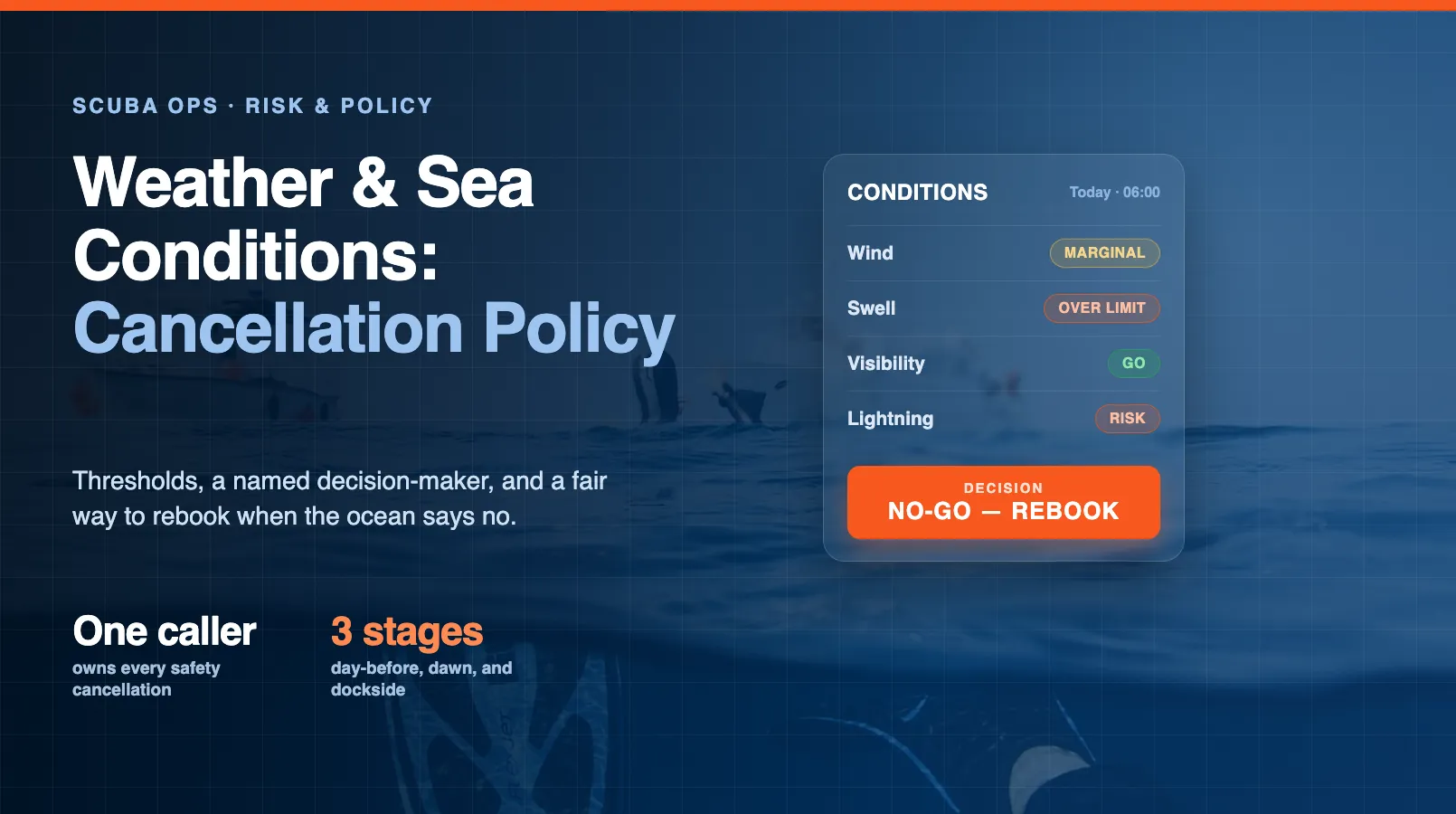
Best practice is to set explicit thresholds (wind speed, swell height, surface visibility, small-craft conditions), watch the marine forecast the evening before each trip, and proactively text every booked diver the night before — not the morning of — with a one-tap reschedule offer to the next safe departure. EquipDash automates this with the Weather Cancellation bot: the forecast hits your threshold, every booked diver gets a personalized text, deposit holds roll forward to the new slot, and refunds inside policy are self-serve. Decide evening-before, not morning-of: divers are often already driving to the marina by sunrise.
A safety stop is a short pause — usually three minutes at around five meters — near the end of a dive to off-gas nitrogen before surfacing. No-fly time is the interval a diver must wait after diving before flying, to avoid decompression sickness (commonly 12 hours after a single dive, 18+ after repetitive dives). Neither is software, but both shape trip scheduling: a dive operator building the day’s roster keeps surface intervals and last-dive-before-flight windows in mind, and EquipDash makes the diver’s last-dive date and trip times easy to see when planning departures.
A single-site operation works from one dock or shore-entry point — one schedule, one boat, one tank inventory. A multi-site operation runs trips from multiple locations (a harbor dock plus a shore-dive site, or a home base plus a seasonal satellite) with separate schedules, gear and staff at each. Multi-site shops need software that tracks trips and inventory per site so a blown-out day at one location doesn’t black out the others. EquipDash handles both single and multi-site with no extra add-on.
Rental regulators, BCDs and cylinders run on service schedules — regulators serviced annually, cylinders visually inspected each year and hydrostatically tested on a longer cycle. Miss an interval and the gear is out of spec and unsafe to rent. EquipDash tracks service dates per item and the Equipment Service-Due bot auto-creates a service ticket ahead of any reg or cylinder hitting its interval, so the kit goes to the bench instead of onto a diver. A return flagged for service (a free-flowing reg, a sticky inflator) can raise a ticket the moment it’s logged.
Most dive centers send four touchpoints by SMS: a departure reminder with dock, time and what to bring (the night before), a waiver-and-medical chase (12 hours before, if unsigned), a no-show follow-up (past departure time, with a rebook offer), and a review request (an hour after the boat ties up). Each is a small touch, but stacked together they cut no-shows, recover lost seats, and lift your rating. EquipDash ships these as pre-built Dash Bots — no scripts to write, no SMS provider to wire up.
Certification verification is confirming a diver actually holds the qualification a trip requires before they get in the water. Operators capture the agency (PADI, SSI), the level (Open Water, Advanced), the cert number and often the last-dive date at booking, then a guide reviews the manifest before departure. EquipDash collects all of this on the booking form and flags obvious gaps — a missing cert, an expired medical, a level that doesn’t match the dive — so your staff make an informed go/no-go call rather than sorting paperwork at the tank fill.
GLOSSARY
55+ scuba and snorkel terms every dive-center owner, guide and dock lead should know — from dive manifests and Stripe gear deposits to certification agencies, no-decompression limits, marine forecasts and the dive-ops terminology that makes busy summer Saturdays predictable.
FREQUENTLY ASKED QUESTIONS
Real questions from dive center and snorkel operators evaluating EquipDash. If yours isn't here, get in touch.
Contact UsPlans start at $29/month. 21-day free trial, no card. There is a 1–2% platform fee you can pass to the diver at checkout — so unlike FareHarbor or Peek Pro pulling 1–6% off your top line, your margin stays yours.
Start your free 21-day trial and explore every feature, including Dash AI and Dash Bots. No credit card, no commitment.
