Ski Tune & Wax Shop Workflow: Customer Drop-Off to Shelf-Ready
Ski Tune & Wax Shop Workflow: Customer Drop-Off to Shelf-Ready
By the EquipDash Team
A tune and wax bench is one of the few things in a ski shop that earns money on a quiet Tuesday. The rental counter lives and dies by the weather and the weekend, but service work trickles in all season — locals chasing fresh edges before a powder day, families dropping off three pairs at once, the regular who wants a hot wax every other week. The bench, the tools, and the trained hands you already keep for your rental fleet can run a profitable service operation on the side, if the workflow behind it is tight.
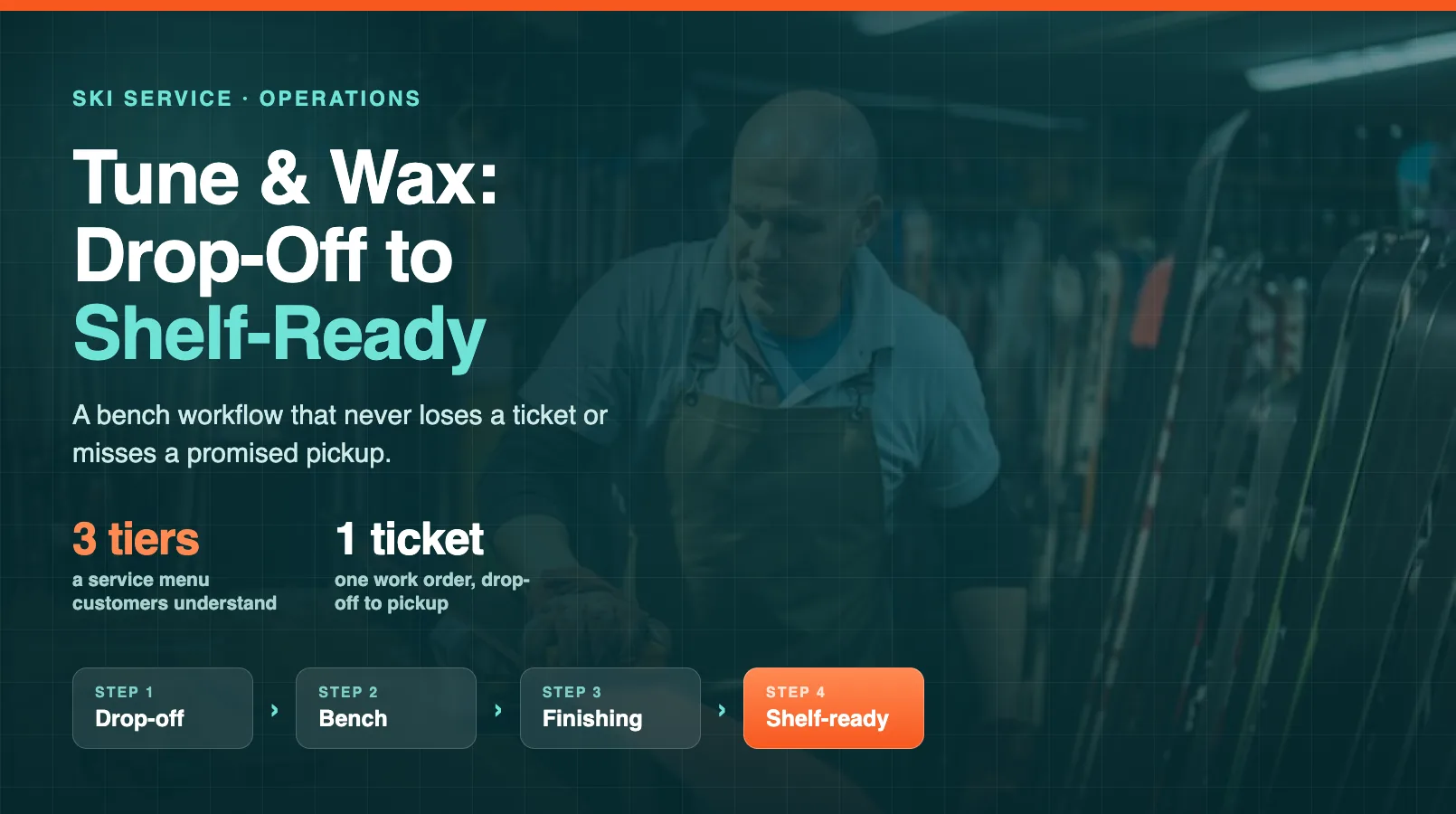
The shops that make real money on service aren't the ones with the fanciest stone grinder. They're the ones where a pair of skis moves from the customer's hands to a shelf-ready rack without anyone losing the ticket, missing the promised time, or guessing what was ordered. This guide walks the whole operation, from the moment a customer drops off to the moment their skis are back on the shelf with a pickup text already sent.
From drop-off to shelf-ready: the bench workflow
Every tune shop runs the same basic path, whether it does five jobs a day or fifty. A customer drops off, the job gets written up and tagged, the skis wait in a queue, a technician works the bench, the skis pass a final check, and they land on the shelf with the customer notified. The shops that fall apart are the ones where one of those steps lives only in someone's head.
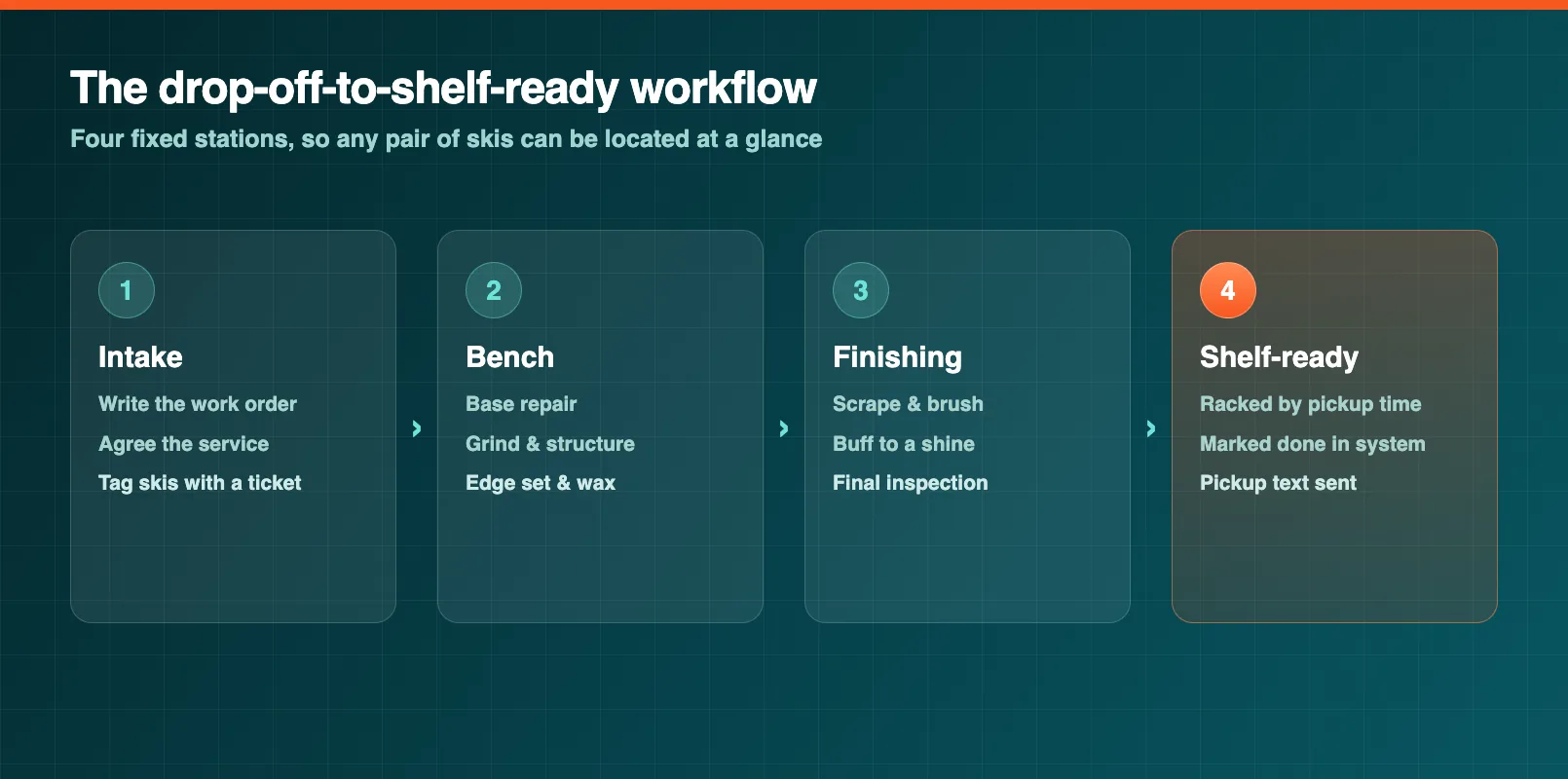
Build the workflow as fixed stations and the whole thing gets predictable. Intake is where you write the work order, agree the service, and tag the skis. The bench is where the real work happens — base repair, grind, edges, wax. The finishing station is where you scrape, brush, buff, and inspect. Shelf-ready is where the skis get racked by pickup time and the customer gets pinged.
The point of stations isn't bureaucracy. It's that any staff member can see where a pair of skis is at a glance, and a half-finished job never gets mistaken for a done one.
Building your service menu
Your menu is the contract between what the customer thinks they're getting and what your bench actually does. Keep it short and tiered. Most shops do well with three core levels — a hot wax, a standard tune, and a full performance tune — plus a handful of clearly priced add-ons.
The hot wax is your volume product: clean the base, hot wax, scrape, and brush. The standard tune adds a base clean-up, an edge sharpen, and a fresh wax. The full tune layers in a base grind, a precise edge bevel, and a hand finish for customers who care about every turn. Add-ons cover binding tests and adjustments, P-Tex base repair, mounting, and a quick "race prep" for the competitive crowd.
Write each tier as the exact steps included, not vague marketing words. "Standard tune: base clean, edge sharpen, hot wax" tells the technician what to do and the customer what they paid for. Vague menus create arguments at pickup.
Pricing your tune and wax work
Price by tier, and price for margin. The raw cost of a tune is mostly labor plus a few dollars of wax and consumables, so your job is to set prices that reward the bench time without scaring off the locals who keep the queue full all winter.
Anchor to the shops around your hill, then position deliberately. If you turn work around faster or finish to a higher standard, you can sit above the cheap drop-off counter at the supermarket-style shop. The same tiered thinking that drives your rental rates applies here — see our guide on ski rental pricing strategy for how to build tiers customers actually understand. Resist the urge to compete on price alone; a $5 cheaper wax rarely wins a customer who just wants their skis ready when promised.
Bundle where it helps. A season wax pass, a "tune plus boot check" combo, or a multi-pair family rate all lift the average ticket while giving the customer a reason to come back to you instead of the shop down the road.
Turnaround targets that keep customers coming back
Turnaround is the promise customers remember. The actual bench work on a tune is fast — minutes, not hours — so your turnaround is really a measure of how deep the queue is, not how hard the job is. Manage the queue and you manage the promise.
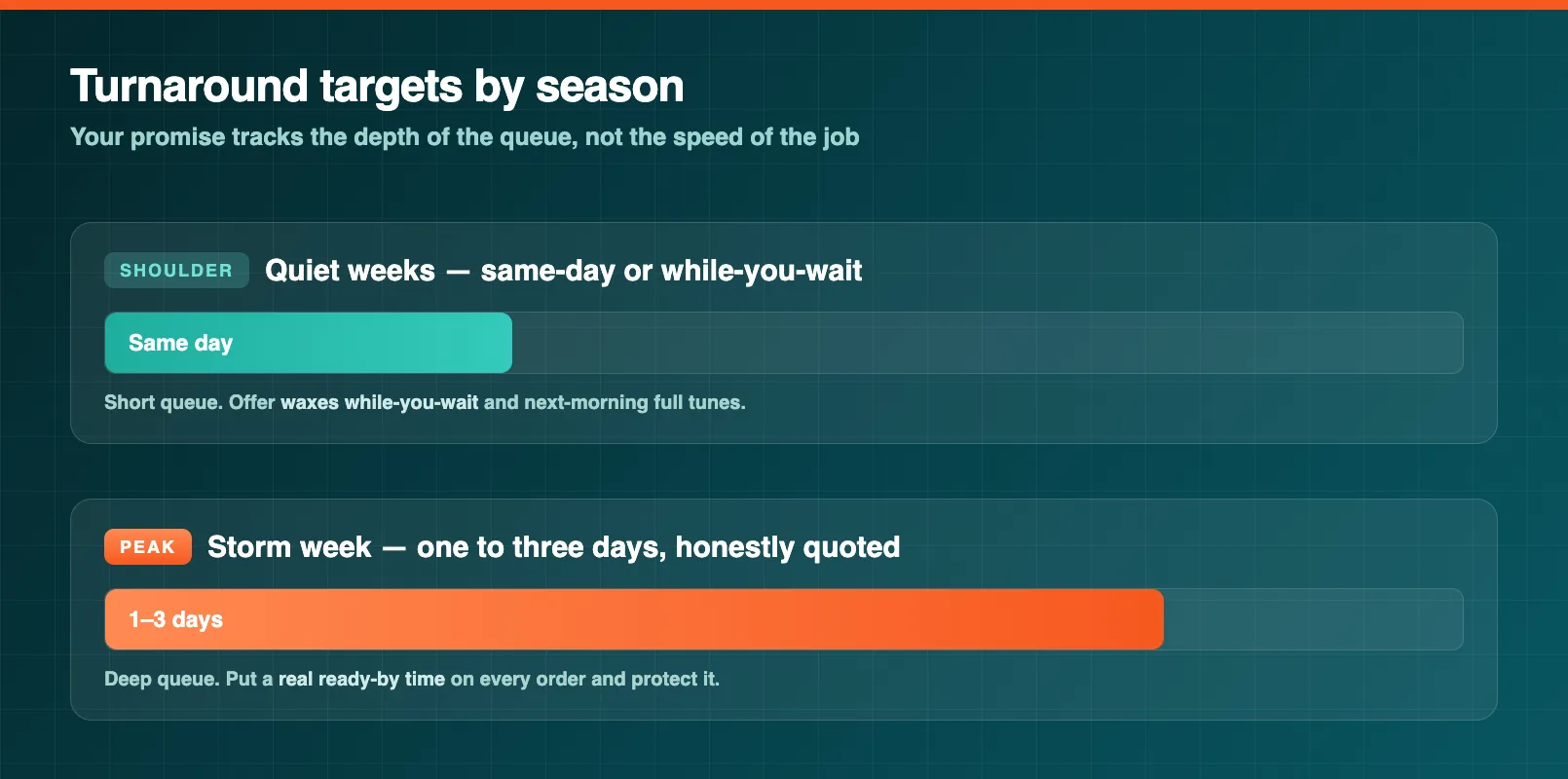
Set clear targets by season. In the quiet shoulder weeks you might offer same-day or next-day service and even waxes while-you-wait. In peak season, when every local wants fresh edges before the weekend storm, a one-to-three-day turnaround is honest and keeps quality high. Whatever you promise, put a real ready-by time on the work order so nobody is guessing.
The fastest way to wreck your reputation is to miss a promised time. It's better to quote two days and deliver in one than to promise overnight and call with an apology. Build a little slack into the busy weeks, and treat your turnaround target as a number you protect.
Staffing and skill levels at the bench
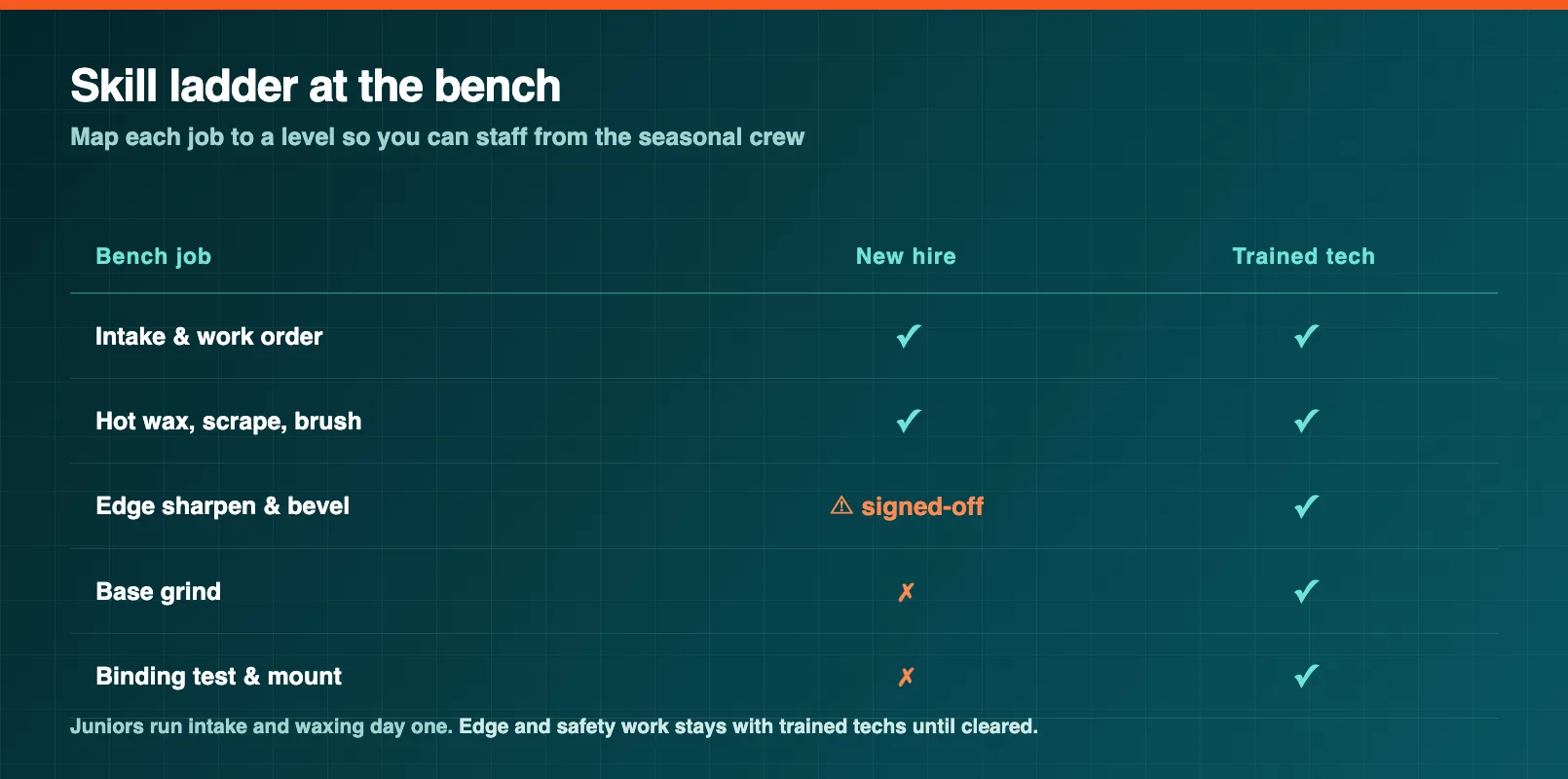
A tune bench runs best on a skill ladder, not a single hero technician. Map the jobs to levels and you can staff the bench from the same seasonal crew you hire for rental. New hires can handle intake, hot waxes, scraping, brushing, and the shelf-ready check on their first shift after a short walkthrough.
Edge work, base grinds, and binding tests sit a rung up. Those stay with trained technicians until a junior has been watched, coached, and signed off — a bad edge bevel or a missed binding test isn't a cosmetic mistake, it's a safety one. Keep a simple matrix of who is cleared for what, and review it as the season goes on. A standard ski edge bevel inspection checklist gives juniors a repeatable standard to sign off against before they're cleared for edge work.
Cross-training pays both ways. Rental staff who can run a wax bench fill the slow midweek hours, and bench techs who can work the rental counter cover the Saturday rush. The same seasonal hiring and training discipline you use for the front of house applies to the bench — it's the same crew, just more useful.
The equipment your bench actually needs
You can open a credible tune shop with a surprisingly short equipment list, then scale up as volume proves itself. The non-negotiables are a solid bench with good vises, a quality waxing iron, scrapers and brushes, a set of files and edge tools, base repair material, and proper ventilation and lighting. Get those right and you can deliver a clean, honest tune all day.
The big-ticket machine is the stone grinder, and it's a want before it's a need. A grinder transforms base flatness and structure, but it's a serious investment that only pays off once your daily volume keeps it busy. Until then, hand tools plus the occasional send-out for severe base damage will carry you. Add the machine when the queue, not the catalog, tells you to.
Don't skimp on the small consumables and safety gear — gloves, eye protection, sharp guards, and good wax. Cheap tools cost you in rework and ruined bases, and a tune shop's whole reputation rides on bases that come back better than they left.
Digital work-order tracking
Paper tags fall off in the rack. The single biggest operational upgrade most tune shops can make is moving the work order off a sticky note and into a system that tracks the customer, the service ordered, the technician, and the promised-ready time against a ticket number on the skis.
Pair that system with a simple ski tune and wax log so every job carries a consistent record from intake to pickup. A proper work order and tracking system does three things a paper tag can't. It never loses the job, so the "have you seen a pair of red Rossignols?" phone calls stop. It shows the whole queue at a glance, so you can promise turnaround honestly. And it fires the pickup notification automatically the moment a job is marked shelf-ready, so the front counter isn't chasing customers by phone. EquipDash runs that same booking-and-tracking backbone for rental, so your service tickets live next to the rest of the shop.
That last piece matters more than it sounds. The pickup text — and the gentle reminder a day later if skis sit uncollected — is what turns a finished job into a cleared rack and a paid invoice.
Upsells that lift the average ticket
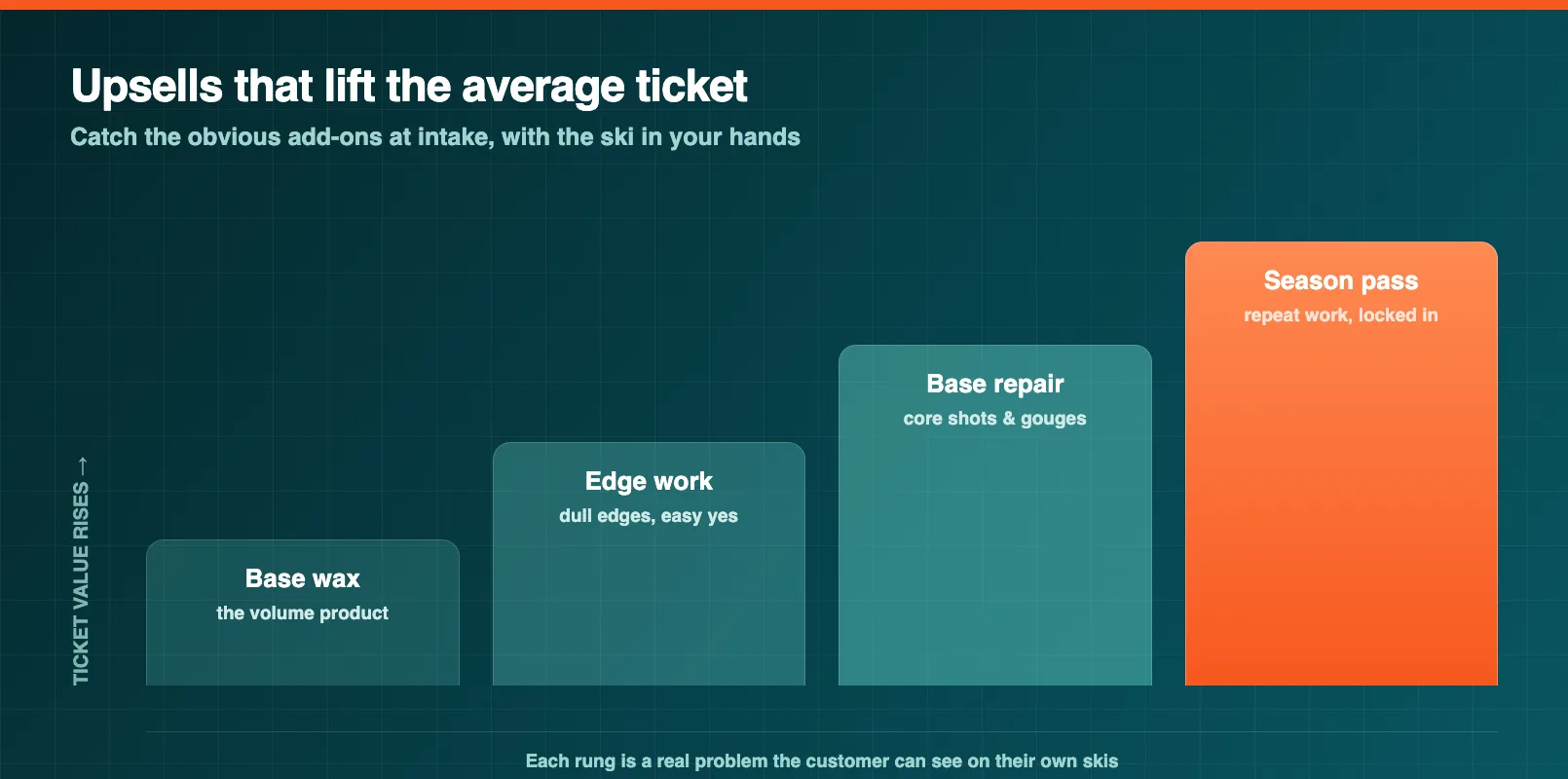
Every drop-off is a conversation, and the bench is full of honest upsells. A customer in for a wax with edges like butter knives genuinely needs a sharpen. A base with a deep core shot needs repair before it gets worse. The trick is to catch these at intake, show the customer the actual ski, and let the damage make the case.
Train your intake staff to inspect every pair as it lands on the counter and to quote the obvious add-ons on the spot — edge work, base repair, a binding test on older gear, a fresh mount. None of this is a hard sell; it's pointing at a real problem and offering to fix it while the skis are already in your shop. Season wax passes and pre-booked end-of-season tunes lock in repeat work before the customer walks out.
A tune and wax bench won't replace your rental fleet, but it fills the quiet days, uses staff and tools you already keep, and brings locals through your door all winter. Get the workflow tight — fixed stations, a clear menu, honest turnaround, and a digital ticket that never gets lost — and service becomes one of the steadiest lines in the shop. For the bigger picture, see our guide to running a ski and snowboard rental business, and browse the rest of the ski and snowboard operator resources when you're ready to tighten the rest of the shop. When the season ends, our end-of-season ski retirement guide covers which gear to pull, resell, and reorder.
FAQ
How long should a ski tune and wax take?
A basic hot wax is a 15-to-30-minute job and can often be done while the customer waits. A full tune with a base grind, edge set, and wax is more like 30 to 60 minutes of bench time, but most shops quote a one-to-three-day turnaround in peak season because work is queued. Set turnaround by how deep the backlog is, not by how long the job itself takes.
What should I charge for a ski tune and wax?
Price by tier, not by the hour. A hot wax sits at the low end, a standard tune in the middle, and a full performance or race tune at the top, with add-ons like binding tests and base repair priced separately. Check what the shops around your hill charge, then position your menu against the turnaround and quality you can actually deliver rather than racing them to the bottom.
Do I need a stone grinder to run a tune shop?
No. Plenty of profitable shops run hand tools, files, and a good waxing iron and send only the worst base damage out to a grinder. A stone grinder is a large investment that pays off once your volume is high enough to keep it busy. Start with quality hand tools, prove the demand, and add the machine when the queue justifies it.
Can rental staff also run the tune bench?
Yes, with a clear skill ladder. New staff can handle intake, hot waxes, and shelf-ready checks on day one, while edge work and base grinds should stay with trained technicians until juniors are signed off. Cross-training rental staff onto the simpler bench jobs smooths your labor in both directions and gives people a reason to come back next season.
How do I track tune jobs so nothing gets lost?
Use a work order with a ticket number on the skis and a matching record in your system, not a paper tag that falls off in the rack. A digital work order captures the customer, the service, the promised-ready time, and the technician, and it sends the pickup text automatically when the job is marked done. That kills the lost-ski phone calls that eat your front counter.
Is a tune and wax shop worth running alongside rental?
For most ski shops, yes. Service work uses the same bench, tools, and staff you already have for rental fleet maintenance, it carries strong margins because the cost is mostly labor and a little wax, and it brings local owners through your door all season. It also keeps technicians busy on the slow midweek days when rental volume dips.
in one place