Hiring Seasonal Ski Rental Staff: Sourcing, Training, Retention
Hiring Seasonal Ski Rental Staff: Sourcing, Training, Retention
By the EquipDash Team
Staffing is the part of a winter rental operation that keeps owners up at night. The season is short, the hiring window is tight, and the people you bring on have to be good at their jobs within a week or two because there is no slow ramp — opening weekend hits and the counter is slammed. Get the crew right and the season runs itself. Get it wrong and you spend December training under fire while customers wait in line.
This is a guide to the whole staffing cycle for seasonal ski rental staff, written for operators who have to do it every year. We will cover where to find good people, how to train them fast, how to handle the housing problem that sinks so many resort-town offers, how to build a pay package that competes, and the retention moves that turn a one-winter hire into someone who comes back season after season. If you are still building the rest of the operation, the complete guide to running a ski rental business sets the wider context this fits inside.
Where to find seasonal ski rental staff
Your best source of staff is the staff you already had. Returning crew know your fleet, your point-of-sale, and your regulars, so start every hiring season by reaching out to last winter's keepers before you post a single ad. That tells you how many real gaps you have to fill, and it is far cheaper than recruiting and training a stranger.
For the gaps, work the channels that actually reach ski people. The hill itself is a network: lift crew, instructors, and patrollers all know someone looking for winter work, and a referral from a current staffer is the highest-quality lead you will get. Local colleges and gap-year programs are full of people who want a season on snow. Outdoor-industry job boards and the resort's own seasonal hiring page reach motivated applicants. Even a sign in the window during the off-season pulls in locals who ski and want a discount.
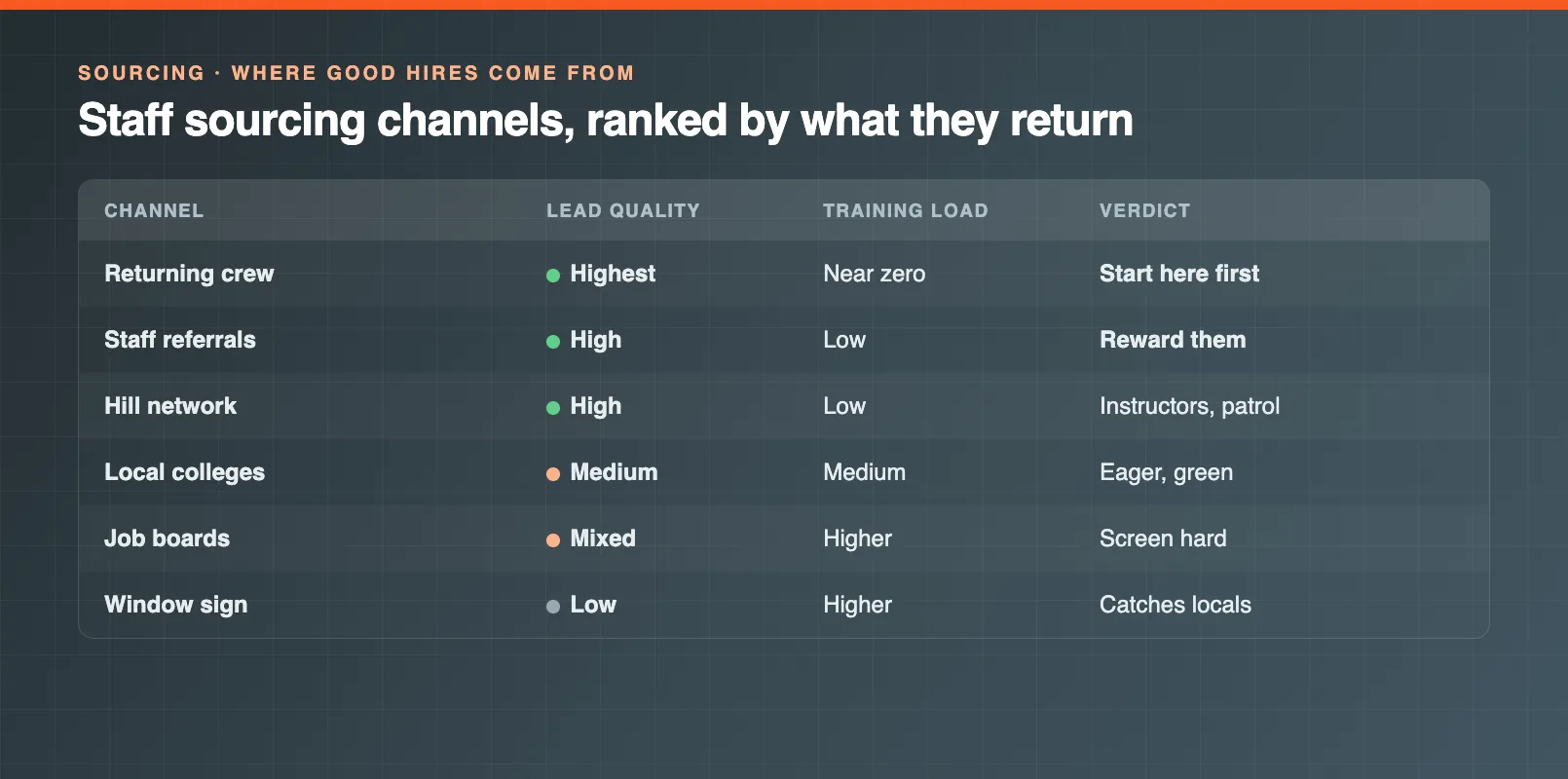
Rank your channels by quality, not just volume. A handful of referrals and returning staff will out-perform a stack of cold applications every time, so put your effort where the good leads come from. Screen for attitude and reliability over technical skill — you can teach someone to fit a boot in a week, but you cannot teach them to show up on a powder morning when they would rather be riding.
A training curriculum that sticks
Trying to teach everything in one orientation day is how you end up with staff who freeze at the counter on opening weekend. Break training into a clear order so each new hire builds on what they already know instead of drowning in it.
Start with the basics anyone needs from hour one: how to greet a customer, run intake, take a deposit, and use the point-of-sale and booking system. Layer on fleet knowledge next — sizes, models, how to read a rental agreement, and where everything lives in the shop. Then move to the skilled work: boot fitting deserves real attention, so lean on your boot-fitting process for rental shops as the training spine. Anyone who will touch the bench needs the fundamentals from your tune and wax workflow before they are let loose on a customer's skis.
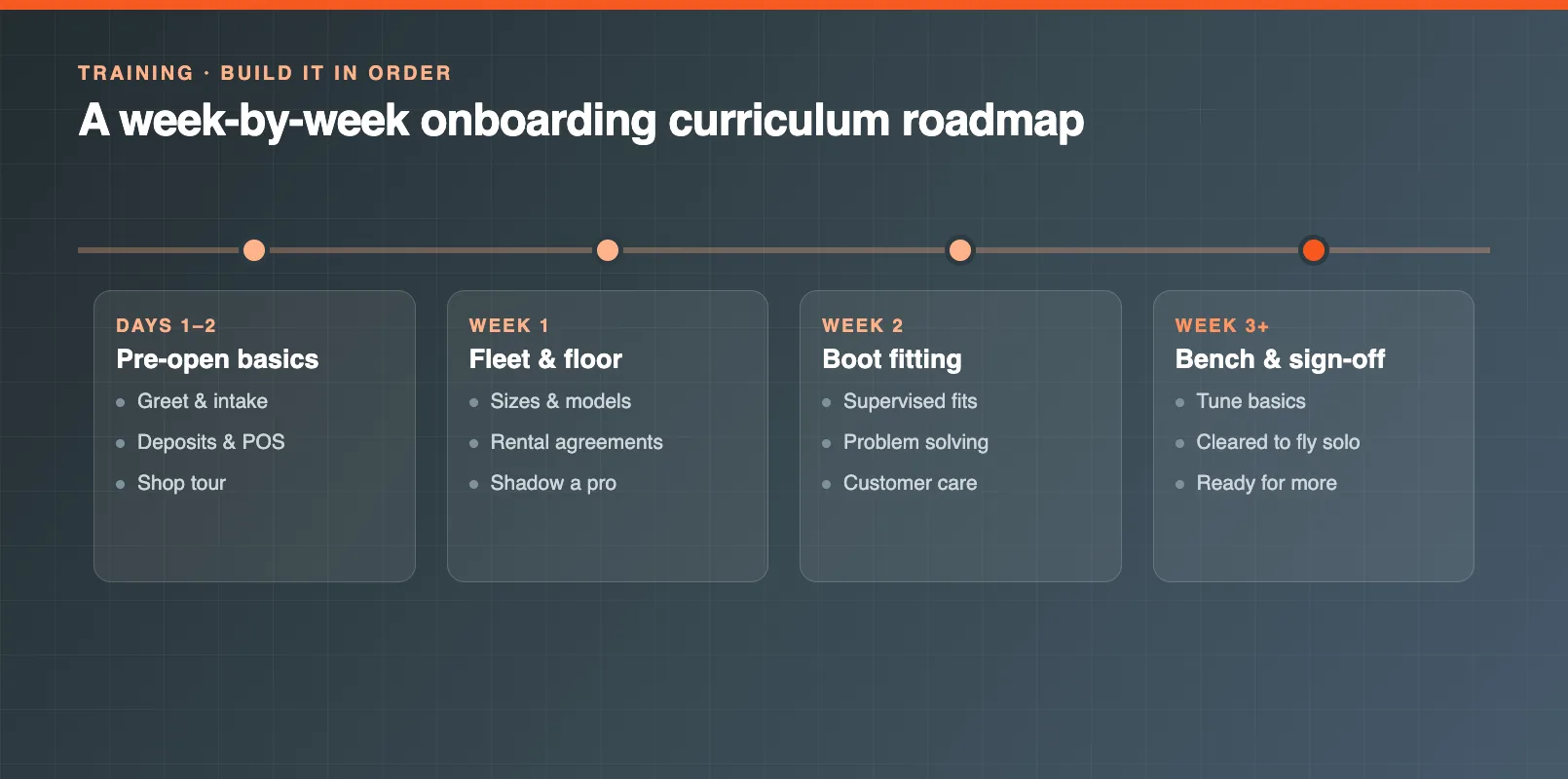
Pair every new hire with an experienced staffer for their first shifts and let them shadow before they fly solo. Keep a simple sign-off sheet so you know exactly who is cleared for intake, fitting, and bench work — that record also tells you who is ready for more responsibility later. A short opening-day checklist turns that first real shift into a routine everyone can follow instead of a scramble.
Housing arrangements
In a resort town with no affordable rentals, housing decides whether your offer gets accepted at all. A great wage means nothing to an applicant who cannot find a room within an hour of the hill, so treat housing as part of the hiring conversation, not an afterthought.
You do not need to own a bunkhouse. Plenty of shops master-lease a few units for the season and sublet rooms to staff at cost, which covers your outlay and gives crew a place to land. Others partner with the resort's seasonal housing program or offer a flat housing stipend that helps staff secure their own place. Whatever you choose, be honest about it in the job post. If you cannot offer housing this year, say so and focus your sourcing on locals who already live in the area — there is nothing worse than an accepted offer that falls apart in November because the new hire could not find somewhere to sleep.
A pay structure that competes
Seasonal staff compare offers across the whole hill — your shop, the lifts, the other rental outfits, the restaurants. You rarely win that comparison on base hourly rate alone, so build a package instead of chasing a number.
Start with a fair base wage benchmarked against local jobs, not a national average. Then stack on the parts that cost you less than they are worth to the staffer: a season pass is the single biggest draw for anyone who took a winter job to ski, a generous gear discount keeps the crew kitted out, and peak-day premiums reward the people who show up on the busy holiday weekends when you need every hand. Cap the season with an end-of-season bonus that staff can see coming from day one — paid only to those who finish the season — and you give people a concrete reason not to walk off in February.
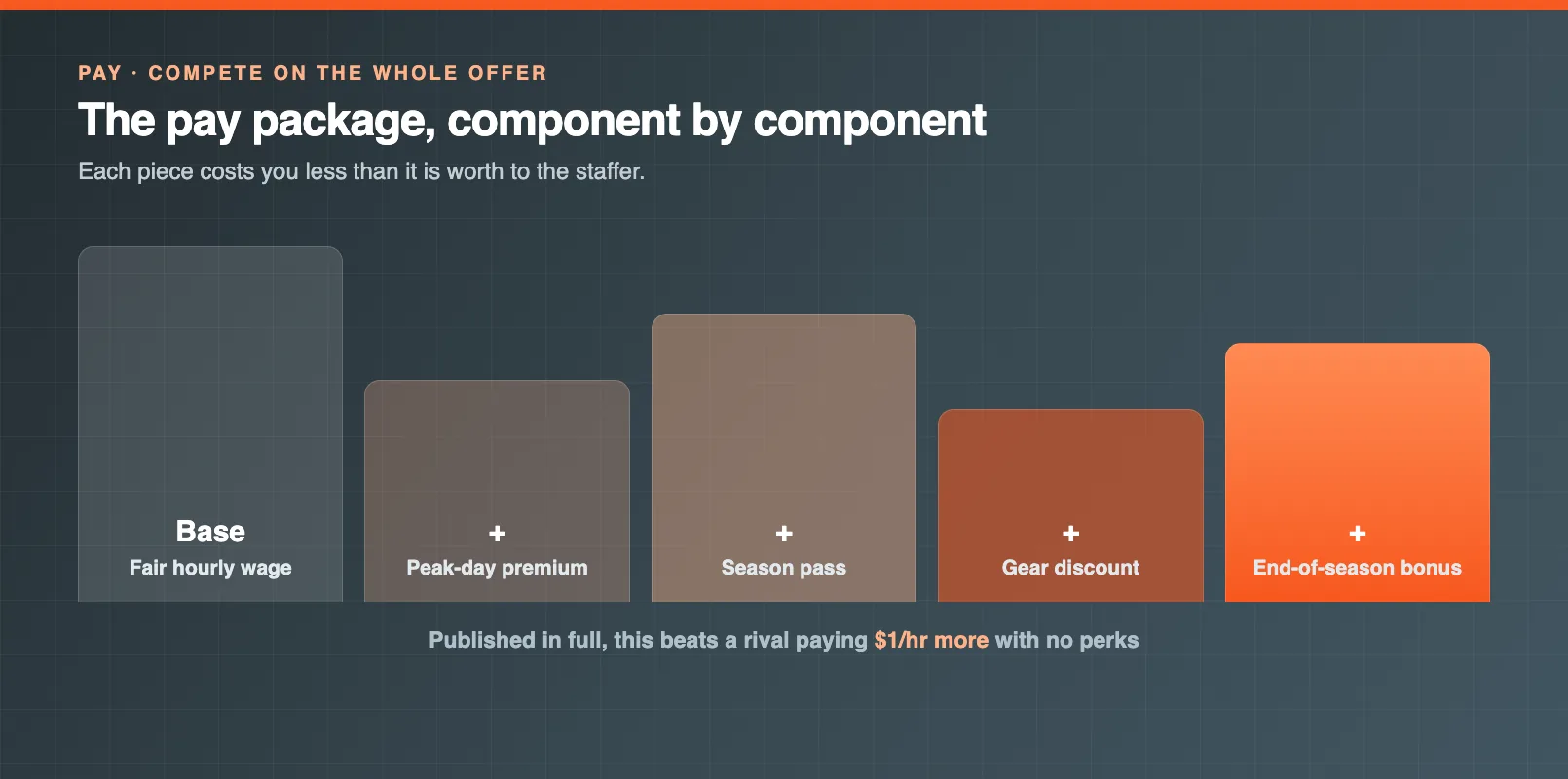
Publish the full package in the job post. An applicant weighing two offers will pick the one where they can see the pass, the discount, and the bonus spelled out over the one that just lists a slightly higher hourly rate. The same discipline you bring to your rental pricing strategy — knowing your numbers and what they buy — belongs in how you price labor.
Retention through the season
The fastest way to lose good staff mid-season is a roster that feels unfair. If the same two people are always stuck closing or always pulled in on their pass day, they burn out and quit right when you can least afford to replace them. Build the schedule so the load and the good shifts are shared, and protect the pass days you promised so crew actually get to ride.
Cover gaps fast so nobody gets blindsided by a surprise double. When a staffer calls in sick on a holiday Saturday, you need to fill that hole quickly, not draft whoever happens to be standing nearby. A peak-day staffing alert can flag when a busy day is short-handed before it becomes a problem, so you are reacting in the morning instead of mid-rush. The same forecasting that protects you on the customer side, like the moves in your no-show recovery playbook, keeps your floor calm.
Beyond scheduling, retention is mostly small and consistent. Tell people when they did well. Give clear expectations so nobody is guessing what good looks like. Feed lunch on the brutal weekends. These cost little and do more for whether someone finishes the season than a one-time pay bump ever will.
Turning hires into year-over-year returning staff
Every staffer who comes back next winter is one you do not have to find, interview, or train from zero. Returning crew lift service quality from opening day and cut your hiring workload in half, so re-recruitment is worth as much attention as the first hire.
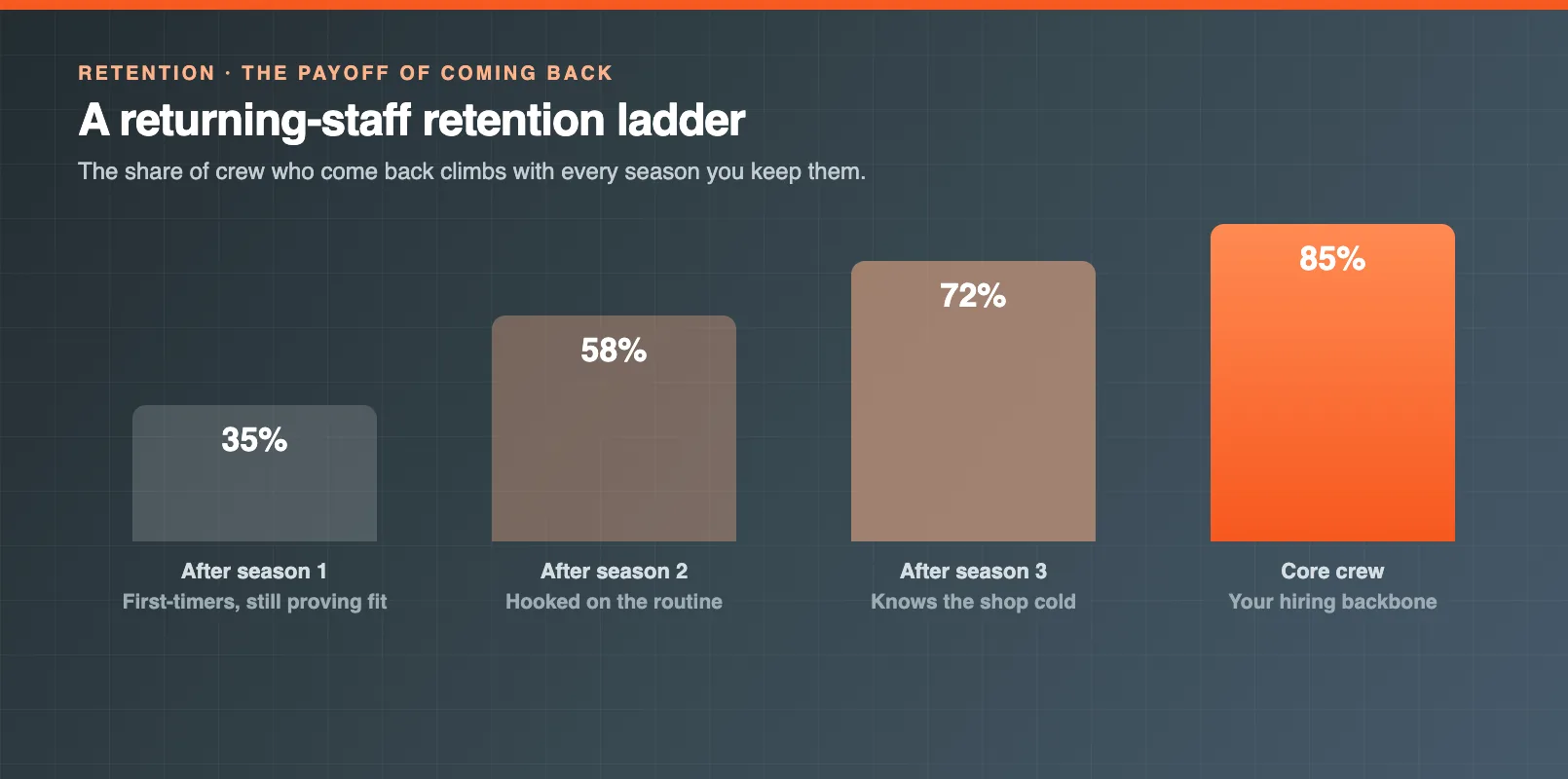
Start before the season ends. Have an honest conversation with every keeper in the last few weeks — tell them straight that you want them back, and put it in writing with the perks they earned this year. Stay in light contact over the off-season so you are not a stranger when autumn comes, then reach out to your returners first the moment you reopen hiring. Track who returned and why in your records the same way you track customers; over a few seasons you build a core crew that knows the shop cold, and your hiring shifts from frantic recruiting to a few quick yeses.
Putting it together
Good seasonal staffing is a cycle, not a scramble. Source early and lean on returning crew and referrals, train in a clear order so people are useful fast, solve the housing problem honestly, and build a pay package that competes on the whole offer rather than the hourly rate. Then protect your people through the season with fair scheduling and quick coverage, and start re-recruiting your keepers before they walk out the door in spring. Do that for a few winters and the hardest part of running a shop turns into one of the steadiest. For the terms that come up along the way, the ski rental glossary is a quick reference.
FAQ
When should I start hiring seasonal ski rental staff?
Start two to three months before your projected opening day. Reach out to last season's returning staff first, in early autumn, so you know how many gaps you actually need to fill. Post to job boards and local colleges six to eight weeks out, run interviews and reference checks a month ahead, and keep training days on the calendar for the two weeks before you open. Hiring late forces you to train under pressure during your busiest weekends.
What hourly pay is competitive for seasonal ski rental staff?
Benchmark against the other shops, lifts, and resort jobs on your hill rather than a national average, because a ski town labor market is local and tight. Most operators win on the total package, not the base rate: a fair hourly wage plus a season pass, a gear discount, peak-day premiums, and an end-of-season bonus often beats a competitor paying a dollar more an hour with no perks. Publish the full package in the job post so applicants can see it.
Do I need to provide staff housing?
In a resort town with no affordable rentals, housing is often the deciding factor in whether someone takes the job at all. You do not have to own a bunkhouse. Many shops master-lease a few units and sublet rooms to staff at cost, partner with the resort's housing program, or offer a housing stipend. If you cannot offer housing, be upfront in the job post and focus your hiring on locals who already have a place to live.
How long does it take to train a new rental shop hire?
A new hire can run intake, basic fitting, and point-of-sale within their first week if you train in a clear order and let them shadow an experienced staffer. Boot fitting and the finer points of fleet maintenance take longer and should stay supervised until they are signed off. Plan for a couple of structured training days before opening plus on-the-floor coaching through the first few weekends, not a single orientation that tries to cover everything at once.
How do I keep seasonal staff from quitting mid-season?
Mid-season walk-offs usually trace back to unfair scheduling, unclear expectations, or burnout on the big weekends. Build the roster fairly so the same people are not always stuck closing, cover no-shows fast so nobody works a double by surprise, and give staff their pass days so they actually get to ski. Small, consistent recognition and a clear end-of-season bonus they can see coming do more for retention than a one-time bump.
How do I get seasonal staff to come back next winter?
Treat re-recruitment as something you start before the current season even ends. Have an honest end-of-season chat with every keeper, tell them you want them back, and put it in writing with the perks they earned. Stay in light contact through the off-season, then reach out first when you reopen hiring. Crew who return already know your shop, your fleet, and your customers, which cuts your training load and lifts service from day one.
in one place