Ski Rental Damage Assessment: Fair Charges, Clean Customer Comms
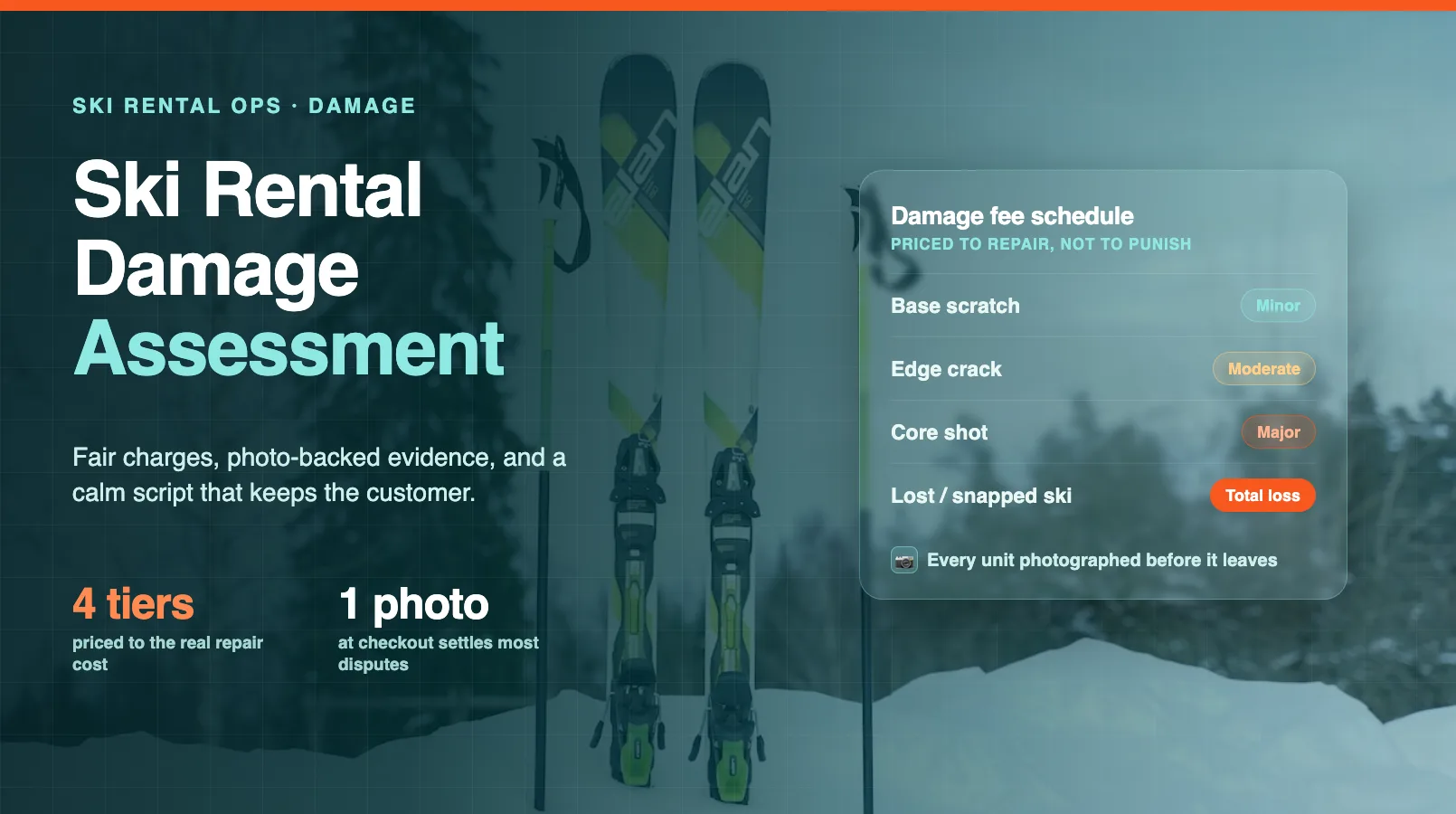
Ski Rental Damage Assessment: Fair Charges, Clean Customer Comms
Damage charges are the part of a ski rental shop nobody enjoys. The guest hands back a ski with a fresh core shot, you both know it wasn't there at checkout, and now you have to decide what to say — and what to charge — without turning a good day on the mountain into a one-star review.
The shops that handle this well aren't the ones with the strictest policy. They're the ones with a clear, consistent process. When the fee is written down before the season starts, the gear is photographed before it leaves, and the conversation follows a calm script, a damage charge stops being an argument. It becomes a routine the customer expects.
This guide walks through the six pieces of a ski rental damage assessment that holds up: a fee schedule, photo evidence at checkout, a return inspection, the customer conversation, dispute resolution, and how to keep the relationship intact for next season. If you're building out the wider operation, the complete guide to running a ski rental business ties these pieces together.
Damage Fee Schedule
Everything downstream depends on this one document. If you don't have a written fee schedule, every damage call becomes a judgment call — and judgment calls feel arbitrary to the person paying them.
A good schedule separates normal wear from chargeable damage, then tiers the chargeable stuff by repair cost. Edge burrs, light base scratches, and topsheet scuffs are wear. You expect them, you tune them out between rentals, and you never charge for them. What you charge for is damage that costs you money to fix or that takes a unit out of the fleet.
Build your tiers around what the repair actually costs you, not a round number that feels punitive:
- Minor (base scratch through the wax layer, small edge ding): a stone-grind and tune you'd do anyway. Often free, or a small flat fee.
- Moderate (deep base gouge, edge crack, delamination starting): a base weld or edge repair plus shop time.
- Major (core shot, broken edge section, snapped binding): a serious repair or a write-down.
- Total loss (snapped ski, lost unit, unrepairable): replacement cost, depreciated for the unit's age.
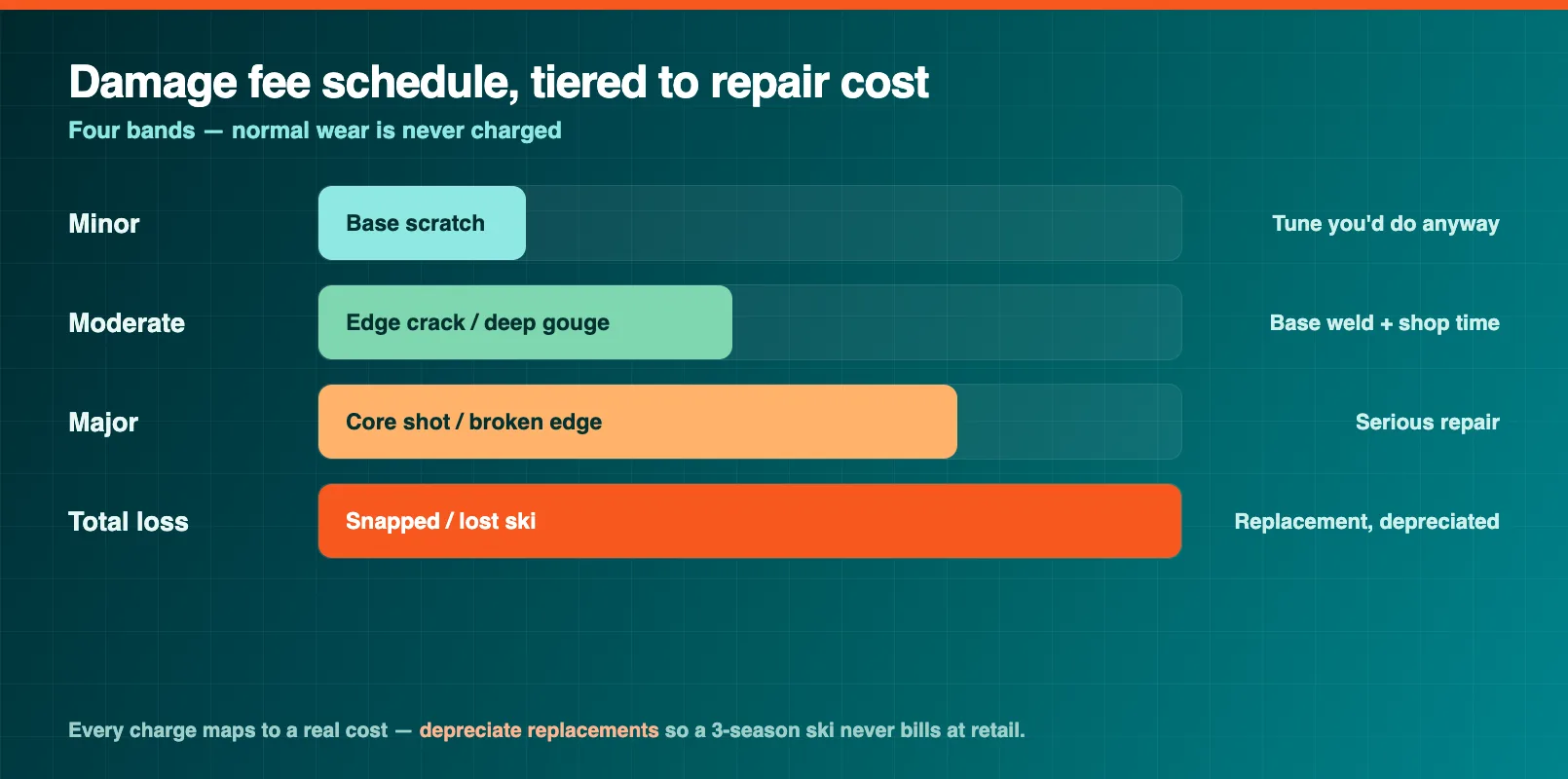
Two rules keep a schedule fair. First, depreciate replacement charges — a guest should never pay full retail for a ski that's three seasons into your fleet. Second, publish the schedule. Put it on the rental agreement, post it at the counter, and have staff mention it during the boot fitting. A fee nobody saw coming feels like a trap; a fee printed on the form the guest signed feels like the deal they agreed to. The same logic that shapes your ski rental pricing strategy applies here: transparency converts resentment into acceptance.
Photo Evidence at Checkout
The single biggest cause of damage disputes is the absence of a before picture. Without one, every conversation is your word against the guest's, and you'll lose those arguments more often than you'd like — usually by waiving a charge you were right about, just to end the standoff.
The fix is a quick photo of each unit as it goes out. It doesn't need to be a studio shoot. Two or three shots of each ski's base and edges, the binding, and any pre-existing marks, attached to the booking, takes under a minute per setup once it's a habit.
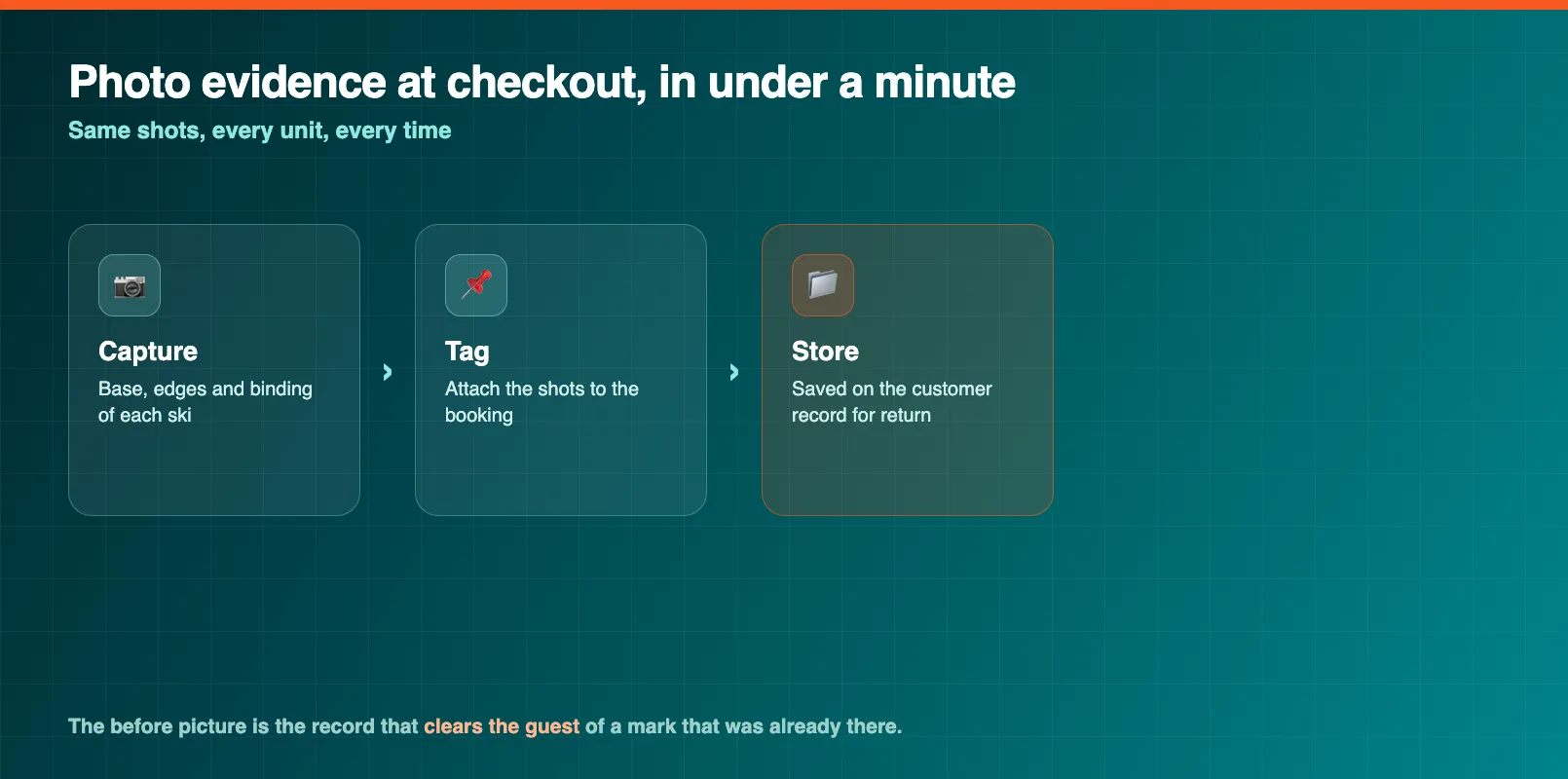
The trick is making it routine rather than something staff do only when they have a bad feeling about a customer. Selective documentation looks like profiling and feels unfair. Photographing every unit, every time, protects the guest as much as you — it's the record that clears them of a scratch that was already there. Tie the photos to the booking record so they live with the rental, not in a camera roll nobody can find in March. If you're already capturing condition during your tune and wax shop workflow, the checkout photo is a small addition to a habit you have.
Return Inspection
The return is where assessment actually happens, and it's where most shops rush. A guest is tired, the line is building, and it's tempting to wave the gear through and sort it out later. Later never comes, and the damage gets eaten as a cost of doing business.
Build a short, repeatable inspection that takes the same path every time so nothing gets missed:
- Bases and edges first. Run a hand down each base, check edges for cracks or missing sections, look for core shots.
- Bindings and brakes. Confirm they function, check for cracked housings, test the release if you can.
- Compare against the checkout photos. This is the step that settles disputes before they start — the before-and-after is right there.
- Log the condition. Even a clean return gets logged, so your records are complete and the unit's history is current.
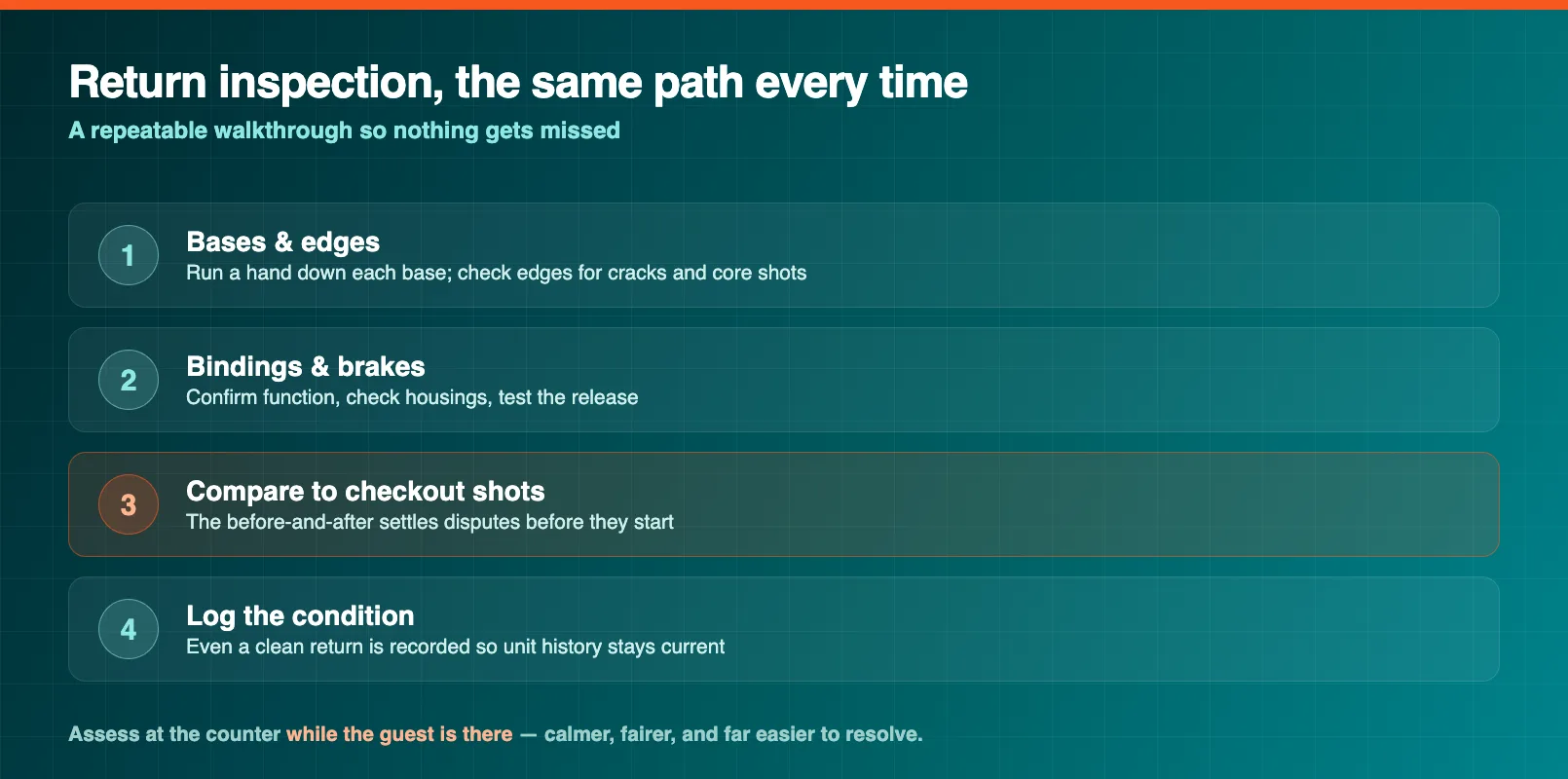
When you do find damage, assess it at the counter while the guest is standing there, not after they've driven home. On-the-spot assessment is calmer, fairer, and far easier to resolve — the gear is in hand and the photos are one tap away. A consistent inspection also feeds your fleet planning: the units taking the most damage tell you what to retire and what to reorder, feeding straight into your end-of-season retirement list. A well-trained crew makes this fast, which is why hiring and training seasonal staff on the inspection routine pays for itself.
Customer Communication
How you say it matters more than what you charge. The same fee delivered two different ways produces either a shrug or a chargeback. Lead with the facts, keep your tone neutral, and never make it sound like an accusation.
A clean script has four beats: name what you found, show the evidence, state the charge and why, and explain what happens next. "There's a core shot on the left ski base — here's the checkout photo showing it was clean, and here's the return. That's a moderate repair, which is $X on the schedule you signed. We'll charge the card on file and email you the breakdown." Calm, specific, backed by the photo. No drama, no apology, no lecture.
The biggest mistake is hedging. Vague language — "there might be some damage, we'll have to see" — invites negotiation and makes a fair charge feel negotiable. State it plainly and let the evidence carry the weight. Writing each assessment by hand at a busy counter is where consistency breaks down, so a tool like the damage report drafter agent can turn your inspection notes and photos into a clear, customer-ready summary in seconds — same tone every time, no matter who's working the counter.
Dispute Resolution
Even with photos and a published schedule, some guests will push back. That's fine — a dispute process isn't a failure, it's the pressure valve that keeps a fair charge from becoming a public complaint. The goal is a path that resolves quickly without you caving on legitimate charges or digging in on borderline ones.
Work it as a ladder, not a wall:
- Show the evidence again, calmly. Most disputes end here. The before-and-after photo settles it.
- Explain the depreciation. Guests often assume you're charging retail. Showing the discounted, age-adjusted number defuses the "you're ripping me off" reaction.
- Offer a middle path on genuine gray areas. If you honestly can't tell whether it was pre-existing, split it or waive it. A borderline call isn't worth a bad review.
- Escalate cleanly when needed. For real disputes, document everything and move to your card processor's process — your photos and signed agreement are your case.
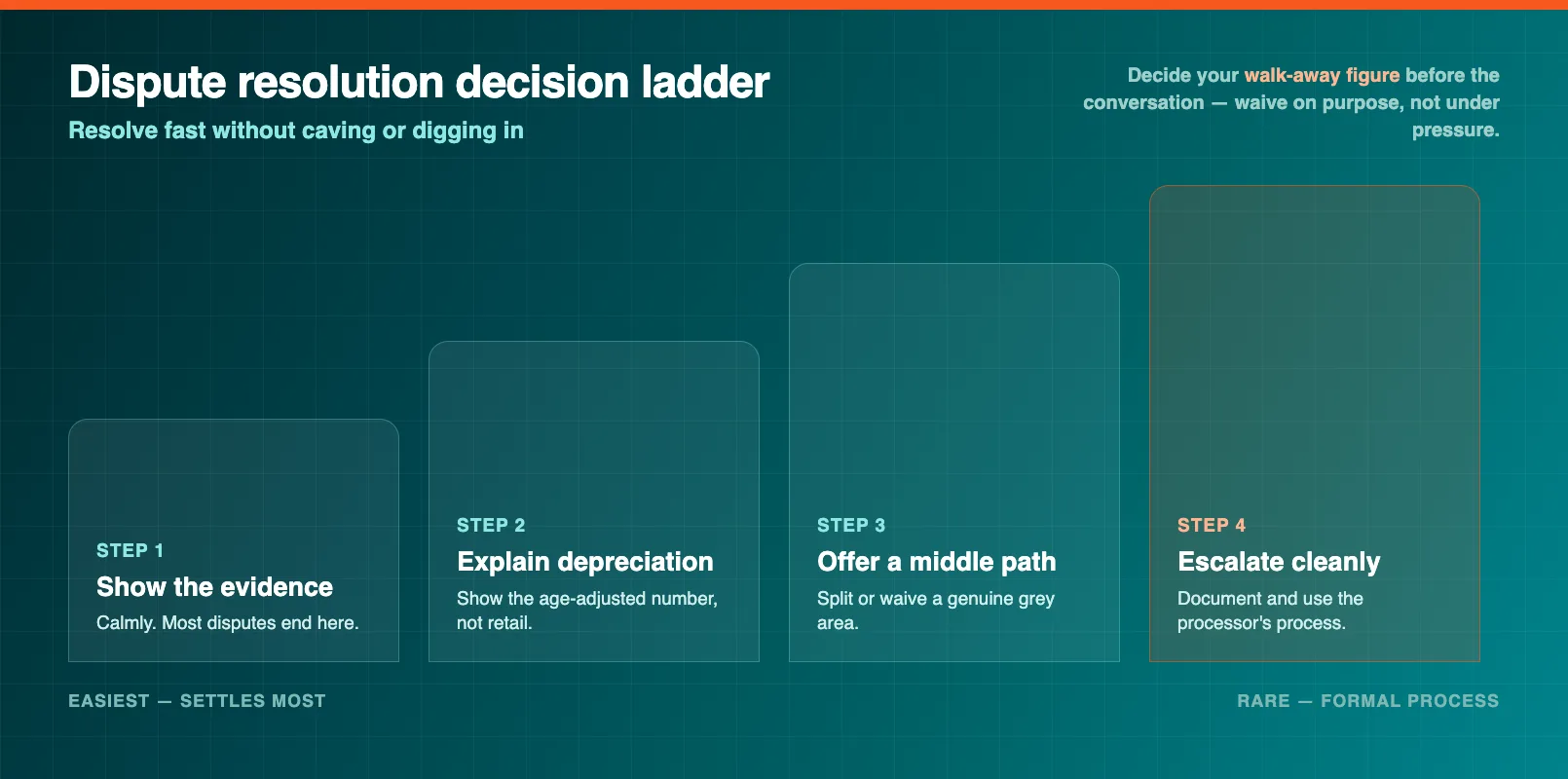
Know your walk-away line before you're in the conversation. Decide in advance the dollar figure below which it's simply not worth the friction — for many shops a small charge waived to keep a happy customer is cheaper than the staff time and reputational cost of fighting it. The discipline isn't never waiving; it's waiving on purpose, not under pressure. The same calm-comms muscle that recovers a no-show or late cancellation keeps a damage dispute from spiralling.
Repeat-Customer Framing
Here's the part that's easy to lose sight of when you're staring at a damaged ski: most damage isn't malicious, and most guests aren't trying to cheat you. A first-timer caught an edge on a rock they never saw. Treating an honest accident like theft costs you a customer who would otherwise have come back every season.
Frame the charge as fixing the gear, not punishing the guest. "We need to repair this so it's safe for the next skier" lands completely differently than "you damaged this." The first is a shared interest; the second is a verdict. Guests who feel respected through a damage charge are the ones who book again — and tell their friends you were fair about it.
The long game is what makes a fair process worth the effort. A reputation for being firm but reasonable is a competitive advantage in a town full of rental shops. It shows up in reviews, in repeat bookings, and in the guest who recommends you precisely because the damage charge was handled like a professional. The whole point of the photos, the schedule, and the script isn't to win arguments — it's to make the charge a non-event, so the relationship survives it.
Putting It Together
A ski rental damage assessment that works isn't built on a strict policy — it's built on a consistent one. Write the fee schedule before the season. Photograph every unit at checkout. Inspect every return the same way. Deliver the charge with a calm script and the evidence to back it. Resolve disputes on a ladder, and frame every charge around the gear, not the guest.
Do that, and damage charges stop being the worst part of your day. They become a routine your customers expect and respect — and one more reason they come back next winter. Start with the ski rental damage assessment checklist, browse the rest of the ski and snowboard rental hub, and keep the ski rental glossary handy for the terms your staff need to know.
FAQ
What counts as normal wear versus chargeable damage on rental skis?
Normal wear is anything you'd fix as part of routine maintenance between rentals — edge burrs, light base scratches above the wax layer, topsheet scuffs. You never charge for those. Chargeable damage is anything that costs real shop time or money to repair, or that pulls a unit out of your fleet: deep base gouges, core shots, edge cracks, delamination, and broken or lost gear. The clearest way to draw the line is to tie every charge to an actual repair cost.
How do I set fair ski rental damage fees?
Base each tier on what the repair actually costs you, not a round number that feels like a penalty. A minor scratch that's covered by a tune you'd do anyway should be free or a small flat fee; a base weld or edge repair carries the cost of materials plus shop time; a write-off is charged at replacement cost depreciated for the unit's age. Publish the schedule on your rental agreement so guests agree to it before they ski.
Do I really need to photograph every rental at checkout?
Yes — and photographing every unit, every time, is what makes it fair. Selective documentation looks like profiling and undermines trust. A quick set of base, edge, and binding shots tied to the booking takes under a minute once it's a habit, and it protects the guest as much as you: it's the record that clears them of a mark that was already there. The before photo is the single biggest thing that prevents damage disputes.
What's the best way to tell a customer they're being charged for damage?
Use a calm, four-beat script: name what you found, show the checkout-versus-return photo, state the charge and the tier it falls under, and explain what happens next. Keep your tone neutral and avoid hedging — vague language invites negotiation and makes a fair charge feel optional. Frame it as repairing the gear so it's safe for the next skier, not as punishing the guest for the damage.
How should I handle a customer who disputes a damage charge?
Work it as a ladder. Show the before-and-after photo calmly first — most disputes end there. If they think you're overcharging, explain the depreciation and show the age-adjusted number. For genuine gray areas where you can't tell if it was pre-existing, offer to split or waive it. For real disputes, document everything and rely on your signed agreement and photos through your card processor's process. Decide your walk-away figure before the conversation starts.
Will charging for damage cost me repeat business?
Not if you handle it well — being fair about a charge is often what earns the repeat booking. Most damage is an honest accident, not an attempt to cheat you, so treating it like theft is what loses customers. Lead with the gear ("we need to repair this so it's safe for the next skier"), back the charge with evidence, and stay reasonable on borderline calls. A reputation for being firm but fair shows up in reviews and referrals.
in one place