Software for Outdoor Adventure Companies: What Actually Matters
A guided backcountry trip is not a museum ticket. Before anyone clips into a harness you have to check the forecast, confirm the waiver is signed, match the right gear to the right body, and make sure the guide leading them actually holds a current Wilderness First Responder certificate. Generic booking software treats all of that as a single line item ("1 x Adventure Tour") and leaves the hard parts to a clipboard and your memory.
That gap is why so many outdoor operators end up running two or three disconnected tools: one for bookings, a spreadsheet for gear, a separate waiver app, and a wall calendar for who's certified to lead what. This guide walks through the features that genuinely matter for an outdoor adventure business, so you can tell the difference between software built for your world and a generic reservation form with a mountain photo on the homepage.
For the broader picture of what a platform should do, start with our guide to tour operator software. If you're a smaller shop watching every dollar, the breakdown for tour operators on a small-business budget is the better starting point.
The Unique Needs of Outdoor Adventure Companies
Most booking tools were designed for predictable, indoor, low-risk experiences: a cooking class, a walking tour, a wine tasting. Outdoor adventure breaks every one of those assumptions. Your departures hinge on weather you don't control. Your activities carry real injury risk, so waivers are not optional paperwork. Your inventory is physical gear that has to be sized, cleaned, and accounted for after every trip. And the person leading the group needs verified training, not just a friendly attitude.
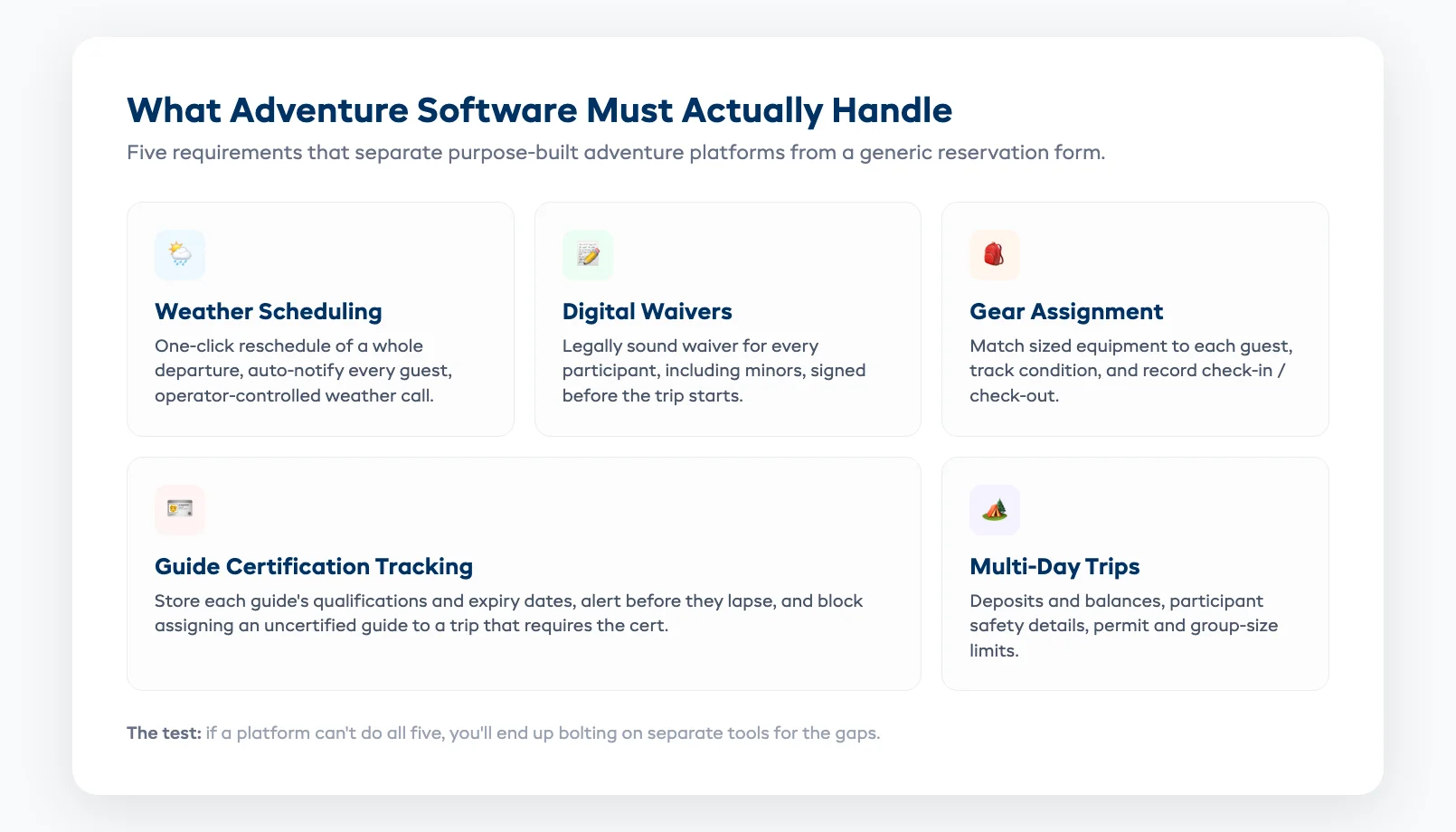
That means the checklist for adventure software is different. You're not just asking "can customers book online?" You're asking whether the system can hold a tentative booking against a forecast, capture a legally sound waiver for every participant including minors, track which paddleboard or harness went out with which guest, and stop you from assigning a guide whose swift-water rescue cert lapsed last month. The features below are the ones that separate purpose-built adventure platforms from generic schedulers.
Weather-Dependent Scheduling
Weather is the single biggest variable in an outdoor business, and your software either helps you manage it or fights you. The two questions every adventure operator asks ("What software features matter most?" and "How do I handle weather-dependent cancellations?") both lead straight back to scheduling flexibility.
You need easy rescheduling, not just cancellation. When a forecast turns, the goal is to move the trip, not refund it. Good software lets you shift an entire departure to a new date with one action and automatically notify every booked guest, rather than emailing twelve people by hand. A reschedule keeps the revenue; a cancellation gives it back.
Make the weather call yours, with a clear policy attached. Set departures as weather-dependent so guests understand at checkout that you decide whether conditions are safe. When you cancel a trip yourself, the system should trigger a full reschedule or refund automatically. That's the fair side of the deal and it heads off disputes. Bury that policy and guests will argue every gray morning; surface it at booking and in reminders and the conversation is already settled.
Watch the window, not just the day. For multi-day or backcountry trips, a single bad afternoon shouldn't sink the whole booking. Software that lets you flag and shift individual days, or hold a departure as tentative until 48 hours out, gives you room to make the safe call without losing the customer.
Gear Assignment and Participant Tracking
Every outdoor trip goes out with equipment that has to come back. Kayaks, wetsuits, harnesses, helmets, bikes, tents — each item is sized to a person, used hard, and needs checking before it goes out again. When that lives in your head or on a paper list, things walk off, get double-booked, or go out damaged.
Tie gear to the booking. The system should let you assign specific equipment (or at least the right size and quantity) to each participant when they book or check in. That stops the classic Saturday-morning scramble where two groups both think they have the last three large wetsuits.
Track condition and availability, not just count. A harness that failed inspection isn't available inventory, even though it's physically in the shed. Software that lets you pull an item out of rotation for maintenance keeps you from accidentally handing damaged gear to a paying guest. The same record tells you when a fleet of rental bikes is due for a service.
Know who had what. If a paddle comes back cracked or a GPS unit doesn't come back at all, a check-in and check-out record tells you which trip and which guest it went out with. That turns "somebody lost a $400 unit" into a specific, recoverable conversation.
Guide Certification and Assignment
Ask any insurer or regulator and they'll tell you the fastest way to lose a claim is to put an uncertified guide in charge of a high-risk activity. "Can software track guide certifications?" is one of the most common questions adventure operators ask, and the answer should be yes, automatically.
Store certifications against each guide. Wilderness First Responder, swift-water rescue, avalanche, climbing instructor, first aid, whatever your activities require, the platform should hold each guide's qualifications and, crucially, their expiry dates. A certificate that lapsed in March is a liability gap you won't notice until it matters.
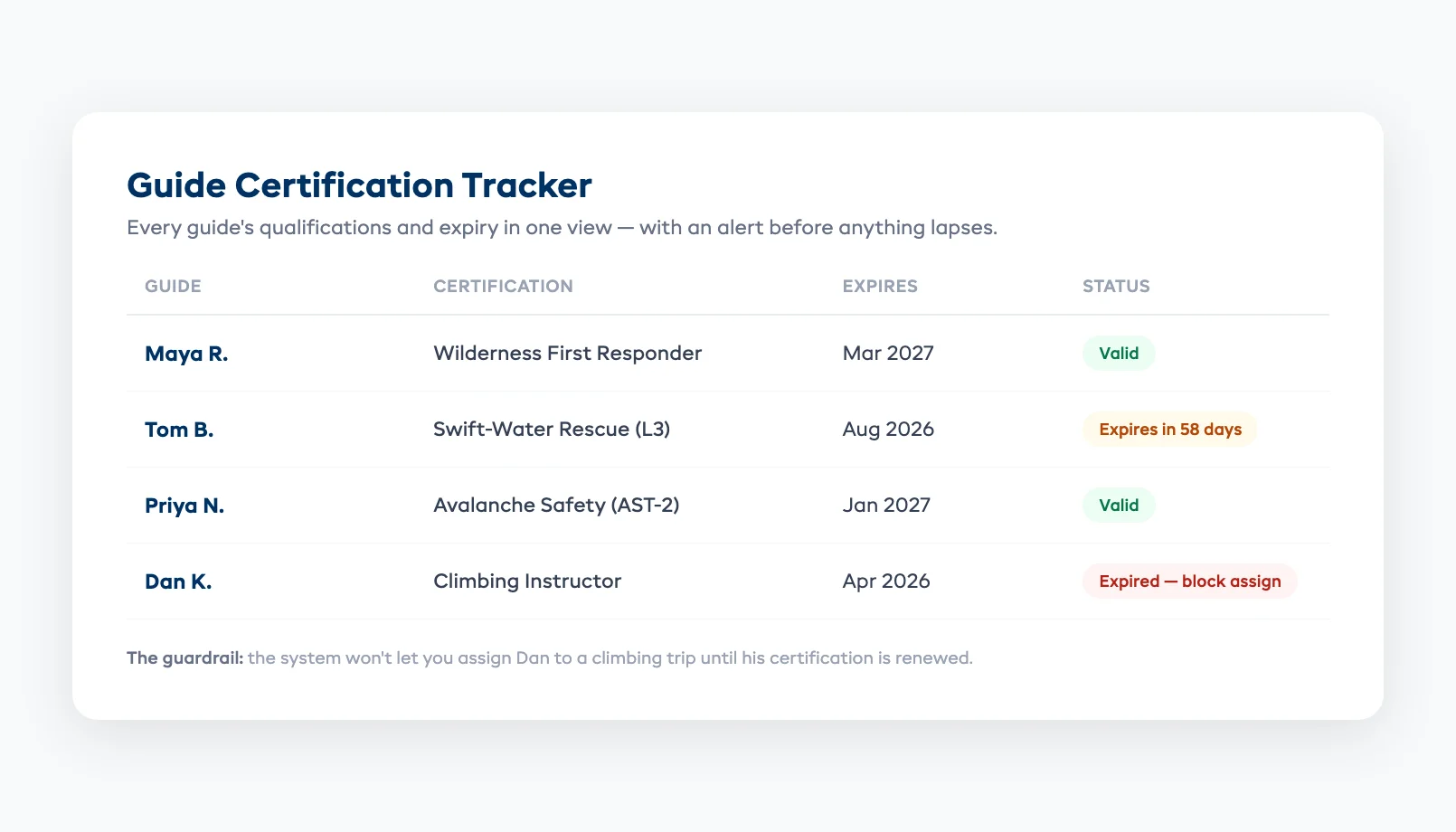
Get warned before they expire. The real value is the alert. Software that flags a certification 60 days before it lapses gives you time to book the recert before it costs you a trip, or worse, before you unknowingly send out an uncertified guide. Renewals are predictable; missed renewals are an accident waiting to happen.
Match the right guide to the right trip. When you schedule a departure, the system should only let you assign guides who hold the certifications that activity requires. That single guardrail prevents the most dangerous and most expensive scheduling mistake an adventure company can make.
Multi-Day Trip Management
A two-hour kayak rental and a five-day mountaineering expedition are not the same product, and software built only for the former falls apart on the latter. Multi-day trips carry deposits, packing lists, dietary requirements, permits, and logistics that a single-slot booking form can't hold.
Handle deposits and balances. Multi-day trips usually take a deposit at booking and the balance closer to departure. Your platform should automate that schedule: collect the deposit, send the balance reminder, and flag anyone who hasn't paid before the trip locks.
Capture the details that keep people safe. Dietary needs, emergency contacts, medical notes, experience level, and gear sizing all need to be collected ahead of a backcountry trip and visible to the lead guide. A booking system that gathers this at the time of purchase beats chasing it by email the week before.
Manage capacity and permits. Many backcountry areas cap group sizes by permit. Software that enforces your maximum party size and tracks permit allocation stops you from overselling a trip you legally can't run at that size.
Choosing Your Software
Once you know the features that matter, the choice comes down to whether a platform was built for operations like yours and what it costs to run. A few large adventure-specific platforms exist, but most carry enterprise pricing and per-booking fees that punish you in peak season. Generic schedulers are cheaper but make you bolt on waivers, gear tracking, and certification management yourself.
EquipDash is built for exactly this middle ground: outdoor and adventure operators who need weather-flexible scheduling, built-in digital waivers, gear and participant tracking, and guide management in one system without enterprise overhead. Plans run from $23/month on Starter through $55/month on Growth to $119/month on Pro (annual billing), with platform fees of 2%, 1.5%, and 1% respectively, so as your booking volume grows, your per-transaction cost drops. Behind the scenes, Dash AI can draft your weather-reschedule notifications and flag the guide whose certification is about to lapse, so the routine admin runs itself while you run the trips.
Whatever you choose, judge it against the five needs above, not the homepage photography. For a deeper look at pricing models and how to set your own rates profitably, see our guide to tour operator pricing strategy. The right platform pays for itself the first time it saves a weather-threatened departure or catches a lapsed certification before it becomes a claim. Start a free trial and run your next season on one system instead of four.
FAQ
What software features matter most for an outdoor adventure business?
Five features separate adventure-ready software from a generic booking form: weather-dependent scheduling with one-click rescheduling, built-in digital waivers for every participant, gear assignment and check-in/check-out tracking, guide certification storage with expiry alerts, and multi-day trip management for deposits, permits, and participant details. If a platform can't handle all five, you'll end up bolting on separate tools.
How do I handle weather-dependent cancellations?
Set departures as weather-dependent so guests agree at checkout that you make the safety call, and lead with rescheduling rather than refunds. Good software lets you shift an entire trip to a new date and notify every booked guest in one action, which keeps the revenue instead of returning it. When you cancel a trip yourself for weather, the system should trigger a full reschedule or refund automatically so the policy stays fair and disputes stay rare.
Can software track guide certifications?
Yes. Purpose-built adventure software stores each guide's qualifications (Wilderness First Responder, swift-water rescue, avalanche, first aid) along with expiry dates, and alerts you before a certification lapses, typically around 60 days out. The strongest systems also block you from assigning a guide to a trip whose required certification they don't currently hold, which prevents the most expensive scheduling mistake an adventure operator can make.
Do I need adventure-specific software or will a generic booking tool work?
A generic booking tool handles the reservation but leaves the hard parts (waivers, gear sizing, certification tracking, weather rescheduling, multi-day logistics) to spreadsheets and clipboards. That works at very low volume but breaks down as you grow, because the disconnected tools stop talking to each other. Software built for outdoor adventure keeps bookings, gear, guides, and waivers in one record, which is what actually saves time once you're running multiple trips a day.
How does software handle multi-day adventure trips?
Multi-day trips need deposit and balance scheduling, capture of participant details like dietary needs and emergency contacts, and capacity or permit enforcement for backcountry areas. A good platform collects the deposit at booking, sends an automatic balance reminder before departure, surfaces every participant's safety details to the lead guide, and stops you from overselling a permit-capped group. That replaces the email chasing and side spreadsheets most operators rely on.
in one place