Surf Waivers and Minor Consent: Ocean-Safety Liability Essentials
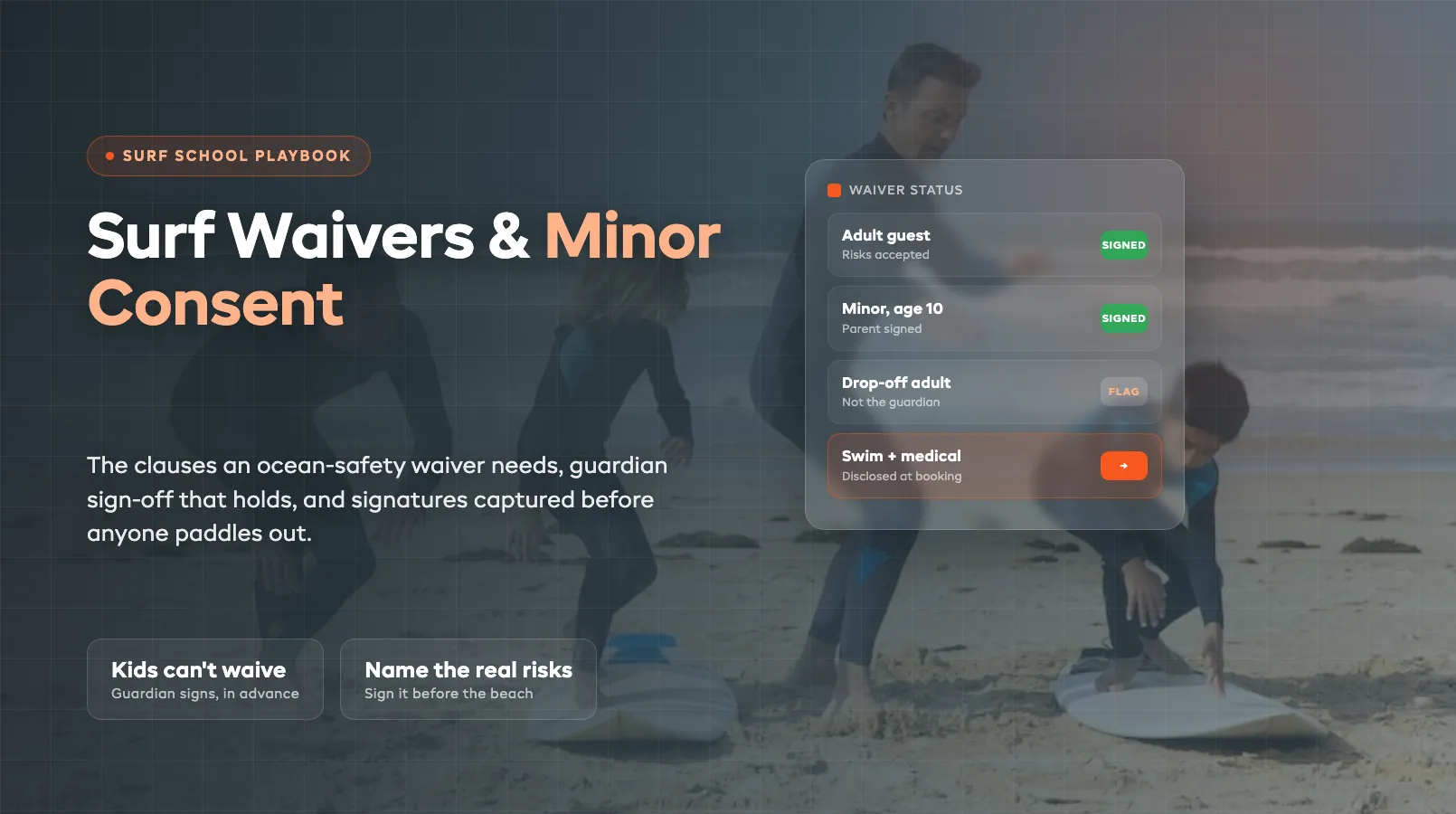
Every surf school has a waiver. Most of them are a page nobody reads, signed on a wet clipboard while the instructor is already carrying boards to the water. It feels like a formality, until the day something goes wrong, and you discover the form was signed by the wrong person, the clauses were vague, or it named none of the risks that actually caused the problem.
A waiver is not a magic shield. It will not stop every claim, and how much weight it carries depends on where you operate. But a clear, honest waiver that names real ocean risks and is signed by the right person is one of the strongest records you can hold. The single biggest gap in most surf schools is minor consent, because a large share of your lessons are children, and a child cannot waive anything. This guide covers what your waiver actually needs to cover, how to handle minors properly, and how to capture and store signatures without drowning in paper. If you are still setting up the wider operation, start with the full playbook on how to run a surf school and board rental business.
What an ocean-safety waiver actually needs to cover
A surf waiver has a few jobs, and a good one does all of them in language a nervous first-timer can read in under a minute. Strip out the dense legal boilerplate that nobody understands — a clause a guest demonstrably read and accepted is harder to challenge than a wall of text they clearly skimmed.
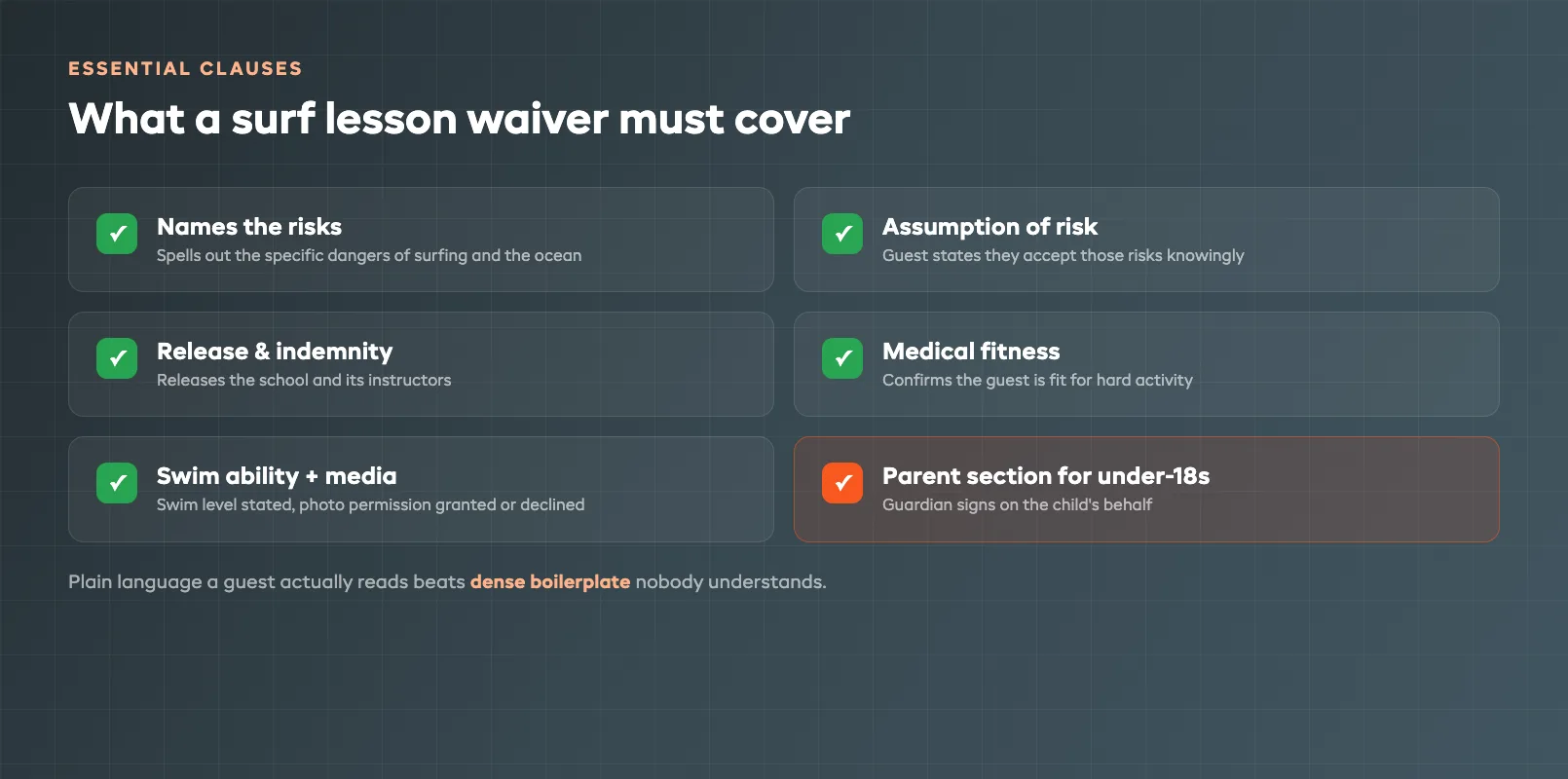
At its core, the form should name the specific risks of surfing, state that the guest accepts those risks, and release and indemnify the school and its instructors. It should confirm the guest is medically fit to take part and can swim to a stated level. And it should handle media consent, because you will almost certainly want to use lesson photos and clips, and a guest needs to opt in or out of that clearly.
The mistake is treating the waiver as a generic activity release copied off the internet. Surfing is not go-karting or a bike hire — the risks are specific to moving water, and your form should read like it was written for the ocean. That specificity is what makes it useful later. The same care you put into a clean surf lesson booking software flow should go into the terms guests accept inside it.
Minor consent: the part most surf schools get wrong
Here is the uncomfortable truth: a huge slice of surf lesson bookings are children, and a child cannot sign away anything. A waiver a twelve-year-old signs themselves is close to worthless. The person who has to accept the risks and release the school is the child's parent or legal guardian.
That sounds obvious, and yet it is where schools trip up constantly, because the person who brings the child to the beach is often not the guardian. It is a grandparent on holiday, an older sibling, a family friend, or a summer-camp chaperone. They are happy to scribble a signature, but they have no legal standing to consent on that child's behalf. If your only waiver is the one signed at the beach, you can end up with a form signed by someone who could never give consent in the first place.
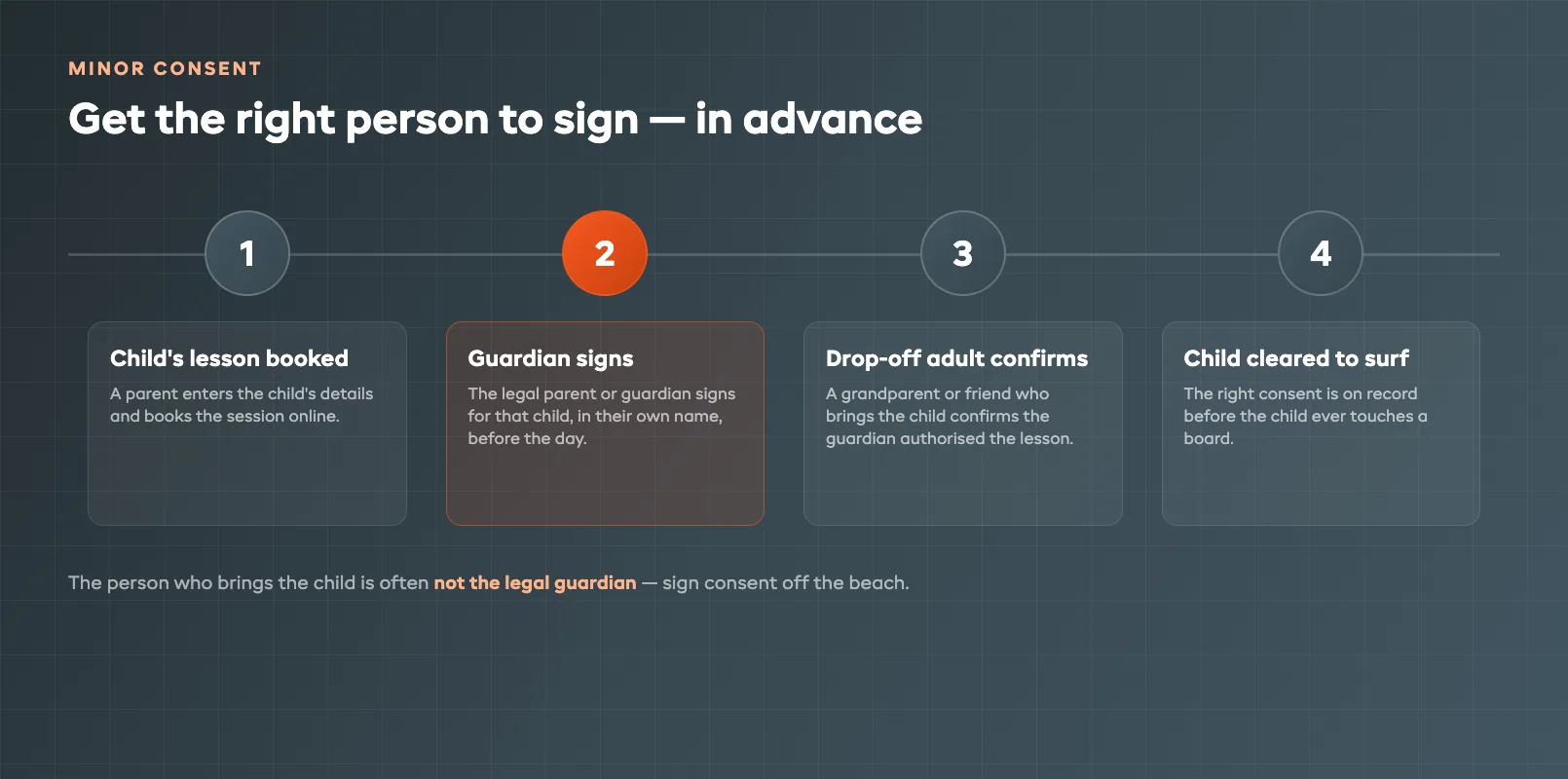
The fix is to move consent off the beach and into the booking. When a lesson for a minor is booked, the waiver goes to the parent or guardian to sign in advance, in their name, for that specific child. Add a clear clause covering the drop-off situation (the adult presenting the child confirms the guardian has authorized the lesson) so your team knows who is responsible before the child touches a board. For surf camp operations that run multi-day programs full of kids, this is not optional housekeeping; it is the backbone of the whole operation.
Name the real ocean hazards: don't hide them
A waiver that lists risks in vague, general terms is weaker than one that names them plainly. Counterintuitive as it feels, spelling out exactly what can go wrong is what makes a guest's acceptance meaningful. They cannot later claim they had no idea the ocean was unpredictable if your form said so in plain words.
For a surf lesson, the hazards are specific. Rip currents can pull a beginner off the bank. Surf and tide change through the session, so conditions at the end of a lesson are not the ones at the start. A loose board is heavy and hard, and board contact is one of the most common lesson injuries. Marine life (from jellyfish to whatever your local water holds) is a real factor. And cold water saps strength and judgment faster than beginners expect.
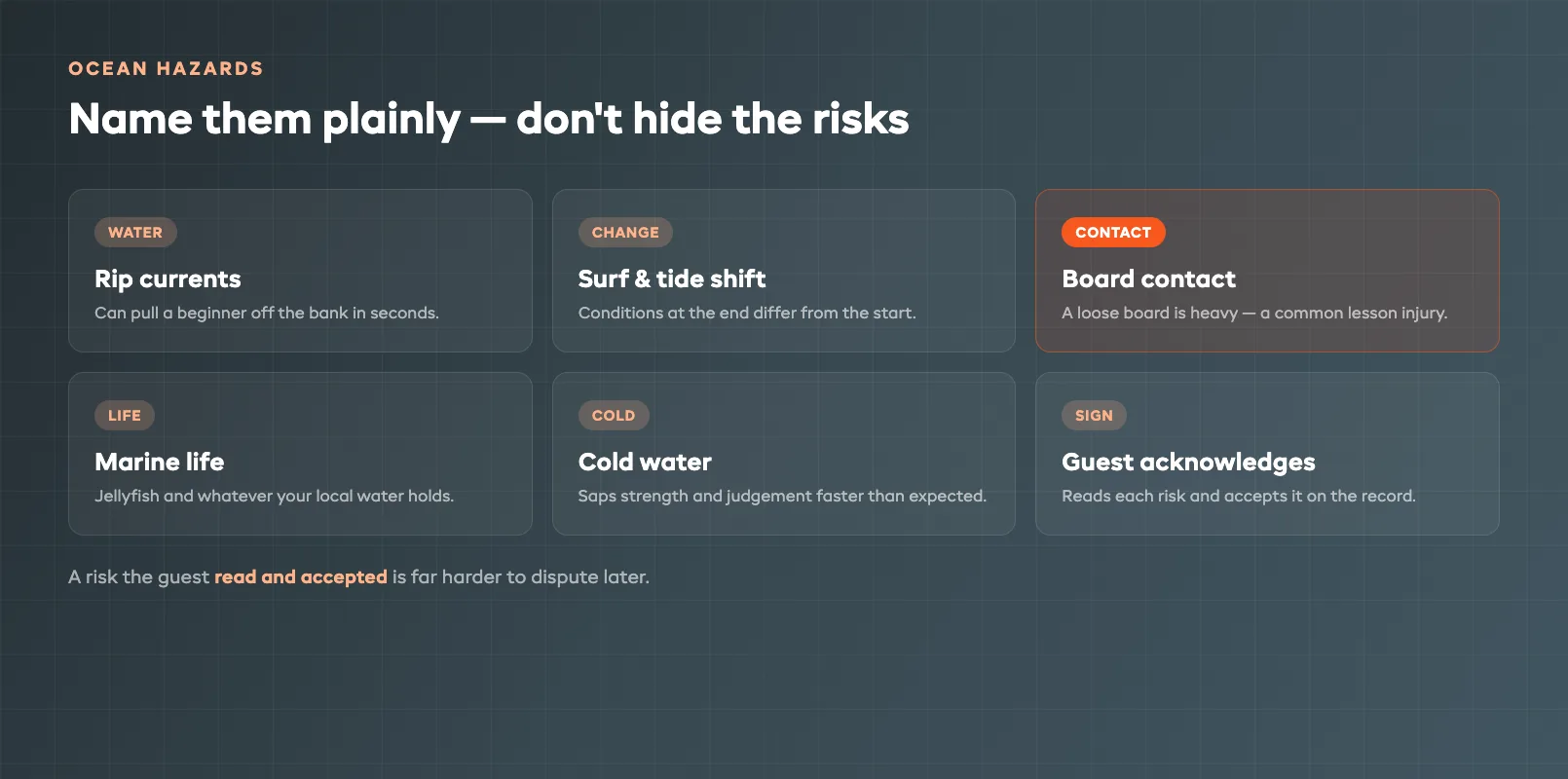
Naming these is not about scaring guests off. It is about honesty and record. A guest who reads that board contact is a known risk and signs anyway has genuinely accepted it. Your surf weather and conditions policy already governs when a lesson runs at all; the waiver covers the risks that remain even on a good day, once you have decided the conditions are safe enough to teach.
Ask about swim ability and medical fitness
The waiver is the natural place to collect two things every instructor needs to know before a guest paddles out: how well they swim, and whether they have any medical condition that matters in the water. Both belong on the form the guest is already signing, not in a separate conversation that gets skipped when the beach is busy.
Ask plainly. Can the guest swim? How confident are they in the ocean, as opposed to a pool? Do they have any medical conditions (heart, epilepsy, recent injury, anything) relevant to hard activity in cold water? This is not box-ticking. It lets your instructors group students sensibly, keep weaker swimmers close and in shallower water, and flag anyone who needs a careful eye before the lesson starts rather than mid-session.
Collecting this at booking, alongside the signature, means the information is in front of your team before anyone arrives. An instructor who knows they have two non-swimmers in a group of six runs that lesson differently, and safely, from one who finds out in the shore break. Pair it with sensible group sizes from your surf instructor scheduling and the disclosure actually changes how the lesson is run.
Capture signatures at booking, not on the beach
The best waiver in the world is no use if it is a stack of damp paper in a milk crate. The way to make waivers actually work is to capture them digitally, at the point of booking, before the guest ever reaches the sand.
A digital signature is valid in most places as long as you can show who signed, what they agreed to, and when. That is exactly what a booking system gives you: the waiver goes out with the confirmation, the guest signs from their phone at home, and the signed form is stored against their booking automatically. Nothing gets lost, nothing is signed in a rush, and your instructors arrive at the beach with a clean list of who is cleared to surf.
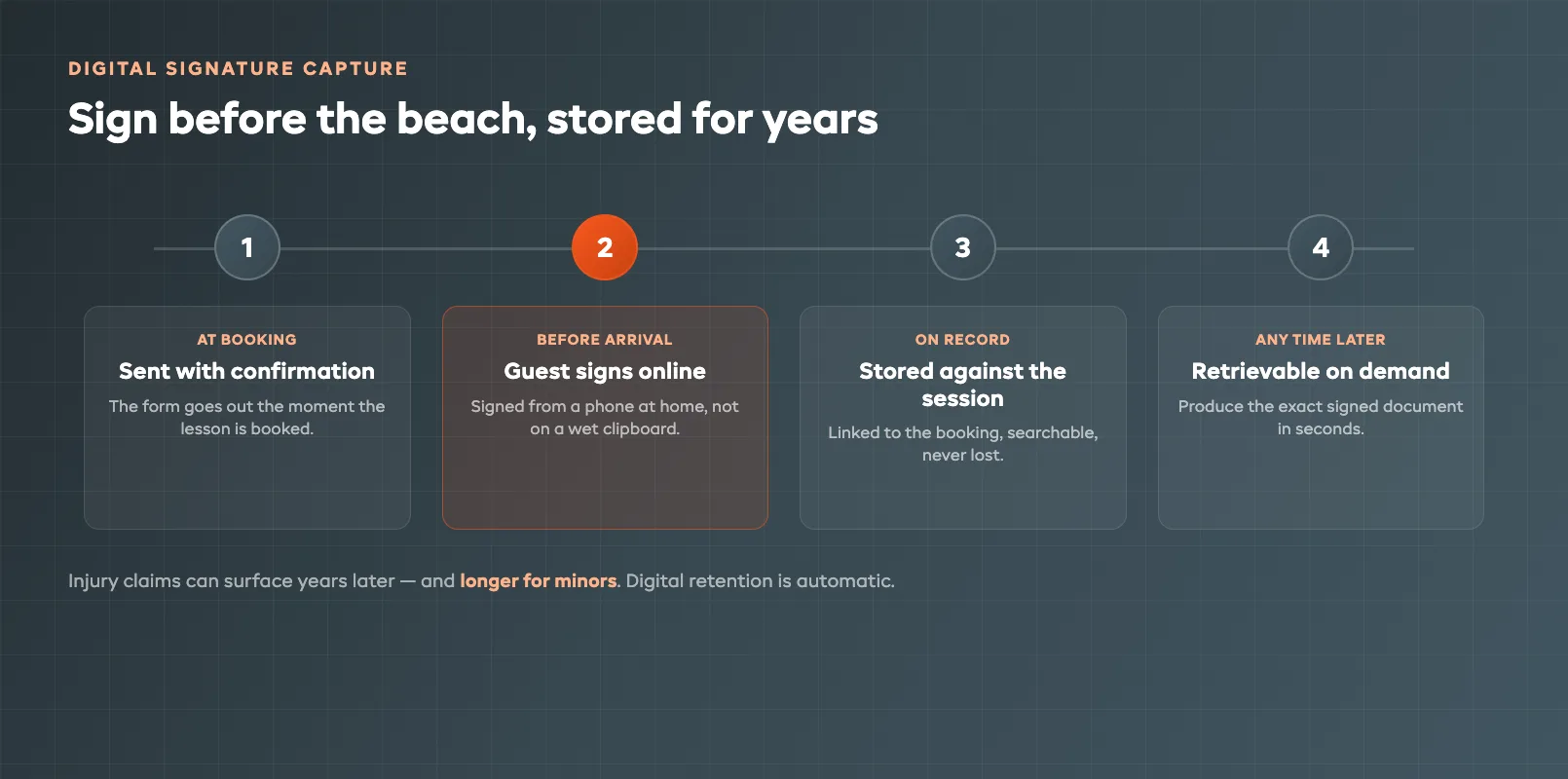
It also solves retention. Injury claims can surface long after the lesson, and for minors the window can run for years, often not starting until the child reaches adulthood. Paper degrades, gets binned, or vanishes. Digital forms sit in the system linked to their session, so keeping them for years is automatic and finding a specific signed document takes seconds instead of an afternoon. The same gear and inventory discipline you apply to surfboard rental management belongs to your records too: if you cannot find it fast, you do not really have it.
Putting it together
A surf waiver is only worth what it documents. Make it plain enough to read, specific enough to name real ocean risks, and signed by the right person, which for children means the parent or legal guardian, in advance, not a grandparent on the beach. Add swim-ability and medical disclosure to the same form so instructors know what they are working with, and capture the whole thing digitally so signatures are collected before arrival and stored for as long as you might need them.
None of this makes you bulletproof, and you should take local legal advice on the exact wording for where you operate. But a clear, honest, well-signed waiver system quietly protects your school on the days everything goes right, and matters enormously on the rare day it does not. To see how the waiver fits the wider business, revisit the surf school and board rental playbook, browse the surf glossary for the terms, or use the surfboard inspection checklist to keep the gear side just as tight. Operators building out the full setup can start from the surf rental and lesson hub.
FAQ
Do surf schools legally need a waiver?
A waiver is not always a legal requirement, but running lessons without one is a serious risk you take on for no good reason. Surfing puts beginners in moving water with a board, other surfers, and conditions that change, and a well-written waiver records that the guest understood and accepted those risks. It will not make you immune to every claim, and courts weigh waivers differently by jurisdiction, but a clear, signed release is one of the strongest pieces of documentation you can have if something goes wrong. Treat it as standard practice for every guest, every lesson, no exceptions.
Can a minor sign a surf lesson waiver?
No. A minor cannot enter a binding legal agreement, so a waiver a child signs themselves carries little weight. The parent or legal guardian has to sign on the child's behalf, accepting the risks and releasing the school for their child specifically. This is where a lot of surf schools have a quiet gap: the child is often brought to the lesson by a grandparent, an older sibling, or a family friend who is not the legal guardian and cannot give consent. Your booking flow should make the guardian sign in advance so the right person accepts the terms before the child is ever in the water.
What should a surf lesson waiver include?
At a minimum it should name the specific risks of surfing and the ocean, state that the guest assumes those risks, release and indemnify the school and its instructors, confirm the guest is medically fit and can swim to a stated level, and grant or decline media consent for photos and video. For anyone under eighteen it also needs a parent or guardian section. Keep the language plain enough that a guest actually reads it, because a waiver full of dense legal boilerplate that nobody understands is easier to challenge than a clear one they demonstrably accepted.
Should a surf waiver ask about swimming ability?
Yes. Swimming confidence is one of the most important things to know before a lesson, and it belongs on the same form you already ask a guest to sign. Ask plainly whether the guest can swim, how confident they are in the ocean, and whether they have any medical conditions relevant to activity in the water. This is not only a safety measure. It lets your instructors group students sensibly, keep a closer eye on weaker swimmers, and decide who stays in waist-deep water. Collecting it at booking means you know before anyone arrives, not after they have paddled out.
Are digital surf waivers valid?
In most places a digital signature is just as valid as a wet-ink one, provided you can show who signed, that they agreed to the specific terms, and when. Digital waivers are usually the better option for a surf school: guests sign from their phone before they arrive, nothing gets lost in a wet clipboard on the beach, and every form is stored and searchable. The key is capturing the signature against a clear copy of the terms and keeping it linked to the right guest and session, so you can produce the exact document someone agreed to if you ever need it.
How long should a surf school keep signed waivers?
Keep them well beyond the day of the lesson. The exact period depends on where you operate and the limitation period for injury claims in your jurisdiction, which can run for years, and longer for minors, where the clock often does not start until the child reaches adulthood. As a practical rule, store every signed waiver for at least several years and keep records for minors for longer. Digital storage makes this painless: forms sit in the system linked to their booking, so retention is automatic and you can retrieve any signed document in seconds instead of digging through a filing cabinet of damp paper.
in one place