Managing Weather and Surf Conditions: A Reschedule-First Policy
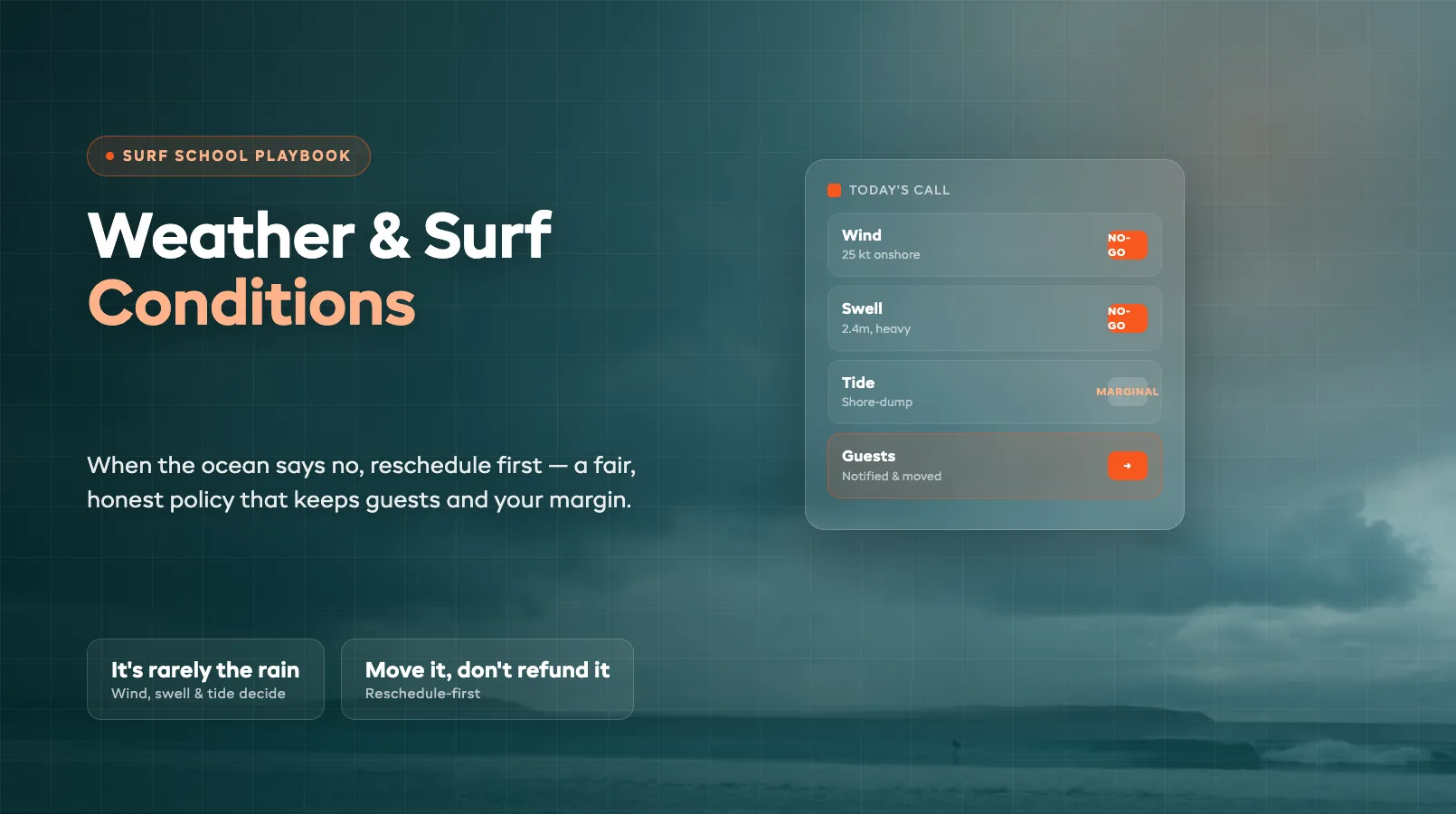
Every surf school lives with the same truth: some days the ocean decides you are not teaching. A gale turns the lineup to washing-machine chop, a swell jumps overhead, or the tide drains the bank you use for beginners. The lesson cannot safely run, and now you have a decision to make — one that either quietly costs you money or keeps your calendar full.
The instinct is to apologize and refund. It feels fair. But a refund on every weather call hands back revenue on days the instructor showed up, the gear was ready, and the only thing that failed was the forecast. A reschedule-first policy solves that: it treats a weather cancellation as a booking that moves, not one that disappears. This guide covers what actually cancels a lesson, when to make the call, and how to write a policy guests happily accept before they ever need it. If you are still building the wider operation, start with the full playbook on how to run a surf school and board rental business.
It is rarely the rain: know what actually cancels a lesson
Beginners assume surf lessons are called off by bad weather. They are not. Rain barely matters — people are getting wet anyway. What cancels a lesson is the state of the water, and that comes down to three things: wind, swell, and tide.
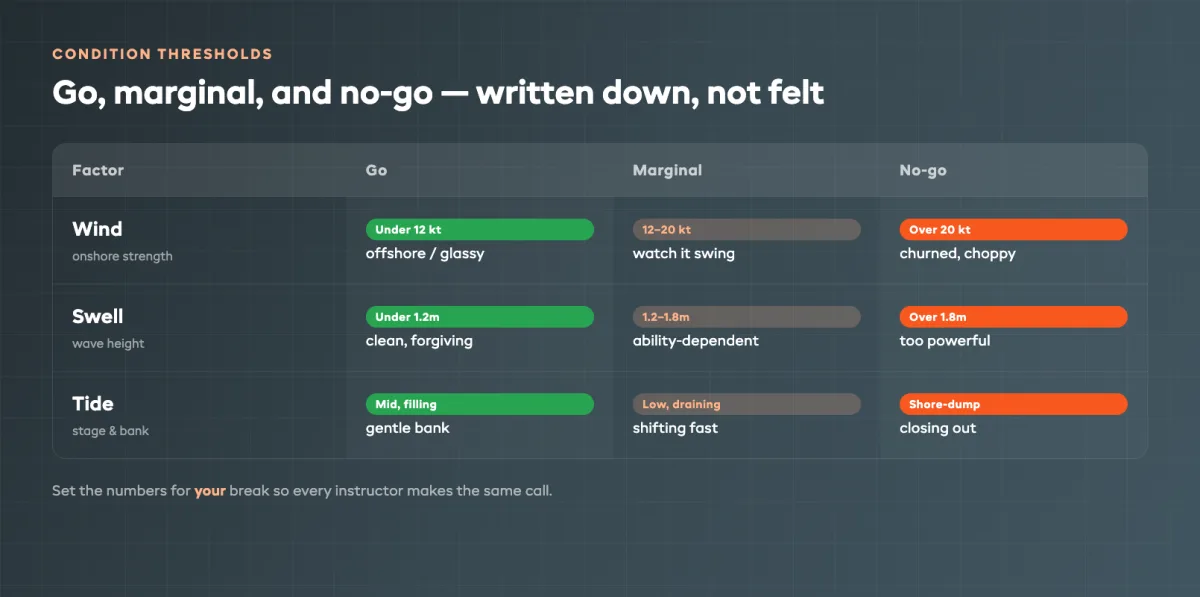
Strong onshore wind is the usual culprit. It churns the surface into choppy, unpredictable slop that is miserable to learn in and hard to teach in. Swell is the next factor — waves that are too big, too powerful, or breaking too hard are unsafe for a first-timer even on a calm, sunny day. Tide ties it together, because the same beach can be a gentle learners' bank at one stage of the tide and a closed-out shore-dump two hours later.
The mistake is leaving all this to a gut feeling on the morning. "It looks rough" means different things to different instructors, and a nervous new coach will cancel days a senior one would happily run. Write down thresholds instead: a wind speed, a wave-height range, and the tide windows that work for your break. That gives you a clear go, marginal, and no-go for any forecast, and it means every member of your team makes the same call.
Decide on a timeline, not a single moment
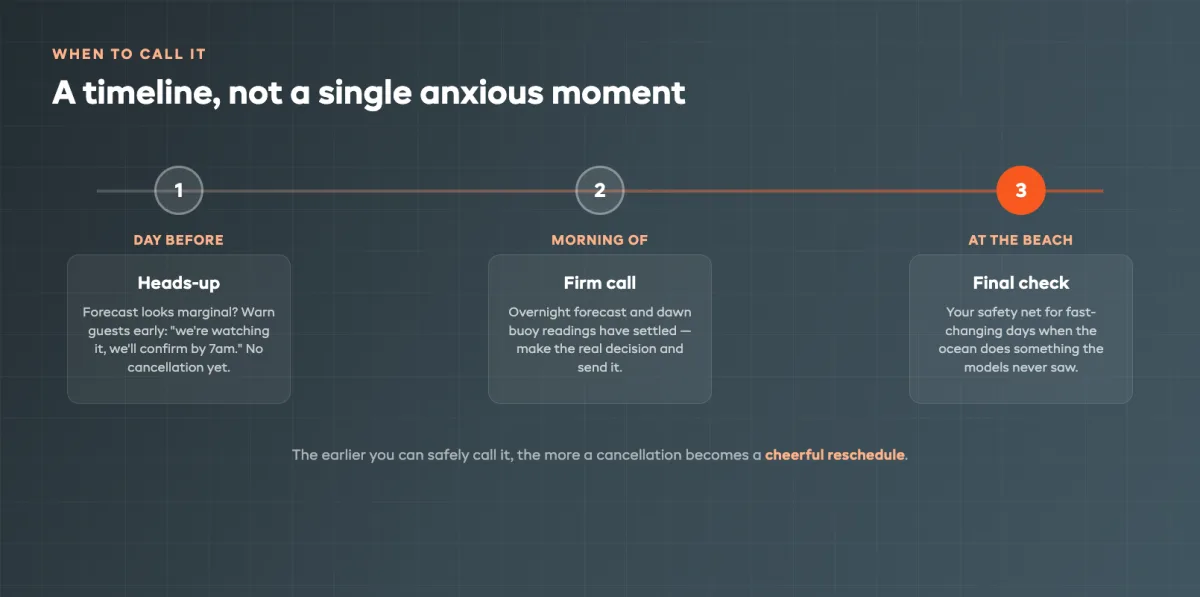
The second question is when you cancel. Leave it too late and guests have already driven an hour with the kids and the wetsuits. Call it too early and you bin a lesson that would have been fine once the wind swung offshore. The fix is to stop treating the decision as one moment and start treating it as a timeline.
Give guests a heads-up the day before when the forecast looks marginal, not a cancellation, just a friendly "we're watching the conditions for tomorrow, we'll confirm by 7am." Make the firm decision on the morning of the lesson, once the overnight forecast and the dawn buoy readings have settled. Then keep a final on-beach check for the fast-changing days when the ocean does something the models never saw coming.
Deciding as early as you safely can is a courtesy your guests remember. It respects their time and travel, and it is the single biggest reason weather cancellations turn into cheerful reschedules instead of one-star reviews. The on-beach check is your safety net, not your default — most calls should be made from the warmth of the forecast, not the cold of the car park.
Reschedule first, credit second, refund last
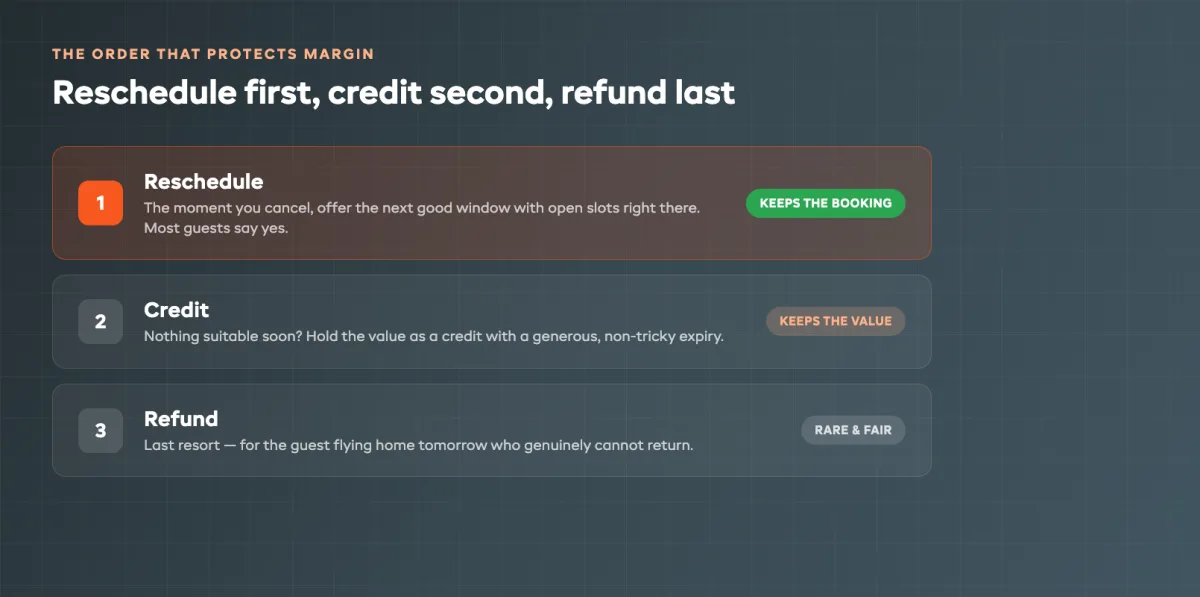
Here is the heart of it. When you cancel for weather, the guest should never be worse off, but that does not mean a reflexive cash refund. Offer options in a clear order, and lead with the one that keeps the booking alive.
Reschedule first. The moment you call a lesson, the message to the guest should be "let's get you booked into the next good window" with the available slots right there. Most people say yes, because they came to surf and you have just made it easy. Credit second: if nothing suitable is coming up soon, hold the value as a credit that does not expire in a fortnight. Give it a generous life so it feels like a genuine hold, not a trick. Refund last, and only for guests who truly cannot return — a visitor flying home tomorrow, say. A grudging refund to someone who would happily have rebooked just gives away margin you never needed to lose.
This order is not about squeezing customers. It is about recognizing that a full session canceled for weather already cost you a committed instructor and prepped gear. Moving the booking keeps that value in the business while still treating the guest fairly. The surf lesson pricing you worked so hard to set only holds up if a weather day does not quietly refund it away.
Write a policy guests accept before they need it
A weather policy only works if guests agreed to it before the weather turned. Spring a reschedule-only rule on someone after you cancel and it feels like a stitch-up. Show it upfront and it feels like common sense.
Keep the wording short and honest. Say plainly that lessons depend on safe conditions, that you will always try to give as much notice as possible, and that a weather cancellation means a reschedule or credit rather than an automatic cash refund. Put it on the booking page, repeat it in the confirmation email, and let your surf lesson booking software show and store the terms so the whole agreement is in one place. A guest who read the policy while booking almost never argues it later.
Deposits are what make this hold together. Take a deposit or full payment when the lesson is booked, and be crystal clear that guests never lose it to your weather call. It carries to the new slot or becomes a credit. That upfront payment is also your best defense against ordinary no-shows, which is a different problem the same booking discipline solves. Managing seasonal demand and staffing around all this is easier when your surf camp operations and lesson calendar sit in one system.
Communicate the call without spending your morning on the phone
The last piece is delivery. You have set thresholds, agreed a timeline, and written a fair policy, and then a bad forecast lands and you are facing forty phone numbers at six in the morning. That is where good communication turns a stressful call into a routine one.
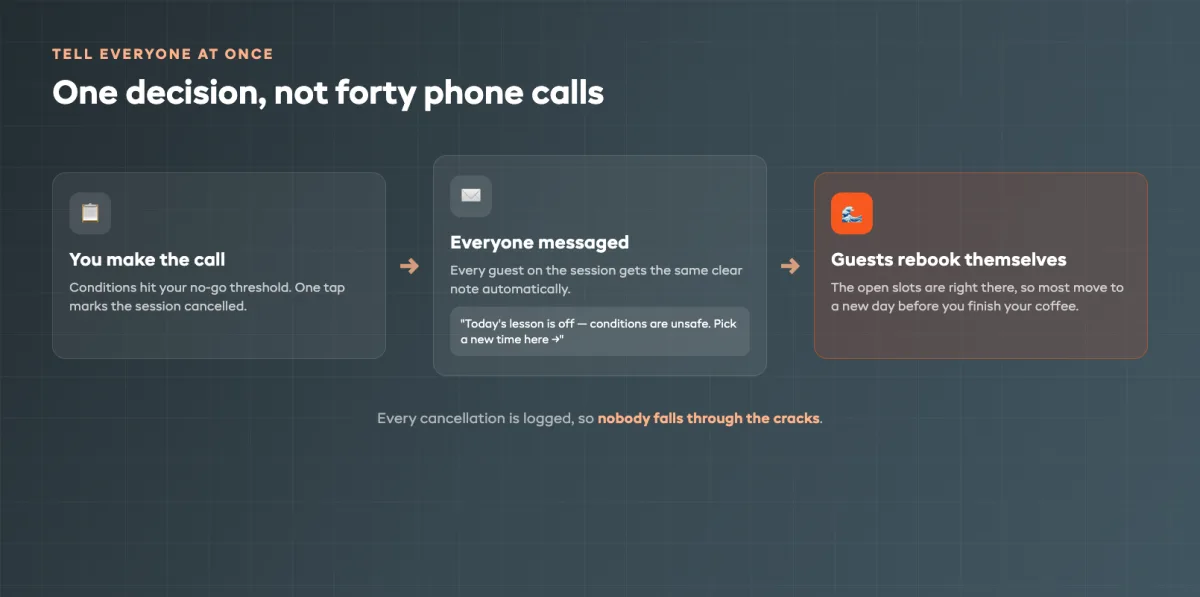
The moment you make the decision, every guest on the affected session should get the same clear message: conditions are unsafe, here is why, and here is the link to pick a new time. Handling that by hand is slow and easy to fumble when you are also checking the buoys and wrangling instructors. Booking software sends it in one action, logs every cancellation, and lets guests rebook themselves from the slots you have open — often before you have finished your coffee. A weather-alert Dash Agent can even watch the forecast and flag marginal sessions before you have to.
Automating the message does something subtle, too. Because the reschedule link is right there, most guests act on it immediately, while the disappointment is small and the next good day is visible. A cancellation you communicate well is not a lost booking. It is a booking that simply changed date. Keeping your instructor scheduling and board and wetsuit fleet linked to the same calendar means those moved bookings slot back in without a second scramble.
Putting it together
Weather will always be the part of a surf school you cannot control. The part you can control is what happens next. Set honest thresholds for wind, swell, and tide so every call is consistent. Decide on a timeline so guests get the earliest warning you can safely give. Lead every cancellation with a reschedule, fall back to a credit, and keep refunds for the rare guest who cannot return. Publish the policy upfront and back it with a deposit, then automate the message so a bad forecast costs you minutes, not your margin.
Do that, and a blown-out morning stops being a loss. It becomes a booking that moved to a better day, with a guest who trusts you more for how you handled it. For the full picture on running the business around the weather, see the guide on how to run a surf school and board rental business, the surf glossary for the terms, and the surf hub for how it all fits together. A simple surfboard inspection checklist keeps the gear side just as tidy as the calendar.
FAQ
Should I refund or reschedule a surf lesson canceled for weather?
Reschedule first. When you cancel for wind, swell, or an unsafe forecast, the fairest and most profitable response is to move the guest to the next suitable slot rather than hand back cash. A reschedule keeps the revenue, keeps the relationship, and recognizes that the instructor and gear were ready to go. Offer a non-expiring credit as the second option and a full refund only as a last resort for guests who genuinely cannot return, and publish that order clearly so nobody is surprised.
What conditions should cancel a surf lesson?
It is rarely the rain. Beginner surf lessons are usually called off by strong onshore wind that churns the water, a swell that is too big or too powerful for the ability level, or a dangerous combination of tide and current. Set clear thresholds in advance (a wind speed, a wave height, and tide windows) that mark a lesson as a clear go, a marginal call, or a no-go. That turns a subjective "it looks rough" into a consistent decision your whole team makes the same way.
When should I decide to cancel a surf lesson for weather?
Use a timeline rather than a single moment. Give guests a heads-up the day before if the forecast looks marginal, make the firm call on the morning of the lesson once the overnight forecast has settled, and keep a final on-beach check for conditions that change fast. Deciding early where you can respects your guests' time and travel, while the on-beach check covers the days when the ocean does something the forecast did not predict.
How do I write a surf lesson weather policy guests will accept?
Keep it short, honest, and visible at booking. State plainly that lessons depend on safe conditions, that a weather cancellation means a reschedule or credit rather than an automatic cash refund, and how far ahead you will let them know. Show it on the booking page and in the confirmation email so guests agree to it before they pay, not after a cancellation. A policy people saw upfront almost never becomes an argument later.
Can I take a deposit if surf lessons get canceled for weather?
Yes, and you should. A deposit or full upfront payment is what makes a reschedule-first policy work, because the money stays with you and simply moves to the new booking rather than being refunded and re-collected. The key is fairness: a guest never loses their deposit when you are the one who cancels for weather. It carries to the rescheduled lesson or becomes a credit. Deposits protect you from no-shows, not from your own weather calls.
How can I tell guests about a weather cancellation without spending my morning on the phone?
Automate it. Booking software can message every guest on an affected session the moment you make the call, explain that conditions are unsafe, and give them a link to pick a new slot themselves. That turns a stack of phone calls at 6am into a single decision, and most guests rebook straight away because the next available time is right in front of them. It also keeps every cancellation on record, so nobody falls through the cracks.
in one place