Group Bookings, School Visits, and Corporate Events: Operator Playbook
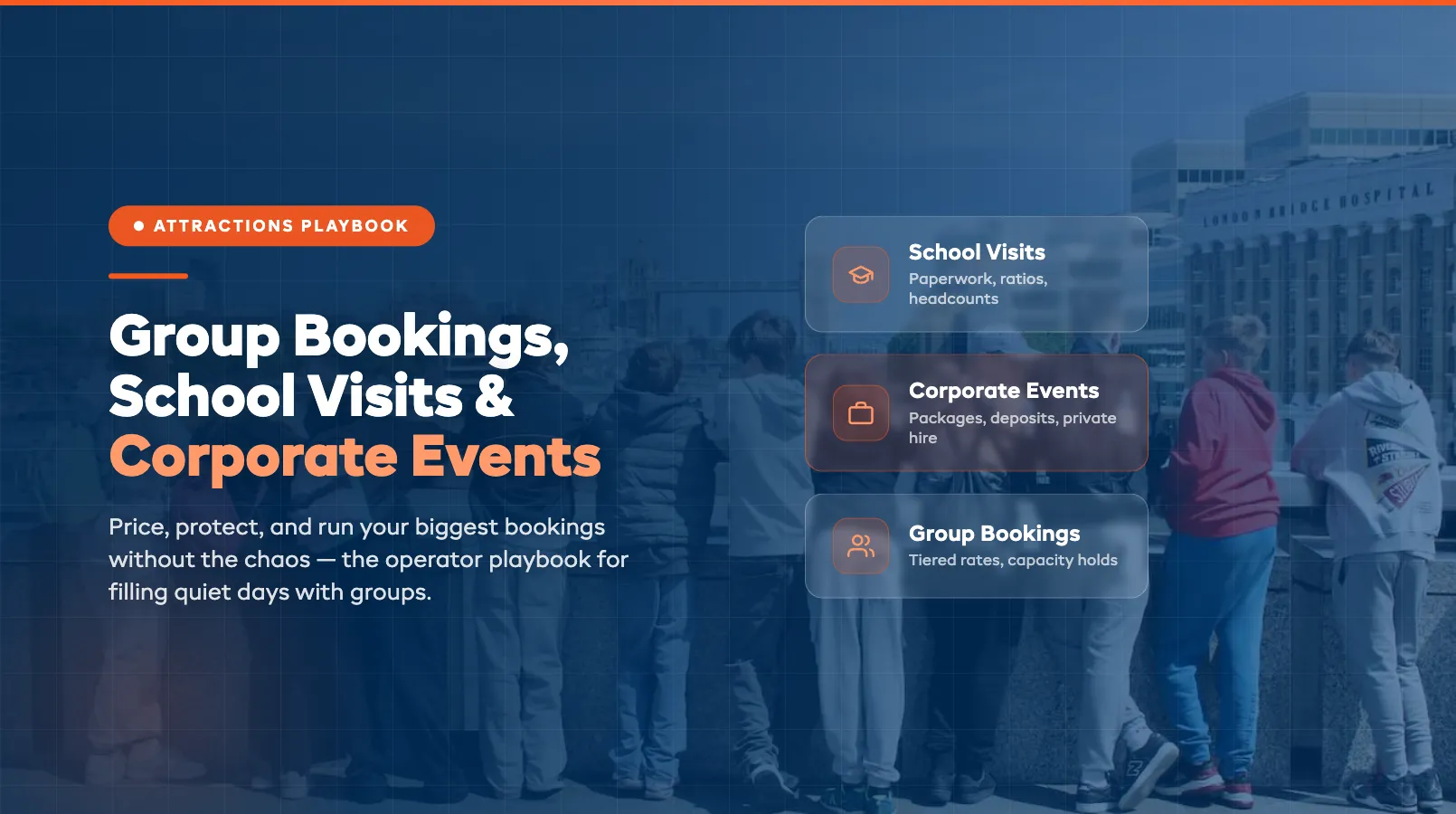
Groups are the best revenue line most attractions under-manage. A single school booking can fill a quiet Tuesday morning. A corporate away-day can be worth thirty walk-up tickets and book months ahead. But groups also break the systems that work fine for solo guests: they need quotes, deposits, special pricing, dietary notes, risk paperwork, and a point of contact who answers the phone. Handle them like one big walk-up and you'll lose the booking — or worse, win it and then fall over on the day. This playbook covers the three group types every attraction sees most — school visits, corporate events, and general group bookings — and how to price, protect, and run each one without the chaos. It sits under our complete guide to running a ticketed attraction; read that first if you're building your operation from scratch.
Build a Group Pricing Structure That Holds
Walk-up pricing falls apart the moment a coach of forty arrives. Groups expect a discount, and you should want to give one — they book ahead, fill quiet slots, and cost less per head to serve. The trick is making the discount deliberate, not a negotiation you lose every time.
Set a minimum group size. Most attractions start group rates at 10 or 15 paying guests. Below that, standard pricing applies. A clear threshold stops every family of six asking for the group rate.
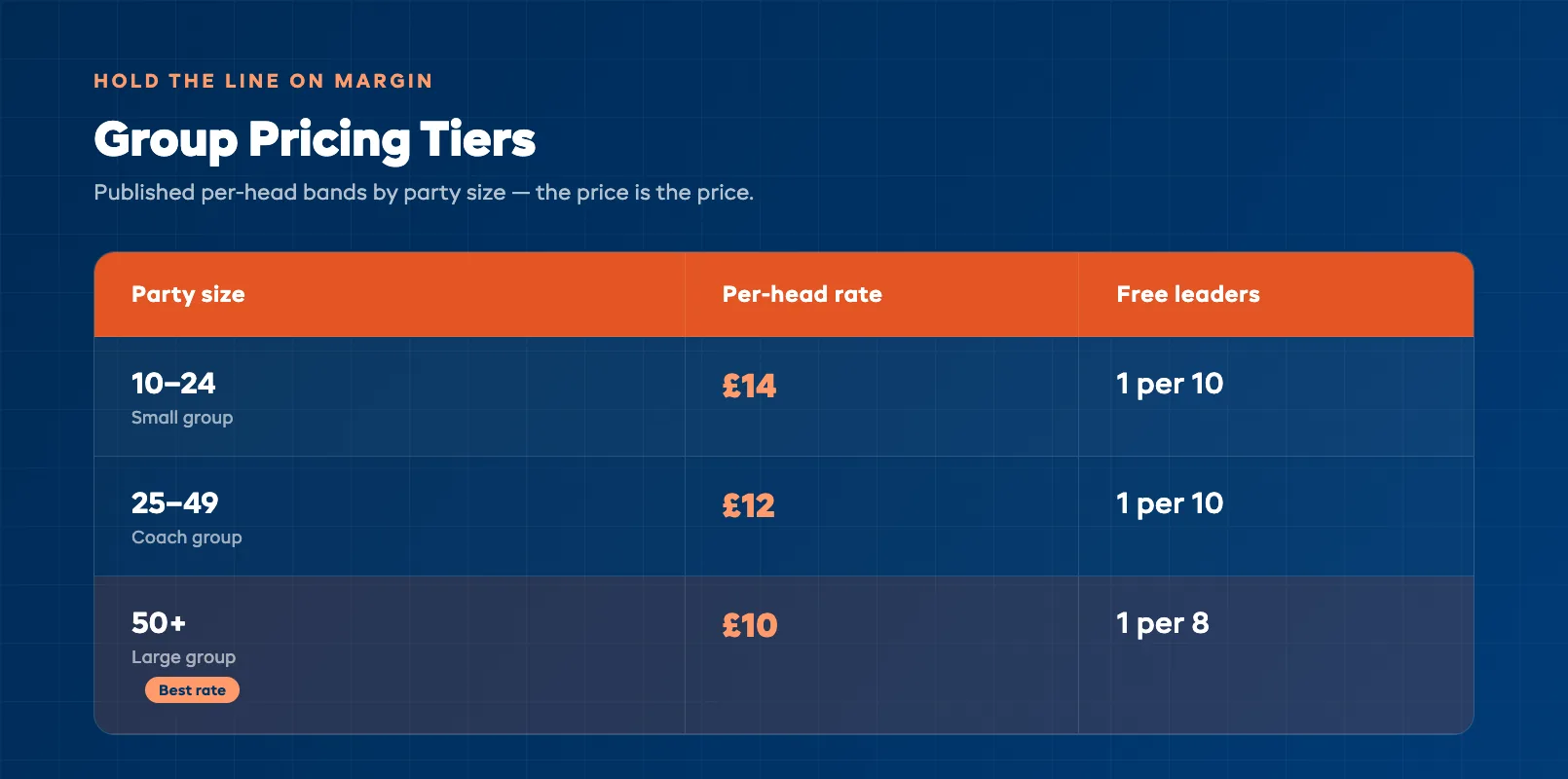
Tier the discount by size, not by mood. A published table — 10–24 guests at one rate, 25–49 at a better one, 50+ at your best — means the price is the price. Your booking staff stop improvising and your margin stops leaking.
Price the leaders separately. Teachers, coach drivers, and corporate organizers usually come free or heavily discounted. Decide the ratio in advance — one free adult per ten students is common — and bake it into the quote so it's never a surprise.
Print the structure, put it on your group-booking page, and hold the line. The operators who lose money on groups are almost always the ones negotiating each booking from scratch.
Run School Visits to a Tight Protocol
School visits are high-volume, high-trust, and high-scrutiny. Get them right and a single teacher rebooks every year and tells the staff room. Get them wrong and you've got fifty over-excited children and an under-briefed teacher in your busiest gallery.
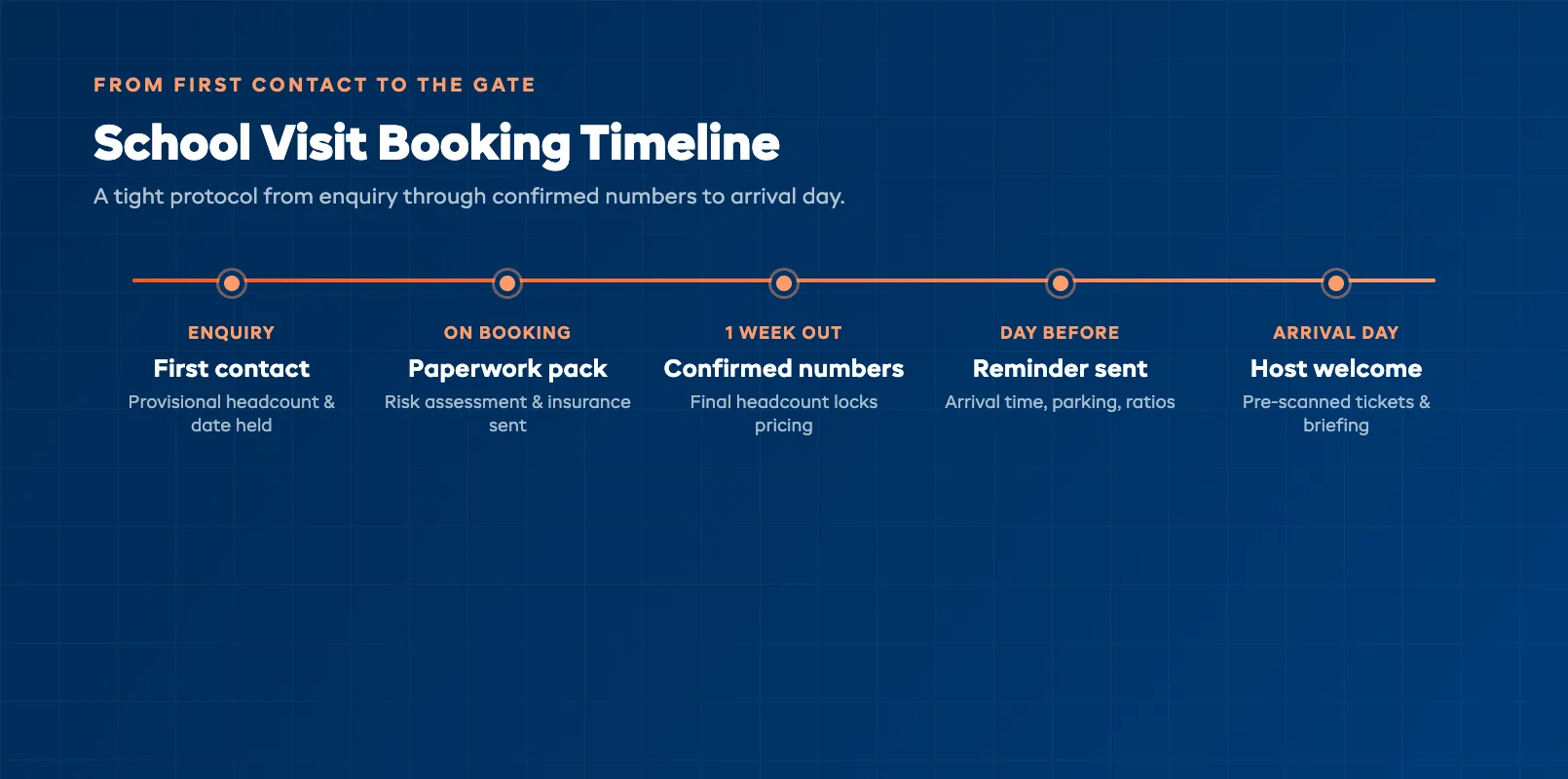
Lock the paperwork early. Schools need a risk assessment document, public liability insurance details, and often a pre-visit checklist for the lead teacher. Have these ready as a downloadable pack so the teacher can clear it with their head and their council weeks ahead.
Confirm the real headcount. School numbers move — a class drops out, a year group joins. Take a provisional number at booking and a confirmed number a week before, with your cancellation terms tied to the confirmed figure, not the optimistic one.
Brief for supervision ratios. Decide and state your required adult-to-child ratio (commonly 1:6 for under-eights, 1:10 above). Put it in the booking confirmation so the school arrives with enough supervisors and you're not policing it at the gate.
A documented group and school booking briefing keeps every visit running the same way, whoever's on shift. The first time a coach arrives twenty minutes early with a headcount that doesn't match the booking, you'll be glad the protocol is written down rather than improvised.
Package Corporate Events Properly
Corporate bookings are where attractions leave the most money on the table. A company isn't buying tickets — it's buying a solved afternoon. Sell them a price-per-head and you've undercharged for the value; sell them a package and you've built a premium product.
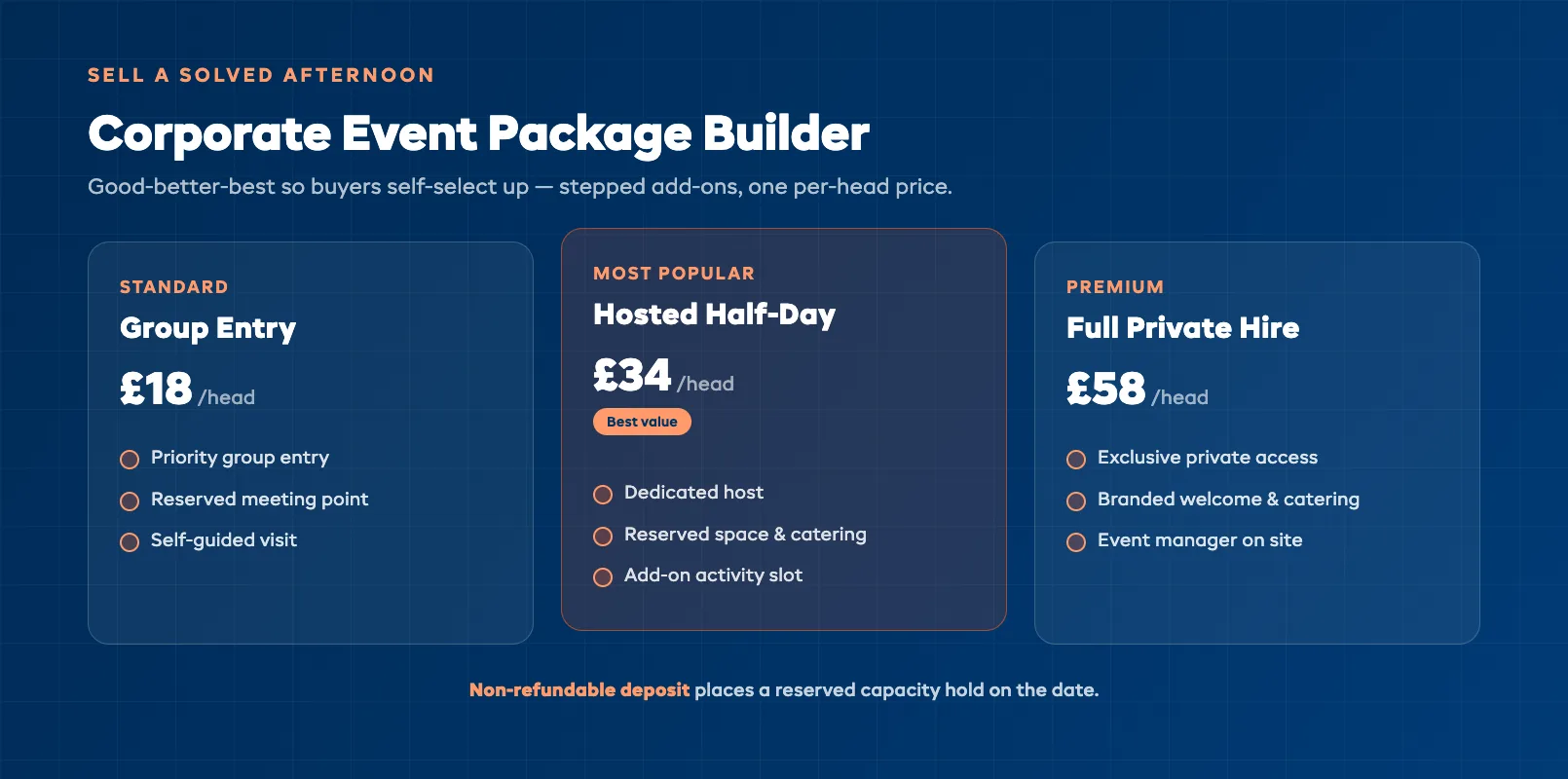
Bundle, don't itemise. A corporate package might combine private or priority entry, a reserved space, catering, a host, and a branded touch. Quote one per-head figure for the whole experience rather than a shopping list the buyer can pick apart.
Tier the offer. A simple good-better-best — standard group entry, a hosted half-day, a full private hire — lets the buyer self-select up. Most will choose the middle option, which is exactly where you want your margin.
Protect the date with a deposit. Corporate events block capacity you can't resell at the last minute. A non-refundable deposit and a signed agreement turn a soft "we're thinking about it" into a real booking you can plan staff around.
The teams that win corporate work treat it as a product with a clear spec, not a custom quote every time. Build two or three packages, price them once, and let the buyer choose.
Protect Your Capacity When Groups Book
A group booking is a big block of your day committed in one transaction — which is exactly why it can wreck your capacity plan if it isn't handled inside the same system as everything else. Forty students arriving at 10:30 don't just fill forty tickets; they fill a slot, a pinch point, and your staff's attention.
Hold group bookings against the same live capacity count as your timed-entry tickets. If a school takes the 10:30 window, that window's remaining inventory should drop for walk-ups and online buyers automatically — not sit in a separate spreadsheet that nobody reconciles until the gate is jammed. This is the single most common way attractions end up over comfortable capacity without realizing it. Our capacity management guide covers the full timed-entry model that group bookings have to plug into, and our guide to OTA distribution shows how third-party channels fit around the direct group business you protect.
Steer groups toward the slots you most want filled. A school visit is far more valuable on a quiet Wednesday than on a packed Saturday, so price and pitch your group availability to pull demand into the troughs. Done well, groups become the tool that flattens your week instead of the thing that overloads your peak.
Staff a Group Day Differently
A day with three school groups and a corporate booking is not a normal day, and staffing it like one is how good attractions get bad reviews. Groups need dedicated hands.
Assign a group host. Every booking over a certain size gets one named staff member who meets them, runs the briefing, and stays their point of contact. Guests forgive almost anything if one person clearly owns their visit.
Pre-brief the whole team. The morning huddle should name every group on the books that day — who, when, how many, any access needs or allergies. A team that knows a coach of fifty lands at eleven behaves completely differently from one ambushed by it.
Staff the pinch points. Groups clot at entry, toilets, the café, and the gift shop far harder than solo guests. Put extra people exactly there on group-heavy days, and stagger group arrivals so two coaches don't hit the entrance at once.
Match the roster to the bookings, not to a generic template, and a heavy group day runs as smoothly as a quiet one — just with more revenue in the till.
Get the Day-of Operations Right
Everything you've priced, protected, and rostered comes down to the first fifteen minutes when the group actually arrives. Nail the welcome and the rest of the visit looks after itself.
Confirm before they travel. An automated reminder the day before — arrival time, what's included, where the coach parks, who to ask for — heads off most day-of confusion before it starts. A group booking confirmation agent can send and chase these automatically so nobody on your team is manually emailing teachers at 7am.
Have the welcome ready. Tickets pre-printed or pre-scanned, the host at the door, the briefing rehearsed. A group that's standing and waiting is a group that's getting restless — and forty restless people are loud.
Separate the money from the moment. Settle payment, deposits, and any balance before or after the visit, never at the gate while forty people queue behind. The arrival is for welcoming, not invoicing.
Run the day-of from a single checklist and a single live booking view and group days stop being the ones staff dread. For the full operating picture around groups — capacity, pricing, staffing, and the tech that ties them together — see the attractions operator hub and keep the attractions glossary handy for the shared definitions.
FAQ
What is the minimum group size for attraction group bookings?
Most attractions set their group-rate minimum at 10 or 15 paying guests. Below that threshold, standard walk-up pricing applies. Setting a clear minimum stops every small family asking for the discounted rate and makes your group pricing predictable. Publish the threshold on your group-booking page so it's never a negotiation — the price is simply the price once a party crosses the line.
How should I price group bookings at my attraction?
Use a published, tiered structure rather than negotiating each booking. A common approach is one rate for 10–24 guests, a better rate for 25–49, and your best rate for 50 or more. Decide your free-leader ratio in advance — often one free adult per ten students or guests — and build it into the quote. A fixed table protects your margin and stops booking staff improvising discounts on the phone.
What paperwork do schools need before a visit?
Schools typically need a risk assessment document, your public liability insurance details, and often a pre-visit checklist for the lead teacher. Provide these as a downloadable pack so the teacher can clear the trip with their head teacher and local authority weeks ahead. You should also confirm supervision ratios — commonly 1:6 for under-eights and 1:10 above — in the booking confirmation so the school arrives with enough adults.
How do I sell corporate events at an attraction?
Sell a package, not a price-per-head. Bundle private or priority entry, a reserved space, catering, and a host into a single per-person figure, and offer a good-better-best tier so buyers self-select upward. Protect the date with a non-refundable deposit and a signed agreement, because a corporate booking blocks capacity you can't easily resell at short notice. Treating corporate work as a defined product rather than a custom quote wins more bookings at a better margin.
How do group bookings affect my attraction's capacity?
A group booking commits a large block of a single time slot in one transaction, so it has to be held against the same live capacity count as your timed-entry and walk-up tickets. If a school takes your 10:30 window, that slot's remaining inventory should drop automatically for everyone else — not sit in a separate spreadsheet. Keeping group bookings inside one capacity system is the main way attractions avoid quietly exceeding comfortable capacity on busy days.
How should I staff a day with several group bookings?
Staff a group-heavy day differently from a normal one. Assign a named host to every large booking to run the briefing and stay the group's point of contact, pre-brief the whole team in the morning huddle on who's arriving and when, and put extra people at pinch points like entry, toilets, and the café. Stagger group arrival times so two coaches don't hit the entrance at once, and match your roster to the day's actual bookings rather than a generic template.
in one place