Equipment Rental Pricing Strategy: How to Price for Profit
Most rental shops set prices by copying the shop down the road and rounding to a nice number. It feels safe, but it is guesswork. You end up with rates that either leave money on the table or quietly lose you money on every booking once you count the gear that wears out and the hours you spend on the counter.
Pricing for profit is not complicated. You need to know what each unit costs you, how long it takes to earn that back, and how much your busy weeks can carry your quiet ones. This guide walks through a simple formula, the rate structures that work, and how to run the whole thing without a spreadsheet you dread updating.
The Rental Pricing Formula
Start with the unit, not the market. Every price should cover four things: the cost of the gear spread over its life, the cost of keeping it rentable, your overheads, and a margin on top. Skip any one of them and the shop looks profitable right up until you need to replace a fleet.
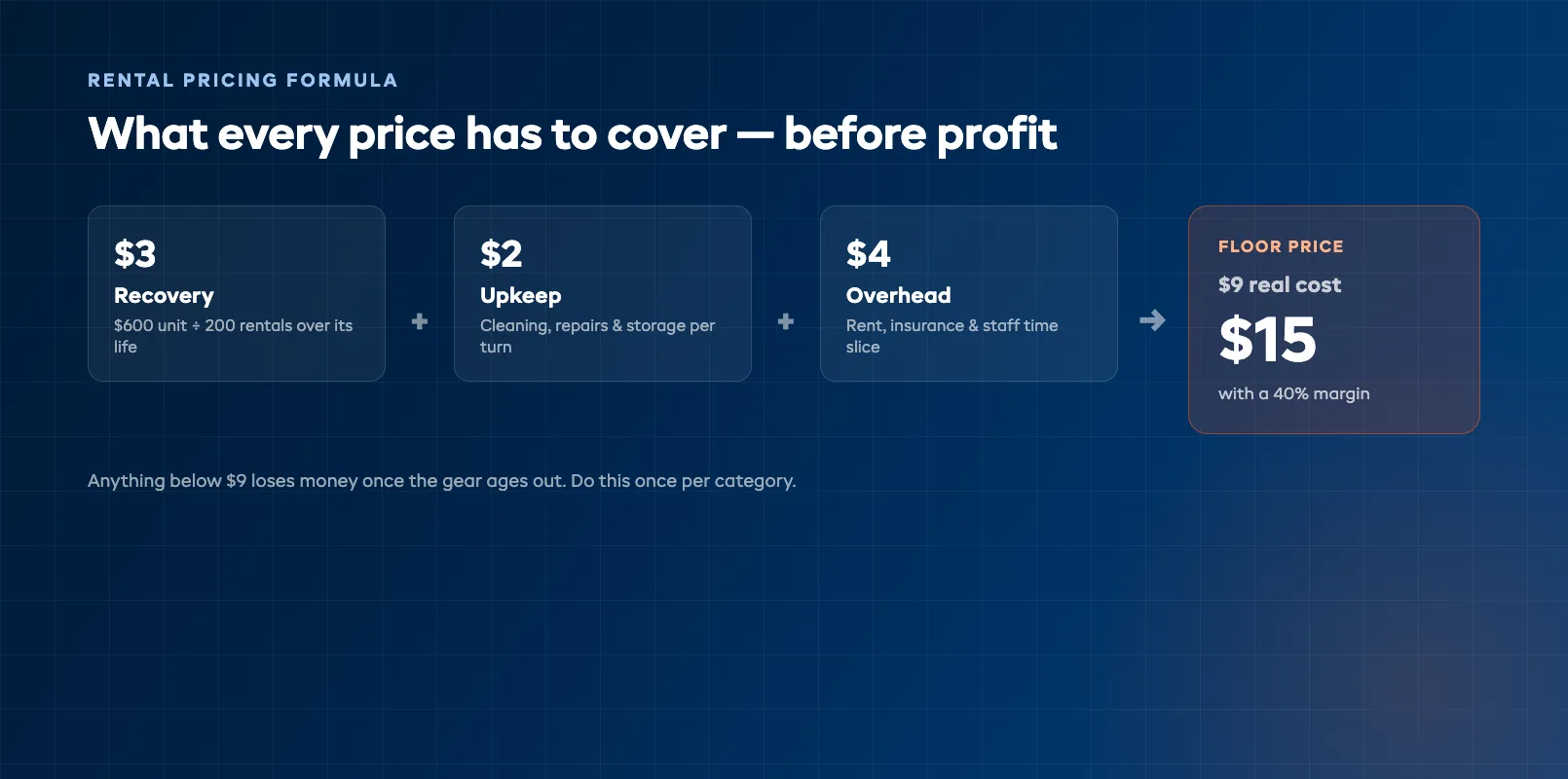
Here is the plain version. Take what a unit cost you and divide it by the number of rentals you realistically expect over its life. That gives you the recovery cost per rental. A $600 paddleboard you expect to rent 200 times before it retires needs to earn $3 per rental just to pay for itself. Add cleaning, repairs, and storage per turn — say another $2. Add a slice of rent, insurance, and staff time — maybe $4. Now you are at $9 in real cost before a cent of profit.
If you want a 40% margin, that unit rents for around $15 at the floor. Anything below $9 loses money once the gear ages out. The point is not the exact figures, it is that you now have a number you can defend instead of a guess. Do this once per category and you will spot the units that are secretly unprofitable.
Hourly vs Daily vs Weekly
The rate structure you choose should match how customers actually use the gear and push them toward the bookings that earn you the most per unit of downtime.
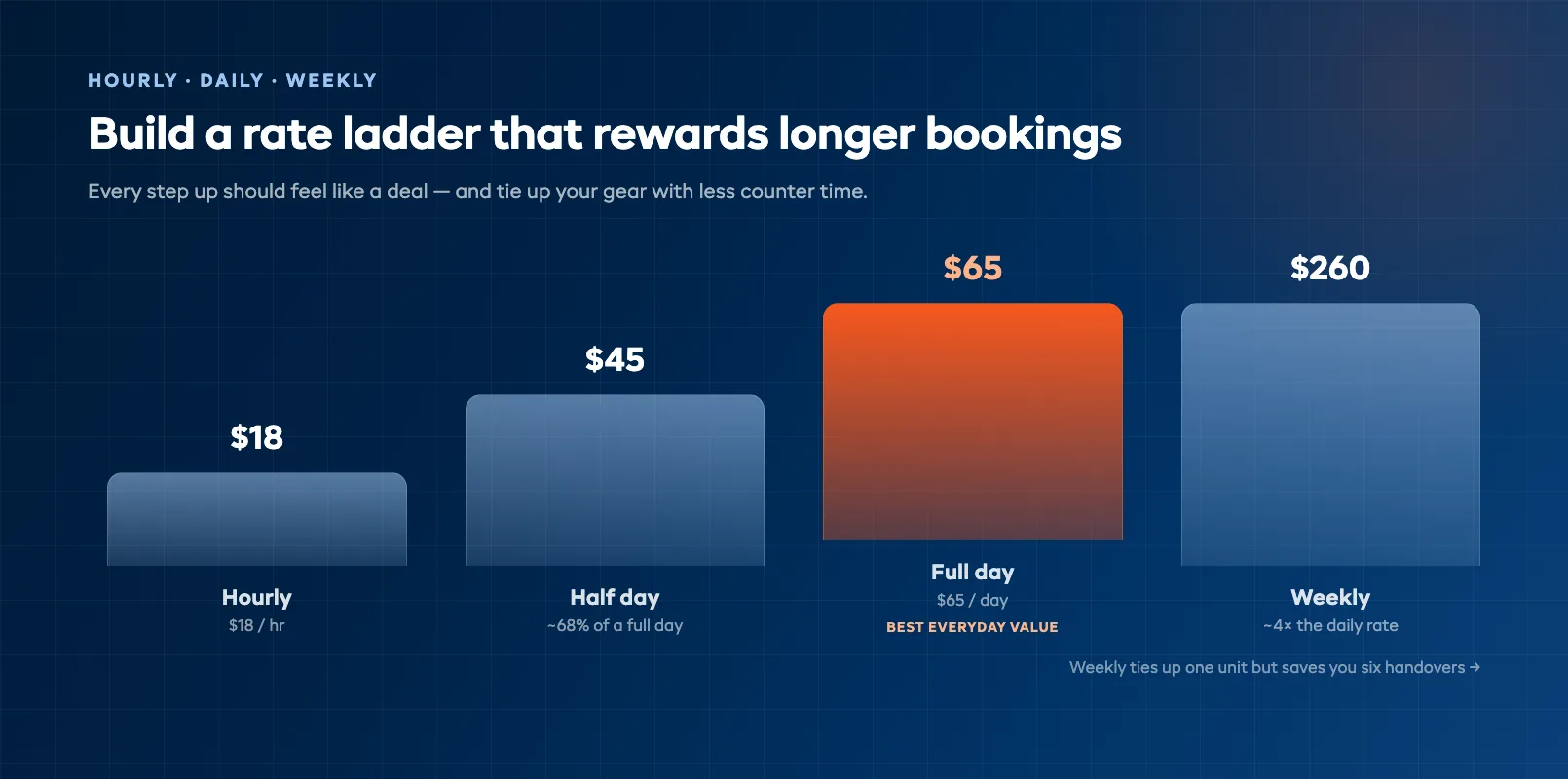
Hourly rates suit gear with high turnover and short use windows — kayaks, bikes, and lawn tools. They fill gaps and capture walk-ins, but they mean more handovers, more cleaning, and more counter time per dollar. Price hourly high enough that a full day is clearly better value.
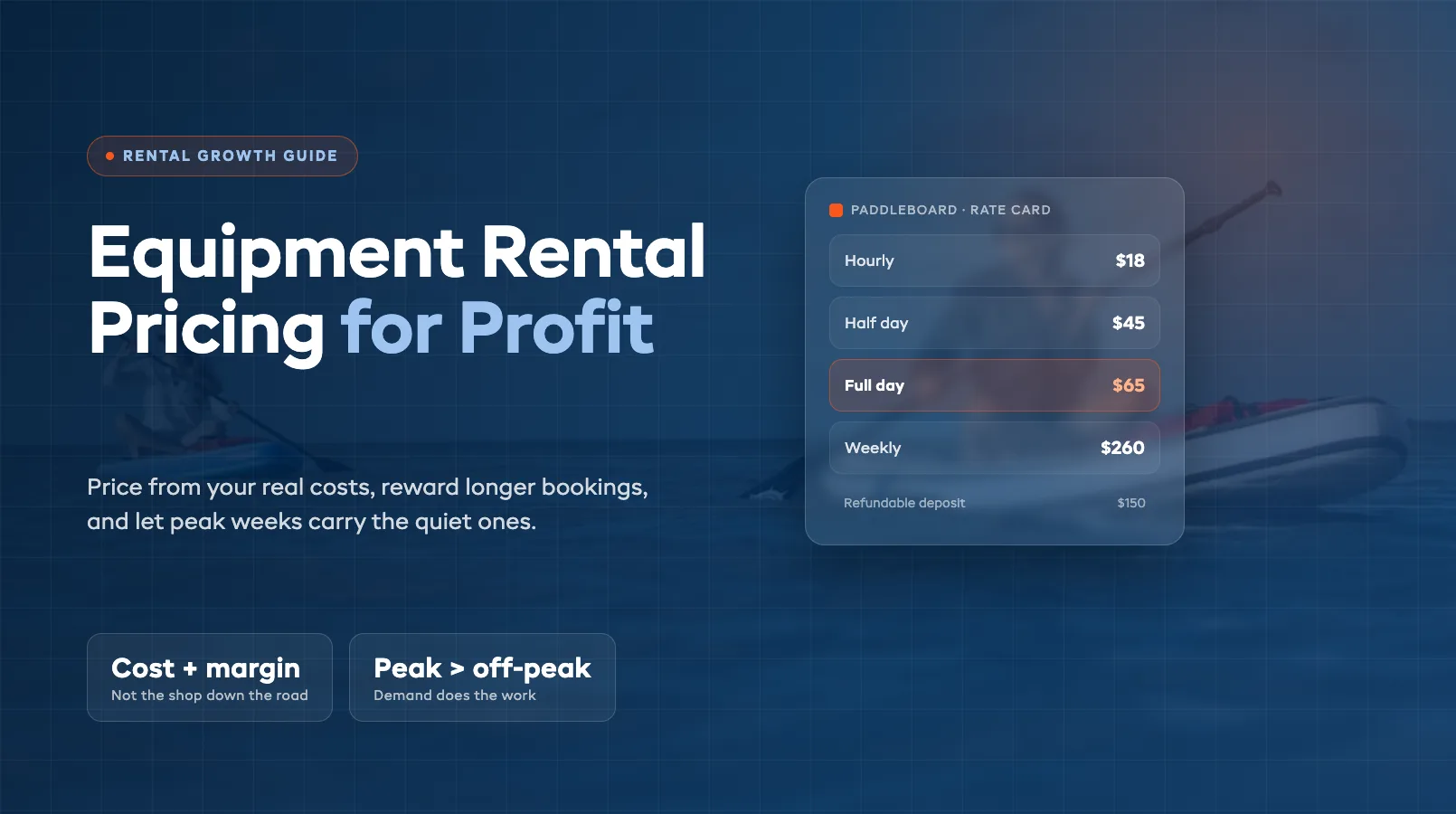
Daily rates are the backbone for most shops. Set the daily rate, then build the ladder from there. A half day should be roughly 60 to 70% of a full day, so buying the whole day feels smart. Weekly rates usually land around four to five times the daily rate, not seven — the discount rewards a longer, hands-off booking that ties up one unit but saves you six handovers. Multi-day and weekly bookings are your friend: less labor, less wear per dollar, and predictable use. Structure the ladder so every step up looks like a deal.
Seasonal and Dynamic Pricing
A flat rate all year means you undercharge in peak weeks and overcharge in the dead ones. Your busy season has to carry the quiet season, and the only way it can is if peak prices are genuinely higher.
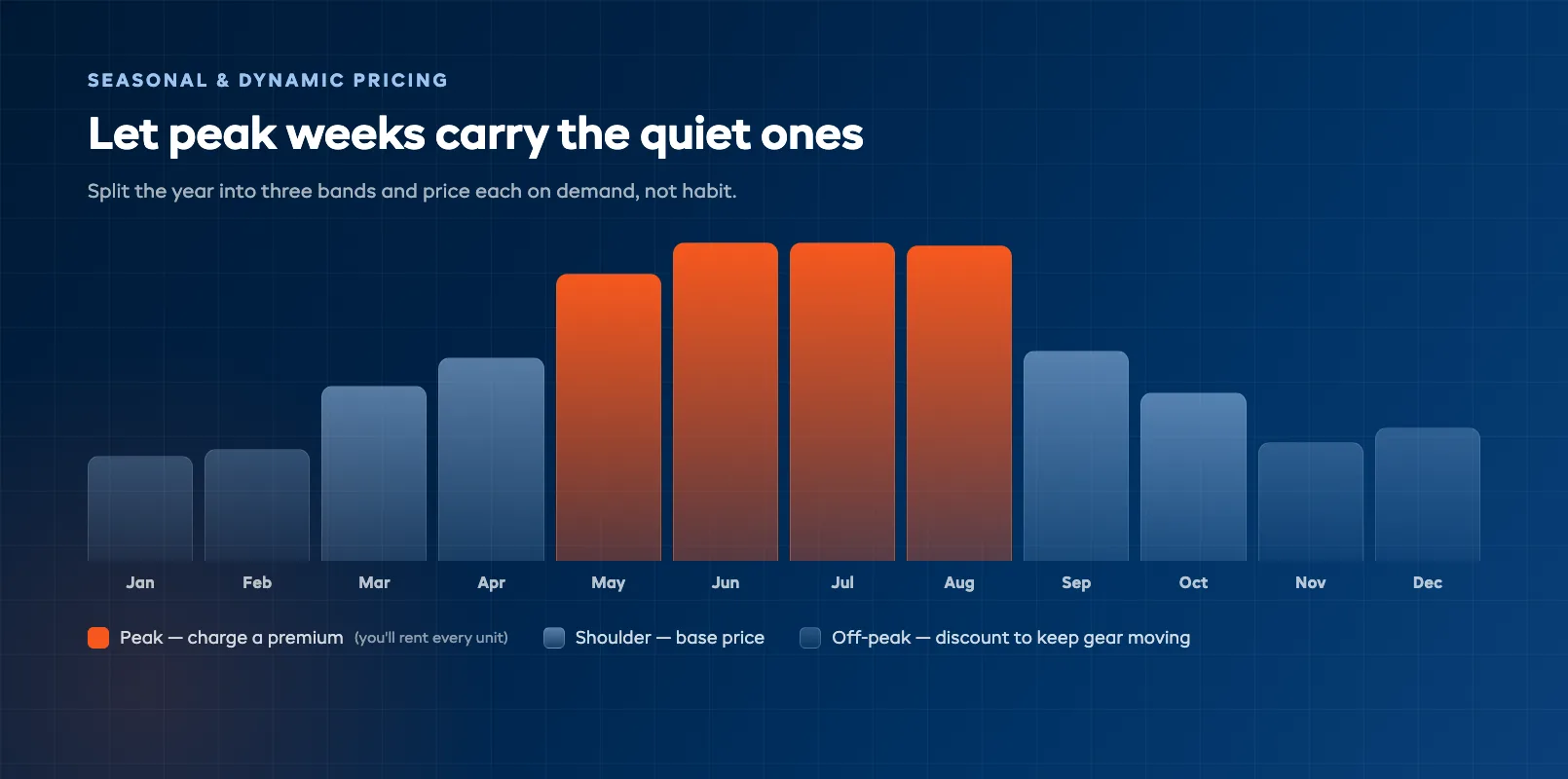
Split your year into three bands: peak, shoulder, and off-peak. Peak is when demand outstrips your fleet — school holidays, long weekends, the first warm week. Charge a premium then, because you will rent every unit regardless. Off-peak is when units sit idle; a lower rate that gets gear out the door beats a high rate that keeps it on the rack. Shoulder sits in between.
Dynamic pricing takes this further by nudging rates on demand signals — a heatwave forecast, a fully booked Saturday, a competitor selling out. You do not need airline-style algorithms. A few rules go a long way: lift rates 10 to 15% when you are past 80% booked for a day, and run a modest off-peak discount to smooth the quiet midweek slumps. The goal is simple — earn more when demand is high and keep gear moving when it is not.
Deposits, Waivers, and Insurance
Your rate is the revenue; deposits and waivers are the protection. Price them as part of the strategy, not an afterthought, because damage and no-shows quietly eat the margin you worked out above.
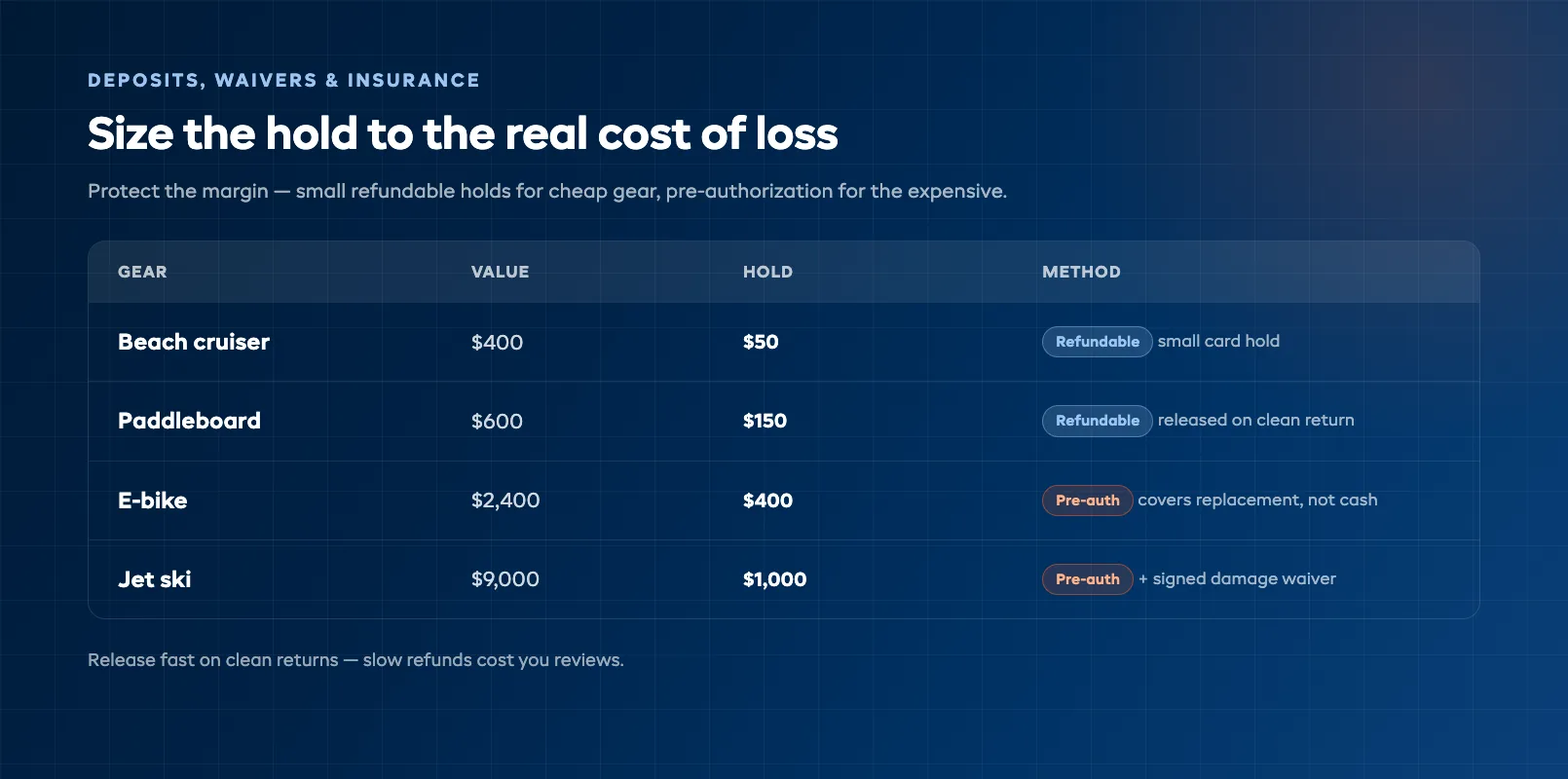
Take a security deposit or a card pre-authorization sized to the real cost of damage or loss, not a token amount. For low-value gear a modest refundable hold is enough; for high-value units, a pre-authorization that covers replacement protects you without holding the customer's cash. Release it fast on clean returns — slow refunds cost you reviews.
A signed waiver at checkout sets expectations for damage, late returns, and liability, and it makes the awkward conversation easy because the terms were agreed up front. Build an optional damage-waiver fee into the booking flow — a few dollars that covers minor wear buys peace of mind for the customer and steadier income for you. Insurance sits behind all of it; make sure your policy matches the gear you actually rent and the way people use it.
Competitive Price Research
You cannot price in a vacuum, but you should not copy blindly either. Research tells you where you sit; your formula tells you where you need to be.
Pull the rates of three to five nearby shops that rent similar gear. Note their daily rate, their weekly discount, their deposit, and what is included — delivery, cleaning, a second day free. You are looking for the shape of the market, not a number to match. If your costs mean you need to sit above the local average, justify it with something real: newer gear, faster service, easier booking, or delivery. Renters happily pay a little more for less hassle.
Watch for the shop that is clearly underpricing. They are often the one about to raise prices or quietly go under, and matching them is a race to the bottom. Price to your costs and your service, check the market a couple of times a year, and adjust in small, confident steps rather than lurching. If you are still setting up the fundamentals, our guide on how to start an equipment rental business covers the costing groundwork that pricing sits on top of.
Pricing in Your Software
A pricing strategy only pays off if it runs the same way on every booking, every day, without you doing math at the counter. That is a job for your rental software, not a spreadsheet.
Set your rate ladders, seasonal bands, and deposit rules once, and let the system apply them automatically — the right daily rate, the weekly discount, the peak premium, and the deposit all calculated at checkout online and in person. Good software also lets you run time-boxed promotions and off-peak discounts without rewriting your base rates, so you can test an offer and pull it back cleanly. When your prices and deposits are consistent everywhere customers book, you stop leaking margin to manual errors.
EquipDash handles the rate ladders, seasonal pricing, deposits, and waivers in one place, so the strategy you built here runs itself. Once pricing is set, the next lever is getting found — our guide to SEO for rental businesses covers how the right renters land on your booking page in the first place.
Putting It Together
Price from your costs, not your neighbor's sign. Work out the real cost per rental, build a rate ladder that rewards longer bookings, charge more when demand is high, protect every unit with a sensible deposit and waiver, and let your software apply it all consistently. Do that and your busy weeks carry the quiet ones — which is the whole point of pricing for profit.
FAQ
How do I set rental prices that cover costs and stay competitive?
Start with the unit cost, not the market. Divide what a unit cost you by the number of rentals you expect over its life to get the recovery cost per rental, then add upkeep, a slice of overhead, and your margin. That gives you a defensible floor price. Only then check nearby shops to see where you sit — if your costs put you above the local average, justify it with newer gear, faster service, or delivery.
Should I charge hourly, daily, or weekly for equipment rentals?
Use all three, structured as a ladder. Hourly suits high-turnover gear and walk-ins but costs you more in handovers, so price it high enough that a full day is clearly better value. Daily rates are the backbone. Set a half day at roughly 60 to 70% of a full day, and a weekly rate at around four to five times the daily rate so a longer, low-labor booking still feels like a deal.
How do I adjust rental prices for peak season?
Split the year into peak, shoulder, and off-peak bands. Charge a premium in peak weeks when demand outstrips your fleet, because you will rent every unit anyway. Run a lower rate off-peak to keep idle gear moving. You can add light dynamic pricing on top — lift rates 10 to 15% once a day is more than 80% booked, and discount quiet midweek slots to smooth demand.
How much should a rental deposit be?
Size the deposit or card pre-authorization to the real cost of damage or loss, not a token amount. A modest refundable hold works for low-value gear; for high-value units use a pre-authorization that covers replacement without holding the customer's cash. Release it quickly on clean returns, since slow refunds cost you reviews. Pair it with a signed waiver at checkout so the terms are agreed up front.
How do I research competitor rental prices without copying them?
Pull the rates of three to five nearby shops renting similar gear and note their daily rate, weekly discount, deposit, and what is included. You are looking for the shape of the market, not a number to match. Ignore any shop that is clearly underpricing — matching them is a race to the bottom. Price to your own costs and service, then review the market a couple of times a year.
Can rental software handle pricing automatically?
Yes, and it should. Set your rate ladders, seasonal bands, deposit rules, and waiver fees once, and the system applies the right price and deposit at every checkout, online and in person. Good software also lets you run time-boxed promotions and off-peak discounts without rewriting your base rates, so your pricing stays consistent everywhere customers book and you stop losing margin to manual errors.
in one place