How to Start an Equipment Rental Business (2026 Guide)

Starting an equipment rental business is one of the most accessible ways to build a profitable, location-independent-ready company in 2026. The barrier to entry is relatively low, the demand is year-round (with seasonal peaks), and the recurring revenue model means customers keep coming back.
But "accessible" doesn't mean "easy." Most rental businesses that fail in their first two years make the same handful of mistakes — wrong equipment choices, underpriced rentals, no online presence, or trying to manage everything on paper and spreadsheets.
This guide covers every step from market research to launch day, with real numbers and practical advice. Whether you're starting a bike rental in a beach town, a ski equipment shop at a resort, or a kayak and paddleboard operation on a lake, the fundamentals are the same.
Is an Equipment Rental Business Right for You?
Before you invest a dollar, let's be honest about what running a rental business actually involves.
The upside is real:
- Recurring revenue — The same equipment earns money over and over. A $2,000 mountain bike that rents for $65/day pays for itself in 31 rental days. Everything after that is gross profit.
- Growing market — The equipment rental market is projected to reach $230 billion globally by 2028 (Research and Markets). The shift toward "access over ownership" keeps accelerating — especially among younger consumers.
- Seasonal flexibility — You can start small, scale during peak season, and run a lean operation in the off-season.
- Low customer acquisition cost — Once you're visible on Google Maps and your booking page works, organic traffic does the heavy lifting. Rental businesses in tourist areas often get 60–70% of bookings from organic search.
The reality check:
- Capital intensive upfront — You need equipment before you earn a dollar. Starting inventory for a small bike rental shop runs $15,000–$40,000. Kayaks, paddleboards, and camping gear can be less.
- Physical operations — Equipment needs maintenance, cleaning, storage space, and occasional replacement. This isn't a laptop-only business.
- Seasonality — Most rental businesses have distinct peak and off-peak periods. You need enough cash reserves (or complementary services) to cover the slow months.
- Liability — Customers use your equipment in the real world. Insurance, waivers, and safety procedures aren't optional.
If you're comfortable with physical operations, seasonal cash flow, and equipment maintenance, a rental business can be one of the most rewarding small businesses to run. If you want passive income with zero physical work, this isn't it.
Step 1: Research Your Market and Niche
The biggest mistake new rental operators make is starting with the equipment they like instead of the equipment their market needs.
Identify Your Market
Start with geography. Where will you operate? The answer determines everything — what equipment, what pricing, what season, what competition.
Questions to answer:
- What activities do tourists and locals already do in your area?
- Is there existing rental competition? (Competition isn't bad — it validates demand.)
- What's the peak season? How long does it last?
- Are there events, resorts, or attractions that drive traffic?
How to research:
- Search Google Maps for existing rental shops in your area. Note their reviews, pricing, and offerings.
- Check Google Trends for search volume on "[activity] rental near [location]."
- Talk to local tourism offices, hotels, and campgrounds. Ask what visitors request most.
- Visit competitor shops as a customer. Note what they do well and where they fall short.
Choose Your Niche
A focused niche beats "we rent everything" for new businesses. Some of the most profitable niches:
| Niche | Typical Equipment Cost | Average Daily Rental | Peak Season |
|---|---|---|---|
| Bike rentals (beach/city) | $500–2,000/bike | $35–75 | Spring–Fall |
| E-bike rentals | $1,500–4,000/bike | $65–120 | Spring–Fall |
| Kayak/SUP rentals | $400–1,200/unit | $40–80 | Summer |
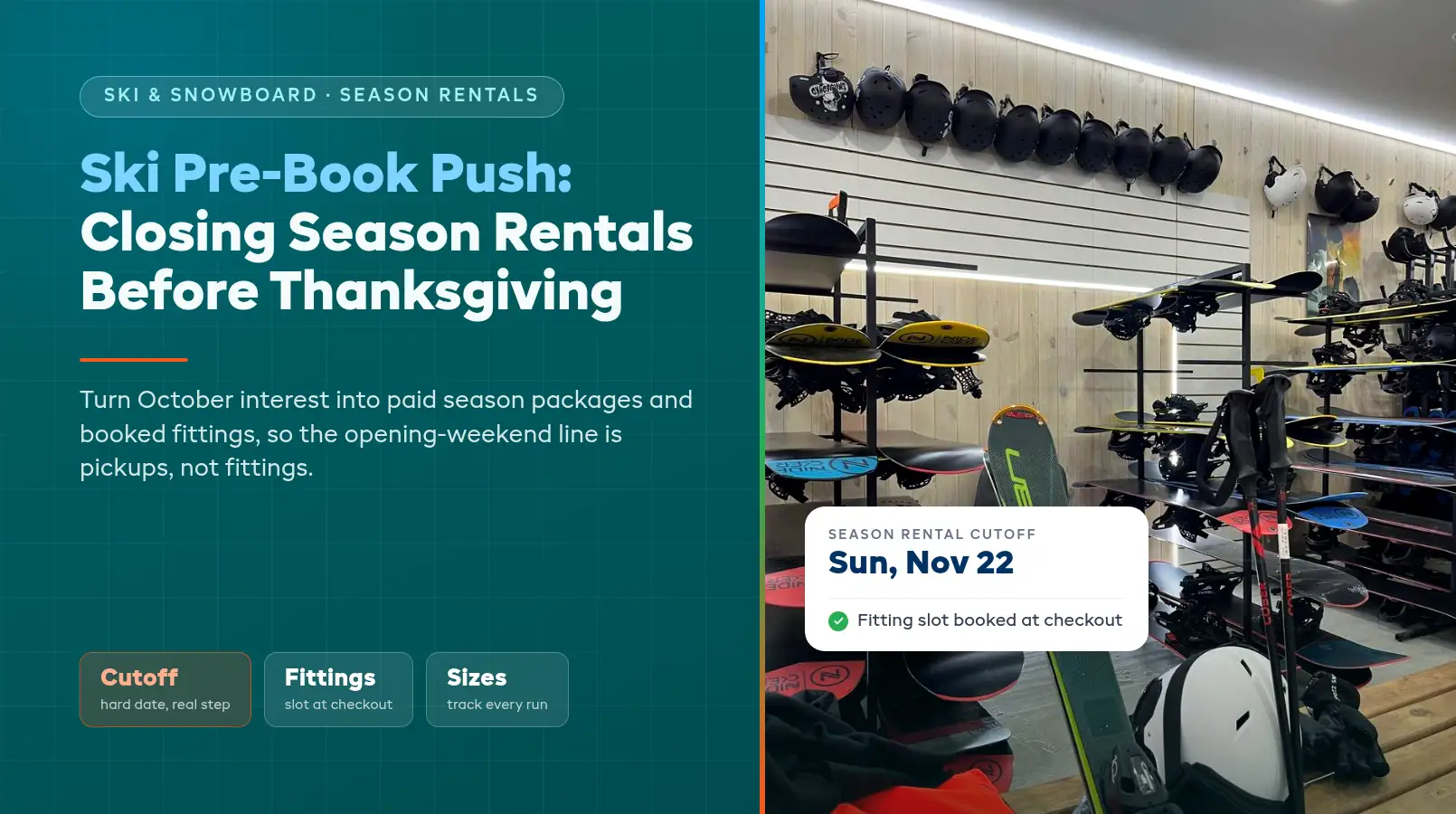
| Ski/snowboard rentals | $800–2,500/set | $45–85 | Winter |
| Camping gear rentals | $100–500/kit | $25–60 | Summer |
| Water sports (jet ski, boat) | $5,000–30,000/unit | $150–500 | Summer |
The sweet spot for first-time operators is usually mid-range equipment with broad appeal. Beach cruiser bikes, standard kayaks, or entry-level ski gear. Premium and specialty equipment can follow once you've proven demand.
Step 2: Write a Business Plan
Your business plan doesn't need to be 50 pages. It needs to answer five questions with real numbers.
1. Startup Costs
Map every dollar you'll spend before your first rental:
| Category | Typical Range |
|---|---|
| Equipment (initial fleet) | $10,000–50,000 |
| Location (deposit + first month) | $2,000–8,000 |
| Insurance (annual) | $1,500–5,000 |
| Business registration + licenses | $500–2,000 |
| Website + booking software | $300–1,500 |
| Marketing (initial) | $500–2,000 |
| Signage + storage fixtures | $1,000–3,000 |
| Total | $15,800–71,500 |
A small bike rental shop in a tourist area can start for under $25,000. A water sports operation with jet skis will be $60,000+.
2. Revenue Projections
Use conservative estimates:
Example: 20-bike beach rental shop
- Fleet: 20 bikes × $65/day average rental
- Peak season: 120 days, 70% utilization = $109,200
- Off-season: 120 days, 20% utilization = $31,200
- Shoulder season: 125 days, 40% utilization = $65,000
- Annual gross revenue: ~$205,400
Subtract operating costs (rent, insurance, maintenance, staff, software) of roughly $80,000–120,000, and you're looking at $85,000–125,000 net before taxes. Solid numbers for a small business.
3. Break-Even Timeline
Most rental businesses break even in 6–18 months, depending on startup costs and seasonality. The key variable is your peak season — a summer-only business that opens in January has 5 months of costs before revenue flows.
Pro tip: If possible, time your launch 4–6 weeks before peak season. This gives you time to set up while minimizing the pre-revenue burn.
4. Equipment Replacement Schedule
Plan for equipment lifecycle. Most rental equipment lasts 2–4 seasons depending on usage intensity:
- Bikes: 2–3 seasons (1,000+ rental days), then sell used
- Kayaks/SUPs: 3–5 seasons (more durable, less mechanical wear)
- Ski gear: 2–3 seasons (bindings and boots wear fastest)
- Camping gear: 2–3 seasons (tents and sleeping bags need regular replacement)
Budget 15–25% of annual revenue for fleet replacement and maintenance.
5. Competitive Advantage
What will make customers choose you over existing options? Common differentiators:
- Better online booking — Many established shops still take phone-only reservations. An online booking system is an instant advantage.
- Newer equipment — Fleets get tired. If competitors rent 5-year-old bikes, your new fleet stands out.
- Delivery or mobile rentals — Bring the equipment to the customer instead of making them come to you.
- Bundled experiences — Bike rental + guided tour, kayak rental + lesson, ski rental + lift ticket partnership.
Step 3: Choose Equipment and Initial Inventory
Your initial fleet is your biggest investment, so get this right.
Start Smaller Than You Think
The most common mistake is over-buying. A rental shop with 30 bikes and 5 customers per day has 25 bikes collecting dust (and depreciating). Start with enough equipment to handle your realistic first-month demand, not your dream-case scenario.
Rule of thumb: Start with enough inventory to handle 60–70% of a peak day's demand. If you project 20 rentals per day at peak, start with 14–16 units. You can always add more — you can't un-buy equipment that isn't renting.
Quality vs Quantity
Rent what you'd be comfortable using yourself. Customers forgive a small fleet. They don't forgive broken equipment, uncomfortable seats, or gear that looks like it survived a war.
- Buy commercial-grade equipment designed for rental use (it exists for bikes, kayaks, skis)
- Avoid consumer-grade gear — it's cheaper upfront but breaks 3x faster under rental use
- Factor in maintenance costs per unit when calculating true cost
- Negotiate fleet pricing — most manufacturers offer 15–30% discounts on bulk orders
Track Every Item
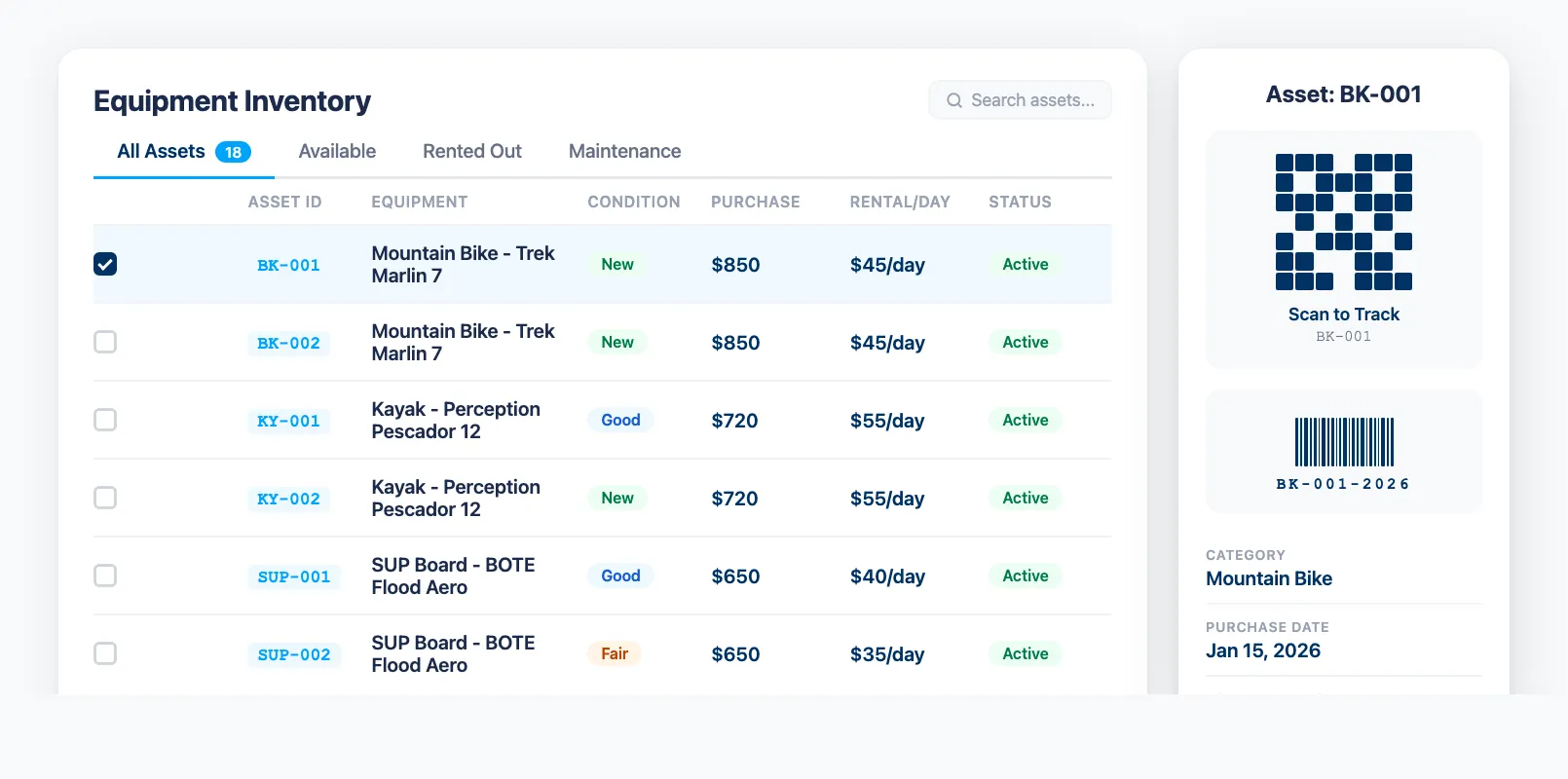
From day one, track every item by a unique identifier — serial number, asset tag, or barcode. This is non-negotiable for:
- Knowing what's rented and what's available
- Scheduling maintenance based on usage
- Reporting equipment damage to specific bookings
- Insurance claims
Using rental inventory management software from the start saves hundreds of hours compared to trying to retroactively organize a spreadsheet system once you're busy. Choosing a platform with built-in inventory tracking means every item is accounted for from day one.
Step 4: Set Your Pricing
Pricing determines whether you're profitable or just busy. Get it right from the start.
The Pricing Formula
Start with this baseline calculation:
Minimum daily rate = (Equipment cost ÷ Target rental days over lifecycle) × 2.5
Example: A $1,500 e-bike you plan to rent for 400 days over 3 seasons:
- $1,500 ÷ 400 = $3.75 cost per rental day
- $3.75 × 2.5 = $9.38 minimum daily rate
The 2.5x multiplier covers maintenance, insurance, storage, and profit. In practice, you'll charge much more than this minimum based on market rates — but it's your floor. Never go below it.
Pricing Structures
Offer multiple rental periods to capture different customers:
| Period | Pricing Approach | Example (bike rental) |
|---|---|---|
| Hourly | Premium rate for short use | $15–20/hour |
| Half-day | 2–3x hourly | $35–45 |
| Full day | Core rate | $55–75 |
| Multi-day | Declining rate per day | $45–60/day |
| Weekly | Significant discount | $250–350/week |
The sweet spot: Most rental revenue comes from full-day and multi-day bookings. Price hourly rates high enough that customers self-select into full-day rates — that's where your margins are best. For more on how rental software platforms handle pricing tiers and seasonal rates, see our equipment rental software comparison.
Seasonal Pricing
Charge more during peak season. Your customers expect it, and your capacity is limited.
- Peak: Standard published rates (this is your baseline)
- Shoulder: 15–25% discount to attract early/late season bookings
- Off-peak: 30–50% discount (or close if demand doesn't justify operating costs)
Deposits and Damage Policies
- Require a security deposit ($50–200 depending on equipment value)
- Offer optional damage waiver ($10–25) for peace of mind
- Clearly document equipment condition at check-out and check-in
- Process deposit refunds within 24–48 hours — slow refunds kill your reviews
Step 5: Set Up Your Location (Physical + Online)
You need both a physical presence and a digital one. In 2026, your website is often the first (and sometimes only) storefront customers see.
Physical Location
What you need:
- Storage: Secure, weather-protected space for your fleet. Even if you operate from a trailer or truck, you need overnight storage.
- Check-in/check-out area: A visible, accessible spot where customers can browse equipment, complete paperwork (digitally), and get fitted or briefed.
- Maintenance area: Space for cleaning, basic repairs, and seasonal prep.
Location tips:
- Proximity to the activity location matters more than foot traffic. A bike rental shop at the trailhead beats one in the town center.
- Street visibility helps but isn't essential if your online presence is strong.
- Consider mobile or pop-up options before committing to a long lease.
Online Presence
Your website needs exactly three things to work:
- A booking page — Customers browse your equipment, see real-time availability, pick their dates, and pay. No phone call required.
- A Google Business Profile — This puts you on Google Maps with your hours, photos, reviews, and a booking link. For location-based businesses, this is where most organic traffic comes from.
- Photos that sell — Real photos of your equipment in use, your location, and happy customers. Stock photos won't cut it.
A surprising number of rental shops still have no online booking. "Call us" or "email for availability" in 2026 means you're losing 30–50% of potential bookings to competitors who let customers book in two clicks. For guidance on evaluating booking platforms, see our guide on what to look for in rental booking software.
Step 6: Choose Technology (Software, Payments, Waivers)
The technology you choose on day one shapes how your business operates for years. Choose well now to avoid a painful migration later.
Rental Software
At minimum, your software should handle:
- Online booking with real-time availability
- Inventory tracking by individual item
- Payment processing (credit cards at minimum, Apple Pay and Google Pay ideally)
- Automated confirmations and reminders
- Digital waivers integrated into the booking flow
- Basic reporting (daily revenue, utilization, booking trends)
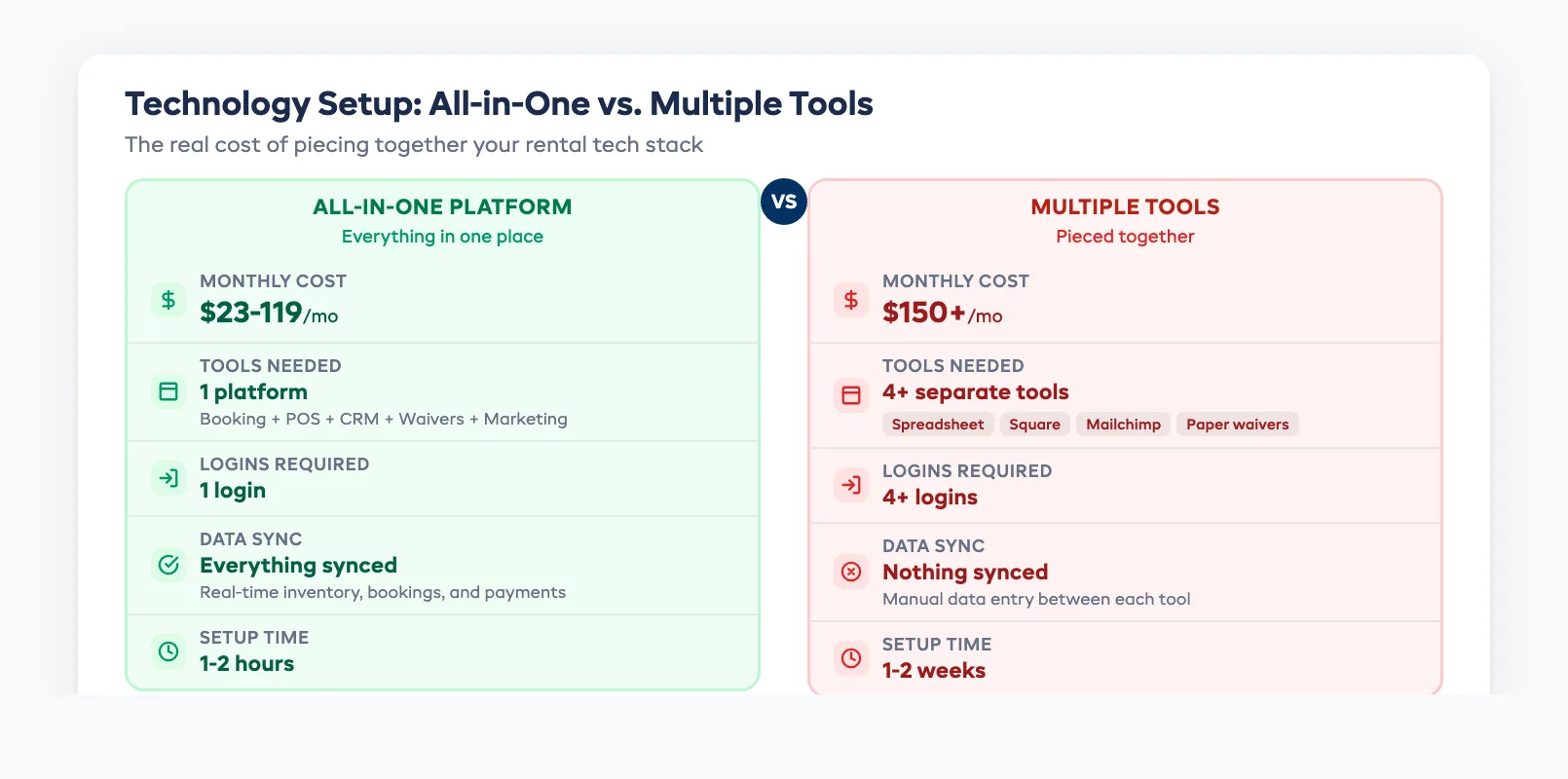
Some operators start with free or basic tools — a Google Calendar for bookings, Stripe for payments, HelloSign for waivers, a spreadsheet for inventory. That works until it doesn't. Usually around booking #200, when your first double-booking happens and you realize your four disconnected tools have no idea what the others are doing. Our guide on how to prevent double bookings explains exactly why disconnected tools cause conflicts and how to avoid them. Choosing the right equipment rental software from day one saves you from that painful migration later. If you're on the fence about whether you've outgrown spreadsheets, our spreadsheets vs software guide covers the exact breaking points. And if you're a small shop with under 100 items, you don't need enterprise features — just the 4 essentials.
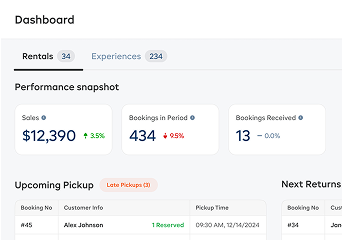
An all-in-one equipment rental software platform — especially cloud-based equipment rental software that requires no installation and works from any device — handles everything from a single dashboard. For a new business, this means:
- One system to learn (not four)
- One subscription to pay (not four)
- Zero integration headaches
- Data that actually connects (booking → inventory → payment → waiver → report)
EquipDash starts at $23/month (annual billing) with a 21-day free trial — designed specifically for rental shops and tour operators starting out. At $100K annual booking volume, the total cost runs $2,160–$2,428 per year, which is significantly less than cobbling together separate tools. Our equipment rental software comparison covers platforms that handle both rentals and tour operations.
Payment Processing
Accept every way your customers want to pay:
- Credit and debit cards (non-negotiable)
- Apple Pay and Google Pay (growing fast, especially with tourists)
- Cash (still needed but declining — keep it simple with a basic register)
Waivers and Insurance
- Set up digital waivers that integrate with your booking system
- Consult a local attorney about waiver requirements in your jurisdiction
- Get commercial general liability insurance ($1M minimum is standard)
- Consider per-rental damage waivers as a revenue stream (most customers choose them)
For a full comparison of rental platforms, check our equipment rental software comparison.
Step 7: Market Your Business
Your marketing strategy doesn't need to be complicated. For a location-based rental business, three channels drive 80% of bookings.
1. Google Business Profile (Free)
This is your most important marketing channel. Period.
- Complete every field — hours, photos, services, booking link
- Add 10+ high-quality photos of your equipment and location
- Respond to every review within 24 hours
- Post updates weekly (new equipment, seasonal specials, local events)
- Most rental businesses get 40–60% of their bookings through Google Maps
2. Your Website + SEO
- Optimize your website for "[activity] rental near [location]" keywords
- Create a Google-friendly booking page with clear pricing and availability
- Add a blog with local guides, activity tips, and seasonal content
- Build links from local tourism sites, hotel directories, and event pages
3. Partnerships
- Hotels and Airbnbs — Leave flyers, offer a commission for referrals, or provide a dedicated booking link
- Tourism offices — Get listed in official guides and brochures
- Complementary businesses — Coffee shops, restaurants, and activity providers can cross-promote
- Event organizers — Festivals, races, and outdoor events need equipment
What about social media? It helps for brand awareness, but rarely drives direct bookings for local rental businesses. Post consistently (3x/week) with real photos and customer content, but don't make it your primary channel. Your time is better spent on Google and partnerships.
Step 8: Launch and Optimize
Your launch isn't a single day — it's a 90-day period where you're testing, learning, and adjusting everything.
Pre-Launch Checklist
- Equipment inspected and tagged
- Booking system live and tested (book a rental yourself, end to end)
- Payment processing tested with real transactions
- Waiver system connected and working
- Google Business Profile complete with photos
- Website live with booking page
- Confirmation and reminder emails tested
- Pricing loaded for all equipment and rental periods
- Insurance confirmed and certificate filed
- Staff trained on check-in/check-out process
First 30 Days
- Track every booking, cancellation, and no-show
- Ask every customer how they found you
- Note which equipment rents fastest and which sits idle
- Watch your check-in/check-out process — where do customers wait? Where does confusion happen?
- Collect every review you can. Your first 10 reviews on Google set the trajectory.
Days 30–90
- Adjust pricing if utilization is too low (<40%) or too high (>90%)
- Add equipment where demand exceeds supply
- Remove or discount equipment that isn't renting
- Refine your automated emails based on customer feedback
- Start building partnerships with local businesses
After 90 Days
You now have real data. Use it to automate your rental business operations — set up the automated workflows that remove you from the repetitive tasks so you can focus on growth.
Review your rental inventory management process and tighten up any gaps. The habits you build in the first quarter define how smoothly your business runs going forward.
Common Mistakes to Avoid
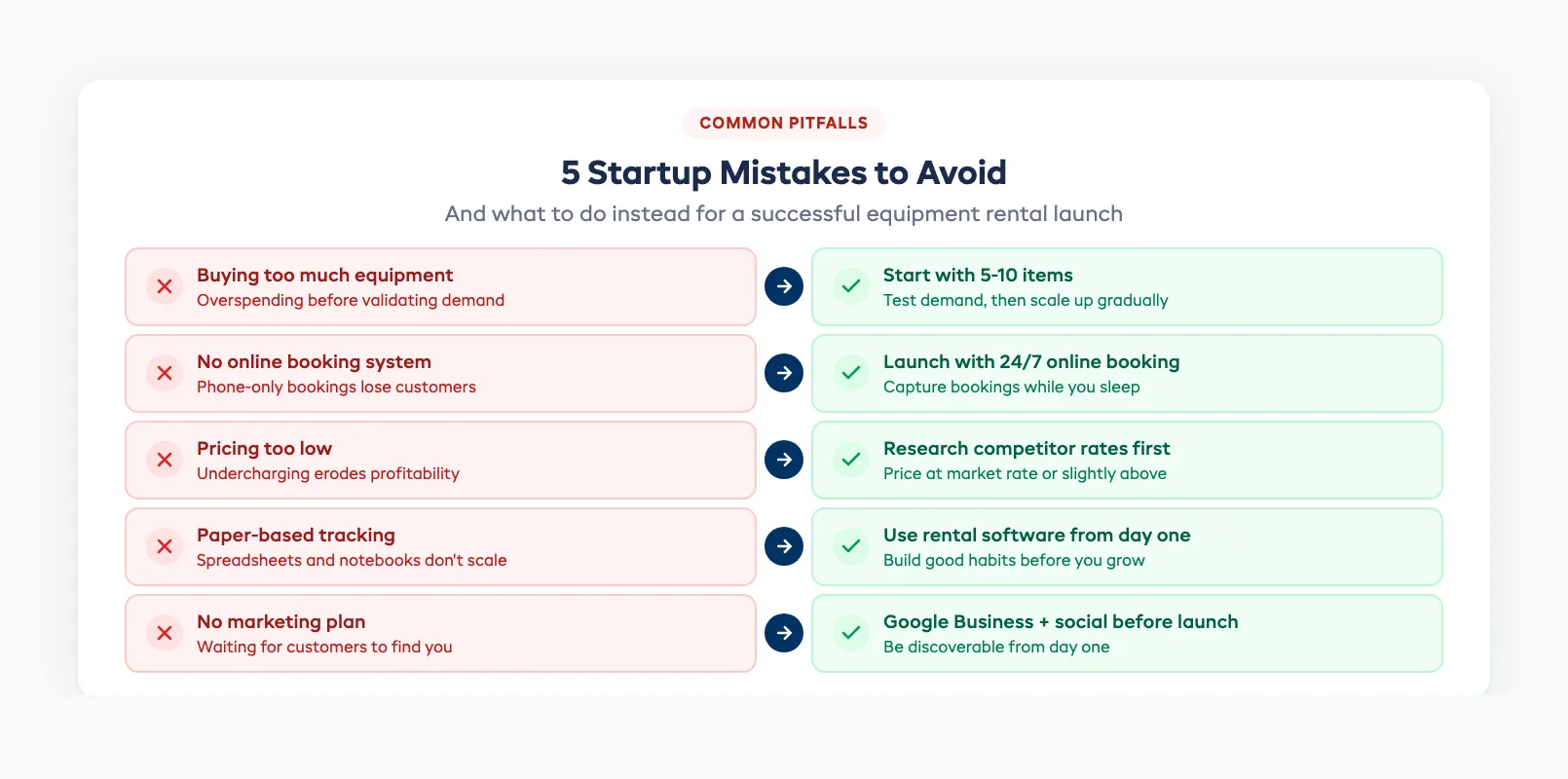
1. Over-investing in equipment before proving demand Start lean. It's cheaper to rent out 12 of 15 bikes than to own 40 and rent 12. You can always add units mid-season. You can't un-buy them.
2. No online booking "Call for availability" in 2026 is like putting a "Closed" sign on your door from 6pm to 9am. An online booking system for rentals is not optional — it's where 50–70% of your bookings will come from.
3. Underpricing to compete Competing on price is a race to the bottom. Compete on experience, convenience, and equipment quality. A customer choosing between a $45 rental with online booking, clean equipment, and a friendly briefing versus a $35 rental where they have to call, wait, and hope — they'll pay the extra $10 every time.
4. Ignoring maintenance A broken bike on Saturday morning doesn't just cost one booking — it costs the customer's review, their friends' future bookings, and your reputation. Schedule maintenance proactively, not reactively.
5. Managing everything on paper Paper waivers get lost. Spreadsheet calendars lead to double-bookings. Handwritten receipts don't scale. Digital tools cost less per month than the revenue you lose to one preventable mistake.
6. Skipping insurance One injury claim without insurance can end your business. Get proper commercial liability coverage before your first rental. Budget $1,500–5,000 annually depending on your equipment type and risk profile.
7. Launching without reviews Your first 10 Google Reviews determine how many people trust you enough to book. Ask every single early customer. Make it easy — send an automated follow-up email with a direct link.
FAQ
How much does it cost to start an equipment rental business?
A small operation (15–20 bikes, kayaks, or sets of ski gear) can start for $15,000–30,000 including equipment, insurance, location deposit, software, and marketing. Water sports operations with motorised equipment start at $40,000+. The biggest variable is equipment cost — buy used commercial-grade gear to cut initial costs by 30–40%.
How long until I break even?
Most rental businesses break even in 6–18 months. A summer-season bike shop that opens in April with $25,000 in startup costs and averages $1,200/day in peak season can break even by mid-July. Off-season businesses take longer. Time your launch to minimize the gap between investment and first revenue.
What's the most profitable rental equipment?
E-bikes, paddleboards, and premium ski gear consistently deliver the highest margins because the rental rate is proportionally higher relative to equipment cost and maintenance. But profitability also depends on your local market. The best equipment to rent is the equipment your market actually demands — not the gear with the highest theoretical margin.
Do I need a physical storefront?
Not necessarily. Many successful rental businesses operate from trailers, trucks, or partner locations (hotels, marinas, trailheads). What you do need is secure storage, a visible check-in point, and an online presence. A physical storefront helps walk-in traffic but isn't required if your online booking and marketing are strong.
What software should I use from day one?
Start with an all-in-one rental management platform that handles booking, inventory, payments, waivers, and reporting. EquipDash starts at $23/month (annual billing) and includes everything a new rental business needs. If you're comparing options, our equipment rental software comparison breaks down the top platforms for new operators. Avoid starting with free tools and migrating later — the data migration headache isn't worth the $23/month you saved.
How do I handle the off-season?
Three strategies: (1) Offer complementary equipment for the opposite season (kayaks in summer, snowshoes in winter). (2) Use the off-season for maintenance, fleet upgrades, and marketing prep. (3) Build recurring revenue — gift cards, advance bookings for next season, and local partnerships that drive year-round traffic. Some operators also run indoor experiences or equipment sales to supplement off-season income.
What insurance do I need?
At minimum: commercial general liability insurance ($1M per occurrence is standard), commercial property insurance for your equipment, and umbrella coverage. If you rent motorised equipment (jet skis, ATVs), you'll need additional policies. Budget $1,500–5,000/year depending on equipment type. Consult a commercial insurance broker who specializes in recreation or rental businesses — they'll know what your jurisdiction requires.
Can I run a rental business part-time?
Yes, especially if you automate your operations. With online booking, automated waivers, and digital check-in, you can manage a small fleet with just a few hours per day during peak times. Many operators start part-time alongside another job, then go full-time once revenue supports it. The key is having good software that handles bookings 24/7 without you.
in one place