SEO for Rental Businesses: The 2026 Guide
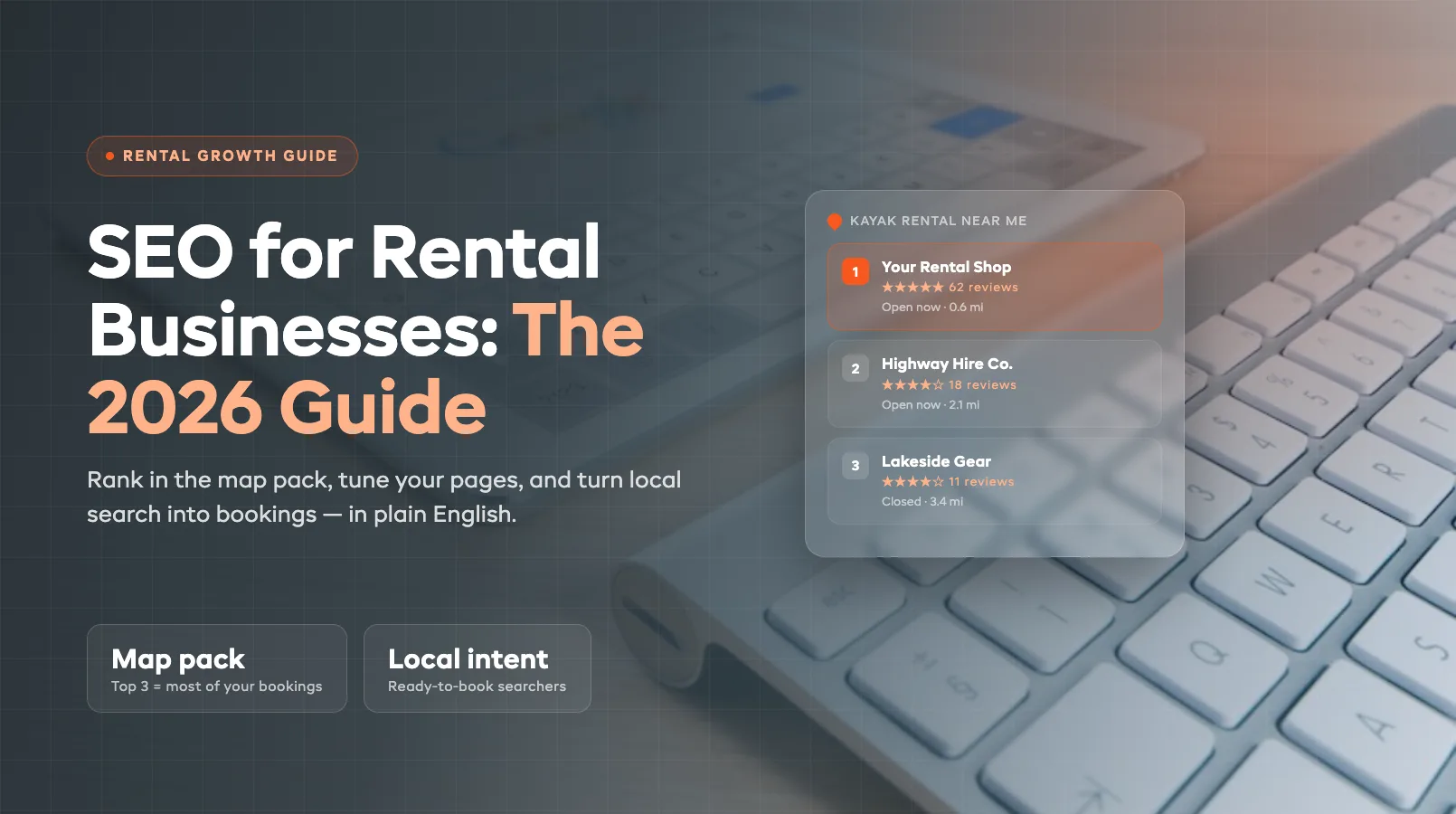
Most rental shops get found the hard way — a sign on the road, word of mouth, and whoever remembers your name from last season. Search does the same job while you sleep. When someone three suburbs over types "kayak hire near me" or "party tent rental" into their phone, SEO decides whether they find you or the shop down the highway.
The good news is that rental businesses have an edge in search that big brands can't buy: you are local, and most of your customers are searching locally with money in hand. This guide walks through the SEO that actually matters for a rental shop in 2026 — from the map pack to your website to the way AI is changing results — without the jargon. If you are still setting up the business itself, start with our guide on how to start an equipment rental business, then come back here to get found.
Local SEO: Google Business Profile and Maps
For a rental shop, local SEO is the whole ballgame. Most of your customers are nearby and ready to book, and the first thing Google shows them is the map pack — the three business listings with the little map above the regular results. Landing in that top three is worth more than any blog post you will ever write.
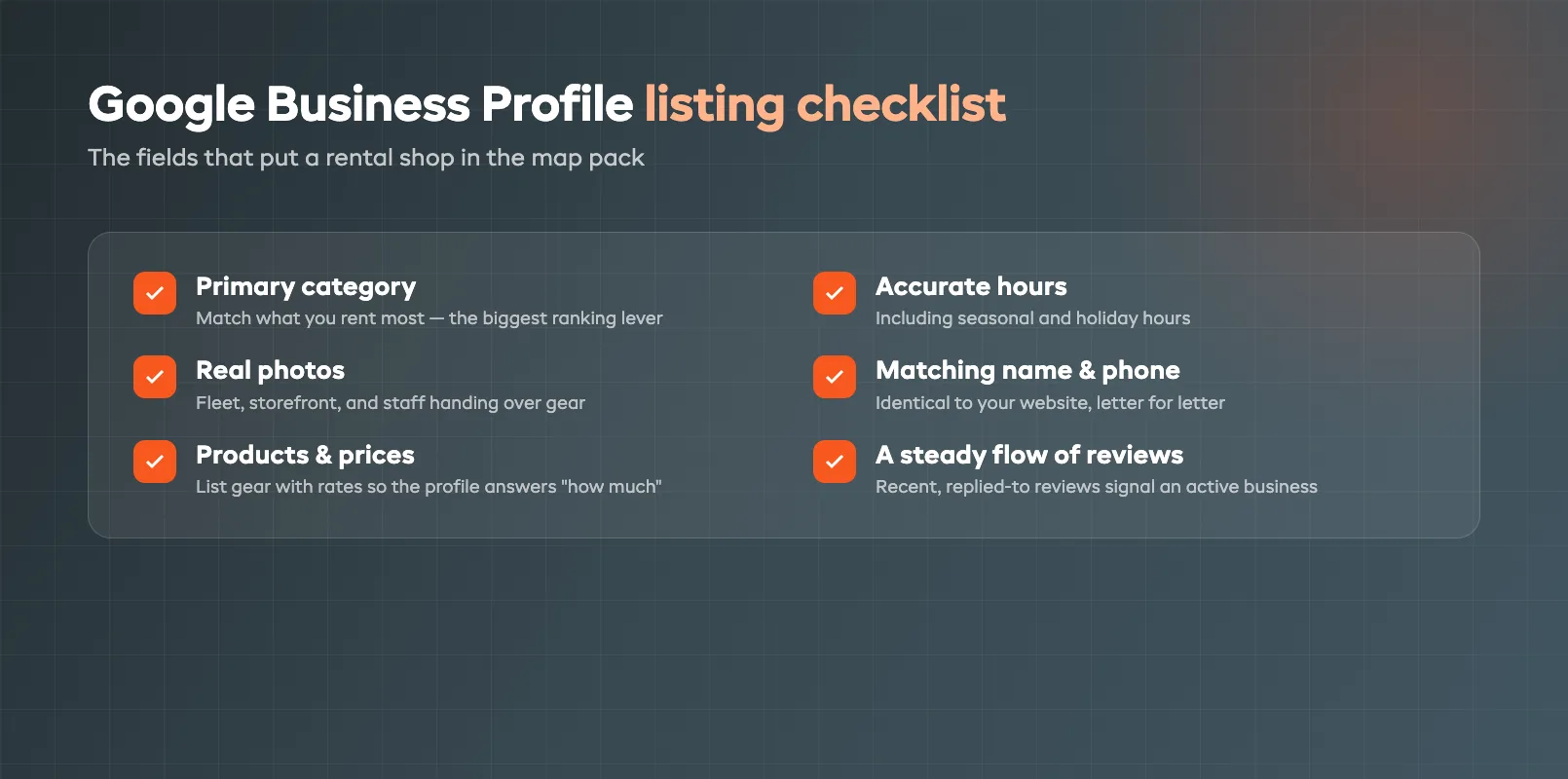
It starts with your Google Business Profile. Claim it, verify it, and fill in every field. That means:
- The right primary category. Pick the one that matches what you rent most — "Boat rental service," "Equipment rental agency," "Party equipment rental service." The category drives a huge share of your ranking.
- Name, address, and phone that match your website exactly. Even small differences confuse Google and hurt you.
- Real photos. Your fleet, your storefront, staff handing over gear. Profiles with genuine photos get more clicks and more direction requests.
- Accurate hours, including the seasonal and holiday hours a rental business lives and dies by.
- Products and services listed out, with prices where you can, so the profile itself answers the "how much" question.
Then there are reviews, which are the single biggest lever you control. Ask every happy customer for one, ideally the moment they return the gear and they're still smiling. Reply to all of them, good and bad. Google reads a steady flow of recent reviews as a sign your business is active and trusted, and it ranks you accordingly. A shop with sixty recent four-and-five-star reviews will beat a better-known competitor sitting on twelve reviews from two years ago.
On-Page SEO for Rental Websites
Once your profile is pulling in local searches, your website has to do the converting — and it can rank on its own for terms the map pack doesn't cover. The core idea is simple: give each thing you rent its own page, and make that page answer the questions a renter has.
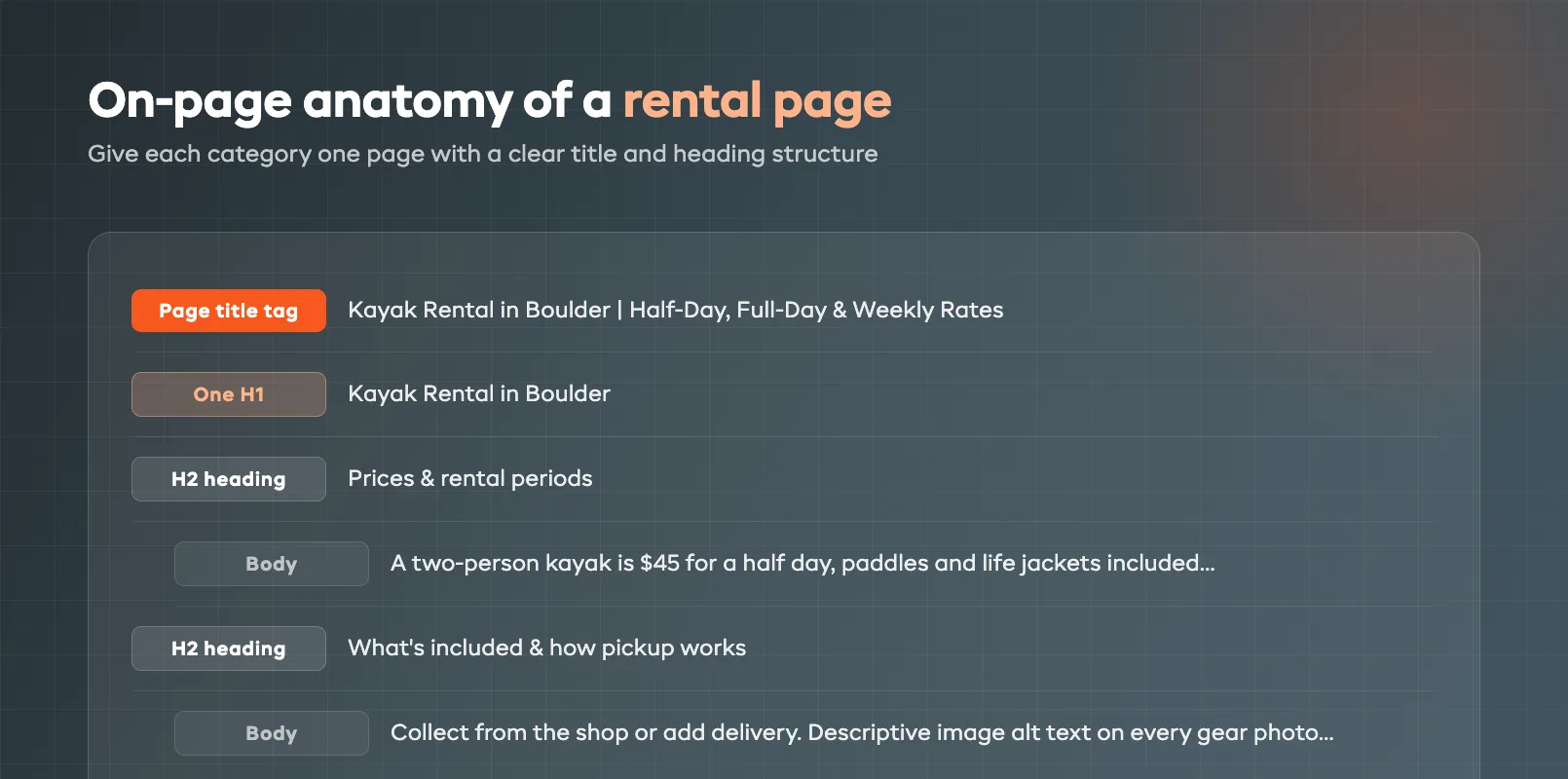
Don't cram every category onto one "Our Rentals" page. If you rent kayaks, paddleboards, and canoes, that's three pages, each targeting the way people actually search — "kayak rental [your town]," "stand up paddleboard hire," and so on. On each page, get the basics right:
- Title tag — the clickable headline in search results. Put the gear and the location in it: "Kayak Rental in Boulder | Half-Day, Full-Day & Weekly Rates."
- One H1 that matches the page's job, then H2s that break the page into the questions renters ask: pricing, sizes, what's included, delivery, deposits.
- Real, useful copy — not keyword soup. Answer what it costs, how long you can keep it, what condition it's in, and how pickup works. Helpful pages rank; thin pages don't.
- Descriptive image alt text and file names so your gear photos show up in image search too.
If you're not sure which pages convert best, our guide on how to increase rental bookings digs into turning that traffic into paid reservations once it arrives.
Content Marketing
On-page SEO gets your money pages ranking. Content marketing is how you catch the people who aren't ready to book yet but will be — the ones searching "what size paddleboard do I need" or "how much does it cost to rent a marquee for a wedding." Answer those questions well and you become the shop they already trust when it's time to pay.
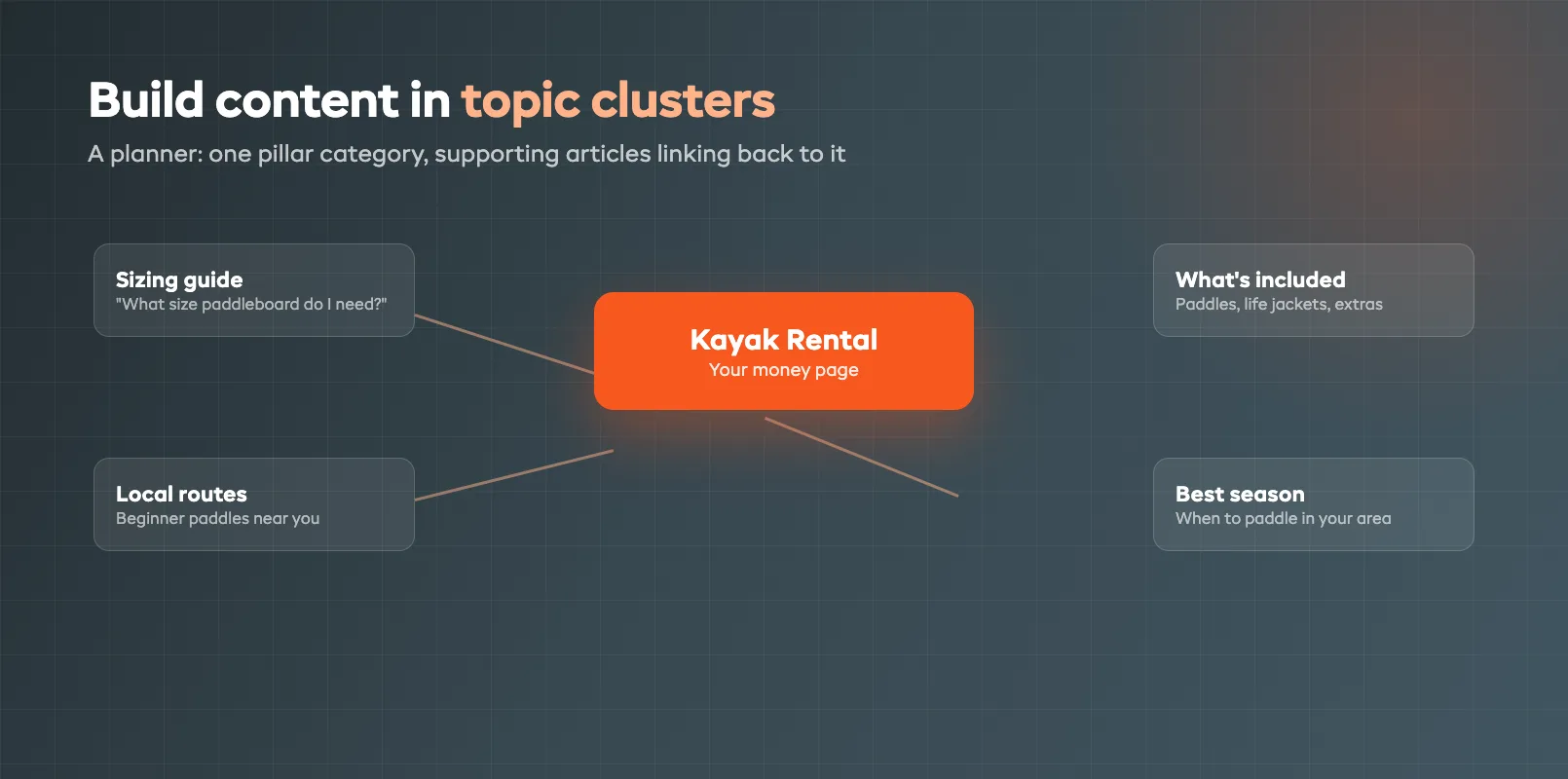
The trick is to organize content into topic clusters instead of writing random posts. Pick a main category — say, kayak rental — and build a cluster around it: a sizing guide, a beginner's route list for your area, a "what's included" explainer, a seasonal "best time to paddle" piece. Each of those links back to your kayak rental page, and together they tell Google you're the authority on that topic locally.
You don't need to publish every week. A rental shop that puts out one genuinely useful, well-targeted piece a month, tied to a category it wants to rank, will out-perform a competitor churning out thin posts nobody reads. Write for the customer first: if the article would actually help someone standing in your shop, it's worth publishing.
Technical SEO Basics
Technical SEO sounds like the part you need a developer for, and sometimes you do — but the basics are things you can check yourself, and they matter because they decide whether Google can even read your site.
Focus on the handful that move the needle:
- Mobile speed. Most of your renters are searching on a phone, often outdoors on a weak signal. A page that takes six seconds to load loses them. Compress your images and pick a fast, modern website platform.
- HTTPS. Your site needs the padlock. It's a ranking factor and a trust signal, and modern browsers warn people away from sites without it.
- A clean, crawlable structure. Every important page should be reachable in a click or two from your homepage, with a sitemap submitted to Google Search Console so nothing gets missed.
- No broken links or dead pages. When you retire a piece of gear, redirect its page rather than leaving a dead end.
You don't have to become an engineer. If your website runs on a modern rental or booking platform, a lot of this is handled for you, which frees you up to spend your time on the profile, pages, and reviews that customers actually see.
SEO in the Age of AI Overviews
The biggest shift in the last year is what shows up at the top of Google: an AI overview that summarises an answer before you scroll to any website. It's understandable to look at that and wonder whether SEO still pays. For a local rental business, it does — but the game moves a little.
Here's why you're not in as much trouble as the headlines suggest. AI overviews are strongest for broad, informational questions. When someone searches with local, buying intent — "jet ski rental near me," "table and chair hire this weekend" — Google still leads with the map pack and business websites, because that's what the searcher wants. Those are your highest-value searches, and they're the ones least touched by AI summaries.
Where AI does appear, the way to win is the same clarity that's always worked, turned up a notch. Write direct, factual answers to specific questions. Use plain headings that state the question. Keep your prices, hours, and policies accurate and easy to find. AI systems quote sources that answer cleanly, so a page that says "A two-person kayak rents for $45 for a half day and includes paddles and life jackets" is far more quotable than a wall of marketing copy. Structured data and an up-to-date Google Business Profile also feed the systems that build these answers, which is one more reason the basics keep paying off.
Measuring Results
SEO without measurement is guesswork, and you don't have time for guesswork in peak season. The goal isn't to chase vanity numbers — it's to know which of your efforts turn into calls and bookings so you keep doing those.
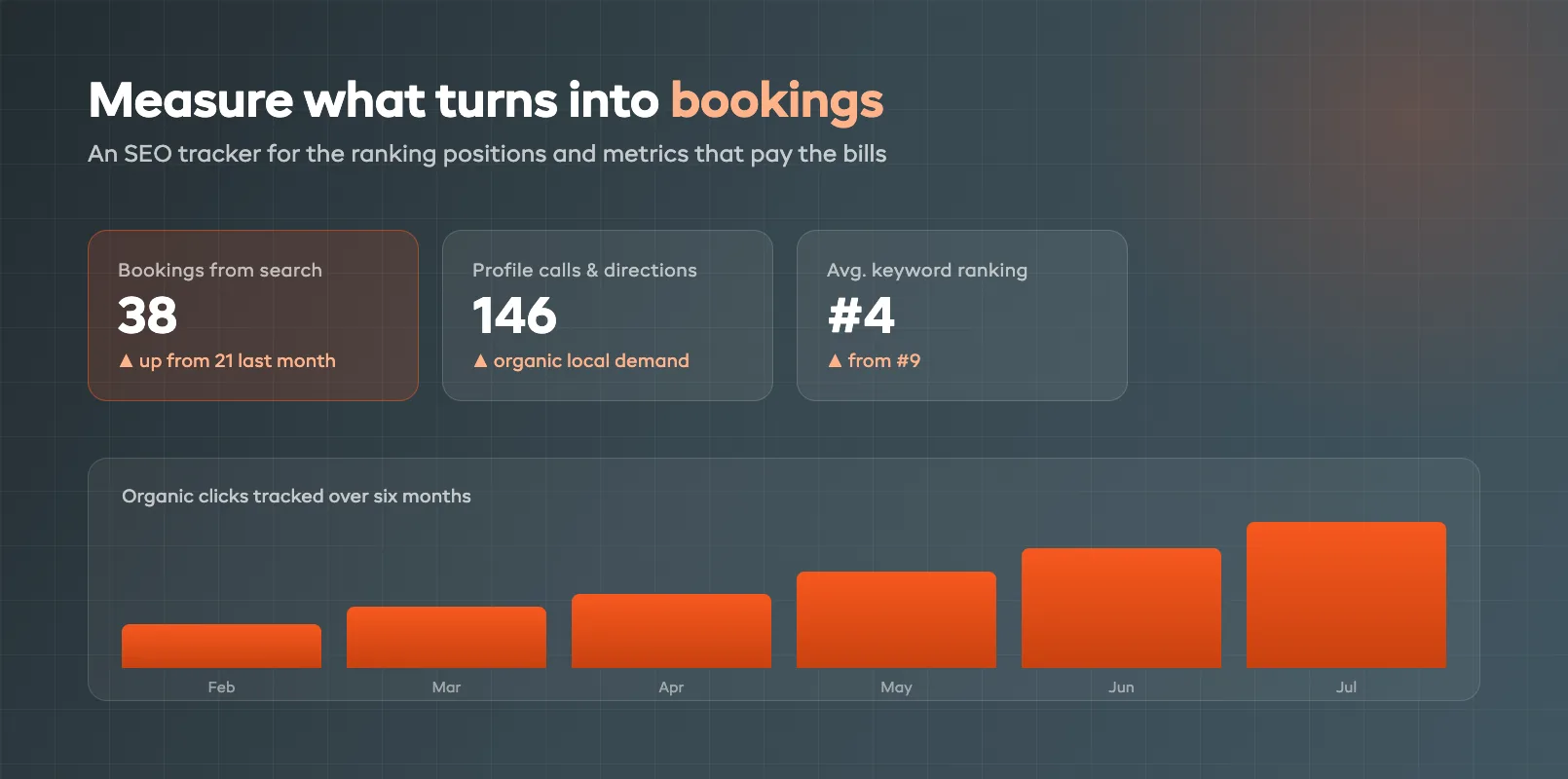
Watch these, and check them monthly rather than daily:
- Google Business Profile insights — calls, direction requests, and website clicks straight from your listing. For a rental shop these are the closest thing to a cash register in your analytics.
- Organic traffic to your money pages in Google Analytics — how many people land on your category and booking pages from search.
- Keyword rankings for your main gear-and-location terms, so you can see the map pack and page positions moving.
- Online bookings that started from search — the number that actually matters. If your booking system can show you where a reservation came from, connect the dots back to SEO.
Give it time. Local profile changes can move within weeks, but ranking pages and content is usually a three-to-six-month job. Track the trend, not the daily wobble, and reinvest in the pages and posts that are clearly earning their keep.
Putting It Together
SEO for a rental business isn't one big project — it's a short list of habits. Complete your Google Business Profile and keep the reviews coming. Give every category its own clear page. Publish one genuinely useful piece of content a month around the gear you want to rank for. Keep the site fast, secure, and crawlable. Write clean, factual answers so both people and AI can quote you. Then measure what turns into bookings and double down there.
Do those consistently for a season and you'll stop relying on the roadside sign. The customer three suburbs over will find you first — and they'll already trust you by the time they call. For the wider playbook on filling your calendar, our guide on how to increase rental bookings picks up where search leaves off.
FAQ
How do I show up in Google Maps for my rental shop?
Claim and fully complete your Google Business Profile: correct name, address, and phone number, the right primary category, real photos, accurate hours, and a steady stream of reviews. Google ranks the map pack mostly on relevance, distance, and prominence, so a complete, active profile with genuine reviews near the searcher is what puts you in the top three.
What content should a rental business create for SEO?
Write the things your customers ask before they book — sizing and fit guides, what's included, how delivery or pickup works, seasonal advice, and comparisons between the gear you rent. Group these around your main rental categories so each cluster of articles supports the category page you want to rank.
Is SEO still worth it with AI overviews on Google?
Yes. AI overviews summarise information, but they still pull from and link to pages that answer questions clearly, and local searches with buying intent still show map results and websites. Clear, factual, well-structured pages are more likely to be cited by an AI summary and to win the click that turns into a booking.
How long does rental business SEO take to work?
Local SEO through your Google Business Profile can move within a few weeks once the profile is complete and collecting reviews. Ranking website pages and content usually takes three to six months of consistent work before you see steady organic traffic, because search engines need time to crawl, trust, and rank new pages.
Do I need to pay an agency to do rental SEO?
Not to start. A shop owner can claim the Google Business Profile, gather reviews, write clear category pages, and publish helpful content without an agency. Consider paid help once the basics are in place and you want to scale content or compete for tougher keywords, and always ask exactly what work you're paying for.
Which SEO metrics matter most for a rental business?
Track the ones tied to money: calls and direction requests from your Google Business Profile, organic visitors who land on your booking or category pages, keyword rankings for your main gear terms, and online bookings that started from search. Impressions and rankings are useful signposts, but bookings and calls are what pay the bills.
in one place