Pricing Motorcycle Hire: Day Rates, Touring Weeks and Gear
A motorcycle hire fleet runs two businesses at once. The day-hire side sells Saturdays: high demand for a short window, priced per day, returned by dinner. The touring side sells weeks: one booking, one handover, a thousand miles, and a machine that comes back needing a service. Price both off one rate card and you'll be too expensive for the tourer and too cheap for the Saturday rider, which is exactly how most shops end up busy and under-margined at the same time. This guide works through the rate ladder, the seasonal curve, the gear counter you're probably underselling, deposits that match machine value, mileage policy, and the per-bike numbers that tell you what to buy next.
It pairs with our buying guide to motorcycle rental software: the pricing mechanics below assume you can actually run tiered rates, deposits, and add-ons in your booking system rather than negotiating each one at the counter.
Day vs Multi-Day vs Touring Rates
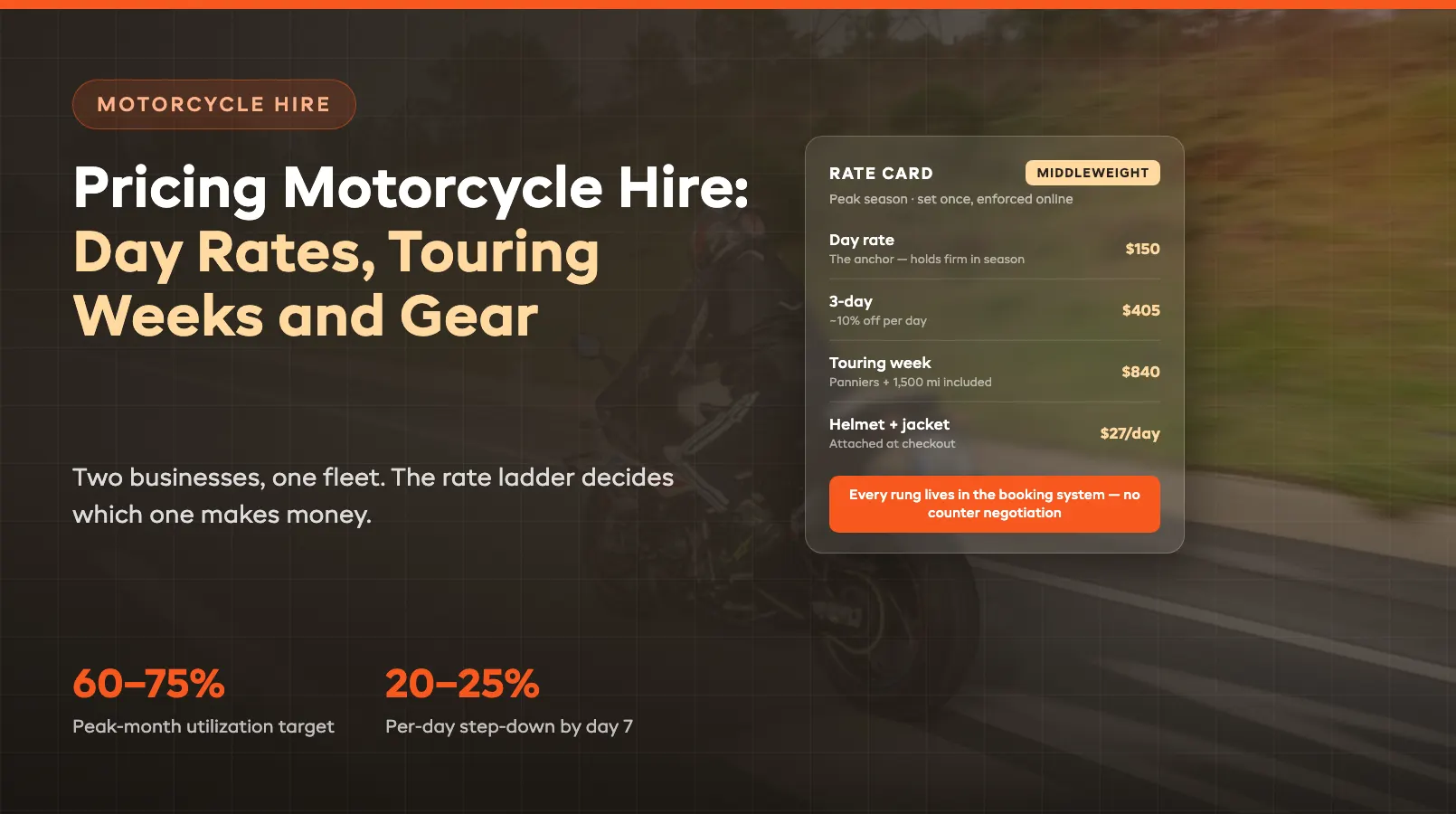
The core structure is a ladder: a headline day rate that anchors the card, multi-day rates that step the per-day price down, and a touring week that's priced as a product, not a discount.
- Day rate is your price-of-entry number and should carry the demand premium. It's what the Saturday rider compares against every other shop in town. A middleweight naked might sit at $120–$180/day depending on market; a premium adventure or touring machine at $200–$300.
- Multi-day steps reward length because your costs don't scale with it: one handover, one clean, one set of paperwork whether the bike is out two days or five. A typical curve runs around 10% off per-day at 3 days and 20–25% off by 7. The step should be visible on the rate card — riders extend a 2-day booking to 3 when they can see the third day is cheaper.
- The touring week is a different product: 7 days, panniers fitted, a mileage allowance sized for a real trip, and often gear included. Package it and name it. A "$1,400 touring week, luggage and 1,500 miles included" sells a trip; "7 × day rate minus 20%" sells a calculator.
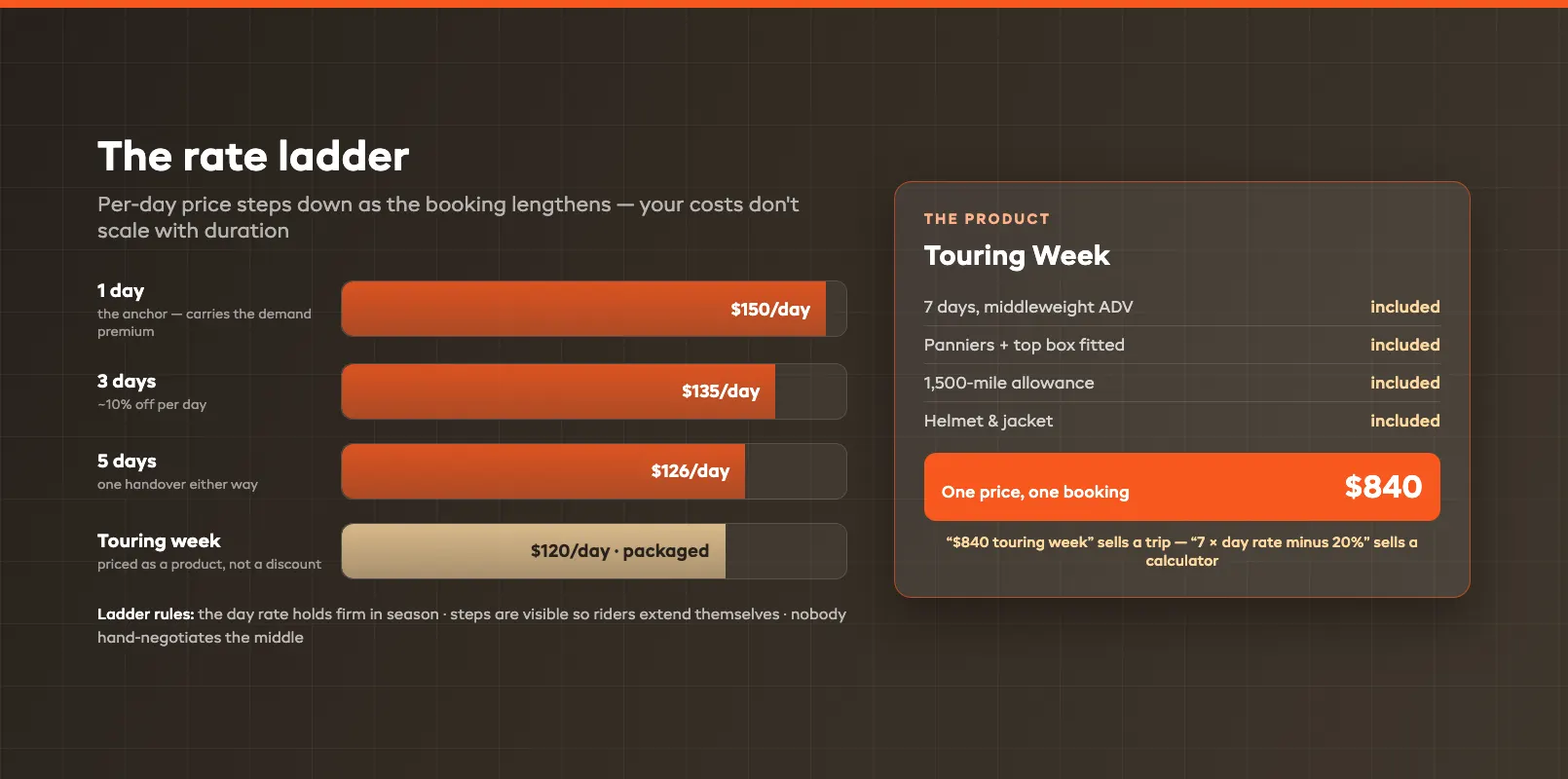
The discipline is refusing to let the ladder collapse: the day rate holds firm in season, the touring week holds its mileage allowance, and nobody hand-negotiates the middle at the counter. Every rung lives in the booking system so the price a rider sees online is the price the counter charges.
Seasonality: Price the Season, Not the Year
Motorcycle demand is a curve, not a line: riding season peaks hard, shoulder months wobble with weather, and winter is near-zero in most markets. A flat year-round rate card means you're underpriced exactly when the fleet sells out and overpriced when it sits.
Run at least three tiers on the card: peak (school holidays, event weekends, high summer), shoulder, and off-season. Peak day rates commonly carry 20–40% over shoulder; off-season pricing is less about margin and more about keeping bikes turning at all — a winter weekday rate that covers costs and keeps the machine from sitting five months straight is a win. Event weekends deserve their own line: if a rally, MotoGP round, or regional bike week lands in your area, those dates are your highest-demand inventory of the year and should be priced, and deposit-protected, accordingly.
Two mechanics make seasonal pricing work in practice. First, set the calendar in advance in your booking system so rates flip on dates automatically — a "we should really update the website" pricing process lags demand by weeks in both directions. Second, watch forward bookings, not just the weather: when the peak calendar is 80% booked six weeks out, the remaining slots are underpriced. That forward-load signal is the cheapest revenue management tool a small fleet has.
Gear Hire as Attach Revenue
The rider who books a $150 day on a bike will pay another $30–$50 for a helmet, jacket, and gloves, if you ask at the right moment. Most shops don't: gear lives in a cupboard, gets thrown in free for whoever asks, and earns nothing. Treated properly, gear is the highest-margin line in the shop, because a $400 helmet that rents at $15/day pays for itself in a season and everything after is margin.
Build a short menu and attach it at booking, not at the counter:
- Helmet: the universal attach; hygiene liners make per-rental turnaround trivial.
- Jacket and gloves: the fly-in tourist's first question; price as a bundle.
- Luggage: panniers, top box, tank bag; near-mandatory attach on touring bookings that don't include it.
- Extras that sell trips: intercoms, phone mounts, heated grips in shoulder season, a pillion seat-and-gear set.
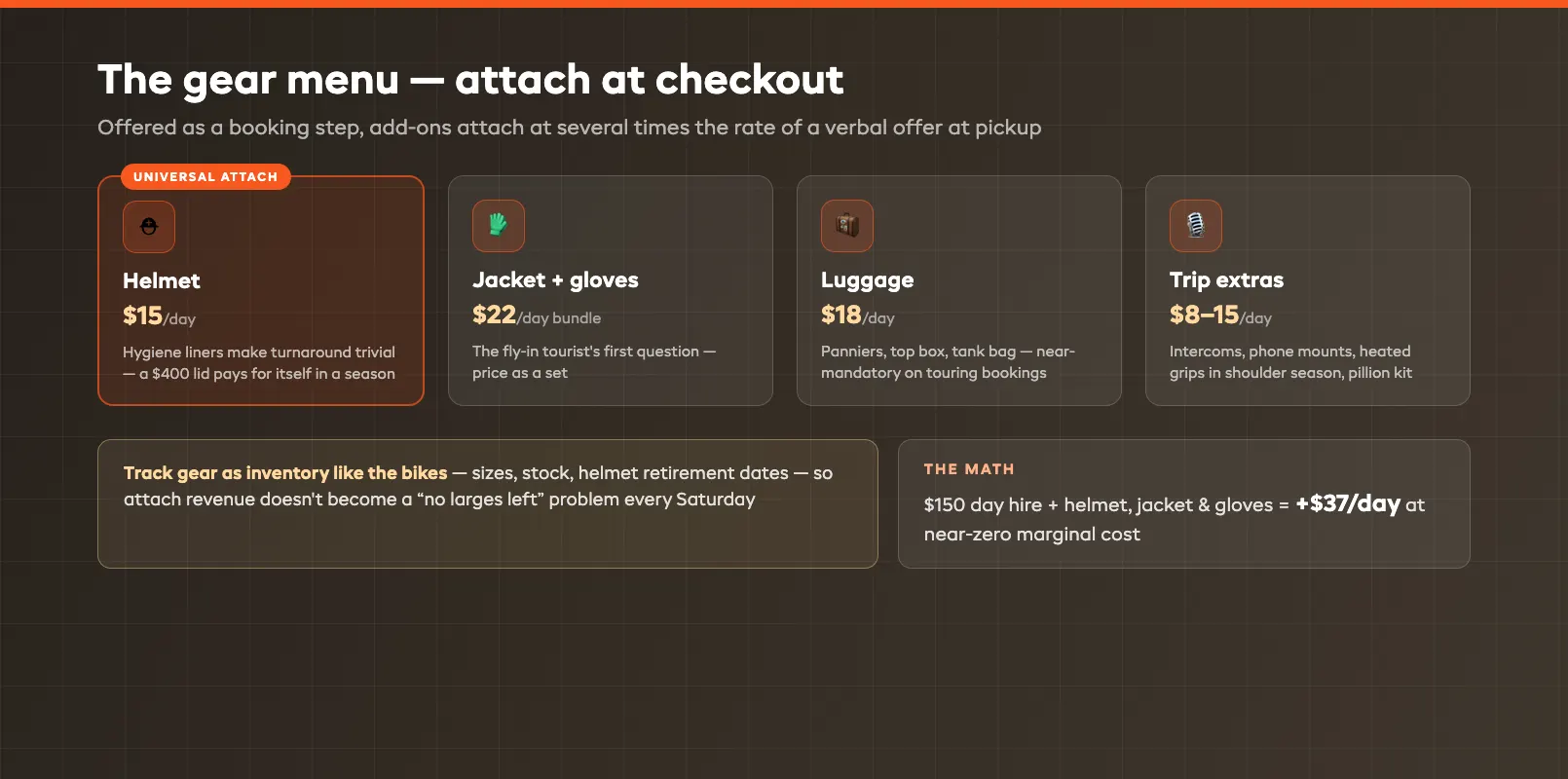
The mechanics matter more than the menu: add-ons offered as a checkout step attach at several times the rate of add-ons mentioned verbally at pickup, because the rider is already in spending mode and nobody is queueing behind them. Track gear as inventory like the bikes (sizes, condition, retirement dates on helmets) so the attach revenue doesn't come with a "we've run out of large" problem every Saturday.
Deposits by Machine Value
One flat deposit across a fleet that spans a $6,000 commuter and a $28,000 touring flagship gets both ends wrong: heavy enough to scare riders off the small bikes, light enough to leave you exposed on the big ones. Tier it — three or four bands tied to machine value and excess:
- Band A: small/commuter machines: deposit around $500–$750, matching a modest damage excess.
- Band B: middleweights: $750–$1,250.
- Band C: premium/touring/adventure flagships: $1,500–$2,500, reflecting both panel cost and the price of a dropped bike's electronics.
- Optional excess-reduction: a per-day fee that halves the excess and deposit — riders love it, and priced right it's profitable insurance-adjacent revenue (check what your policy and local rules allow).
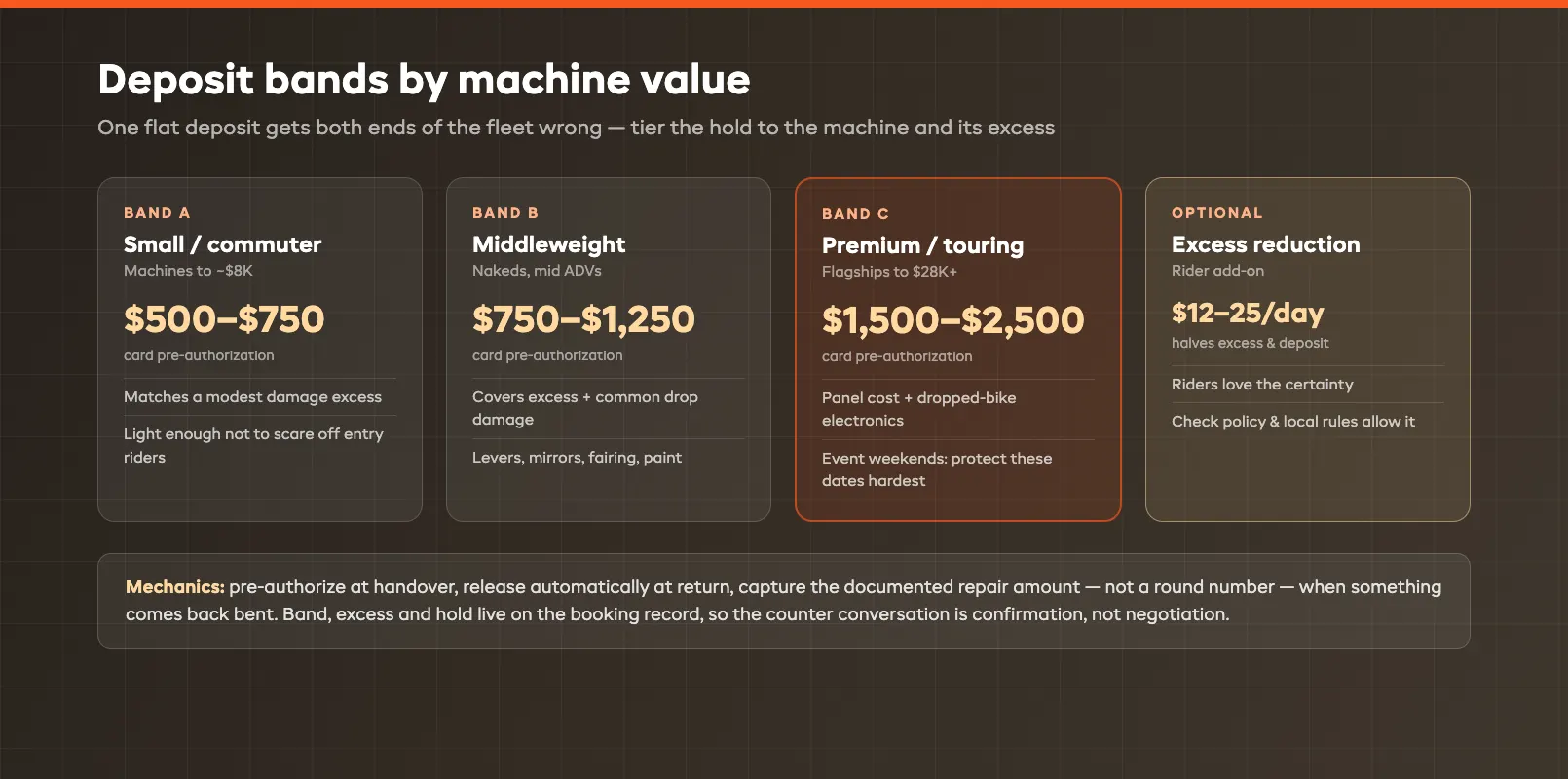
Operationally, deposits should be card pre-authorizations captured at handover and released automatically at return, not cash in a drawer, not a charge-and-refund that riles cardholders. The deposit band, excess, and hold amount all belong on the booking record next to the rider file, so the conversation at the counter is confirmation, not negotiation. The other half of that counter conversation (licenses, waivers, and experience checks) has its own playbook in our guide to rider checks and waivers.
Mileage Policies
Unlimited miles is a clean marketing line and a quiet subsidy: the day rider doing 120 miles and the tourer doing 400 pay the same, while depreciation, tires, and service intervals track the odometer, not the calendar. On a bike, mileage is the cost: chains, sprockets, tires, and valve services arrive on schedule.
A defensible structure: a daily allowance that covers real use (150–250 miles/day for day hire), a bigger pooled allowance on touring weeks (1,200–1,800 miles), and a clearly published per-mile rate beyond. Set high enough to matter, around $0.25–$0.50/mile, and disclosed at booking so it never lands as a surprise. Reserve true unlimited for the touring package where it's priced in, not as a default across the card. The quiet win is data: recording out-and-back odometer readings per rental (photo at handover, photo at return) both enforces the policy and feeds the service schedule — the bike that did three touring weeks back-to-back needs its chain looked at now, not at the calendar interval.
Utilization per Bike
Fleet decisions made on gut feel buy more of what the owner likes riding. Fleet decisions made on numbers buy more of what earns. The number that matters is revenue per bike against days rented per bike, tracked monthly per machine:
- Utilization rate: days rented ÷ days available. A healthy season target for a well-run fleet is 60–75% in peak months; a bike under 40% in peak is the wrong bike or the wrong price.
- Revenue per available day: total revenue (rate + attached gear) ÷ days available. This is the truer number, because it catches the machine that rents rarely but commands a premium versus the one that's always out at a discount.
- Cost drag: service, tires, and repair spend per bike. The middleweight that rents constantly but eats chains may net less than the flagship that goes out twice a month.
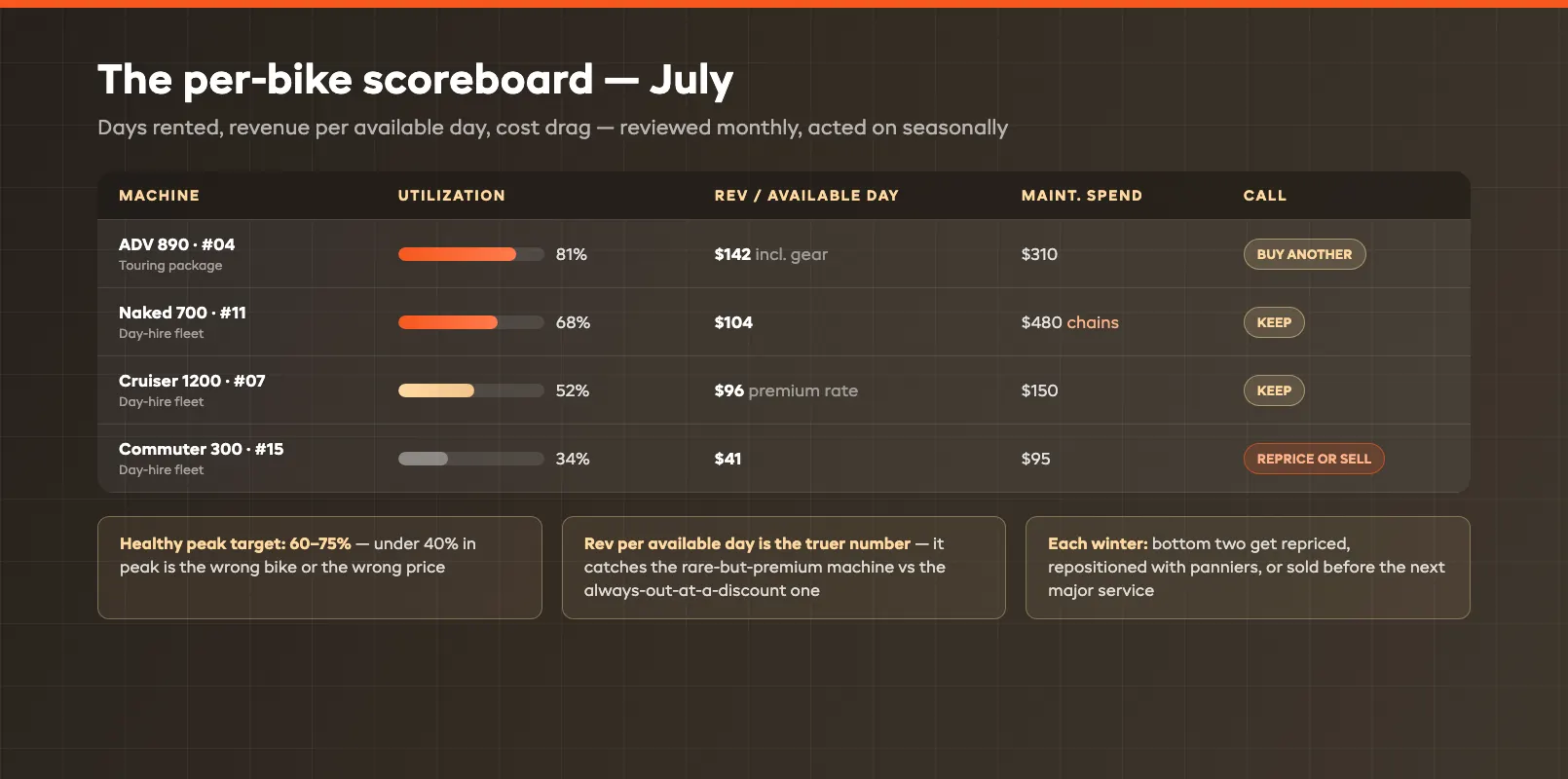
Run the scoreboard monthly and act on it seasonally: the bottom two machines each winter either get repriced, repositioned (a day-hire bike moved to the touring package with panniers fitted), or sold before their next major service. This is also where the rate ladder proves itself. If the touring week is always sold out and day hire is soft, the fleet mix follows the data. Purpose-built motorcycle rental software gives you these numbers as a report rather than a spreadsheet project, and our pricing page shows what that costs, typically less per month than one recovered no-show.
Rate ladder, seasonal card, gear menu, deposit bands, mileage policy, utilization scoreboard: six decisions, each made once and enforced by the booking system. That's the difference between a fleet that's busy and a fleet that's profitable.
FAQ
How much should I charge for motorcycle rental per day?
Anchor to your market and machine class: middleweight nakeds commonly sit around $120–$180 per day, premium adventure and touring machines at $200–$300, with small commuters below both. The day rate should carry your demand premium (it's the price the Saturday rider shops around) and it should hold firm in peak season. Multi-day and touring bookings then step down from it on a published ladder rather than by counter negotiation.
How should multi-day and weekly motorcycle hire discounts work?
Step the per-day price down as the booking lengthens, because your costs don't scale with duration: one handover, one clean, one set of paperwork either way. A typical curve is around 10% off per-day at 3 days and 20–25% off by 7. Make the steps visible on the rate card so riders extend their own bookings, and package the 7-day as a named touring product with luggage and a mileage allowance rather than a bare discount.
Should motorcycle rental include unlimited mileage?
Only where it's priced in, usually the touring package. As a fleet-wide default, unlimited miles quietly subsidizes the highest-mileage riders while chains, tires, and services track the odometer. A defensible structure is a daily allowance of 150–250 miles for day hire, a pooled 1,200–1,800 miles on touring weeks, and a published per-mile rate beyond, disclosed at booking. Photograph the odometer at handover and return to enforce it and feed the service schedule.
How much deposit should a motorcycle rental take?
Tier it by machine value instead of running one flat number: roughly $500–$750 on small commuters, $750–$1,250 on middleweights, and $1,500–$2,500 on premium touring and adventure flagships, each matched to that band's damage excess. Take it as a card pre-authorization at handover with automatic release at return, and consider an optional per-day excess-reduction fee — riders like the certainty and it's healthy revenue when your policy allows it.
Is renting out riding gear worth it?
Yes. It's often the highest-margin line in the shop. A $400 helmet renting at $15 a day pays for itself in a season, and jackets, gloves, and luggage follow the same math. The key is offering gear as a checkout step at booking time, where attach rates run several times higher than a verbal offer at pickup. Track gear as inventory with sizes and retirement dates so the revenue doesn't collapse into a "no larges left" problem every weekend.
What utilization rate should a motorcycle hire fleet target?
A well-run fleet targets roughly 60–75% utilization (days rented over days available) per bike in peak months; anything under 40% in peak signals the wrong bike or the wrong price. Pair it with revenue per available day, including attached gear, and per-bike maintenance spend, reviewed monthly. Each off-season, reprice, reposition, or sell the bottom machines before their next major service, and let the sold-out segments tell you what to buy.
in one place