Rider Checks and Waivers: Getting It All Before the Keys Move
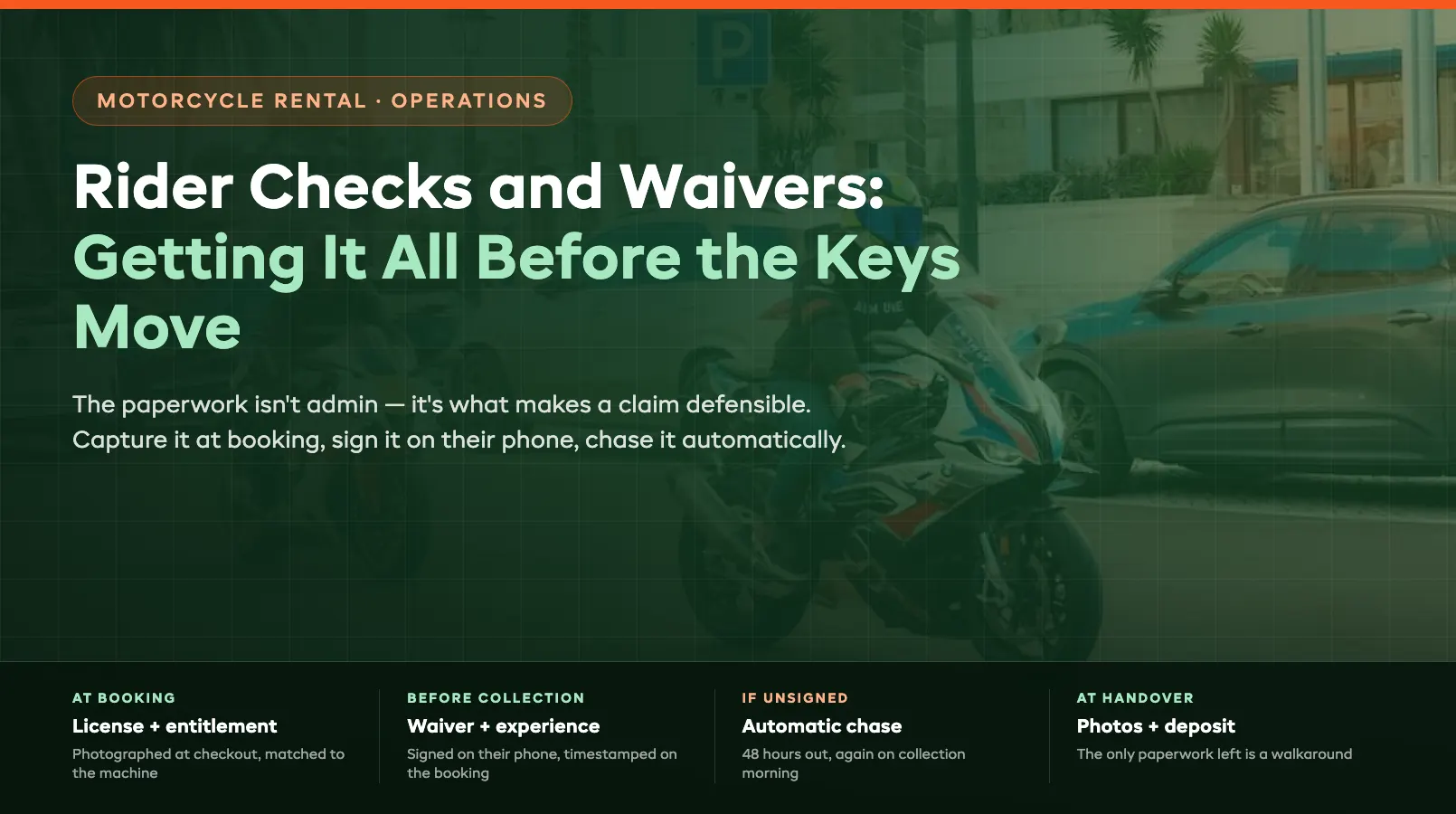
Every motorcycle rental operator has a version of the same rule: no paperwork, no keys. The difference between the shops that sleep well and the shops that don't is not the rule. It's whether the rule survives a busy Saturday. A waiver is not admin. It is the document that decides whether a claim against your business is defensible or arguable, and the license check beside it is the difference between an insured incident and an uninsured one. This guide is the working system: what to capture, when to capture it, how to get it signed without slowing the counter, and how to store it so the whole file surfaces in one search when, years later, you actually need it.
If you're still choosing the platform that runs all of this, start with the buying guide to motorcycle rental software. This post assumes the tooling exists and focuses on the process.
What to Capture and When
The complete rider file for a motorcycle rental has five parts, and each has a correct moment of capture:
- License, front and back: at booking. Photographed by the rider from their own phone during checkout, stored against the booking. Not inspected-and-handed-back at the counter: captured, so it exists when an insurer asks.
- Entitlement class: at booking, recorded against the specific bike reserved. An M endorsement, an A2 power class, a learner capacity limit, whatever your jurisdiction tiers, the booking should hold the rider's class next to the machine's requirement so a mismatch surfaces days early.
- Signed waiver: before collection day. The waiver is where the rider acknowledges the risks, confirms experience, and accepts damage and deposit terms in writing.
- Experience declaration: with the waiver. Years riding, machines ridden, recent riding frequency. Two minutes of questions that matter enormously later.
- Condition photos and deposit authorization: at handover. The only two items that genuinely belong to collection day.
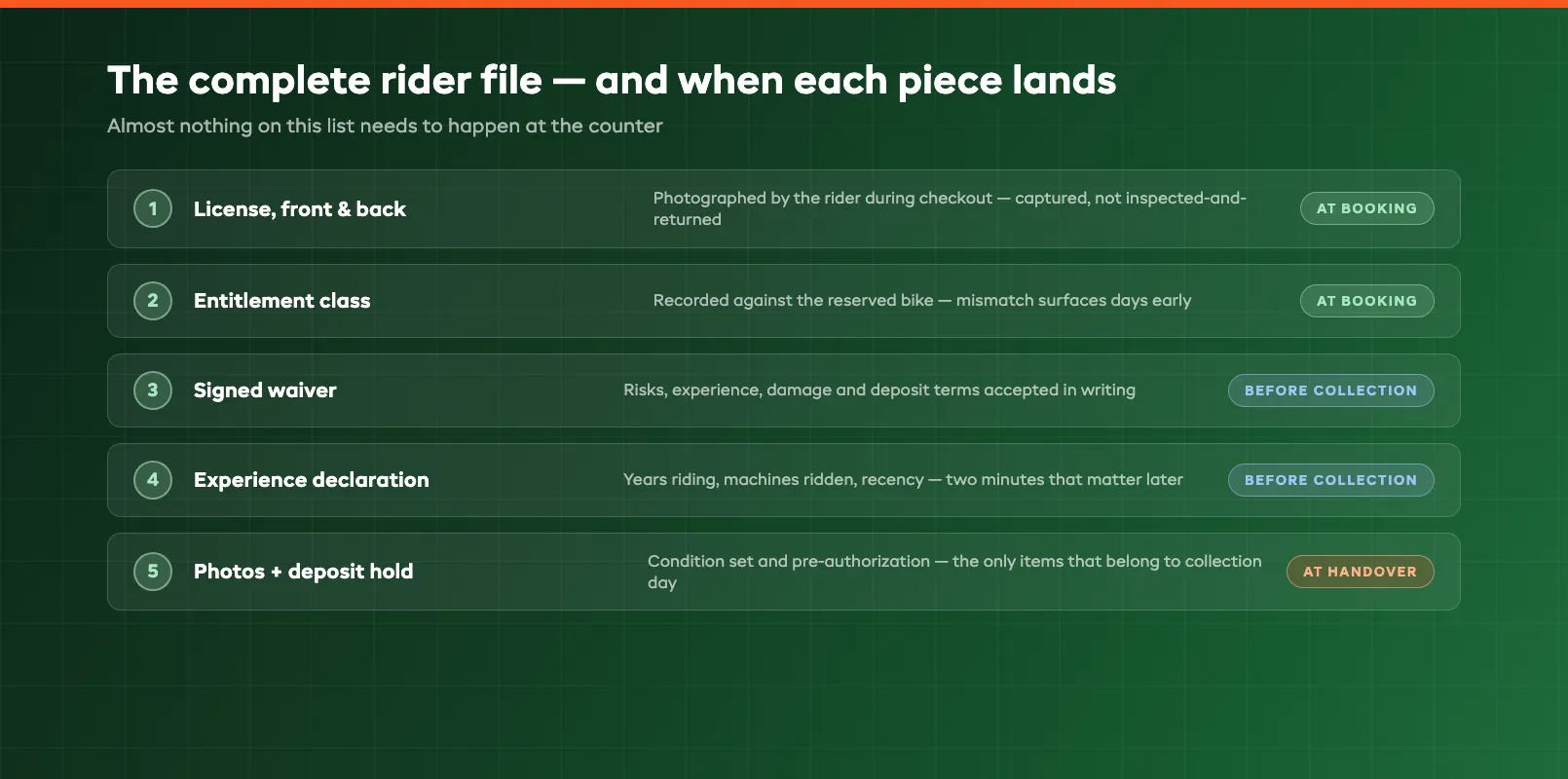
Notice the pattern: almost nothing on that list needs to happen at the counter. That's the point of the next section.
Moving Checks to Booking, Not the Counter
The counter is the worst place in your business to run a compliance process. The rider is standing there in boots, the next customer is behind them, and your staffer is choosing between doing the checks properly and doing them fast. Under that pressure, "no paperwork, no keys" quietly becomes "no paperwork, keys anyway, we'll sort it after." The one rental where it mattered will be the one where it was skipped.
Moving every possible check to booking time changes the physics. The rider photographs their license at checkout from their sofa. The waiver arrives by email the moment the booking confirms and gets signed that evening. The entitlement mismatch (a rider with a car license booking a 1,200cc machine) surfaces as a flag on the booking two days out, when it's a phone call and a substitution rather than a counter argument and a refund. By collection day, the handover is a walkaround, condition photos, deposit hold, keys. Five minutes, no clipboard.
There's a revenue angle too: a booking that arrives pre-checked is a booking that doesn't cancel at the counter. Discovering at pickup that the rider isn't entitled to the machine costs you the rental, the slot you turned others away from, and usually an argument about the deposit. Discovering it at booking costs you an email. And the same booking-time flow is where deposits and add-on gear get agreed without friction — how to price those is covered in our guide to motorcycle hire rates.
Digital Signing
A motorcycle rental waiver signed on paper at the counter has three problems: it's read under time pressure (which is exactly what a lawyer will argue), it lives in a filing cabinet, and it's the slowest part of your handover. Digital waivers fix all three. The waiver goes out automatically when the booking confirms, opens on the rider's own phone, gets read at their own pace, and comes back signed with a timestamp, the signer's identity, and the booking it belongs to — a far stronger record than a scrawl on a counter clipboard.
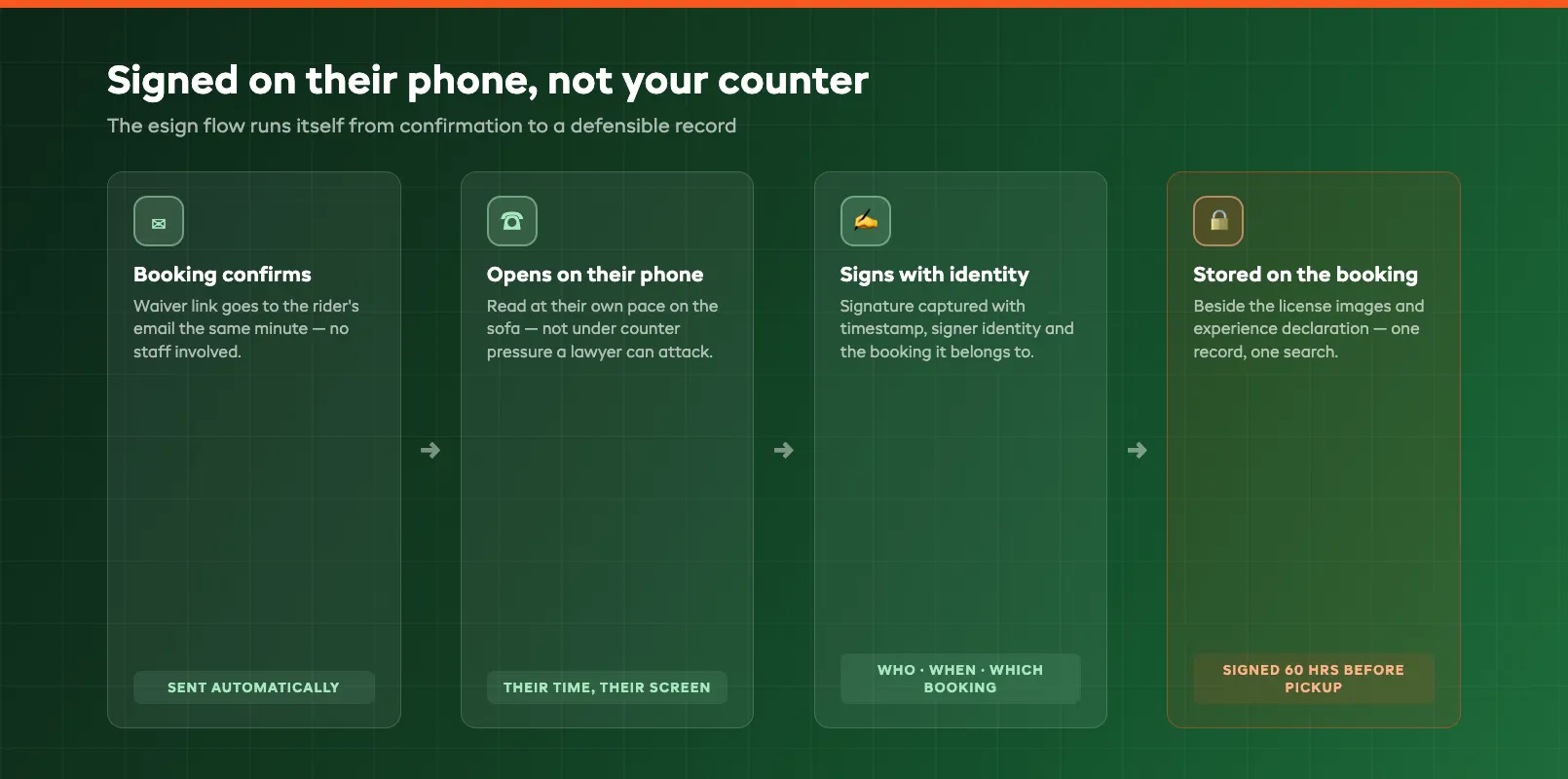
What makes the record defensible is the metadata: who signed, when, from where, against which booking, alongside which license images. If a claim turns adversarial, "we always get them signed" impresses nobody; a timestamped file signed 60 hours before the incident is a different conversation. Two structural rules keep it that way. First, the waiver and the license live on the same booking record: the moment paperwork sits in one tool and bookings in another, reconciliation becomes a manual job, and manual jobs get skipped in season. Second, every rider on the booking signs their own waiver, including the passenger who "might take a turn riding," who is the gap operators learn about the hard way.
Chasing the Unsigned
Sending the waiver is the easy half. The operational problem is the rider who doesn't sign it, and on any given week that's a third of your bookings, not because riders object but because emails sink. Chasing them manually means a staffer working a list every morning, which works until the first genuinely busy week, which is exactly when the exposure is highest.
The chase should run itself on a fixed schedule: waiver sent at confirmation, reminder at 48 hours unsigned, second reminder the morning of collection, and a visible flag on the day's pickup list for anything still open. Staff stop chasing paper and start scanning a status column. This rider is ready, this one still owes a signature, nobody gets keys with an open flag.
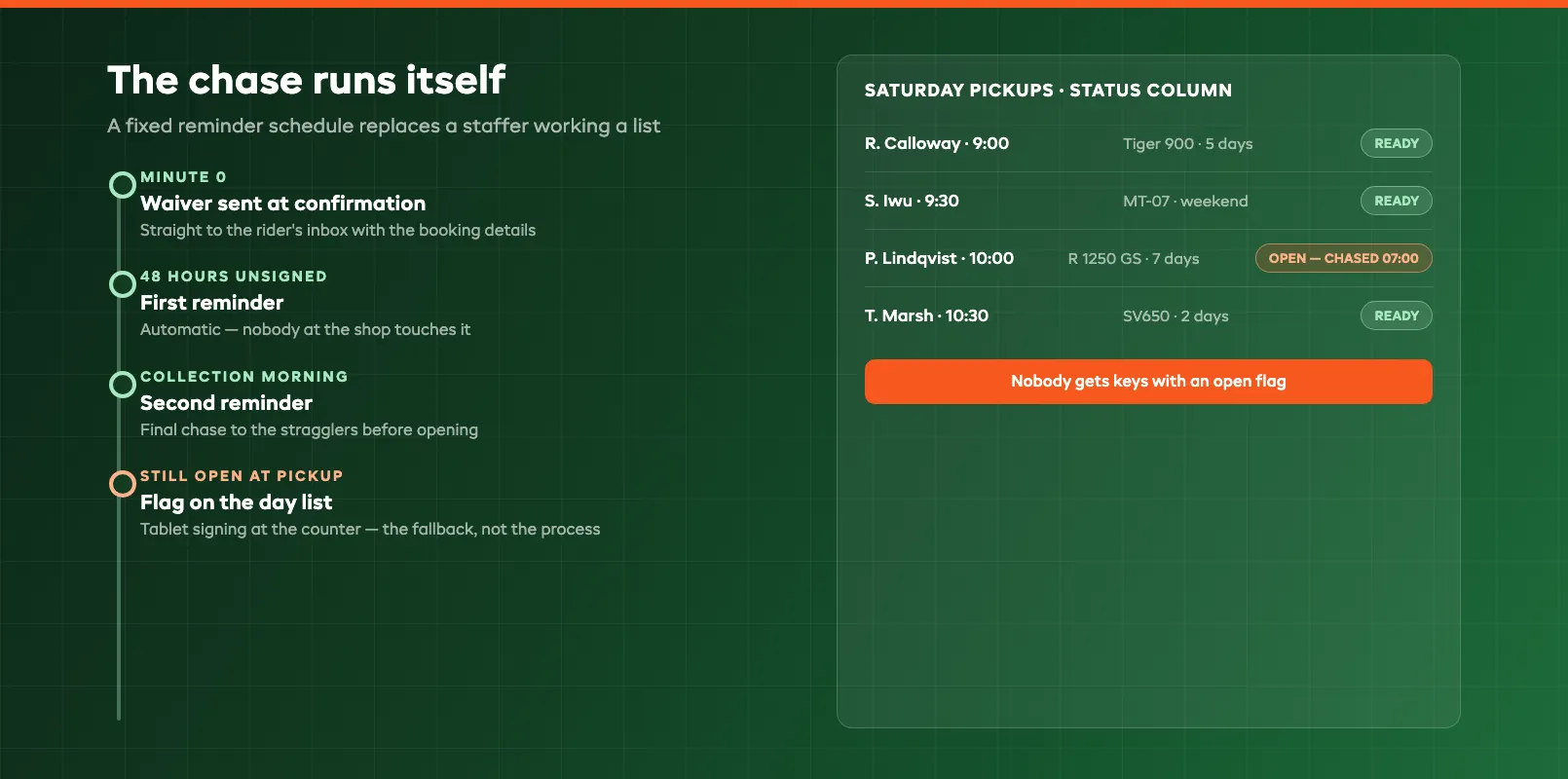
The last-resort path still exists: a rider who arrives with the waiver unsigned signs it on a tablet at the counter before anything else happens. That's the fallback, not the process, and the measure of a good chase sequence is how rarely the fallback fires. Shops that automate the reminders consistently report walk-in signing dropping to a handful of cases a month.
Experience Questions Worth Asking
The waiver confirms the rider accepts the risk. The experience declaration tells you whether the risk is sensible to accept. Motorcycle rental sits apart from nearly every other rental category here: the machine's danger scales directly with the gap between what the rider booked and what the rider can actually handle. Four questions cover most of it:
- How many years have you held this license class? A license earned last month and a license held for a decade are different customers on the same paperwork.
- When did you last ride, and how often? The returning rider who hasn't been on a bike in eight years is a known risk profile — many operators route them to a middleweight for day one.
- What do you ride at home? A rider stepping up 400cc from their own machine deserves a conversation before they deserve keys.
- Have you ridden loaded, two-up, or in this terrain? For touring operations, a rider who has never carried luggage on a mountain pass is worth knowing about in advance.
The declaration does double duty. Operationally, it lets you steer the booking: substitute the machine, suggest a shorter first day, flag the handover for a longer briefing. Legally, it's part of the file: a rider who declared ten years of experience and turns out to have exaggerated has made the misrepresentation, not you. Keep the questions in the booking flow, keep the answers on the record, and give staff a one-line summary on the pickup list.
Storage and Retrieval
The file you built exists for one moment: the day someone asks for it. That's an insurer six months out, a chargeback dispute at ninety days, or a solicitor's letter two years after the rental, and in every case the question is the same: produce the record. Storage that can't produce it quickly is storage that doesn't count.
The standard is one search, whole file. Search the rider's name or booking number; get back the license images, entitlement class, signed waiver with its timestamp, experience declaration, condition photos from both ends of the rental, and the deposit trail, all hanging off the one booking record. What breaks this is fragmentation: waivers in one app, licenses in a camera roll, bookings in a third system. Each extra system is a place the file can be incomplete, and an adversarial claim will find the gap.
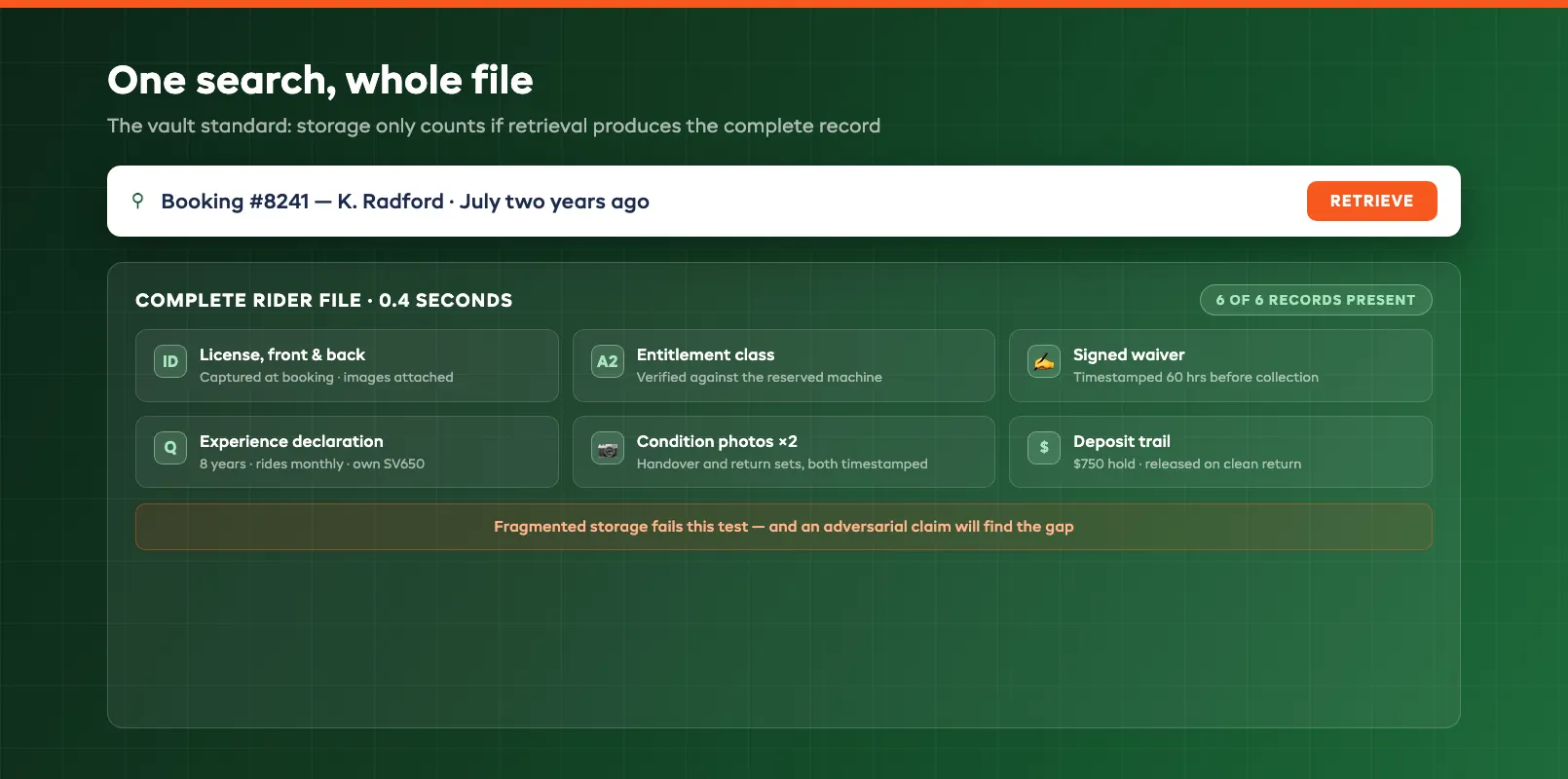
Retention is jurisdiction-specific, but the practical floor is your statute of limitations for personal injury claims, commonly two to six years, and cloud storage is cheap enough that most operators simply keep everything. Purpose-built motorcycle rental software does this by default because the booking record is the filing system; if you're assembling it from separate tools, the retrieval test above is the one to run before a claim runs it for you.
FAQ
What should a motorcycle rental waiver include?
Four things in plain language: acknowledgment of the specific risks of motorcycling, the rider's experience declaration, acceptance of your damage and deposit terms, and identification tying the signature to this rider and this booking. It should be signed digitally before collection day, so the record carries a timestamp and signer identity, and every rider on the booking signs their own, including a passenger who may ride.
When should the waiver be signed — at booking or at pickup?
Before collection, ideally within hours of the booking confirming. A waiver sent automatically at confirmation gets read on the rider's own phone at their own pace, which is both faster on collection day and harder to challenge later — a document signed under counter pressure is exactly what an opposing lawyer will attack. Counter signing on a tablet stays available as the fallback for the few who arrive unsigned.
How do I check a rider's license before a motorcycle rental?
Capture it at booking, not the counter: the rider photographs the license front and back during checkout, the images store on the booking, and the entitlement class is recorded against the specific machine reserved. Motorcycle entitlements are tiered nearly everywhere (M endorsements in US states, A2/A power classes in Europe, learner capacity limits in Australia) so the check is whether this class covers this bike, surfaced days before collection rather than minutes.
What happens if a customer won't sign the waiver?
No signature, no keys, without exception, because the one unsigned rental is the one your insurer will ask about. In practice refusal is rare; the real problem is the rider who simply hasn't signed yet, which automated reminders at 48 hours and on collection morning mostly eliminate. For the genuine refusal at the counter, treat it as a cancellation under your standard policy: the waiver terms were part of the booking, not a surprise at pickup.
What experience questions should I ask before renting a motorcycle?
Years holding the license class, recency and frequency of riding, what they ride at home, and whether they've ridden loaded or two-up if it's a touring rental. The answers let you steer the booking (a smaller machine, a longer briefing, a shorter first day) and they become part of the legal file: a rider who overstated their experience made the misrepresentation, not you.
How long should I keep signed waivers and rider records?
At minimum, your jurisdiction's limitation period for personal injury claims: commonly two to six years, and longer where incidents involving minors pause the clock. Digital storage makes the practical answer "keep everything": a complete file costs megabytes, while a missing one can cost a claim. The standard worth holding is retrieval, not just retention — the whole rider file, produced from one search of the booking.
in one place