Pre-Season Boat Launch: Recommissioning a Fleet After Winter
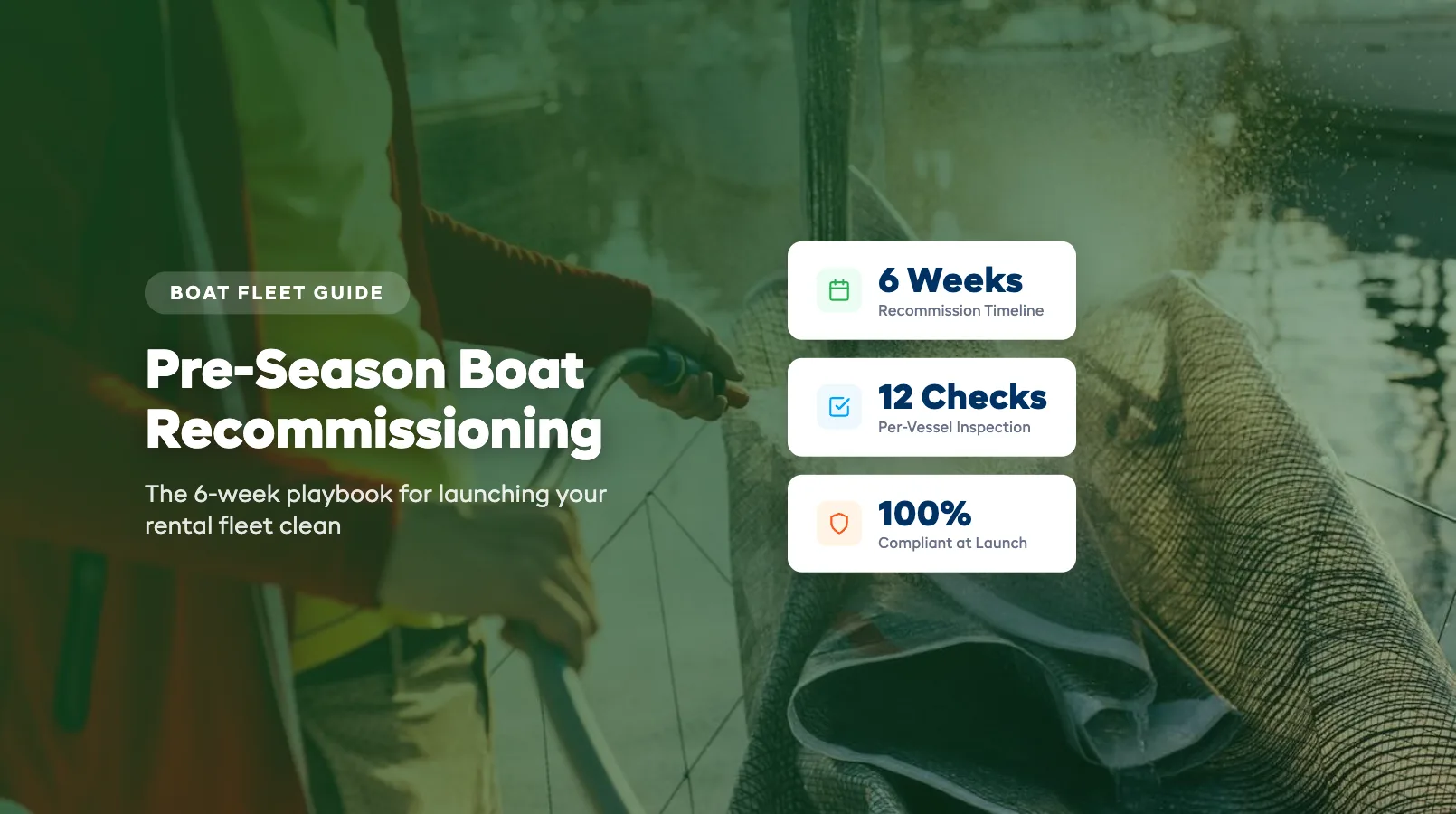
You winterised the fleet in November. Covers on. Batteries out. Fuel stabilised. Now it's mid-March and the first booking is 6 weeks away. The gap between "boats in storage" and "boats earning revenue" is where most operators lose time, money, or both.
Rush the recommissioning and you'll spend your first two weekends pulling boats off the water for problems you should have caught in April. Skip the insurance renewal and you're one prop strike away from an uninsured claim.
For the full boat rental operator playbook — licensing, fleet sizing, pricing — see our complete boat rental business guide. For ongoing maintenance tracking once the season starts, see our boat maintenance logs guide. For the fall half of the cycle, from the haul-out week to billing winterization and storage as revenue, see our boat winterization and storage guide.
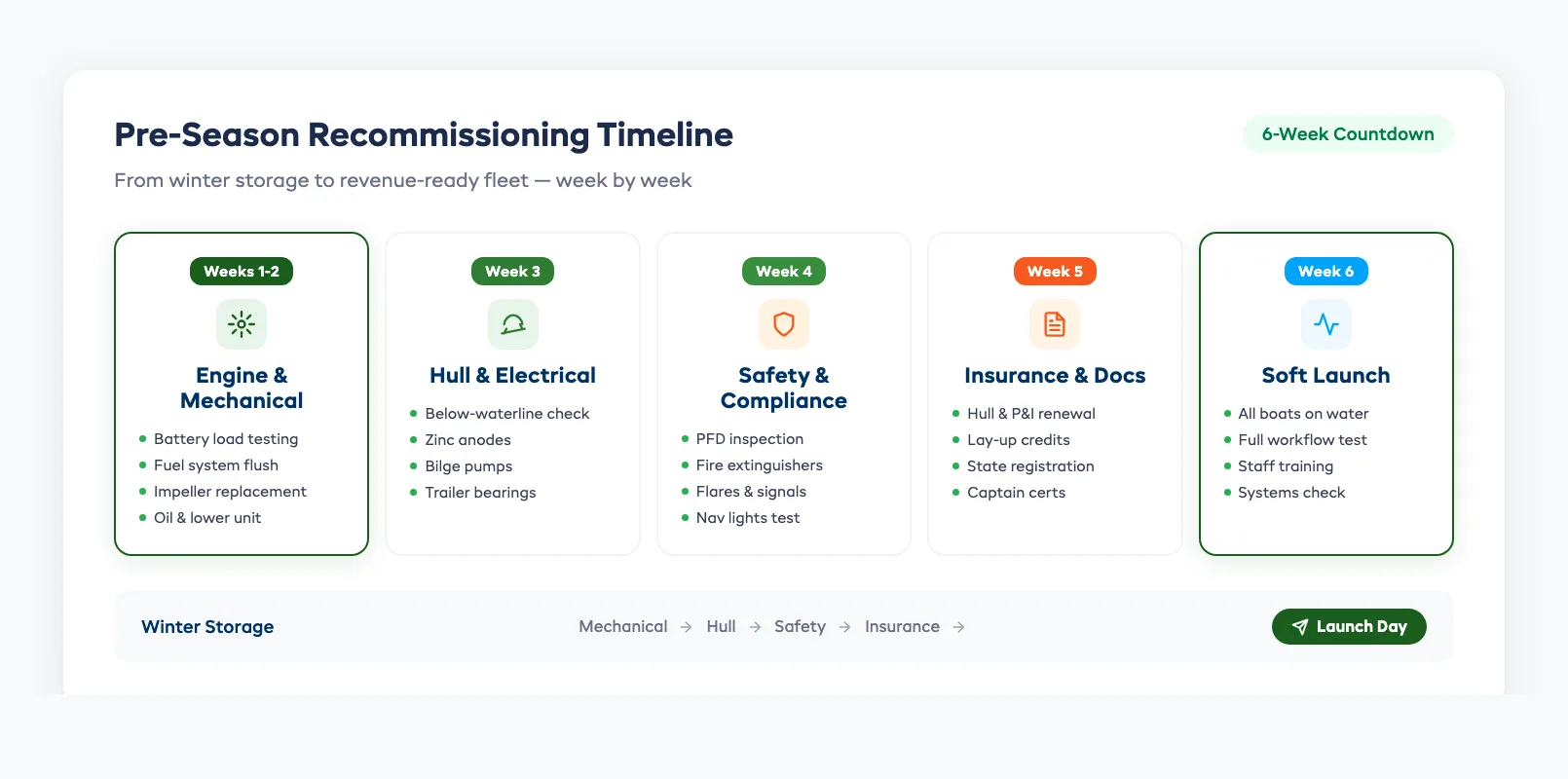
Timeline: 6 Weeks Out
Six weeks sounds generous. It isn't. You'll find problems on the first boats you touch, and fixing those eats into time planned for the rest of the fleet.
Weeks 1-2: Engine and mechanical. Pull covers. Reconnect batteries. Run every engine. This is where 80% of problems surface — dead batteries, corroded terminals, cracked hoses, impeller failures.
Week 3: Hull, trailer, electrical. Below-waterline inspection, zinc anodes, bilge pumps, navigation lights, trailer bearings and tires.
Week 4: Safety gear and compliance. Life jackets, fire extinguishers, flares, throwables, first aid kits. Check expiry dates. Replace anything questionable.
Week 5: Insurance and documentation. Renew policies, update registrations, confirm captain certifications.
Week 6: Soft launch and staff training. Every boat on the water with staff driving. Test your booking flow, check-out process, and return inspection.
Never compress this into 3 weeks. Every operator who tries spends the first month of the season doing warranty work instead of serving customers.
Engine Recommissioning
Engines that sat 4-5 months need a systematic wake-up. Skipping steps creates problems that show up 2 miles from the dock with a customer aboard.
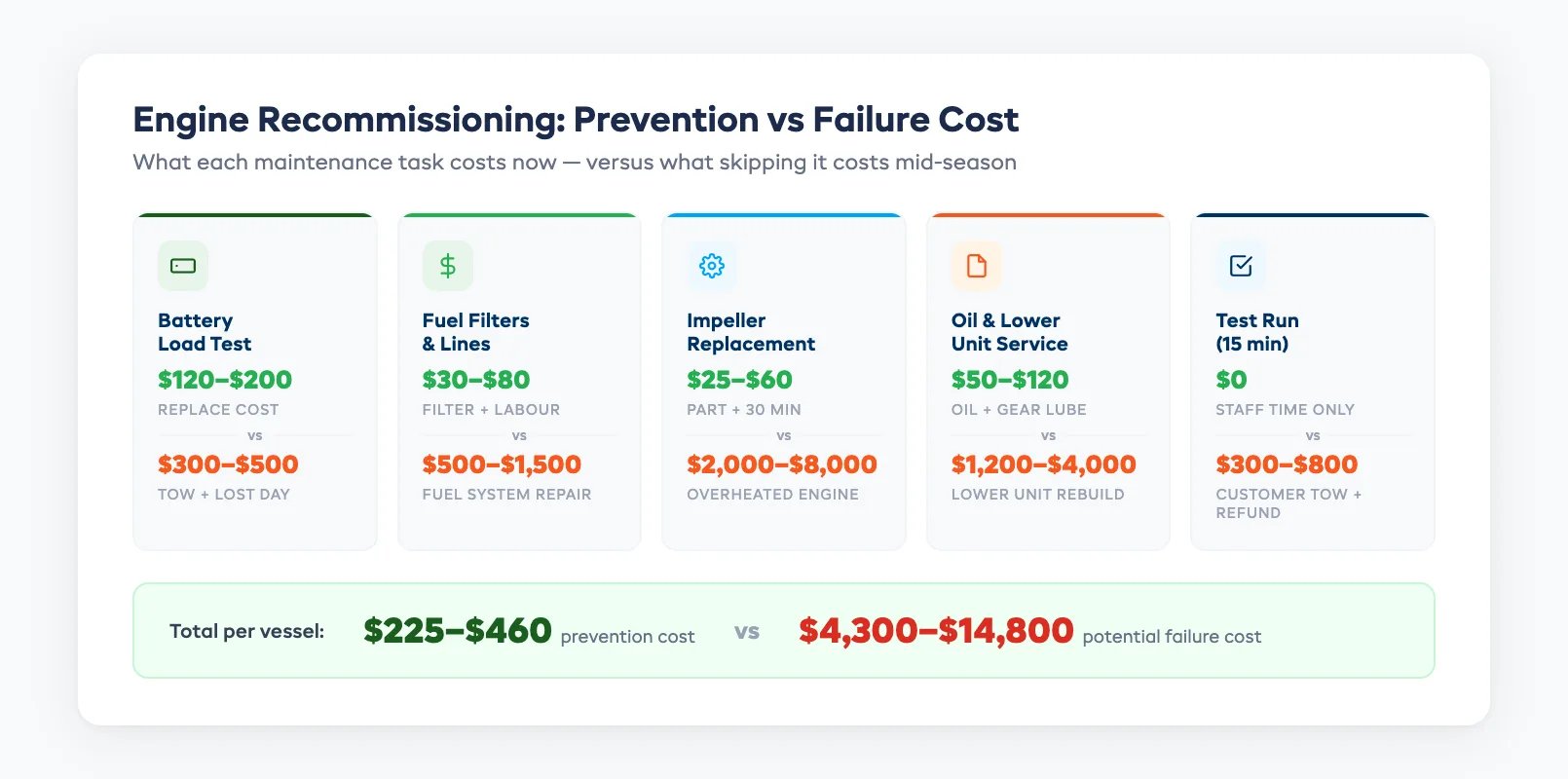
Batteries. Reconnect and load-test every battery with a digital tester — not just a voltage check. A battery can show 12.6V and still fail under load. Replace any showing less than 75% capacity. A marine starting battery costs $120-$200. A tow back costs $300-$500 plus the lost rental day.
Fuel system. Drain water separators. Replace fuel filters on every vessel. Check fuel lines for cracking, especially rubber sections near the engine. Any fuel smell in the bilge means a leak.
Cooling system. Replace the water pump impeller on every raw-water-cooled outboard. Every spring. A new impeller costs $25-$60. An overheated engine costs $2,000-$8,000.
Oil and lower unit. Change engine oil and filter. Drain lower unit gear lube — milky color means water contamination and possible freeze damage.
Test run. Run each engine at idle for 10-15 minutes, then cruising RPM for 5 minutes. Check for overheating, vibration, oil pressure, and charging voltage. Log results per vessel — this is your season baseline.
A booking system with maintenance tracking lets you log every recommissioning task and flag anything needing follow-up.
Safety Gear Audit
The Coast Guard doesn't care that you were busy with engines. If a vessel leaves the dock without compliant safety equipment, you're liable.
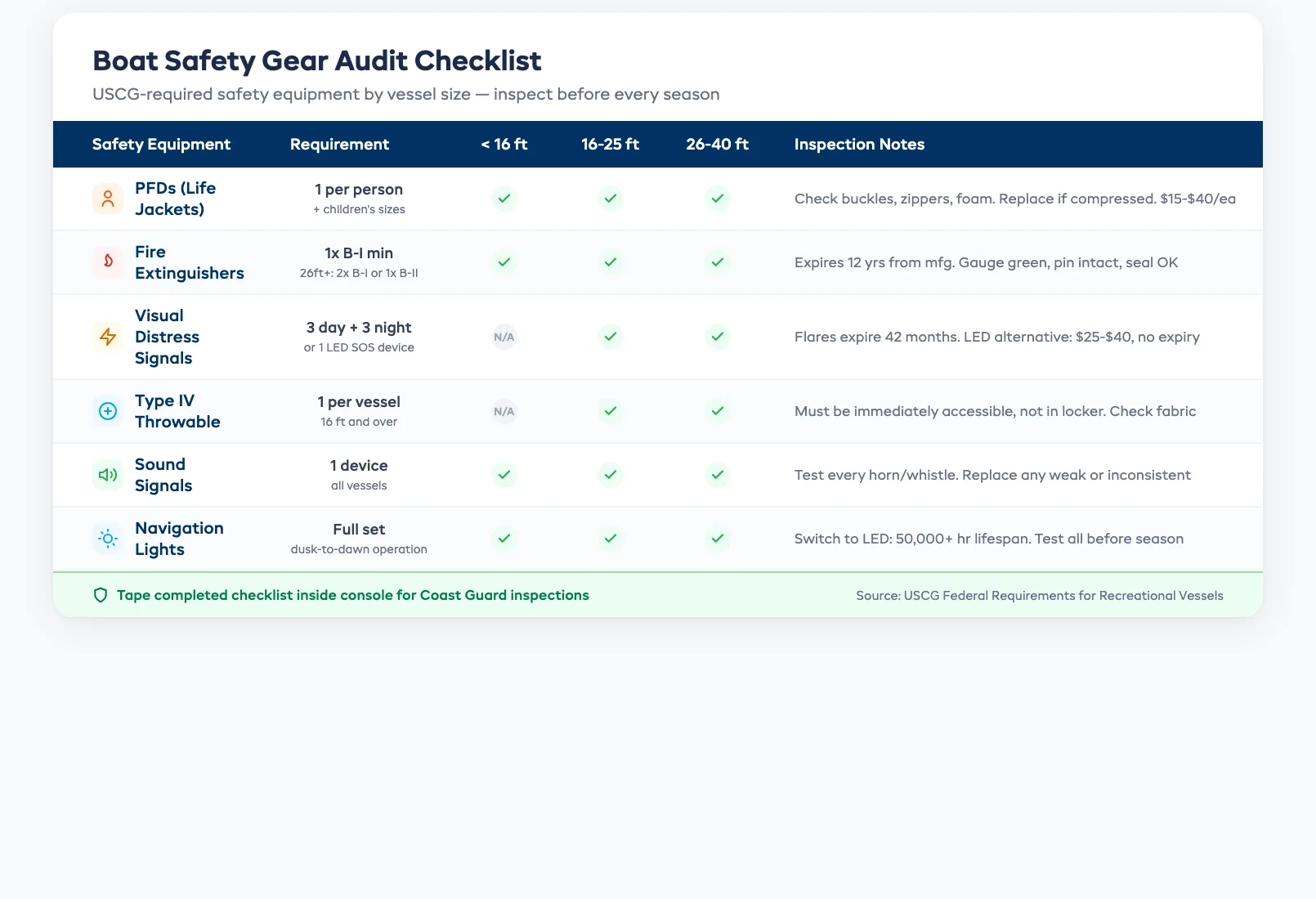
Life jackets (PFDs). One USCG-approved PFD per passenger capacity, plus children's sizes for family operations. Inspect buckles, zippers, straps, and flotation foam. Compressed foam or torn fabric means replacement. Budget $15-$40 per adult PFD.
Fire extinguishers. Marine extinguishers expire 12 years from manufacture date (check the stamp, not the inspection tag). Gauge in the green, pin and tamper seal intact. Vessels under 26 feet: one B-I minimum. Over 26 feet: two B-I or one B-II.
Visual distress signals. Pyrotechnic flares expire 42 months from manufacture. If yours are 3+ years old, replace them. Or switch to electronic LED SOS lights — they don't expire and the Coast Guard accepts them. $25-$40 per unit.
Throwables and sound signals. One Type IV throwable per vessel 16 feet and over. Air horn or whistle on every vessel — test each one.
Navigation lights. Test all lights. Switch to LED if you haven't — 50,000+ hour lifespan, fraction of the power draw.
Build a per-vessel compliance checklist and tape the completed form inside the console for inspections. Your damage deposit and handoff process should include a safety briefing that walks customers through the equipment.
Insurance and Registration Renewal
The section operators push to the last minute — and the one that creates the most expensive problems when it lapses.
Hull and P&I insurance. Contact your broker 6-8 weeks before launch. Confirm coverage matches current fleet value. Verify the policy covers commercial rental use — a personal marine policy won't cover a customer at the helm. Expect 2-4% of vessel value annually for hull, plus $1,500-$5,000 per vessel for P&I.
Lay-up credits. Most insurers offer 15-25% premium credits for documented winter storage. File lay-up dates before renewal so the credit applies.
State registration. Renew every vessel before launch. Fees: $25-$150 per vessel. Display new stickers before the first trip. Expired registration: $50-$250 citation per vessel.
Captain certifications. If you run captained charters, verify every captain's USCG license is current. OUPV licenses require renewal every 5 years with drug testing and a physical.
Keep digital copies of every document in your booking system. When a customer asks "is this boat insured?" you want a one-tap answer.
Soft-Launch Day
Not opening day. The dress rehearsal where you find every problem before a customer does.
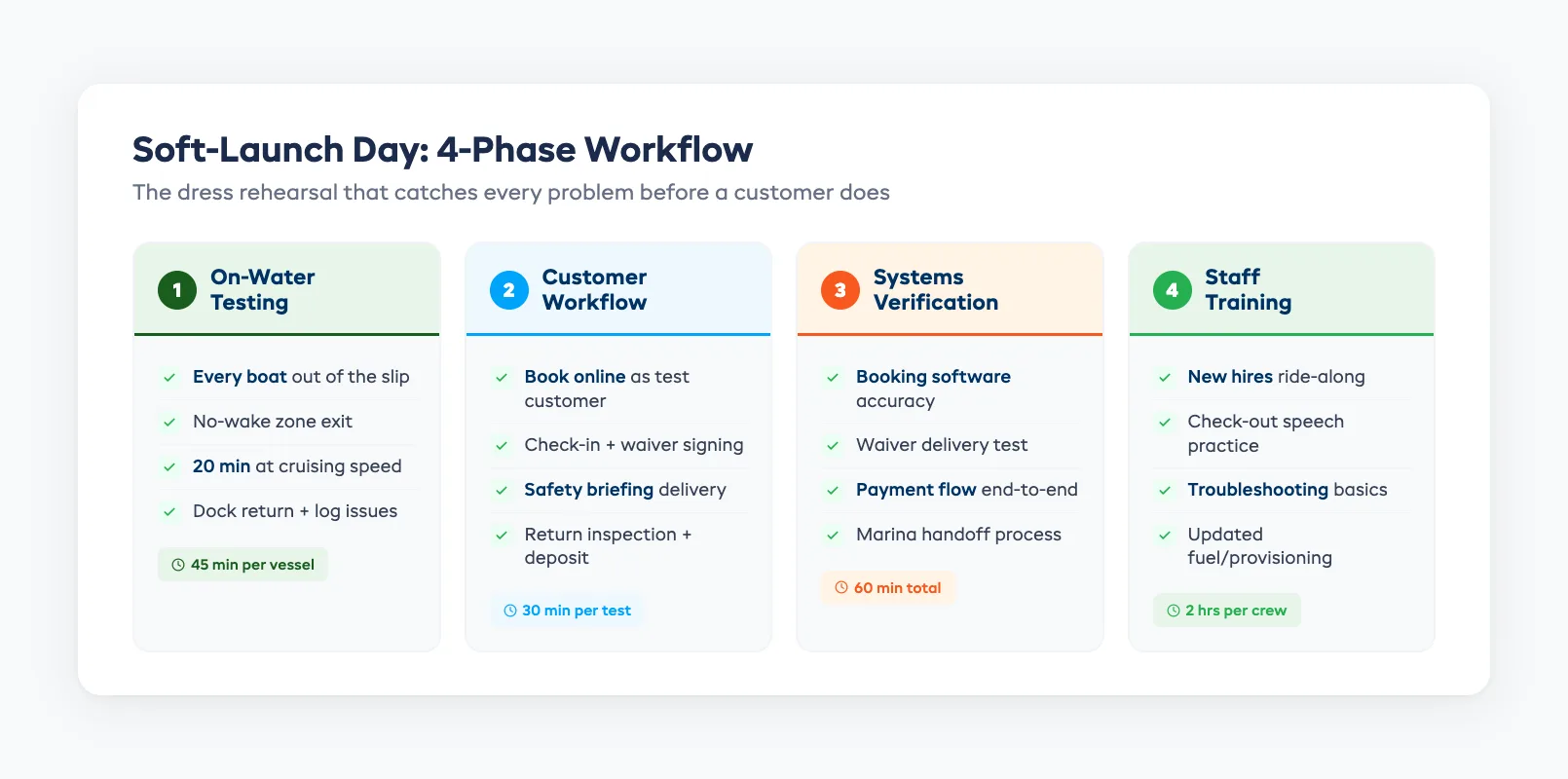
Every boat on the water. Not just the first three. Your dock team drives each vessel through the exact customer route — out of the slip, through the no-wake zone, cruising speed for 20 minutes, back to the dock. Log anything that feels off.
Full customer workflow. Staff member plays the customer. Book online. Arrive. Complete check-in. Sign the waiver. Safety briefing. Take the boat out. Return. Inspection. Deposit release. Every step, front to back.
Systems check. Confirm booking software shows accurate availability. Verify waivers send correctly. Test payment flow. Check your marina handoff process with the current dock layout.
Staff training. New hires ride along. They learn the check-out speech, safety briefing, return inspection, and troubleshooting basics. Returning staff get refreshed on new vessels or updated fuel and provisioning policies.
Schedule soft-launch 5-7 days before opening. That gives a full work week to resolve whatever surfaces.
First-Week Monitoring
The first weekend was busy. You're tempted to call recommissioning done. Don't.
Log everything. For the first 7 operating days, dock team logs every mechanical issue, customer complaint, and booking hiccup. Small things too — a sluggish throttle on Pontoon 6, a flickering nav light on Boat 3.
Daily engine checks. Check oil, coolant, and belt tension on every vessel before the first departure. This catches break-in issues — a new impeller not seated properly, a battery connection that vibrated loose.
One question at the dock. Ask every returning customer: "Anything we should know about the boat?" Not a survey. One question, face to face. Customers notice things your inspection missed.
Utilization tracking. Compare first-week bookings against forecast. Above 85% utilization on weekends? Adjust turnaround time. Below 60%? Check pricing against competitors.
Everything logged during recommissioning and first-week monitoring becomes your season maintenance baseline. When a customer reports an issue in July, you can check whether it existed at launch. That distinction matters for insurance and damage deposit disputes.
If you're scaling past 10 vessels, first-week monitoring matters even more. More boats, more edge cases, more chances for something to slip through.
A clean recommissioning sets the tone for the entire season. Skip a step in April and you'll pay for it in June — with tow bills, canceled bookings, and reviews that mention "mechanical issues." Do the work now. Log everything. Launch clean.
FAQ
How long does boat recommissioning take per vessel?
Budget 4-6 hours per vessel for a thorough recommissioning — engine work, safety gear audit, hull inspection, and test run. A 10-boat fleet needs 40-60 labor hours across 2-3 weeks.
What's the most common problem found during spring recommissioning?
Dead or weak batteries. Even with a trickle charger, marine batteries degrade over winter. Load-test every battery — voltage readings alone don't reveal capacity loss. Budget to replace 15-25% of your fleet's batteries each spring.
Should I recommission boats myself or hire a marine mechanic?
For outboard pontoons and fishing boats, a trained dock manager can handle most tasks. For inboard engines, sterndrives, or vessels over 30 feet, use a certified marine mechanic ($150-$300/hour). Cheaper than a mid-season breakdown.
When should I start recommissioning?
Six weeks before your planned opening day. Memorial Day start? Begin mid-April. April start in warmer climates? Begin early March. The timeline doesn't compress well.
Do I need to replace the water pump impeller every year?
Yes, for raw-water-cooled outboards. Impellers cost $25-$60 and take 30-45 minutes. An overheated engine costs $2,000-$8,000 to repair. The maths is not close.
What insurance documents should I have on each vessel?
Current hull insurance policy, P&I certificate, state registration with valid sticker, and commercial use permit if required. Keep digital copies in your booking system and physical copies in a waterproof sleeve at the helm.
How do I handle a boat that fails the soft-launch test?
Pull it from the rental fleet until the issue is resolved. Mark it unavailable in your booking system immediately. Fix first, test again, then add it back to availability.
in one place