Ski Rental No-Shows: Recovery and Prevention
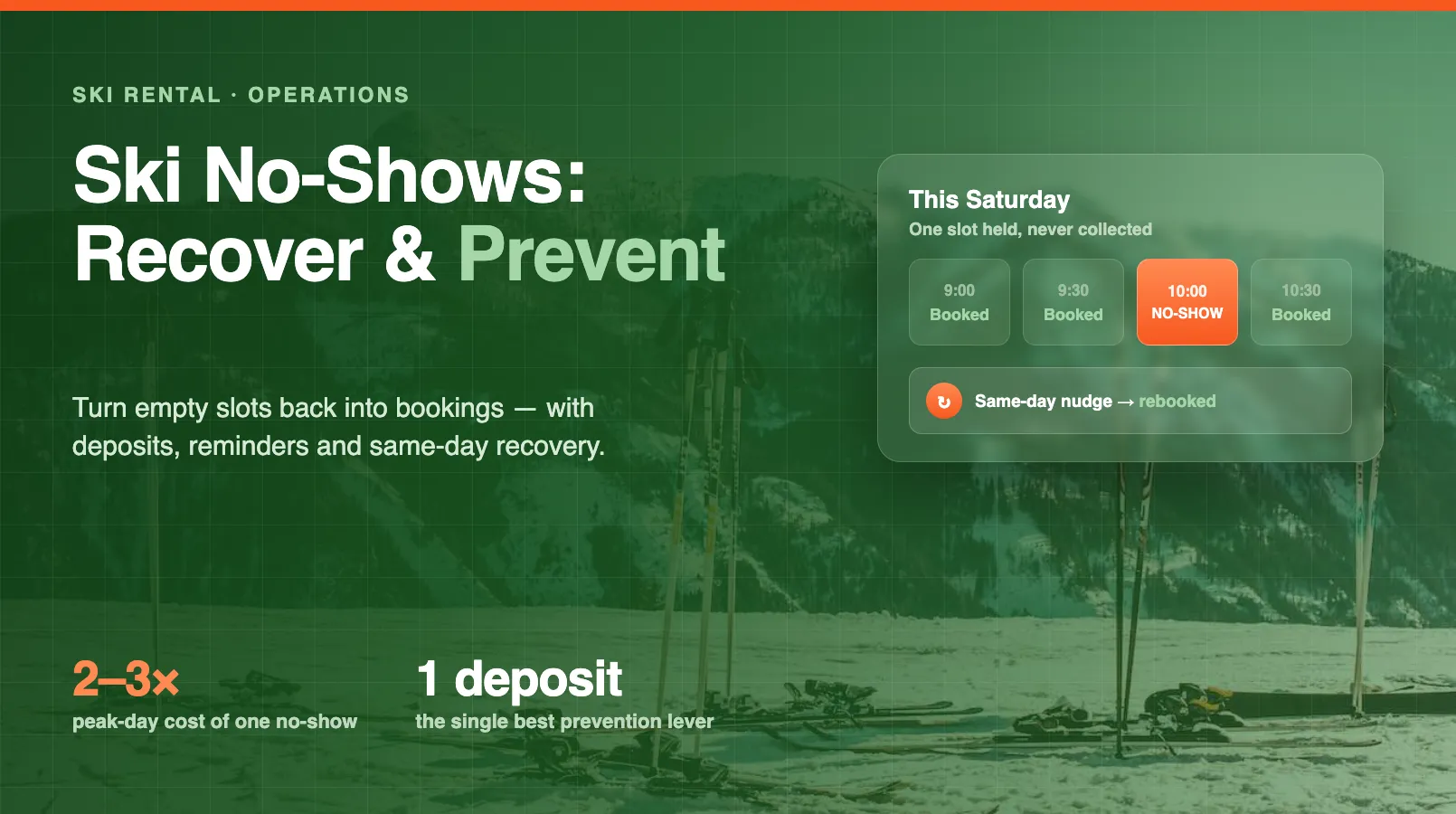
Every empty slot on a busy ski morning is money you can't get back. A customer booked gear for today, you held those skis and boots out of the walk-in pool, and they never walked through the door. No call, no cancellation — just a reservation that quietly expired. On a quiet Tuesday it stings a little. On a peak Saturday, when you turned away walk-ins because the fleet was spoken for, it's one of the most expensive things that can happen in your shop.
No-shows feel random, but they aren't. They follow patterns you can predict, prevent, and — when one slips through anyway — recover. This guide breaks the whole problem down: why customers no-show in the first place, the recovery cadence that wins bookings back, the prevention levers that stop them before they start, the exact messages to send, the real unit economics behind an empty slot, and how to automate the entire loop so it runs without eating your mornings.
Why no-shows happen
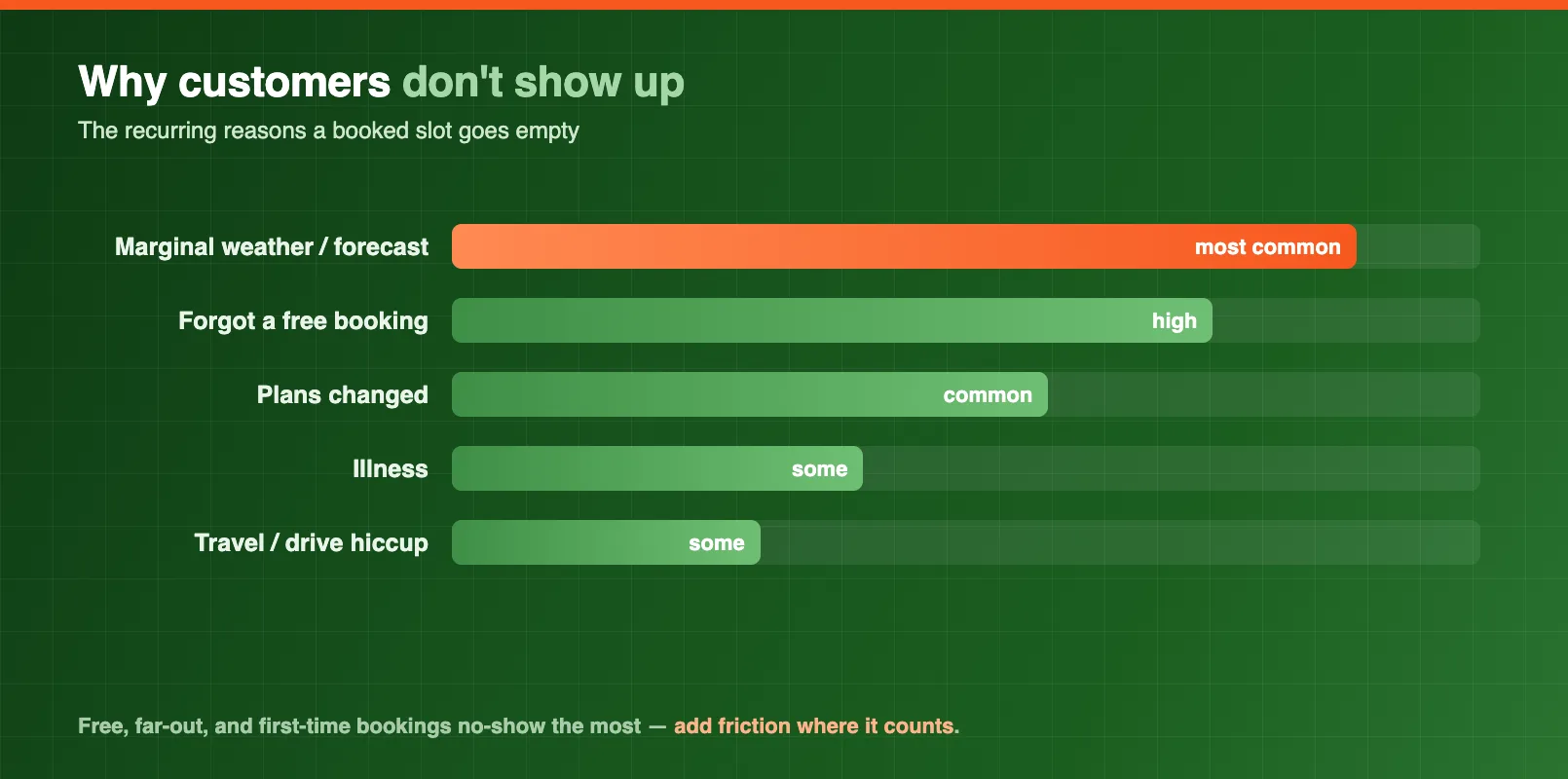
Most no-shows aren't bad faith. People book a ski day weeks out, then life moves — the weather turns, someone gets sick, the drive looked longer than expected, or the group simply changed plans and forgot you were holding gear. A reservation that cost nothing to make is easy to abandon, because there's no money and no friction standing between the customer and a quiet no-show.
The patterns are consistent enough to plan around. Free bookings no-show far more than paid ones. Bookings made far in advance no-show more than same-week ones, because plans have more time to drift. First-time customers no-show more than repeat locals who know exactly where you are and what to expect. And weather-dependent days — a marginal forecast, a warm spell, a storm warning — spike no-shows across the board, because skiing is the one purchase people will skip if the mountain doesn't look right.
Knowing the causes tells you where to aim. You can't fix the weather, but you can add friction at booking, tighten your reminders as the date approaches, and treat a vague forecast as a signal to reach out early rather than wait and hope.
Recovery cadence
When a customer doesn't show, the worst thing you can do is nothing. A silent shop writes off the booking and the relationship in one go. A shop with a recovery cadence treats the no-show as the start of a conversation, not the end of one — and recovers a real share of bookings that would otherwise be gone for good.
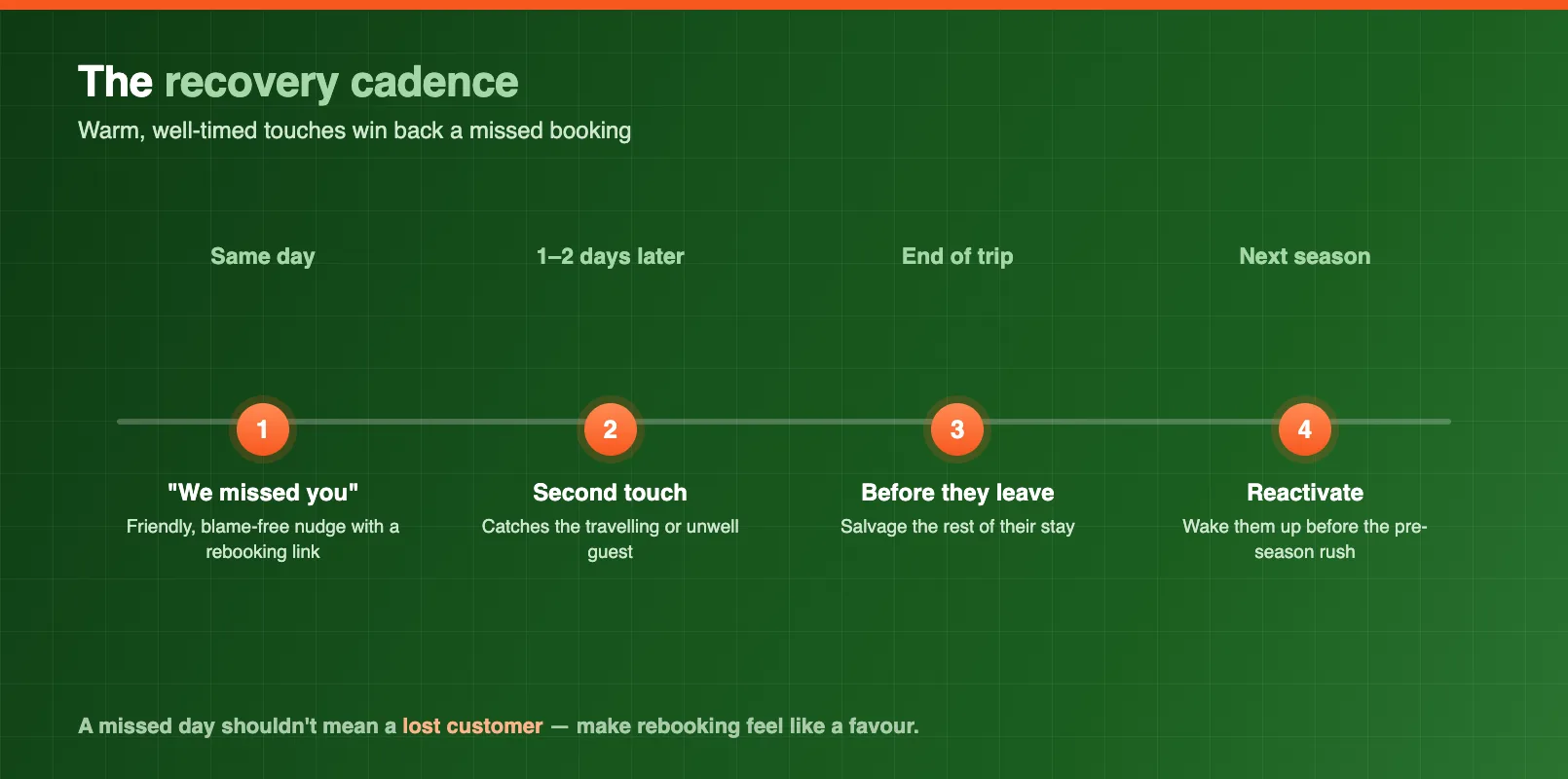
The cadence is simple and it's all about timing. Reach out the same day, while the customer still remembers booking and might still salvage their trip. Lead with warmth, not blame: "We missed you today — still keen to get out on the snow? Here's a link to rebook." Many no-shows are genuinely sorry and just need an easy door back in. A second touch a day or two later catches the people who were traveling or unwell on the day itself.
If the booking is gone for this trip, the recovery shifts to the longer game — a note before they leave town, or a reactivation message at the start of next season. The point is that one missed day doesn't have to mean a lost customer. The shops that recover best are the ones that make rebooking feel like a favor, not a penalty.
Prevention: deposits and reminders
Recovery matters, but prevention is cheaper. Two levers do most of the work: deposits and reminders.
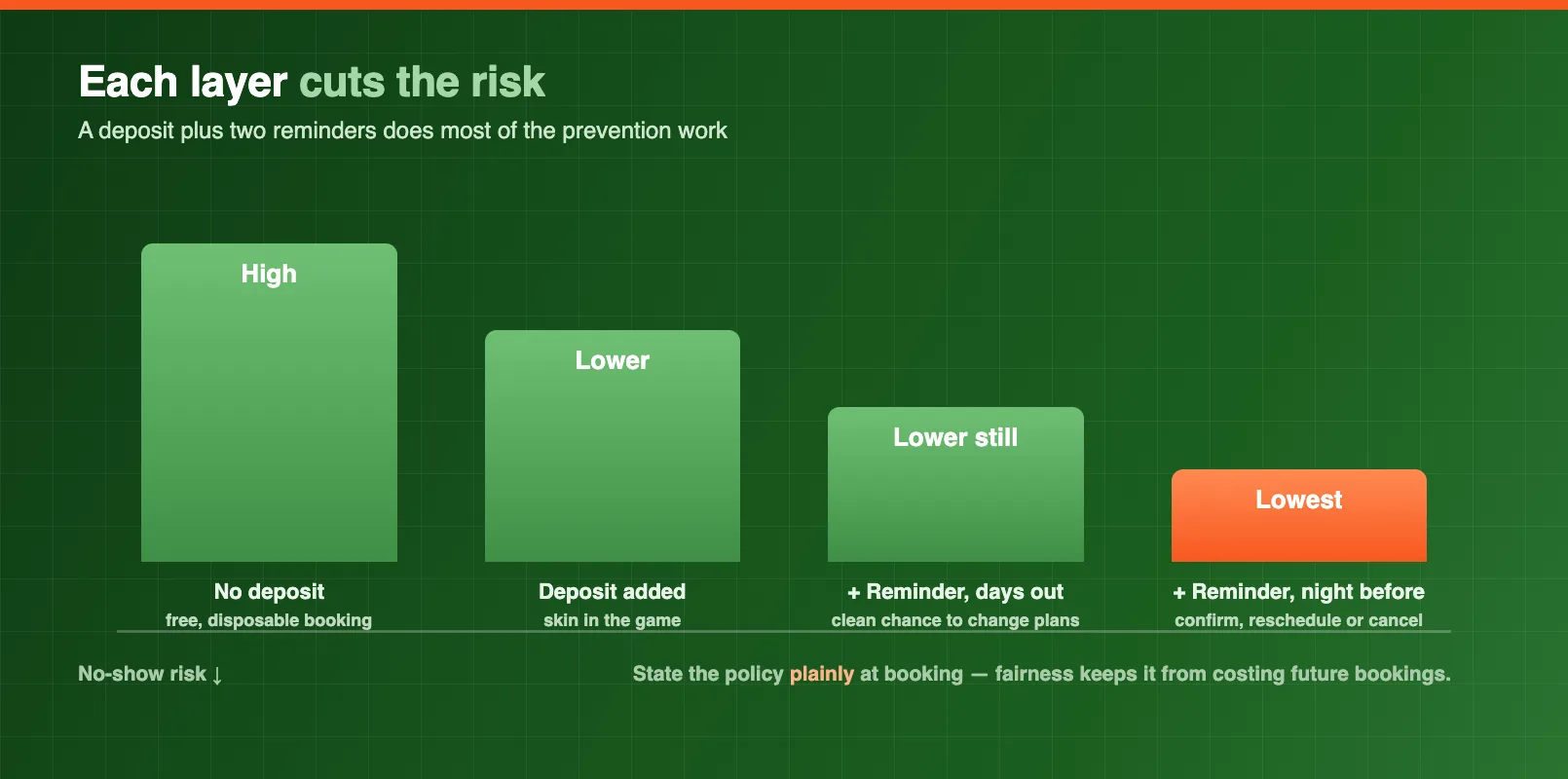
A deposit is the single most effective thing you can do. The moment a customer has paid even a small amount, the booking stops being disposable — they have skin in the game and they show up. You don't need to charge the full rental up front. A partial deposit, clearly refundable up to a sensible cutoff, cuts no-shows sharply without scaring off legitimate bookings. State the policy plainly at booking so there are no surprises, and honour it cleanly when someone cancels in time. Fairness is what keeps the deposit from costing you future bookings.
Reminders are the second lever, and timing is everything. Send one a few days out, when the customer can still change plans without drama, and a second the evening before with the practical details — collection time, address, parking, what to bring, and the forecast. The night-before message catches the most no-shows, because that's when people firm up the next day. Make every reminder a one-tap chance to confirm, reschedule, or cancel, so a customer who can't make it tells you while you can still resell the slot.
Communication templates
Good recovery and prevention live or die on the words you send. Below are four messages you can adapt and reuse — short, friendly, and built to make the next action obvious.
Reminder, a few days out: "Hi [name], your ski rental with [shop] is booked for [date]. Need to change anything? Confirm, reschedule, or cancel here: [link]. See you on the snow!"
Reminder, the night before: "Hi [name] — all set for tomorrow! Collect your gear from [address] from [time]. Bring your boots size and ID. Forecast looks [conditions]. Reply or tap here if anything's changed: [link]."
Same-day recovery: "Hi [name], we held your gear today but didn't see you — everything okay? If you'd still like to get out this trip, rebooking takes a minute: [link]. Hope to see you soon."
Off-season reactivation: "Hi [name], the season's nearly here and your gear's ready. Lock in your dates early — last winter booked out fast: [link]."
Keep the tone human. A customer who reads a real message from a shop that wants to see them is far more likely to come back than one who gets a cold automated penalty notice.
Unit economics
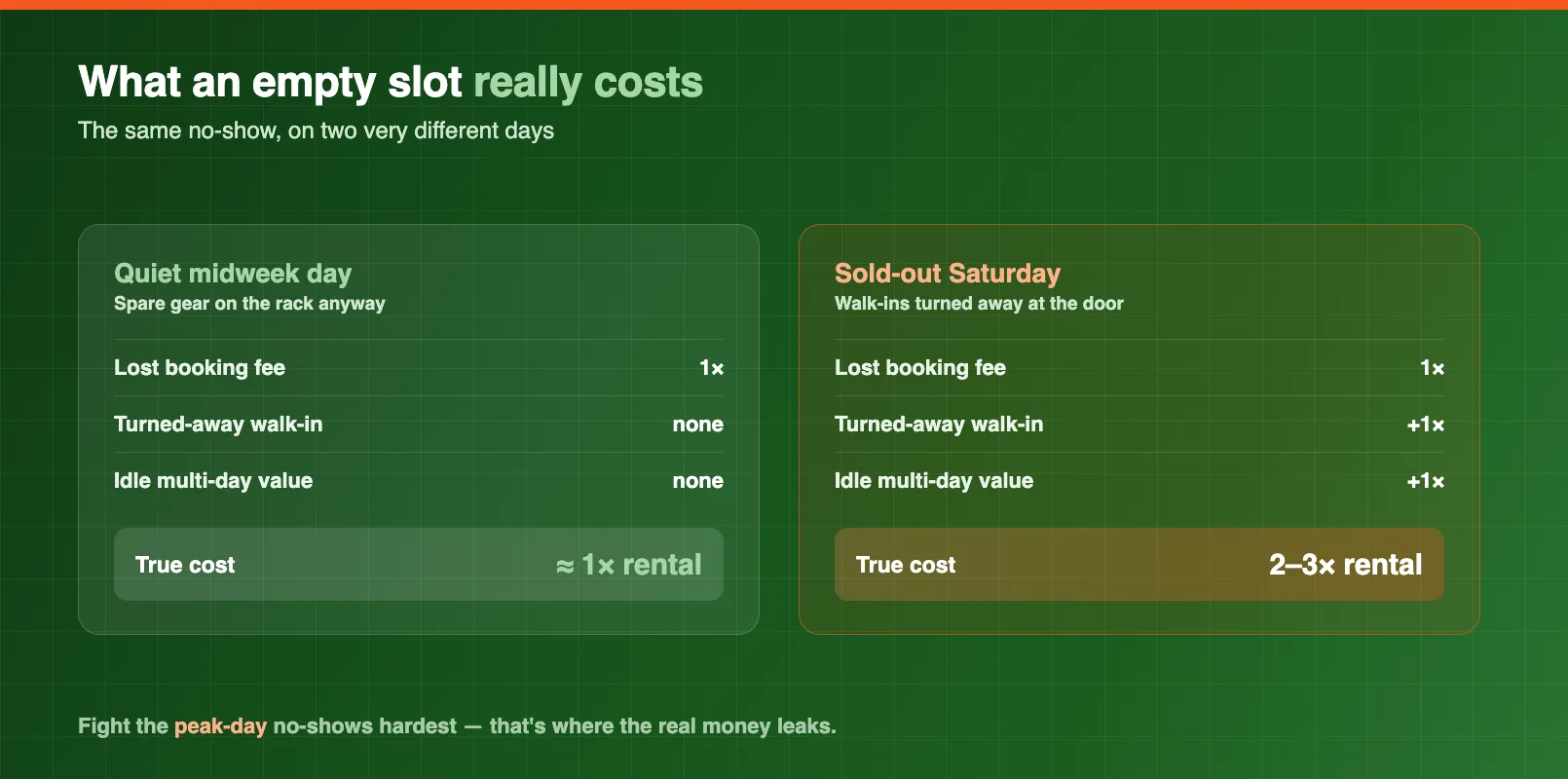
To know how hard to fight no-shows, you need to know what one actually costs — and it's almost always more than the rental fee. A no-show on a quiet midweek day costs you roughly the booking value, because you probably had spare gear anyway. A no-show on a sold-out Saturday costs you far more: the booking, plus the walk-in you turned away because that gear was held, plus the multi-day value if it was a week-long reservation that now sits idle.
That's why peak-day no-shows deserve the most aggressive prevention. On your busiest mornings, an empty slot isn't a missing fee — it's a missing customer you actively rejected. Run the numbers on your own shop: take the rentals you turn away on a peak day, multiply by your average rental value, and you'll usually find that a handful of no-shows on the wrong day costs more than a slow week. Pricing your peak days well, covered in our ski rental pricing strategy guide, only pays off if the booked slots actually get used.
Automation
The catch with all of this is that the busy mornings — the ones where no-shows hurt most — are exactly when nobody has time to send a recovery message by hand. Manual follow-up always slips first when the counter is three deep. That's why the whole loop belongs on autopilot.
Run your reminders, deposit cutoffs, day-of recovery, and off-season reactivation straight off your booking calendar. A no-show follow-up agent can fire the same-day message the moment a slot expires unfulfilled, and a pre-season reactivation agent can wake your past customers up before the rush. Set the cadence once and every booking gets treated the same way, on the busy days and the quiet ones alike. EquipDash's Dash Agents can run that follow-up automatically, so the recovery message goes out whether or not anyone at the counter has a free hand.
Automation doesn't replace the human touch — it protects it. The shop owner who'd never remember to chase a Tuesday no-show now does it every time, in seconds, without thinking about it.
Putting it together
No-shows are a solvable problem, not a cost of doing business. Add a deposit so bookings stop being disposable. Send two well-timed reminders so customers confirm or cancel while you can still resell the slot. Reach out the same day when someone slips through, warmly and with an easy way back. Know what an empty peak-day slot really costs so you fight the expensive ones hardest. Then automate the lot so it runs every booking without eating your mornings.
Do that consistently and no-shows shrink from a recurring drain to a rare, well-handled exception. For the bigger picture on running the shop end to end, start with our guide on how to run a ski rental business, and make sure the gear those bookings reserve is dialled in with ski boot fitting for rental shops. You can also explore the ski and snowboard rental hub and brush up on terms in the ski rental glossary. Ready-made automations are waiting too: the ski no-show follow-up agent and the pre-season ski customer reactivation agent.
FAQ
What counts as a no-show in a ski rental shop?
A no-show is a booked rental the customer never collects and never cancels. They reserved gear for a date, you held that gear back from walk-in demand, and the slot expired empty with no word. It's different from a cancellation, where the customer tells you in advance and you get a chance to resell the slot.
How much does a ski rental no-show actually cost?
More than the day's rental fee. You lose the booking revenue, the walk-in you turned away because the gear was held, and often the multi-day value if it was a week-long reservation. On a peak Saturday the true cost of one no-show can be two or three times the headline price once you count the slot you couldn't resell.
Do deposits reduce ski rental no-shows?
Yes, more than any other single lever. A customer who has paid even a small deposit has skin in the game and shows up far more reliably than one who booked for free. A partial deposit at booking, clearly refundable up to a cutoff, is the cleanest way to cut no-shows without scaring off legitimate bookings.
When should I send ski rental reminders?
Send one reminder a few days out so the customer can still change plans cleanly, and a second the evening before with collection time, address, and what to bring. The night-before message catches the most no-shows because that's when people firm up the next day. Make every reminder a one-tap chance to confirm, reschedule, or cancel.
How do I win back a customer who no-showed?
Reach out the same day with a friendly, blame-free message — "we missed you, want to rebook?" — rather than a penalty notice. Many no-shows are weather, illness, or a travel hiccup, not bad faith. A warm same-day nudge plus a low-friction rebooking link recovers a meaningful share of lost bookings that a silent shop never sees again.
Can no-show recovery be automated?
Yes. Reminders, deposit cutoffs, the day-of recovery message, and the off-season reactivation can all run automatically off your booking calendar. Automation matters most on the busy mornings when staff are slammed and manual follow-up never happens — exactly when no-shows spike. Set the cadence once and let it run every booking the same way.
in one place