Season Pass Programs That Actually Renew: Pricing, Perks, Member Comms
A season pass looks like free money the day you launch it. Cash up front, a guest locked in for a year, a number on the board that makes the quiet months feel survivable. Then renewal season arrives and half of them are gone. The pass that felt like a membership turns out to have been a one-off discount with a longer expiry date — bought once, used twice, never renewed. The difference between a pass program that compounds and one that leaks is rarely the price. It's whether the pass is built to be used, remembered, and renewed. This guide walks through the seven decisions that make a season pass actually renew, from the pricing architecture down to the break-even math. It sits under our complete guide to running a ticketed attraction; read that first if you're building your operation from the ground up.
Build a Pricing Architecture That Pays for Itself
The first number to get right isn't the pass price — it's the break-even visit count. A pass should be priced so a member breaks even somewhere around their third or fourth visit. Price it to break even on visit two and you're giving away margin to people who'd have come anyway. Price it to break even on visit six and nobody buys, because the maths only works for fanatics.
Start from your single-admission price and decide how many visits the pass should "feel worth." If a day ticket is $28 and you want break-even at the fourth visit, your pass lands somewhere near $89 to $99 — three-and-a-bit visits to get their money back, then everything after is upside for the member and near-pure margin for you. The members who visit eight times a year cost you almost nothing extra per visit and become your most reliable word-of-mouth.
Anchor the pass against the day rate everywhere you sell it. "Two visits pays for itself" printed next to the price does more conversion work than any discount banner. The pass isn't cheap — it's the obvious choice for anyone who plans to come back.
Design Tiers People Actually Climb
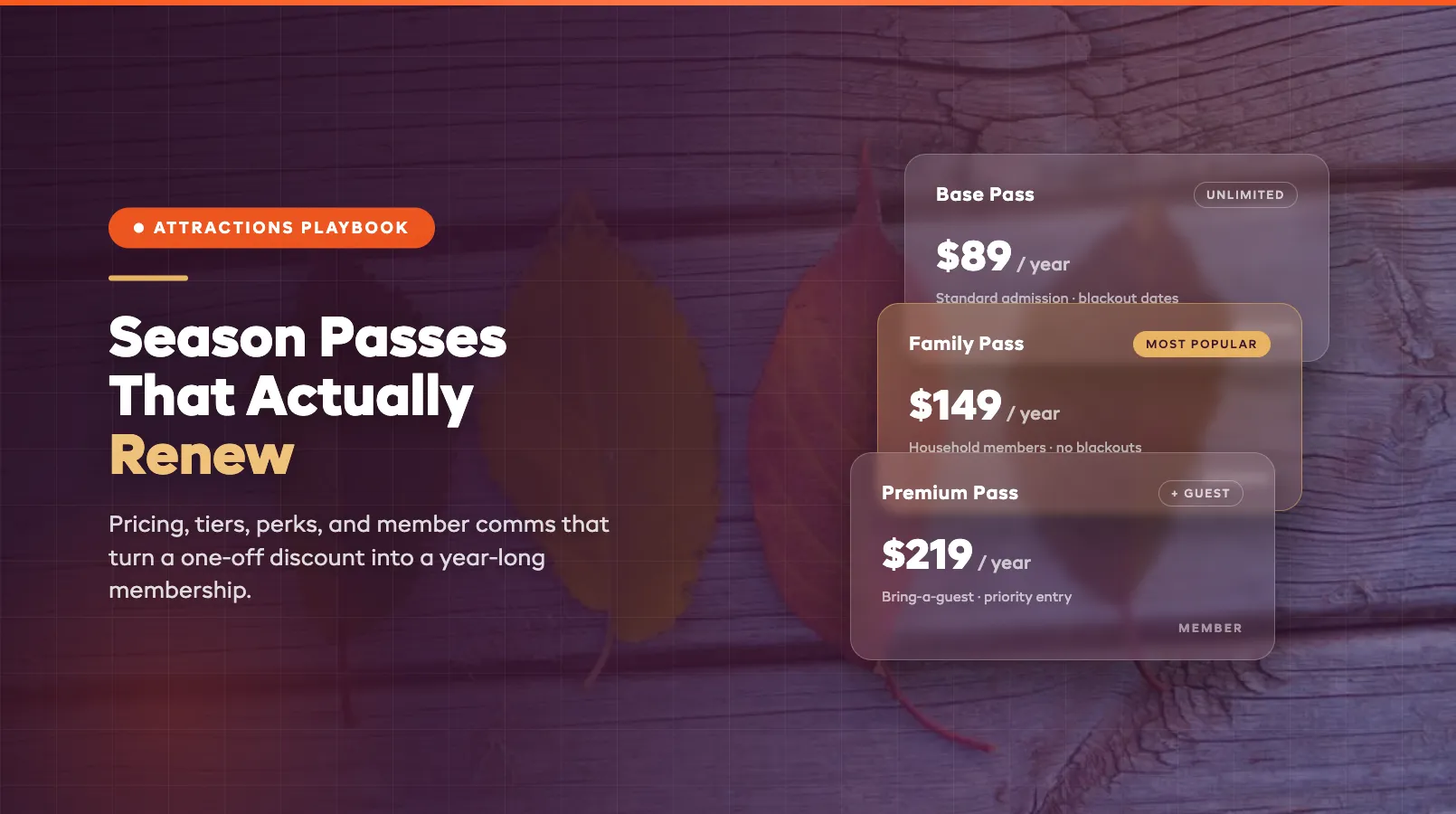
One pass is a product. Three passes is a ladder, and ladders sell upward. The trick is making each rung feel like an obvious step, not a confusing menu. Most attractions land on three tiers, and three is usually right.
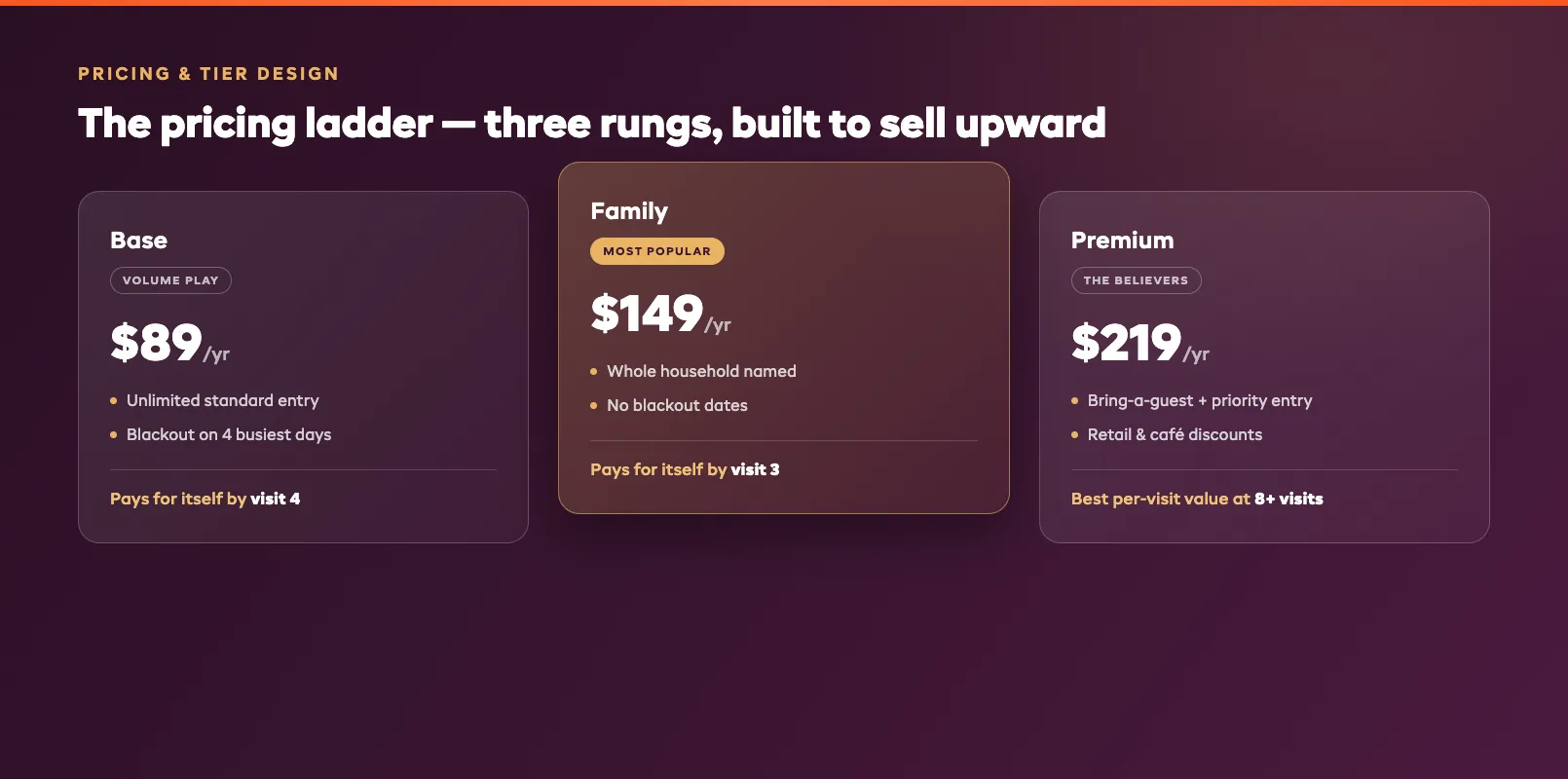
Base tier — the volume play. Unlimited standard admission for one named person, blackout dates on your three or four busiest days. This is the pass most people buy and the one your pricing architecture is built around.
Mid tier — the family or no-blackout upgrade. Either add household members or remove the blackout dates. This is where your margin lives, because the people who upgrade are the ones who were always going to visit on the busy days anyway.
Top tier — the believers. Bring-a-guest privileges, priority entry, retail and café discounts, an early-access window for events. Few buy it, but the ones who do are your highest-value members and your loudest advocates.
Price the gaps so the middle tier is the obvious pick — a base-to-mid jump that feels like a rounding error next to what it unlocks. Name the tiers something a member can say out loud, not "Tier 2." The pricing ladder below shows how the rungs and break-even points line up.
Make the Perk Math Work
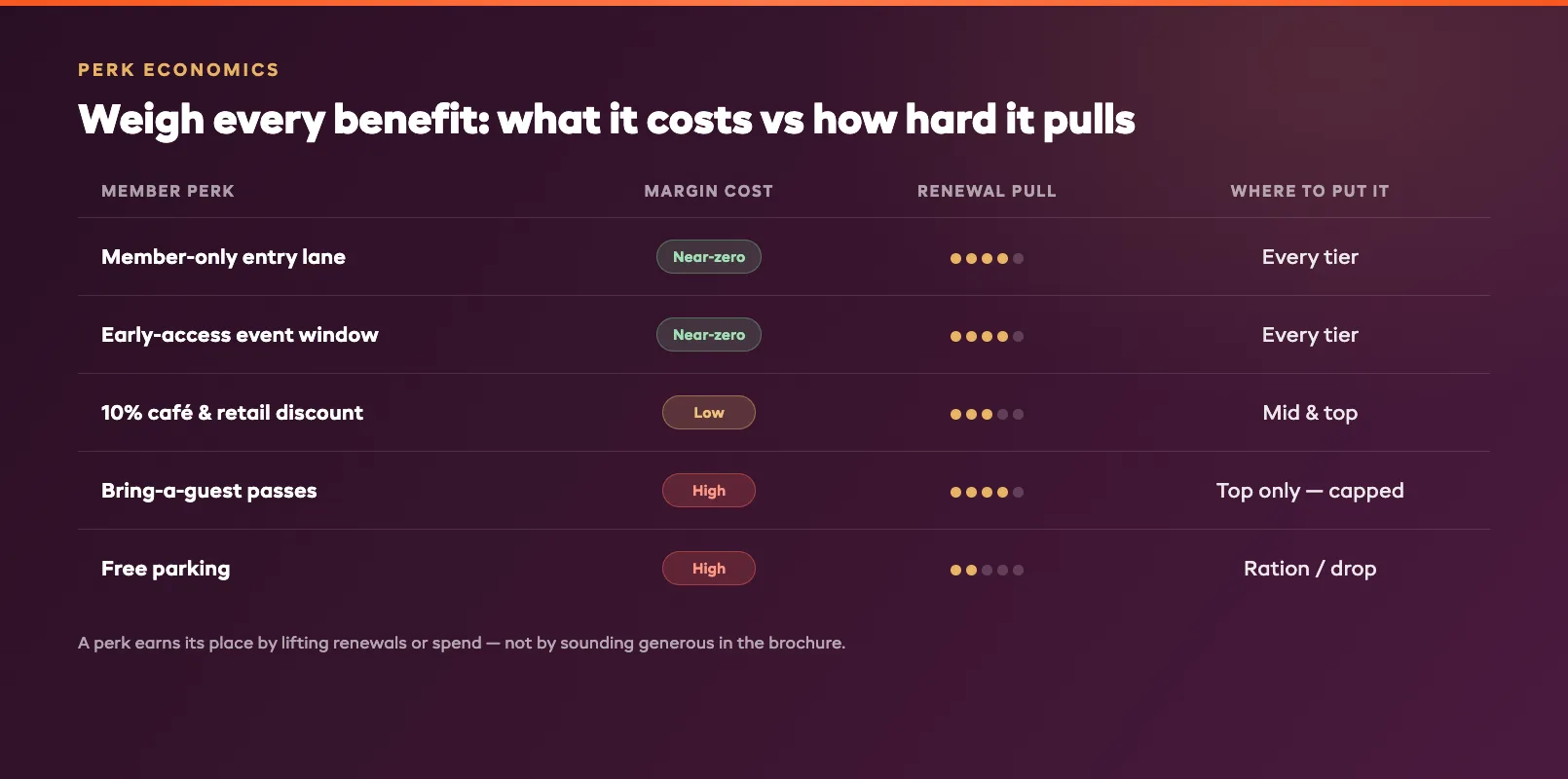
Perks are where good pass programs quietly bleed money. Every perk has a cost and a pull, and the two are rarely related. The job is to load up on perks with high pull and near-zero cost, and ration the ones that actually hit margin.
Free perks that pull hard. Priority or member-only entry lanes, a members' early-access hour, the right to book event tickets before the public, a printed membership card. These cost you almost nothing and make the pass feel like status. Lead with these.
Cheap perks that feel generous. A 10% café or retail discount sounds expensive but rarely is — most members spend more overall because the discount nudges them to buy at all. Run the actual numbers on your average member basket before you panic about the percentage.
Expensive perks to ration. Bring-a-guest passes, free parking, and merchandise giveaways come straight off margin. Put these only on your top tier, cap them where you can ("four guest passes a year, not unlimited"), and track redemption so a perk that's quietly costing thousands gets noticed.
The discipline is simple: a perk earns its place by lifting renewals or spend, not by sounding good in the brochure. The perk-cost table below is the kind of view worth building before you commit to a single benefit.
Onboard Members in the First Week
The fastest predictor of whether a member renews is whether they used the pass in the first month. A pass that sits in a drawer until summer is a pass that won't renew, because the member never built the habit. The first week is your only real onboarding window — spend it.
Send a genuine welcome the day they buy: how to use the card, what's open this week, one specific reason to come back soon. Then nudge a first return visit — a members' preview night, a "your first month" reminder, a small reason to walk back through the gate before the novelty fades. The goal is a second visit inside thirty days, because the member who visits twice early visits eight times a year.
Capture the things that let you talk to them later, too — the kids' ages, the visit pattern, whether they came for the animals or the rides. A pass program is a relationship, and the data you gather in week one is what makes every later message land instead of annoy.
Keep Members Warm with Real Comms
Most pass members hear from the attraction exactly twice: when they buy, and when the pass is about to expire. That silence is why they don't renew — there's no relationship to renew. Member comms aren't marketing spam; they're the reason the pass still feels alive in month seven.
Build a light, predictable rhythm. A monthly "what's on for members" note. A heads-up before each school holiday so families plan their visit around you. A members-only event or preview a few times a year that makes the pass feel like a club. The cadence matters more than the polish — members who hear from you regularly renew at noticeably higher rates than the ones who go quiet.
Segment by behavior, not just by tier. The member who hasn't visited in three months needs a different message ("we miss you, here's what's new") from the one who comes every fortnight ("you've earned early access to the new exhibit"). Keep an eye on the busy-day side of this too — a flurry of member visits can collide with walk-up demand, so coordinate big member events against your live capacity planning rather than dropping them on an already-full Saturday.
Engineer the Renewal Before It's Due
Renewal isn't an event at month twelve — it's the result of everything that came before, locked in by a deliberate sequence in the final weeks. Leave it to a single "your pass expires" email and you'll renew the people who were always going to renew and lose everyone on the fence.
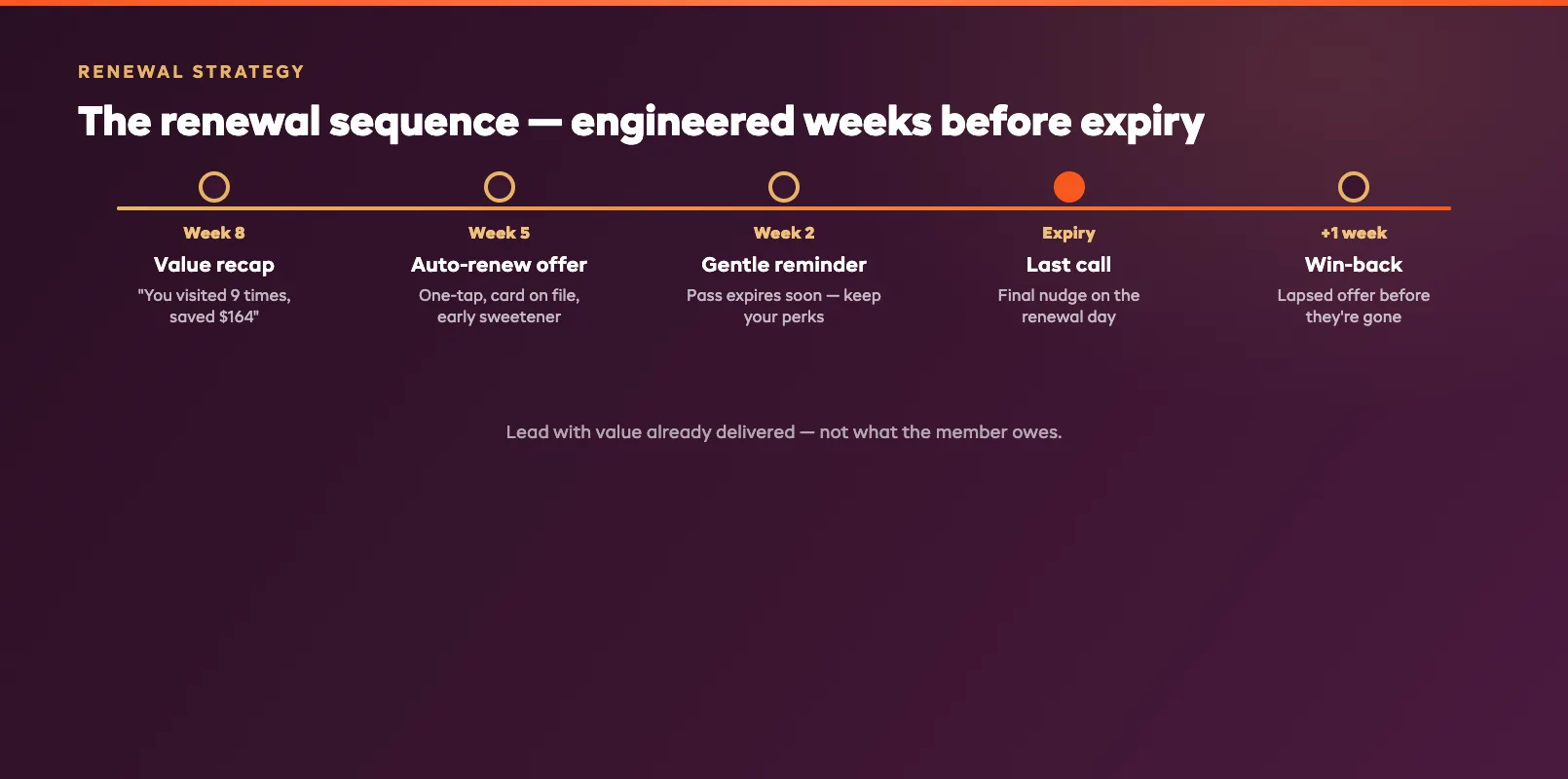
Start the renewal conversation six to eight weeks out, not the day before. Lead with what they got, not what they owe: visits taken, money saved versus day tickets, the events they came to. A member who sees "you visited nine times and saved $164" renews on the value they've already proven to themselves. Then make the renewal itself frictionless — one tap, card on file, auto-renew offered with a small loyalty sweetener for saying yes early.
This is exactly the kind of timed, personalised sequence worth automating rather than running by hand. A season pass renewal agent can watch each member's expiry date, pull their real usage, and send the right nudge at the right moment — the value recap at week eight, the gentle reminder at week two, the win-back the week after lapse. The renewal cadence below shows where each touch lands.
Run the Break-Even Numbers Before You Launch
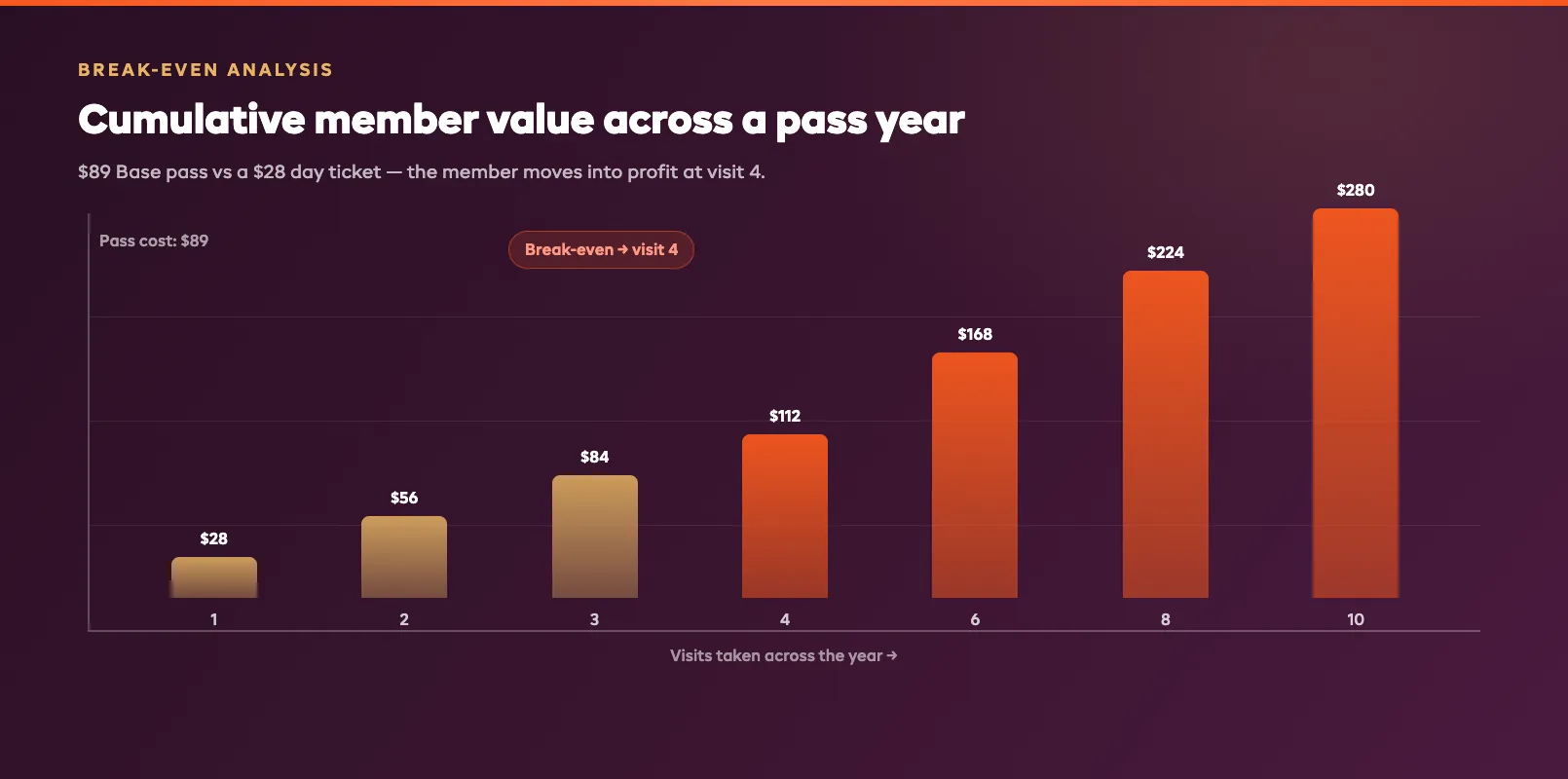
A season pass is a bet that members will visit often enough to be worth more than the discount you gave them — but not so often that you can't serve them. Before you launch, model both ends. On price, confirm your pass break-even sits around visit three or four against your real day rate and your real cost-to-serve, not a guessed one. A member visit isn't free: staffing, wear, and the café queue all carry a cost per head, and a pass priced as if visits are costless is a pass that loses money on your keenest members.
On volume, ask what happens if the program works. If a thousand members each visit eight times, that's eight thousand visits to absorb — wonderful for revenue, ruinous if it lands on days you're already full. Model the visit distribution, set blackout dates to steer demand off your peaks, and treat pass capacity as part of the same plan as your timed-entry and walk-up inventory. The break-even view below pairs the price-side and volume-side maths in one place.
Putting It Together
A season pass that renews isn't a discount with a long expiry — it's a year-long relationship priced to pay for itself, tiered to sell upward, stocked with perks that pull without bleeding, and kept warm by comms that make renewal feel obvious. Get the architecture right before launch day and the renewals largely take care of themselves. When you're ready to build one, the season pass launch checklist walks you through every decision in order, and the wider attractions resource hub and attractions glossary cover the operational pieces around it — from group and school bookings to OTA distribution and day-to-day gate operations.
FAQ
How should I price an attraction season pass?
Price the pass so a member breaks even around their third or fourth visit against your single-admission rate. If a day ticket is $28 and you want break-even at the fourth visit, the pass lands near $89 to $99. Break-even on visit two gives away margin to people who'd have come anyway; break-even on visit six is too steep for anyone but fanatics. Anchor the price against the day rate everywhere you sell it — "two visits pays for itself" converts better than a discount banner.
How many season pass tiers should an attraction offer?
Three tiers is the sweet spot for most attractions. A base tier with unlimited standard admission and a few blackout dates carries the volume; a mid tier that adds household members or removes blackouts is where your margin lives; and a top tier with guest passes, priority entry and retail discounts captures your highest-value members. Price the gaps so the middle tier is the obvious pick, and name each tier something a member can say out loud rather than "Tier 2."
Which season pass perks are worth offering?
Load up on perks with high pull and near-zero cost — member-only entry lanes, an early-access hour, the right to book events before the public, a printed membership card. A small café or retail discount usually pays for itself because members spend more overall. Ration the expensive perks — guest passes, free parking, merchandise — to your top tier, cap them, and track redemption. A perk earns its place by lifting renewals or spend, not by sounding generous in the brochure.
How do I get season pass members to renew?
Start the renewal conversation six to eight weeks before expiry and lead with value already delivered — visits taken and money saved versus day tickets — not what the member owes. A line like "you visited nine times and saved $164" renews people on proof they've given themselves. Make the renewal itself one tap with a card on file, offer auto-renew with a small early-bird sweetener, and follow up after lapse. Members who hear from you all year renew far better than those who only hear from you at expiry.
Why do season pass members stop renewing?
The most common reason is that they never built the habit. A member who doesn't use the pass in the first month rarely renews, because the pass became a forgotten card in a drawer. The second reason is silence — most members hear from the attraction only when they buy and when the pass expires, so there's no relationship to renew. Fix both with strong first-week onboarding that drives an early second visit, and a light, regular comms rhythm through the year.
How do season passes affect my attraction's capacity?
Unlimited passes create demand you can't fully predict, so they have to be modeled and steered, not just sold. If a thousand members each visit eight times, that's eight thousand visits to absorb — a problem if they land on days you're already full. Use blackout dates on your busiest days to push member demand off the peaks, and hold pass visits against the same live capacity count as your timed-entry and walk-up tickets so a busy day doesn't quietly exceed comfortable capacity.
in one place