Dive Liability Waivers and Medical Statements: Getting Them Right
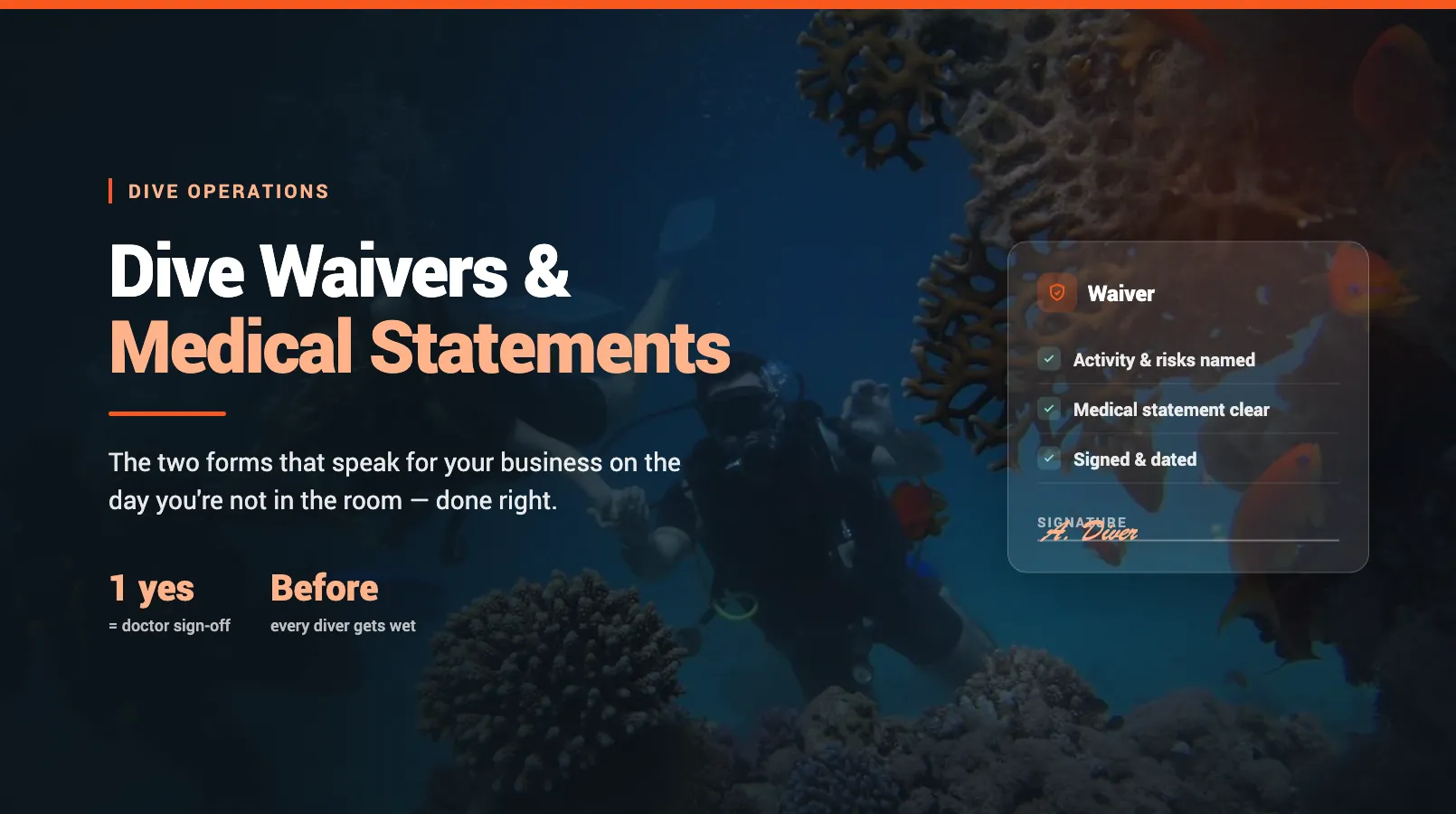
Every diver who steps onto your boat has already signed something, or should have. The waiver and the medical statement are the two pieces of paper that sit between your business and a bad day, and most operators treat them as a box to tick at check-in. That works right up until the moment a claim lands, and then the wording, the signature, and whether you can even find the form all suddenly matter a great deal.
The good news is that getting this right is not complicated. It is a matter of using forms that say the right things, capturing them cleanly before anyone gets wet, and storing them so a specific diver's signed form is a ten-second search rather than an afternoon in a filing cabinet. This guide walks through what a dive waiver actually needs, how the medical statement fits, the extra care minors require, and how to run the whole thing without slowing down your counter.
What makes a dive waiver actually hold up
A waiver is only as good as its weakest link, and the weak links are usually obvious in hindsight. A form that hold up shares a few things. It names the specific activity (scuba diving, or a try-dive, or a training course) rather than waving vaguely at "water activities." It describes the real risks in plain language a diver can understand: drowning, decompression illness, equipment failure, marine life, the conditions on the day. It states clearly that the diver accepts those risks and agrees not to hold the operator liable for them.
Just as important is what a waiver cannot do. In most places it will not shield you from your own negligence. If you hand out a regulator that was overdue for service or let someone dive who was plainly unfit, no clause saves you. The waiver protects against the ordinary, unavoidable risks of diving, not against cutting corners. Treat it as one layer of defense that sits on top of running the operation properly, alongside the rental gear servicing and certification checks that back it up.
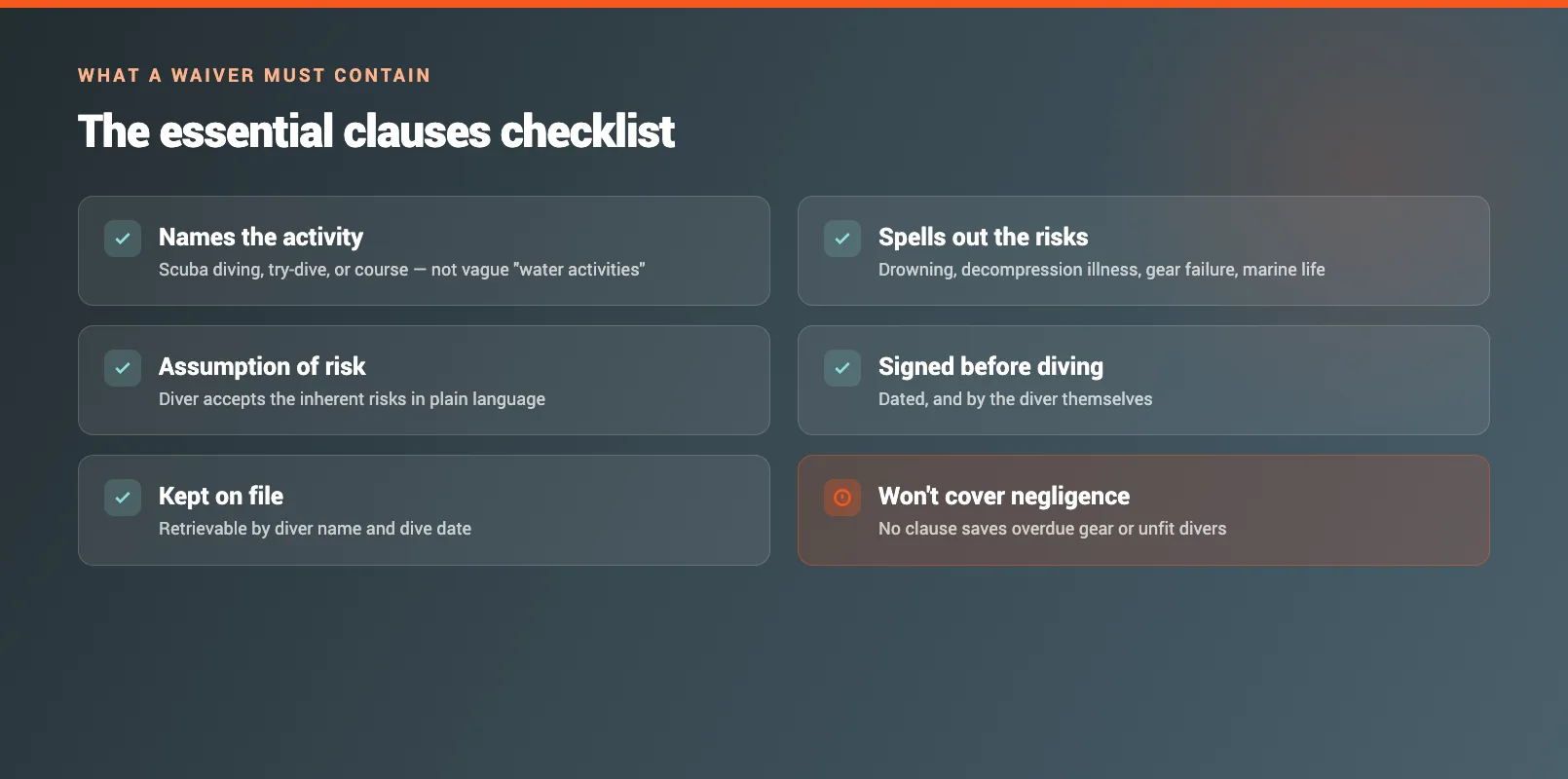
The other detail that trips operators up is timing and identity. The form has to be signed by the diver themselves, before they get in the water, with a date on it. A waiver signed after a dive, or signed by whoever happened to be standing at the counter, is worth very little. Build the check into your flow so nobody boards without a completed form tied to their name and the date they dived. If you run courses, that same discipline carries through every stage of the diver's paperwork, from the first pool session onward.
The RSTC medical statement
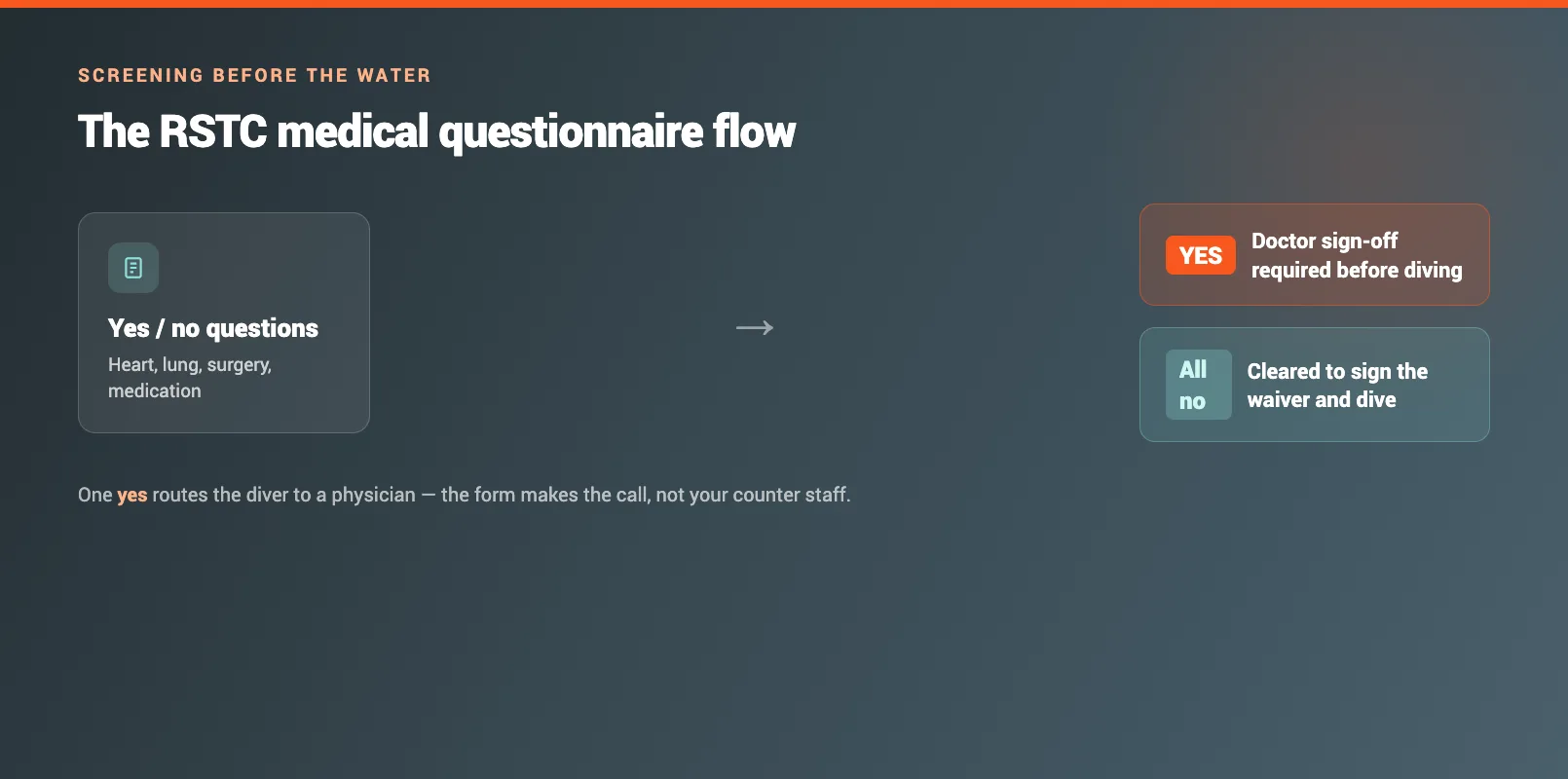
The waiver handles liability. The medical statement handles fitness to dive, and it is a separate job. The industry standard is the RSTC medical statement — a health questionnaire recognized across the major training agencies. The diver works through a list of yes or no questions about heart conditions, lung problems, recent surgery, medication, and the rest. The rule is simple: any single yes means the diver needs a doctor to sign off before they can get in the water.
That threshold matters because it takes the judgment call off your staff. Nobody at the counter has to decide whether a diver's asthma or blood-pressure medication is a problem — the form does. A yes routes the diver to a physician, and the diver comes back with a signed clearance or they do not dive. Using the RSTC wording rather than a form you wrote yourself means instructors, insurers, and any doctor the diver visits all recognize it and know exactly what it asks.
Keep the medical statement with the waiver as a pair, but understand that they do different things. A signed waiver with no medical screening leaves a hole, because a diver who should never have been in the water is a very different problem from one who accepted the ordinary risks. Screen first, then let the fit divers sign on and go. If you are running certification courses, the medical statement also feeds into the certification prerequisites you are already checking at check-in, so it fits naturally into the process rather than bolting on top of it.
Minors and parental consent
A minor cannot sign away rights on their own behalf, so both the waiver and the medical statement have to be completed by a parent or legal guardian. This is the area where operators most often get sloppy, and it is the one where a gap is hardest to fix after the fact.
Confirm that the person signing really is the parent or guardian, not an older sibling, a coach, or a family friend who came along for the trip. Capture their signature exactly as you would an adult's, and keep the child's date of birth on the form so it is plain on the record that the diver was under age at the time and that consent was given by the right person. If you set a minimum age for certain dives, many operators do, note it on the form and enforce it at check-in rather than at the dock.
The reason to be strict here is timing. In many regions a minor's window to bring a claim does not start until they reach adulthood, which means a form signed today might need to stand up many years from now. A clean, complete, correctly signed consent is what makes that possible. A rushed one, or a missing one, is a problem you have handed to a future version of yourself.
Digital versus paper capture
Plenty of dive shops still run waivers on paper, and paper works right up until it does not. It gets coffee-stained, half-completed, filed in the wrong box, or lost in a move. It is slow at a busy check-in, illegible when it matters, and impossible to search when you need one specific form from three seasons ago. Every one of those failure modes shows up exactly when you can least afford it.
Digital capture solves most of it. An electronic signature carries the same legal weight as wet ink in most countries, provided you can show who signed, that they intended to sign, and that the document was not altered afterwards. A digital waiver captures the signer's name, a timestamp, and the exact version of the form they agreed to, which is often easier to defend than a paper stack, because nothing is missing and every field is readable. Sending the form ahead of time also means divers arrive with it done, so the counter is checking a green tick rather than handing out clipboards.
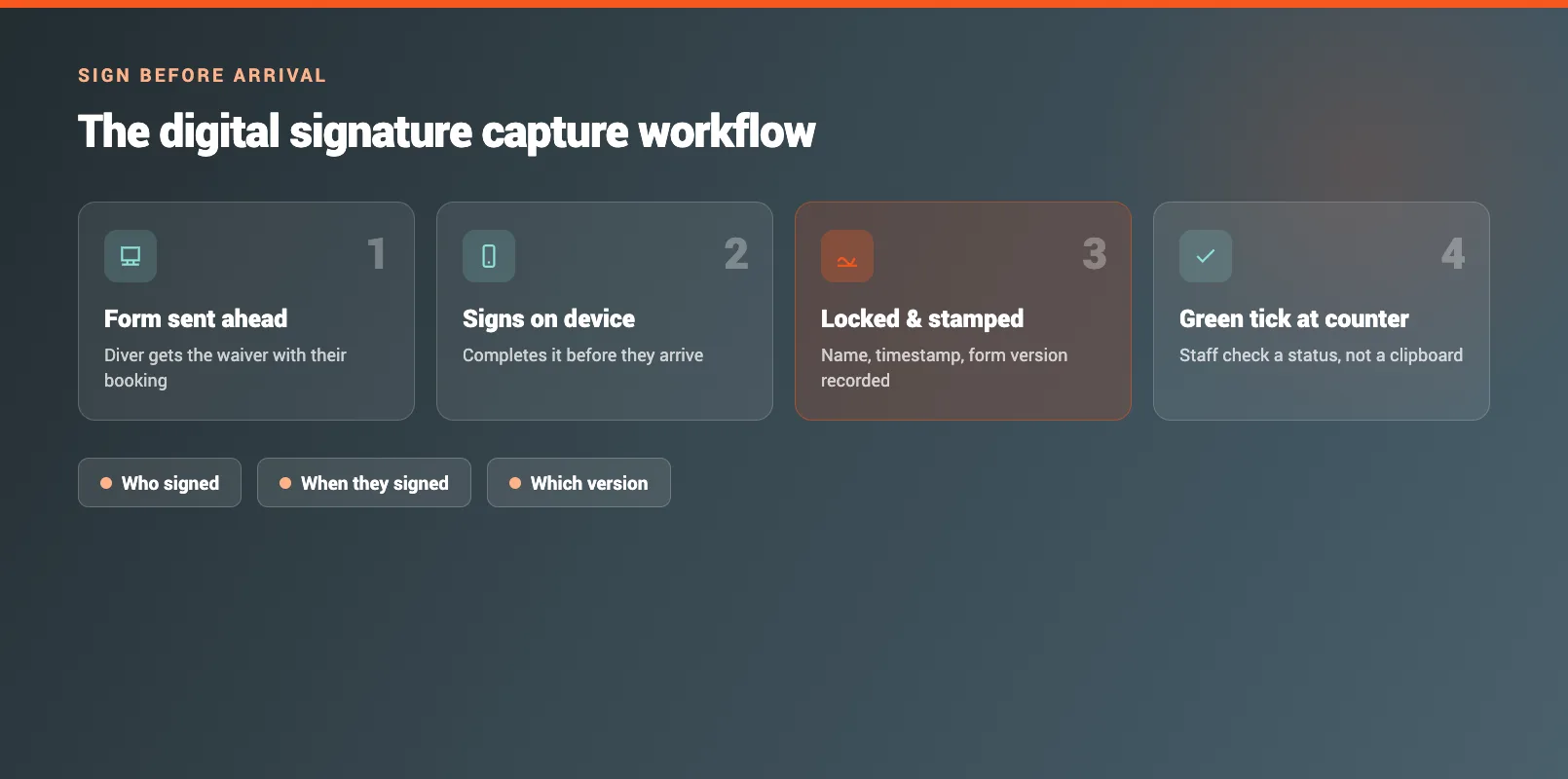
The practical win is that digital forms tie themselves to the booking. When the waiver, the medical statement, and the diver's certification all live against the same reservation in your dive shop booking software, staff see at a glance who is cleared and who still owes paperwork. That is the difference between a smooth boarding and a scramble on the dock. It also means the record for any diver is one search away, not a rummage through a folder.
Storage and retention
A signed form you cannot find is the same as no form at all. Once the waiver and medical statement are captured, the job becomes keeping them, tied to the date each diver actually dived, for as long as a claim could possibly arrive.
How long is long enough depends on your region, but the honest answer for most operators is "longer than you think." The window to bring a claim runs several years in many places, and for minors it can stretch well past that because their clock may not start until adulthood. Digital storage makes this a non-issue — a stored record costs almost nothing, so plenty of operators simply keep everything indefinitely rather than trying to time a purge. The failure to avoid is a system where forms quietly disappear after a season.
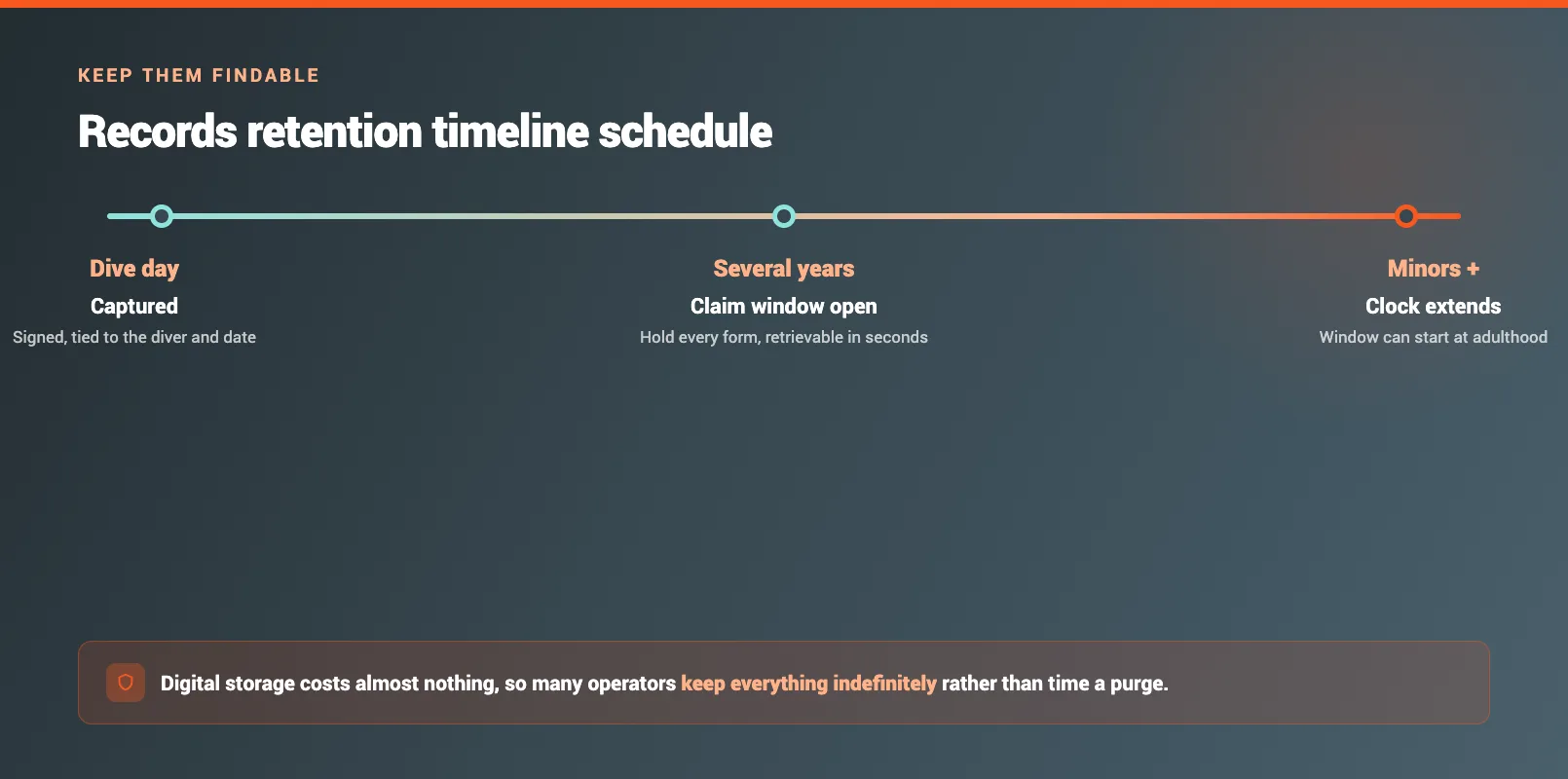
What matters more than the exact number of years is retrievability. If a claim lands naming a diver and a date, you want to pull that person's signed waiver, their medical statement, and the form version they agreed to in seconds. When those records live against the booking rather than in a physical box, that search is trivial. When they live in a filing cabinet, it is a gamble every time.
Defending a disputed waiver
If a waiver is ever tested, a handful of things decide whether it does its job. Was it the right form, naming the activity and the risks in language the diver could understand? Was it signed by the correct person (the diver, or the parent for a minor) before the dive? Can you produce it, tied to the date, along with the medical statement that showed the diver was cleared? And can you show the diver saw the exact version you are relying on, not some earlier draft?
Every one of those questions is easier to answer when the process was clean from the start. A digital record with a name, a timestamp, and a locked form version answers most of them on its own. Good medical screening answers the fitness question. Solid retention means you can actually produce the document. None of this requires a lawyer on staff. It requires a process that captures the right form, from the right person, at the right time, and keeps it.
That is the whole game. The waiver and the medical statement are not paperwork to survive at check-in; they are the record that speaks for you on the day you are not in the room. Build them into the booking flow, screen every diver, take extra care with minors, and store everything where you can find it. Do that consistently and the forms sit quietly in the background: exactly where you want them, right up until the rare day you need one, when they are ready.
For the bigger picture on how all of this fits with running the operation, see the full scuba diving business guide, and if any of the terms here are new, the scuba diving glossary has plain-language definitions. Operators building out their whole setup can also explore the scuba diving hub for how bookings, gear, and paperwork tie together.
FAQ
What is a dive liability waiver?
A dive liability waiver is a signed agreement in which a diver acknowledges the risks of scuba diving and agrees not to hold the operator liable for those inherent risks. To have any weight it has to name the specific activity, spell out the risks in plain language, be signed before the diver gets in the water, and be kept on file. A waiver does not cover an operator's own negligence in most places, so it protects you against the ordinary risks of diving, not against cutting corners on gear or supervision.
What is the RSTC medical statement?
The RSTC medical statement is a standard health questionnaire used across the dive industry to screen students and divers before they get in the water. The diver answers a set of yes or no questions about heart, lung, and other conditions, and any yes means they need a doctor's sign-off before diving. It is used by the major training agencies, so a form that follows the RSTC wording is recognized by instructors and insurers alike.
Can a minor sign a dive waiver?
No. A minor cannot legally sign away rights on their own behalf, so a parent or legal guardian has to sign the waiver and the medical statement for them. Confirm the signer is actually the parent or guardian, capture their signature the same way you would an adult's, and keep the minor's date of birth on the form so it is clear they were under age at the time. Some operators also set a minimum age for certain dives and note it on the form.
Are digital dive waivers legally valid?
Yes. In most countries an electronic signature carries the same weight as a wet-ink one as long as you can show who signed, that they meant to sign, and that the document was not changed afterwards. A digital waiver that captures the signer's name, a timestamp, and the exact version of the form they agreed to is often easier to defend than a paper stack, because nothing goes missing and every field is legible.
How long should dive operators keep signed waivers?
Keep them for at least as long as someone could bring a claim, which varies by region but is often several years, and longer for a minor, whose clock can start when they reach adulthood. Many operators keep waivers indefinitely because a stored digital record costs almost nothing. The important part is that you can find a specific diver's signed form quickly, tied to the date they dived, rather than searching a box of paper.
Does a waiver protect a dive operator from all claims?
No. A waiver reduces exposure to claims arising from the normal risks of diving, but it will not shield an operator who was negligent, for example handing out gear that was overdue for service or letting an unqualified diver in the water. The waiver works alongside good operating practice, proper medical screening, and solid records. It is one layer of defense, not a substitute for running the business safely.
in one place