End-of-Season Ski Retirement: When to Replace Boots, Skis, and Bindings
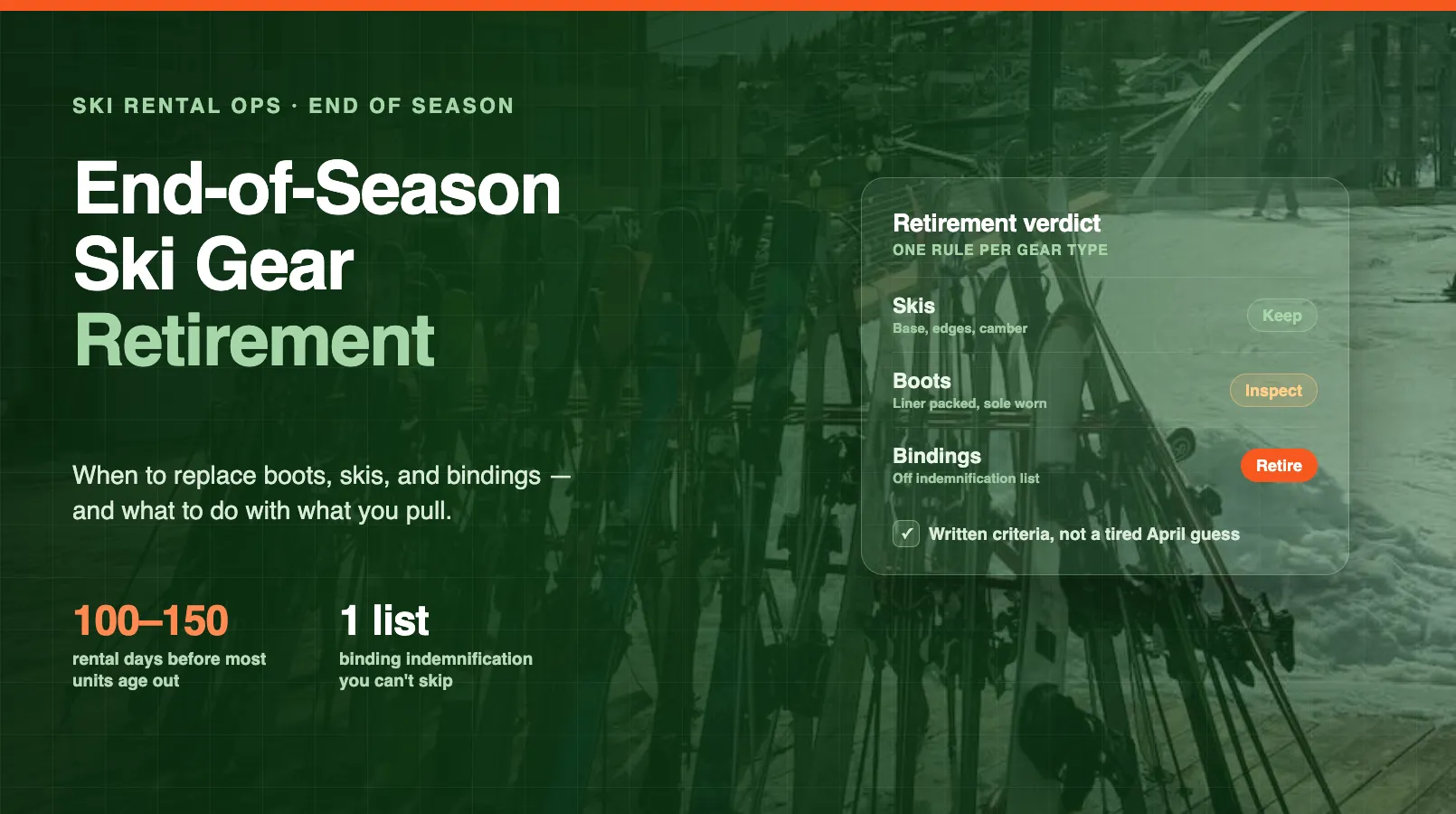
End-of-Season Ski Retirement: When to Replace Boots, Skis, and Bindings
The lifts have stopped spinning, the racks are full, and you're standing in front of a fleet that just worked hard for twenty weekends. Some of it has another season left. Some of it should never go back out. And a few pairs of bindings are quietly past the date where the manufacturer will stand behind them — which is a problem whether you know it or not.
End-of-season retirement is where a ski rental shop either protects its margin or bleeds it. Retire too aggressively and you're buying gear you didn't need to replace. Retire too slowly and you're renting out skis that ski badly, boots that pack out, and bindings that expose you to a liability you can't talk your way out of. The shops that get this right treat retirement as a process with written criteria, not a gut call made in a tired April warehouse.
This guide covers the six decisions that make up a clean retirement cycle: the criteria for each gear type, the binding rules you legally can't skip, where to resell what you pull, when to place next season's order, how to budget for it, and how to store what stays. If you're building the wider operation, the complete guide to running a ski rental business ties these pieces together.
Retirement Criteria by Gear Type
Each part of the kit ages differently, so each needs its own rule. Lump them together and you'll either keep junk or scrap good gear.
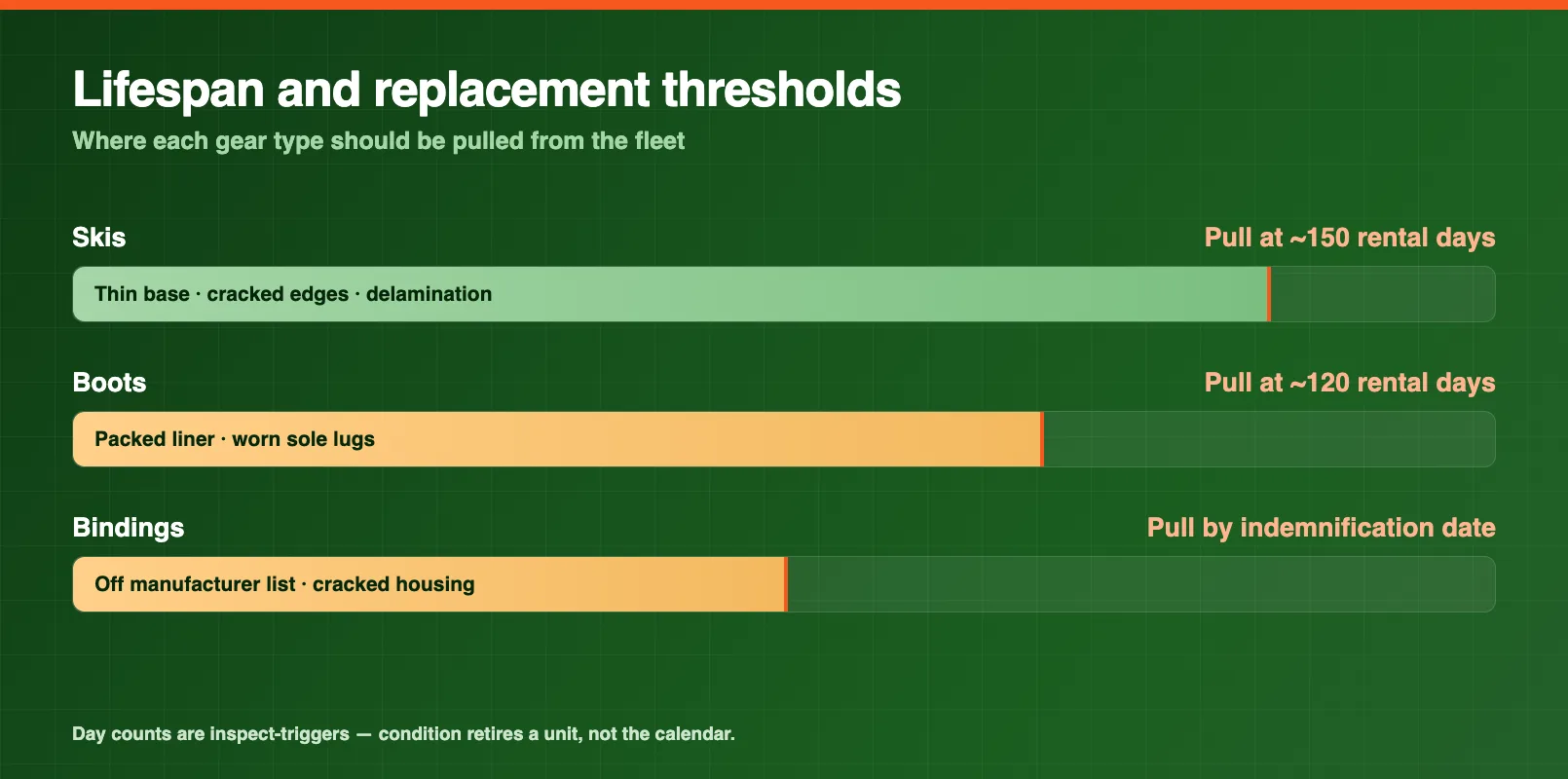
Skis are usually the longest-lived item in the fleet. A well-maintained rental ski survives roughly 100 to 150 rental days before the base goes thin, the edges run out of steel from repeated grinds, or the core loses its pop. Pull a ski when the base can't take another stone grind without hitting the core, when edges are cracked or separating, or when delamination shows at the tip or tail. Topsheet chips and tuned-out scratches are cosmetic — keep skiing them. Good tune and wax workflow stretches this lifespan; neglect shortens it.
Boots retire on a shorter clock than people expect. The shell outlasts everything, but the liner packs out, the buckles fatigue, and the sole lugs round off — and a rounded sole is a binding-release problem, not just a comfort one. Most rental boots are done at 100 to 150 days, sooner in a high-volume shop. If the liner no longer holds the foot or the sole shows wear at the toe and heel, retire the boot regardless of how good the shell looks. The fit drives everything, which is why boot fitting and boot condition are the same conversation.
Bindings are the item with a hard expiry, and we'll cover the legal side next. Mechanically, retire any binding with a cracked housing, a spring that won't hold its DIN setting, or corrosion on the release mechanism.
Damage that pushes a unit over the line mid-season should be flagged then, not rediscovered in April — your damage assessment process feeds straight into the retirement list.
Binding Legal Considerations
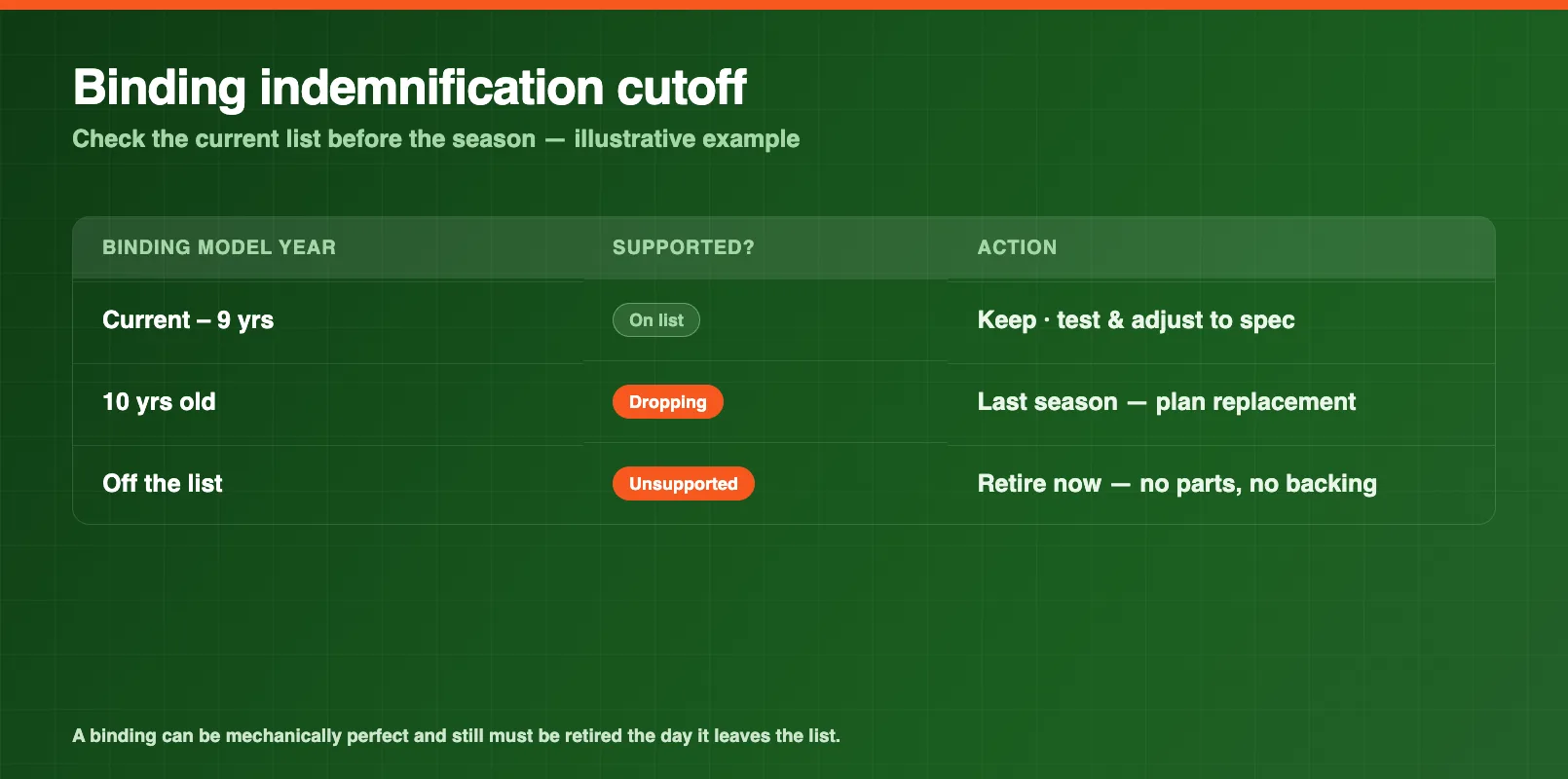
This is the section you can't shortcut. Every major binding manufacturer publishes an indemnification list — the models they will still legally back if a binding is involved in an injury claim. Once a binding model drops off that list, the manufacturer no longer supports it, replacement parts stop, and certified shops can no longer test or adjust it to spec. Renting a binding past its indemnification date means you're personally carrying a risk the manufacturer used to share.
The rule is simple: check the current year's indemnification list before the season, and retire any binding that has fallen off it — full stop, regardless of how new the binding looks or how few days it has on it. A binding can be mechanically perfect and still be retired purely because the manufacturer stopped backing the model.
Keep the testing certificates and the indemnification list you checked against on file. If a claim ever lands, the question won't be whether the binding looked fine — it'll be whether you could prove it was a supported, tested model on the day it went out. That paperwork is your defense.
Resale Channels
A retired ski isn't worthless. A binding off the indemnification list cannot be resold as a usable binding, but the skis and boots attached to it often have real resale value to a recreational skier who'll put ten days a year on them. Recovering even 15 to 25 percent of original cost across the fleet meaningfully offsets next season's order.
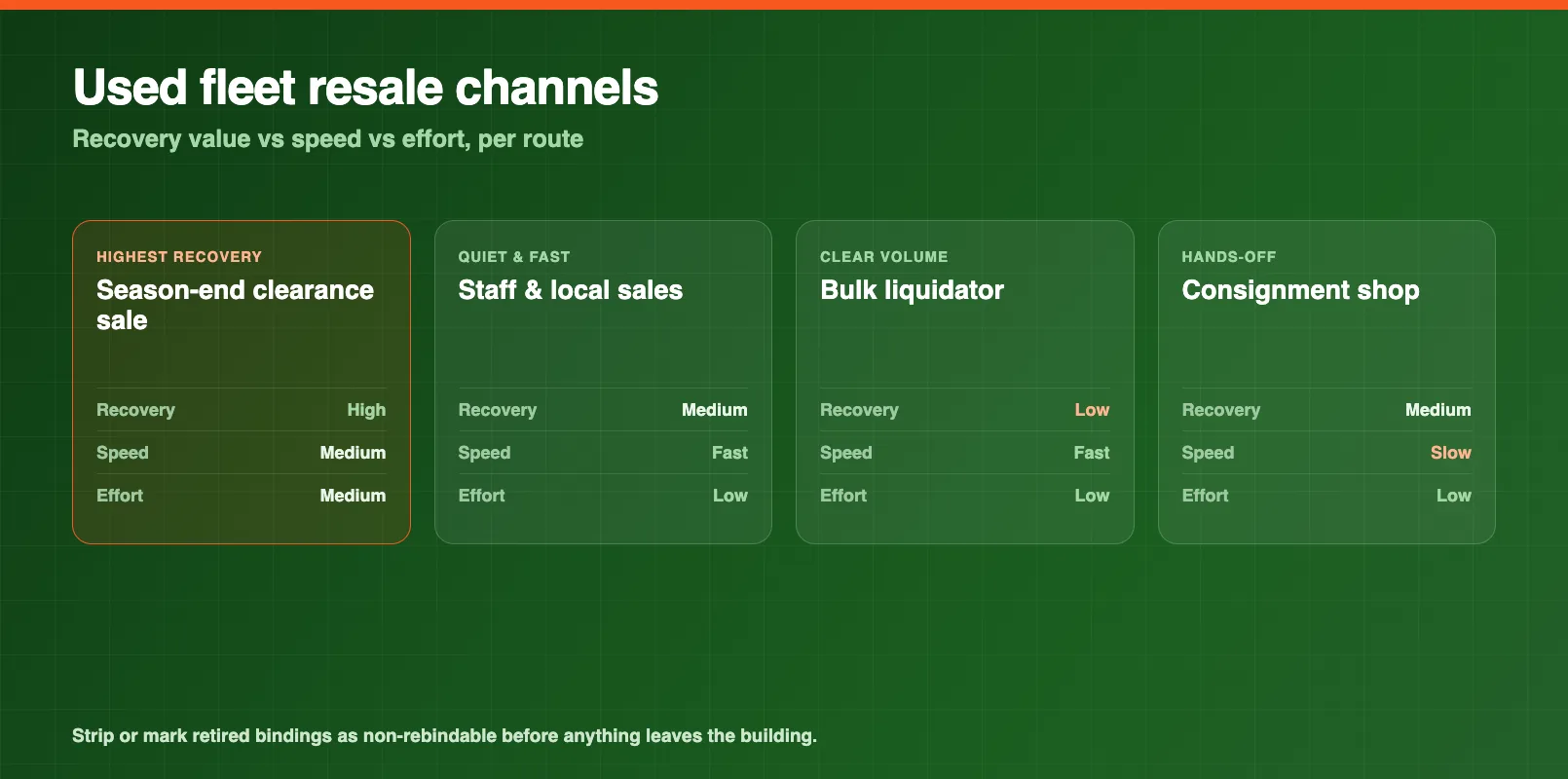
A few channels work for most shops:
- Season-end clearance sale. The highest-recovery option. Your own customers already trust the gear, and a "buy the skis you rented" promotion converts well. Time it for the last few weekends while skiing is still on people's minds.
- Staff and local sales. Quiet, fast, and low-effort. Offer first pick to staff and regulars before anything hits the public.
- Bulk liquidators and used-gear wholesalers. Lowest recovery per unit, but they take the whole lot in one transaction. Best for clearing volume fast when you'd rather have the space than the last dollar.
- Consignment with a used-gear shop. Hands-off but slow, and you split the proceeds.
Whatever you sell, strip retired bindings or clearly mark them as non-rebindable, and be honest about condition. A cheap used ski that gets returned angry costs more than it made.
The Procurement Calendar
Next season's order is won or lost on timing. Place it too late and you're paying full price for whatever's left; place it at the right moment and you catch pre-season discounts, the full size run, and the models you actually want.
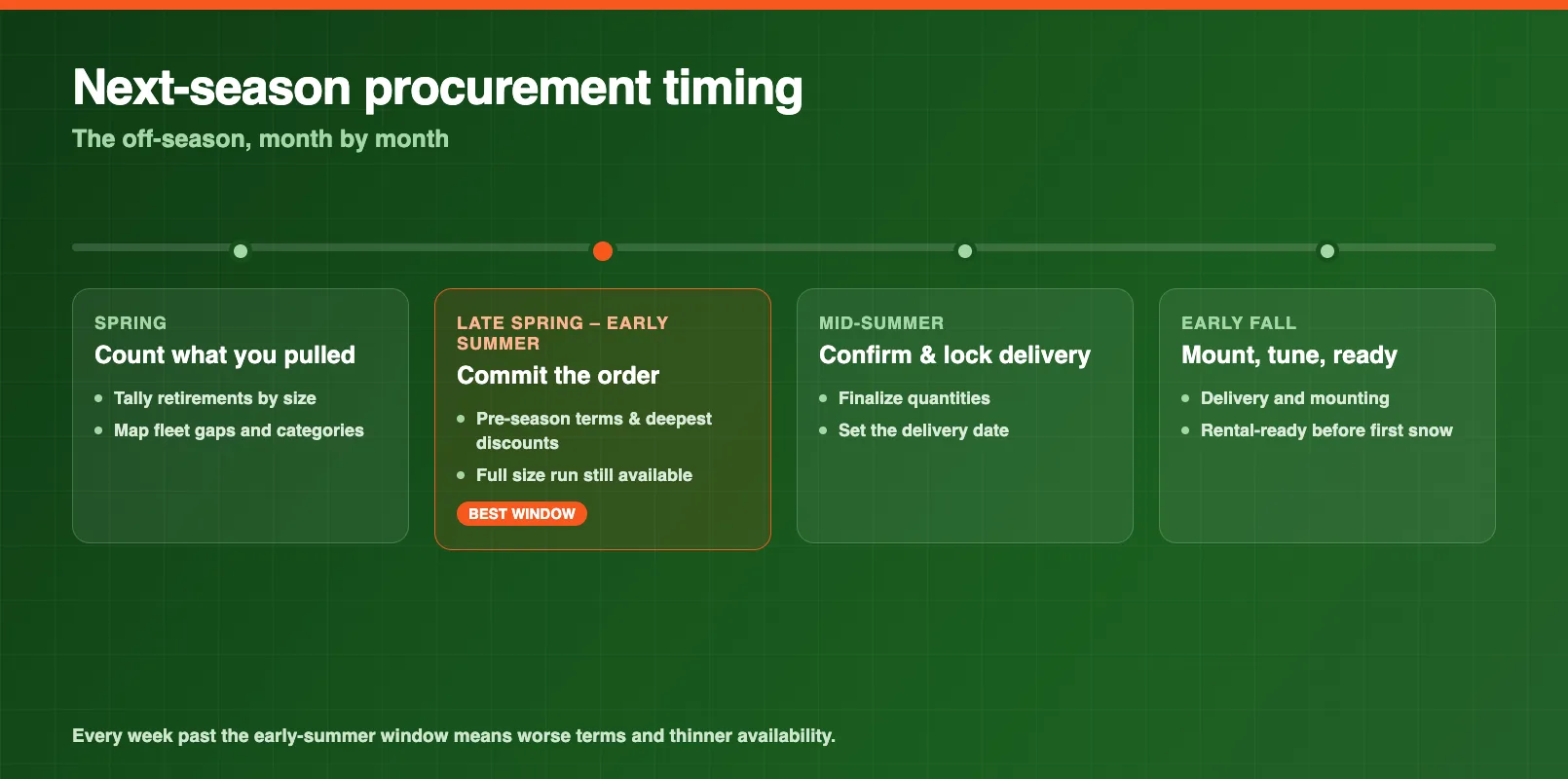
The rhythm most shops settle into looks like this. Spring, right after retirement, is when you count exactly what you pulled and what the gaps are by size and category. Late spring to early summer is when manufacturer pre-season ordering opens with the best terms and deepest discounts — this is the window to commit. Mid-summer is for confirming the order and locking delivery. Early fall is delivery, mounting, and tuning so the fleet is rental-ready before the first cold snap. Miss the early-summer window and you're ordering at worse terms with thinner availability every week you wait. The retirement notes you log now are also what powers the fall pre-season prep cycle — the September audit cashes in the condition calls you make in spring.
The procurement count starts with knowing your real numbers — what came back broken, what aged out, and what sells through. A system that tracks unit history end to end makes that count a report instead of a warehouse headcount, and a stock-low alert agent can flag thin sizes before they cost you a booking.
Budget Planning
Retirement and procurement only hurt when they arrive as a surprise. They shouldn't. A rental fleet depreciates on a predictable schedule, so the replacement cost should be sitting in a reserve before the season ends.
The clean way to handle it: divide each unit's purchase cost by its expected rental-day life, and set that per-day amount aside as a replacement reserve every time the unit goes out. A ski that cost you $400 and lasts 120 days is "spending" about $3.30 of itself per rental day — money that should be earmarked, not absorbed into general cash flow. Do this across the fleet and next season's order is already funded when spring arrives. Build that depreciation number into your pricing strategy so the rate each unit earns actually covers the cost of replacing it.
This is also where resale recovery and trade-in credits come back into the math. A fleet that recovers 20 percent at retirement needs a smaller reserve than one that scraps everything, so track recovery as a line item, not an afterthought.
Storage
What you keep needs to survive five or six months in a back room without aging a full season in the process. Bad storage retires gear faster than skiing does.
Skis go away dry, waxed, and edges lightly oiled to stop rust — a storage wax is cheap insurance against a fleet that rusts over summer. Store them on edge or flat, never under weight that can warp the camber, in a space that stays cool and dry rather than a hot, damp shed. Boots get buckled loosely to hold their shape, liners pulled or at least dried fully so they don't grow mold, and kept out of direct heat that hardens the plastic. Bindings stay clean and dry, backed off to their lowest setting to relax the springs.
Do this well and the gear you kept comes out in fall the way it went in — which means your retirement decisions in spring actually hold true in November, instead of being quietly undone by a summer in a damp corner.
Putting It Together
End-of-season retirement is six decisions that compound. Clear per-item criteria tell you what to pull. The indemnification list tells you what you legally must pull. Resale recovers cash from what you removed, the procurement calendar replaces it at the best price, the budget reserve means the bill was already paid, and good storage protects everything that stayed.
Run it as a documented routine and the off-season stops being a scramble — it becomes the quiet, profitable groundwork for next season. Pull the end-of-season ski retirement checklist to run the cycle the same way every year, and see the ski and snowboard rental hub or the ski rental glossary for the rest of the operation.
FAQ
How many rental days do skis, boots, and bindings actually last?
As a working rule, skis run 100 to 150 rental days, boots 100 to 150 (often sooner in high-volume shops because liners pack out), and bindings are governed less by days than by the manufacturer's indemnification list. Treat these as triggers to inspect, not hard expiry dates — a thin base, cracked edges, a packed-out liner, or a worn sole retires a unit regardless of its day count.
What is binding indemnification and why does it force retirement?
Indemnification is the manufacturer's published list of binding models they will still legally stand behind in an injury claim. Once a model drops off that list, the maker no longer supports it, parts stop, and certified shops can't test or adjust it to spec. Renting a binding past its indemnification date means you're carrying the liability alone — so a binding can be mechanically perfect and still must be retired the moment it falls off the list.
Where can I resell retired rental skis and boots?
The best recovery comes from a season-end clearance sale to your own customers, followed by quiet staff and local sales. Bulk liquidators clear volume fast but pay the least per unit, and consignment is hands-off but slow. Always strip or clearly mark retired bindings as non-rebindable, and be honest about condition — most shops recover roughly 15 to 25 percent of original cost across the fleet.
When should I order next season's rental fleet?
Count your retirements and gaps in spring, then commit your order in late spring to early summer when manufacturer pre-season terms and discounts are best. Confirm and lock delivery through mid-summer, and aim for early-fall delivery so gear is mounted and tuned before the first cold snap. Every week you wait past the early-summer window means worse terms and thinner size availability.
How do I budget for fleet replacement without a spring cash crunch?
Treat each unit as depreciating per rental day: divide its purchase cost by its expected day life and set that amount aside as a replacement reserve every time it goes out. A $400 ski lasting 120 days reserves about $3.30 per rental day. Do this across the fleet and next season's order is funded before spring — then subtract your resale recovery to shrink the reserve you actually need.
What's the right way to store gear over the off-season?
Store skis dry and waxed with a storage wax to block rust, flat or on edge and never under warping weight, in a cool dry space. Buckle boots loosely to hold their shape, dry or pull the liners to prevent mold, and keep plastic out of direct heat. Back bindings off to their lowest setting to relax the springs. Good storage means your spring retirement decisions still hold true when the gear comes out in fall.
in one place