How to Scale a Rental Business
How to Scale a Rental Business
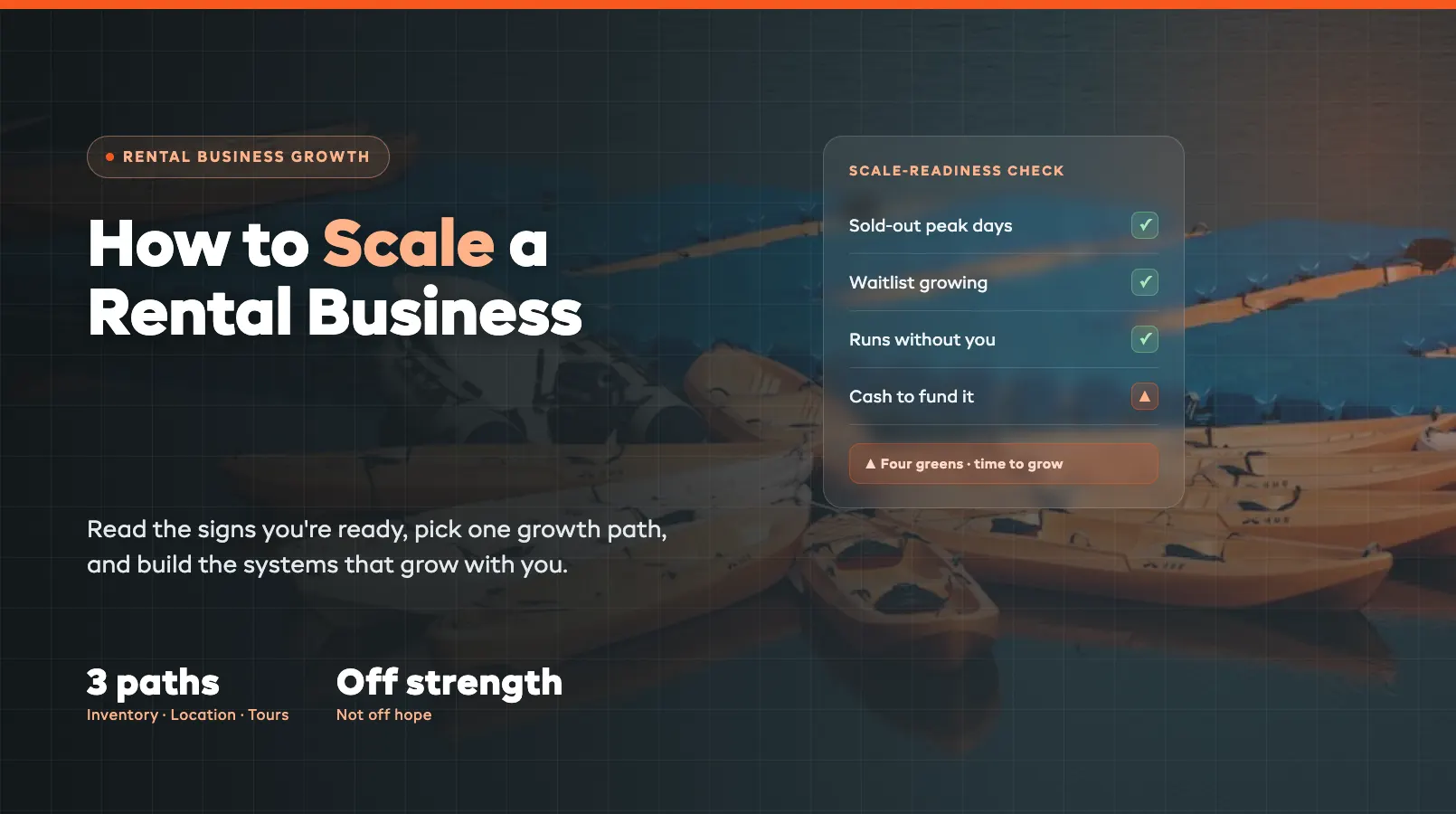
There is a point in every rental business where the problem flips. For years the question is "how do I get more bookings?" Then one season you look up and the real question is "how do I handle all this demand without burning out?" You are selling out your best days, running a waitlist, and turning people away. That is a good problem — but it is still a problem, and how you answer it decides whether the next few years feel like growth or grind.
Scaling is not about working more hours. It is about picking the right growth path at the right time and building the systems that let more revenue flow through without more chaos. This guide walks through the signals that say you are ready, the three main ways to grow, the technology that makes growth survivable, and the mistakes that sink operators who move too fast. If you are earlier in the journey, start with the complete guide to starting an equipment rental business and come back here when the demand is real.
Signs You're Ready
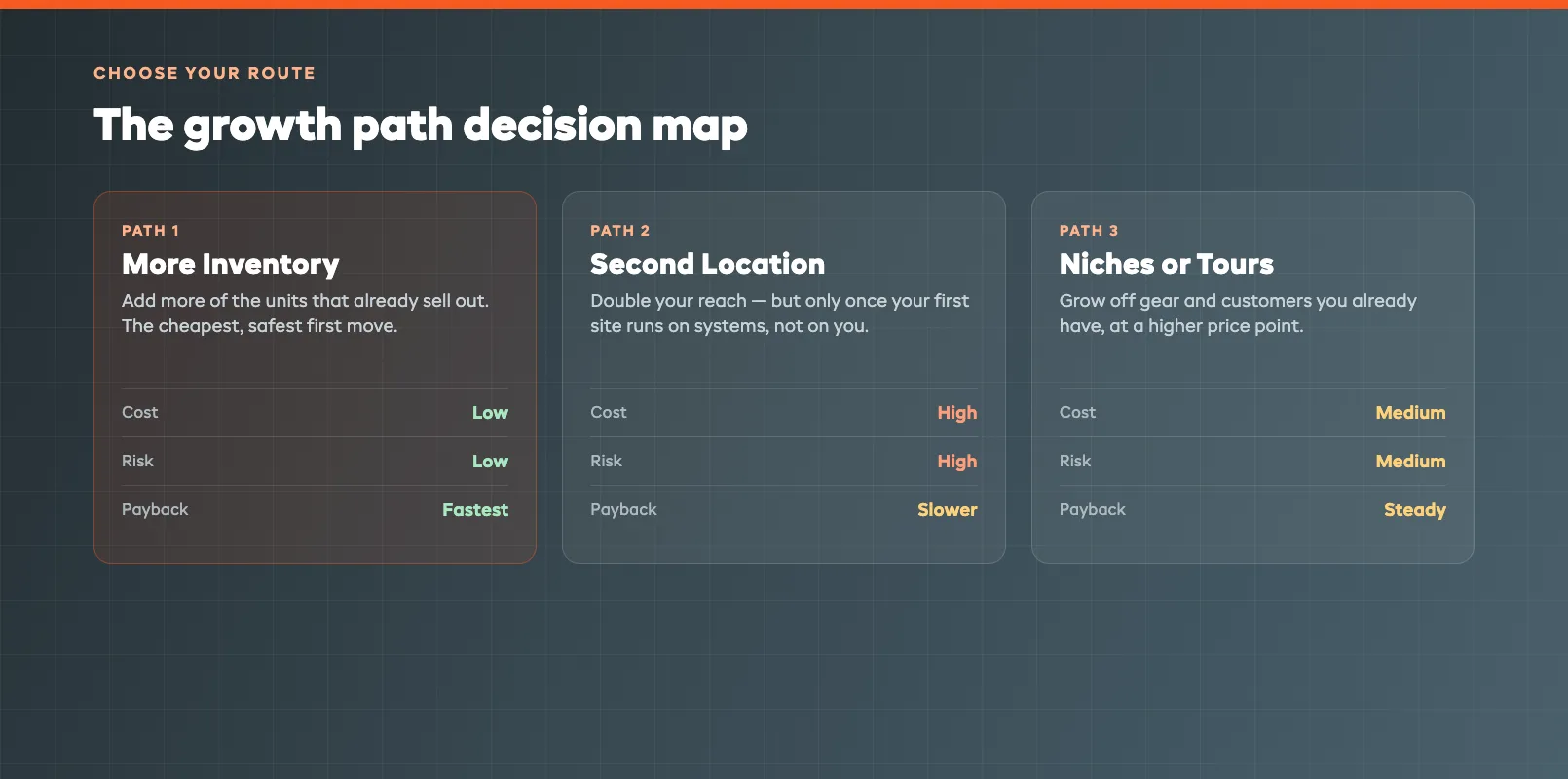
Growth should be a response to demand you can measure, not a hunch or a good month. Before you spend a dollar expanding, look for a few clear signals stacked together.
The first is repeat sold-out demand — not one busy weekend, but a pattern of peak days where you have nothing left to rent. The second is a growing waitlist or steady turn-aways: every customer you say no to is revenue walking out the door, and if you are tracking it, you know exactly how much. The third, and the one operators skip, is that your current location runs without you — bookings, handovers, and day-to-day problems get handled by your systems and your staff, not by you personally touching everything.
The last signal is financial. You should have either cash set aside or steady, reliable profit to fund the growth, so you are expanding off strength rather than borrowing against hope. If you are still firefighting every day and living booking to booking, that is the thing to fix first — scale amplifies whatever state you are already in.
Growth Path #1: More Inventory
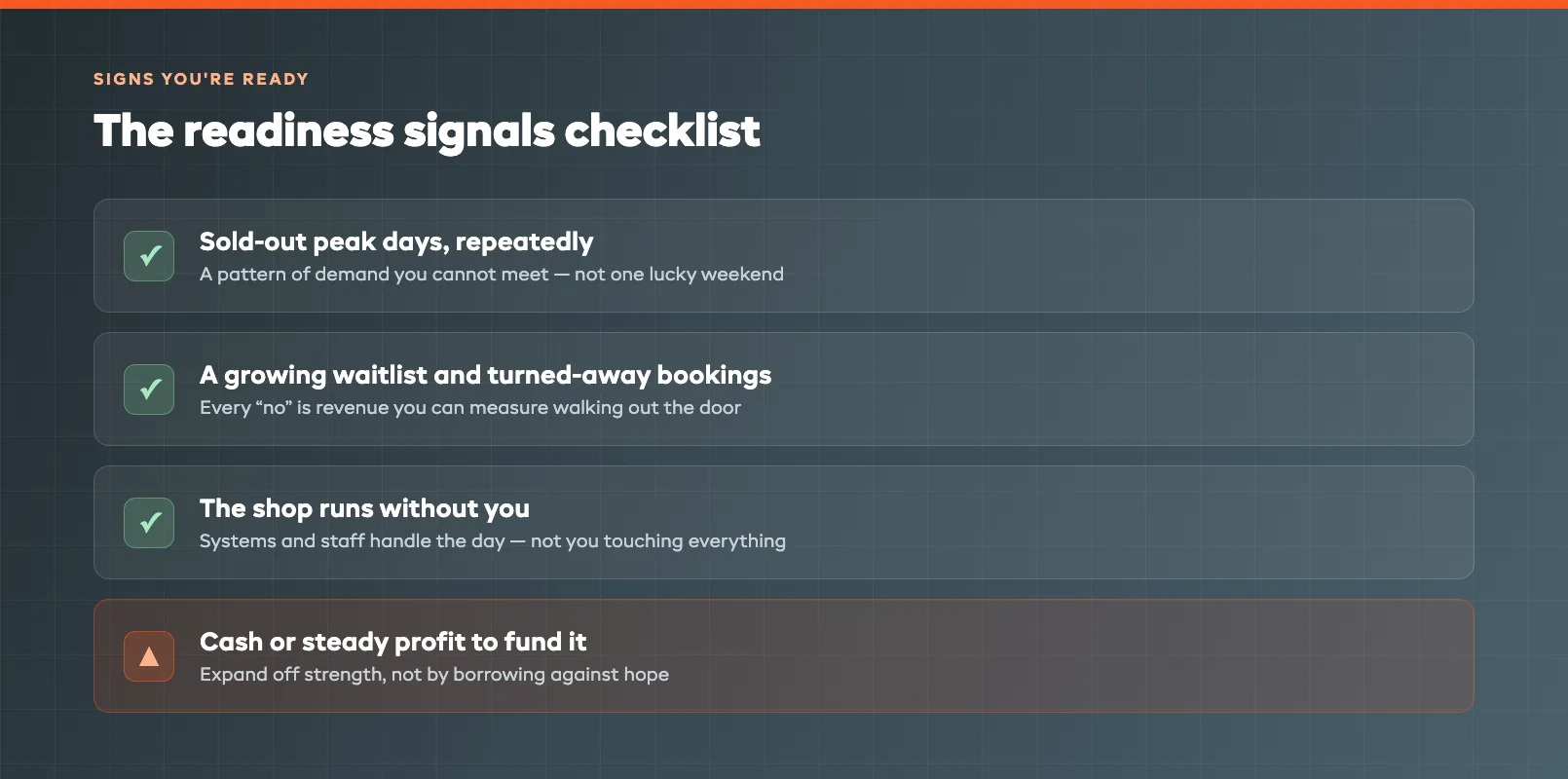
The simplest, cheapest, and lowest-risk way to grow is to add more of what already sells out. If your kayaks, e-bikes, or trailers are booked solid on every good day, more units is close to a guaranteed return.
Start with the data, not the gut. Look at utilisation per item — how many days each unit actually earns — and add stock to your highest-utilisation categories first, because those units pay themselves back fastest. A boat that rents 80% of peak days is begging for a sibling; a niche item that sits idle half the season is not. Buying more of a slow mover just parks more cash in the yard.
New inventory also has a hidden benefit: it smooths out your worst days. When you are constantly at capacity, one damaged unit or one late return cascades into cancellations. A little headroom in your fleet turns those near-misses into non-events. For the operational side of running a bigger fleet well — maintenance, tracking, and turnover — the guide to rental fleet management goes deep on keeping utilisation high as you add units.
Growth Path #2: Second Location
A second location is the growth path that looks most like "real" expansion, and it is also the one that ends the most rental businesses. Done at the right time it doubles your reach. Done too early it doubles your fixed costs — rent, staff, insurance — long before it doubles your revenue.
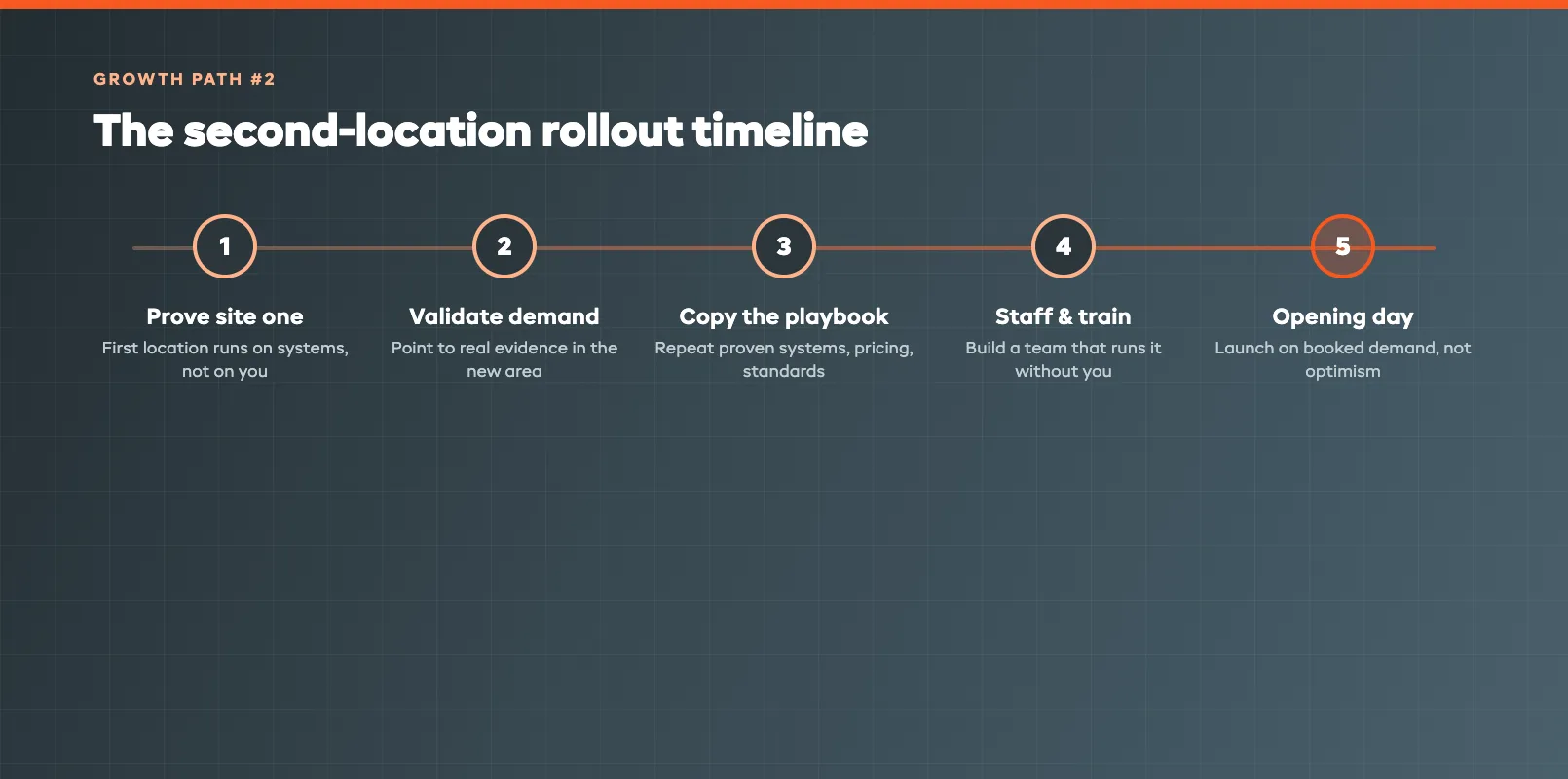
The gate is simple: do not open a second site until your first one runs on systems, not on you. If the business still needs you in the building to function, a second location just splits you in half. Once your processes, training, and software can run a site without your daily attention, you have something you can copy — and copying a proven playbook is far safer than reinventing one across town.
Pick the new area on evidence, not romance. Look for signs of demand you can point to: customers who already travel to you from that region, search interest, events, or a gap where no one serves the market well. Then repeat what works. The operators who scale locations successfully are boringly consistent — same systems, same pricing logic, same standards — while the ones who struggle treat every new site as a fresh experiment.
Growth Path #3: New Niches or Add Tours
Sometimes the best growth is not more of the same or somewhere new — it is adjacent. Adding a related niche or a guided experience lets you grow off the gear and the customers you already have.
A new niche means a category that shares your season, your storage, or your audience. A paddle-sports shop adding wetsuits and snorkel sets, or a bike shop adding e-bikes and kids' trailers, spreads risk and lifts the average booking without a whole new operation. The rule is overlap — the closer the new line sits to what you already do, the cheaper and faster it pays off.
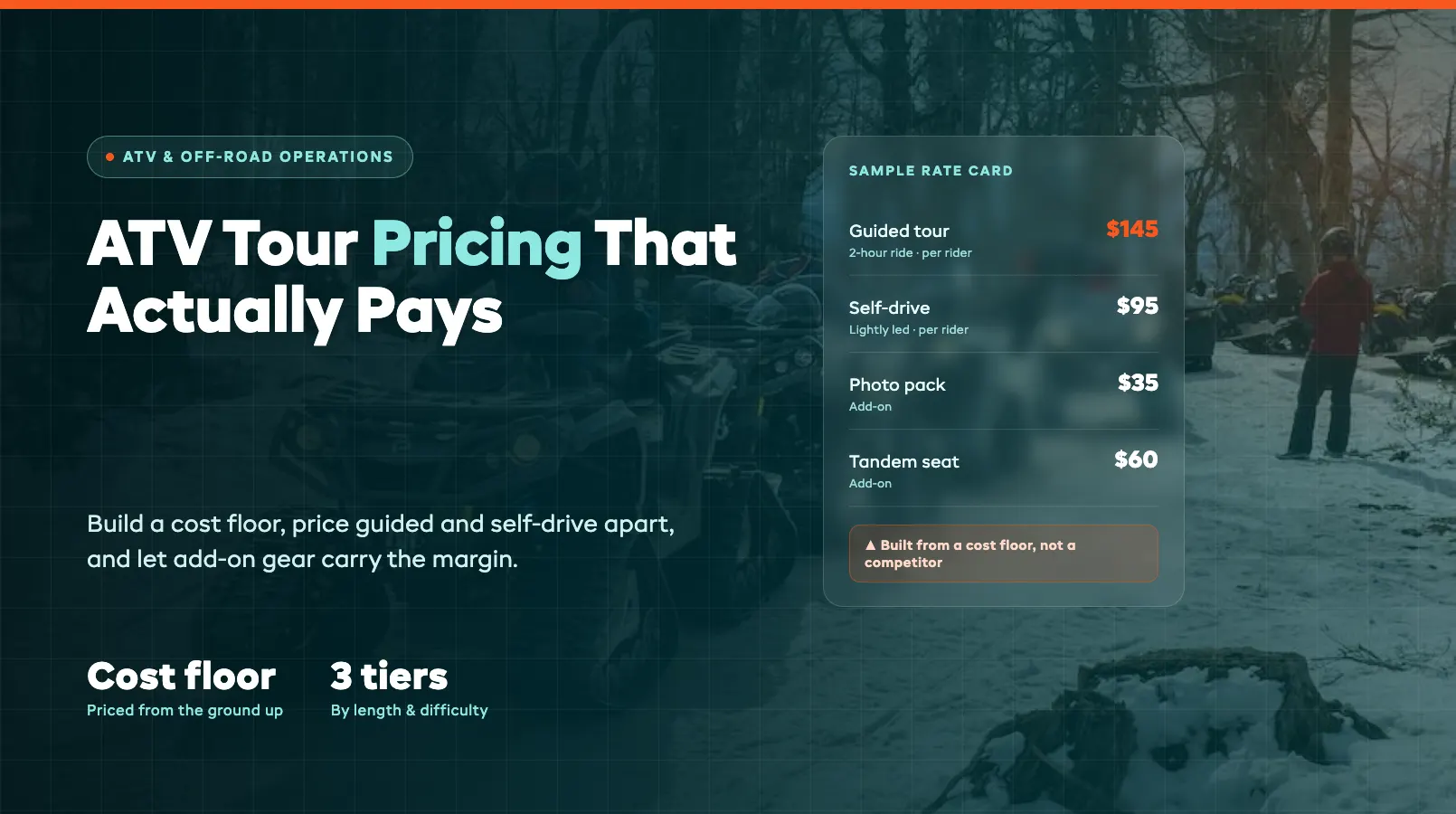
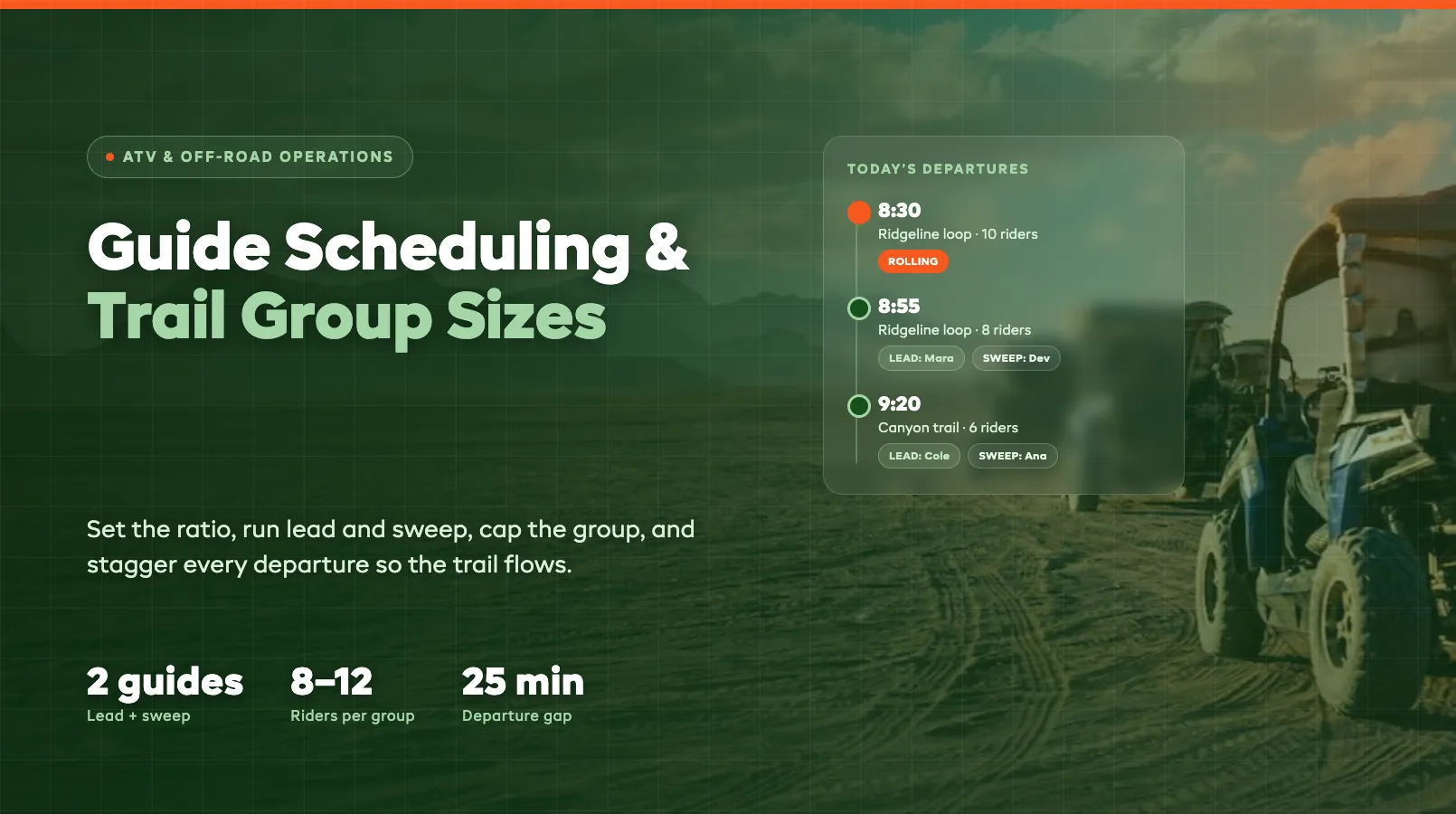
Adding tours is often the highest-upside move of all. A guided tour uses equipment you already own and customers who already trust you, but sells at a far higher price point than a bare rental — you are selling an experience, not just an asset. The trade-off is that tours need guides, schedules, and a different flavour of customer service, so treat it as a genuine new product line. If you go this way, software that handles bookings, schedules, and rentals in one place matters even more; the all-in-one tour operator software guide covers running rentals and tours side by side without two disconnected systems.
Technology for Scaling
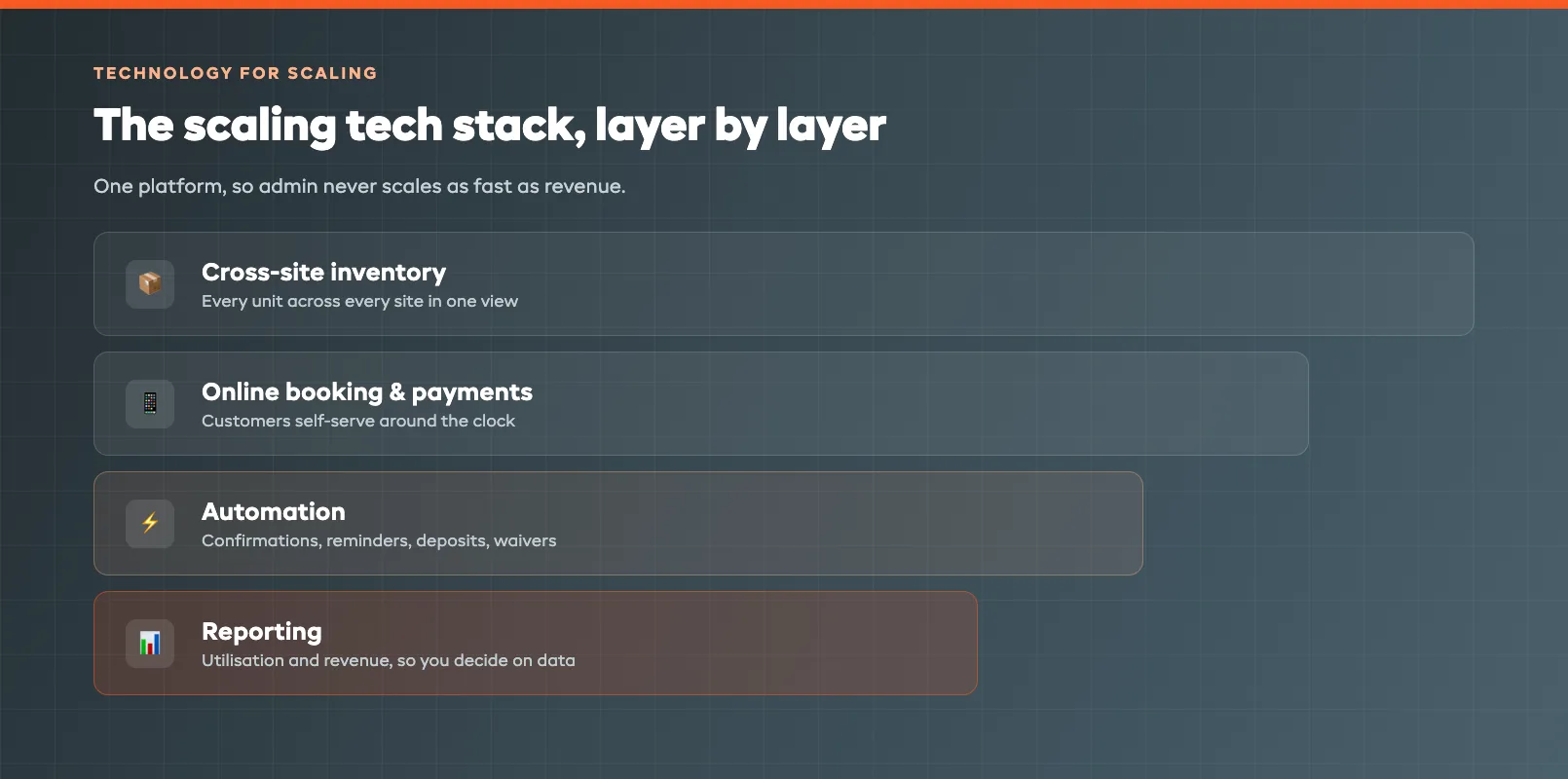
Every growth path shares one requirement: your admin cannot scale at the same rate as your revenue, or growth will bury you. The job of technology is to let you add units, sites, and product lines without adding a proportional pile of manual work.
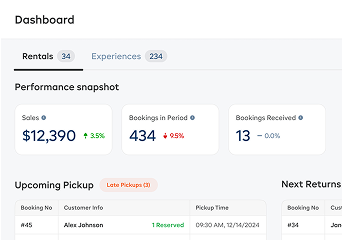
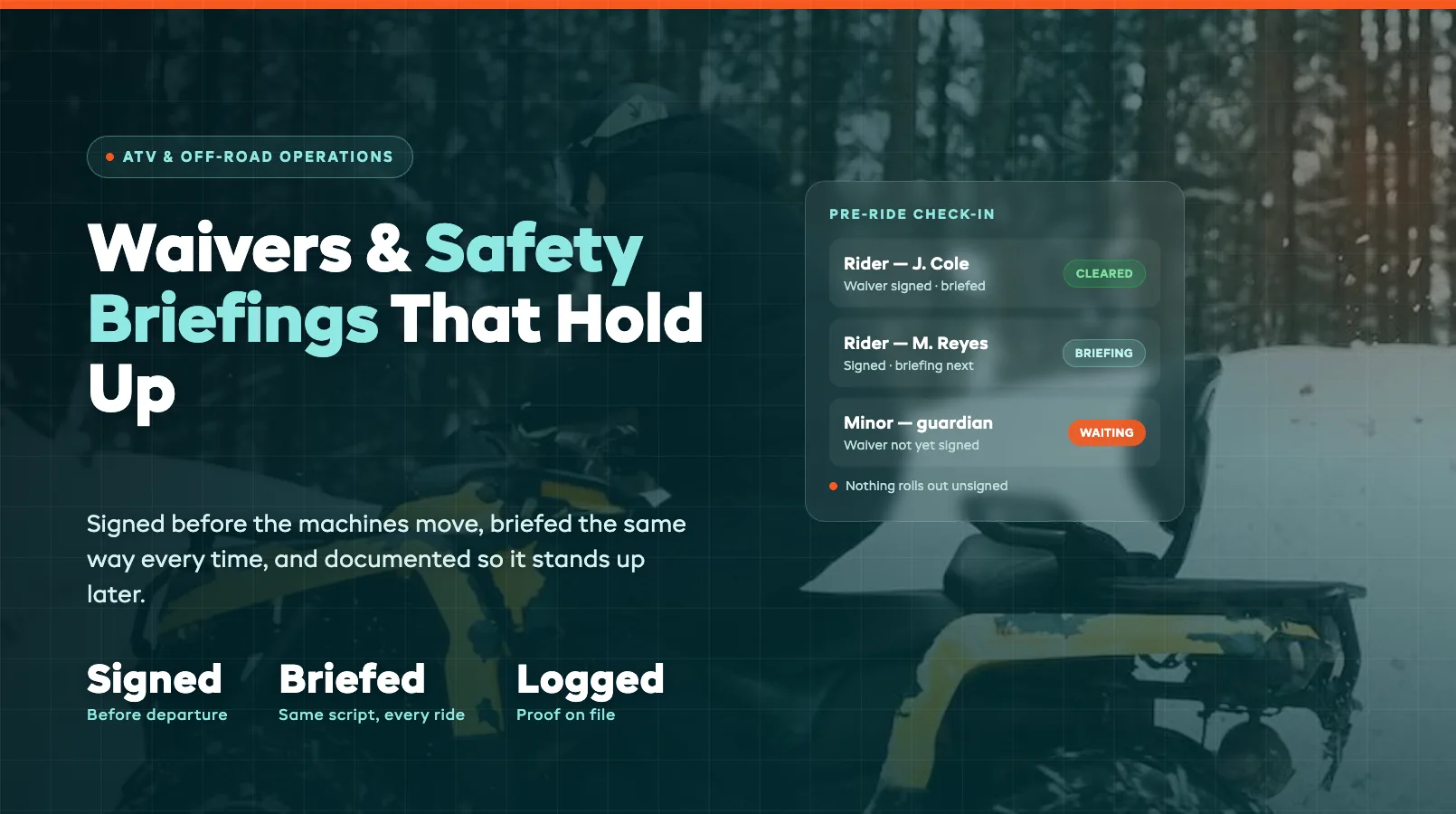
At a minimum, scaling needs software that manages inventory across multiple locations from one view, takes online bookings and payments so customers self-serve around the clock, and gives you reporting on utilisation and revenue so you keep making decisions on data instead of memory. As you get bigger, automation for confirmations, reminders, deposits, and waivers stops the small tasks from multiplying out of control — the difference between a two-location business that feels calm and one that feels like a fire drill is almost always the systems underneath.
The trap to avoid is stitching together a booking tool, a separate calendar, a spreadsheet, and a card reader that do not talk to each other. That patchwork works at one location and quietly breaks at two. One platform that connects bookings, inventory, payments, and reporting is what lets a small team run a much bigger operation.
Common Mistakes
Most scaling failures are not bad luck — they are the same handful of avoidable errors.
- Scaling a broken process. If your single location leaks money through low utilisation, no-shows, or messy admin, growth multiplies the leaks. Fix the operation first, then scale something that already works.
- Growing on optimism, not booked demand. Doubling inventory or opening a site because it feels like the right time — rather than because you are turning away measurable demand — is how the new costs arrive long before the new revenue.
- Funding growth with heavy debt. Expanding off cash flow and steady profit keeps a slow season from becoming a crisis. Borrowing to grow fast leaves no margin for the season that under-performs.
- Letting service slip. The reputation that got you here can erode fast if quality drops while you are distracted by expansion. Protect the customer experience through the transition, not after it.
- Doing it all yourself. If you are still the only person who can run the business, you do not have a business you can scale — you have a job. Build the team and the systems that let it run without you before you make it bigger.
Putting It Together
Scaling a rental business comes down to sequence. First confirm the demand is real and repeatable. Then choose the path that fits where you are — more inventory when specific items sell out, a second location once your first runs itself, or a new niche or tour line when you can grow off gear and customers you already have. Put the technology in place so admin does not scale faster than revenue, and steer clear of the mistakes that turn growth into grind.
Grow off strength, not hope. The operators who scale well are not the ones who move fastest — they are the ones who fix the leaks, prove the demand, and repeat what already works.
FAQ
How do I know when my rental business is ready to scale?
The clearest sign is repeat, predictable demand you cannot meet — sold-out peak days, a growing waitlist, and customers you regularly turn away. If your current location runs smoothly without you touching every booking, and you have cash or steady profit to fund it, you are ready. If you are still firefighting daily, fix that first.
Should I add more inventory or open a second location?
Add inventory first almost every time. It is cheaper, lower-risk, and faster to pay back, especially when specific items sell out. Open a second location only once your first site runs on systems rather than on you, and only when you have proven demand in the new area — a second location doubles your fixed costs before it doubles your revenue.
Is adding tours a good way to grow a rental business?
It can be one of the best, because a guided tour uses gear you already own and customers who already trust you, at a much higher price point than a bare rental. The catch is that tours need staff, scheduling, and a different kind of customer service, so treat it as a real new product line rather than a side experiment.
What technology do I need to scale a rental business?
At minimum you need software that manages inventory across locations, takes online bookings and payments, and gives you reporting on utilisation and revenue. As you grow, automation for confirmations, reminders, and waivers stops admin from scaling faster than your team. The goal is to add units and sites without adding a proportional pile of manual work.
How fast should I scale my rental business?
Slower than you want to. The safest pace is one that your cash flow funds without heavy debt and that your systems and staff can absorb without service slipping. Most operators who fail scaled too fast — they doubled inventory or opened a location on optimism rather than on booked demand, and the new costs arrived long before the new revenue.
What is the most common mistake when scaling a rental business?
Scaling a broken process. If your single location leaks money through low utilisation, no-shows, or messy manual admin, growing simply multiplies those leaks. Tighten your operation, get your utilisation and your systems right, and then add scale on top of something that already works.
in one place