ATV Rental Waivers and Safety Briefings That Hold Up
ATV Rental Waivers and Safety Briefings That Hold Up
A signed waiver on file feels like protection. Right up until something goes wrong on the trail and a lawyer starts reading the fine print. Then you find out whether your paperwork was built to hold up — or just to make everyone feel busy at check-in.
ATV and off-road rentals carry real risk. Loose gravel, blind crests, first-time riders on a 400-pound machine. You cannot remove that risk, but you can build a waiver and a safety briefing that do two jobs at once: keep riders safer, and give you a clean, defensible record if a claim ever lands. This is how operators who have been through it set both up.
What a waiver actually protects you from
Start with an honest picture of what a waiver does. A good one shifts assumed risk onto the rider for the ordinary dangers of the activity — the bumps, spills, and mechanical realities that come with riding off-road. It signals that the rider knew the sport was dangerous and chose to ride anyway.
What it does not do is give you a free pass on your own conduct. Most courts will not enforce a waiver that tries to excuse gross negligence — handing over a machine you knew was faulty, skipping the briefing, or renting to someone plainly unfit to ride. Enforceability also varies by jurisdiction, and the rules around minors are their own minefield.
So treat the waiver as one layer, not the whole wall. The other layers are a real safety briefing, honest maintenance, and documentation that proves you did things properly. A waiver backed by those is strong. A waiver standing alone is a hope, not a defense.
The clauses every ATV waiver needs
A waiver that holds up is specific. Generic templates pulled off the internet often miss the language that matters for off-road, and vague documents are the first thing to get picked apart. Name the activity, name the risks, and make the acknowledgements explicit.
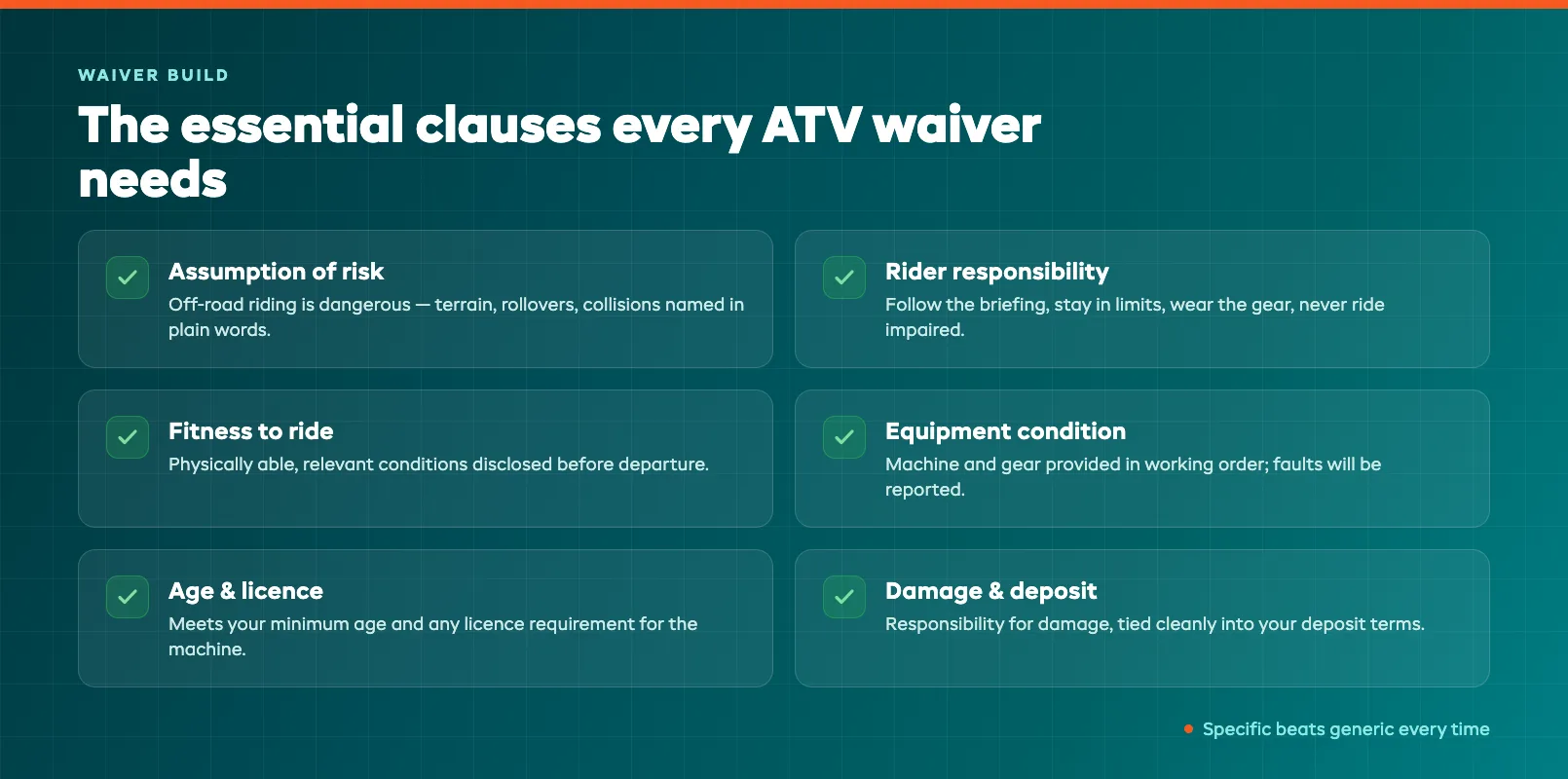
At minimum, your waiver should cover:
- Assumption of risk — plain-language acknowledgement that off-road riding is inherently dangerous, listing real hazards like terrain, rollovers, and collisions.
- Rider responsibility — the rider agrees to follow the briefing, stay within limits, wear the gear, and not ride impaired.
- Fitness to ride — a statement that the rider is physically able and has disclosed any relevant conditions.
- Equipment acknowledgement — the rider confirms the machine and gear were provided in working order and that they will report faults.
- Age and license — confirmation the rider meets your minimum age and any license requirement.
- Photo and property terms — permissions and responsibility for damage, tying into your deposit terms.
Write it so a rider can actually read it. A waiver they clearly understood is far harder to challenge than a wall of legal boilerplate nobody pretends to have read.
Running a safety briefing riders remember
The briefing is where you turn a signature into genuine safety — and into a second layer of protection. A consistent, scripted briefing means every rider hears the same thing, and you can prove it. Winging it means each guide covers something different, and you have no record of what any given rider was told.
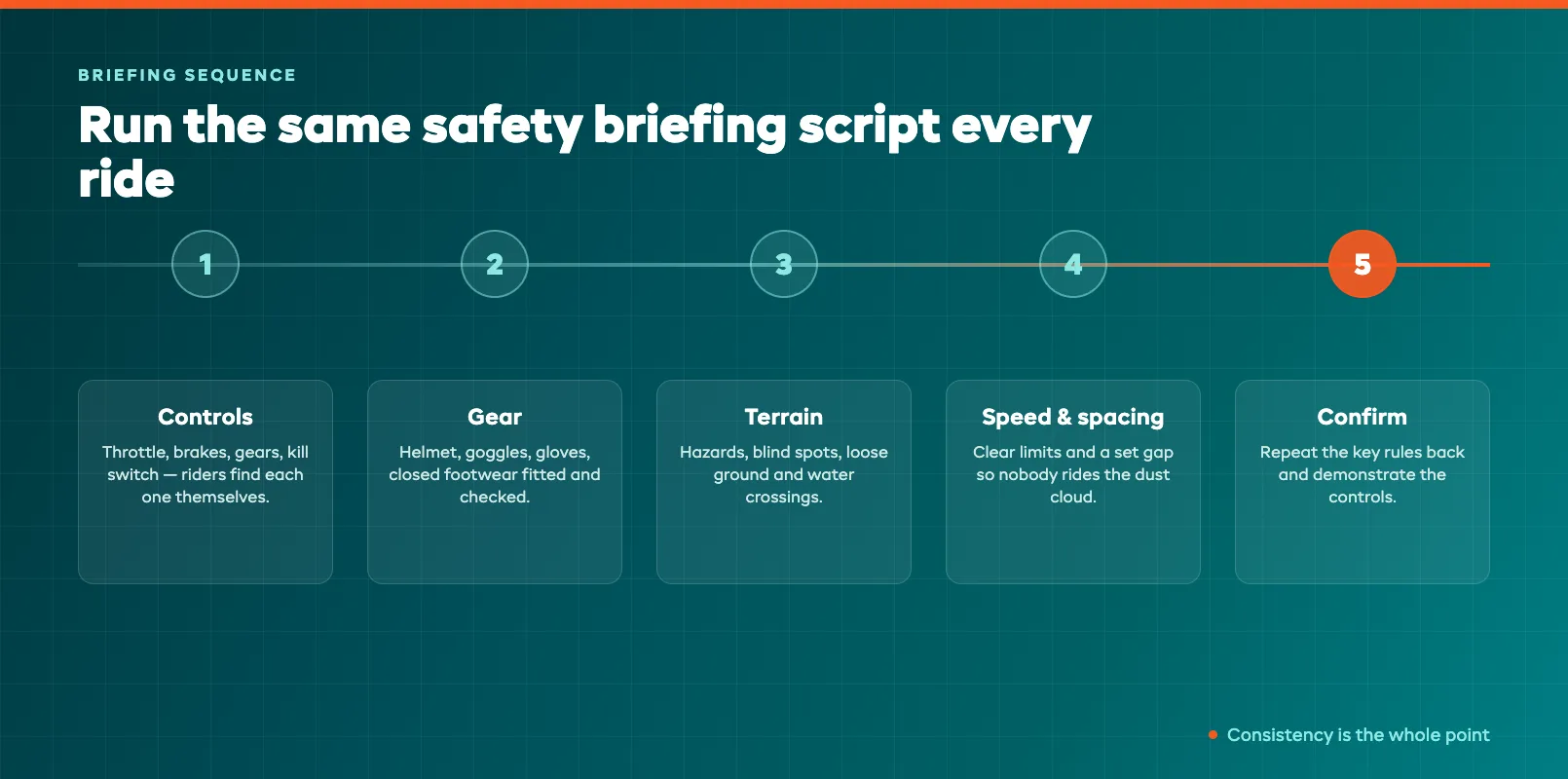
Build a fixed sequence and run it the same way every time:
- Controls and machine — throttle, brakes, gears, kill switch. Have riders find each control themselves.
- Gear — helmet, goggles, gloves, closed footwear, fitted and checked before departure.
- Terrain and hazards — what the trail throws at them, where the blind spots are, what to do on loose ground or water crossings.
- Speed and spacing — clear limits and a set distance between machines so nobody rides into the dust cloud ahead.
- Group rules — hand signals, what to do if separated, and how to signal a stop or a fault.
Finish with a quick check for understanding. Ask riders to repeat the two or three rules that matter most, and have them demonstrate the controls before you let a machine move. A rider who can show you they understood is safer — and a much weaker source of a "nobody told me" claim later.
Capturing signatures before they touch a machine
Timing matters as much as content. The waiver has to be signed, and the briefing delivered, before a rider gets on a machine — never after, and never "we'll sort it when you get back." A signature collected after a ride is a gift to the other side's lawyer.
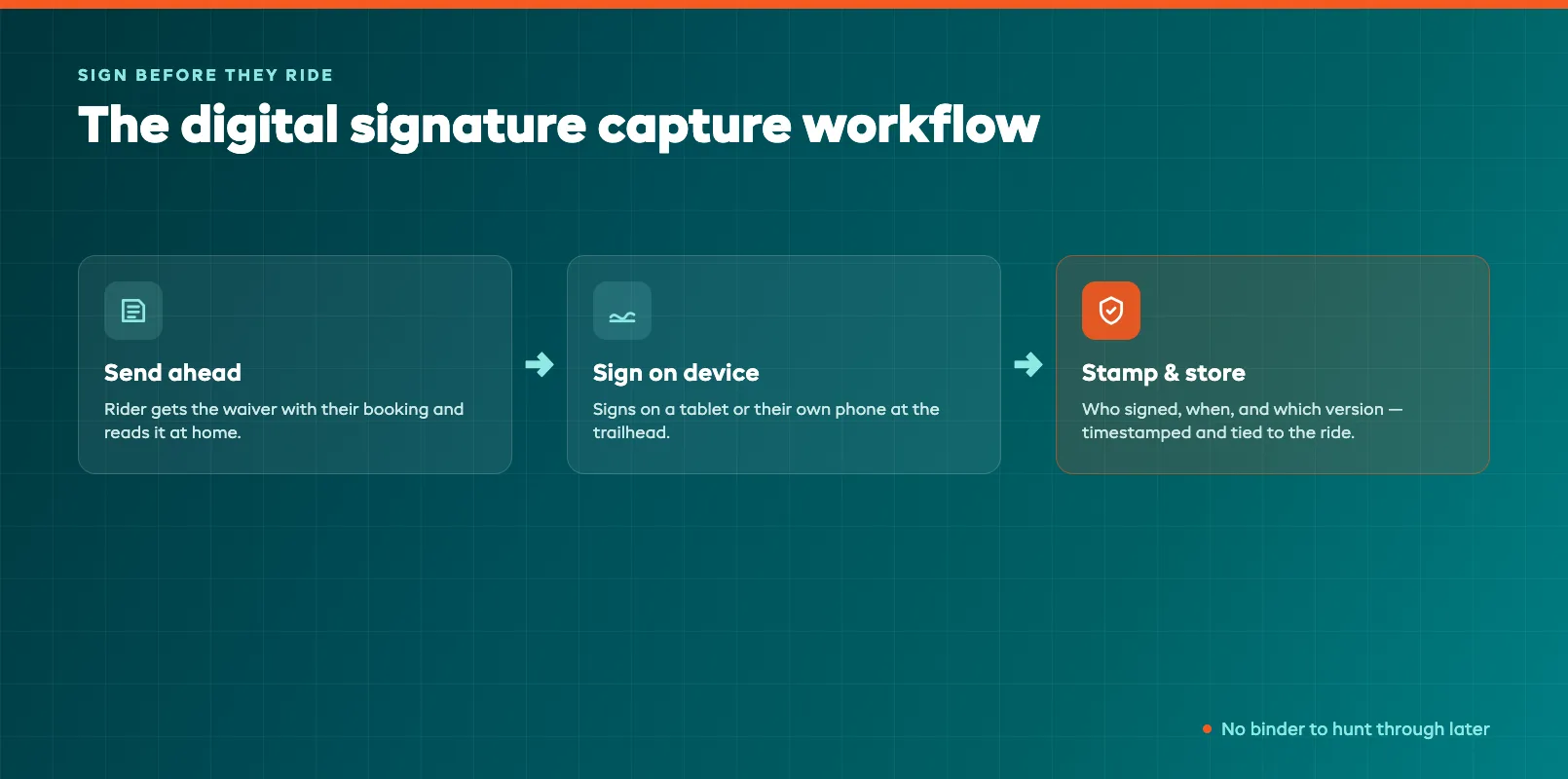
Paper works, but it is slow at a busy trailhead and easy to lose. Digital capture solves both. A rider signs on a tablet or their own phone, and the system stamps exactly who signed, when, and which version of the document they agreed to. No hunting through a binder six months later, no smudged signatures, no missing pages.
Sending the waiver ahead of time is even better. Riders complete it at home, arrive already signed, and you spend check-in on the briefing instead of chasing paperwork. Booking software that ties the waiver to the reservation means you can see at a glance who still needs to sign before the group rolls out. Our guide to ATV and UTV booking software covers how that fits into the wider check-in flow.
Documenting incidents so your paperwork holds up
Most rides end fine. But the day one does not is exactly when your documentation earns its keep. The instinct is to deal with the person and move on. Do that — then, while it is fresh, record what happened.
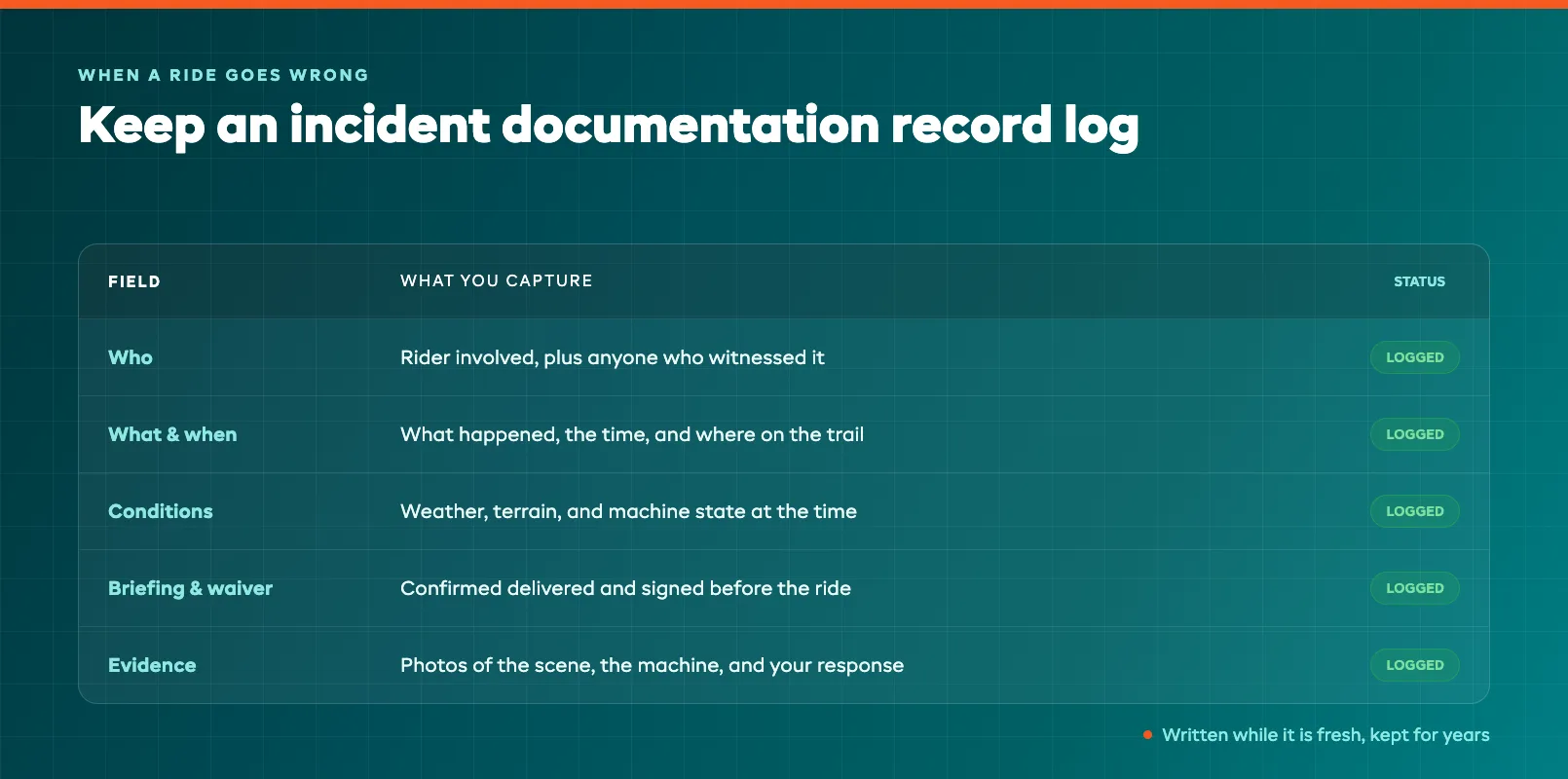
A usable incident record captures the who, what, when, and where: the rider involved, what happened, the time and location on the trail, the conditions, who witnessed it, and what you did in response. Note whether the briefing was delivered and the waiver signed — because those are the first facts anyone will ask about. Photos of the scene and the machine help.
Keep these records with the matching waiver and briefing log, and hold onto them. Personal injury claims can surface years after the ride, and memory is a poor defense. A dated file showing the rider was briefed, signed a clear waiver, and rode a maintained machine is worth far more than anyone's recollection. Keeping the machine itself trail-ready is its own discipline — see off-road fleet maintenance for how service records back up the same story.
Minors, groups, and the awkward edge cases
The clean cases are easy. The edge cases are where operators get caught. Minors are the big one: a parent or legal guardian generally needs to sign, and even then enforceability varies, so keep proof of the relationship and check your local rules rather than assuming a parent signature settles it.
Groups bring their own friction. A stag party or a corporate day means a stack of waivers and a room that would rather skip the briefing. Do not let them. Collect every signature, brief the whole group together, and note anyone who seems impaired or unfit — you can and should refuse a rider, and a documented refusal protects you far more than a reluctant rental. For the full operating picture around guided and self-drive trips, the pillar guide on running an ATV and off-road tour business ties waivers into the rest of your day. If a term trips you up, the ATV and off-road glossary spells the common ones out.
Putting it together
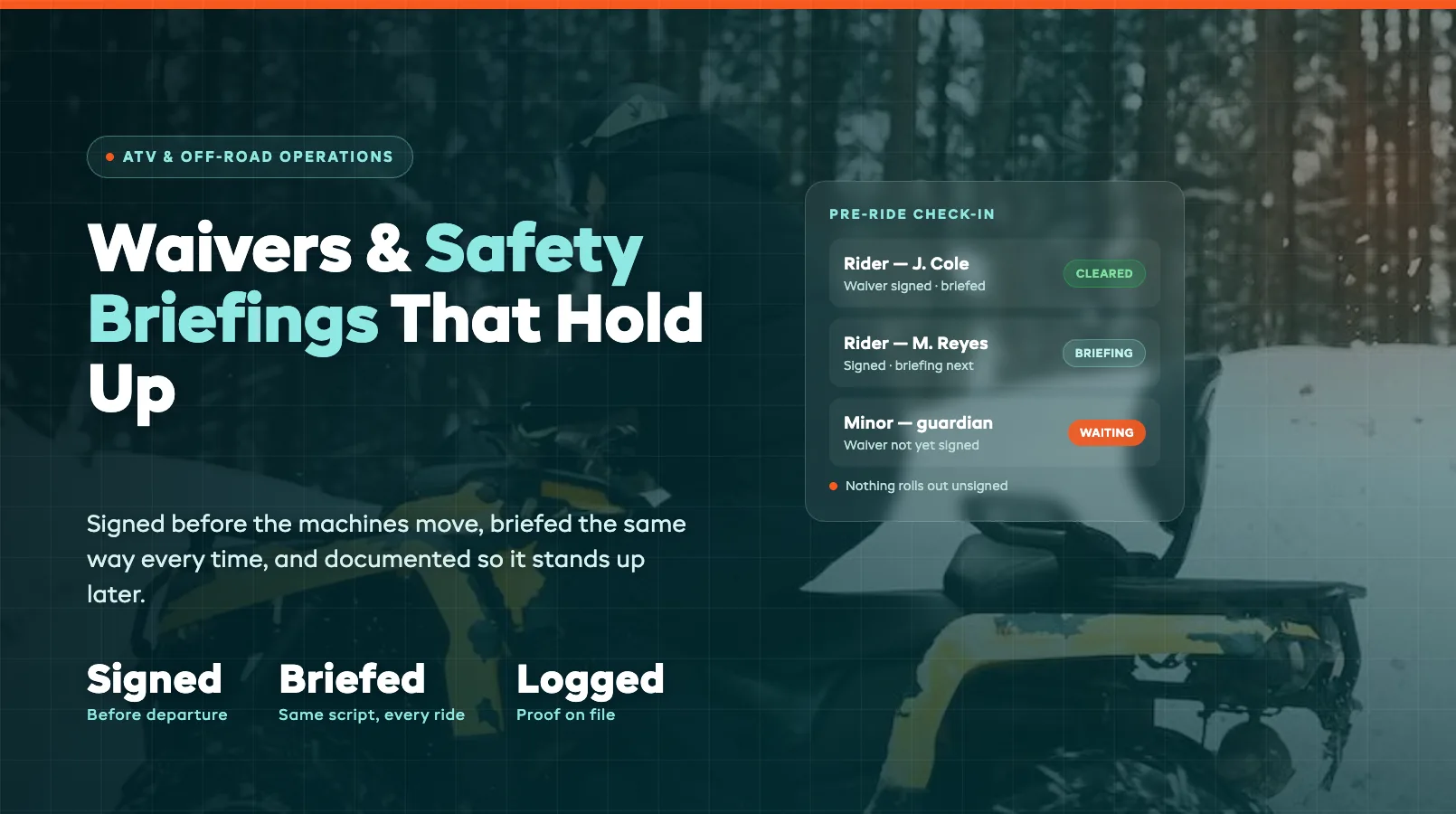
Waivers and briefings are not box-ticking. They are the two halves of the same protection: the signature says the rider accepted the risk, and the briefing proves you did your part to manage it. Neither holds up well alone.
Get the clauses right, run the same briefing every time, capture signatures before the machines move, and document anything that goes wrong while it is fresh. Do that consistently and you are not just papered up — you are running a genuinely safer operation, which is the best defense there is. Tie the paperwork to your booking system so nothing rolls out unsigned, and the whole thing runs itself. Get more detail on the surrounding operation in our ATV vertical hub.
FAQ
Does a waiver actually stop someone suing me?
A well-written waiver deters claims and gives you a strong defense, but it does not make you immune. It works best paired with a documented safety briefing and honest operations. Anyone can file a claim; a solid waiver plus proof you did things properly is what wins it.
Can a parent sign an ATV waiver for a minor?
Usually yes, but the enforceability of a parent signing away a minor's rights varies by jurisdiction. Get the parent or legal guardian to sign, keep proof of the relationship, and check your local rules rather than assuming a parent signature ends the matter.
Do I need a fresh waiver every visit?
The safest approach is a signed waiver tied to each rental or ride date. Digital systems make this quick and give you a clean, dated record for every trip, which is far stronger than relying on one signature from a visit two years ago.
How long should I keep signed waivers?
Keep them for at least as long as your local limitation period for personal injury claims, which is often several years. Digital storage makes long retention easy, so there is little reason to bin them early — hold onto them well past the ride.
Is a photo of a paper waiver good enough?
It is better than nothing, but a proper digital capture with a timestamp, the signer's details, and the exact document version is far cleaner if you ever need it. A phone photo can be argued with; a stamped digital record is much harder to dispute.
What should a safety briefing cover for ATVs?
Controls and throttle, braking, terrain and hazards, speed limits, spacing between machines, protective gear, and what to do if a rider gets separated or a machine faults. Run the same sequence every time and check that riders understood before you let them ride.
in one place