ATV Tour Pricing: Guided, Self-Drive, and Add-On Gear
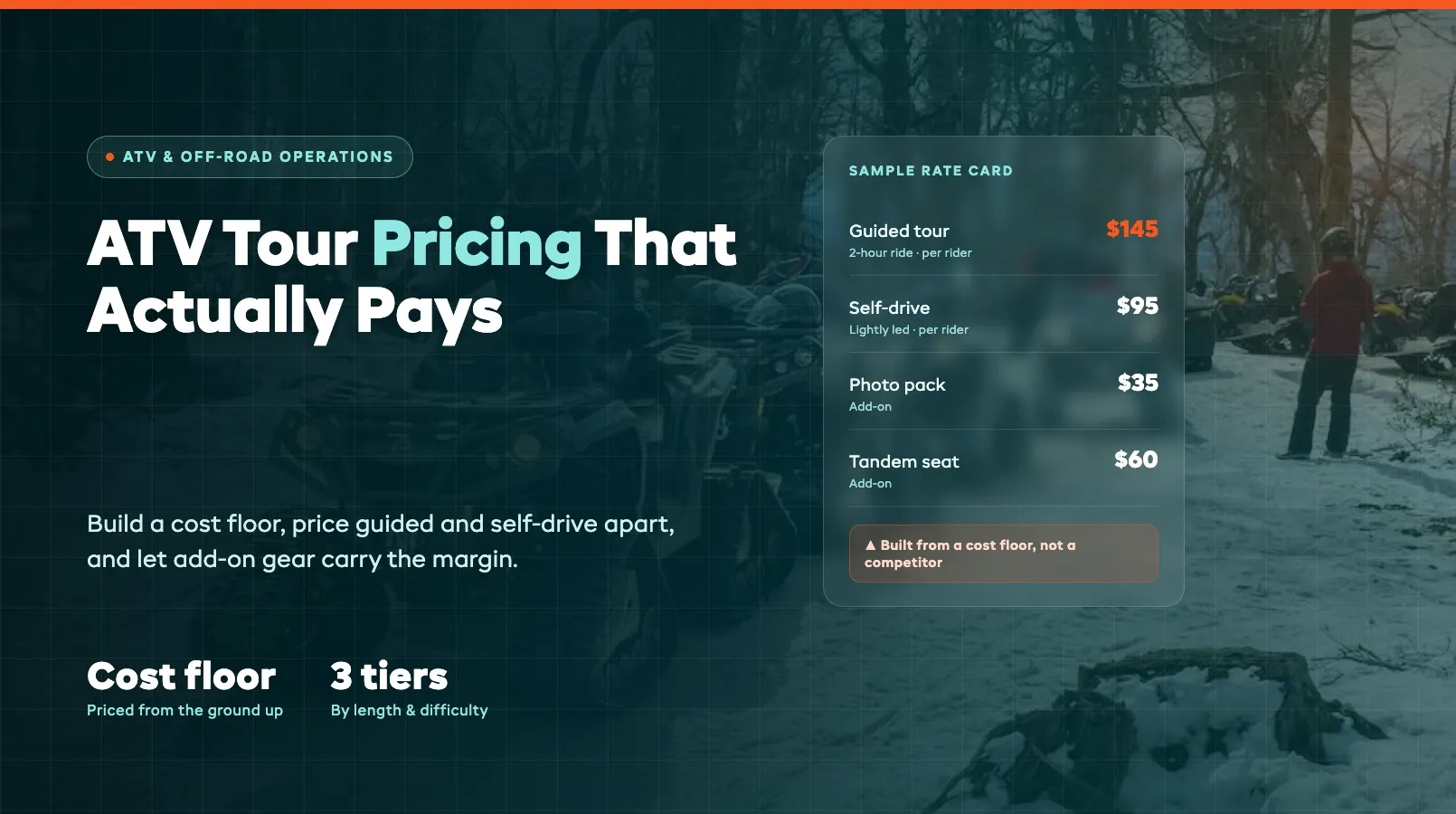
ATV Tour Pricing: Guided, Self-Drive, and Add-On Gear
Ask ten ATV operators how they set their tour price and most will tell you the same thing: they looked at what the shop down the highway charges and landed a few dollars under it. It feels safe. It is also how you end up busy every weekend and still short on cash at the end of the season, because their costs are not your costs and their machines are not your machines.
Price is not a number you copy. It is a number you build — from what a ride actually costs you to run, up through the value of a guide, and out to the add-ons that quietly carry your margin. This guide walks through the whole stack: the cost floor, guided versus self-drive rates, pricing by length and difficulty, gear upsells, and how to flex all of it with the season. If you are still setting up the wider operation, start with the complete guide to running an ATV and off-road tour business and treat this as the deep dive on what to charge.
Build your cost floor first
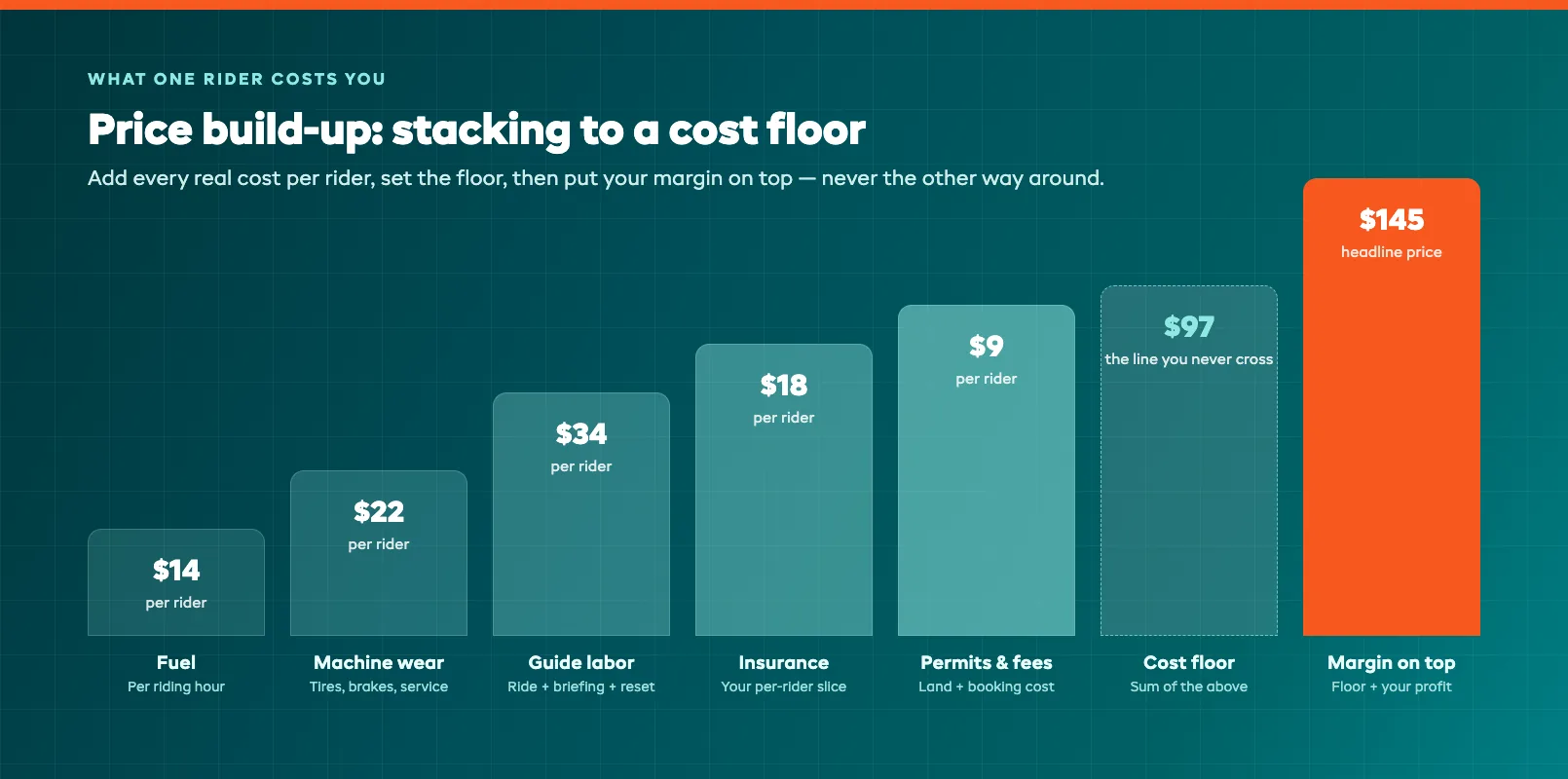
Before you can pick a price, you need to know the price you can never go below. That is your cost floor — everything one rider costs you before you have made a cent.
For an ATV tour, the floor stacks up from a handful of real numbers: fuel for the machine, wear and maintenance charged per riding hour, the guide's wages for the time they are with the group, your slice of insurance and permit fees per rider, and the booking and payment costs on the sale. Add them up honestly. A machine that eats fuel, tires, and brake pads on rocky terrain costs far more per hour than a soft-tops loop on graded fire road, and if your price does not carry that wear you are slowly selling your fleet for parts.
Once the floor is clear, your margin sits on top of it — not the other way around. The mistake is picking a headline price, then hoping the costs fit underneath. Do it in the right order and every tour you sell is guaranteed to make money, not just look busy.
Price guided and self-drive as different products
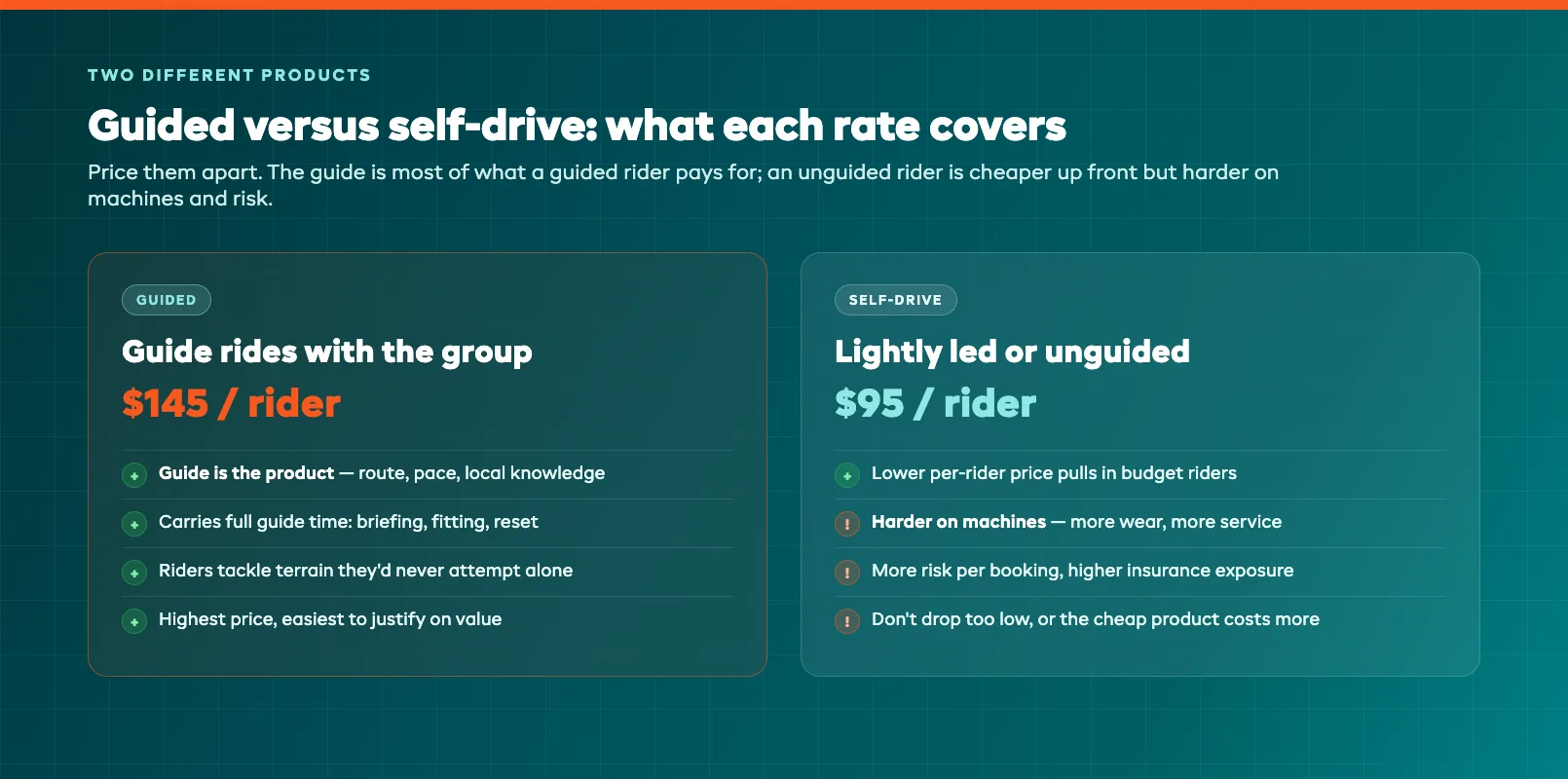
The single biggest lever on your price is whether a guide rides with the group. Guided and self-drive are not the same product at a small discount — they are two different things, and pricing them the same way leaves money on both.
On a guided tour, the guide is most of what the customer is buying. They get a safe route, someone who reads the trail, local knowledge, and the confidence to ride terrain they would never tackle alone. That experience justifies a higher price, and the price has to carry the guide's full time — not just the two hours on the trail, but the briefing, the gear fitting, and the reset between groups. Lean on your waivers and safety briefings to make that pre-ride time part of the value, not dead time.
Self-drive or lightly-led options come in lower, but be careful how low. Riders without a guide's constant eye tend to be harder on machines and carry more risk, which means more wear and more insurance exposure per booking. Drop the price too far and you have taken on the higher-cost product for less money. Set self-drive at a point that still covers the machine and the risk, and treat the gap between the two as a genuine choice for the customer, not a race to the bottom.
Charge for length and difficulty
Two tours that both put a rider on a quad are not worth the same money if one is a 45-minute intro loop and the other is a four-hour technical backcountry run. Length and difficulty both push your costs up, so both should push your price up.
Longer rides burn more fuel, rack up more machine hours, and hold a guide for most of the day. Harder trails need your most experienced guide, run a tighter rider-to-guide ratio, and carry more risk of a spill or a breakdown. The clean way to handle it is tiers. Offer a short, easy intro ride, a half-day loop, and a longer or more technical option, each priced to cover its own true cost.
Tiers do more than protect your margin — they let customers sort themselves. A nervous first-timer books the intro loop and leaves happy; a group of regulars pays up for the backcountry ride they actually want. Keeping those tiers straight in your booking software means each option shows the right price, length, and difficulty at the moment of sale, instead of a staff member explaining the ladder over the phone every time.
Turn add-on gear into margin
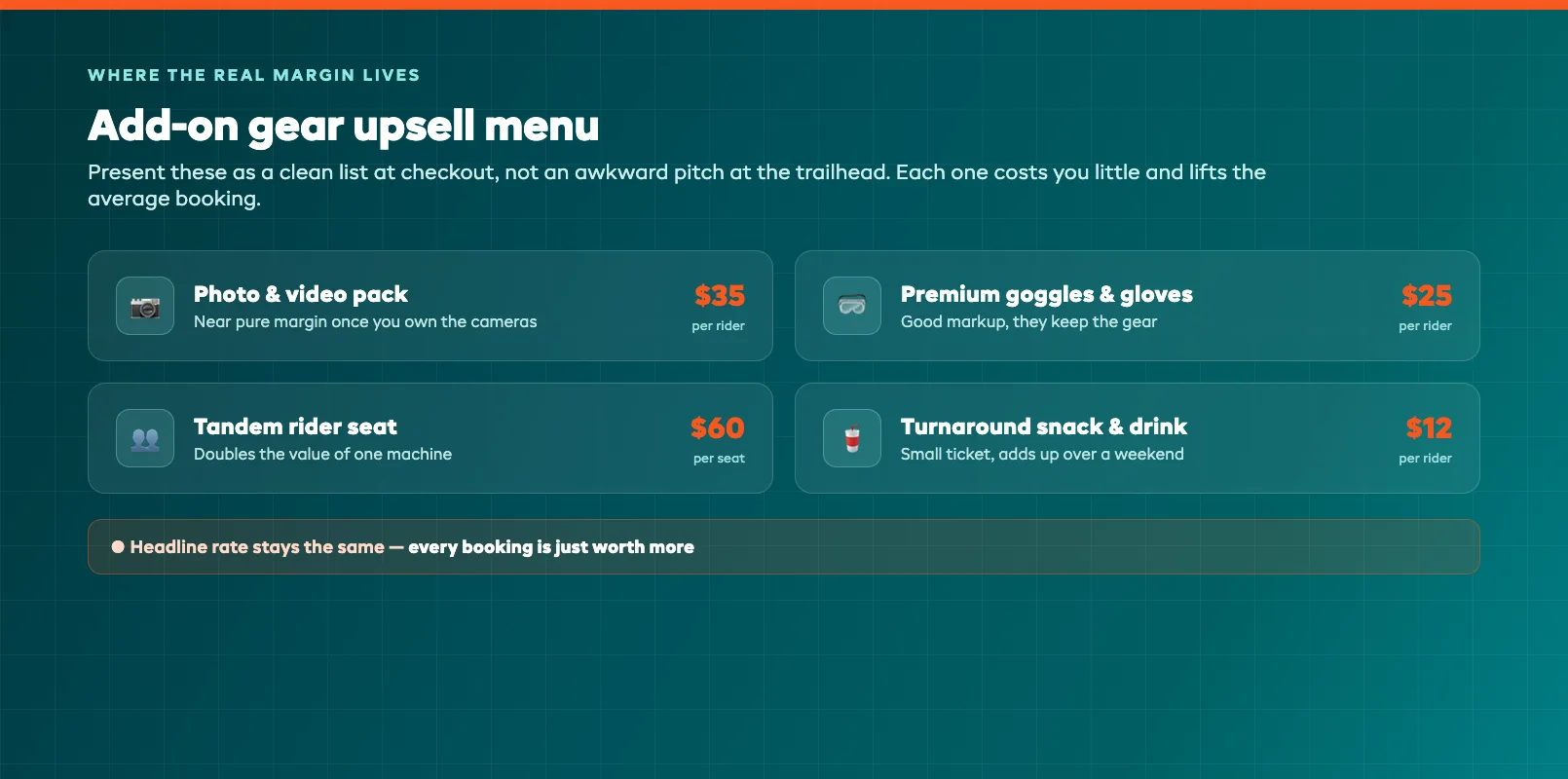
Here is where thin tours become healthy ones. The headline tour price gets a customer in the door; the add-ons are where a lot of your real margin lives, because they cost you almost nothing per booking.
Think about what an ATV rider will happily pay extra for. A photo or video package of their ride is close to pure margin once you own the cameras. Premium gear — goggles, gloves, a neck gaiter they keep — carries a good markup and improves their day. A second rider seat lets a couple ride together and doubles the value of one machine. Even a cold drink and a snack at the turnaround point adds up across a busy weekend.
The trick is to present these as a simple menu at the point of booking, not as an awkward upsell at the trailhead. When a customer books online and sees a clean list of add-ons with prices, a healthy share will tick a box or two. That lifts your average booking value without touching your headline rate — the number competitors see when they shop you stays the same, but every sale is worth more.
Flex your prices with demand
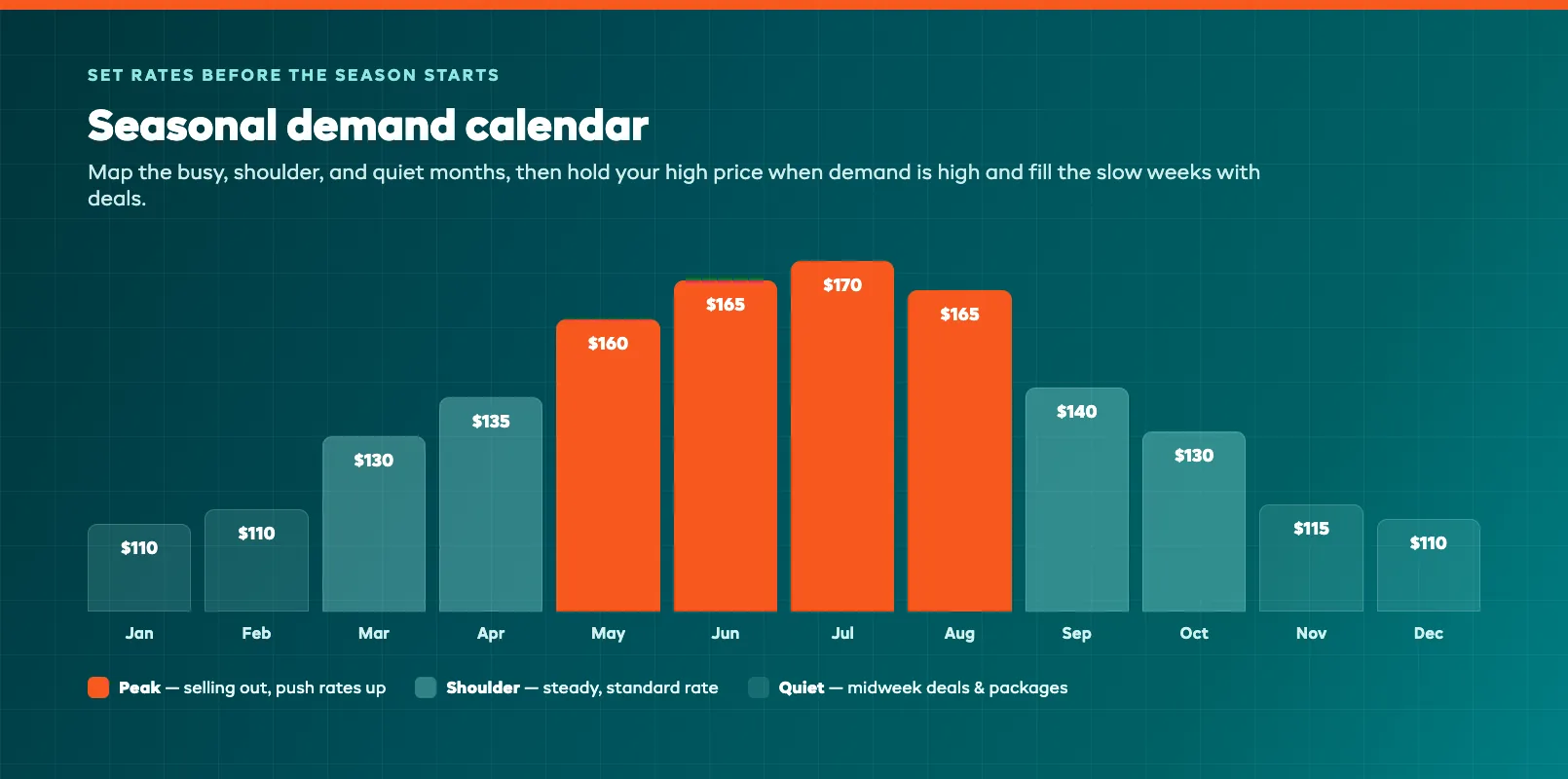
Off-road demand is not flat, so your prices should not be either. Most operators have peak weekends where they turn people away and quiet midweek stretches where machines sit idle. Charging one price across both wastes the peak and does nothing for the trough.
Raise your rates when you are selling out. If Saturday mornings book solid a week ahead, that slot is underpriced — nudge it up and you make more on the same rides. Then use the quiet periods differently: midweek deals, family or group packages, or a shoulder-season discount to pull in riders who would not pay the peak rate. The goal is to protect your high price when demand is high and fill idle time without training every customer to wait for a discount.
Seasonal swings deserve the same treatment. Map your year — the busy stretch, the shoulder, the slow months — and set a rate calendar before the season starts rather than reacting week to week. Good booking software lets you build those rates into the calendar so the right price shows automatically, and a Dash Agent can flag when a slot is selling faster than usual so you can adjust before you sell out too cheap.
Protect the price with deposits
A price only counts if you actually collect it, and the fastest way to bleed a good rate is no-shows. A rider who books a guided tour and never turns up costs you a machine, a guide's time, and a slot you could have sold — none of which you get back.
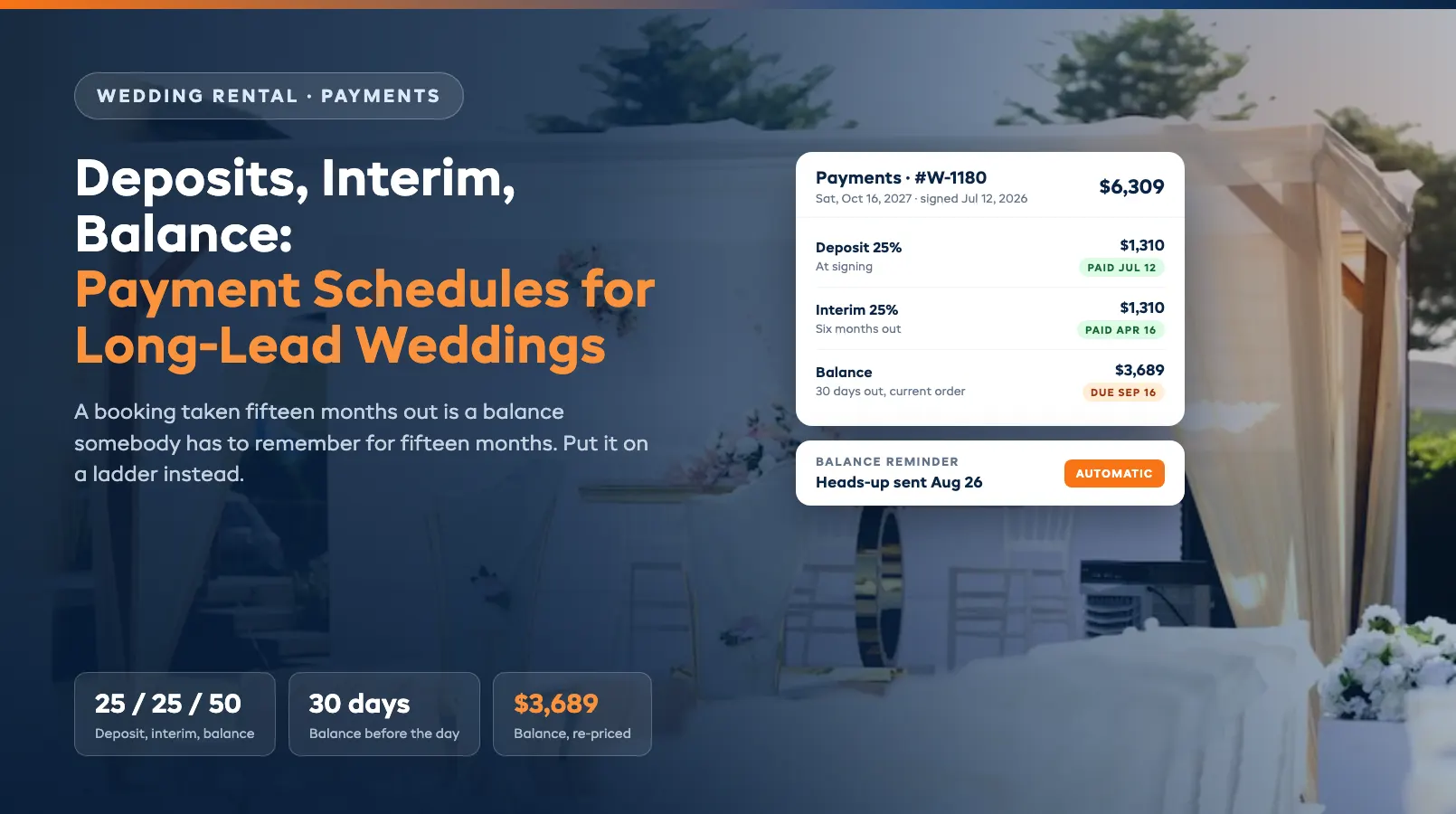
Take a deposit, or full prepayment, on every booking beyond a walk-up. It filters out the casual maybes, and it means a no-show has already paid for most of the ride. Hold a card on file for damage and late cancellations too, and spell out your cancellation window clearly so there are no arguments at the trailhead. Booking software that takes payment at the point of sale and stores the card makes all of this automatic, so you are protecting your price without chasing anyone. For the wider staffing and scheduling side that keeps those booked tours running smoothly, see our guides on fleet maintenance and guide scheduling and group sizes.
Putting it together
ATV tour pricing is a stack, not a single number. Start with a cost floor so you know your minimum, price guided and self-drive as the two different products they are, charge more for longer and harder rides, and let add-on gear carry the margin that a competitive headline rate leaves thin. Then flex the whole thing with demand so your busy weekends earn their keep and your quiet weeks still fill.
Do that and you stop guessing. Every tour you sell clears its true cost, every add-on lifts the average, and the price on your website is one you built rather than one you borrowed. For more on running the operation end to end, see our ATV and off-road tour hub, and check the off-road glossary if any of the terms here are new.
FAQ
How much should I charge for a guided ATV tour?
Most guided ATV tours land between about 90 and 180 dollars per rider for a two-hour ride, depending on region, terrain, and how much gear is included. Build your own number from a cost floor rather than copying a competitor, because their costs and machines are not yours.
Should self-drive tours cost less than guided ones?
Usually the per-rider price is lower, because you are not paying a guide's full attention to each machine. But not by as much as operators expect — unguided riders are harder on machines and carry more risk, so keep enough margin to cover the extra wear and insurance.
What add-ons make the most money on ATV tours?
Photo and video packages, premium gear like goggles and gloves, and a second rider seat tend to have the best margins because they cost you little per booking. A simple add-on menu at checkout lifts your average order value without raising the headline price.
How do I price longer or harder ATV tours?
Charge more for both. A longer ride burns more fuel and machine hours; a harder trail needs a stronger guide and carries more risk. Price by tier — a short intro loop, a half-day, and a technical backcountry ride — so customers self-select and each tier covers its true cost.
Should ATV tour prices change with the season?
Yes. Demand for off-road tours swings hard between peak weekends and quiet midweek stretches. Raise rates when you are selling out, and use discounts, packages, and midweek deals to fill the slow periods rather than dropping your peak price for everyone.
Do I need deposits on ATV tour bookings?
For anything but a walk-up, yes. A deposit or full prepayment protects you against no-shows on machines and guide time you cannot resell at the last minute. Booking software that takes the payment and holds a card on file makes this automatic.
in one place