Customer Retention for Rental Shops: Turning One-Time Renters Into Regulars
Customer Retention for Rental Shops: Turning One-Time Renters Into Regulars
Most rental shops treat every season like a cold start. The budget goes on ads and listings to pull in strangers, while the hundreds of people who already rented, paid, and had a good time get nothing — not a thank-you, not a reminder, not a reason to come back.
That's backwards. The customer who rented from you last month already knows where you are, trusts your gear, and has a card on file. Winning that person again costs a fraction of winning a stranger, and they tend to book faster and spend more when they do. This guide covers the retention playbook for a rental shop: follow-up, loyalty and referrals, seasonal reminders, and the experience details that quietly decide whether anyone returns.
Why Retention Matters More Than Acquisition
The maths is blunt. Acquiring a new customer means paying for ads, ranking for searches, or buying placement on marketplaces — shops commonly spend $20–$60 in marketing to land one new booking. A repeat booking, by contrast, costs the price of an email.
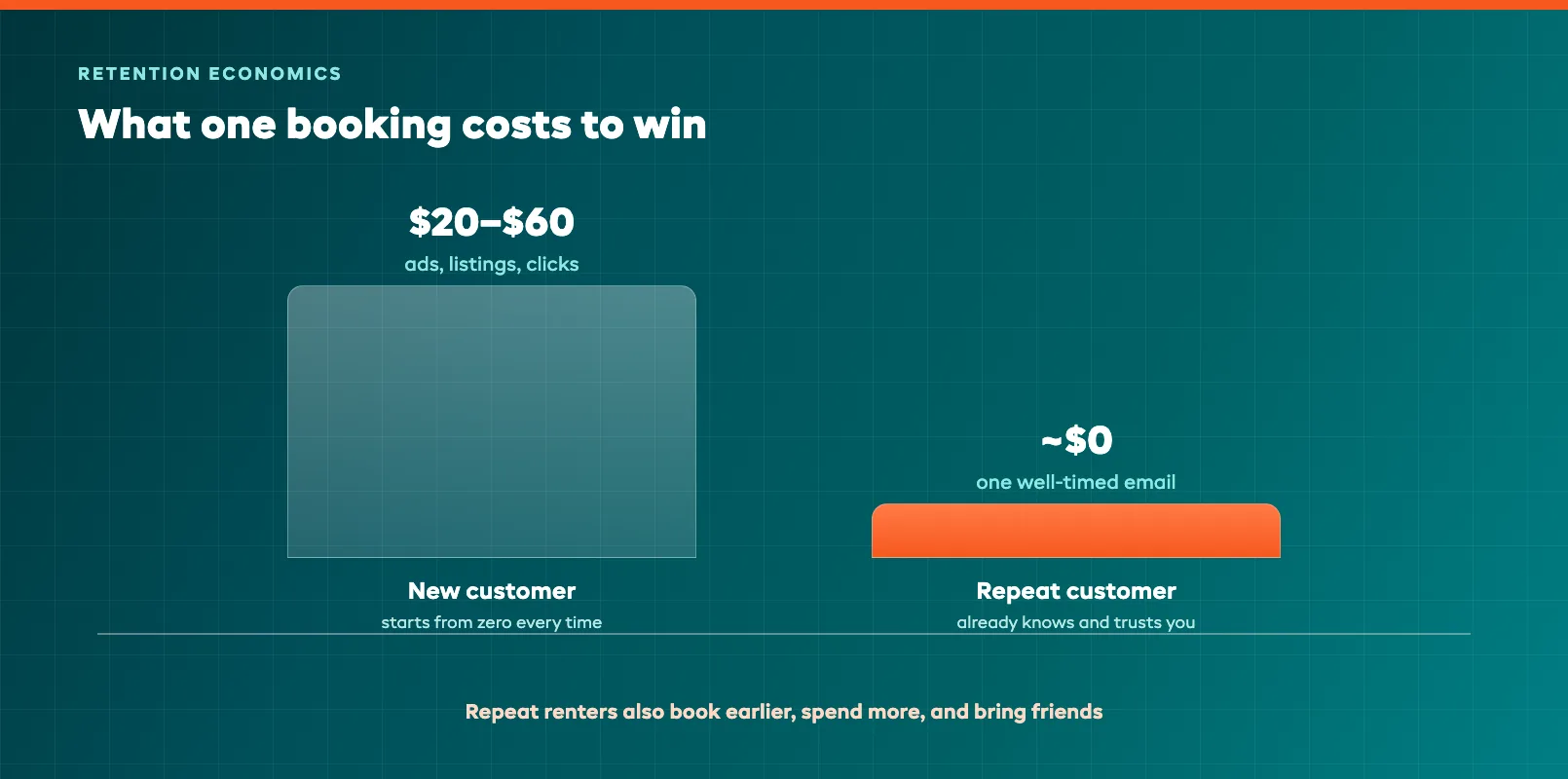
Repeat customers are also better customers. They book earlier, argue less about deposits, damage gear less often because they've handled it before, and are far more likely to bring friends. A shop where 30% of bookings come from returning names needs far less ad spend to hit the same revenue as one starting from zero every month — which is why retention is the first lever to pull before you try to scale the business.
A useful target: local shops should aim for 25–40% of bookings from returning customers. Tourist-town shops will sit lower, and that's fine — for them, the same follow-up work converts into reviews and referrals instead of direct repeats.
None of it happens without one habit: capture the name and email on every booking. A till receipt tells you nothing next season. A customer record does.
Post-Rental Follow-Up
The follow-up window is short. A renter who had a great Saturday on your kayaks feels warmest about you that evening and has mostly forgotten you by Friday. Two messages, properly timed, do the whole job.
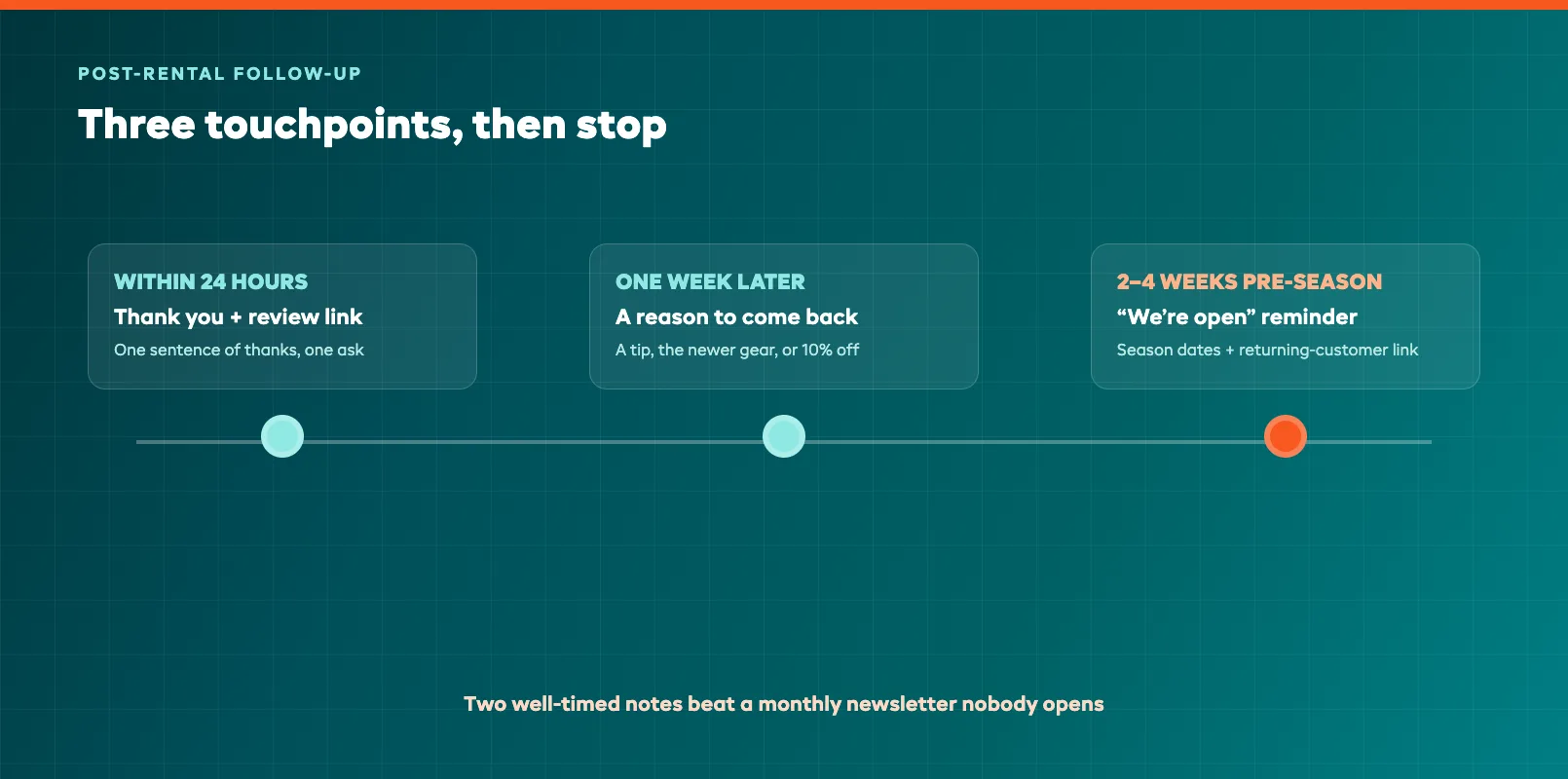
Within 24 hours of the return: a short thank-you with a review link. One sentence of thanks, one ask. Reviews earned in this window are longer, warmer, and more specific — and they feed the acquisition side too, since reviews are one of the strongest ways to increase rental bookings from people still deciding.
About a week later: a reason to come back. It doesn't have to be a discount — "ask for the newer boards next time" or "here's the trail everyone rents the e-bikes for" works. If you do offer something, keep it small: 10% off the next booking is plenty.
Then stop. Two well-timed messages beat a monthly newsletter nobody opens. The shops that get this right don't have more discipline than you — they've set the messages up once in their booking system and let them send themselves.
Loyalty and Referral Programs
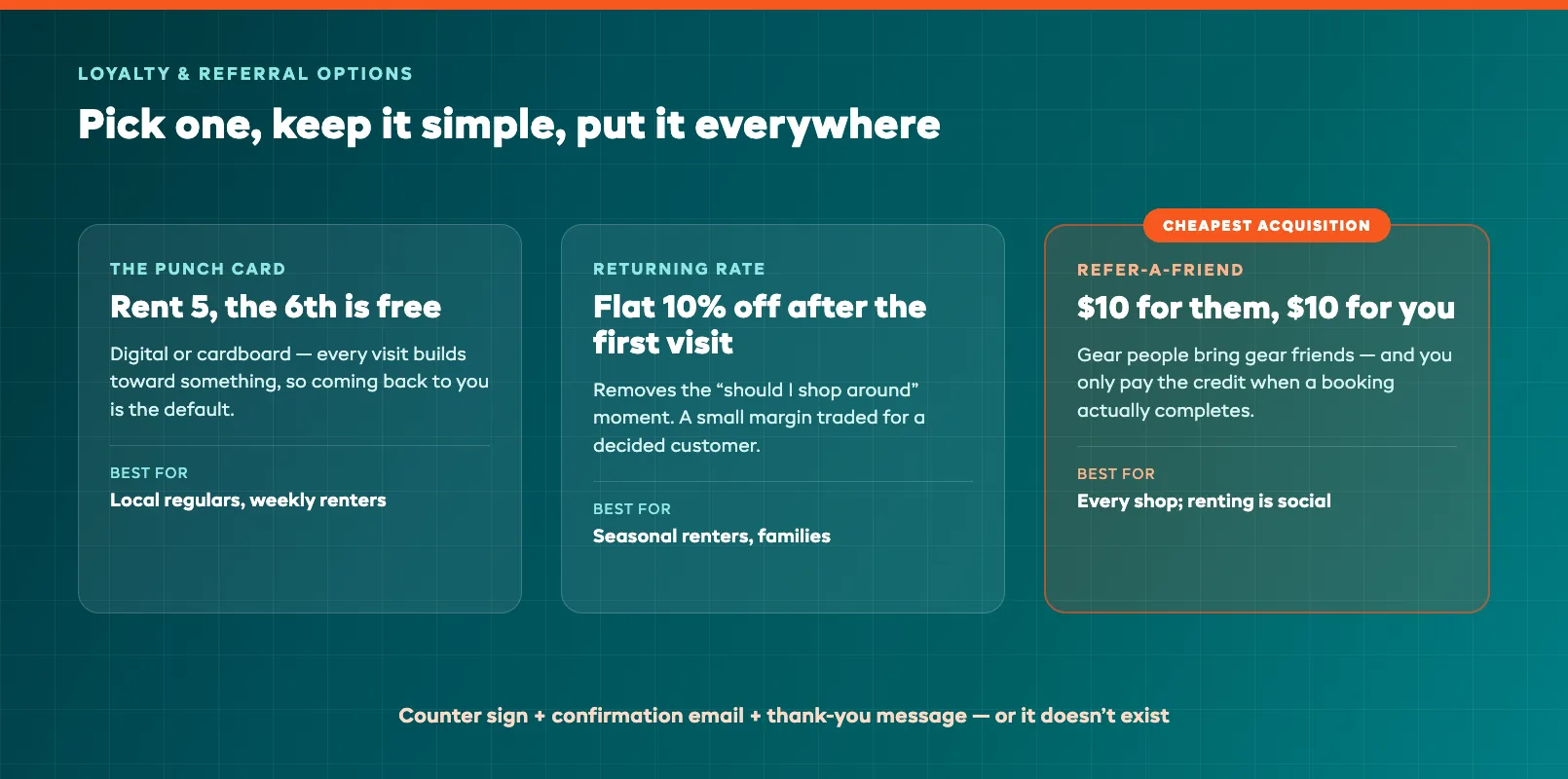
Loyalty programs fail in rental shops when they're built like airline schemes. Points, tiers, and portals need volume a small shop doesn't have. What works is the corner-café model: simple, visible, and generous enough to mention to a friend.
Three formats carry their weight:
- The punch card: rent five times, the sixth is free. Digital or literal cardboard — it gives every renter a running reason to come back to you specifically.
- The returning-customer rate: a flat 10% off any booking after the first. Costs you a small margin on people already inclined to return; removes the "should I shop around" moment entirely.
- Refer-a-friend: both sides get a credit — $10 off for the friend, $10 off the referrer's next rental. Renting is social, and gear people bring gear friends. This is the cheapest acquisition channel you will ever run, because you only pay it on a completed booking.
Whichever you pick, put it on the counter, in the confirmation email, and in the thank-you message. A loyalty program nobody hears about is just a discount you forgot to advertise.
Seasonal Reminders
Seasonal shops have a retention superpower most retailers would kill for: you know almost exactly when your customer will need you again. The family that rented skis last December will need skis this December. The only question is whose shop they think of first.
So tell them. Two to four weeks before your season opens, send one message to last year's list: the season dates, anything new in the fleet, and a returning-customer booking link. That single email routinely outperforms paid campaigns for one simple reason — everyone on the list has already paid you once.
Two refinements make it stronger. Segment by what they rented: ski customers get the snow report, paddleboard customers get the spring opening. And give returning customers a small head start — early access to peak weekends before you open them publicly. Peak dates sell out anyway; letting your regulars book first costs nothing and makes them feel like regulars.
Customer Experience as Retention
Every tactic above fails if the rental itself was a hassle. Nobody redeems a punch card at a shop that made them queue twenty minutes to sign a paper form. Retention is mostly decided during the rental, not after it.
The details that bring people back are unglamorous: booking online in two minutes, gear that's clean and ready at the counter, a waiver signed before arrival instead of on a clipboard, a checkout that remembers them. For a returning renter, recognition is the experience — "back again? The 54cm road bike, right?" is worth more than any coupon, and it's only possible if your system keeps the history instead of a filing cabinet.
Speed matters double for regulars. The second visit should be faster than the first: details on file, sizes remembered, deposit handled the same way as last time. If you're still setting these basics up, the guide to starting an equipment rental business covers the operational foundations that retention sits on.
One more habit: when something goes wrong — a double-booked trailer, a flat battery — fix it generously and follow up personally. A recovered problem creates a more loyal customer than a flawless transaction, because it proves what you're like when it counts.
Putting It Together
Retention isn't a campaign; it's a loop. Capture every customer's details at booking. Thank them within a day and ask for the review. Give them a stated reason to return — a punch card, a returning rate, a referral credit. Remind them just before the season starts, and make the second visit faster than the first.
Set each piece up once, let your booking system run the sending, and check one number monthly: what share of this month's bookings came from returning names. When that number climbs, everything else — ad spend, review count, word of mouth — gets easier.
FAQ
What is a good repeat-customer rate for a rental shop?
For a shop serving a local market, aim for 25–40% of bookings coming from returning customers. Tourist-heavy shops run lower — 10–15% is respectable when most renters are visitors — but referrals and reviews carry more weight there instead. If less than one booking in ten is a returning name, retention is your cheapest growth lever.
What is the best way to follow up after a rental?
A short thank-you message within 24 hours of the return, with a review link. One message, one ask. A week later, a second message can offer a small incentive to book again. Anything more frequent reads as spam and gets you unsubscribed before next season.
Are loyalty programs worth it for a small rental shop?
Yes, if you keep them simple. A punch-card style offer — rent five times, the sixth is free — or a flat returning-customer discount costs almost nothing to run and gives people a stated reason to come back to you instead of a competitor. Skip points systems and tiers; small shops don't have the volume to make them meaningful.
How do I bring seasonal customers back next year?
Capture the email at booking, then send one reminder two to four weeks before your season opens — "the bikes are back out, here's your returning-customer link." Sent to last year's list, that single message routinely outperforms any ad campaign because everyone on it has already paid you once.
Does rental software actually help with retention?
It helps with the part humans forget: the follow-up. A system that stores every customer's history and sends the thank-you, review request, and season-opening reminder automatically means retention keeps running through your busiest weeks — which is exactly when you'd otherwise drop it.
Should I discount to win back a lapsed customer?
A modest one-time offer — 10–15% off the next booking — is fine for someone who hasn't rented in over a year. Don't discount people who were coming back anyway; save offers for genuinely lapsed names and let the returning-customer experience carry the rest.
in one place