Snowmobile Fleet Maintenance and Pre-Ride Inspections
Snowmobile Fleet Maintenance and Pre-Ride Inspections
A snowmobile season is short, and every sled in your fleet knows it. Rental machines get ridden harder in one winter than most privately owned sleds get ridden in five — cold starts every morning, renters who hold the throttle wide open, and trails that swing from powder to ice to exposed gravel in a single week. The operators who make money in this business are not the ones with the newest fleet. They are the ones whose machines are ready to ride on the mornings that matter.
That takes a system, not a mechanic with a good memory. This guide covers the four pieces: service intervals tracked by engine hours, a daily pre-ride inspection, a turnaround routine between rentals, and a per-sled service log that ties it all together. It is one part of the bigger picture in the complete guide to running a snowmobile business.
Maintenance is a revenue problem, not a workshop problem
Start with the maths. If a sled rents for $250 a day and your season has 90 rideable days, every machine-day lost to the workshop during peak weeks is $250 you never get back — the demand was there, the sled was not. A fleet of ten that loses one machine for the two weeks around the holidays has burned roughly $3,500 in bookings, which buys a lot of belts and carbides.
That is the frame for every decision below. You are not maintaining sleds to keep them shiny. You are maintaining them so that on the busiest Saturday of the winter, all ten start, all ten pass inspection, and all ten earn.
Service on engine hours, not on the calendar
A calendar schedule fails a rental fleet because sleds do not accumulate wear evenly. Your two favorite trail machines might log 30 hours in a busy week while a mountain sled logs six. Service by the month and you over-service the quiet machines and under-service the workhorses — and the workhorses are the ones that fail.
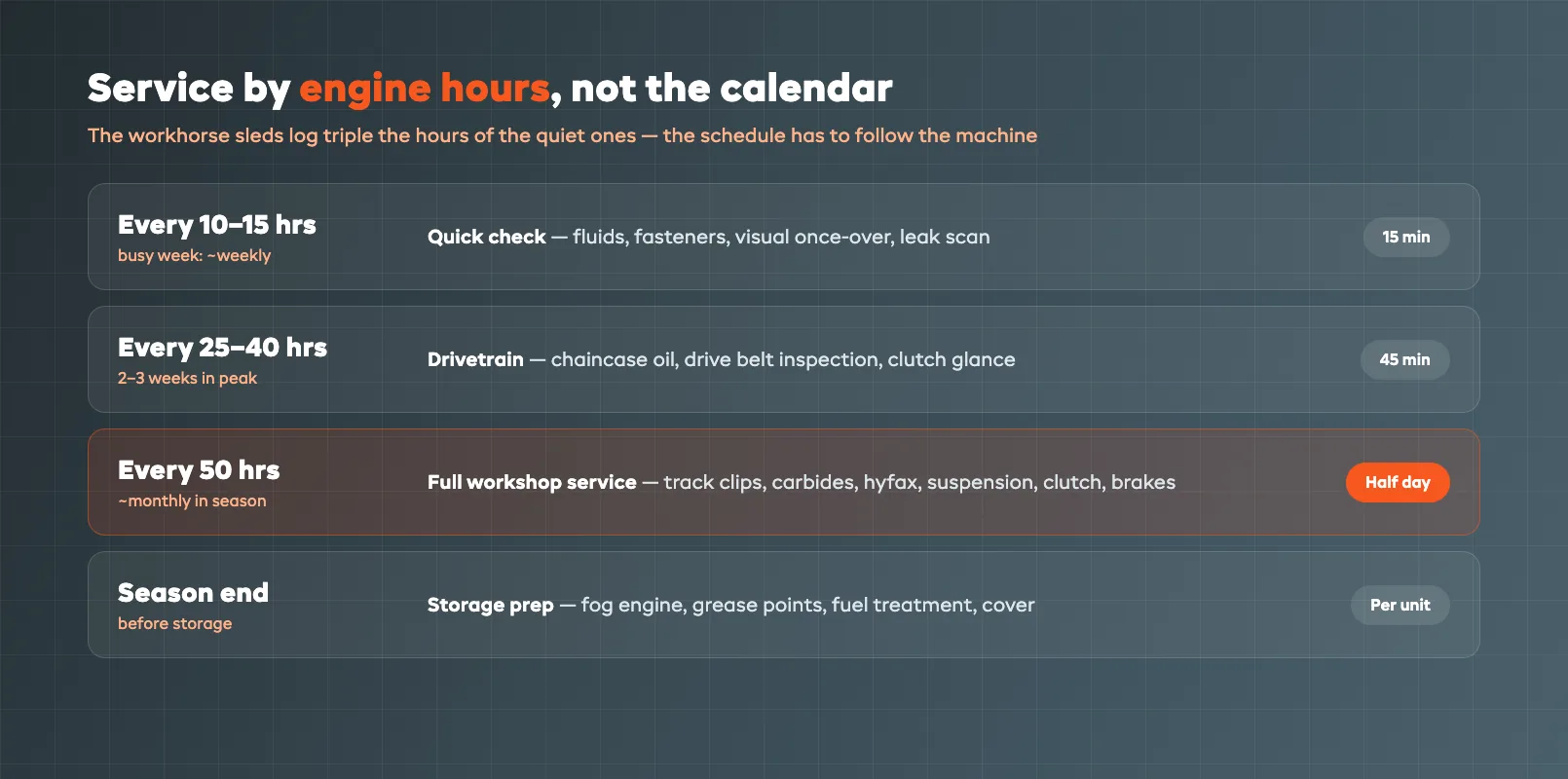
Track engine hours per unit and hang the schedule off that. A rhythm that works for most rental fleets: a quick check every 10-15 hours (fluids, fasteners, visual once-over), chaincase oil and a belt inspection every 25-40 hours, and a full workshop service every 50 hours — track clips, carbides, hyfax, suspension bolts, clutch, brake pads. Your manufacturer's manual is the final word for your specific models; the point is that the trigger is hours on the machine, not weeks on the wall.
Two consumables deserve special respect in a rental fleet. Carbides and hyfax wear fast when snow cover is thin — a single afternoon on an icy, gravel-flecked trailhead can take visible metal off a carbide. And drive belts die young under rental throttles; renters lug the engine and slip the clutch in ways owners never would. Keep both on the shelf in quantity. A $60 belt should never cost you a $250 rental day.
The daily pre-ride inspection
Every sled gets checked every morning it goes out — no exceptions for the machine that was fine yesterday. The check is short, ordered, and always the same, so nothing gets skipped when the queue is long and the group is stamping their boots.
Work the machine front to back. Throttle squeezes and returns freely, even at -20°. Brake lever comes back firm, not to the bar. Kill switch stops the engine; tether pulls and stops it too — test both, because the rider will be wearing one. Headlight and taillight work. Track tension sits in spec with no missing clips or torn lugs. Skis are straight, carbides have metal left, ski rubbers are intact. Finish with a glance underneath for fuel or oil on the snow. Three to five minutes per sled once the routine is muscle memory.
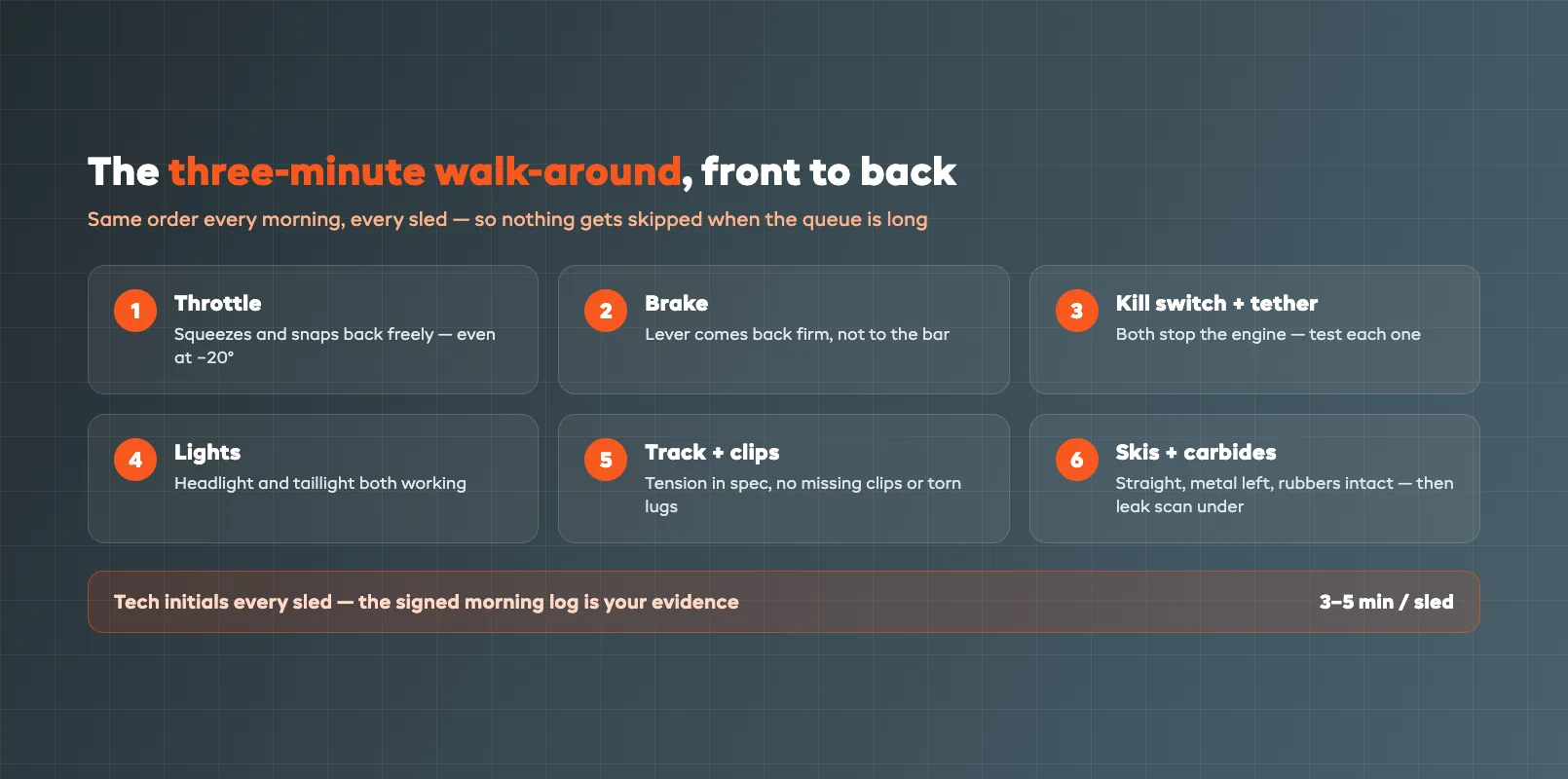
Have the tech initial each sled's check. That sign-off matters twice: it keeps the routine honest on chaotic mornings, and it is the record that shows a specific machine was inspected by a named person on a specific day. If an incident ever ends up in a dispute, "we always check them" is an opinion — a signed morning log is evidence. The same logic drives your rider waivers and safety briefings, and the two records belong in the same system.
The between-rental turnaround
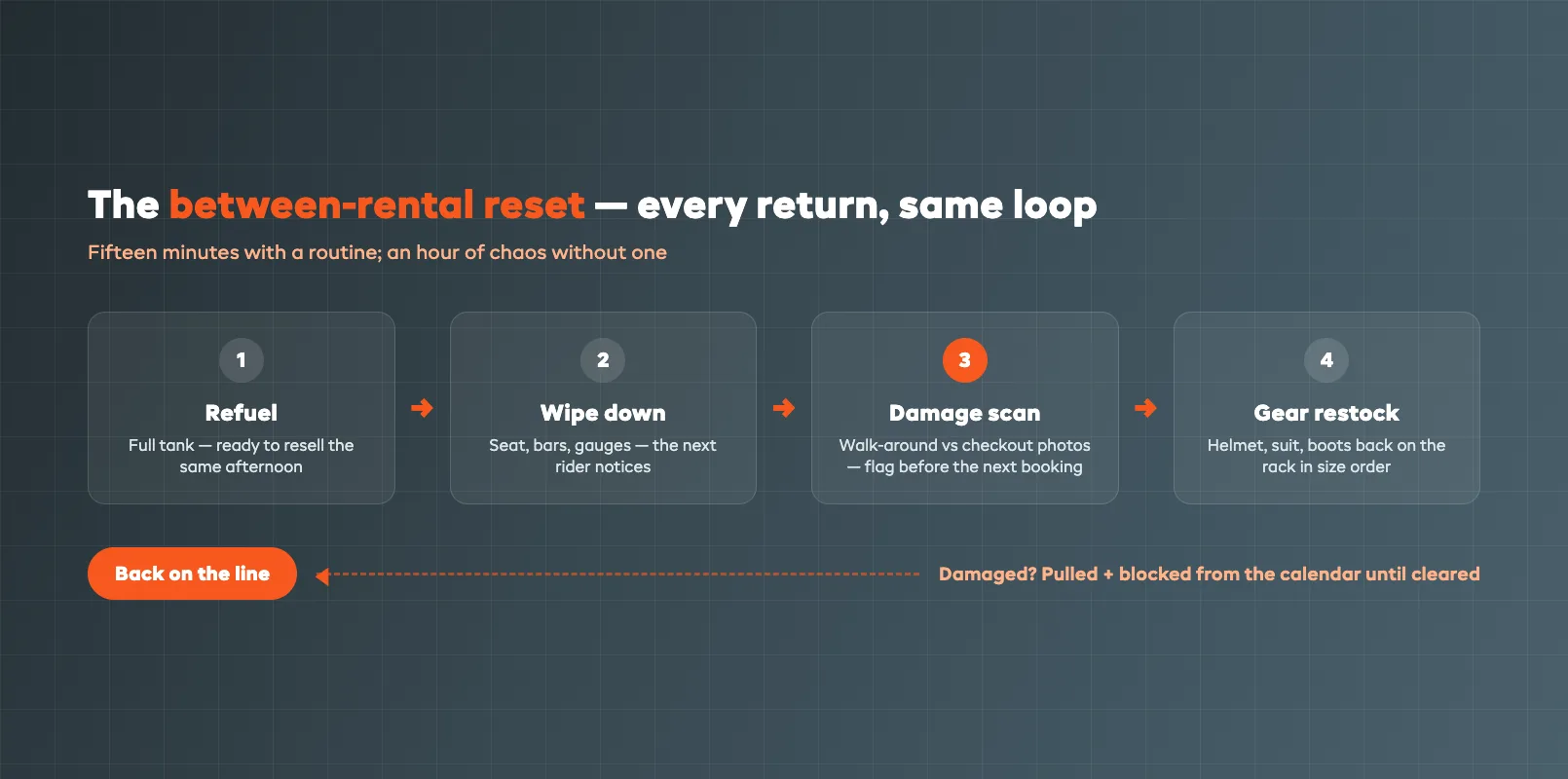
The morning inspection catches mechanical faults. The turnaround between rentals catches everything else — and protects the next booking.
When a sled comes back, it goes through the same short loop every time: refuel, wipe down the seat and bars, walk around it looking for new damage against the checkout photos, check the carbides and track if the renter mentioned ice, and restock the gear that goes out with it. Fifteen minutes with a routine; an hour of chaos without one. If the sled is damaged, it gets flagged and pulled before the next rider is standing beside it — a damage conversation at return, with photos, goes far better than one at the next departure.
One log per sled, and everything in it
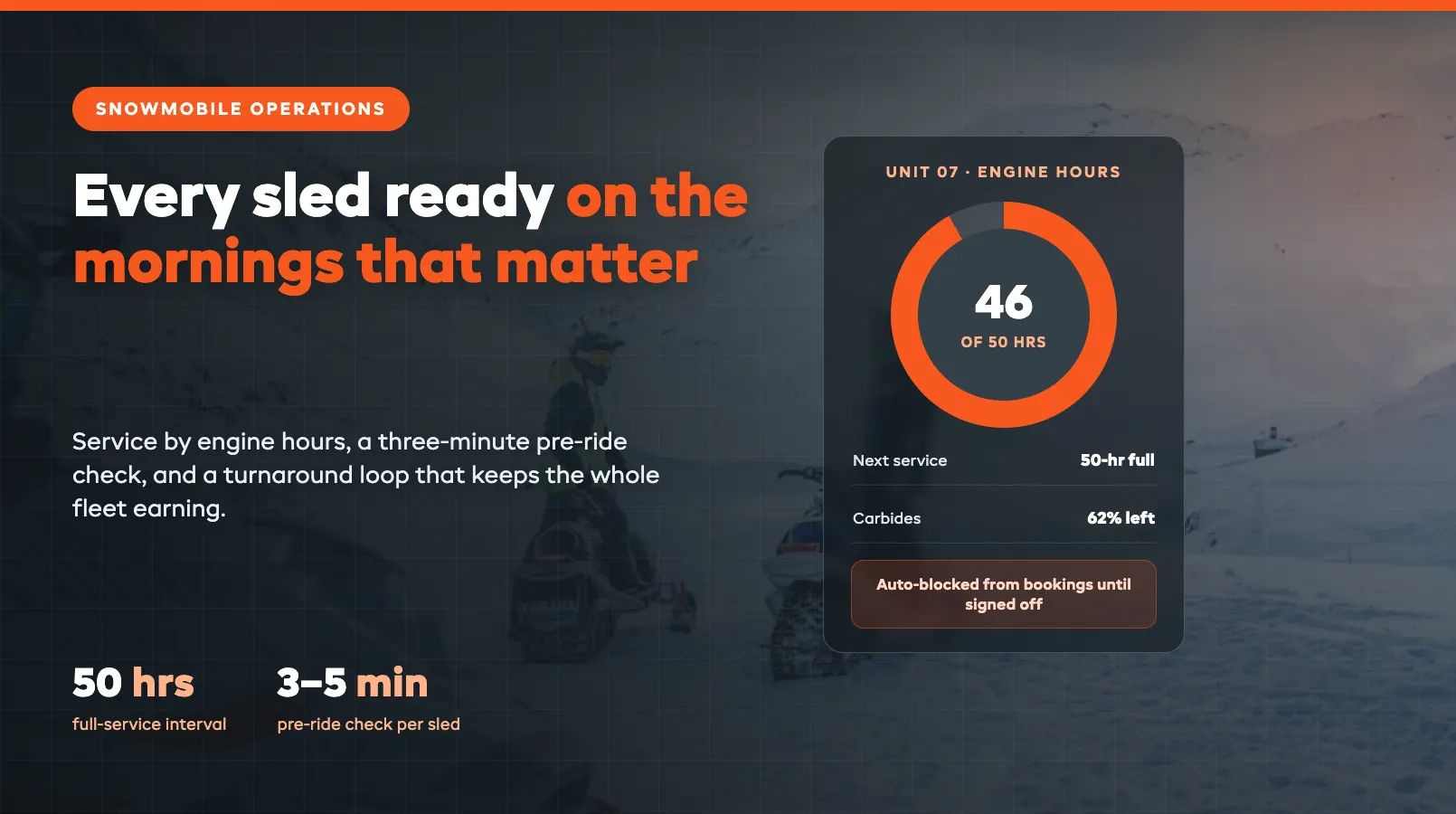
Give every machine a unit number and log everything against it: engine hours, every service, every fault, every repair, every damage claim. The format matters less than the discipline, but a clipboard in the workshop fails the moment two people need it or one page gets wet. Fleet software earns its keep here — hours and service history against each unit, faults flagged from the morning check, and the sled blocked from the booking calendar until the fault is cleared. That last link is the one that saves you: a machine flagged at 8am should be impossible to book at 8:05. If your snowmobile booking software can hold unit-level status, maintenance stops being a separate world from bookings — a sled is either earning or being fixed, and the calendar always knows which.
The log also tells you when to let a machine go. Rental sleds typically leave the fleet at 3,000-5,000 miles or after three or four seasons, before big engine and suspension bills arrive. The signal is in the records: when a unit's annual repair spend passes about a quarter of its resale value, sell it while someone still wants it. A well-documented service history adds real money at sale time, too — buyers pay for proof.
Spares, low-snow weeks, and the mid-season failure
Plan for the failure you cannot prevent. Even a well-run fleet loses a machine mid-season — a renter finds a rock, a crank lets go, parts take two weeks to arrive. Three habits soften the blow. Keep one sled in ten as flexible capacity rather than selling every machine every day, so a breakdown costs you a buffer instead of a booking. Stock the consumables that actually fail — belts, carbides, hyfax, clips, plugs, ski rubbers — at depth. And use low-snow weeks for workshop time: when bookings are thin, pull the high-hour machines forward for their 50-hour services so peak weeks inherit a fresh fleet, not a queue.
For trail, terrain, and equipment terms worth knowing, the snowmobile glossary covers the vocabulary, and the snowmobile operator hub connects maintenance to the rest of the operation.
Putting it together
Hours tracked per unit. Service triggered by those hours. Every sled inspected and signed off every morning. A fixed turnaround loop between rentals. One log per machine, linked to the booking calendar so a flagged sled cannot be booked. None of it is complicated — it is the same short routines repeated all winter, and it is the difference between a fleet that earns 90 days a season and one that spends peak week in the workshop.
FAQ
How often should rental snowmobiles be serviced?
Service on engine hours, not weeks. A common rental-fleet rhythm is a quick fluid and fastener check every 10-15 hours, chaincase oil and belt inspection every 25-40 hours, and a full inspection — track clips, carbides, hyfax, suspension, clutch — every 50 hours or roughly monthly in peak season, whichever comes first. Always defer to the manufacturer's schedule for your specific models.
What should a pre-ride snowmobile inspection cover?
Throttle returns freely, brake lever is firm, kill switch and tether both stop the engine, lights work, track tension is in spec with no missing clips or torn lugs, skis and carbides are straight and not worn through, and there are no fuel or oil leaks under the machine. A trained tech covers all of it in three to five minutes per sled.
Who should do the pre-ride check — staff or the rider?
Your staff, every time. Riders can and should be shown the controls during the safety briefing, but the operator carries the liability for sending out a safe machine. Have a tech sign off each sled each morning, and record the sign-off so you can prove the machine was checked if anything is ever questioned.
What wears out fastest on a rental sled fleet?
Carbides and hyfax lead the list, especially in low-snow or icy conditions and on trailheads with exposed gravel. Drive belts follow — renters ride the throttle harder than owners do. Track clips, ski rubbers, and brake pads round out the usual suspects. Stock all of these as consumables; none should ever cause a sled to miss a day waiting on parts.
How do you track maintenance across a whole fleet?
Give every sled a unit number and log hours, services, and faults against that unit — in software rather than a clipboard if you can. The test is simple: for any machine, you should be able to see current engine hours, the last three services, and any open faults in under a minute. If you cannot, sleds slip through and the one that slips is always the one that fails mid-tour.
When should a rental snowmobile be retired from the fleet?
Most rental operators turn sleds over at 3,000-5,000 miles or three to four seasons, before major engine and suspension work starts eating the margin. Watch the per-unit repair log: when a machine's annual repair spend passes 25-30% of its resale value, sell it while it still has value and put the money toward a new unit.
in one place