Tour Operator Group Pricing: Discounts, Private Groups, and Corporate Packages
A family of four books your kayak tour at $65 each. So does a school group of 28, a corporate team of 20, and a bachelorette party of 12. If they all pay the same per-person rate, you are leaving money on the table with the groups who would happily pay a package price — and you are scaring off the price-sensitive groups who needed a volume break to say yes.
Group pricing fixes that. Done right, it fills slots that would otherwise run half-empty, lands the high-value corporate bookings your competitors fumble, and protects your margin when a group of 30 suddenly becomes a group of 22. This guide walks through the structure. For the wider picture, see our tour operator software guide and the detailed tour pricing strategy breakdown.
Why Group Pricing Matters
Groups behave differently from individual bookers. They commit earlier, pay in one transaction, and rarely no-show — a confirmed group of 20 is far more reliable revenue than 20 separate seats sold one at a time. They also have a decision-maker who is comparing your quote against two or three other operators, so the shape of your offer matters as much as the number.
The mistake most operators make is treating group pricing as "the normal price, minus a discount I made up on the phone." That leaves you negotiating from scratch every time, quoting inconsistently, and often discounting below your own floor without realizing it. A published structure does the opposite: it sets expectations, speeds up the booking, and keeps every group rate above your break-even.
Tiered Discounts vs Flat Rates
You have two ways to price a group: a flat group rate for the whole booking, or a per-person rate that improves as the group grows.
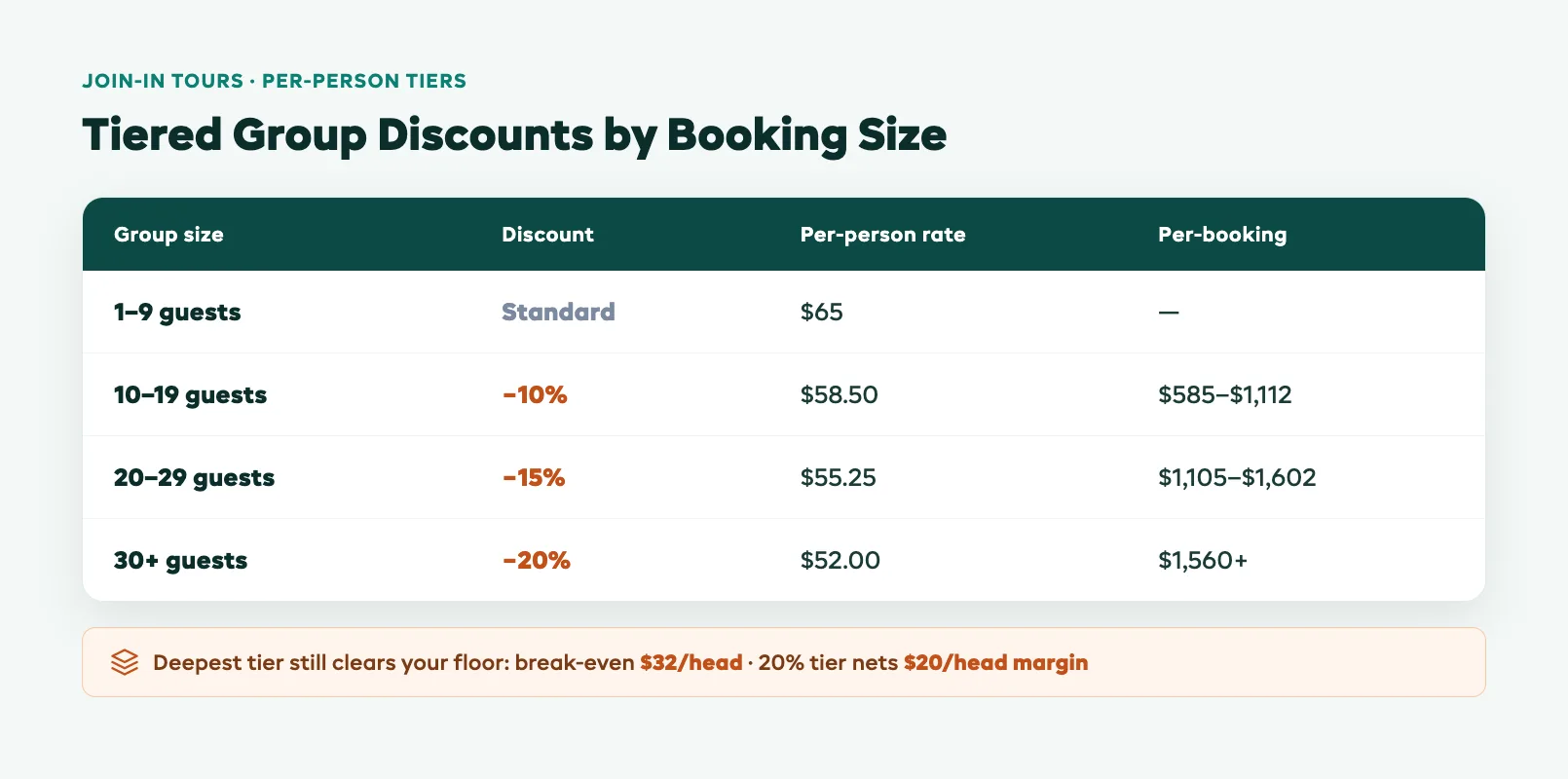
Tiered per-person discounts work best for scheduled, join-in tours where groups share a departure with other guests. Discount the head, not the boat — set thresholds and a per-seat floor that keeps even your deepest discount comfortably above cost:
A simple structure: standard rate up to 9 guests, 10% off for 10–19, 15% off for 20–29, and 20% off for 30 or more. The key rule is that your deepest tier still has to clear your variable cost per guest plus a margin. If your break-even is $32 per head, a 20% discount off a $65 rate lands at $52 — still healthy. Discount past that and you are paying customers to take your tour.
Flat group rates suit private bookings and buyouts, where the group takes the whole departure. Price those against what the slot would otherwise earn, not per head — more on that next.
Private Groups vs Join-In Tours
This is the distinction that trips up most operators. A join-in group shares a scheduled departure with strangers and pays the tiered per-person rate above. A private group books exclusive use of a departure — no strangers, their own timing, sometimes a custom route.
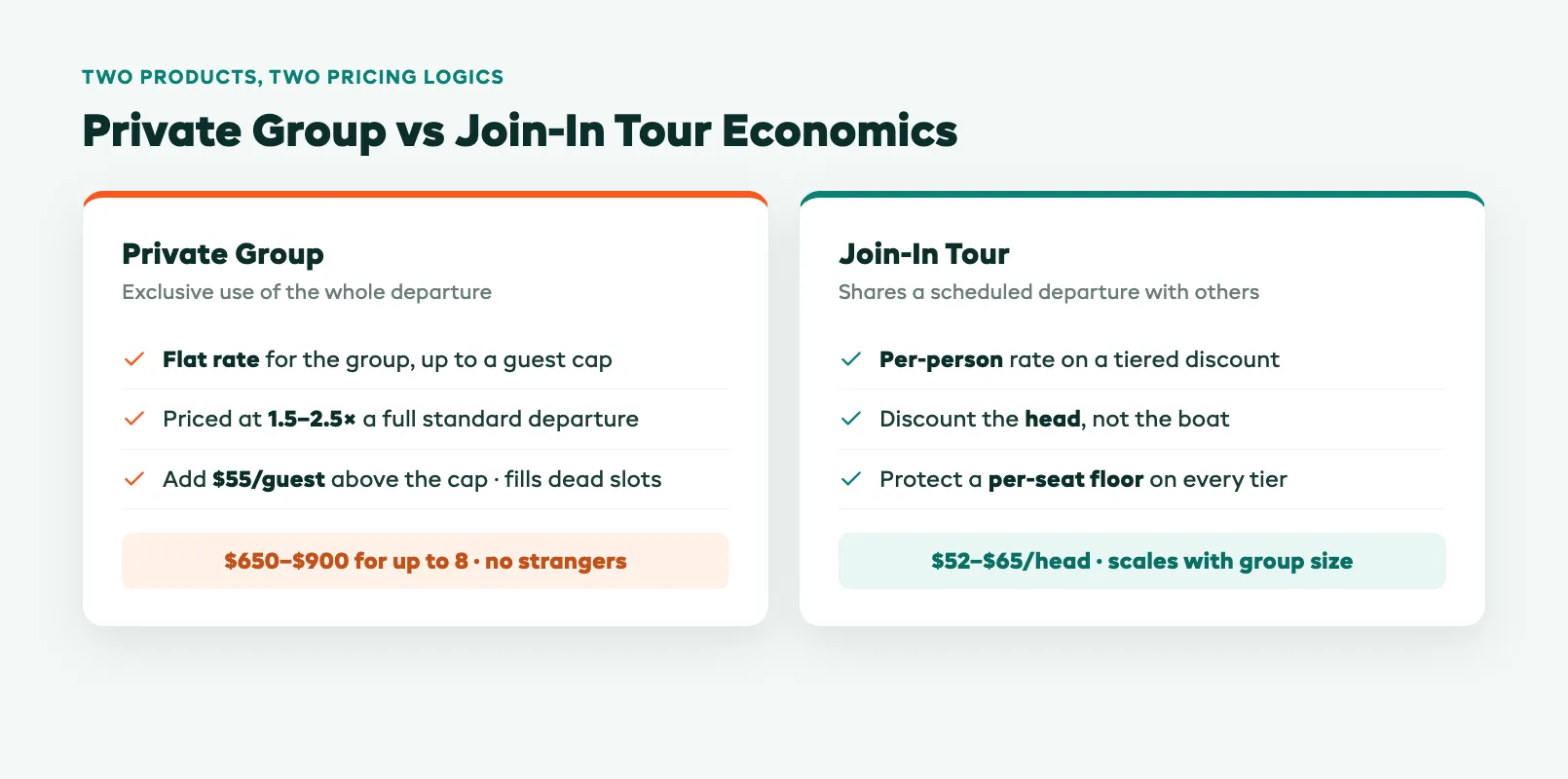
Price private tours as a flat rate for the group up to a guest cap, then add per-person above it. If a full standard departure of 12 guests at $65 grosses $780, set your private rate at $650–$900 for up to 8 guests, plus $55 per additional guest. A family of 6 sees $108 a head and feels the exclusivity premium is fair; you fill a slot that might have run at 60% capacity anyway, at near-zero extra cost. Private bookings also fill dead times — a 7 AM or late-afternoon private departure uses guide hours that would otherwise sit empty.
School, Corporate, and Event Packages
Large institutional groups are a different product, and they should be a different price.
School and youth groups are volume-driven and budget-tight. Offer your deepest per-person tier, but bundle in what schools actually need — a guaranteed guide-to-student ratio, free chaperone spots (one free adult per 10 students is standard), and simple invoicing they can run through a purchase order. The margin per head is thin, but these groups book mid-week off-peak slots you struggle to fill otherwise.
Corporate and event groups are the opposite: price for certainty, not the lowest number. A corporate buyout is a standalone product with a minimum spend. Bill catering, branding, transport, and custom touches as line items rather than burying them in a discount. Corporate clients are buying a clean invoice and a guaranteed experience for their team — not a bargain. A 20-person team-building outing priced as a $2,400 package will close faster than the same group quoted $65 a head, because the decision-maker wants a fixed, defensible number.
Handling Size Changes and Cancellations
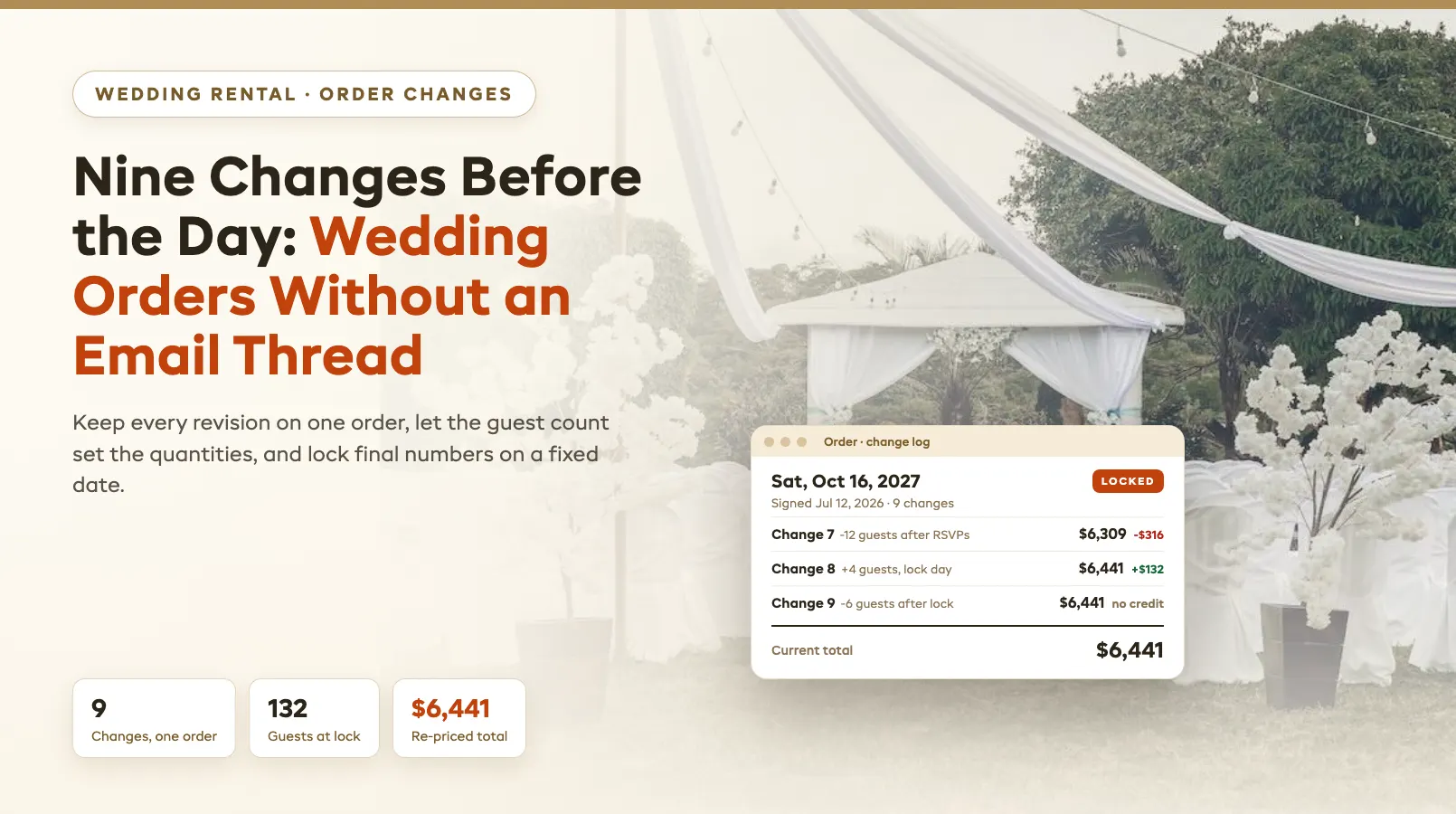
Group bookings move. A confirmed 30 becomes 24 the week before; a private party of 8 wants to add 4 more. Your policy has to protect the slot without punishing reasonable changes.
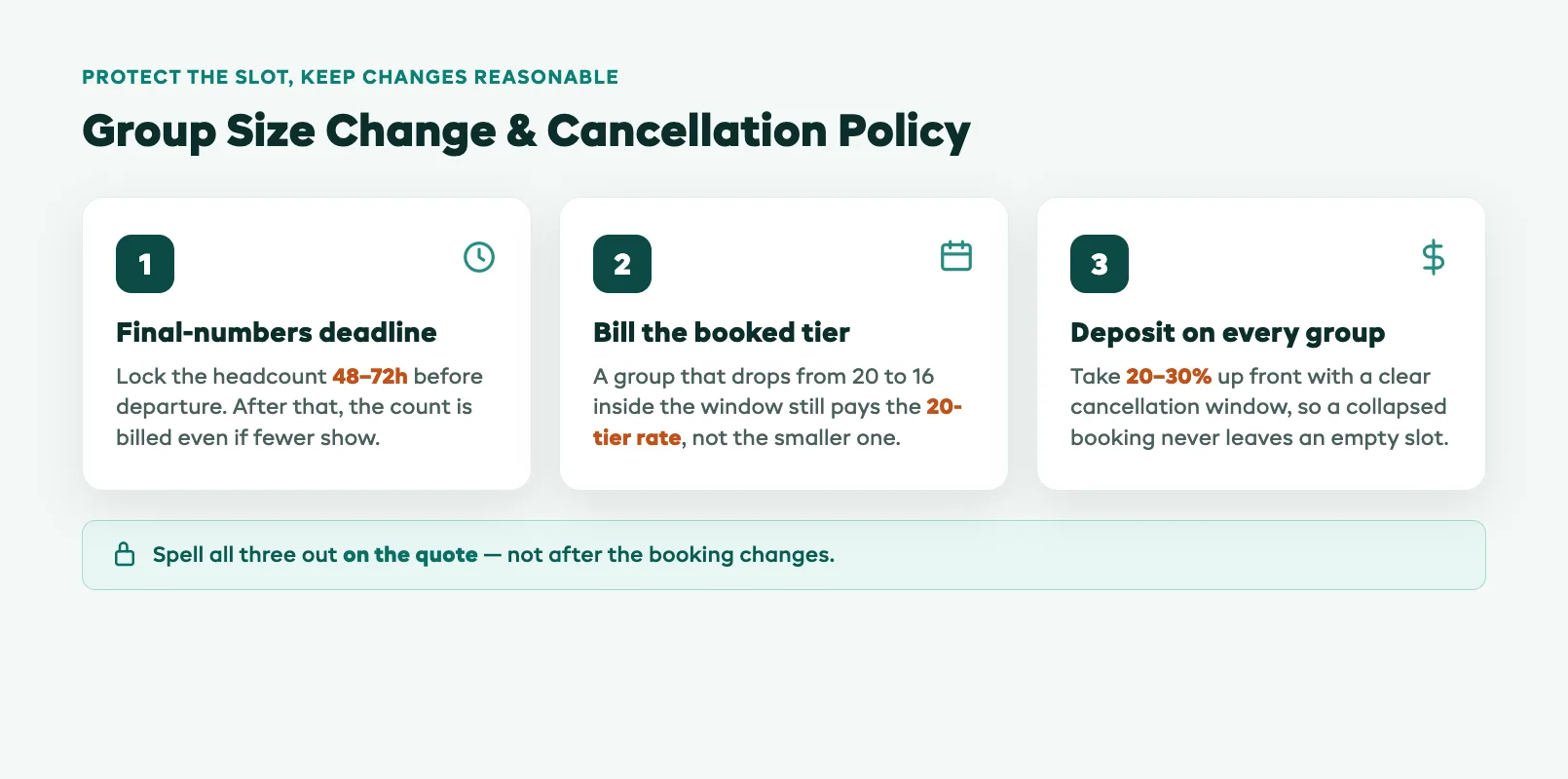
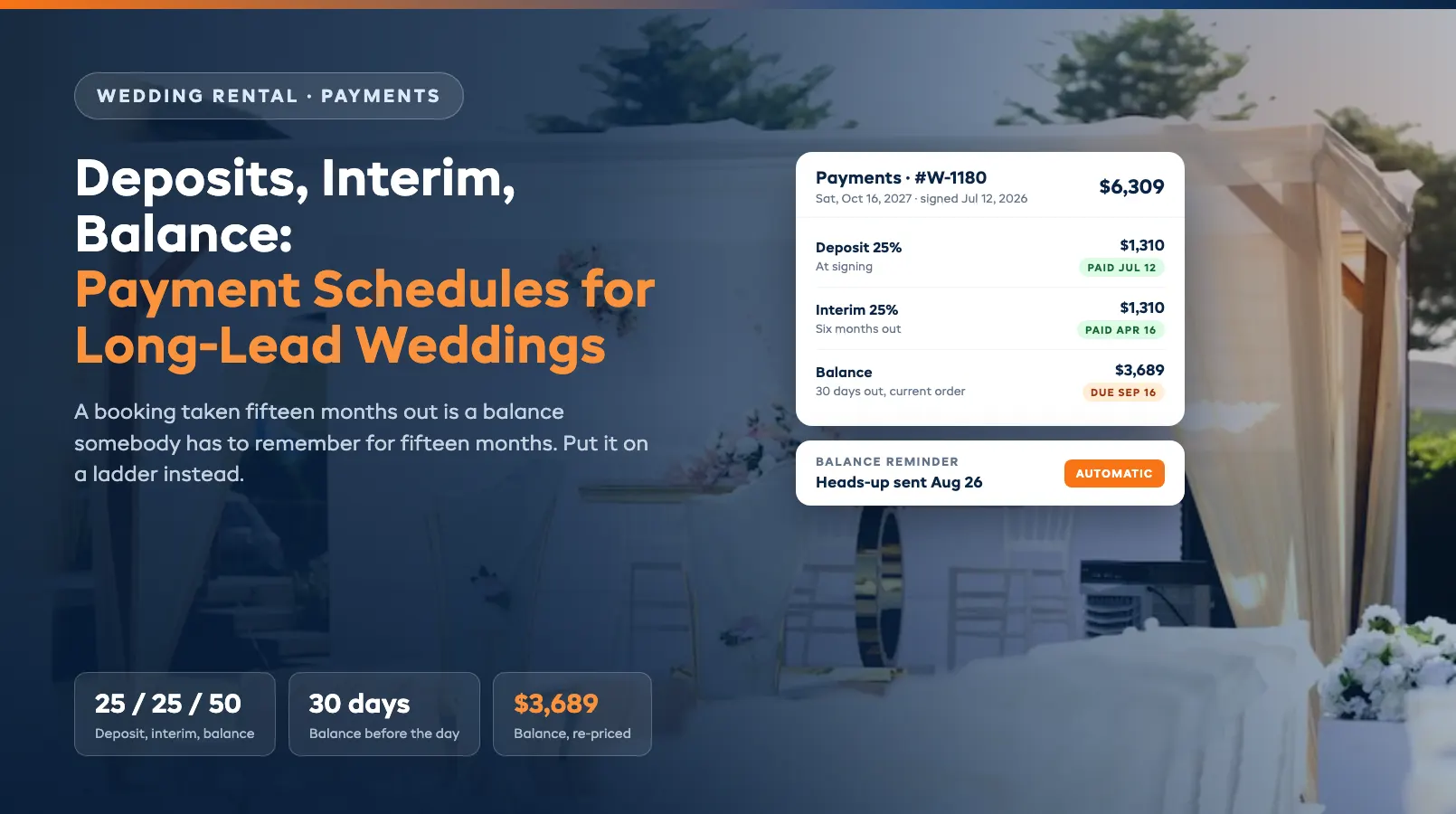
Three rules cover most of it. First, set a final-numbers deadline — typically 48 to 72 hours before departure — after which the headcount is locked and billed even if fewer show. Second, bill the tier that was booked, not the smaller one that turned up; a group that drops from 20 to 16 still pays the 20-tier rate inside the deadline. Third, take a deposit on every group booking (20–30% is standard) with a clear cancellation window, so a collapsed booking does not leave a hole you cannot refill. Spell these out in the quote, not after the fact.
Setting Up Group Pricing in Software
Running tiered, private, and corporate rates by hand means re-quoting every group from a spreadsheet and hoping you remembered your floor. Good activity booking software handles the structure for you: it applies per-person discount tiers automatically as group size crosses each threshold, takes a flat private rate plus per-guest add-ons, enforces deposit and final-numbers rules at checkout, and keeps every quote above the floor you set. Dash AI can even flag when a requested discount would dip below your break-even before you send the quote. The result is consistent group pricing your team can offer without a phone call to you — and a calendar that fills with the high-value bookings you used to lose.
For more on building your full rate card, read the tour pricing strategy guide. For checklists and templates, visit the tours hub and the tour operator glossary.
FAQ
Should I offer group discounts, and at what thresholds?
Yes — groups commit early, pay in one transaction, and rarely no-show, so they are worth a volume break. A common structure is standard rate up to 9 guests, 10% off for 10–19, 15% for 20–29, and 20% for 30 or more. The non-negotiable rule is that your deepest tier still clears your variable cost per guest plus a margin. Work out your break-even per head first, then set the discounts above it — never the other way around.
How do I price private groups versus scheduled join-in tours?
Price join-in groups per person on a tiered discount, because they share a departure with other paying guests. Price private groups as a flat rate for exclusive use of the whole departure, up to a guest cap, plus a per-person add-on above the cap. Base the flat private rate on what that slot would earn at full capacity — typically 1.5 to 2.5 times a standard booking — since the guide and equipment cost is the same whether the group is private or shared. The customer pays for exclusivity; you fill a slot at almost no extra cost.
How do I handle a group that changes size after booking?
Set a final-numbers deadline, usually 48 to 72 hours before departure, after which the headcount is locked and billed even if fewer people turn up. Bill the discount tier that was originally booked, not a cheaper one, if the group shrinks inside that window. Take a deposit of 20 to 30% on every group booking with a clear cancellation policy, so a last-minute collapse does not leave you with an empty departure you cannot resell. Put all of this in writing on the quote so there are no surprises.
How should I price corporate and school groups?
Treat them as two different products. School groups are budget-driven: offer your deepest per-person tier, bundle in free chaperone spots and simple invoicing, and use them to fill mid-week off-peak slots. Corporate groups buy certainty, not the lowest price: quote a flat package with a minimum spend, and bill catering, branding, and custom touches as separate line items rather than discounting. A corporate buyout quoted as one fixed package number closes faster than the same group priced per head.
Can booking software manage group pricing automatically?
Yes. Activity booking software applies per-person discount tiers as group size crosses each threshold, handles flat private rates with per-guest add-ons, and enforces deposit and final-numbers rules at checkout — all without you re-quoting from a spreadsheet. It keeps every group rate above the floor you configure, so your team can offer consistent pricing without checking with you first. Some systems can also warn you when a requested discount would fall below your break-even before the quote goes out.
in one place