Off-Season Strategies for Rental Businesses
Off-Season Strategies for Rental Businesses
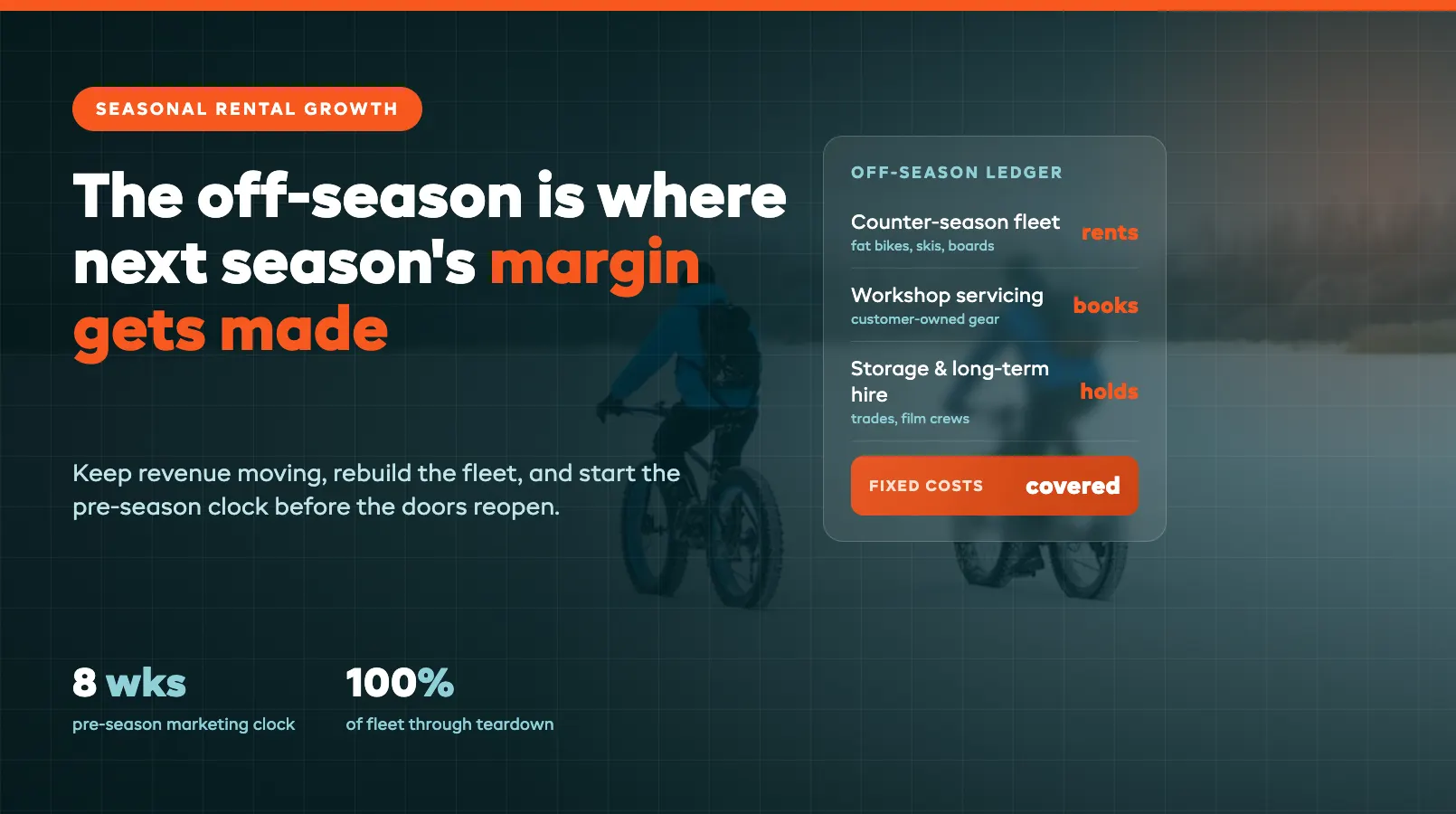
Every seasonal rental operator knows the feeling. The last busy weekend ends, the counter goes quiet, and the same question lands: what now? For some shops the answer is four months of dust and a slow bleed of fixed costs. For the better-run ones, the off-season is where next year's margin gets made — gear comes back to standard, the marketing engine gets rebuilt, and a surprising amount of revenue still walks through the door.
The difference is rarely budget. It is having a plan for the quiet months written down before they arrive, the same way you plan the busy ones. This guide covers the five places that plan should focus, and it pairs with the complete guide to starting an equipment rental business if you are still building the foundation.
Off-season revenue: shrink it, don't switch it off
Cost-cutting alone never saves a slow season — a shop with zero revenue and low costs is still losing money every month. The goal is to keep some income moving while the main season sleeps, and most operators have more options than they think.
Counter-season rentals are the first place to look. Bike shops rent fat bikes and cross-country skis in winter; ski shops rent bikes and paddleboards in summer; camping outfitters rent to hunters in the fall. You already have the counter, the booking system, and the customer list — the only new cost is the gear, and a small counter-season fleet that rents twenty times pays for itself.
Beyond that: long-term hires to trades and film crews who need gear for weeks rather than days, storage fees for customers who would rather pay you to keep their own equipment than haul it home, servicing and repair work on customer-owned gear using the workshop that would otherwise sit idle, and gear sales — retiring last season's fleet at end-of-season prices to buyers who become next season's renters.
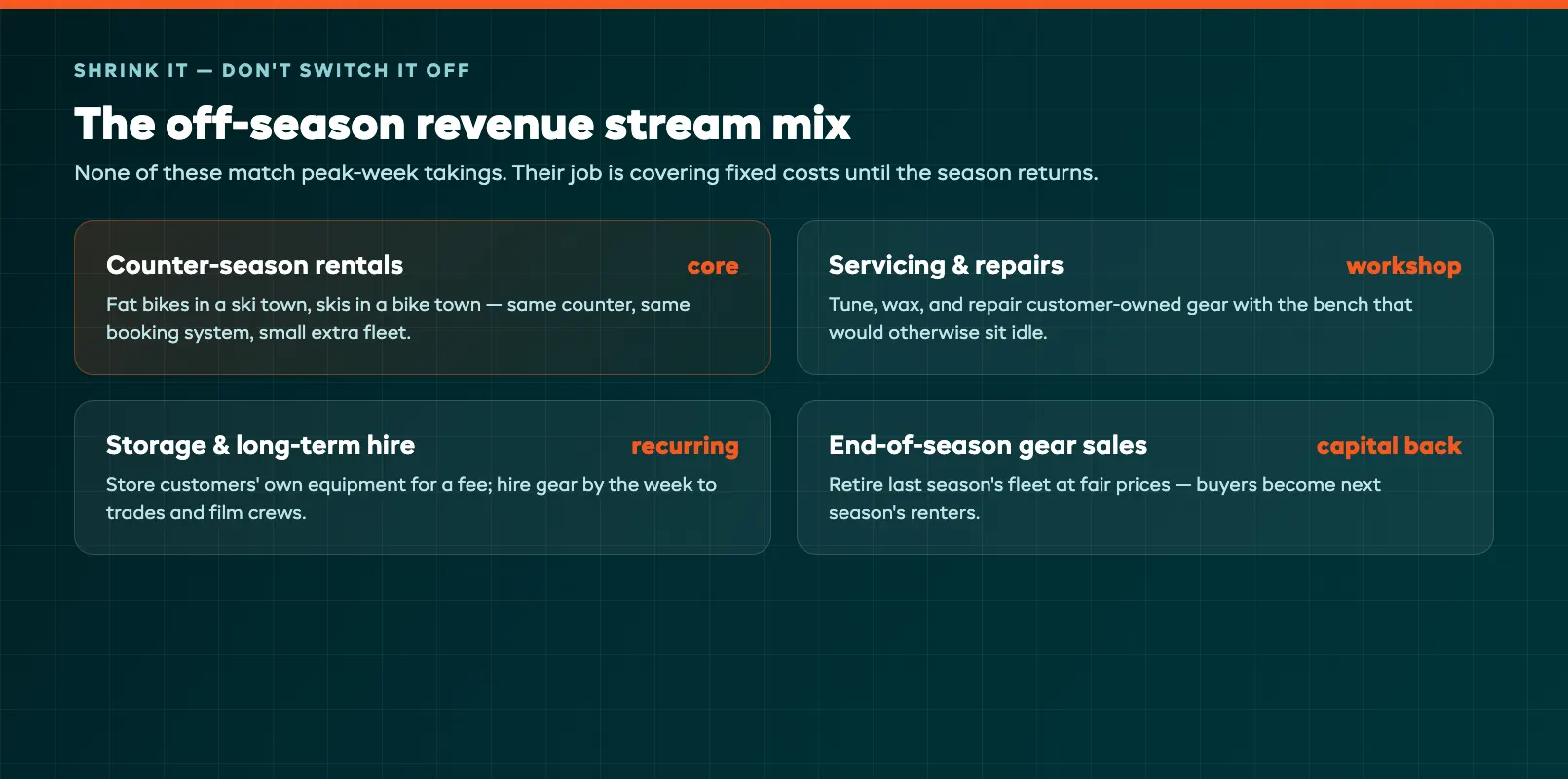
None of these will match peak-week takings, and they do not need to. Their job is to cover rent and keep your best staff employed until the season comes back.
Maintenance and inventory refresh: the deep work
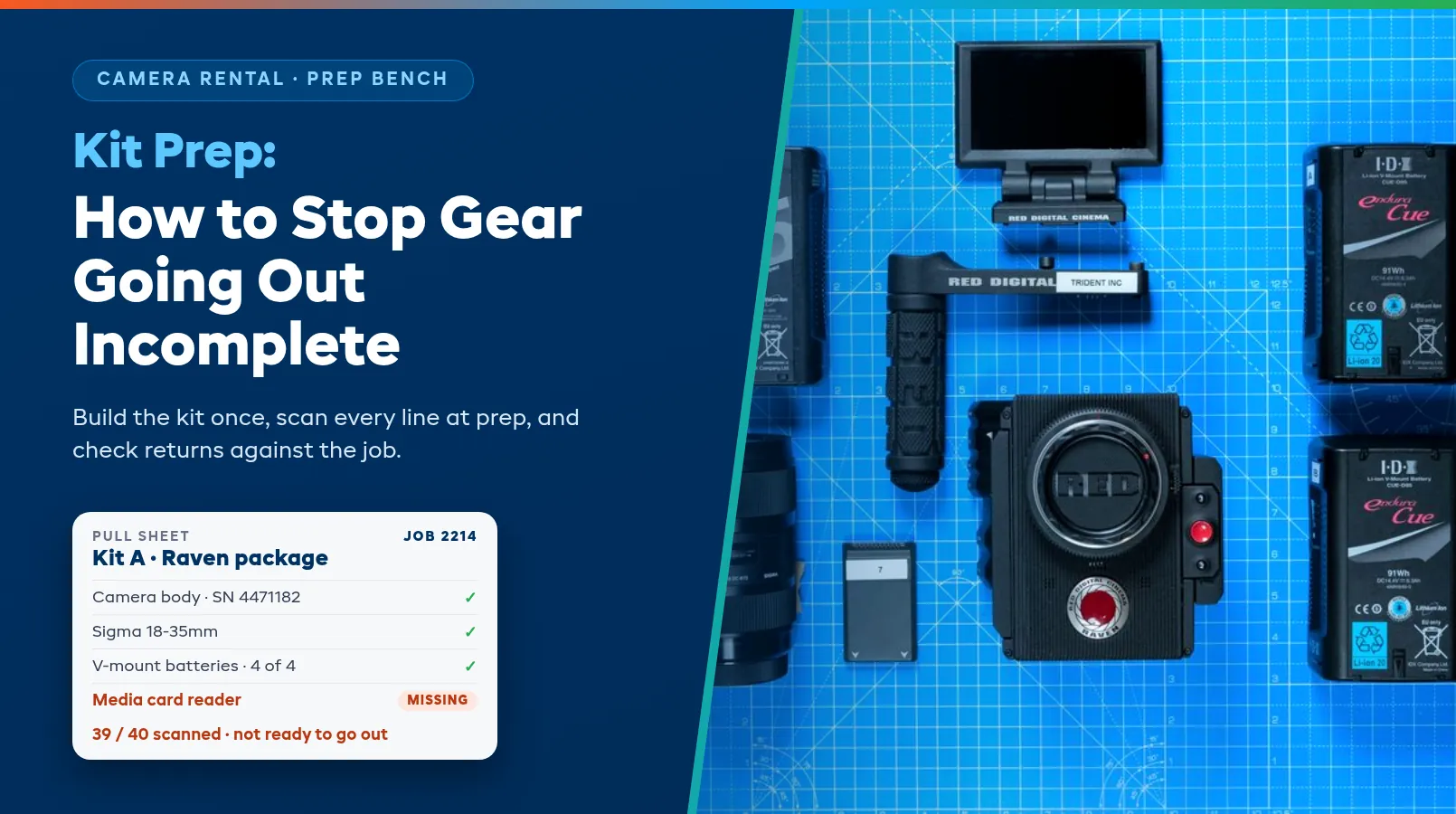
Peak season maintenance is triage — fix what is broken, get it back on the shelf. The off-season is when the fleet actually gets restored. Every unit should pass through a full teardown inspection: drivetrains and bindings serviced, soft goods washed and checked for wear, batteries cycled and stored correctly, safety-critical parts replaced on schedule rather than on failure.
This is also the honest accounting moment. Grade every item, retire what is past its service life, and cut what never earned its shelf space. Utilization numbers from your booking system tell you which units rented forty times and which rented four — retire and reorder accordingly, so capital goes into the gear that actually books. Logging all of it against each unit is exactly what an equipment maintenance tracking system is for: next off-season, the teardown list writes itself.
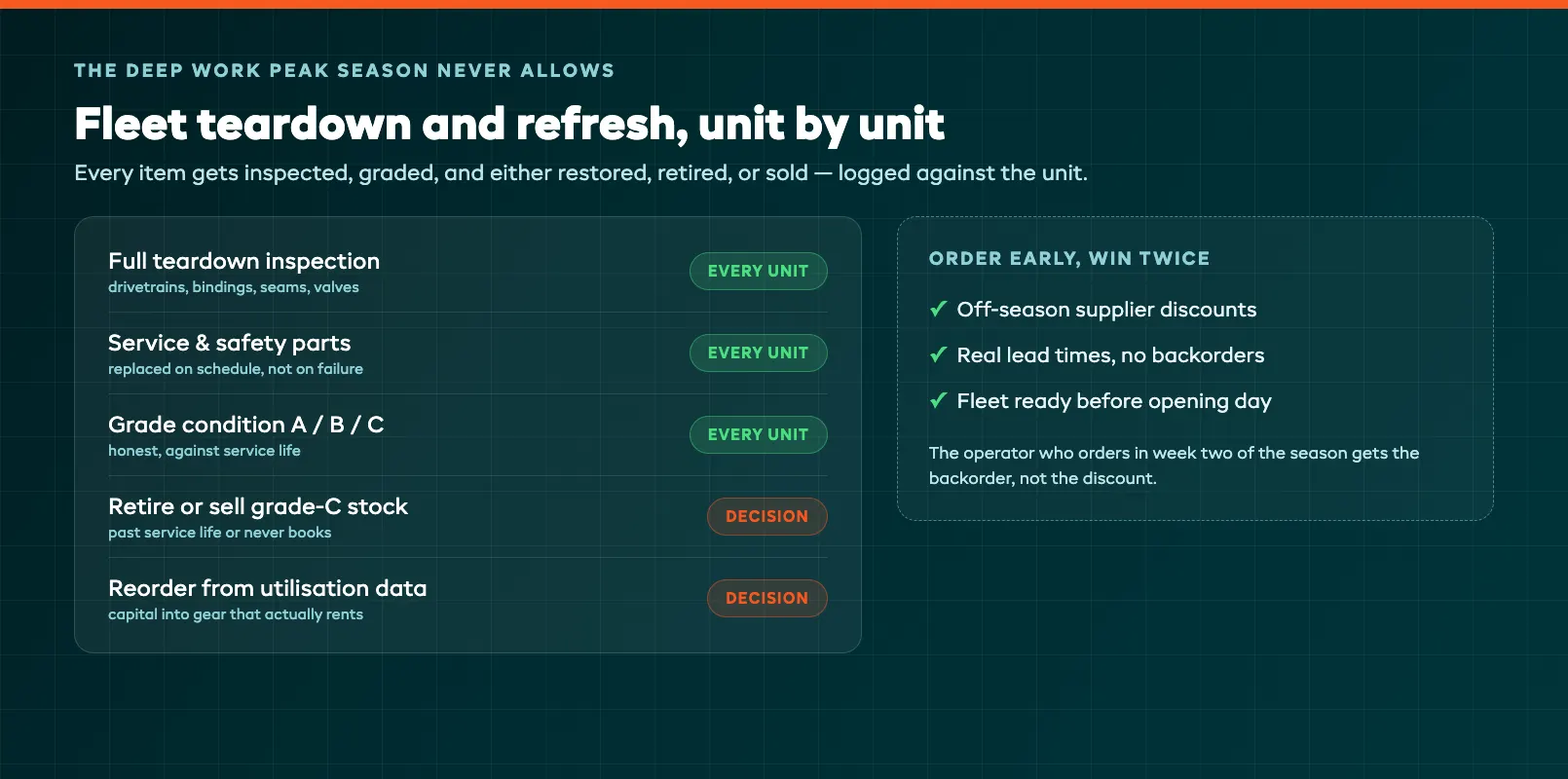
Order replacement stock early. Suppliers quote their best prices and their real lead times in the quiet months — the operator who orders in the off-season gets the discount; the one who orders in week two of the season gets the backorder.
Pre-season marketing: build the queue before the doors open
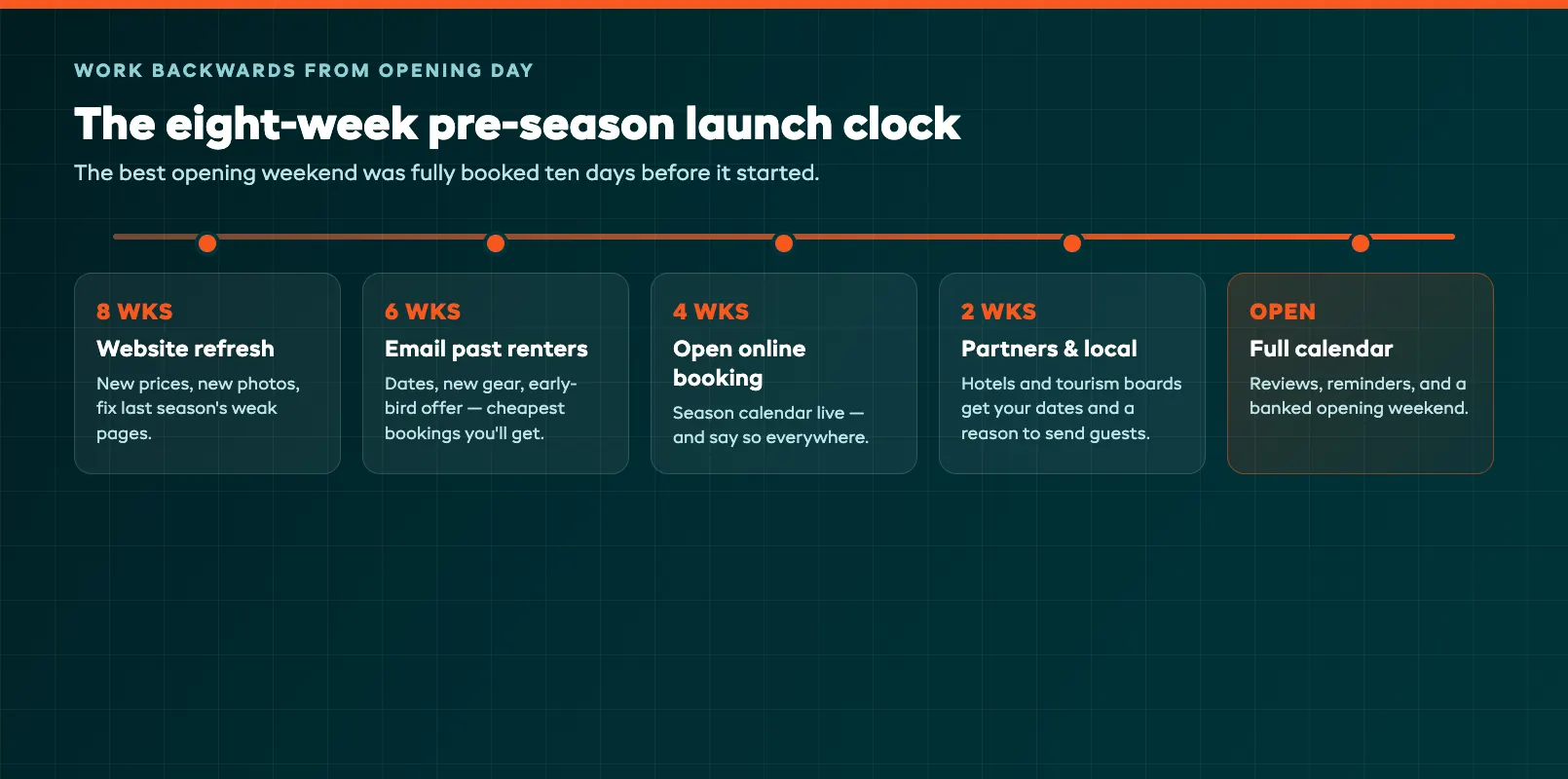
The best opening weekend is the one that was fully booked ten days before it started. That does not happen with a "we're open!" post on day one — it happens because the marketing machine started running six to eight weeks out.
Work backwards from opening day. Eight weeks out: refresh the website, update prices and photos, and fix the pages that underperformed last season. Six weeks: email the customer list — past renters are the cheapest bookings you will ever get — with dates, new gear, and an early-bird offer. Four weeks: open online booking for the season and say so everywhere. Two weeks: local partnerships, hotels, and tourism boards get your dates and a reason to send guests. Opening week: reviews, reminders, and a full calendar already banked.
Early-bird pricing deserves a hard look if you have never run it. A modest discount for bookings made before the season starts converts demand you would have gotten anyway into cash flow you get now — and every pre-booked slot is one less to fill in season.
Staff training and process improvement
The off-season is the only time you can change how the shop runs without breaking it while customers watch. Start with the friction list: every workaround, bottleneck, and "we'll fix it after the season" note from the busy months. Pick the handful that cost the most time and fix them properly.
Then train against next season instead of the last one. Walk returning staff through the updated booking flow, the damage and deposit process, and the maintenance standards while there is time to practice. Document the counter routines — checkout, return inspection, incident handling — so the seasonal hires you bring on at peak-season ramp-up learn from a checklist instead of from whoever happens to be standing nearby. A shop that writes its process down onboards a new hire in days, not weeks.
Plan the next peak while this one is still fresh
Within a month of closing, run the season review — while the pain is still specific. What sold out and could have been priced higher? What sat on the shelf? Which week did staffing break? Which channel actually produced bookings? The answers go straight into next season's plan: fleet order, price list, hiring calendar, and marketing budget.
Set the targets in writing — revenue, utilization, average order value — and put dates against the pre-season milestones so the eight-week marketing clock starts automatically instead of when someone remembers. Operators who close this loop treat every season as a draft of the next one; the ones who do not just repeat the same season, mistakes included, until a leaner competitor stops them. The peak-season preparation playbook picks up exactly where this planning ends.
FAQ
How do rental businesses make money in the off-season?
The common streams are counter-season rentals (bikes in a ski town, skis in a bike town), long-term hires to trades and film crews, servicing and repair work on customer-owned gear, storage fees, and end-of-season gear sales. None match peak takings — the goal is covering fixed costs and keeping key staff until the season returns.
What should I focus on first in the slow months?
The fleet. A full teardown inspection, service, and honest grading of every unit is the highest-value off-season work because it decides your reorder list, your opening-day reliability, and your maintenance costs for the whole coming season. Marketing starts later — the eight-week pre-season clock — but the gear work starts as soon as the doors quiet down.
Is the off-season about earning revenue or cutting costs?
Both, but revenue is the half most operators skip. Cutting hours and pausing subscriptions helps, yet a shop with zero income still bleeds every month. Even modest off-season revenue — a small counter-season fleet, workshop servicing, storage — changes the math dramatically because it lands against costs you are already paying.
When should pre-season marketing start?
Six to eight weeks before opening day. Eight weeks out is website and pricing refresh, six weeks is the email to past renters with an early-bird offer, four weeks is opening online booking, two weeks is partners and local channels. Shops that start on opening day spend the first month filling a calendar that could have been full already.
Should I sell off rental gear at the end of the season?
Sell the units that are past their best rental life but still have retail value — typically after two or three seasons, depending on the category. End-of-season sales recover capital for the new fleet order, clear storage space, and put your brand in customers' garages. Grade honestly first: anything safety-critical that is out of spec gets retired, not sold.
How do I keep good seasonal staff coming back next year?
Tell them before they leave that you want them back, put a date on it, and stay in touch over the break. Off-season training days, first pick of shifts, and a small returning-staff pay bump are far cheaper than recruiting and training replacements. A returning crew that already knows your process is worth weeks of ramp-up time on opening day.
in one place