Weather, Trail Closures, and Cancellations for Off-Road Operators
Weather, Trail Closures, and Cancellations for Off-Road Operators
No-shows cost you the odd seat. Weather takes whole days. A wet spring, a fire ban, or a land-manager closure can wipe two or three weeks off an off-road season, and every one of those days comes with the same hard conversation: the tour is off, and the guest wants to know what happens to their money.
The operators who come through those weeks intact are not luckier — they wrote the policy before the storm. They know exactly what conditions cancel a tour, who makes the call and when, what the guest gets offered, and how the message goes out. This guide covers all four, and it slots into the wider playbook in the complete guide to running an ATV and off-road tour business.
Set go, marginal, and no-go thresholds before the season
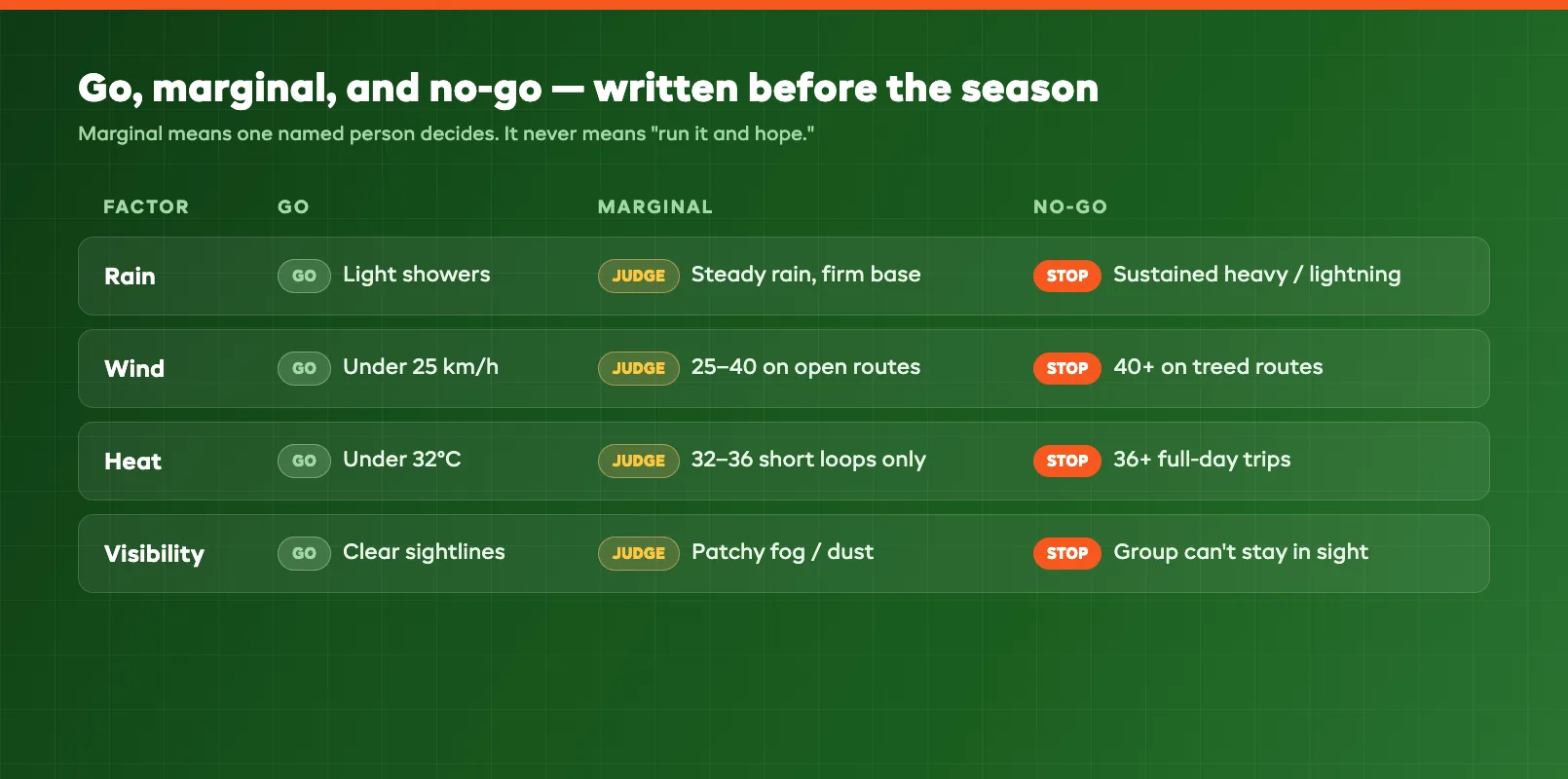
The worst time to decide whether 30mm of overnight rain cancels a tour is 6:45am with a full group booked. Under pressure, the revenue argues for running and the conditions argue for canceling, and whoever shouts loudest wins. Written thresholds settle the argument in the off-season, when nobody has money on the table.
Keep the grid simple: for each factor — rain, mud depth, wind, heat, visibility — write a go limit, a marginal band, and a hard no-go. Sustained lightning is always no-go. Wind above your treed-route limit is no-go on those routes and marginal on open ones. Heat above your cutoff without shade stops is no-go for full-day trips, marginal for short loops. Marginal means one named person makes a judgment call; it never means "run it and hope."
Put the grid in your operating plan next to the guide scheduling roster, brief every guide on it at induction, and hold to it on the days it costs you. A threshold you waive when the booking sheet is full is not a threshold — it is a suggestion, and your guides will treat it as one.
Trail closures: land managers, fire bans, and mud season
Weather you can see coming. Closures arrive by email. Most off-road operators run on someone else's land — forestry, parks, private stations — and the permit that lets you operate comes with the manager's right to shut the network with a day's notice. Fire bans close everything at once in high season. Mud season closes the spring: saturated trails rut under tires, the damage lasts all summer, and riding through a closure is the fastest way to lose the access your whole business depends on.
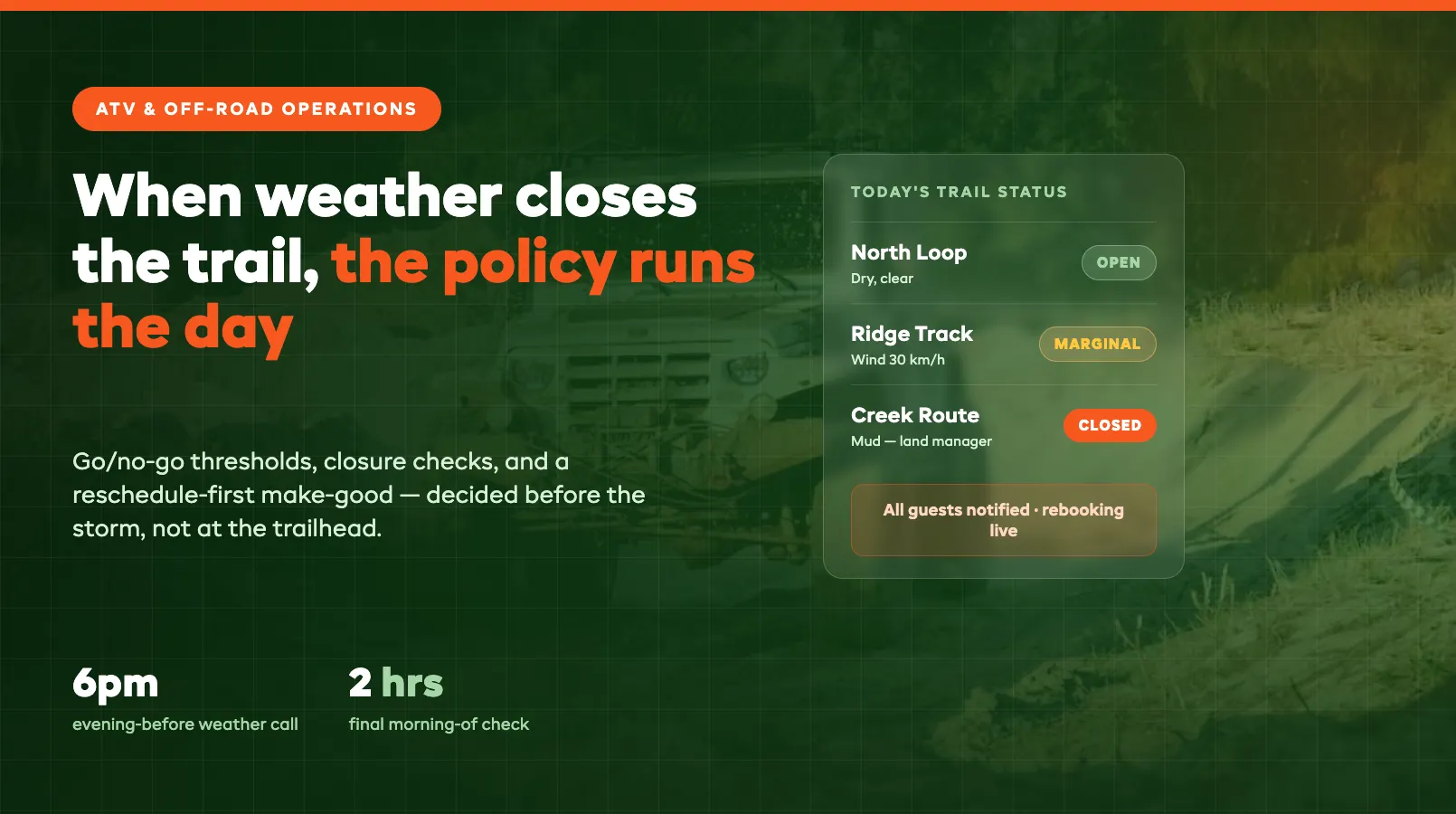
Make closure-checking a named morning job, not something everyone assumes someone else did. One person checks the land-manager notices, the fire-danger rating, and your own guides' condition reports from yesterday's trips, then marks each route open, caution, or closed for the day. Five minutes, logged, done before the first departure.
The operators who handle closures best also build route redundancy. If your permit covers three networks and one closes, tomorrow's tours move instead of canceling — machines from the affected routes go back through the fleet maintenance workshop for their service backlog, and the season keeps moving. One route, one permit, one point of failure.
The cancellation call: one owner, two checkpoints
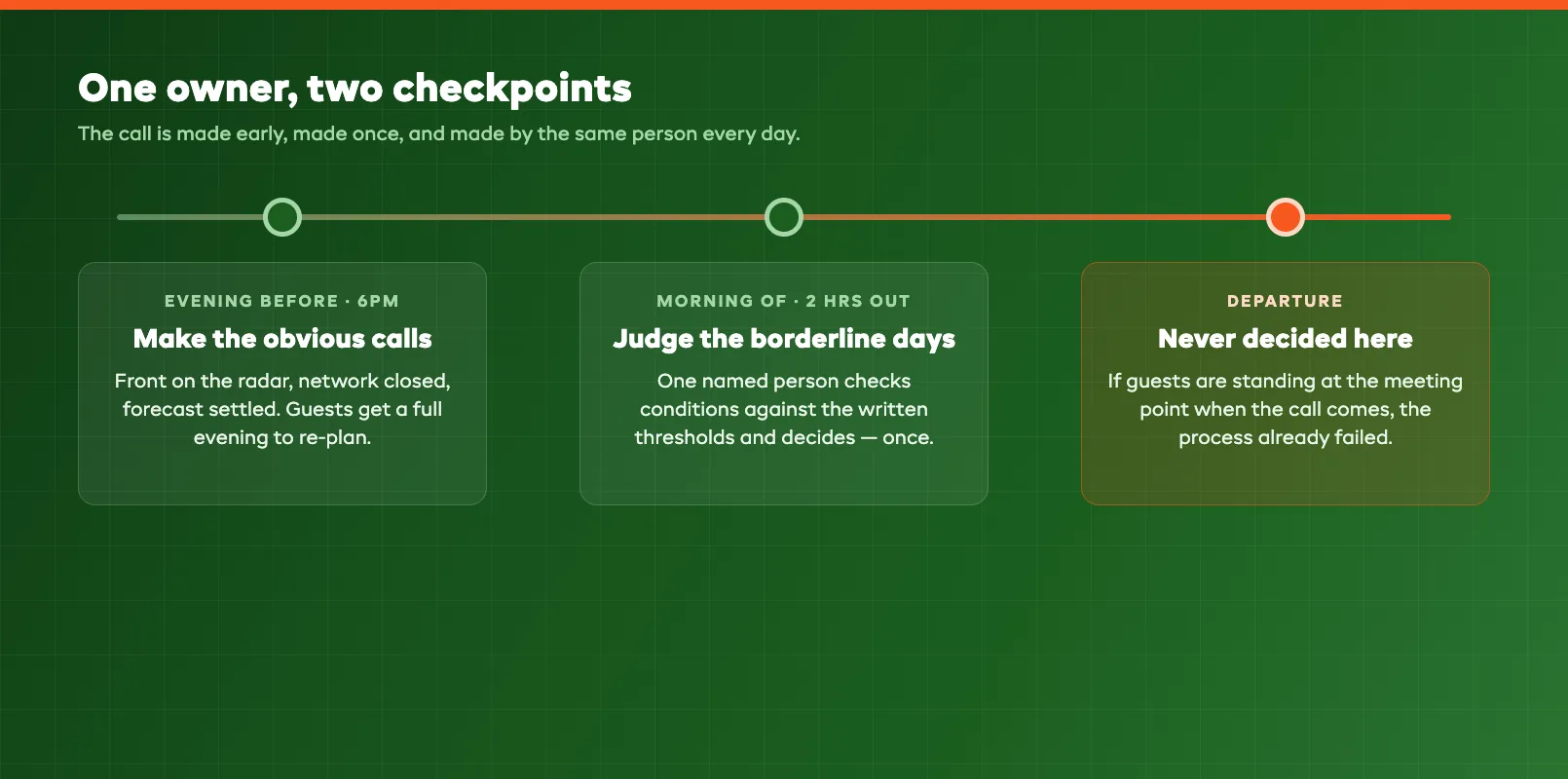
Every canceled tour is decided twice. The evening before, around 6pm, you make the obvious calls: the front is on the radar, the network is closed, the forecast is settled. Guests get a full evening to re-plan, and your morning stays calm. Genuinely borderline days roll to a morning-of check, about two hours before departure — enough time for the message to land before anyone drives to the meeting point.
The call belongs to one named person. Not a group chat, not whoever answers the phone — the owner or head guide, using the threshold grid. When the same person makes the call the same way every day, guides stop second-guessing, the desk stops lobbying, and guests get a consistent answer.
Two details make the call easier to make. First, record the reason every time — "canceled, ridge route, wind" takes ten seconds and builds the season log you will use to fix the schedule next year. Second, remember that the riskiest cancellation is the one you did not make. Your waivers and safety briefings cover the risks of riding; they do not cover a decision to send a group out in conditions your own policy called no-go.
Reschedule first, credit second, refund last
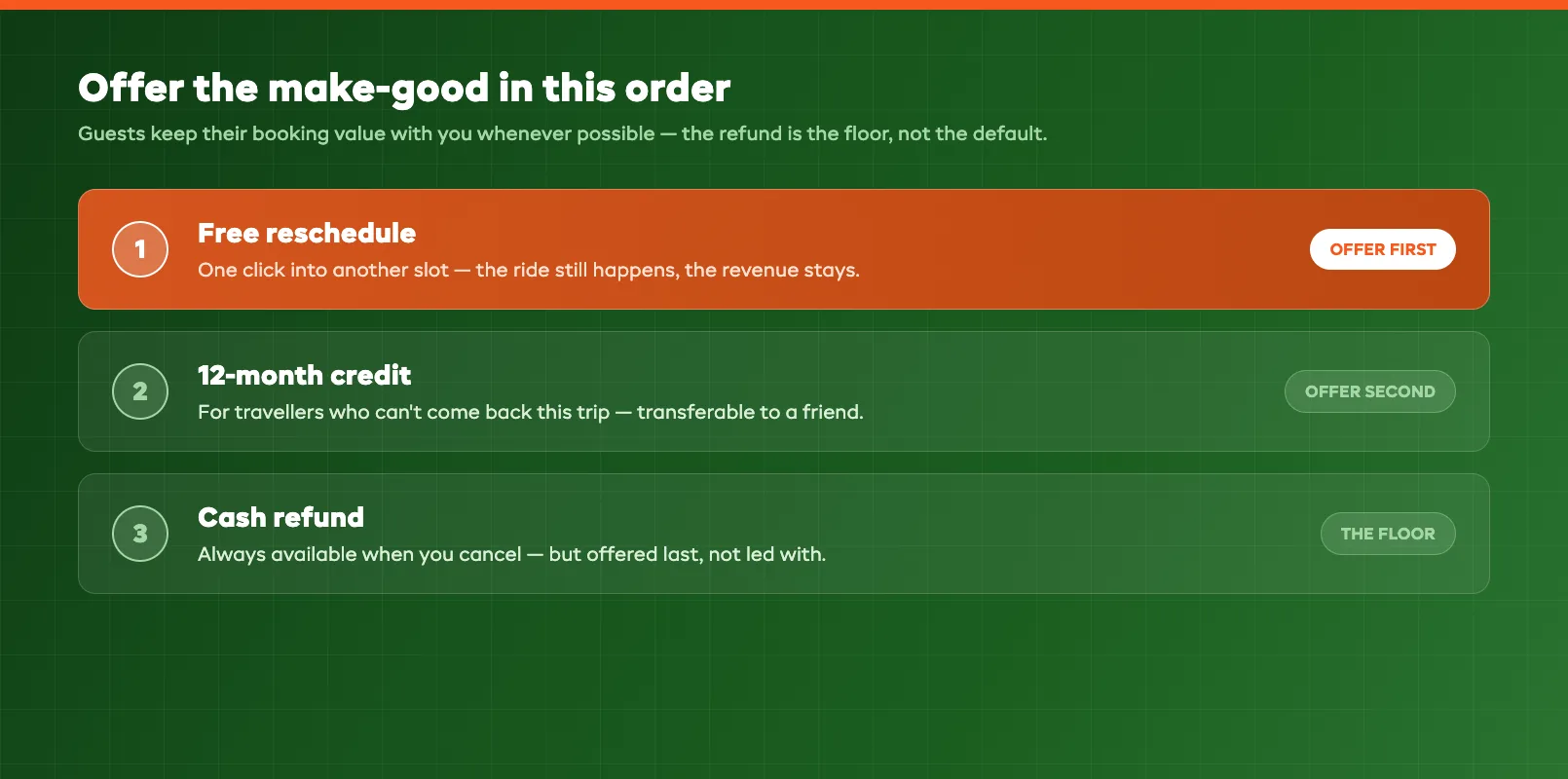
When you cancel, the guest must never lose their money — that part is not negotiable, and your booking page should say so in plain language. What you control is the order of the offer, and the order is where the season's revenue gets saved or lost.
Lead with the reschedule. It costs you a slot you probably had anyway, the guest still gets the ride, and the booking value stays on your books. For travelers who cannot come back this trip, offer a twelve-month credit — many book again next season, and a credit transferred to a friend is a new customer you did not pay to acquire. The cash refund sits at the bottom of the ladder for guests who cannot do either. Offered in that order, most operators keep well over half of canceled-day revenue; offered as "refund or reschedule?", almost everyone takes the cash.
Guest-canceled bookings run on a separate, published timeline — full refund outside your notice window, credit inside it, and deposits handled the way your deposit policy already defines. Price the whole make-good structure into your rates the same way you price fuel and guides; the tour pricing guide covers how cancellation cost feeds the rate card.
Tell every guest at once, automatically
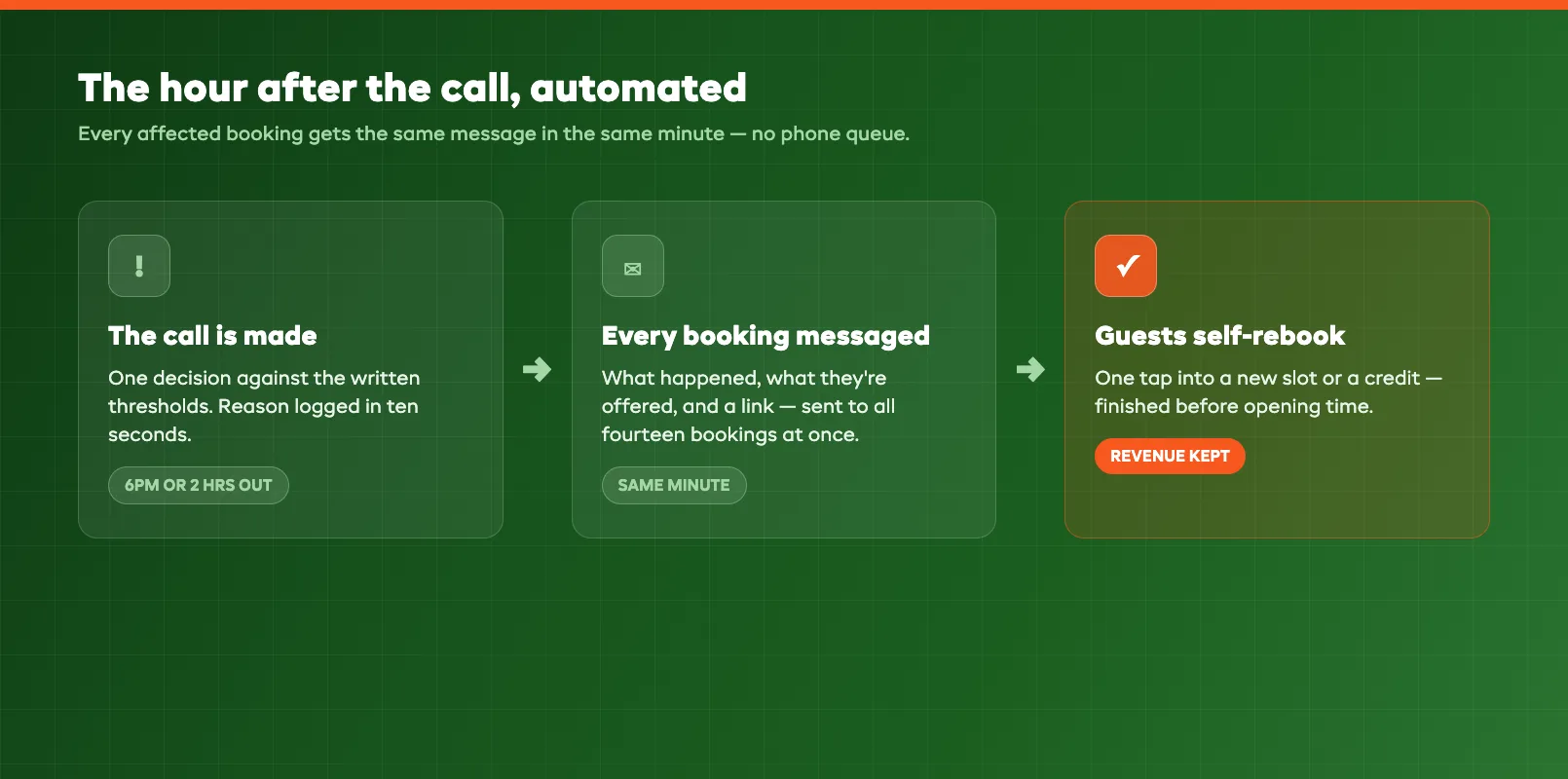
A cancellation handled well reads like competence; handled late, it reads like chaos. The difference is rarely the decision — it is the hour after. Phoning down a list of fourteen bookings takes all morning, and the guest you reach last has been standing in the rain at the trailhead for twenty minutes.
This is the one part of the process worth automating end to end. When the call is made, every affected booking gets the same message in the same minute: what happened, what they are offered, and a link to rebook or take the credit themselves. Guests who self-serve a reschedule in one tap do not join a phone queue to argue about a refund. Modern ATV booking software ties the cancellation, the notification, and the rebooking link together so the whole event is finished before opening time.
Close the loop with tomorrow's guests too. A short "conditions are clearing, your tour is on" note the evening after a storm stops the anxious emails before they start — and it is the kind of small operational polish that shows up across every business on the ATV and off-road hub.
Putting it together
Weather policy is a system, not a vibe: thresholds written before the season, closures checked by name every morning, one person making the call at two fixed checkpoints, a make-good ladder that leads with the reschedule, and a message that reaches every guest at once. None of it stops the rain. All of it decides whether a wet fortnight costs you two weeks of revenue or two weeks of rebookings.
Write the grid this month, brief the team, and put the policy where guests can read it before they book. If any of the terms in your permits or closure notices are unfamiliar, the off-road glossary covers the language land managers and insurers use.
FAQ
When should an ATV tour be canceled for weather?
When conditions cross the limits you set before the season — sustained heavy rain that turns trails to bog, lightning in the area, wind strong enough to drop branches on treed routes, extreme heat without shade or water stops, or visibility too poor to keep a group together. The point of written thresholds is that the answer is already decided before anyone checks the forecast.
Do guests get a refund if the operator cancels an off-road tour?
If you cancel, the guest should never lose their money — but a refund is the last option you offer, not the first. Lead with a free reschedule, then a credit valid for twelve months, then the refund for guests who cannot do either. Most travelers take the reschedule if you make it one click.
What is mud season and why do operators close for it?
Mud season is the spring window when melting snow and rain leave trails saturated and soft. Riding them carves ruts that last all summer, damages the trail base, and gets operators on the wrong side of the land managers who issue their permits. Many regions close networks entirely for several weeks, and operators who ride through closures risk losing access.
Who decides whether a tour runs in marginal conditions?
One named person — usually the owner or head guide — using the written thresholds. Marginal days are exactly when a committee fails: the booking desk wants the revenue, the newest guide does not want to look soft, and nobody owns the call. One decision-maker, two checkpoints, decision made once.
How far in advance should a weather cancellation be made?
Make the obvious calls the evening before, by around 6pm, so guests can re-plan their day. Hold genuinely borderline days for a final morning-of check about two hours before departure. What you want to avoid is guests standing at the meeting point when the call comes — that is the version they write reviews about.
Should a weather cancellation policy be published on the booking page?
Yes — a short, plain-language version at checkout and in the confirmation email. Guests who know the rules before they book do not argue with them after. It also protects you: when the policy says operator-canceled tours convert to a reschedule or credit first, the refund conversation starts from your terms, not the guest's assumptions.
in one place