Weather Cancellations for Charter Operators: Reschedule-First Revenue Preservation
Every charter operator loses days to weather. Wind comes up, a front stalls over the grounds, lightning sits on the horizon, and a trip you sold three weeks ago cannot safely leave the dock. That part you cannot change. What you can change is what happens next — whether that lost day costs you the revenue and the customer, or just the day.
Most operators default to a refund the moment a guest mentions the forecast. It feels fair, and it ends the awkward conversation fast. But a refund hands back money you have already earned the right to keep, sends a paying customer away with nothing booked, and trains your market to cancel at the first gray cloud. A reschedule-first policy does the opposite: it treats a weather day as a postponement, not a loss. This is a spoke off our broader guide to running a charter business, zoomed in on the policy that decides whether weather costs you a day or a customer.
Setting Go/No-Go Criteria
The first job is to take the decision out of the moment. If you decide trip-by-trip whether conditions are safe, you will second-guess yourself, cave to a pushy guest, or cancel a trip that was actually fine. Write the thresholds down once, in numbers, and follow them every time.
Good criteria are specific to your vessel and your waters. Sustained wind speed, gust ceiling, wave or swell height, visibility, and lightning distance are the core five. Set a clear "sail" band, a "hold and reassess" band, and a hard "stand-down" line for each. A 24-foot center console fishing the open Gulf has very different numbers than a 50-foot sailing catamaran inside a protected bay — so does a sunset cruise versus a tuna run that puts you 40 miles out. Your insurer and your Certificate of Inspection set the outer limits; your comfort and your guests' experience set the rest.
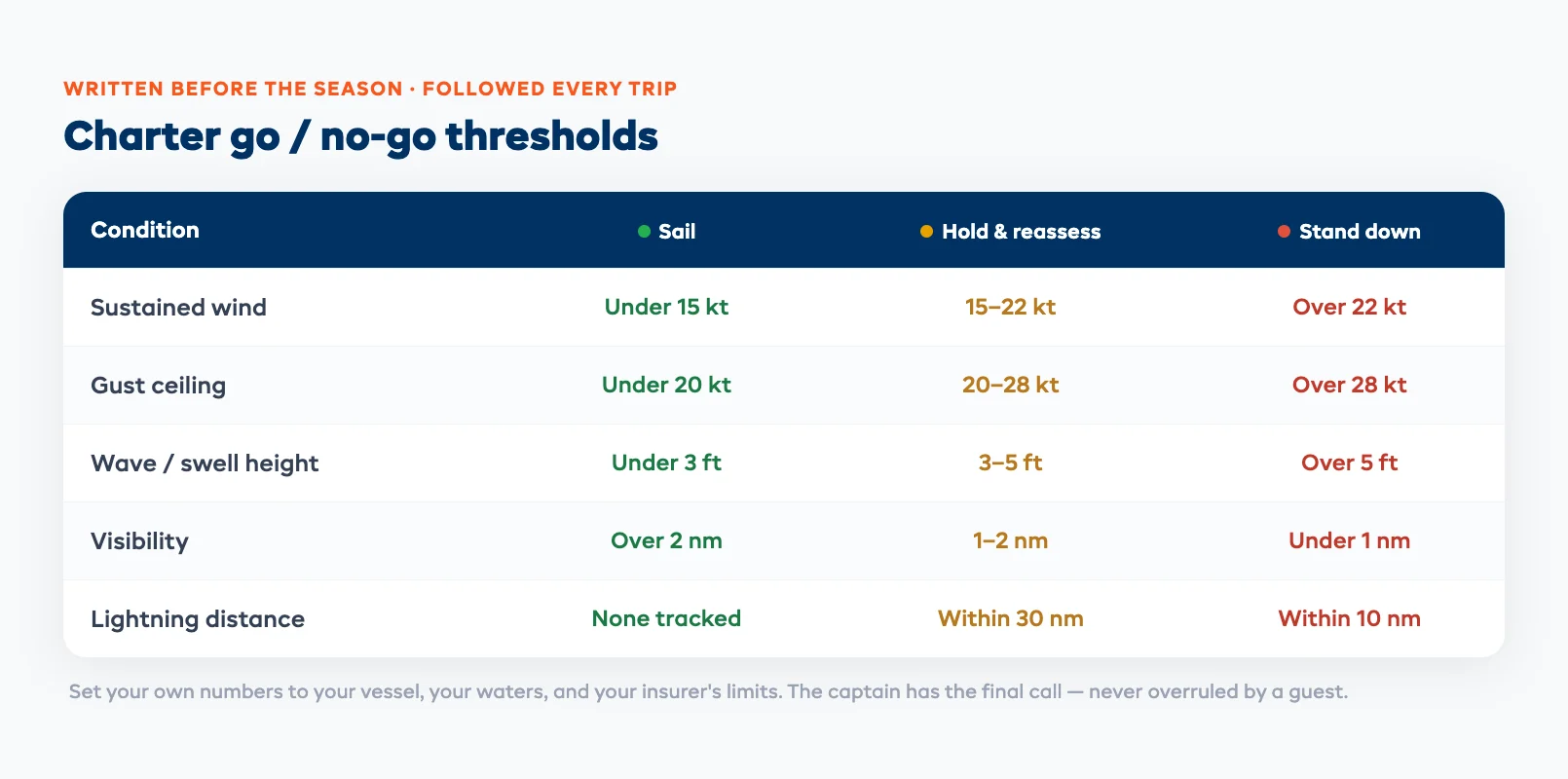
Two rules keep the criteria honest. First, the captain has the final call and it is never overruled by a guest — bake that line into your booking terms so nobody is surprised. Second, "uncomfortable" and "unsafe" are different decisions. A short steep chop that will leave half the boat seasick is a customer-experience call you can make with the guest; a thunderstorm cell tracking toward the grounds is a safety call you make alone. Knowing which one you are facing keeps you from canceling sellable trips out of caution and from running miserable ones out of greed.
Timing the Cancellation Call
When you make the call matters almost as much as the call itself. Decide too early and you cancel on a forecast that improves by morning. Decide too late and your guest is already in the car, the deckhand is paid, and the bait is bought.
Build a simple decision ladder around your departure time. At 24 hours out, you are watching the trend and warning the guest that weather is in play — no decision yet, just a heads-up so it is not a shock. At 12 hours, you are leaning one way and you say so. By a few hours before departure, or first light for a morning trip, you make the firm call against your written criteria and you communicate it immediately. The earlier you can give a guest honest warning, the more goodwill you bank — people forgive a canceled trip far more easily than a canceled morning they have already driven two hours for.
The pre-departure routine that surrounds this call is worth standardizing the same way you would a safety briefing. Our charter pre-departure check covers the fuel, gear, and conditions sweep that feeds the final go decision, so the weather call sits inside a process rather than hanging on a gut feeling at the dock.
Reschedule First, Refund Last
Here is the heart of the policy. When you cancel for weather, you are not asking "do I keep the money or give it back?" You are offering a ladder of options, in order, and a refund is the bottom rung — not the first.
The top rung is the easiest yes: rebook now, into a specific open slot, ideally before the guest hangs up or closes the message. A trip that moves from Saturday to the following Tuesday keeps every dollar on your books and keeps the customer in your calendar. If no nearby date works, the next rung is an open-dated credit with a generous window — a full season, not two weeks — so the guest holds something of value and you hold the revenue. Only when neither lands do you reach the refund, and even then your deposit terms decide whether a slice stays with you to cover the costs you already sank into that trip.
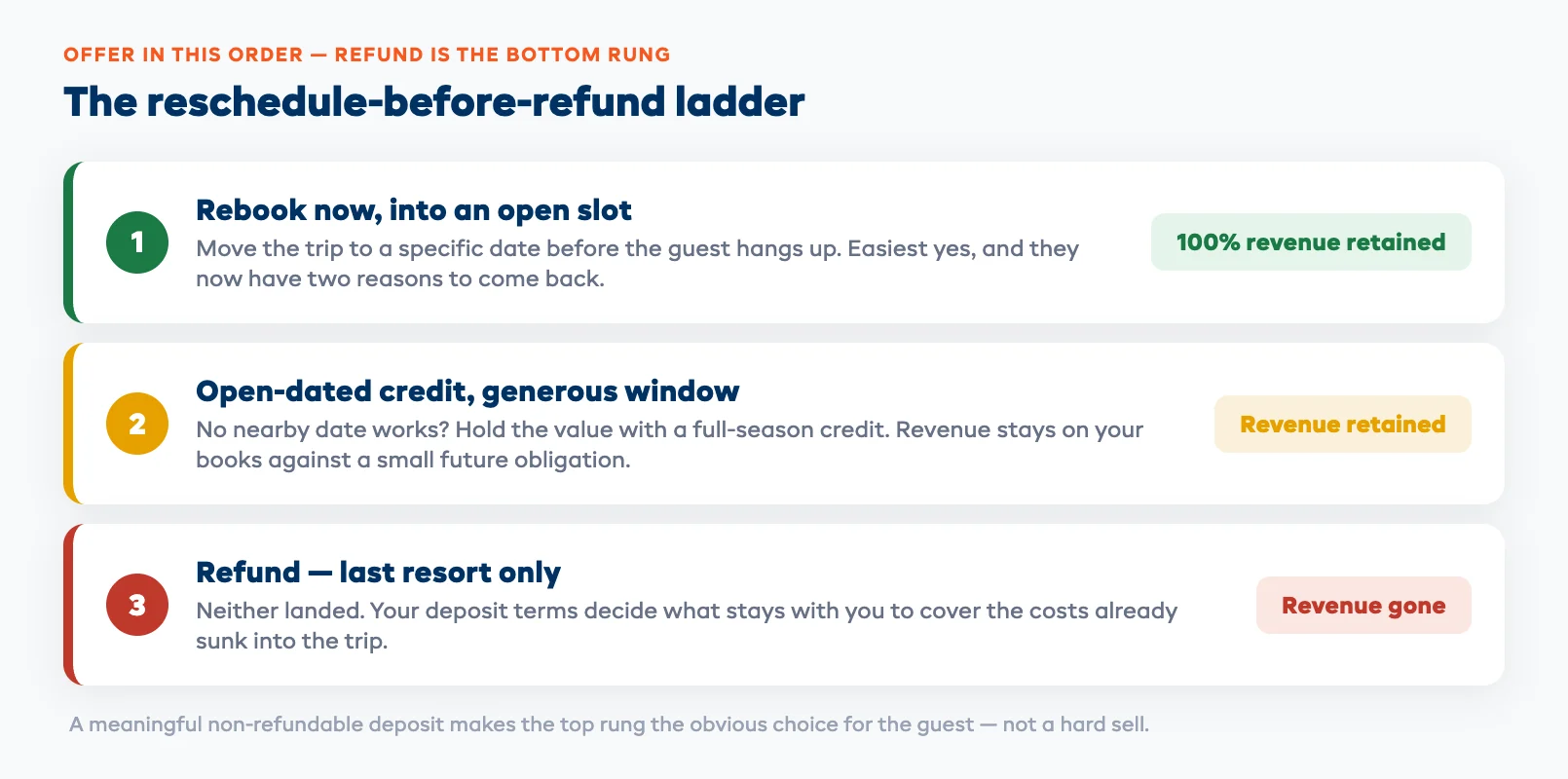
The economics are stark once you lay them side by side. A rebooked trip is 100% revenue retained and a customer who now has two reasons to come back. A credit is revenue retained today against a small future obligation. A refund is revenue gone, costs unrecovered, and a customer with no reason to return. Your pricing and deposit structure are what make the top rungs stick — if you take a meaningful non-refundable deposit, as covered in our charter pricing guide, the reschedule offer is the obvious choice for the guest, not a hard sell. Make the easy path the one that keeps your revenue.
Communication That Holds the Booking Together
A reschedule-first policy only works if the message lands well. The same cancellation can read as "the captain is keeping us safe and looking after us" or "they bailed and kept my money" depending entirely on how you say it. Write your messages once, in advance, so you are not drafting them stressed at 5am.
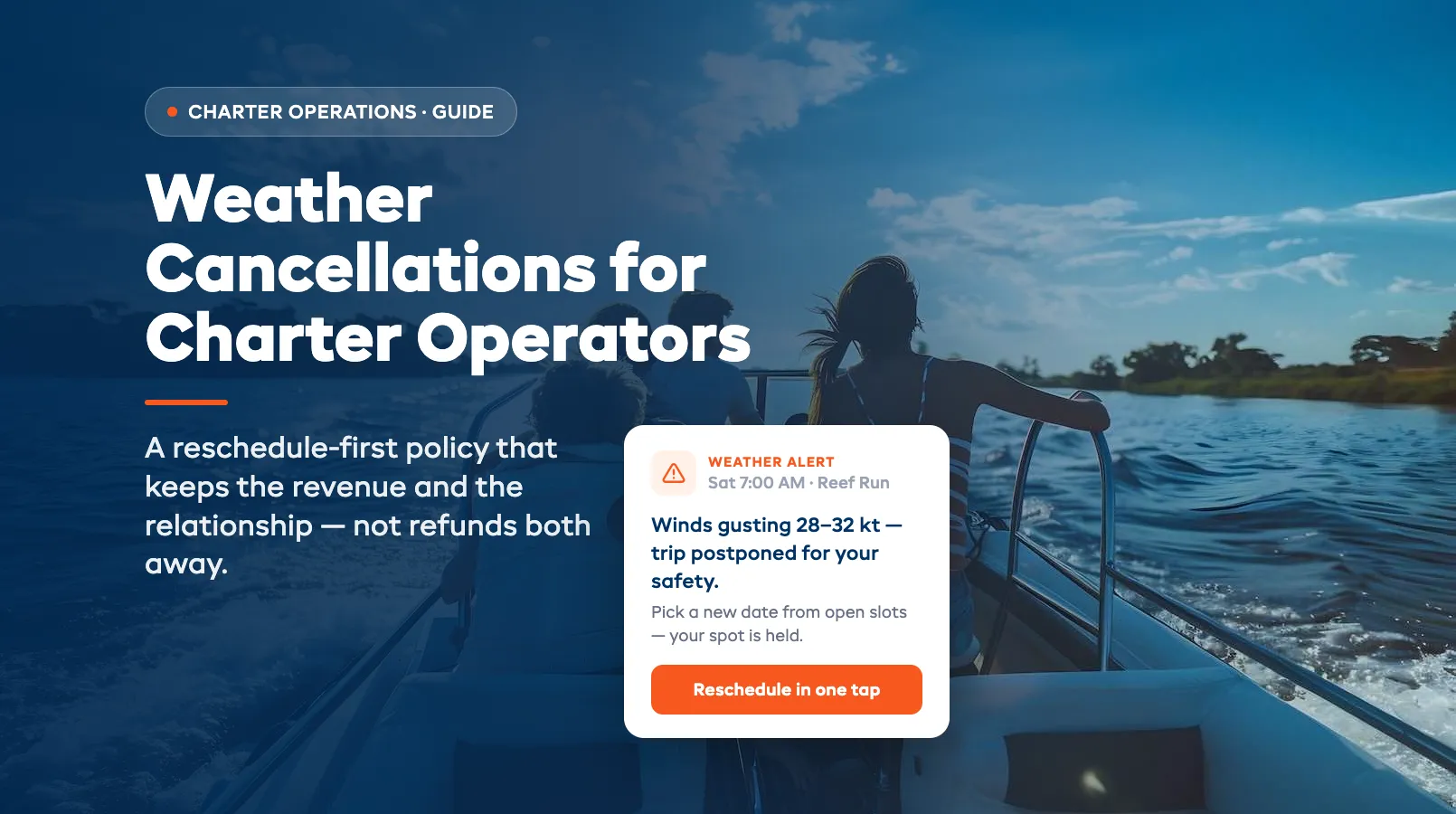
Three things make the difference. Lead with the reason and the safety framing — name the actual conditions, make clear the call protects the guest, not just the boat. Offer the next step in the same breath, with a specific date or a one-tap rebooking link rather than a vague "we'll be in touch." And close with genuine warmth, because a guest who feels looked after reschedules and a guest who feels processed asks for the refund. Keep a short library of these: the 24-hour heads-up, the firm cancellation with reschedule offer, and the confirmation once they pick a new date.
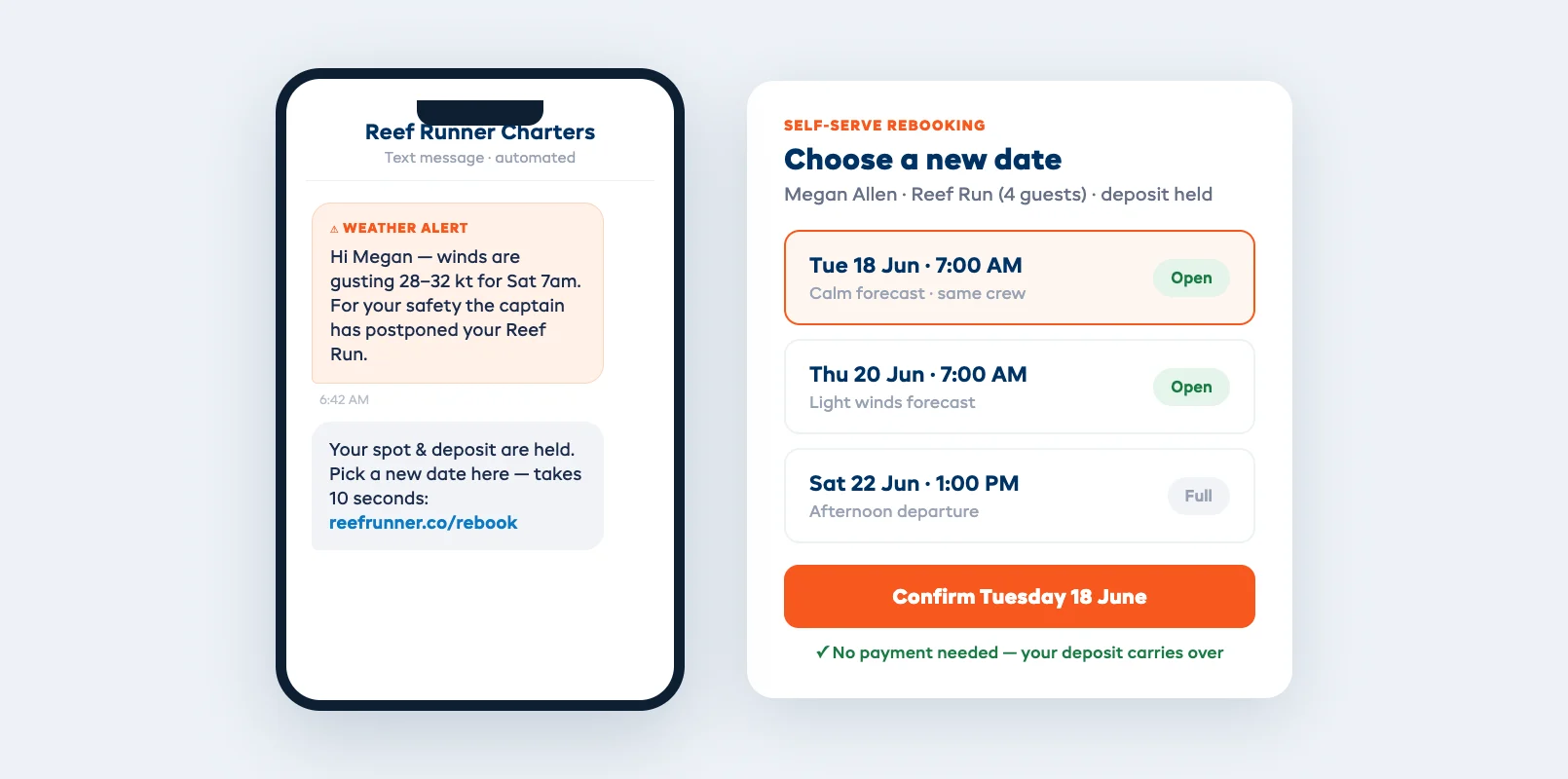
Tone is set long before the storm. If your booking confirmation already explains, in plain and friendly language, that trips are weather-dependent and that you reschedule rather than cancel outright, the actual cancellation message is a reminder of something the guest already agreed to — not a nasty surprise. The waiver and terms you collect at booking are the place to set that expectation; our manifests and waivers guide covers folding the weather and reschedule terms into the paperwork every guest signs.
Planning for Seasonal Weather Patterns
Weather cancellations are not evenly spread across the year, and treating them as random noise leaves money on the table. Every charter ground has a rhythm — an afternoon-thunderstorm season, a windy shoulder month, a stretch of settled mornings that almost never blow out. Knowing yours lets you price, schedule, and staff around it.
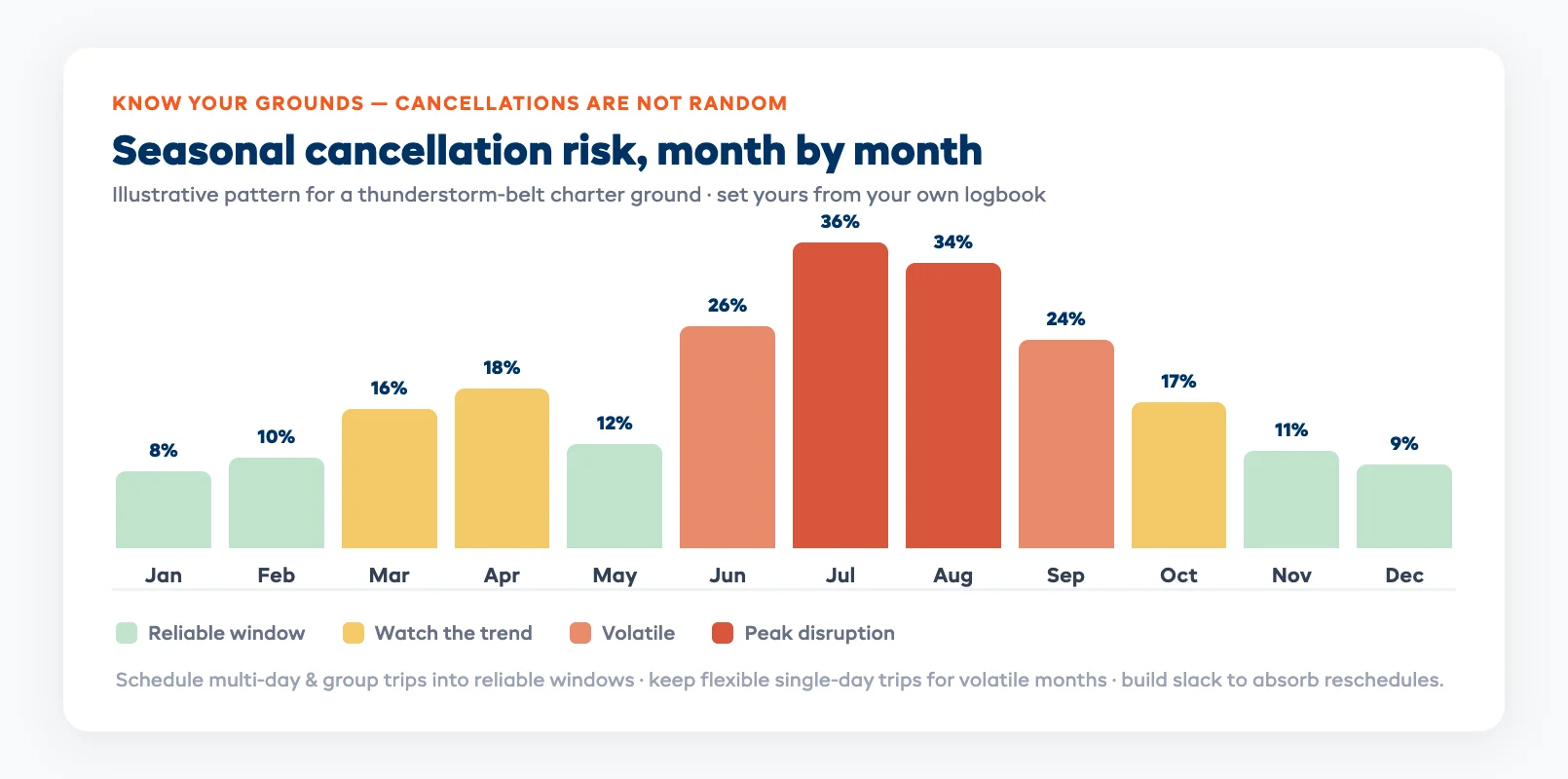
Use the pattern three ways. Schedule high-stakes trips — multi-day runs, big group buyouts, anything hard to rebook — into your most reliable windows, and keep flexible single-day trips for the volatile stretches where a reschedule is easy. Build a little slack into peak season so you actually have open Tuesdays to move a blown-out Saturday into. And set guest expectations by season: a customer booking a July afternoon in a thunderstorm belt should hear about the reschedule policy at booking, not at the dock. If you run sailing and fishing programs that peak differently, our sailing vs fishing operations breakdown covers how those seasonal curves diverge.
Automating the Weather Watch and Rebooking
Doing all of this by hand — checking three forecast sources every morning, drafting messages, juggling the rebooking calendar — is the part that quietly burns out owner-operators. It is also the part most ready to automate.
A charter weather alert agent can watch the forecast against your written thresholds and flag at-risk trips before you have finished your coffee, so the 24-hour heads-up goes out on time without you remembering to send it. When you do make the call, an automated message with a self-serve rebooking link lets the guest pick a new slot from your real availability — turning the reschedule from a phone-tag negotiation into two taps. Dash Agents can run that watch-and-notify loop for you, leaving the actual go/no-go judgment where it belongs: with the captain.
Automation also closes the loop after the trip is saved. Capturing why each cancellation happened and how it resolved — rebooked, credited, or refunded — turns a frustrating day into data you can use next season. Over a year, that record shows you which months really cost you, whether your reschedule rate is climbing, and where your policy is leaking revenue. The charter incident response checklist is a useful companion here for the days when weather turns into something more serious and you need a record that holds up.
A weather day will never be a good day. But with written go/no-go criteria, a clear sense of when to call it, a reschedule-first ladder, messages that keep the relationship warm, and a little automation behind it, a blown-out Saturday becomes a moved trip instead of a lost customer. For the wider picture — pricing, compliance, scheduling, and everything else that goes into a charter operation — start with our complete charter operator's guide or browse the charter operator glossary and the full charters resource hub.
FAQ
Should I refund or reschedule a charter canceled for weather?
Reschedule first, refund last. A weather cancellation is a postponement, not a failure, so the best outcome keeps both the revenue and the customer. Offer a specific open date first, then an open-dated credit with a generous window, and only reach for a refund when neither works. A clear non-refundable deposit in your booking terms makes the reschedule the obvious choice for the guest rather than something you have to argue for.
How do I set go/no-go criteria for charter weather?
Write down numeric thresholds before the season, not in the moment. Cover sustained wind, gust ceiling, wave or swell height, visibility, and lightning distance, with a clear "sail," "hold and reassess," and hard "stand-down" band for each. Tie the numbers to your specific vessel, your waters, and your insurer's limits — an open-water fishing run and a protected-bay sunset cruise need different lines. The captain always has the final call, and it is never overruled by a guest.
When should I make the weather cancellation call?
Build a ladder around departure. At 24 hours out, warn the guest that weather is in play without deciding. At 12 hours, signal which way you are leaning. A few hours before departure, or at first light for a morning trip, make the firm call against your written criteria and communicate it immediately. Earlier honest warning banks goodwill — guests forgive a canceled trip far more easily than a canceled morning they have already driven two hours to reach.
How should I word a weather cancellation message?
Lead with the reason and the safety framing, name the actual conditions, and make clear the call protects the guest. Offer the next step in the same breath — a specific date or a one-tap rebooking link, not a vague "we'll be in touch." Close with genuine warmth, because a guest who feels looked after reschedules while a guest who feels processed asks for the refund. Write the messages in advance so you are not drafting them stressed before dawn.
Can I keep a deposit when I cancel for weather?
That depends entirely on the terms the guest agreed to at booking. If your confirmation and waiver explain that trips are weather-dependent and that you reschedule rather than refund, a non-refundable deposit can fairly stay with you to cover the costs you already sank into the trip — fuel, bait, crew. The key is setting that expectation in writing up front, so the policy is a reminder of something already agreed rather than a surprise at cancellation.
How can I automate weather monitoring for my charters?
A weather alert agent can watch the forecast against your written thresholds and flag at-risk trips automatically, so the 24-hour heads-up goes out on time without you tracking three forecast sources by hand. Pair it with an automated cancellation message that carries a self-serve rebooking link, letting guests pick a new slot from your real availability. The automation handles the watch-and-notify loop; the actual go/no-go judgment stays with the captain, where it belongs.
Does a reschedule-first policy hurt customer satisfaction?
Done well, it raises it. Guests do not resent a canceled trip when the captain is clearly keeping them safe and immediately offers an easy way to rebook — what they resent is feeling abandoned or processed. The policy only backfires when the communication is cold or the rebooking is a hassle. Warm messaging, a generous credit window, and one-tap rebooking turn a disappointing day into proof you look after your customers, which is exactly what brings them back.
in one place