Dive Course Pricing: Open Water to Divemaster Packages
By the EquipDash Team
Course pricing is where a lot of dive shops leave money on the table. Some price Open Water off the cheapest advert in town and end up teaching at a loss. Others load every cost into one big number, scare divers off, and never find out why the enquiry went cold. Both are guessing. Good course pricing is not guesswork. It starts with what a course actually costs you to run and builds up from there.
This guide walks the certification ladder from Open Water to Divemaster: what really goes into a course price, when to bundle and when to itemise, how to build packages that raise the average sale, and how to stop losing hours quoting the same course by email. Get this right and courses stop being a break-even chore and start funding the rest of the shop.
What actually goes into a course price
Before you can price a course you have to know what it costs to deliver. Most shops underprice because they only count the obvious things and forget the rest.
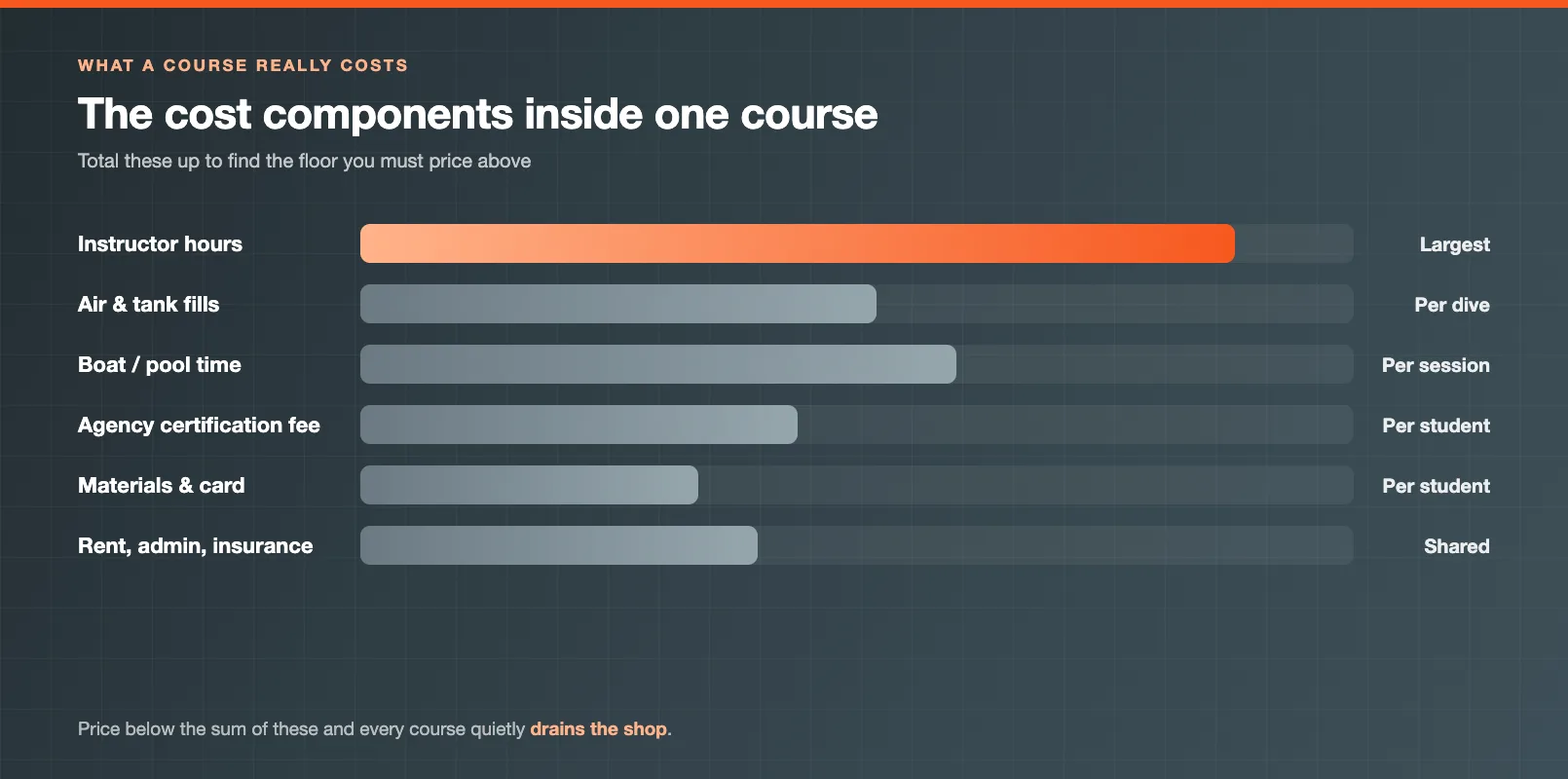
A single course consumes instructor hours across classroom theory, confined-water sessions, and open-water dives. It burns air and tank fills, pool or boat time, and wear on the training gear the student borrows. On top of that sits the agency certification fee (a real per-student cost you pay the training organization) plus the course materials, manuals, and the certification card. Add insurance, admin, and the slice of your rent and staff wages that every course carries, and the true cost is well above the fee you pay the instructor.
Total those up honestly and you have a floor. Price below it and each course quietly drains the shop; price a healthy margin above it and courses become a revenue stream instead of a favor you do for divers.
Price the certification ladder, not just one course
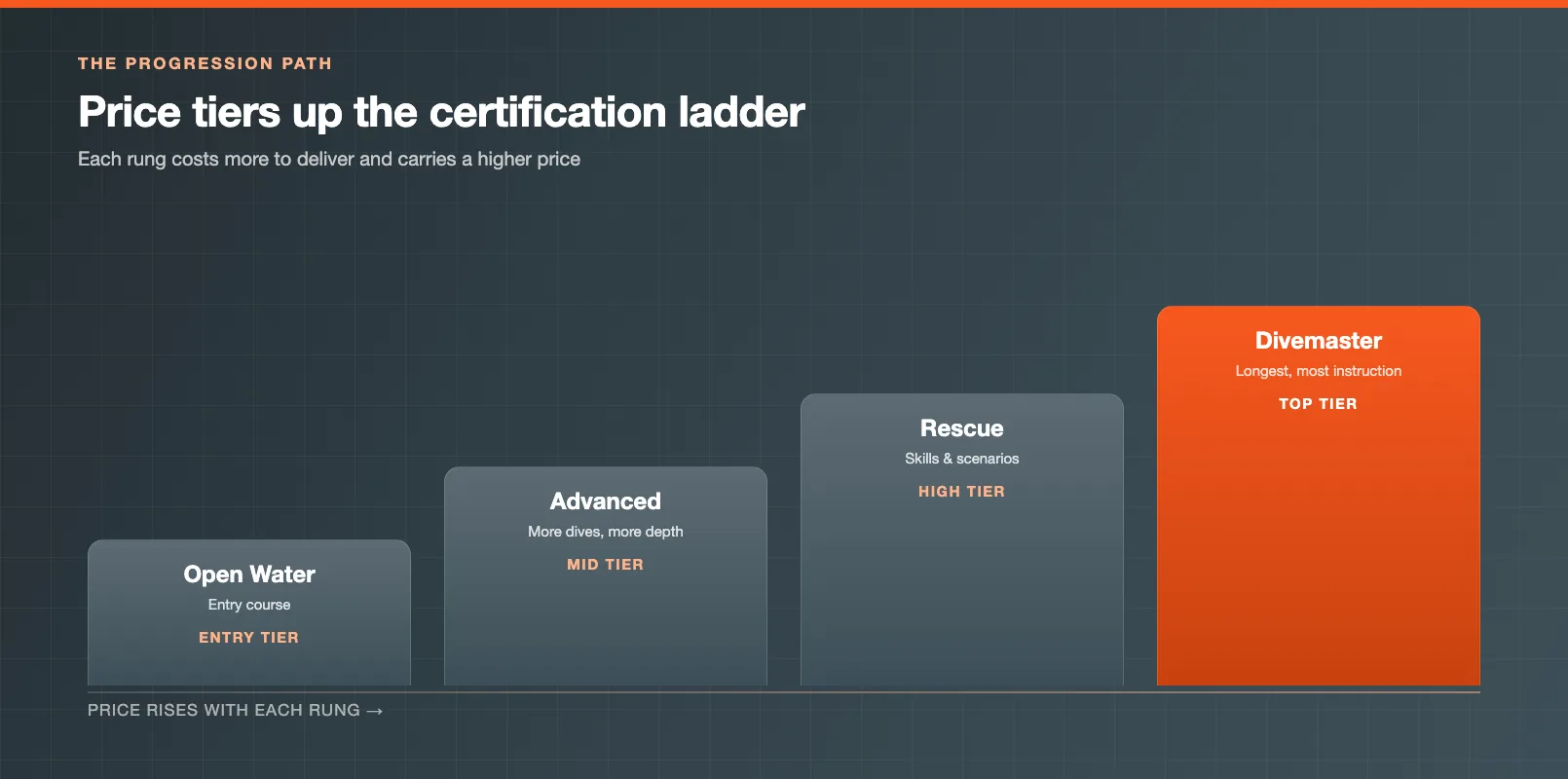
A diver does not just buy Open Water. They start there and, if you look after them, climb: Advanced Open Water, specialties, Rescue Diver, and eventually Divemaster. Each rung is a course you can sell, and each one costs more to deliver and carries a higher price than the last.
Price the whole ladder deliberately rather than pricing Open Water and improvising the rest. When a diver can see the path, and the price of each step, laid out clearly, they understand where they are heading and it feels natural to keep going with you. Publish the ladder so an Open Water student finishing their course already knows what Advanced costs and when the next one runs. If your certification tracking already shows who has finished what, you know exactly which divers are ready for the next rung and can price and promote it to them at the right moment.
Bundle the certification fee, materials, and gear: or itemise them
Two shops can advertise very different prices for the same certification, and the difference is usually what sits inside the headline number. One bundles the agency certification fee, the manuals, the card, and gear rental into a single price. The other advertises a lower course fee and itemises everything else as add-ons.
Neither is wrong, but you have to pick one and be clear about it. Bundling is simpler for the diver and avoids a nasty surprise charge at the end, which usually makes for a better experience and fewer disputes. Itemising keeps your advertised price competitive next to a rival and makes the pass-through costs visible. What you must never do is stay vague: a diver who thinks they have paid for everything and then gets billed for the certification card at the end feels upsold, and that sours the relationship right when you want them to book the next course.
Build packages that lift the average sale
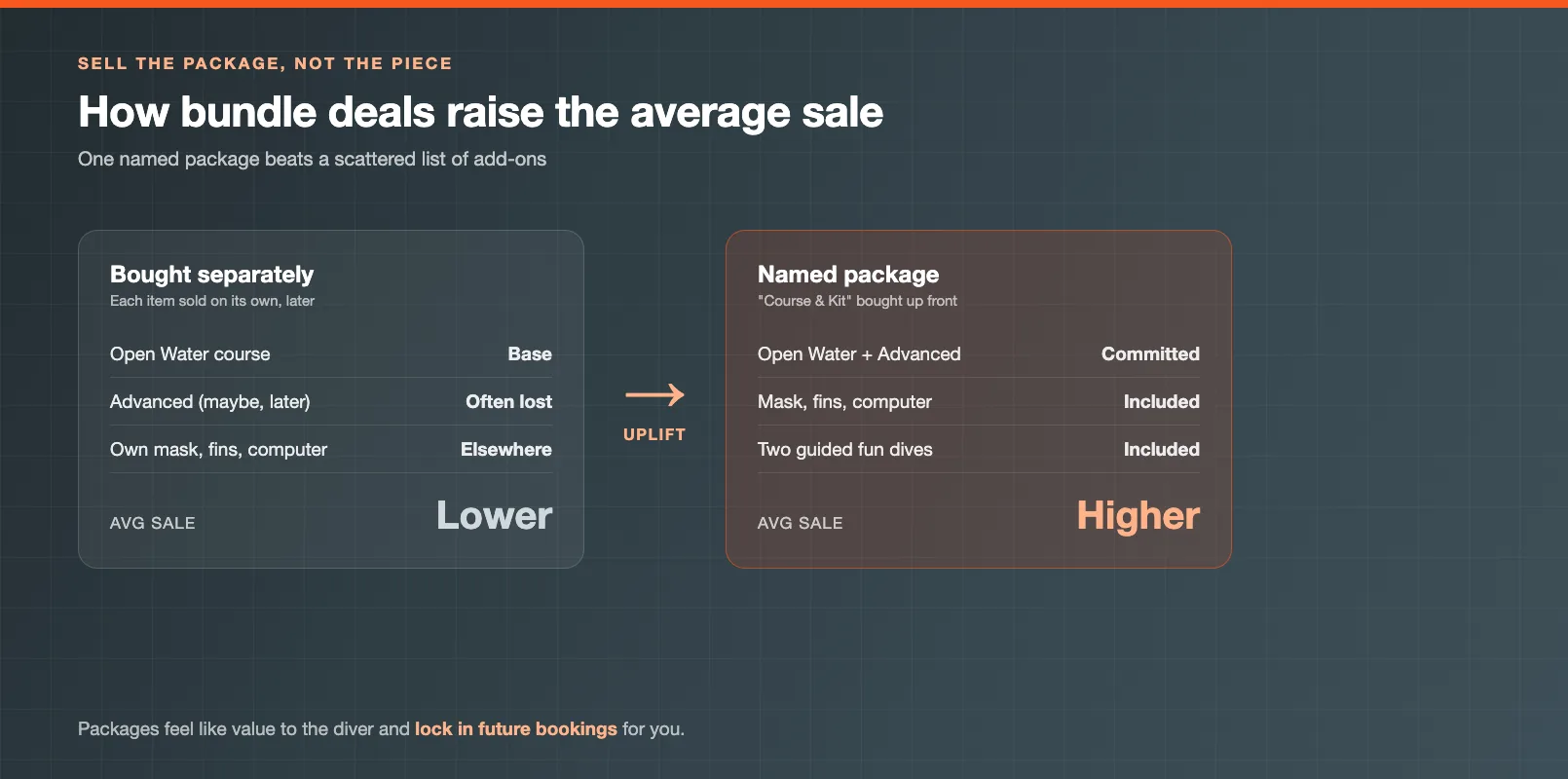
The single fastest way to raise course revenue is to stop selling one rung at a time. A package that pairs Open Water with Advanced, or wraps a course together with gear and a few guided fun dives, lifts the average sale and gives the diver a reason to commit to more up front.
Packages work because they feel like value to the diver and lock in future bookings for you. Someone weighing up Open Water is far more likely to add Advanced now if the combined price is a little softer than buying each separately later. The same logic drives a course-plus-gear bundle: a new diver who buys their own mask, fins, and computer as part of the course is a diver who keeps diving. Keep the offers simple and named ("Open Water + Advanced" or "Course & Kit") so a diver understands the deal at a glance instead of working through a price list.
Private, group, and referral pricing
Not every course is delivered the same way, and your pricing should reflect that. A group course spreads one instructor's time across several students, so the cost per diver is low and the price can be too. A private course ties that same instructor to one or two divers, so the cost per student is far higher and the price has to be as well. Publish both so the group price reads as the value option and the private price captures divers who want flexibility and one-to-one attention and will happily pay for it.
Referral courses — where a diver does their theory and pool work with you and their open-water dives elsewhere, or vice versa — need their own price too, since you are only delivering part of the course. Set these deliberately rather than discounting on the fly, so a partial course still covers the time and resources it actually uses.
Deposits and payment plans for big-ticket courses
A Divemaster course or a loaded package can run into serious money, and a big number asked for all at once puts divers off. A deposit solves both halves of the problem: it holds the place so the diver is committed, and it lets them start without paying the full amount on day one.
For the higher rungs, a simple payment plan (a deposit up front and the balance across the course) turns a daunting sum into an easy yes. It also protects you, because a booked deposit means the diver has skin in the game and is far less likely to drift away. Whatever terms you set, state them plainly at booking alongside your waiver and medical paperwork so there is no confusion about what is due and when.
Position on value, not the lowest price
There is always a shop down the road willing to teach Open Water for less, and chasing them to the bottom is a losing game. Race on price and you win the divers who leave the moment someone cheaper appears, while teaching at a margin that cannot keep the compressor running or the boat fueled.
Compete on what the low-price shop cannot copy: small class sizes, experienced instructors, well-maintained rental gear, good dive sites, and a genuine path up the certification ladder. Make those reasons visible in how you present a course so a diver understands why your price is what it is. A diver who books for value rather than price is the diver who comes back for the next course, buys gear, and joins your trips — worth far more over time than the one who chased the cheapest advert.
Quote and book courses without the back-and-forth
Most course enquiries are the same few questions: how much, what dates, and what is included. Answering them one email at a time is a slow, expensive way to sell a course, and every hour a staff member spends typing quotes is an hour they are not teaching or serving the shop floor.
Put the prices online and let divers book. A booking system that shows course prices, available dates, and package options, and takes a deposit at checkout, turns those repeat questions into self-service bookings. It ties into the same system that runs your fun dives and gear rental and fills your trip schedule, so a course booking, a deposit, and the paperwork all land in one place instead of scattered across an inbox.
If you want to see how the whole operation fits together, the complete guide to running a dive business covers pricing alongside scheduling, gear, and staffing, and the scuba diving glossary explains the terms. EquipDash brings course pricing, deposits, and bookings into one platform, with plans from $23/month on the Starter tier, $55 on Growth, and $119 on Pro, so quoting a course stops eating the time you would rather spend underwater.
Price your courses on what they truly cost and what they are truly worth, build a ladder and packages divers want to climb, and let the system do the quoting. Do that and courses stop being the part of the shop you break even on and become the part that funds everything else. For more on setting up the tools behind it, see how dive operators run bookings for courses, fun dives, and gear or find your shop's place on the scuba diving hub.
FAQ
How much should an Open Water course cost?
There is no single right number because it depends on your region, your costs, and what the course includes. The better question is what your Open Water course actually consumes: instructor hours across theory, pool, and open-water dives, air and tank fills, boat or pool time, the agency certification fee, and the course materials. Add those up, add the margin your shop needs to stay open, and price against that, not against the cheapest advert in town. Two shops can charge very different prices for the same certification because one bundles gear, materials, and the certification card and the other strips them out as add-ons.
Should certification fees be included in the course price?
Either approach works as long as it is clear. Bundling the agency certification fee into one headline price is simpler for the diver and avoids a surprise charge at the end, which is usually the better guest experience. Itemising it keeps your headline price lower next to a competitor and makes the pass-through cost visible. The mistake is being vague: state plainly whether the price includes the certification fee, materials, and the card, so nobody feels they have been quietly upsold once they have already committed.
How do dive shops make money on courses when margins are tight?
Rarely on the entry-level course alone. Open Water is often priced close to cost to bring divers through the door, and the profit comes from what follows: gear sales, the next certification, fun dives, and trips. Shops that treat the first course as the start of a relationship rather than a one-off transaction do better than shops that try to squeeze a big margin out of Open Water and then never see the diver again. Packages and a clear certification ladder are how you turn that first course into a second and a third.
Is it worth offering course packages?
Usually yes. A package that combines Open Water and Advanced, or a course with gear and a few fun dives, raises the average sale and gives the diver a reason to commit to more at once. The diver feels they are getting better value than buying each piece separately, and you lock in future bookings you might otherwise have to win again later. Keep packages simple and named so a diver can understand the offer at a glance rather than working through a price list.
Should private courses cost more than group courses?
Yes. A private course ties up an instructor with one or two divers instead of a full group, so the cost per student is far higher and the price should reflect that. Divers who choose private instruction are usually paying for flexibility, pace, and personal attention, and they expect to pay a premium for it. Publish both options clearly so the group price looks like the value choice and the private price captures the divers who want and will pay for one-to-one time.
How can dive shops stop losing time quoting courses by email?
Put the prices online and let divers book. Most course enquiries are the same handful of questions about price, dates, and what is included, and answering them one email at a time is a slow way to sell. A booking system that shows course prices, available dates, and package options, and takes a deposit at checkout, turns those repeat questions into self-service bookings, so staff spend their time teaching instead of typing quotes.
in one place