Filling Dive Trips: Boat Capacity, Group Ratios, and Scheduling

Every dive operator lives with the same tension. Leave the dock with empty seats and you have burned fuel, crew wages, and a departure slot on divers who never booked. Overload the boat and you are unsafe, over your ratios, and one incident away from a very bad day. The job is to land in the middle: boats that leave full, legal, and matched to the divers on board, week after week.
That middle ground is not luck. It comes from knowing your real capacity rather than the number stamped on the plate, respecting the training-agency ratios that cap your group sizes, and running a schedule that fills departures instead of scattering divers across half-empty trips. This guide walks through how to work all three out and keep them running without a spreadsheet meltdown every Friday night.
Know your real boat capacity
The number on your vessel's plate is a coastguard headcount, not a booking limit. It counts every person on board (captain, deckhand, guides, and divers) and it assumes nobody is hauling a set of doubles and a crate of weights. Schedule against that figure and you will run out of deck before you run out of seats.
Your real capacity is a smaller, more honest number. Start with the licensed headcount, subtract your crew and dive staff, then subtract again for the space that tanks, weights, and personal gear eat up. A boat rated for twenty people rarely dives twenty paying customers; once you take out four crew and leave room to kit up without elbowing each other into the water, the workable figure is often twelve to fourteen. That is the number you build the rest of your scheduling around.
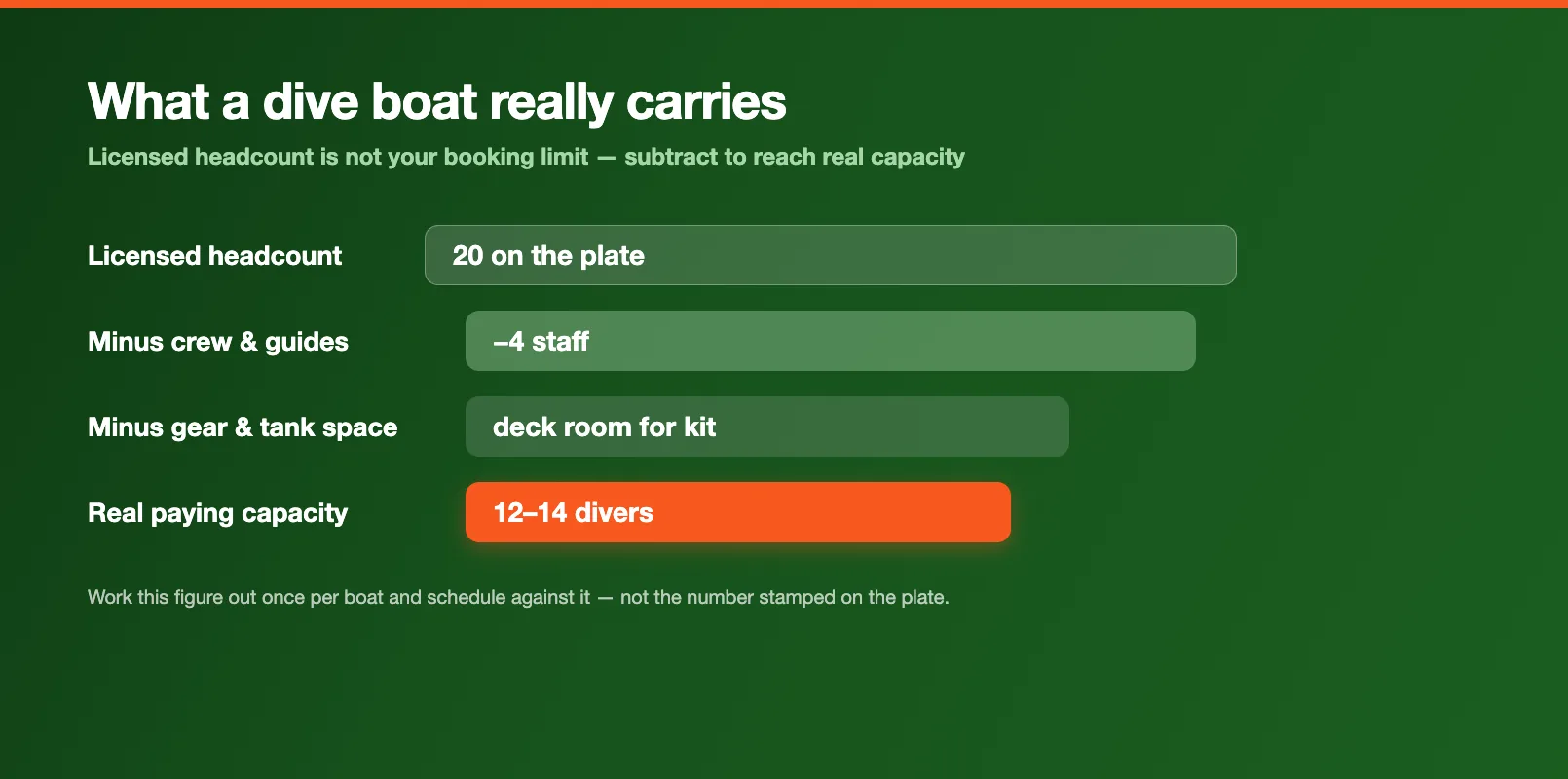
Work this out once for each boat and write it down. When a booking system knows the true paying capacity of a vessel, it can stop selling a departure at the right point automatically, rather than relying on whoever is on the counter to remember that today's boat is the smaller one.
Group ratios that cap your numbers
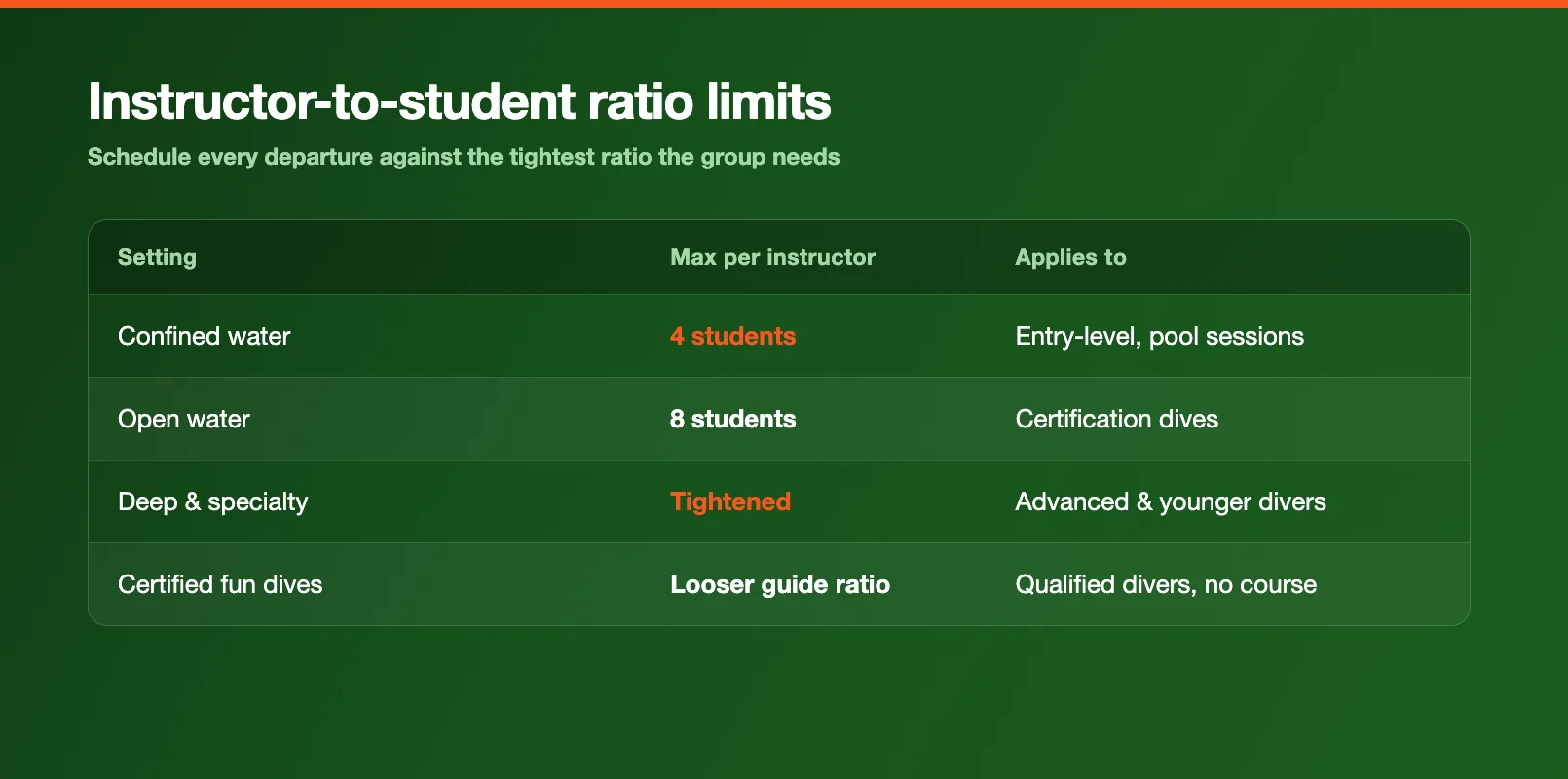
Capacity tells you how many bodies fit. Ratios tell you how many you are actually allowed to guide, and they are the tighter limit far more often than deck space is. Every major training agency sets a maximum number of students per instructor, and those limits shift with the course, the depth, and the age of the divers.
Entry-level courses run tighter in confined water and loosen a little in open water, while deeper dives, specialty courses, and younger divers pull the ratio back down. Certified fun divers are usually guided at a looser ratio than students in training, but they still count. The rule that matters is simple: schedule every departure against the tightest ratio that applies to the mix of people booked on it. One open-water student on an otherwise experienced trip drags the whole boat down to the student ratio unless you put a second staff member on.
This is where staffing and scheduling meet. If a trip is going to carry students, you need enough instructors and divemasters rostered to cover the ratio before you sell the last seats, not after. Tie your certification checks into the booking flow so you know who is coming as a student and who is certified — the same certification checks at check-in that keep unqualified divers out of the water also tell you what ratio a given trip needs.
Match divers to the right trip
A full boat is only a good boat if the divers on it belong there. A shallow reef that delights a fresh open-water diver is a yawn for someone with three hundred logged dives, and the wall dive that thrills the experienced group is out of bounds for the student. Sell the wrong divers onto the wrong departure and you get complaints from both ends.
Sort your bookings by certification level and experience before you finalise each trip. Many operators run distinct departures at busy times (a training-friendly morning on an easy site, an advanced afternoon on something deeper) so every diver gets a profile that suits them. When numbers are light, you can combine them on one boat, but split the group on arrival so each dives with their own guide on their own plan. Getting this matching right is part of what keeps dive bookings flowing through your software instead of turning into a stack of phone calls.
Build a schedule that fills
The most common way to lose money is not empty boats. It is too many boats. Running two departures at forty percent each costs you two lots of fuel and crew to move the same divers one full trip would carry. A published, repeating weekly schedule fixes most of this. Regulars learn that the boat leaves at eight on Saturday and plan around it, and a predictable calendar is far easier to fill than a scatter of one-off trips.
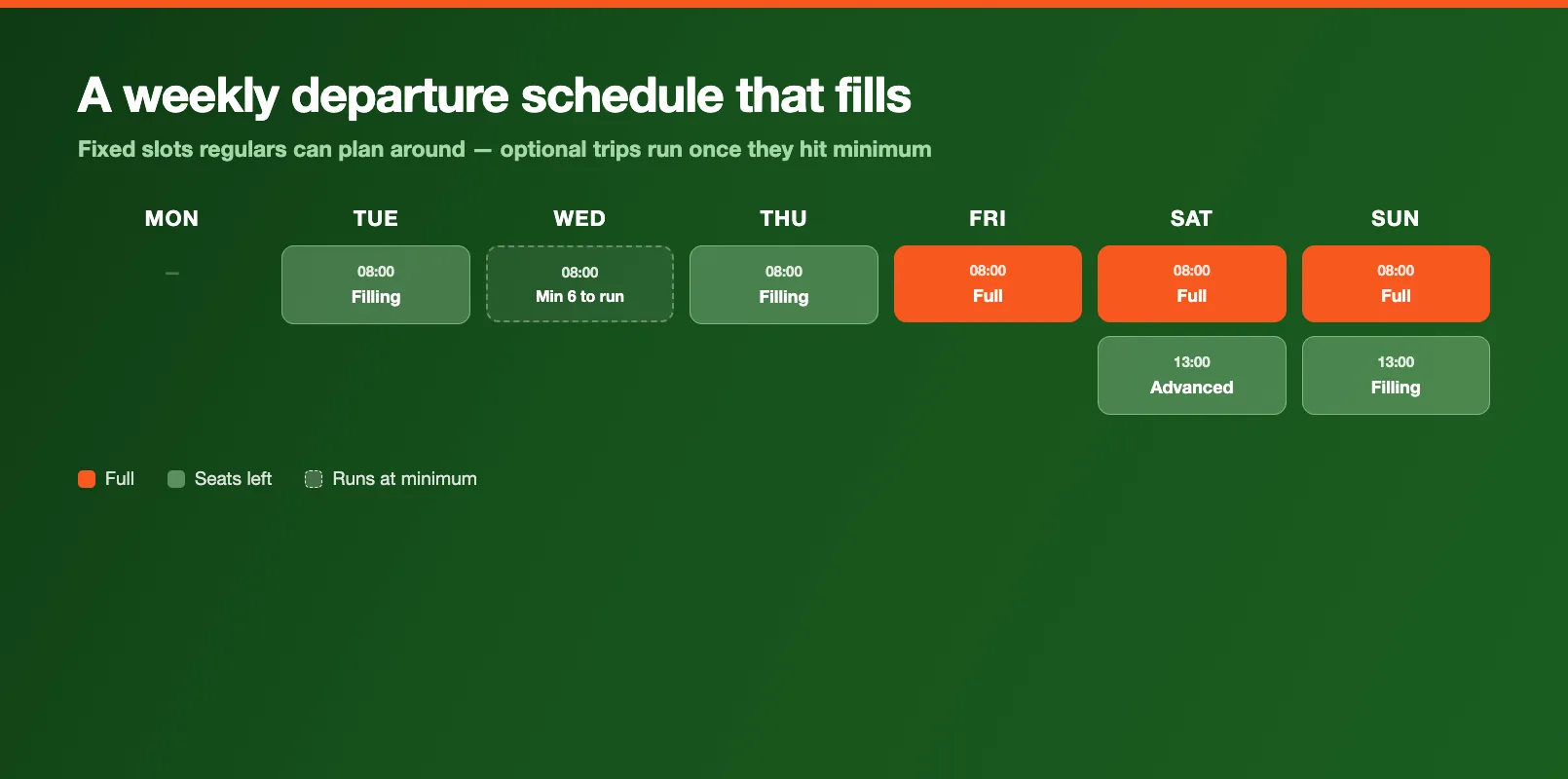
Anchor the week around the departures you know will fill, then add optional trips that only run once they hit a minimum number. Make the minimum clear to divers at booking so a canceled light trip is not a nasty surprise. A visible online calendar that shows which departures still have space quietly steers new bookings toward the trips you most want to fill, and it does the counting for you.
Set the booking cut-off
A trip needs a cut-off point, past which the doors close and prep begins. Leave bookings open until the morning and you cannot confirm tank fills, assign gear, or roster the right guides with any confidence. For most day boats, closing online bookings the evening before hits the sweet spot: late enough to catch the day's stragglers, early enough to prep properly and to work a standby list if a departure is looking thin.
Set the cut-off against your prep reality, not a round number. If your fills and gear checks take a full evening, the night-before deadline is right. If you run a dawn departure, pull it earlier. The point is to give yourself a known, quiet window to turn a list of names into a ready boat.
Handle no-shows and standby
Even a full booking sheet leaks. Divers cancel, oversleep, or simply never arrive, and every empty seat at the dock is revenue you will not get back. Prevention does most of the work: take a deposit at booking, confirm it, and send a reminder the day before with the meeting time, the address, and what to bring. A diver who has paid something and been reminded turns up far more reliably than one who booked free three weeks ago.
For the gaps that still open, keep a standby or waitlist. When a seat frees up, you can offer it to a diver who wanted the trip but missed out, and the boat leaves full instead of light. Pair that with a clear cancellation and refund policy stated at the time of booking so everyone knows who bears the cost, and lean on the same waivers and medical forms discipline so the standby diver's paperwork is sorted before they board.
Staff every trip correctly
Scheduling divers is only half the roster. Each departure needs a captain, deck crew, and enough guides and instructors to cover the ratios for the divers booked. Work the staffing out at the same time you confirm the trip, not on the morning, or you will find a boat full of students and a single instructor at the dock.
Line your staff roster up against the trip sheet. A departure carrying students needs its instructor and divemaster count locked before the last student seats are sold. A certified fun-dive trip can run leaner. Knowing the mix ahead of the cut-off lets you call in a second guide while there is still time, and it keeps you from selling seats you cannot legally supervise. The same gear servicing and tank turnaround that readies the equipment has to line up with the staff roster so both are ready when the boat loads.
Let your scheduling tools do the counting
Doing all of this on a whiteboard works until a busy weekend, when a double-booked tank or an over-ratio trip slips through. A booking system that holds each boat's real capacity, knows the ratios, and shows a live calendar of departures takes the arithmetic off your counter staff. It stops selling a trip at the right number, flags when a departure needs more guides, and lets divers see and book open seats themselves.
The gain is not just fewer mistakes. When the schedule, capacity, and staffing all live in one place, filling a quiet week becomes a matter of nudging a standby list and combining a couple of light trips rather than rebuilding the whole plan by hand. That is the difference between chasing bookings and running a schedule, and it is the backbone of the wider scuba diving operation that ties gear, courses, and trips together. For the full glossary of terms, the scuba diving glossary and the scuba operator hub fill in the rest.
FAQ
How many divers can a dive boat carry?
Fewer than the coastguard number on the plate. That figure counts every body on board, including your captain, deckhand, and guides, and it assumes nobody is carrying scuba kit. Your real paying capacity is that number minus crew and staff, minus the space that tanks, weights, and gear take up on the deck and in the racks. On most boats the workable figure lands well below the licensed headcount, and it is the number you should schedule against.
What is the instructor-to-student ratio for scuba diving?
It depends on the course and the agency, but the common training-agency limits run from around four students per instructor in confined water up to eight in open water for entry-level courses, tightened for deeper or specialty dives and for younger divers. Certified fun divers are usually guided at a looser ratio than students. Always schedule against the tightest ratio that applies to the mix of divers booked on a given departure.
How far ahead should a dive trip cut off bookings?
Far enough to prep. For a day boat that usually means closing online bookings the evening before, which gives you time to confirm tank fills, assign gear, roster the right number of guides, and work a standby list if a trip is light. A same-day cut-off saves nobody time and leaves you scrambling. If you run early departures, an earlier cut-off the night before is safer.
How do dive operators handle no-shows?
The best defense is prevention: take a deposit, confirm the booking, and send a reminder the day before with the meeting time and what to bring. When a no-show still happens, a standby or waitlist lets you offer the seat to another diver quickly. A clear cancellation and refund policy, stated at booking, decides who bears the cost and keeps casual no-shows from becoming a habit.
Should you mix certified divers and students on the same trip?
You can, but plan it deliberately. A site and profile that suits an open-water student may bore an experienced diver, and a deeper site that thrills the experienced group is off-limits to the student. Many operators run separate departures at peak times and only combine when numbers are light, splitting the groups on the boat with their own guide so each dives a suitable profile.
How can dive shops keep boats full in the low season?
Combine departures so one full boat leaves instead of two half-empty ones, publish a fixed weekly schedule so regulars can plan, and open a standby list divers can join for last-minute seats. A visible online calendar showing which trips still have space nudges bookings toward the departures you most want to fill, and a reminder to past customers when a quiet week is coming often brings back enough divers to make the trip run.
in one place