RV Rental Agreements, Insurance, and Damage Protection
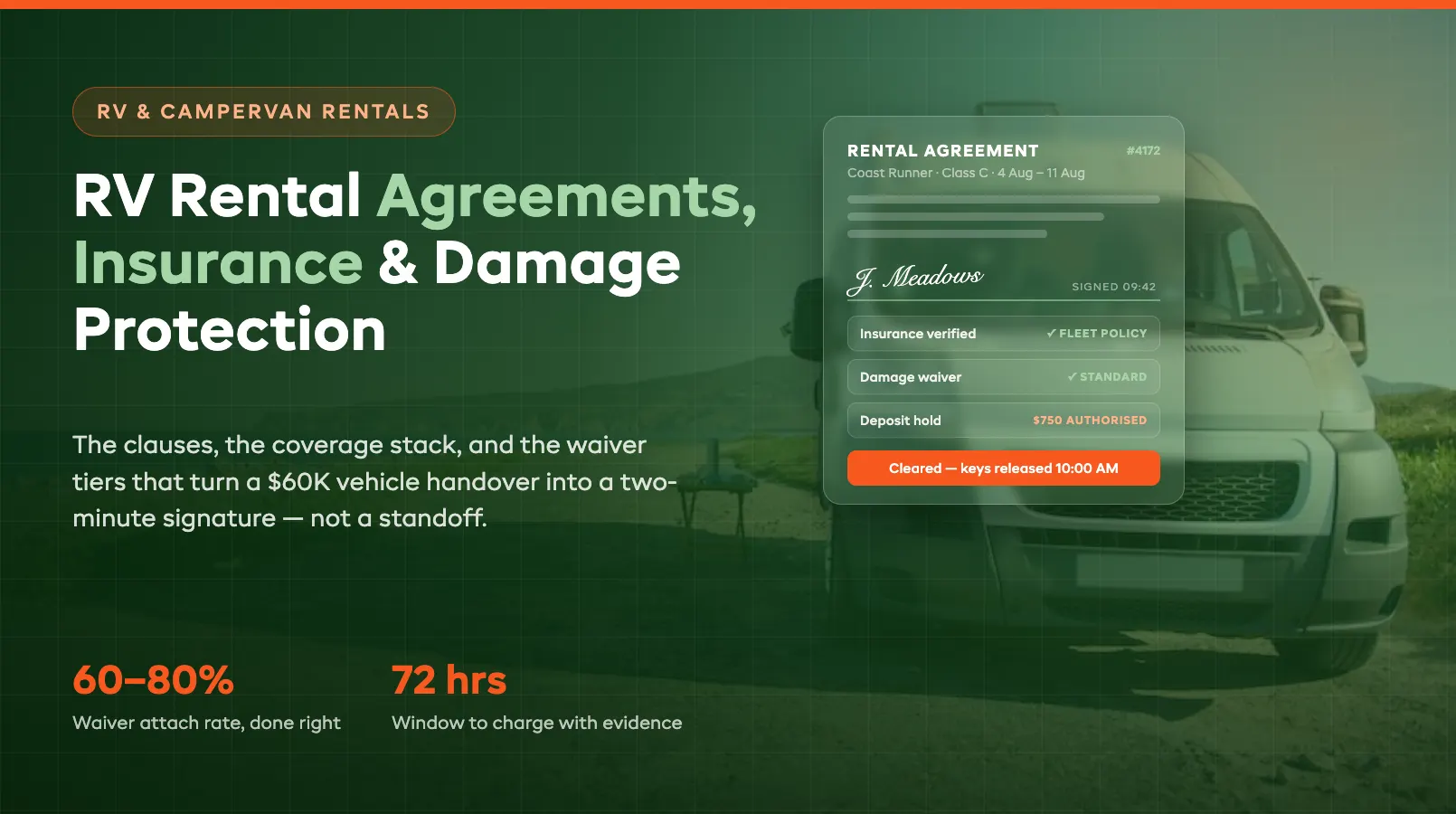
An RV rental is a $60,000-plus vehicle, a small apartment, and a stranger's holiday rolled into one booking, and the only thing standing between a scraped awning and a month-long argument is the paperwork you set up before the keys moved. Operators who treat the agreement as a formality find out what it was for the first time a renter backs a Class C into a fuel canopy. This guide covers the rental agreement clauses that actually matter, how the insurance layers fit together, how to price damage waivers so they earn money instead of eating it, and how to charge for damage without losing the customer.
It slots into the wider playbook in the complete guide to running an RV rental business, and if any term here is unfamiliar, the RV rental glossary covers it.
What an RV Rental Agreement Must Cover
A good agreement does two jobs: it tells the renter exactly what they are responsible for, and it gives you something enforceable when things go wrong. Vague agreements fail both. "Renter is responsible for damage" sounds airtight until a dispute turns on whether a cracked gray-water valve counts as damage or wear.
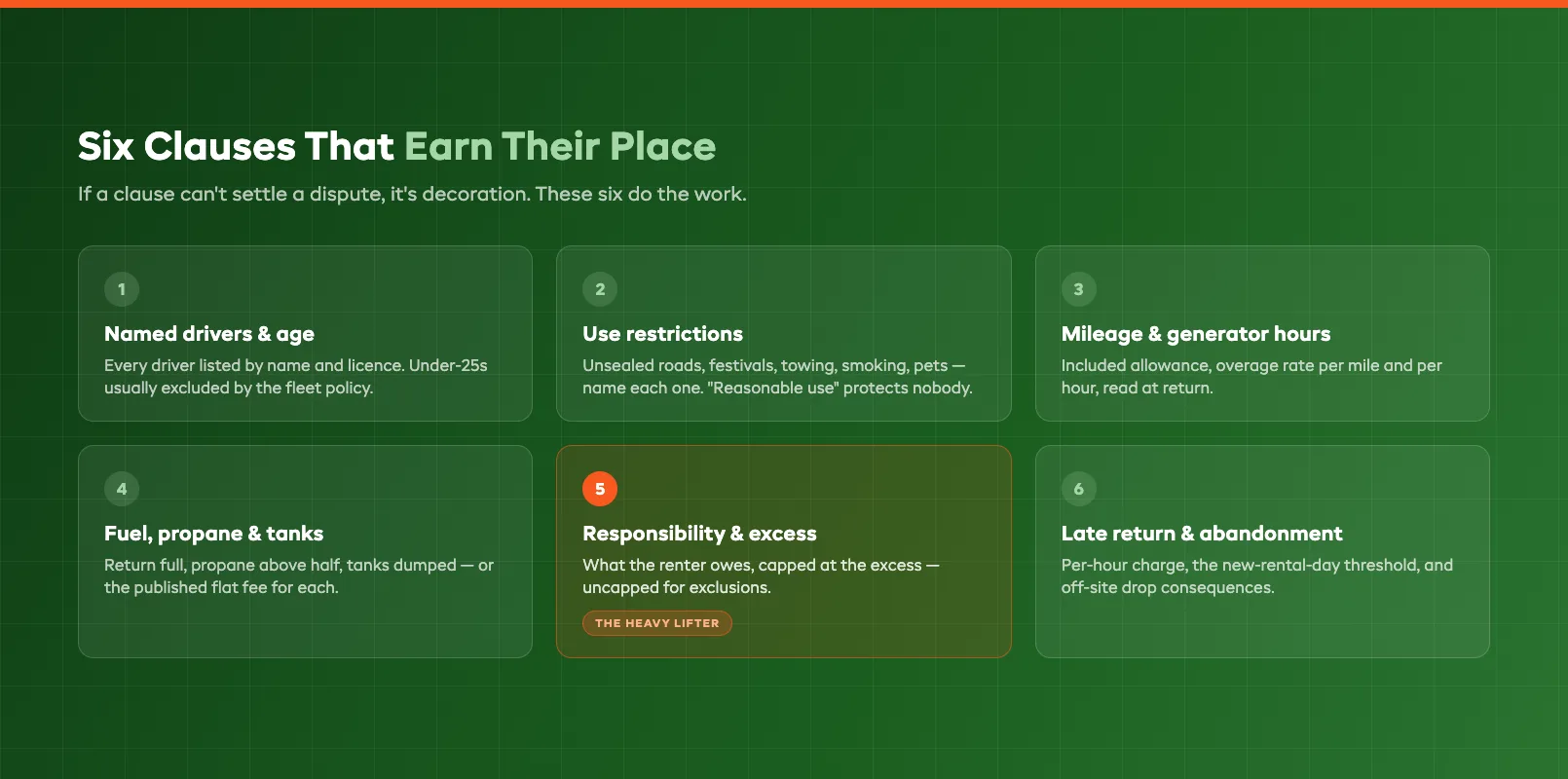
The clauses that earn their place:
- Named drivers and minimum age. Every person allowed behind the wheel, listed by name, license number, and age. Most fleet policies will not cover a driver under 25, and some cut off at 21 for Class A units. An unnamed driver in an accident can void your cover entirely.
- Use restrictions. Where the vehicle may and may not go: no unsealed roads, no festivals or burns if your insurer excludes them, no towing unless agreed, no smoking, pets only by arrangement. Name the specifics — "reasonable use" protects nobody.
- Mileage and generator hours. The included allowance, the overage rate per mile and per generator hour, and how both are read at return. Unlimited-everything sounds generous until one booking does 4,000 hard miles.
- Fuel, propane, and tank state at return. Full fuel, propane above a stated level, and holding tanks dumped, or the flat fee you charge to do each one. Publish the fee in the agreement, not in an argument.
- Damage responsibility and excess. What the renter owes when something breaks, capped at the excess for anything their protection level covers, uncapped for exclusions like awnings, tires, glass, and interior damage. This clause does the heavy lifting; it has to match your waiver tiers exactly.
- Late return and abandonment. The per-hour charge, the point at which a late return becomes a new rental day, and what happens if the vehicle is left somewhere other than your yard.
Have a lawyer in your state or country review the final document once. It costs a few hundred dollars and turns a template into something that holds up.
The Insurance Stack: Who Covers What
RV rental insurance is a stack, not a single policy, and each layer answers a different question.
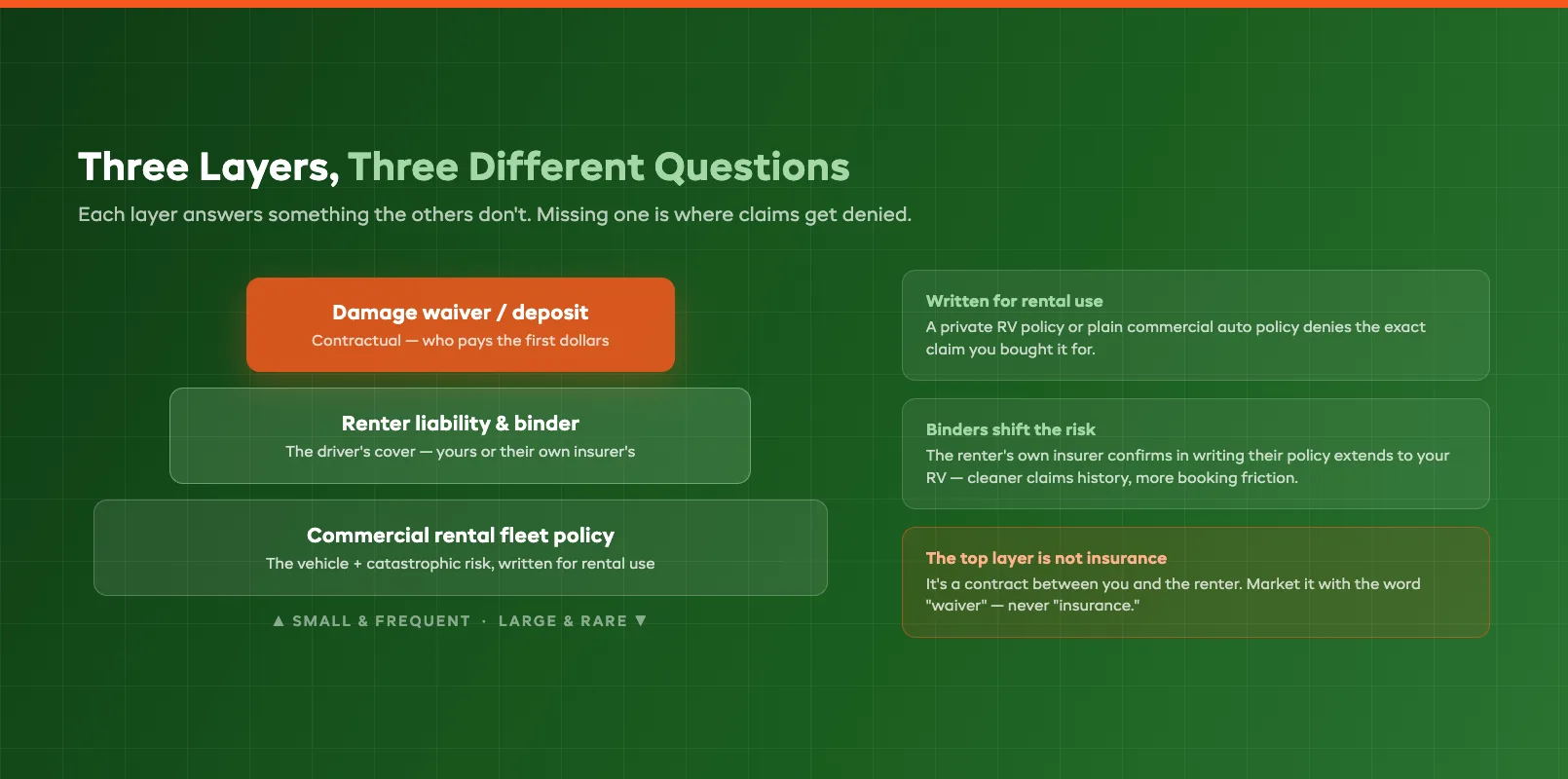
- Your commercial rental policy sits at the bottom. It covers the vehicle itself while rented, liability while a renter drives it, and, critically, it is written for rental use. A private RV policy or a standard commercial auto policy that does not name rental use will deny the exact claim you bought it for. Expect to pay per vehicle per year, and expect the insurer to impose the driver-age and use restrictions your agreement passes on.
- Renter liability sits in the middle. In most setups your commercial policy provides state-minimum liability for the renter as driver, and the renter can top it up. Some operators instead require an insurance binder: the renter's own auto insurer confirms in writing that their policy extends to the rented RV. Binders shift risk off your policy and keep your claims history clean, but they add friction at booking (a day or two of back-and-forth with the renter's insurer) so decide whether your market tolerates it.
- Damage protection sits on top and is not insurance at all. It is a contractual arrangement between you and the renter — a waiver of part of their damage responsibility in exchange for a nightly fee. That distinction matters legally: in most jurisdictions you can sell a damage waiver without being an insurance broker, but call it "insurance" in your marketing and you may be claiming to sell a regulated product. Use the word waiver.
Damage Waivers: Pricing Peace of Mind
The damage waiver is the most profitable line on most RV rental invoices (attach rates of 60–80% are normal when tiers are presented well) and it also cuts disputes, because a renter who paid for protection accepts a $750 excess far more calmly than a surprise $2,500 bill.
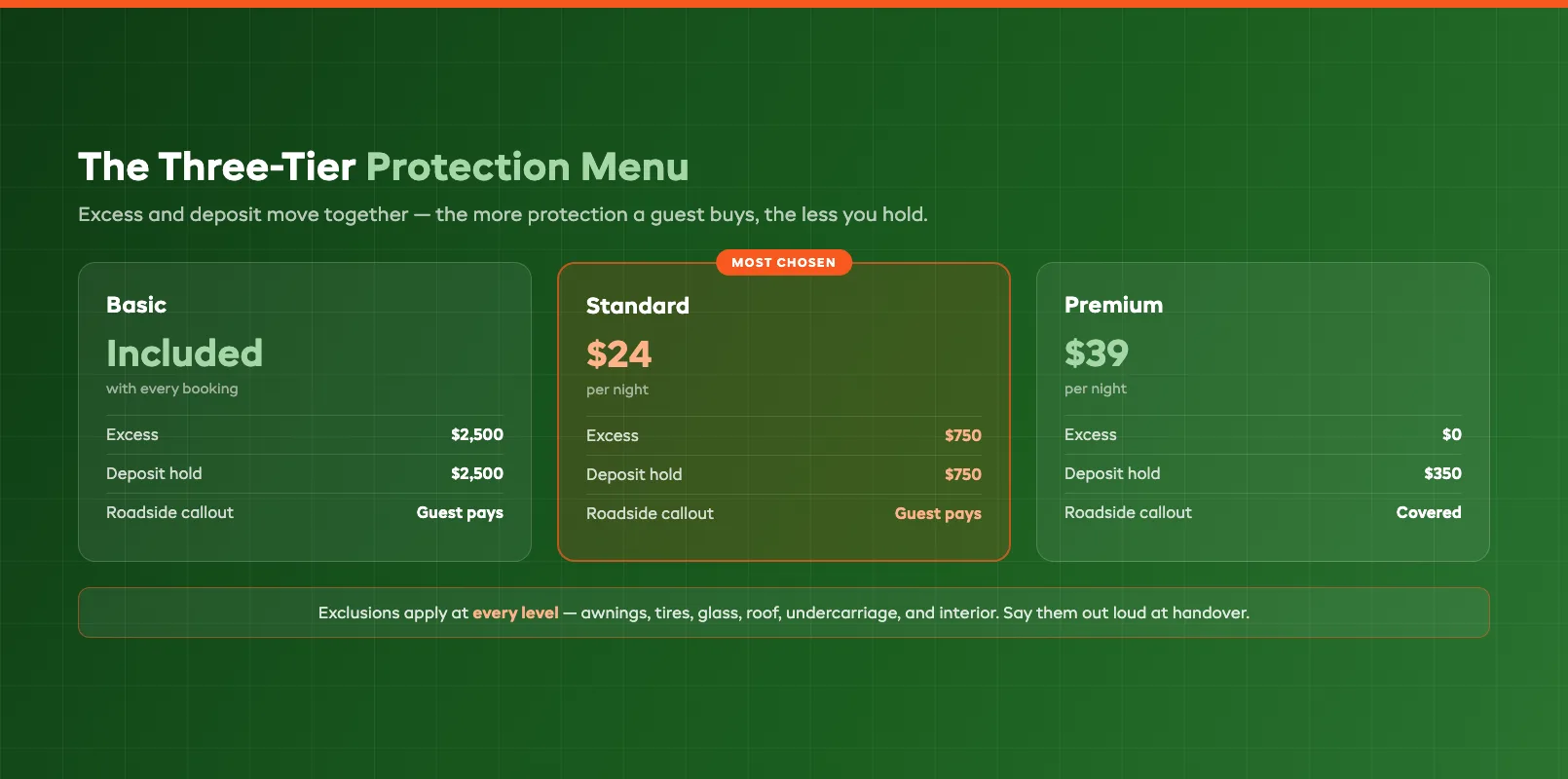
A three-tier structure works for most fleets:
- Basic: included. Full excess applies, typically $2,500–$5,000 depending on vehicle value, secured against the deposit. This tier exists to make the other two look sensible.
- Standard: around $19–$29 per night. Excess drops to $500–$1,000. This is where most renters land; label it as the most popular option because it is.
- Premium: around $34–$49 per night. Excess at or near zero, sometimes bundling extras like roadside callout fees.
Two rules keep tiers honest. First, exclusions apply at every level and get said out loud at handover: awnings, tires, glass, undercarriage, roof, and interior damage are excluded from most waiver programs because they are the things renters actually break. Second, the excess and the security deposit move together — a renter on Premium should not be asked for the same $2,500 hold as a renter on Basic. How deposits are authorized and released belongs to your booking flow, covered in the guide to RV rental booking software.
Verify the Renter Before the Keys Move
Most damage horror stories start before departure, with a renter who should have been screened out. Verification is a five-minute process when it runs inside the booking flow:
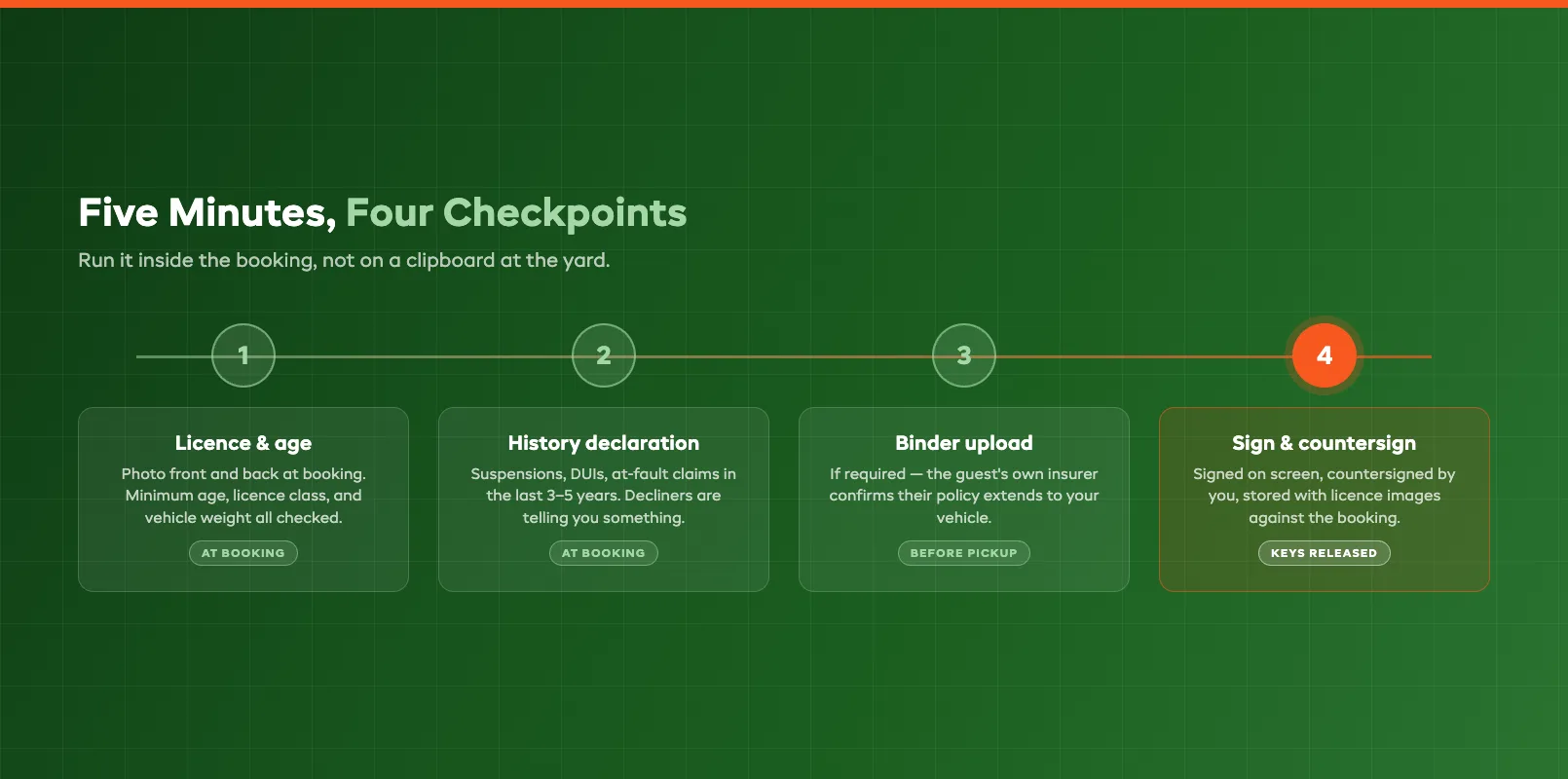
- License and age check. Photo of the license front and back at booking, checked against your minimum age and license class. For a 26-foot Class C, confirm the renter's home license actually permits the weight.
- Driving history declaration. A short declaration covering suspensions, DUIs, and at-fault claims in the past three to five years. Your insurer likely requires it; renters who decline are telling you something.
- Insurance or binder upload, if your model requires the renter's own cover to respond first.
- Sign and countersign. The agreement is signed on screen before or at pickup, countersigned by you, and the completed record, with the license images and declarations attached, is stored against the booking.
Digital signatures are legally recognized in the US under the E-SIGN Act, and equivalents exist across the EU, UK, Canada, and Australia. A signed PDF stored with the booking beats a paper form in a filing cabinet in every way that matters, and platforms like EquipDash capture the signature as a booking step so nobody drives away unsigned.
When Damage Happens: Evidence and Fair Charges
The agreement sets the rules; the evidence wins the dispute. Three habits make damage charges stick:
- Photograph every unit at handover and return, every time. Timestamped photos of all four sides, the roof line, the awning, and the interior, the same angles both times. The pair of photos is the whole case. This is the same discipline that powers the turnaround reset in RV fleet maintenance and turnaround; one walk-around feeds both, and the full shot list lives in the handover and return inspection guide.
- Charge from a published price list, not an estimate. An awning arm, a bumper skin, a broken dinette latch. Price the common items in advance and put the list in the agreement. Renters accept a printed number; they fight a number that appears after the fact.
- Move fast and show your work. Send the photos, the price-list line, and the charge within 72 hours of return. Waiting two weeks reads as invention, and card networks side with the renter when documentation is thin.
Never charge for wear. A worn step tread or a faded decal is your cost of doing business, and billing it as damage is the fastest route to a chargeback and a one-star review.
Putting It Together
Agreement, insurance, waiver, verification, evidence — five pieces, one system. The agreement names the rules and the numbers. The commercial policy carries the catastrophic risk. The waiver turns damage anxiety into margin. Verification keeps the wrong drivers out of the seat. And the photo record turns every dispute into a two-minute comparison instead of a standoff. Operators running the full stack digitally (agreement signed at booking, deposit authorized automatically, photos stored against the booking) spend their time renting vehicles, not arguing about them. That is the difference between paperwork as a formality and paperwork as protection, and it compounds across every booking on the RV and campervan rental hub.
FAQ
What should an RV rental agreement include?
At minimum: named drivers with ages and license numbers, use restrictions (roads, festivals, towing, smoking, pets), mileage and generator-hour allowances with overage rates, fuel and tank-state requirements at return, the damage responsibility clause with excess amounts per protection tier, exclusions, late-return charges, and your published price list for common damage items. Have a local lawyer review it once before you use it.
Do renters need their own insurance to rent an RV?
Not usually. Most operators carry a commercial rental policy that covers the vehicle and provides liability cover for the renter as an authorized driver. Some operators instead require an insurance binder (written confirmation that the renter's own auto policy extends to the rented RV) which shifts risk off the operator's policy but adds a day or two of friction before the booking is confirmed.
Is a damage waiver the same as insurance?
No. A damage waiver is a contract between you and the renter: in exchange for a nightly fee, you waive part of their responsibility for damage, down to a stated excess. It is not a regulated insurance product, which is why operators can sell it directly, but that also means you should never market it using the word insurance. Exclusions such as awnings, tires, glass, and interior damage typically apply at every tier.
How much security deposit should I hold for an RV rental?
Match the deposit to the excess on the renter's protection tier. A renter on a basic tier with a $2,500 excess should have $2,500 authorized; a renter paying for premium protection with a near-zero excess needs only a small hold for fuel, tanks, and cleaning — commonly $250–$500. Pre-authorize on a credit card rather than taking cash, and release the hold promptly after the return inspection passes.
Can I charge a renter for damage found after they leave?
Yes, if your agreement allows post-return charges and your evidence is solid: matching timestamped photos from handover and return, a line from the published price list, and the charge submitted quickly — within about 72 hours. The longer you wait and the vaguer the pricing, the more likely a card dispute goes the renter's way. Wear and tear is never chargeable.
Are digital signatures valid for RV rental agreements?
Yes. Electronic signatures are legally recognized in the US under the E-SIGN Act and UETA, and equivalent laws apply in the EU, UK, Canada, and Australia. A digitally signed agreement stored with the booking record, alongside the license photos and driver declarations, is easier to retrieve and harder to lose than any paper file.
in one place