RV Handover and Return Inspections: Photos, Fuel, and Fair Charges
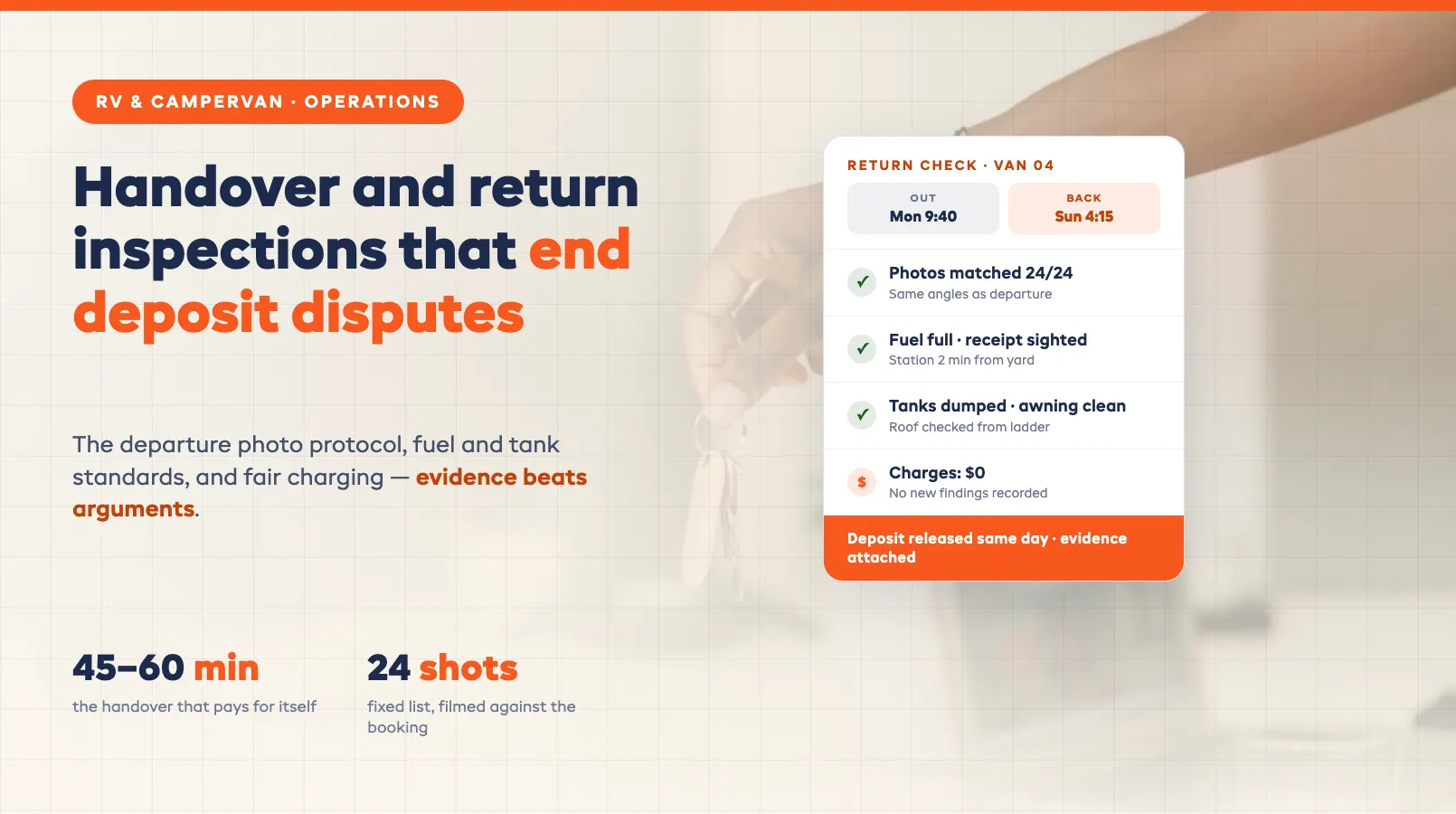
Almost every RV damage dispute is really an evidence dispute. The renter says the scratch was there at pickup; you say it wasn't; nobody has a photo either way, so the argument runs for weeks and ends with a refund you didn't owe. The fix isn't tougher contract language. It's a handover and return process that documents everything while everyone is standing next to the vehicle. This guide covers the departure walkthrough, the photo protocol that holds up in a card dispute, fuel and tank return standards, and how to charge for what you find without turning a good customer into a one-star review.
It builds on the complete guide to running an RV rental business and pairs with the rental agreement and insurance guide — the agreement sets the rules; the inspection process proves whether they were followed.
Why the Handover Is Your Best Insurance
A proper RV handover takes 45–60 minutes. Operators who rush it to 15 pay for the missing half hour many times over, because the handover does three jobs at once.
First, it creates the evidence baseline. Every mark, scuff, and worn corner gets recorded before the renter drives away, which means every mark that appears later is provably new. Second, it trains the renter: most RV damage isn't caused by recklessness, it's caused by someone who has never operated an awning, dumped a tank, or judged the height of a fuel canopy. Third, it sets expectations: a renter who watched you film the roof and read out the refuel fee treats the vehicle differently than one who was handed keys in a parking lot.
Book handovers as calendar events with a set duration, the same way you block turnaround time between bookings — the scheduling side of that is covered in the guide to fleet maintenance and turnaround. A handover squeezed between two other departures gets rushed, and rushed handovers are where disputes are born.
The Departure Walkthrough: Photos That Hold Up
The departure record only works if it's systematic. A handful of random phone photos proves almost nothing — the shot you need is always the one nobody took. Fix the shot list, and every unit gets the same coverage every time.
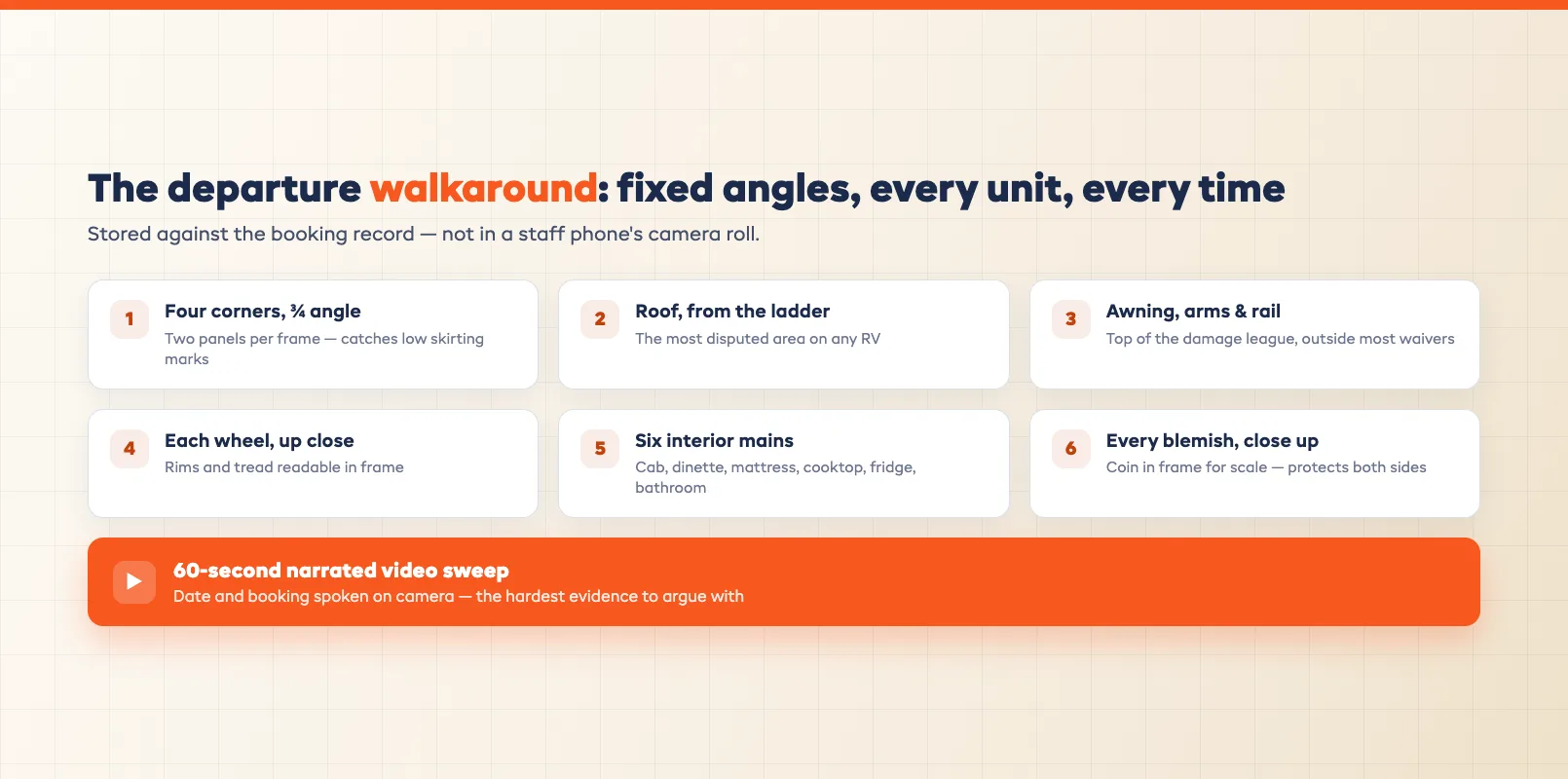
The list that covers a card dispute:
- All four corners at three-quarter angle. Each corner shot captures two panels at once and catches the low skirting damage that straight-on shots miss.
- Roof, from the ladder. The single most disputed area on any RV — renters hit branches and low canopies and never mention it. No roof record at departure means no roof claim at return.
- Awning, arms, and rail. Extended if weather allows. Awnings top the damage league and sit outside most waiver cover.
- Tires, rims, and tread. One shot per wheel, close enough to read condition.
- Interior mains. Cab seats, dinette, mattress, cooktop, fridge interior, bathroom. Six frames, ten seconds each.
- Every existing blemish, up close. With a hand or coin in frame for scale. This protects the renter as much as you. It's what stops you charging them for last month's scuff.
- A 60-second video sweep. Walk the full exterior narrating the date and booking. Video timestamps are the hardest evidence to argue with.
Store everything against the booking, not in a staff phone's camera roll. When evidence lives in the booking record, whoever handles the return, or the dispute three weeks later, sees the full departure state instantly. This is one of the strongest reasons to run inspections inside your booking system rather than on paper; the RV rental booking software guide covers what to look for.
Train the Renter Before the Keys Move
The second half of the handover is a working lesson, not a lecture. The renter operates each system with their own hands while you watch:
- Holding tanks. They connect the hose, open and close the valves, in the right order. Gray after black, cap on, gloves in the bay. A renter who has done it once at your yard will do it right at the dump station; one who only heard it described will guess.
- The awning. Out, pitched, and back in, and the rule that it comes in every night and any time the wind picks up. Say the replacement cost out loud; it lands.
- Power and propane. Shore hook-up, battery switch, what runs on inverter, how to light the fridge on gas. Half of "it's broken" callouts are a switch in the wrong position.
- Height and clearance. The unit's height on a card taped to the dash, and a habit: read every canopy, bridge, and drive-through before committing.
Ten minutes of hands-on training eliminates the most common damage categories before they happen. It's cheaper than any excess.
Fuel, Propane, and Tanks: Set the Return Standard
Return-state arguments are the pettiest and most frequent of all, and they're entirely preventable, because they only happen when the standard was vague.
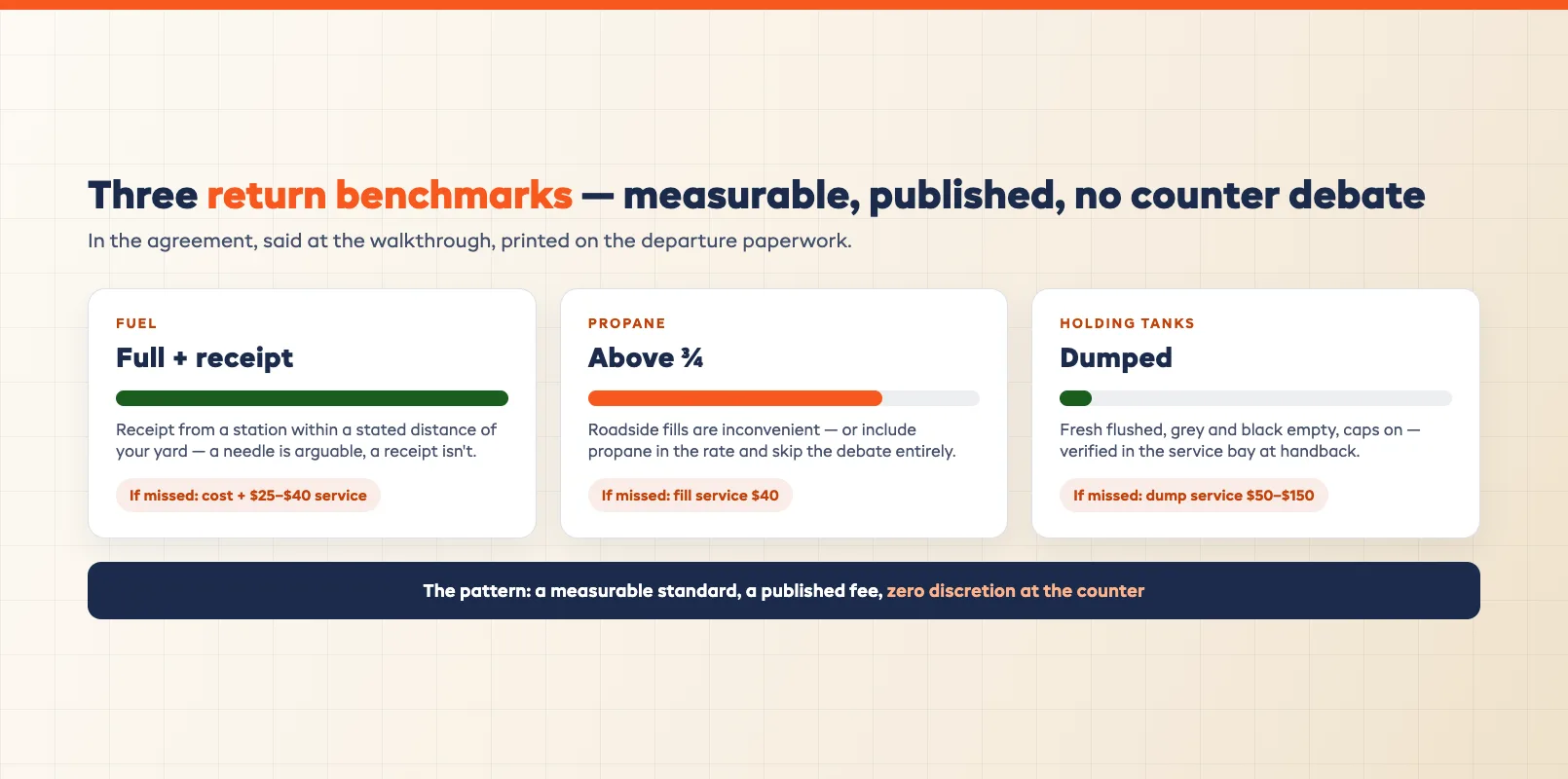
Set three benchmarks in the agreement, repeat them at handover, and put them on the departure paperwork:
- Fuel: full, with a receipt from a station within a stated distance of your yard. A gauge needle is arguable; a receipt from ten minutes away isn't. Publish the refuel fee for anything less: a service rate, not a punitive one, typically the fuel cost plus a fixed $25–$40 service charge.
- Propane: above a stated level. Most operators use three-quarters, because roadside propane fills are genuinely inconvenient. Some include propane and skip the argument entirely, either is fine, as long as it's written down.
- Holding tanks: dumped, or a flat service fee. A dump-and-flush is unpleasant enough that the fee should be real, $50–$150 is the common range, and disclosed at booking, at handover, and on the paperwork. Nobody who paid the fee after seeing it three times feels ambushed.
The pattern is the same for all three: a measurable standard, a published fee, and no discretion at the counter. Staff shouldn't be negotiating fuel charges at 4pm on a Sunday.
The Return Inspection: Compare, Don't Accuse
The return inspection mirrors the departure walkaround: same shot list, same order, ideally with the renter present. Walking the vehicle together while their holiday mood is still intact resolves most findings on the spot: they know about the scuff, they saw it happen, and standing next to it they rarely argue.
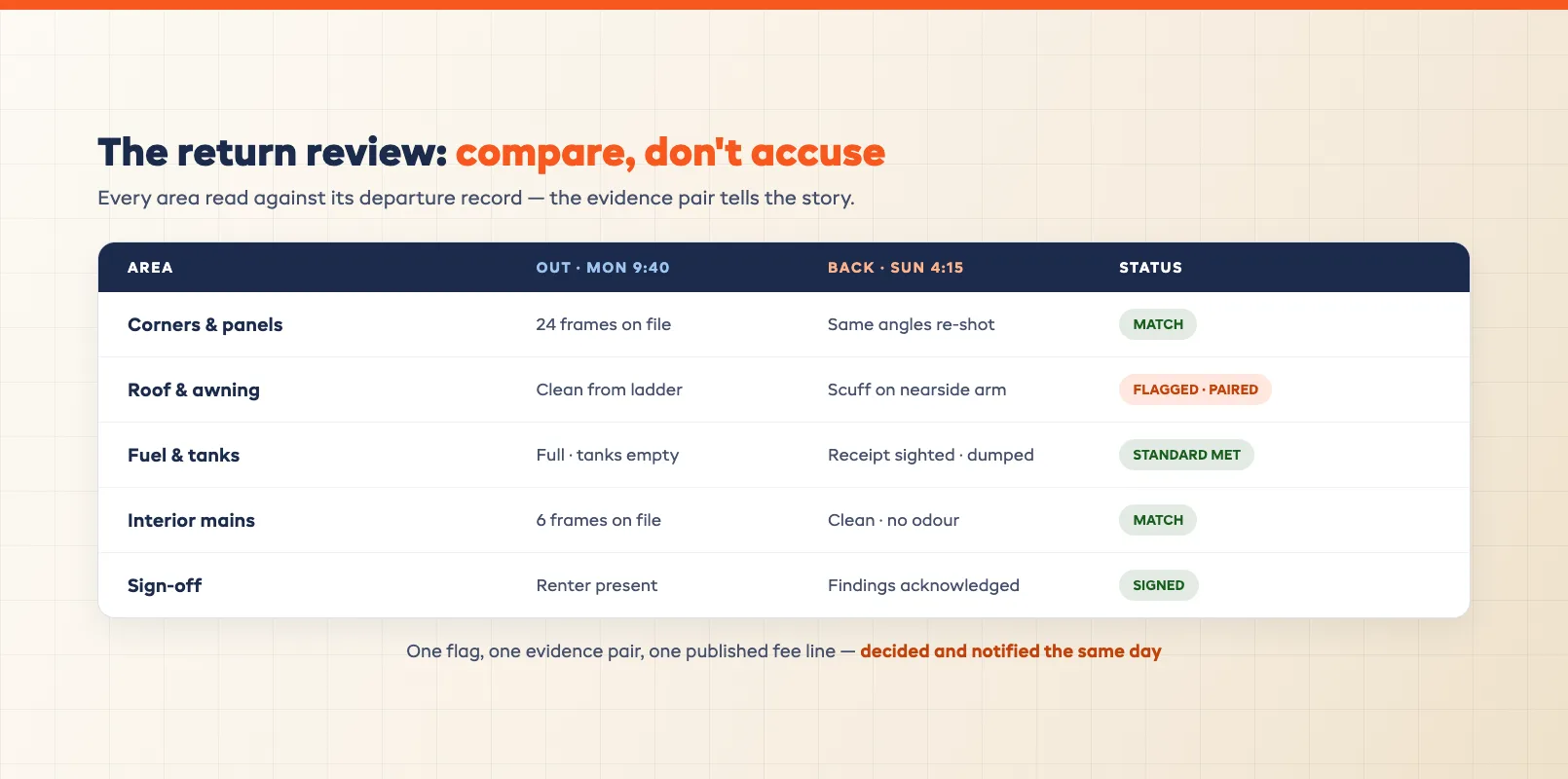
Work through the vehicle area by area, pulling up the departure record as you go:
- Exterior corners and panels: new marks get photographed from the same angle as the departure shot, so the pair tells the story without commentary.
- Roof and awning: the ladder check takes two minutes and catches the damage renters hope you'll miss.
- Fuel, propane, and tank state: read against the published benchmarks, receipt sighted.
- Interior: the six mains plus smell check; smoking and pet violations are interior findings, and they're the reason the interior shots exist.
- Sign-off: the renter acknowledges the findings list, even if it's empty. "Returned clean, no new damage, deposit released" in writing is the note that makes the next booking easy.
If the renter can't be present, after-hours drop-offs happen, film the return sweep the same way you filmed departure, before anyone else touches the vehicle. The unbroken chain from their drop-off to your inspection is what keeps the evidence credible.
Charging Fairly: Published Fees and Evidence
When a finding costs money, how you charge determines whether you keep the customer and win the dispute.
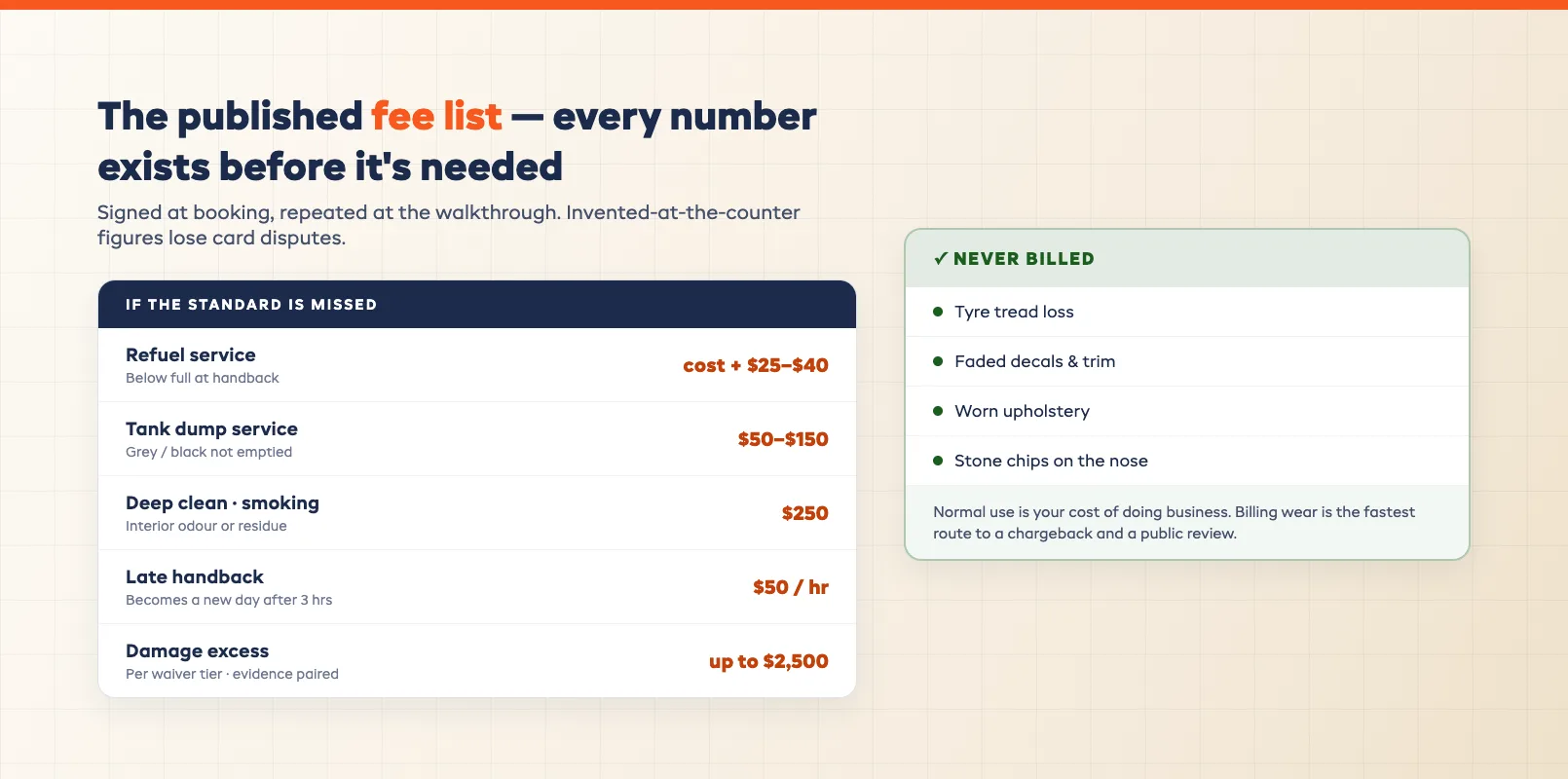
The rules that hold up:
- Charge from the published list. Refuel, tank service, cleaning, late return, awning, excess — every number the renter could be charged already exists in the agreement they signed. Invented-at-the-counter figures lose card disputes.
- Attach the evidence pair. Departure photo, return photo, fee line, total. An itemised email with side-by-side images sent the same day gets paid without argument far more often than a bare deduction from the deposit.
- Never bill for wear. Tire tread, faded decals, worn upholstery, stone chips on the nose — normal use is your cost of doing business, and charging for it is the fastest route to a chargeback and a public review explaining exactly why.
- Move the same day. Deposit holds expire and memories soften. Inspect at return, decide at return, notify at return.
Operators running this process see deposit disputes fall to near zero, not because renters became more careful, but because there's nothing left to dispute. The evidence answers the question before it's asked.
Putting It Together
The handover and return process is one loop: film the departure against a fixed shot list, train the renter on the systems that cause damage, set measurable return standards with published fees, mirror the walkaround at return with the renter present, and charge only what the evidence supports, the same day. Every step feeds the next, and the whole loop lives in the booking record, so any staff member can run it. Teams on EquipDash attach the photo record and inspection sign-off directly to the booking, which is what turns a fair process into a fast one.
FAQ
How long should an RV handover take?
Plan 45–60 minutes for the departure handover: roughly 15 minutes for the filmed walkaround, 15–20 for hands-on systems training, and the balance for paperwork, license checks, and questions. Returns run 20–30 minutes when the departure record is good, because you're comparing rather than discovering. Block both as fixed calendar events so they never get squeezed by the next departure.
What photos do I need at RV departure?
A fixed list: all four corners at three-quarter angle, the roof from the ladder, the awning and arms, each wheel, six interior mains, a close-up of every existing blemish with something in frame for scale, and a 60-second narrated video sweep of the exterior. Store all of it against the booking record, not in a staff phone. The systematic list matters more than the volume — the disputed area is always the one that was skipped.
Can I charge a renter for returning the RV with an empty fuel tank?
Yes, if the standard and the fee were published before departure. Require a full tank with a receipt from a station within a stated distance of your yard, and set the refuel fee at fuel cost plus a fixed service component, typically $25–$40, rather than a punitive multiple. The fee should appear in the agreement, be said out loud at handover, and be printed on the departure paperwork, so paying it never comes as a surprise.
What if the renter isn't present at the return inspection?
Film the return sweep exactly as you filmed departure (same shot list, narrated with date and booking) before anyone else touches the vehicle. Send the findings with side-by-side departure and return images the same day. The unbroken chain from drop-off to inspection is what keeps after-hours evidence credible; a deduction made three days later from memory is what loses disputes.
How do I tell damage apart from normal wear and tear?
Wear is gradual and predictable: tread loss, faded decals, worn upholstery, fine stone chips on the nose. Damage is an event: a dent, a tear, a cracked panel, a bent awning arm. If it happened in one moment, it's chargeable; if it happened over a hundred bookings, it's your cost of doing business. Charging for wear is the fastest way to lose a card dispute and earn a public review. When a finding is genuinely borderline, waive it.
Should the security deposit be released at the return inspection?
If the inspection is clean, yes — release the hold the same day and tell the renter in writing. If there are findings, decide and notify the same day with the evidence and the published fee lines attached, charging only the amount supported. Sitting on a deposit "just in case" generates more complaints than any legitimate charge, and card pre-authorizations expire anyway, so speed protects you as much as the renter.
in one place